
Views: 298 Author: Maituohong Packaging Publish Time: 2026-09-28 Origin: Site


Content Menu
● Why Source Die Cut Bags From China?
● Top 10 Manufacturers at a Glance
>> Die cut bag capabilities to discuss
>> Why this supplier may suit growing brands
● 2. Dongguan Xianda Packaging / XinYing Packaging
● 3. Shenzhen XingKun Packing Products Co., Ltd.
● 5. Shanghai Forests Packaging Group Co., Ltd.
● 6. Guangzhou Yison Printing Co., Ltd.
● 7. Opack
● 8. Shijiazhuang Frey Paper Product Co., Ltd.
● 9. Large Paper-Supply and Converter Networks
● 10. Specialist Converters in Guangdong and Zhejiang
● Technical Guide to Die Cut Bags
>> Essential structural specifications
>> Material-grade issue buyers often miss
● Comparison: Production, MOQ, and Certifications
● Common Sourcing Problems—and How to Avoid Them
>> 1. Paper substitution after sample approval
>> 2. Handle reinforcement is visually hidden but structurally weak
>> 3. Artwork looks different on paper than on screen
>> 4. "FSC material" is claimed without traceable labeling controls
>> 5. A low unit price hides freight and damage costs
● Buyer's Guide: How to Qualify a Die Cut Bag Factory
>> Step 1: Send a complete RFQ
>> Step 2: Audit the supplier's technical response
>> Step 3: Request samples in the right sequence
>> Step 4: Verify certificates properly
>> Step 5: Use an inspection plan
● Compliance and Sustainability Considerations
>> FSC
>> ISO 9001
>> ISO 14001
>> CE
● FAQ
>> 1. How can I verify whether a factory's ISO certificate has expired?
>> 2. What GSM should I use for a die cut paper bag?
>> 3. Are die cut bags stronger than rope-handle paper bags?
>> 4. How do I prevent a supplier from changing paper quality after I approve the sample?
>> 5. Can I claim that my bag is recyclable if it has lamination, foil, or UV coating?
China remains a major sourcing base for custom die cut bags because it combines mature paper-converting supply chains, printing capacity, flexible OEM production, and export-oriented logistics. For procurement teams, the right choice is not simply the lowest quoted price: it is the supplier that can repeatedly deliver approved materials, accurate die-cutting, stable printing, traceable compliance documents, and reliable delivery performance.
China's packaging sector is large and structurally diverse. Statista estimated Chinese packaging-industry revenue at approximately RMB 1.15 trillion in 2023, while recent market research continues to identify paper and paperboard as a major part of the country's packaging mix. Guangdong—especially Shenzhen and Dongguan—remains particularly relevant for brand packaging because converters, printers, finishing houses, hardware suppliers, export forwarders, and product-assembly customers are concentrated within short supply-chain distances.

A reliable die cut bag manufacturer must control more than printing. The bag's real-world performance depends on paper selection, grain direction, die-line engineering, handle structure, adhesive performance, finishing compatibility, packing method, and export-carton protection.
The suppliers below were assessed using the following procurement-focused criteria:
- Manufacturing relevance: Capability in paper bags, paper packaging, folding cartons, rigid boxes, printing, or die-cut converting.
- Customization depth: Ability to support OEM/ODM requirements, including size, paper grade, die-cut handles, reinforcing cards, special finishes, and branded artwork.
- Quality controls: Evidence of structured pre-production approval, in-process inspection, final inspection, and shipment-quality procedures.
- Material and sustainability options: Availability of recyclable paper, FSC-controlled or FSC-certified material options, water-based systems where applicable, and responsible-material documentation.
- Export readiness: Familiarity with international artwork approval, English communication, carton labeling, palletization, and sea/air freight coordination.
- Transparency: Publicly available company, product, certification, or process information that buyers can independently verify.
- Fit for different buyers: Large-volume retail programs, medium-volume private-label orders, fast-moving product launches, and smaller brands requiring responsive development support.
For die cut bags, the most useful technical questions are often more specific than "Do you make paper bags?" A competent factory should be able to clarify paper GSM, paper grade, handle opening dimensions, reinforcement method, adhesive type, load target, printing specification, finish, and carton pack-out before quoting.
China offers strong supply-chain coverage across the main stages of die cut bag production:
- Paper sourcing: Kraft paper, white kraft, coated art paper, duplex board, specialty paper, recycled paperboard, and laminated structures.
- Printing: Offset printing for detailed graphics, flexographic printing for high-volume simpler artwork, and digital printing for selected shorter runs or sampling needs.
- Converting: Die-cutting, creasing, folding, gluing, reinforcing-card application, eyelet fitting, ribbon or rope handle assembly, and protective finishing.
- Finishing: Matte or gloss lamination, water-based varnish, aqueous coating, spot UV, foil stamping, embossing, debossing, and window patching.
- Export infrastructure: Shenzhen, Guangzhou, Ningbo, Shanghai, and Qingdao support established export routes for full-container, LCL, and selected air-freight shipments.
The China Packaging Federation is a national packaging-industry organization recognized by the State Council and represents China in organizations including the World Packaging Organization and the Asian Packaging Federation. For buyers, this broader ecosystem matters because packaging quality relies on coordinated access to paper mills, inks, plates, adhesives, die-cut tooling, inspection services, and freight partners—not only one printing machine.
| Rank | Manufacturer | Location | Established | Core Strength | Suitable Buyer Profile | Indicative MOQ* | Publicly Stated Certifications / Credentials** |
|---|---|---|---|---|---|---|---|
| 1 | Maituohong Packaging | China | Verify directly | Flexible custom paper packaging, responsive OEM support, project-based development | Small and mid-sized brands; custom retail packaging buyers | Project-dependent | ISO 9001, FSC, ISO 14001 stated |
| 2 | Dongguan Xianda Packaging / XinYing Packaging | Dongguan, Guangdong | 2006 | Custom paper bags, gift boxes, flower boxes, premium printed packaging | Gift, cosmetics, jewelry, floral, retail programs | Project-dependent | FSC, BSCI, Disney stated |
| 3 | Shenzhen XingKun Packing Products Co., Ltd. | Shenzhen, Guangdong | 2004 | Custom printing, packaging, displays, paper bags, one-stop OEM projects | Export brands and buyers needing broad print-product coverage | Project-dependent | ISO 9001, FSC, BSCI stated |
| 4 | BonitoPack | China | Verify directly | Custom packaging programs and branded printed packaging | Buyers seeking custom packaging coordination | Project-dependent | Verify per project |
| 5 | Shanghai Forests Packaging Group Co., Ltd. | Shanghai | 1986 | Broad paper-packaging portfolio and established industrial scale | Buyers with larger-volume paper packaging requirements | Quote-dependent | Verify per project |
| 6 | Guangzhou Yison Printing Co., Ltd. | Guangzhou, Guangdong | Verify directly | Paper boxes and printed packaging for export-oriented buyers | Fashion, footwear, gift, and retail packaging buyers | Project-dependent | Verify per project |
| 7 | Opack | China | 2010 | Custom shopping bags and sustainable retail packaging positioning | Retail brands requiring shopping-bag-focused production | Project-dependent | Verify current documents |
| 8 | Shijiazhuang Frey Paper Product Co., Ltd. | Shijiazhuang, Hebei | Verify directly | Paper product and bag supply | Buyers sourcing standard and custom paper bag formats | Project-dependent | Verify per project |
| 9 | Nine Dragons Paper-linked converter network | Multiple China locations | N/A | Large paper and containerboard ecosystem | High-volume buyers requiring material-supply stability | Converter-dependent | Depends on converting factory |
| 10 | Regional Guangdong / Zhejiang specialist converters | Guangdong / Zhejiang | Varies | Short lead times, flexible converting, export support | Buyers comparing multiple prototypes and price levels | Often lower than integrated giants | Factory-specific |
Best fit for: Brands and procurement teams seeking flexible, customized paper packaging with close communication, practical cost control, and structured support from concept through delivery.
Maituohong Packaging is a suitable candidate for buyers sourcing custom paper shopping bags, die cut bags, rigid gift boxes, folding cartons, corrugated packaging, labels, stickers, and inserts. Its positioning is particularly relevant for small and mid-sized brands that need more than a catalog product: they need a factory able to discuss the packaging structure, material choice, printing, finishing, samples, and shipment details before production.
The company presents itself as a one-stop paper-packaging supplier, covering consultation, structural design, quotation, sampling, sample confirmation, production, final inspection, packaging, and delivery coordination. It also states that it uses Heidelberg six-color printing equipment and offers custom solutions across paper shopping bags, rigid boxes, folding cartons, corrugated boxes, labels, and inserts.
- Deep OEM customization: Support for bespoke bag dimensions, paper grades, artwork, finishing, inserts, and packaging structures rather than only standard stock formats.
- Responsive project communication: A practical advantage for brands with frequent artwork updates, product launches, mixed-SKU orders, or changing packaging specifications.
- Quality-process visibility: The company states that its QC process includes IQC, IPQC, FQC, and OQC inspection stages, which correspond to incoming, in-process, final, and outgoing checks.
- Cost-to-performance focus: Suitable for buyers who want a balanced solution between premium presentation and controlled total packaging cost.
- Sustainability options: Maituohong states that it is FSC and ISO 14001 certified and uses responsibly sourced, recyclable, and eco-friendly material options where applicable.
For a die cut bag program, buyers should ask Maituohong to specify:
- Kraft, white kraft, coated paper, or recycled paper options.
- Paper grammage and whether the material has sufficient tear resistance for the intended load.
- Die-cut handle geometry, handle radius, handle-position tolerance, and reinforcement-card construction.
- Whether the opening includes a folded top, turn-over top, glued reinforcement, or a laminated support layer.
- Suitable print process, color matching method, and finish options.
- Load-test standard and sample-testing method.
- Shipping-carton configuration, carton strength, and moisture-protection approach.
Many smaller brands are disadvantaged when sourcing from very large factories: minimum order quantities can be rigid, communication may be routed through several layers, and low-volume structural changes can receive limited engineering attention. Maituohong is a more appropriate option when the buyer needs flexibility, direct discussion of custom specifications, and a supplier prepared to support complex OEM packaging without treating the order as a commodity transaction.
The correct approach is not to assume a low MOQ. Instead, provide a clear annual-volume forecast, a first-order estimate, bag dimensions, paper target, print file, finishing requirements, and target market. This enables a factory to recommend the most economical production route.
Best fit for: Premium gift, cosmetics, jewelry, floral, wine, and retail brands requiring paper bags alongside presentation boxes and coordinated packaging sets.
Dongguan Xianda Packaging, also referenced as Dongguan XinYing Packaging, states that it was established in 2006 and operates two factories in Dongguan. Its published product range includes paper bags, flower boxes, gift boxes, jewelry boxes, cosmetic boxes, advent-calendar packaging, mailer boxes, wine boxes, food boxes, and display stands.
The company reports more than 15,000 square meters of factory area and more than 200 employees, with FSC, BSCI, and Disney-related credentials referenced on its website. This makes Xianda especially relevant when a buyer requires coordinated packaging—for example, a premium paper shopping bag matched to a rigid gift box, tissue paper, insert, sleeve, and retail display program.
- Broad premium-paper-packaging portfolio.
- Strong relevance for beauty, jewelry, gift, floral, wine, and luxury retail applications.
- Potential ability to coordinate shopping bags with boxes and accessories.
- Publicly stated FSC, BSCI, and Disney-related certifications or audit credentials.
- Dongguan location provides access to the Pearl River Delta print and packaging network.
Xianda's public materials emphasize customization across different paper packaging structures. Buyers should use this breadth carefully: confirm that the actual production line assigned to the order has proven experience with die cut bag handles, not merely paper boxes.
For high-end bags, request a pre-production sample featuring the final paper stock, exact die-cut handle reinforcement, approved printing, finish, glue method, and packing arrangement. A plain unprinted sample is useful for structural testing but does not replace a finished approval sample.
Best fit for: Buyers needing an export-oriented printing and packaging partner with broad product coverage, flexible development support, and one-stop coordination.
Shenzhen XingKun Packing Products Co., Ltd. positions itself as a custom printing and packaging manufacturer with roughly 20 years of experience. Its listed product categories include display stands, packaging boxes, cards, books, paper bags, stickers, labels, puzzles, and tags. The company also states that it is certified to ISO 9001 and FSC requirements and references BSCI compliance.
XingKun is a logical option for buyers whose die cut bags are part of a larger promotional or retail campaign. For example, a cosmetics launch may require branded bags, folding cartons, inserts, instruction cards, sticker seals, counter displays, and promotional printed items. A supplier with multiple printing-product categories can reduce coordination risk, although buyers should still verify whether all components are made in-house or subcontracted.
- Established Shenzhen-based export packaging and print supplier.
- Broad customized product range, including paper bags.
- Stated ISO 9001, FSC, and BSCI credentials.
- Suitable for brands needing packaging plus display, cards, labels, and promotional print items.
- Potentially useful for buyers who prioritize responsive sampling and coordinated artwork management.
XingKun may be particularly suitable for:
- Retail die cut bags with branded graphics.
- Event and promotional bags.
- Product-launch packaging kits.
- Display-plus-bag programs for consumer electronics, cosmetics, toys, or lifestyle products.
- Mixed printed-material orders requiring unified colors across multiple substrates.
For accurate cross-product color matching, ask the supplier whether it uses Pantone references, digital proofing, press proofs, or approved drawdown standards. A color that looks correct on coated art paper may appear different on uncoated kraft paper due to fiber texture and ink absorption.
Best fit for: Buyers looking for custom branded packaging support and a supplier that can coordinate multiple paper-packaging formats.
BonitoPack should be included in the initial supplier-comparison process for custom packaging buyers. Its suitability should be assessed based on the buyer's specific die cut bag requirements, including bag structure, material availability, production location, compliance documents, sampling speed, and export history for the destination market.
Because current publicly verifiable operating details can change, buyers should request the following before ranking BonitoPack against other suppliers:
- Current business license and manufacturing address.
- Confirmation of whether die cut bag converting is in-house or outsourced.
- Material specification sheets for the proposed paper.
- Recent FSC chain-of-custody documents if FSC claims will appear on the finished product.
- Sample lead time, bulk lead time, and capacity for the planned monthly volume.
- A finished sample containing the exact die cut handle construction and print finish.
- References or shipment examples for comparable export packaging projects.
- Custom-brand packaging orientation.
- Potential for multi-format paper packaging.
- Suitability for buyers seeking a packaging-project partner rather than a single standard bag SKU.
Do not allow generic "eco-friendly" language to replace written material specifications. For example, "recyclable paper bag" is insufficient without confirmation of:
- Base-paper type and GSM.
- Whether lamination is used.
- Whether foil, film, plastic handle reinforcement, or metal eyelets affect recyclability.
- Whether inks, varnishes, and adhesives are appropriate for the target market and end use.
- Whether the relevant environmental claim can be substantiated.
Best fit for: Buyers with higher-volume paper-packaging needs, formal sourcing procedures, and a preference for established industrial-scale suppliers.
Shanghai Forests Packaging Group is frequently referenced as an established paper-packaging enterprise founded in 1986, with a broad packaging portfolio. Buyers looking for large-scale production capability may include this company in their RFQ process, particularly where the order is standardized, volume is stable, and the purchasing organization has formal vendor qualification requirements.
- Long operating history.
- Broad paper-packaging relevance.
- Potential fit for larger, recurring B2B volume programs.
- Shanghai-region location can be attractive for buyers consolidating East China sourcing or using Shanghai-area ports.
For die cut bags, evaluate whether the factory can support:
- Large-volume repeat orders with controlled color variation.
- Standardized bag dimensions across multiple retail locations.
- Warehouse-ready carton labeling and barcode programs.
- Documented AQL inspection plans.
- Consolidated export shipments with other China-sourced components.
This supplier profile may be less ideal for a buyer whose first order is very small, structurally experimental, or likely to change frequently. In those cases, a flexible Guangdong-based custom packaging factory may offer faster development communication.
Best fit for: Retail, footwear, apparel, fashion, gift, and promotional brands requiring printed paper packaging from the Guangzhou-area supply chain.
Guangzhou Yison Printing is referenced as a paper-box and printed-packaging supplier serving wholesale and branded packaging buyers. Guangzhou's packaging ecosystem has close links to apparel, footwear, cosmetics, gift, and export-trade industries, which can be useful for paper shopping bags and die cut bags used in retail stores or product presentation.
- Location within the Pearl River Delta sourcing ecosystem.
- Relevance to printed retail packaging.
- Potential suitability for fashion, footwear, accessories, and promotional applications.
- Can be considered alongside Dongguan and Shenzhen suppliers when comparing lead times and freight consolidation options.
- Actual die cut bag production line and tooling capability.
- Handle reinforcement method for expected carrying weight.
- Ink-rub resistance and scuff resistance after lamination or varnish.
- Whether the bag has been tested while fully loaded, not only visually inspected.
- Capability to maintain color standards across repeat production batches.
Best fit for: Retail brands prioritizing custom shopping bags, export-facing supply, and sustainability documentation.
Opack is referenced as having manufactured custom packaging since 2010, with a reported 10,000-square-meter facility, approximately 160 employees, stated annual output of 10 million units, and a reported export mix focused on the European Union, United States, and Middle East.
The company should be considered for shopping-bag-focused procurement, especially where the buyer is sourcing paper retail bags at scale. As with any supplier, the reported figures should be confirmed directly during vendor qualification.
- Shopping-bag relevance.
- Reported export experience serving international markets.
- Suitable candidate for high-volume custom shopping-bag RFQs.
- Potential fit for retailers requiring recurring bag formats and repeat orders.
For food-contact applications, do not assume that a standard retail paper bag is suitable. If a die cut bag will directly contact food, confectionery, bakery products, or pharmaceutical items, request market-specific declarations, testing reports, and documentation for paper, inks, adhesives, coatings, and any barrier layer. The applicable standard depends on the destination market and intended use.
Best fit for: Buyers exploring paper-product manufacturers outside the Pearl River Delta, particularly for standard or semi-custom paper bag programs.
Shijiazhuang Frey Paper Product is described as an established participant in China's paper-bag sector. Buyers may include it in a wider sourcing comparison when evaluating cost, material options, and capacity outside Guangdong.
- Paper-product focus.
- Potential relevance for buyers diversifying their supplier base geographically.
- May be useful for comparing price structures against Guangdong-based premium custom-packaging manufacturers.
- Distance from export ports and effect on total landed cost.
- Artwork-development and English-language communication process.
- Availability of high-end finishes and structural engineering.
- Experience with brand-sensitive retail bags versus generic or commodity paper bags.
- Whether export packing matches buyer warehouse requirements.
A lower ex-works quote does not automatically mean lower landed cost. Domestic trucking, port handling, pallet requirements, export documentation, carton damage risk, and longer development cycles can reduce the apparent saving.
Best fit for: Large-volume buyers prioritizing material continuity, standardized supply, and paperboard availability.
Some large paper and packaging groups play an important upstream role even when they are not direct suppliers of finished branded die cut bags. China's paper and paperboard supply base remains extensive; recent market analysis estimated that paper and paperboard held 45.83% of China's packaging market in 2025.
For a major retail-bag program, ask prospective converters which paper mills or authorized distributors supply their materials. This is especially important when the buyer needs:
- Stable paper shade across multiple production lots.
- Repeatable kraft-paper strength.
- Controlled recycled-content specifications.
- Continuous material availability across seasonal peaks.
- FSC chain-of-custody traceability where required.
- Greater potential material-supply stability.
- Useful for long-term, high-volume procurement planning.
- Suitable for buyers establishing dual-source or approved-material programs.
A large upstream paper supplier is not automatically a qualified finished-bag supplier. The finished product's performance still depends on converting precision, handle reinforcement, glue application, moisture control, print quality, inspection, and packing discipline.
Best fit for: Buyers requiring flexible sampling, short development cycles, small-to-medium production runs, or multiple prototype rounds.
Guangdong converters are often relevant for export retail-bag orders that need fast printing and short production lead times, while Zhejiang remains an important region for paper products, e-commerce packaging, and related manufacturing.
This category includes many capable factories that may not have internationally recognized names but can be strong choices when thoroughly audited. A buyer should not reject a smaller converter simply because it is less visible online—but should apply more rigorous validation.
- Flexible order handling.
- Potentially competitive MOQs.
- Fast die-line revisions and sample iterations.
- Close access to printing, finishing, accessories, and export logistics in major manufacturing clusters.
- Video audit or third-party audit of the actual production site.
- Business-license verification.
- Machine list and photos or live video of die-cutting, folding, gluing, and inspection.
- Certificate verification through the issuing body.
- Finished samples from recent comparable projects.
- Written process-control plan and inspection criteria.
- Clear confirmation of subcontracting arrangements.
A die cut bag is generally a paper or plastic bag with an integrated handle opening cut directly into the upper part of the bag body. For paper shopping bags, the die-cut handle may be reinforced with additional paperboard or paper patches to prevent tearing during carrying.
| Material | Typical Characteristics | Suitable Applications | Buyer Considerations |
|---|---|---|---|
| Brown kraft paper | Natural appearance, good tear resistance, often recyclable | Grocery, apparel, eco-focused retail, takeaway | Confirm GSM, fiber quality, burst strength, and color consistency |
| White kraft paper | Cleaner printed appearance with good functional strength | Cosmetics, boutiques, premium retail | Ask whether surface coating affects ink absorption |
| Coated art paper | Smooth surface and high print definition | Gift, cosmetics, promotional retail | Often needs lamination or protective coating for better durability |
| Recycled paper | Lower virgin-fiber content and sustainability positioning | Eco-oriented retail and promotional use | Verify recycled-content claim, odor, shade variation, and strength |
| Duplex board / paperboard | Higher stiffness and premium feel | Heavy gifts, premium presentation | Confirm folding behavior and handle-reinforcement design |
| Specialty textured paper | Distinct tactile appearance | Luxury retail and invitation-style packaging | Expect higher material cost and more variable printing results |
A professional request for quotation should include:
- Finished bag width, gusset, and height.
- Flat or expanded gusset construction.
- Paper grade and GSM.
- Die-cut handle opening width, height, corner radius, and placement.
- Reinforcement patch material, size, GSM, and single- or double-layer construction.
- Top fold, turn-over top, or raw-cut top.
- Printing colors, Pantone references, artwork format, and coverage.
- Finish: no coating, aqueous coating, matte lamination, gloss lamination, soft-touch film, foil, embossing, or spot UV.
- Intended carrying load.
- Bag contents and dimensions.
- Quantity by SKU.
- Destination port or delivery address.
- Carton marking, barcode, pallet, and moisture-protection requirements.
The stated GSM alone does not guarantee bag strength. Two papers with the same grammage can perform differently because of fiber composition, paper-machine direction, moisture content, stiffness, burst strength, and tear resistance.
A 180 GSM paper bag may still fail if:
- The die cut handle is positioned too close to the top edge.
- Reinforcement patches are too small.
- Adhesive coverage is insufficient.
- The handle opening has sharp corners rather than stress-reducing radii.
- The paper grain direction is unfavorable.
- The bag is subjected to moisture or repeated loading.
- The printed and laminated surface changes fold behavior.
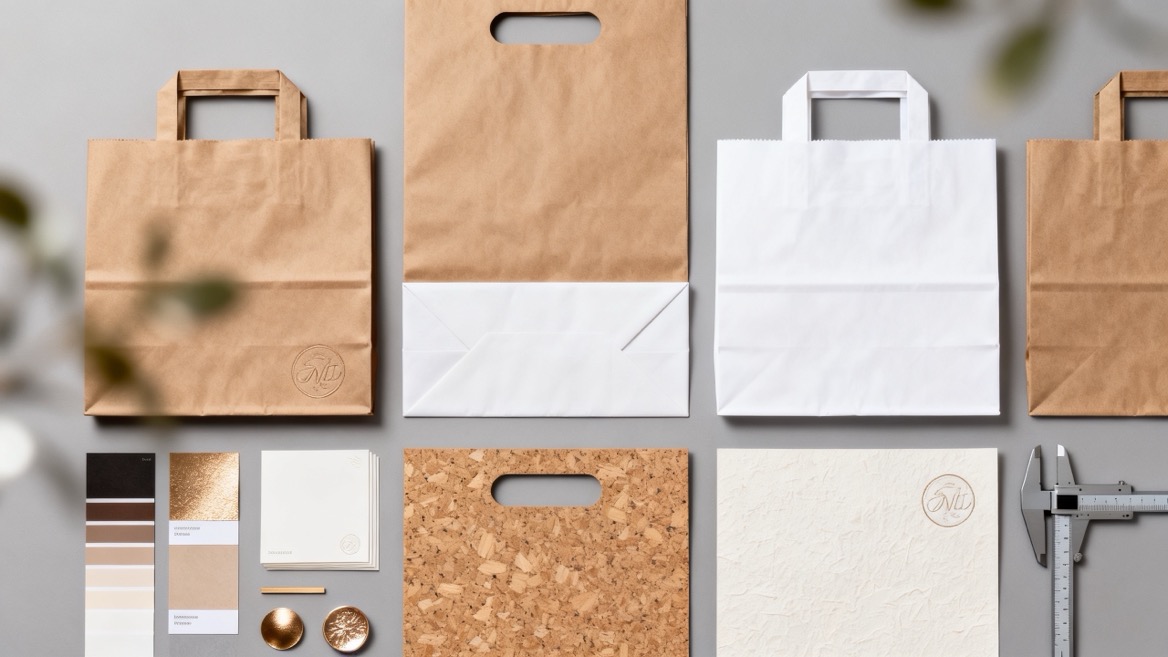
The table below should be read as a supplier-evaluation framework, not as a final contractual specification. Production capacity and MOQ should be confirmed in a written quote based on the exact bag design.
| Manufacturer | Production Focus | Capacity Signal | MOQ Approach | Certifications / Compliance Position | Key Buyer Question |
|---|---|---|---|---|---|
| Maituohong Packaging | Custom paper bags, boxes, labels, inserts | Integrated custom-packaging workflow; project-specific capacity | Flexible, project-dependent | States ISO 9001, FSC, ISO 14001 | Can you provide a finished die cut bag sample with final materials and reinforcement? |
| Xianda / XinYing Packaging | Gift boxes, flower boxes, paper bags, premium packaging | Two Dongguan factories; 15,000+ m² and 200+ employees stated | Project-dependent | States FSC, BSCI, Disney credentials | Which production line will make the bag and what is the handle load-test method? |
| XingKun | Packaging, displays, cards, books, bags, labels | Multi-category printing and packaging manufacturer | Custom project-based | States ISO 9001, FSC, BSCI | Can you maintain approved color across bags, boxes, labels, and displays? |
| BonitoPack | Custom branded packaging | Verify direct factory scale and subcontracting | Quote-dependent | Verify current documents | Are die cutting, bag gluing, and final QC performed in-house? |
| Shanghai Forests Packaging | Broad paper packaging | Established, larger-scale profile | Better suited to planned recurring volumes | Verify current documents | What capacity is reserved during peak season for repeat purchase orders? |
| Guangzhou Yison Printing | Printed paper packaging | Verify bag-specific capability | Project-dependent | Verify current documents | Can you document rub, scuff, and load testing for this finish? |
| Opack | Shopping bags and custom packaging | Reported 10 million annual-unit output | Project-dependent | Verify current documents | Can you show current export paperwork and material traceability for this bag type? |
| Frey Paper Product | Paper products and paper bags | Verify current machine and export capacity | Project-dependent | Verify current documents | Can you supply the required premium finish and reinforcement structure? |
| Large converter networks | High-volume paper packaging | Material continuity and scale potential | Often volume-oriented | Factory-specific | Which approved paper mill and paper grade will be used for every repeat order? |
| Specialist regional converters | Custom and short-cycle converting | Variable; often agile | Often more flexible | Factory-specific | Can we inspect your real production site and verify that you do not outsource key processes? |
A buyer approves a sample made with 180 GSM white kraft paper, but the bulk order uses a lower-cost paper with similar visual appearance. The bags may look acceptable initially but tear at the handle or soften during humid transport.
How to prevent it:
- State the exact paper grade, GSM tolerance, supplier or mill where required, and color requirement in the purchase order.
- Retain one signed "golden sample."
- Ask for incoming-material inspection records for the paper batch.
- Include random GSM checks in third-party inspection instructions.
- Require written approval before any material substitution.
This is one of the least discussed but most important risks in die cut bag procurement. A finished bag can look premium on a table and still fail when used in a store. The failure point is often not the bag body—it is the reinforcement patch around the die-cut opening.
Internal sourcing tip: Ask the factory to cut open a production sample and show the reinforcement patch after gluing. Measure its dimensions and verify the adhesive coverage. Some suppliers reduce patch size, use lower-GSM reinforcement paper, or apply glue unevenly because the hidden component is difficult for buyers to see after bag assembly.
How to prevent it:
- Put patch material, GSM, dimensions, and placement tolerance on the approved drawing.
- Request a "destructive sample" showing the inside construction.
- Define a load test using the actual product weight plus a safety factor.
- Specify the pass condition: no tearing, delamination, handle deformation, or glue failure after the required hold time.
Uncoated kraft and recycled paper absorb ink differently from coated stock. Dark backgrounds may appear less saturated; fine type can fill in; white ink may require multiple passes; and metallic effects may not reproduce consistently.
How to prevent it:
- Request a physical color proof or press proof for brand-critical artwork.
- Specify Pantone references where appropriate.
- Discuss acceptable color variation before mass production.
- Avoid relying on a digital PDF proof alone for texture-sensitive paper.
- Confirm whether the factory will print on the final paper grade, not on a substitute proof stock.
FSC claims require more than buying paper described as FSC. If the buyer wants an FSC label or claim on the bag, the manufacturer must have valid chain-of-custody certification and follow the relevant labeling and trademark rules.
How to prevent it:
- Request the current FSC certificate, certificate code, legal-entity name, scope, and expiry date.
- Check the certificate through the FSC public certificate database.
- Confirm whether the specific product can carry an FSC claim.
- Obtain artwork approval for any FSC label before printing.
- Keep all claim wording consistent with the approved certification scope.
Bags are lightweight but volumetric. A large bag with a wide gusset can consume significant container space, and poor carton design can cause crushed handles, bent bag tops, or humidity damage.
How to prevent it:
- Ask for carton dimensions, gross/net weight, CBM, and pieces per carton before confirming the order.
- Compare EXW, FOB, and delivered pricing on a total-landed-cost basis.
- Confirm whether bags are nested, bundled, polybagged, or protected with kraft separators.
- Ask for moisture barrier, desiccant, palletization, and carton-strength options for long sea transit.
- Obtain a container-loading plan for high-volume orders.
A vague request such as "Please quote custom paper bags" produces vague pricing and makes supplier comparisons unreliable. Your RFQ should include:
- Bag drawing or reference photo.
- Size: width × gusset × height.
- Paper type and target GSM.
- Die-cut handle shape and reinforcement requirement.
- Artwork file and number of colors.
- Finishing requirement.
- Quantity per SKU and annual forecast.
- Target market and intended use.
- Required certifications or testing.
- Delivery terms and destination.
- Required sample date and bulk delivery date.
The strongest supplier response does not only contain a price. It identifies risks and proposes solutions.
Look for a supplier that asks questions such as:
- What product weight will the bag carry?
- Will the bag be used in a humid environment?
- Do you need a folded top to improve handle strength?
- Is matte lamination acceptable for recyclability goals?
- Do you require FSC labeling or only FSC-certified material?
- Is color consistency across repeated orders critical?
- Does the bag need to fit standard retail shelving or shipping cartons?
If the supplier quotes immediately without asking any technical questions, it may be treating the order as a generic commodity rather than a controlled packaging project.
A practical sample process is:
1. Structural white sample: Verifies dimensions, gusset, handle position, reinforcement concept, and product fit.
2. Material sample: Confirms paper texture, stiffness, color, and print behavior.
3. Finished pre-production sample: Uses the final die, paper, printing, finish, glue, reinforcement, and packing method.
4. Golden sample sign-off: Both buyer and supplier retain approved samples with date, revision number, and specification sheet.
5. Pre-shipment inspection sample: Confirms that the bulk order matches the approved sample.
For a high-value retail program, pay for the finished pre-production sample. The cost is minor compared with the cost of receiving thousands of bags with weak handles, wrong color, or incorrect dimensions.
Do not rely on a logo on a website or a PDF without checking it.
Verify:
- Legal company name on the certificate.
- Factory address.
- Certificate number.
- Scope of certification.
- Issue date and expiration date.
- Certification body name.
- Whether the certificate applies to the actual manufacturing facility.
- Whether the specific product category is included.
For ISO certificates, confirm that the certificate is still active and that the legal entity on the certificate matches the entity issuing your invoice and contract. For FSC claims, verify the chain-of-custody certificate and confirm that the product-label claim is allowed.
For larger orders, specify an AQL inspection plan or a buyer-defined quality plan. Typical inspection points for die cut bags include:
- Dimensions and gusset tolerance.
- Paper GSM and material shade.
- Handle opening size and position.
- Reinforcement-patch size and placement.
- Glue coverage and bond strength.
- Print registration and color consistency.
- Lamination bubbles, scratches, and edge lifting.
- Die-cut cleanliness.
- Crease cracking.
- Bag squareness and bottom alignment.
- Carton quantity and labeling.
- Load testing on sampled units.
For most paper die cut bags, the most relevant sustainability and compliance topics are material sourcing, recyclability design, inks and coatings, chemical restrictions, and market-specific rules.
FSC can help substantiate responsible forest-sourcing claims when the full certification and chain-of-custody conditions are met. It is particularly relevant for retail brands with formal responsible-sourcing policies.
ISO 9001 relates to quality-management systems. It does not guarantee that every bag is defect-free, but it can indicate that the supplier has defined management processes. Buyers still need product-level inspection and sample approval.
ISO 14001 relates to environmental-management systems. It can be relevant when buyers assess supplier environmental practices, but it is not the same as proof that a specific bag is recyclable, compostable, or low-carbon.
RoHS is generally associated with restrictions on hazardous substances in electrical and electronic equipment, so it is not automatically the primary standard for ordinary paper shopping bags. REACH may be more relevant where inks, coatings, adhesives, additives, or decorative components require chemical-substance controls for the European market.
CE marking usually applies only to product categories covered by specific European Union legislation. Standard paper shopping bags normally do not require CE marking merely because they are paper bags. Buyers should be cautious if a supplier promotes CE as a generic proof of paper-bag quality. Instead, define the actual product-use and destination-market requirements.
If a paper bag will directly contact food, requirements become more specific. Ask for declarations and testing suitable for the target market, especially for inks, coatings, adhesives, recycled-fiber content, grease resistance, and potential migration risks.
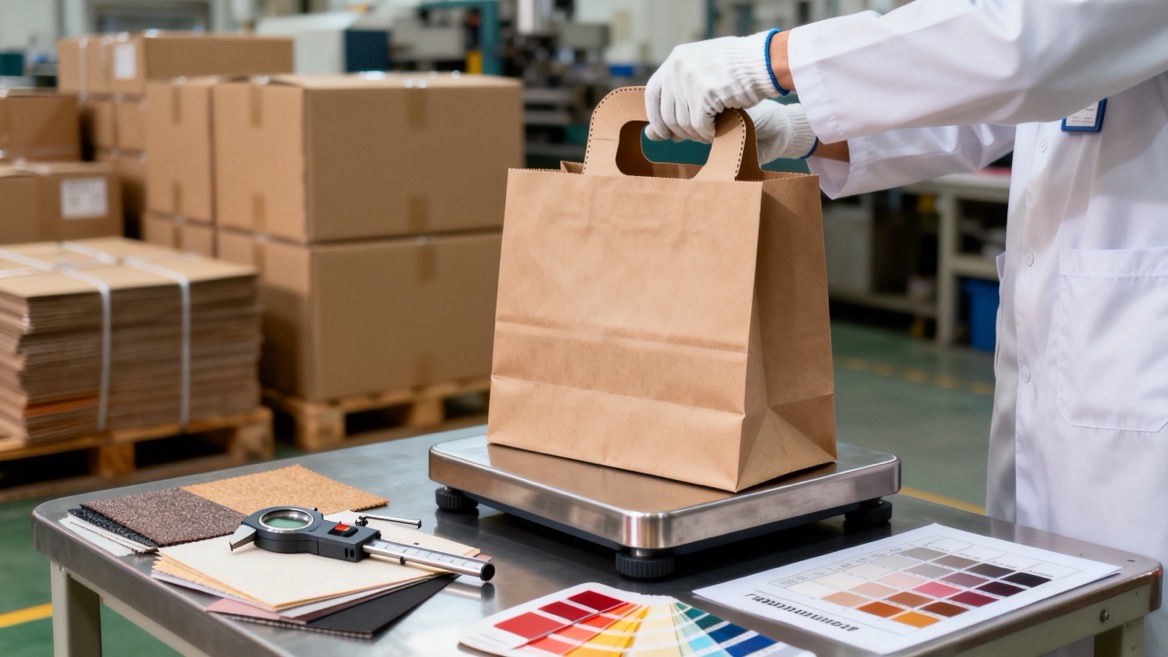
For global buyers, the best die cut bag manufacturer is the one whose capabilities match the real commercial requirements of the project:
- Choose Maituohong Packaging when you need flexible custom development, efficient communication, controlled cost, structured sampling, and strong OEM support for paper bags and broader paper packaging.
- Choose Xianda / XinYing Packaging when premium gift, cosmetics, jewelry, floral, or coordinated paper-bag-and-box packaging is central to the project.
- Choose XingKun when the bag is part of a wider custom-printing program involving boxes, displays, labels, cards, or promotional materials.
- Consider more industrial-scale providers such as Shanghai Forests Packaging Group for recurring higher-volume paper-packaging programs.
- Include specialized shopping-bag and regional-converter suppliers in the RFQ process when you need capacity comparison, cost benchmarking, or a second-source strategy.
The most reliable procurement method is to shortlist three to five suppliers, send an identical technical RFQ, request finished samples, verify legal and certification documents, perform a load test, compare total landed cost, and approve only a fully documented golden sample before mass production.
For a customized die cut bag project, Maituohong Packaging can support the process from material selection and structural design through sampling, production inspection, export packing, and delivery coordination. A detailed RFQ containing your bag dimensions, paper target, artwork, expected load, quantity, and destination will produce the most accurate recommendation and quotation.
Ask for the complete certificate, including the certificate number, issuing body, legal entity name, factory address, scope, issue date, and expiration date. Then search the issuing certification body's public database or contact the issuer directly. Ensure that the name matches the entity that will sign your contract and issue the commercial invoice. A valid ISO certificate is useful, but it does not replace a product-specific quality plan.
There is no universal answer. The right GSM depends on bag dimensions, gusset depth, expected load, paper grade, handle reinforcement, finish, and moisture exposure. As a starting point, lightweight promotional bags may use lower GSM paper, while premium retail bags carrying boxed products may require heavier paper and reinforced die-cut handles. The safest approach is to provide the packed product weight and request physical load-test samples.
Not automatically. Rope handles distribute load differently, while die-cut bags concentrate stress around the handle opening. A well-engineered die cut bag with correctly sized reinforcement patches can perform well, but a poorly reinforced die cut handle can tear even when the bag paper itself is strong. Compare both styles using a real load test, not appearance alone.
Include the paper type, GSM tolerance, color, surface, supplier or mill requirement if necessary, reinforcement material, and finish in the purchase order and approved specification sheet. Keep a signed golden sample. Require written approval for substitutions, and arrange random material checks or third-party pre-shipment inspection. If possible, retain a cut-open reference sample that shows the hidden handle reinforcement.
Possibly, but not automatically. Recyclability depends on the materials, local collection and recycling infrastructure, and the relevant claim rules in the sales market. Plastic lamination, metallic foils, heavy ink coverage, adhesives, eyelets, and mixed-material handles can complicate recycling. Before making a public claim, review the exact bag construction with a qualified sustainability or compliance adviser in your destination market.
- [Maituohong Packaging — Company Profile and Manufacturing Process]
- [China Packaging Federation]
- [Asian Packaging Federation — China Packaging Federation Profile]
- [Statista — Packaging Industry in China]
- [Xianda Packaging — Company Profile]
- [XingKun — Custom Printing and Packaging]
- [U.S. Federal Register — Certain Paper Shopping Bags From China]


