
Views: 243 Author: Maituohong Packaging Publish Time: 2026-10-19 Origin: Site


Content Menu
● Why Source Paper Merchandise Bags from China?
>> China's Packaging Clusters Offer Different Sourcing Advantages
● How These Manufacturers Were Selected
● Top 10 Paper Merchandise Bags Manufacturers in China
>> 2. Xianda Printing Co., Ltd.
>> 3. Shenzhen XingKun Packing Products Co., Ltd.
>> 5. Yiwu Jialan Package Co., Ltd.
>> 7. Xiamen Huide Eco-friendly Paper Bag Co., Ltd. — Huide Packaging/HDPK
>> 8. Dongguan Welm Eco Packaging Tech Co., Ltd.
>> 9. Fujian Nanwang Environment Protection Scien-Tech Co., Ltd.
>> 10. Dongguan Judi Printing & Packaging Co., Ltd.
● Manufacturer Comparison: Capacity, MOQ, and Certification
● Technical Buyer's Guide to Custom Paper Merchandise Bags
>> 1. Specify Performance Before Choosing Paper Weight
>> 2. Test the Complete Bag, Not Just the Paper
>> 3. Approve Printing and Finishing Separately
>> 4. Understand Which Certifications Actually Matter
● Common Sourcing Problems—and How to Prevent Them
>> Material Substitution After Sample Approval
>> A Strong Sample but Inconsistent Bulk Production
>> Unclear Factory Ownership or Subcontracting
>> A Low Unit Price with Higher Delivered Cost
● An Overlooked Insider Check: The Sample-to-Production Gap
● Factory Verification, Sampling, and Logistics
>> Verify the Manufacturing and Contracting Entities
>> Build Lead Time Around Milestones
>> Obtain Freight Data Before Final Approval
● Conclusion: Choose the Production Model That Fits Your Brand
>> 1. How Can I Check Whether a Manufacturer's ISO Certificate Has Expired?
>> 2. Can a Supplier Using FSC-Certified Paper Automatically Supply FSC-Labeled Bags?
>> 3. Why Might Two Bags with the Same Paper Weight Have Different Strength?
>> 4. How Do I Prevent Disputes When Bulk Colors Differ from the Sample?
>> 5. Should I Choose the Supplier with the Highest Capacity and Lowest MOQ?
Choosing a manufacturer of Paper Merchandise Bags requires more than comparing prices and approving an attractive sample. Professional buyers need evidence that a supplier can maintain paper quality, printing consistency, handle strength, and delivery performance across repeat orders.
China offers a broad sourcing base, from automated kraft-bag manufacturers serving retail chains to custom packaging factories developing coordinated shopping bags, gift boxes, and branded accessories. The challenge is identifying which production model fits your purchasing requirements.
This guide examines ten suppliers worth evaluating, explains the differences between their capabilities, and provides a practical framework for factory verification, sampling, compliance, and logistics.
Editorial disclosure: This guide is prepared for Maituohong Packaging, which appears first at the publisher's request. The sequence is not an independently audited ranking by sales, production capacity, or product quality. Supplier statements are identified as such, and unpublished information is not replaced with estimates.
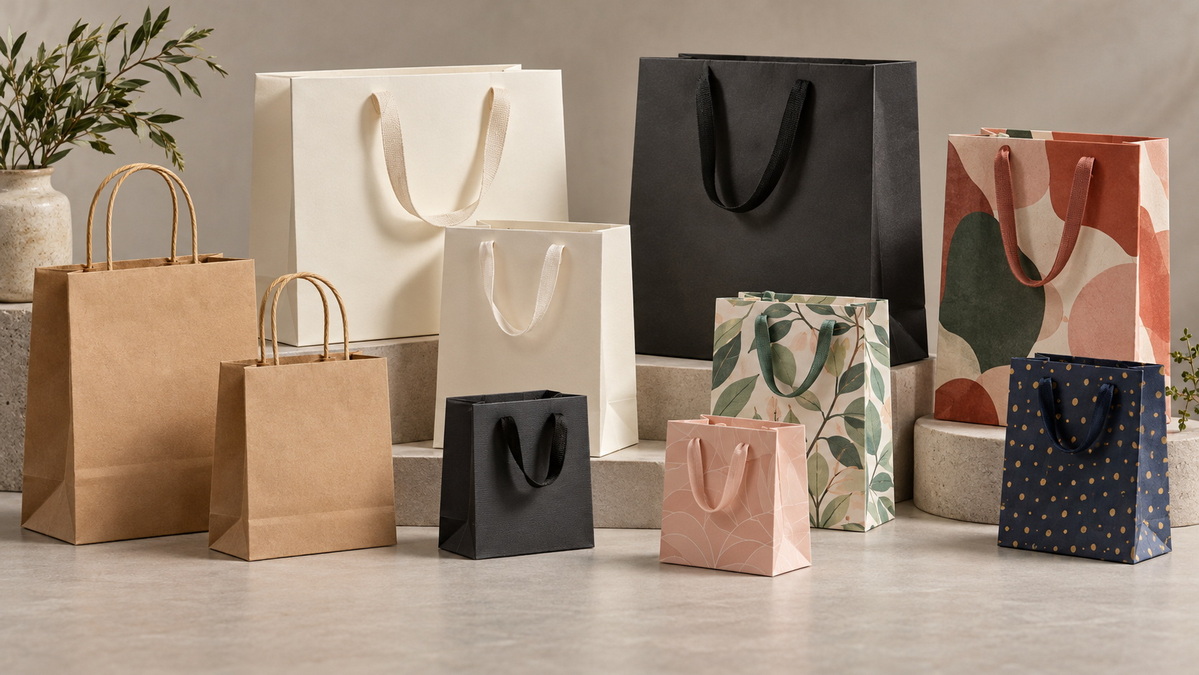
China's advantage extends beyond manufacturing scale. Buyers can access paper sourcing, printing, finishing, structural development, and export coordination within established regional supply networks.
The China Paper Association's 2025 annual industry report, reproduced by the Sichuan Paper Industry Association in May 2026, reports national paper and paperboard production of 141.35 million tonnes in 2025, up 3.74% year over year. Consumption reached 138.79 million tonnes, up 1.80%. These figures describe the wider paper industry—not the market size or export value of paper merchandise bags specifically.
For procurement teams, this industrial base provides access to a substantial range of substrates and converting capabilities. However, national production figures do not prove that an individual bag factory can meet a particular specification.
The locations represented in this guide illustrate several useful sourcing routes:
- Dongguan and Shenzhen: suppliers combining paper bags with gift boxes, commercial printing, and coordinated retail packaging.
- Yiwu: gift-bag and seasonal-packaging suppliers serving wholesale purchasing.
- Xiamen and Quanzhou: manufacturers offering automated paper-bag production and broader foodservice packaging programs.
Longgang in Zhejiang is another significant printing and packaging cluster. A January 2026 government publication reports that its printing industry's full supply-chain output exceeded RMB 50 billion in 2025. This is a cluster-wide figure, not paper-bag production alone.
The practical benefit of a cluster is supplier choice. Buyers should still establish which operations occur inside the nominated factory and which are subcontracted.
The shortlist prioritizes suppliers with publicly described manufacturing or custom-packaging capabilities relevant to retail paper bags.
It also distinguishes dedicated bag manufacturers from broader packaging companies. A factory strong in rigid boxes may be suitable for a coordinated packaging project without necessarily being the strongest choice for millions of standardized kraft bags.
Use the following framework when assessing each candidate:
| Evaluation Area | Evidence to Request | Purchasing Significance |
|---|---|---|
| Manufacturing identity | Business license, factory address, production-site details | Establishes who manufactures and who invoices |
| Product specialization | Comparable bag samples and production references | Shows relevance to your construction |
| Development capability | Dielines, material alternatives, structural prototypes | Supports practical OEM and ODM development |
| Quality control | Incoming, in-process, and final inspection records | Helps prevent material and assembly variation |
| Certification | Current certificates with relevant scope and site | Separates documented systems from website claims |
| Available capacity | Product-specific line allocation and production schedule | Indicates whether your order can actually be accommodated |
| Delivery reliability | Milestone plan and recent shipment performance | Supports launch and replenishment planning |
| Commercial clarity | Itemized specifications, tolerances, tooling, and terms | Makes competing quotations comparable |
No factory audits, certificate validations, or production trials were performed for this article. Published capacity, turnaround, and certification statements should therefore be treated as supplier-reported information rather than verified purchasing guarantees.
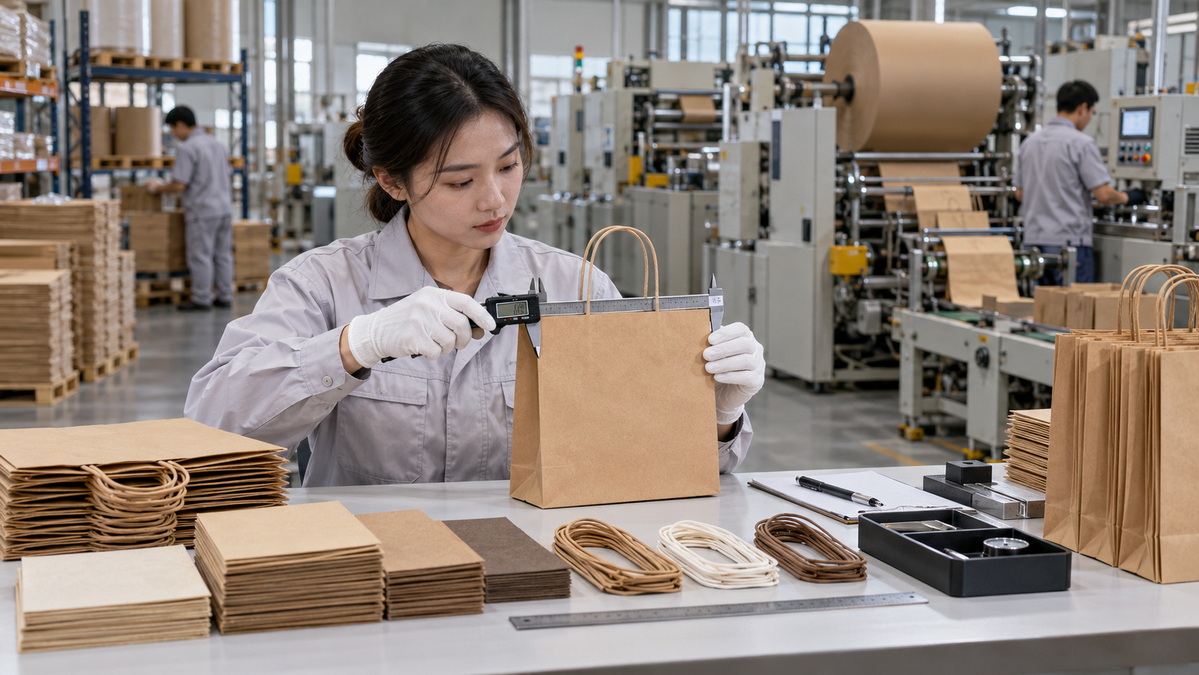
Maituohong Packaging is a relevant candidate for brands seeking paper shopping bags alongside magnetic boxes, rigid boxes, folding gift boxes, and mailer or shipping boxes.
Its potential value lies in coordinating several packaging formats through one development process rather than treating the shopping bag as an isolated purchase.
- Establishment: The company information supplied for this guide states more than 18 years of experience; an exact founding year was not independently established.
- Market coverage: Its website addresses global brands but does not provide a geographic sales breakdown.
- OEM/ODM scope: Structural development, material selection, artwork implementation, printing, finishing, sampling, production, and delivery coordination.
- Published capabilities: Heidelberg six-color printing, dedicated packaging support, and staged quality inspections.
Maituohong describes incoming quality control, in-process checks, final inspection, and outgoing inspection—often abbreviated as IQC, IPQC, FQC, and OQC. It also states that production proceeds after sample approval. These are useful procedures for buyers to examine during qualification.
For small and midsized brands, the company is worth evaluating when flexibility, direct communication, and deeper OEM support matter more than selecting the largest producer. Its website emphasizes responsive packaging specialists, cost optimization, and customization; those claims should be tested through a live development brief and pilot order.
Buyer checkpoint: Ask for a bag-specific quotation showing paper grade, reinforcement construction, handle attachment, MOQ, and testing requirements. Do not assume experience in premium boxes automatically establishes the performance of every shopping-bag design.
Xianda Printing Co., Ltd., operating through xiandagiftbox.com, offers paper bags alongside cosmetic boxes, jewelry boxes, flower boxes, and other printed gift packaging.
- Establishment: The website repeatedly states 2006, but another section states 2014. Buyers should resolve this discrepancy against the business license.
- Location: Its published contact address is in Humen, Dongguan.
- Market coverage: Export-oriented packaging services; a verified regional sales breakdown is not published.
- OEM/ODM scope: Packaging design, prototypes, printing, customized structures, and finishing.
- Core strength: Coordinated paper bags and presentation boxes for gift, cosmetics, and jewelry applications.
Xianda's prototype page states approximately two to three working days for plain white samples and three to seven working days for color samples. These are published estimates, not contractual commitments for every project.
Buyer checkpoint: Confirm the contracting entity and production address. The website contains inconsistent company-history information, making identity verification particularly important before payment.
Shenzhen XingKun Packing Products Co., Ltd., operating through xkdisplay.com, combines paper bags with packaging boxes, retail displays, books, cards, labels, and other printed products.
- Establishment: Its website states that it has operated in printing and packaging since 2004.
- Location: Bao'an District, Shenzhen.
- Market coverage: The company reports serving more than 30 countries and regions.
- OEM/ODM scope: Design assistance, custom printing, packaging development, prototypes, and coordinated printed materials.
- Core strength: Retail programs requiring bags, boxes, and display materials from one supplier.
XingKun publishes three-to-five-day prototyping and seven-to-fifteen-day mass-production turnaround claims. Buyers should obtain a separate schedule for their exact bag construction, finishing, and order quantity.
A particularly useful disclosure concerns sampling: XingKun explains that some samples use digital printing and hand finishing rather than the equipment used for bulk production. This distinction should form part of sample approval.
Buyer checkpoint: Establish which sample attributes represent final production and which are illustrative only.
Bonito Packaging, operating through bonitopack.com, is a broader custom-packaging supplier whose published portfolio emphasizes folding cartons, rigid boxes, gift boxes, and retail packaging.
- Establishment: Its website states more than a decade of experience; an exact founding year is not specified on the reviewed page.
- Legal identity: The reviewed page uses the Bonito Packaging trading name; obtain the complete registered entity name before contracting.
- Market coverage: The company reports customers in more than 20 countries and regions.
- OEM/ODM scope: Structural design, material selection, printing, finishing, sampling, and mass production.
- Core strength: Low-volume brand launches and coordinated custom-packaging projects.
Bonito publishes a starting quantity of 100 units for certain custom-box projects. That figure should not be presented as a verified MOQ for paper merchandise bags. Likewise, its stated scalability from 500 to 500,000-plus units describes order capability, not independently verified monthly bag capacity.
Buyer checkpoint: Request bag-specific product evidence and clarify whether bag production is in-house or subcontracted. Bonito belongs on a coordinated-packaging shortlist, but its reviewed homepage does not establish the same bag specialization as dedicated producers.
Yiwu Jialan Package Co., Ltd. focuses on paper gift bags, gift boxes, wrapping paper, and tissue paper.
- Establishment: 2014, according to its website.
- Location: Yiwu, Zhejiang.
- Market coverage: Global wholesale customers; geographic sales shares are not disclosed.
- OEM/ODM scope: Customized gift bags, printed designs, coordinated gift packaging, and wholesale production.
- Core strength: Decorative, seasonal, and promotional paper-bag programs.
The company reports a factory area exceeding 6,000 square meters, more than 120 workers, five production lines, and daily production exceeding 100,000 pieces. These are supplier-reported figures and should not be interpreted as available capacity for a specific SKU.
Buyer checkpoint: Confirm whether the quoted daily output applies to your bag format or to a broader mix of paper-packaging products.
Bagitan Packaging offers kraft paper bags and related disposable paper packaging for retail, grocery, catering, and foodservice applications.
- Establishment: 2008, according to its company page.
- Legal identity: Obtain the registered company name corresponding to the Bagitan Packaging brand.
- Market coverage: Worldwide supply across garment, restaurant, bakery, coffee, and food-delivery applications.
- OEM/ODM scope: Custom dimensions, materials, logo printing, mockups, and packaging development.
- Core strength: Practical kraft-bag programs and coordinated foodservice packaging.
Bagitan publishes a typical production period of one to three weeks after sample approval, while describing small-MOQ support without stating a universal numerical minimum.
Buyer checkpoint: Its references to certified material suppliers do not, by themselves, establish the certification status of the converting factory or the claim eligibility of your finished bags.
Huide Packaging's website distinguishes its Chinese production company, Xiamen Huide Eco-friendly Paper Bag Co., Ltd., from its sales company, Xiamen Huide Xiesheng Packaging Co., Ltd.
- Establishment: Its supplier profile states 2014; the main website describes more than ten years of experience.
- Location: Xiamen, Fujian.
- Market coverage: The company reports exports to more than 20 countries and regions.
- OEM/ODM scope: Twisted-handle bags, flat-handle bags, die-cut bags, SOS bags, and customized printing.
- Core strength: Automated and higher-volume paper-bag programs.
The website reports a factory footprint exceeding 485,000 square feet and monthly capacity above 50 million pieces. These substantial claims require factory-level verification, including confirmation of which production sites and bag formats are included.
Buyer checkpoint: Align the sales contract, manufacturing site, inspection access, and certification documents. A disclosed sales/production structure is not inherently problematic, but responsibilities must be explicit.
Dongguan Welm Eco Packaging Tech Co., Ltd. offers paper bags alongside food boxes, gift packaging, and other printed packaging products.
- Establishment: The Welm brand website states 2012; buyers should confirm whether this refers to the current legal entity or the wider business.
- Location: Dongguan, Guangdong.
- Market coverage: Overseas packaging customers; the reviewed sources do not establish principal destination markets.
- OEM/ODM scope: Custom paper bags, food packaging, printed cartons, gift packaging, and design support.
- Core strength: Projects combining bags with cartons or foodservice packaging.
Welm's website describes a ten-person development team and three-to-five-day prototyping. These statements provide a starting point for assessing development support, but do not establish production capacity for a particular bag.
Buyer checkpoint: Request paper-packaging-specific certificates. Any qualifications relating to unrelated product categories should not influence bag-factory approval.
Fujian Nanwang Environment Protection Scien-Tech Co., Ltd. is a publicly listed producer specializing in paper bags and related packaging.
- Establishment: 2010.
- Location: Hui'an County, Quanzhou, Fujian.
- Market coverage: International retail and foodservice supply.
- OEM/ODM scope: Customized carry bags, twisted-handle bags, flat-handle bags, die-cut bags, SOS bags, and related paper packaging.
- Core strength: Large, recurring purchasing programs requiring automated production and formal supplier documentation.
Nanwang's website reports more than 400 automated production machines and annual paper-bag output exceeding 2.7 billion units. It also lists ISO 9001, ISO 14001, ISO 22000, FSC chain-of-custody, and BRCGS credentials. Verify their current scope and site coverage rather than assuming every facility holds every listed credential.
Buyer checkpoint: Ask for capacity and certification information covering the actual Chinese facility assigned to your order, rather than relying on group-wide figures.
Dongguan Judi Printing & Packaging Co., Ltd. offers customized retail paper bags, kraft bags, luxury shopping bags, and gift bags.
- Establishment: Its company page lists 1999, while also referring to more than 12 years of experience.
- Legal identity: The same page uses Dongguan Judi Industrial Co., Ltd.; buyers should confirm the relationship between these names.
- Location: Houjie, Dongguan.
- Market coverage: Overseas retail-packaging customers; a regional sales breakdown is not published.
- OEM/ODM scope: Design, prepress, printing, hand assembly, finishing, and distribution.
- Core strength: Customized retail and premium paper-bag construction.
The company reports more than 5,000 square meters of premises, over 150 employees, and ISO 9001 and FSC chain-of-custody certification. These remain supplier statements pending document verification.
Buyer checkpoint: Match the business license, bank beneficiary, certificate holder, and purchase-contract entity before paying a deposit.
The table separates published figures from information requiring a quotation. "Not established" means the reviewed sources did not provide a sufficiently clear bag-specific figure.
| Manufacturer | Published Capacity Information | Paper-Bag MOQ | Certification Information to Verify |
|---|---|---|---|
| Maituohong Packaging | Numerical bag capacity not established | Project quotation required | Website claims ISO 9001, ISO 14001, and FSC. |
| Xianda Printing | Bag-specific output not established | Project quotation required | Current relevant certificates not established. |
| XingKun | Numerical bag capacity not established | Low-MOQ support claimed; number not established | Website claims ISO 9001, FSC, and BSCI participation/audit credentials. |
| Bonito Packaging | No verified bag-capacity figure | Bag MOQ unconfirmed; advertised 100-unit starting quantity concerns boxes | Website lists ISO 9001, FSC, BSCI, and REACH claims; inspect underlying documents. |
| Yiwu Jialan | Reports over 100,000 pieces daily; product mix requires clarification | Project quotation required | Website lists ISO 9001, FSC, BSCI, and customer-audit claims. |
| Bagitan Packaging | Numerical capacity not established | Small-MOQ support claimed; number not established | Material-supplier credentials mentioned; factory status requires confirmation. |
| Huide Packaging/HDPK | Reports over 50 million pieces monthly | Project quotation required | FSC-material sourcing claimed; verify converting-site chain of custody. |
| Welm | Numerical bag capacity not established | Format-specific quotation required | Obtain relevant current certificates and scope. |
| Nanwang | Reports over 2.7 billion paper bags annually | Project quotation required | Lists ISO 9001, ISO 14001, ISO 22000, FSC, and BRCGS. |
| Judi | Numerical bag capacity not established | Project quotation required | Website claims ISO 9001, FSC chain of custody, and an ITS audit. |
Capacity figures are not directly comparable: they use different time periods, product mixes, and potentially different site boundaries. Available production slots matter more than headline capacity.
A quotation stating only "kraft paper, 150 gsm" leaves too much open to interpretation.
Grammage describes mass per unit area. It does not fully describe fiber quality, tear resistance, folding behavior, or finished-bag strength. The Paper Bag industry platform highlights the mechanical strength of long virgin kraft fibers and recommends evaluating the finished carrier bag through an appropriate test method.
Build your specification around:
- Paper grade and approved reference material.
- Grammage and agreed tolerance.
- Required recycled-content documentation, where applicable.
- Bag dimensions and dimensional tolerances.
- Handle material, length, and attachment.
- Top-fold and bottom-reinforcement construction.
- Intended carrying load and reuse expectations.
- Approved printing and finishing process.
Avoid substituting a heavier sheet for a proper performance assessment. A higher grammage does not remove the need to test seams, handles, and reinforcements.
EN 13590 provides a recognized method for testing paper carrier-bag durability. The industry guidance describes repeated lifting with loads related to the bag's size and volume.
A practical purchasing test plan should identify:
1. The claimed carrying load.
2. The loading arrangement.
3. The number and manner of lifting cycles.
4. Conditioning requirements.
5. Acceptable and unacceptable failure modes.
6. Whether testing must be performed by an independent laboratory.
EUROSAC's published guidance describes a high-quality carrier bag as capable of carrying at least 6 kg of supermarket products and being reused up to five times for the same purpose. This is industry guidance, not a universal legal requirement for every merchandise bag.
A small jewelry bag and a large apparel bag need different specifications.
For artwork approval, specify which document controls each attribute:
| Attribute | Recommended Approval Reference |
|---|---|
| Dimensions and folding | Approved structural sample and dieline |
| Brand color | Agreed physical color reference and measurement conditions |
| Artwork position | Signed artwork and dimensional tolerances |
| Foil and embossing | Finished physical sample |
| Paper appearance | Approved substrate sample |
| Carrying performance | Agreed finished-bag test protocol |
Ask whether the sample uses production paper, production printing, and production handle attachment.
This is not a theoretical concern: XingKun explicitly notes that certain samples are digitally printed and hand finished rather than produced through the bulk-production process.
Do not treat a page of certification logos as proof that a bag meets your destination-market requirements.
FSC chain-of-custody certification concerns traceability of forest-based materials through production and distribution. Verify the certificate holder, status, scope, and relevant sites in the official database.
ISO management-system certificates should also be checked against the named legal entity, applicable standard, factory address, and certification scope. CertSearch supports checks for active, suspended, withdrawn, and expired status.
CE marking is not a general environmental or quality certification for ordinary paper merchandise bags. The European Commission states that CE marking applies only where specific legislation requires it and must not be used on other products. RoHS primarily addresses electrical and electronic equipment, not ordinary non-electronic paper shopping bags.
For destination-market compliance, commission a product-specific review covering the actual materials, intended use, and current requirements. Food-contact bags require a separate assessment from bags used to carry already packaged merchandise.
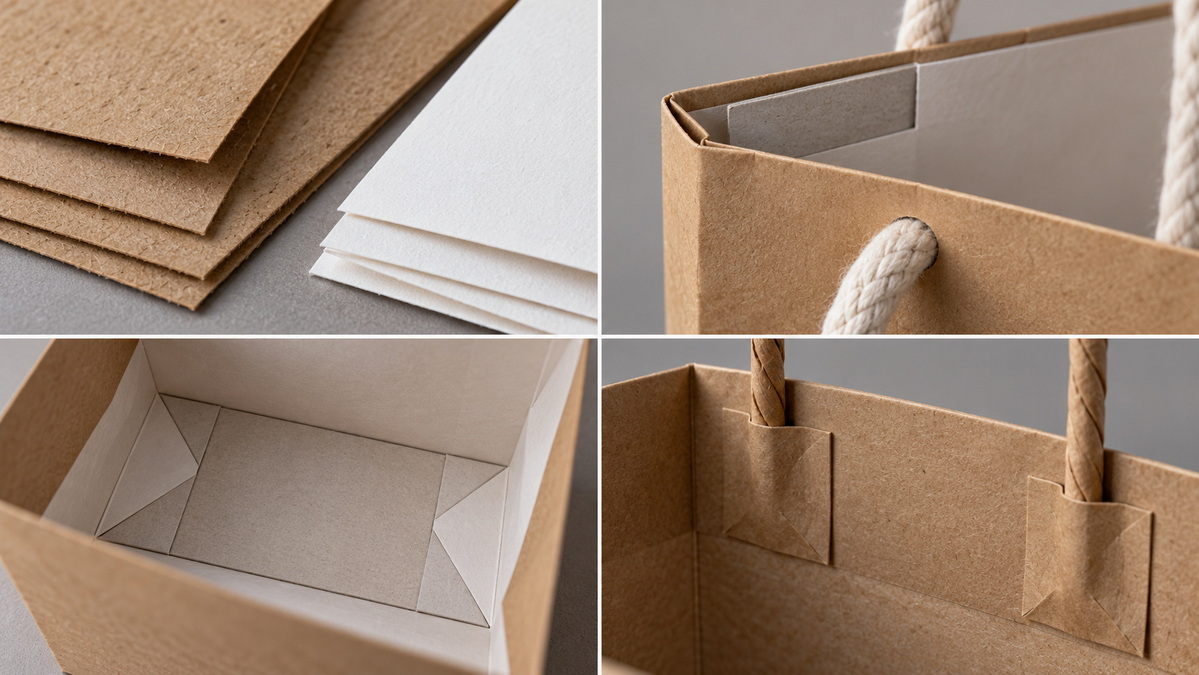
Prevention: Attach an approved bill of materials to the purchase order. Require written authorization before changing paper, reinforcement board, handles, adhesives, or coatings.
Prevention: Approve a production-representative pilot, then draw inspection samples from multiple cartons across the finished lot. Do not rely only on samples selected by the sales team.
Prevention: Identify the manufacturer for each operation. Require disclosure of outsourced printing, bag assembly, or handle attachment and define whether changes need prior approval.
Prevention: Compare carton quantities, carton dimensions, gross weight, freight basis, customs charges, and delivery scope—not just the ex-factory bag price.
These controls should be written into the purchasing agreement, rather than left as informal expectations.
The useful question is not simply, "Does this sample look good?"
It is, "Which parts of this sample were produced differently from the order we will receive?"
Handmade prototypes can establish shape and visual direction, but they may not demonstrate the repeatability of production printing, glue application, folding, or handle attachment. XingKun's published explanation of digitally printed, hand-finished samples illustrates why buyers should ask this question explicitly.
Use three separate approval stages:
1. Structural prototype: Confirms dimensions, folding, and usability.
2. Decoration proof: Confirms artwork, color direction, and finishing.
3. Production-representative pilot: Confirms the actual combination of material, equipment, assembly, and performance.
Keep a signed control sample and record any differences between it and the production method. Do not allow an illustrative prototype to become an undefined acceptance standard.
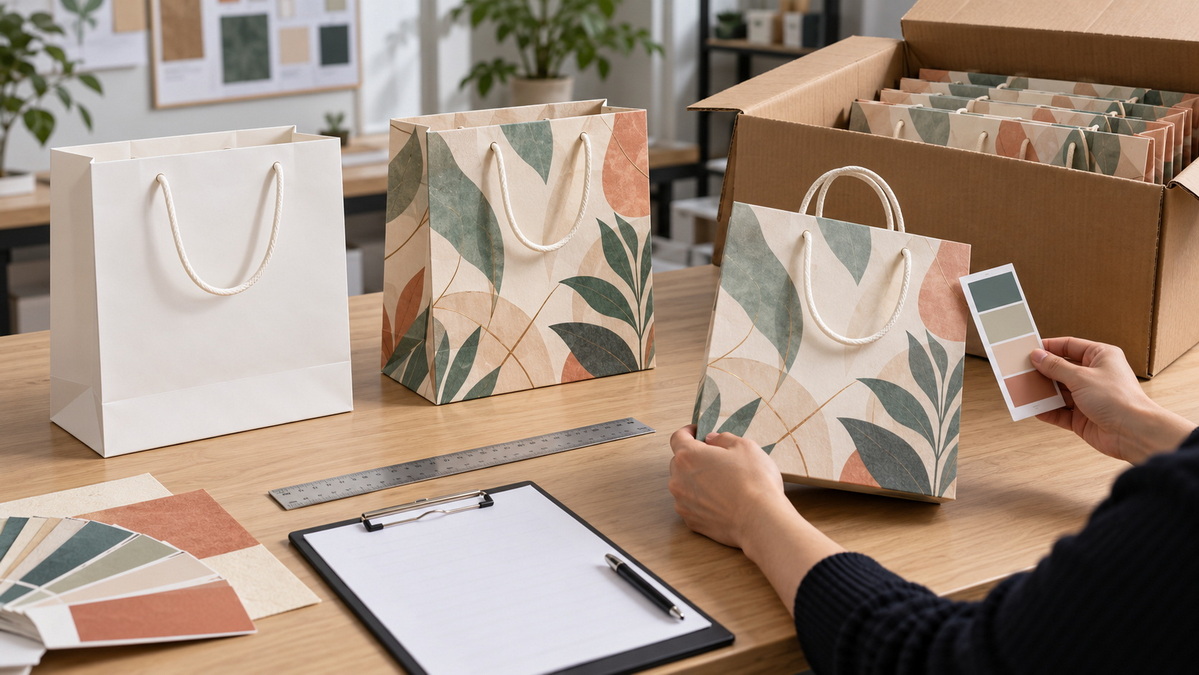
Before issuing a purchase order:
- Obtain the business license and registered address.
- Identify the invoicing entity and manufacturing site.
- Confirm the bank beneficiary.
- Request a live production walkthrough or independent audit.
- Check which processes are subcontracted.
- Obtain current, relevant certificates.
Where sales and production companies differ—as Huide's website explicitly describes—document each party's responsibility.
Request separate dates for:
- Artwork approval.
- Material procurement.
- Prototype completion.
- Production-slot confirmation.
- Mass-production completion.
- Inspection and rework.
- Cargo readiness.
- Freight departure and delivery.
Published supplier turnaround figures are useful for initial screening, but the purchase order should contain the schedule applicable to your approved specification.
Require final carton dimensions, pieces per carton, gross weight, pallet information, and loading assumptions before comparing delivered cost.
Also agree on moisture protection, acceptable carton condition, quantity reconciliation, and the procedure for handling transit damage. Ask your freight forwarder to review the proposed packing and delivery terms before shipment.
A dependable paper merchandise bag supplier should demonstrate more than attractive printing. The purchasing decision should connect manufacturing identity, approved materials, finished-bag performance, relevant documentation, and a realistic delivery plan.
For coordinated bags, gift boxes, and other branded paper packaging, Maituohong Packaging offers a relevant starting point for discussion. Its published workflow covers consultation, structural development, sampling, staged quality control, and delivery coordination.
Send Maituohong your bag dimensions, intended carrying load, order quantity, artwork, destination, and required delivery date. Request a bag-specific material proposal, itemized quotation, production-representative sample plan, and current certification documents before placing a repeat-order program.
Search the certificate number or company name in CertSearch, then compare the result with the document supplied by the manufacturer.
Check the current status, standard, legal entity, factory address, and scope. A certificate may be suspended or withdrawn before its printed expiry date. If no clear record appears, contact the issuing certification body directly rather than assuming either validity or fraud.
Do not assume so. FSC chain-of-custody certification tracks eligible materials through production and distribution.
Check the converting company's certification status and relevant scope, then obtain confirmation that your order qualifies for the intended claim and labeling. Purchasing paper from a certified mill is not, by itself, sufficient evidence for the finished-bag claim.
Paper weight does not fully describe fiber properties or the performance of the assembled bag.
Virgin kraft's long fibers can provide strong mechanical properties, while the finished result also requires suitable construction. Evaluate the complete bag through an agreed test rather than accepting grammage as the sole quality measure.
Define which physical reference controls color approval and whether the sample used the same printing process as bulk production.
Separate structural approval from color approval, record agreed tolerances, and approve a production-representative printed sample where color is commercially critical. This distinction matters because suppliers may use digital printing for prototypes and different equipment for the production run.
Not automatically. Capacity and MOQ answer different purchasing questions.
A large automated manufacturer may suit standardized replenishment orders; a development-focused supplier may better suit multiple finishes, coordinated packaging, or smaller launches. Compare production evidence for your exact design, available scheduling, pilot results, and total delivered cost. The published figures in this guide are screening information, not interchangeable measures of suitability.
1.China Paper Association's 2025 annual industry report, reproduced by the Sichuan Paper Industry Association: national production, consumption, and industry figures. [sczaozhi]
2.Wenzhou Municipal Bureau of Economy and Information Technology: Longgang printing and packaging cluster development. [wzjxj.wenzhou.gov]
3.FSC Search: certificate-holder, status, and scope verification. [search.fsc]
4.FSC chain-of-custody guidance: material traceability through the supply chain. [fsc]
5.CertSearch: accredited management-system certificate verification. [iafcertsearch]
6.European Commission guidance: CE-marking applicability and restrictions. [europa]
7.European Commission guidance: RoHS scope. [environment.ec.europa]
8.EUROSAC carrier-bag guidance: durability, reuse, and EN 13590 testing. [eurosac]


