
Views: 253 Author: Maituohong Packaging Publish Time: 2026-09-02 Origin: Site


Content Menu
● The Three Main Categories of Paper Packaging Boxes
● 1. Folding Cartons for Lightweight Retail Products
● 2. Tuck-End Boxes for Everyday Product Packaging
● 3. Auto-Lock Bottom Boxes for Faster Assembly
● 4. Snap-Lock Bottom Boxes for Cost-Conscious Packaging
● 5. Mailer Boxes for E-Commerce Unboxing
● 6. Corrugated Shipping Boxes for Transport Protection
● 7. Rigid Lid-and-Base Boxes for Luxury Gifts
● 8. Magnetic Closure Boxes for Premium Presentation
● 9. Drawer Boxes for Memorable Unboxing
● 10. Display Boxes for Retail Visibility
● How to Choose the Right Packaging Box
>> 1. Consider Product Weight and Fragility
>> 2. Define the Customer-Facing Moment
>> 3. Design the Interior, Not Only the Exterior
>> 4. Balance Premium Appearance With Logistics Cost
● A Practical Box Selection Matrix
● Common Packaging Mistakes to Avoid
● Custom Packaging Development: A Better Working Process
● Create Packaging That Matches Your Product
>> What is the difference between a folding carton and a rigid box?
>> Which box type is best for e-commerce shipping?
>> Are rigid boxes suitable for international shipping?
>> What information should I provide for a custom packaging quotation?
>> Can a rigid gift box be shipped flat?
>> What is the best insert material for a premium gift box?
>> How do I make custom packaging feel more luxurious?
Choosing the right packaging box is not simply about enclosing a product. It affects product protection, shelf presence, unboxing experience, storage efficiency, freight cost, and perceived brand value. After more than 18 years designing and manufacturing custom paper packaging, our team at Maituohong Packaging has seen one consistent pattern: the best box is the one that matches the product journey—from factory packing to the customer's hands.
This guide explains the most practical types of packaging boxes, how they are made, where they work best, and how to select the right custom paper box for your brand. It is written for retailers, importers, distributors, e-commerce sellers, and premium brands sourcing folding cartons, corrugated shipping boxes, rigid gift boxes, and tailored paper packaging solutions.
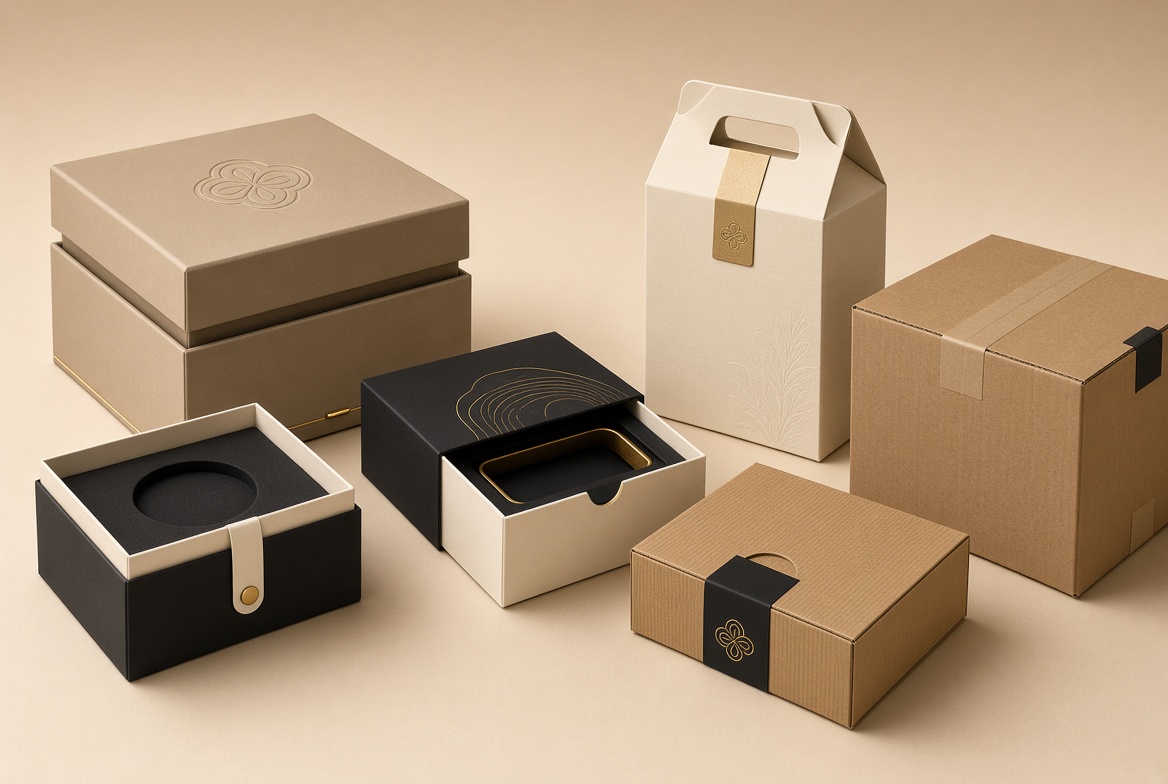
Before comparing individual box styles, it helps to understand the three material families behind most paper-based packaging.
| Packaging category | Typical material | Main advantage | Best for | Delivery format |
|---|---|---|---|---|
| Folding cartons | Paperboard or cardstock | Lightweight, printable, economical | Retail products, cosmetics, food, small consumer goods | Flat-packed |
| Corrugated boxes | Fluted corrugated board | Strength, cushioning, shipping protection | Transport, warehousing, e-commerce fulfillment | Usually flat-packed |
| Rigid boxes | Dense greyboard or chipboard with decorative wrap | Premium presentation and structural feel | Luxury gifts, jewelry, beauty, electronics, special editions | Set-up or collapsible |
Folding cartons are generally made from a single layer of paperboard and are valued for efficient storage, detailed printing, and easy assembly. Corrugated board uses fluted paper layers between linerboards, creating air spaces that add cushioning and compression resistance. Rigid boxes are made from thick board and a separate decorative wrap, creating the substantial feel associated with luxury presentation packaging.
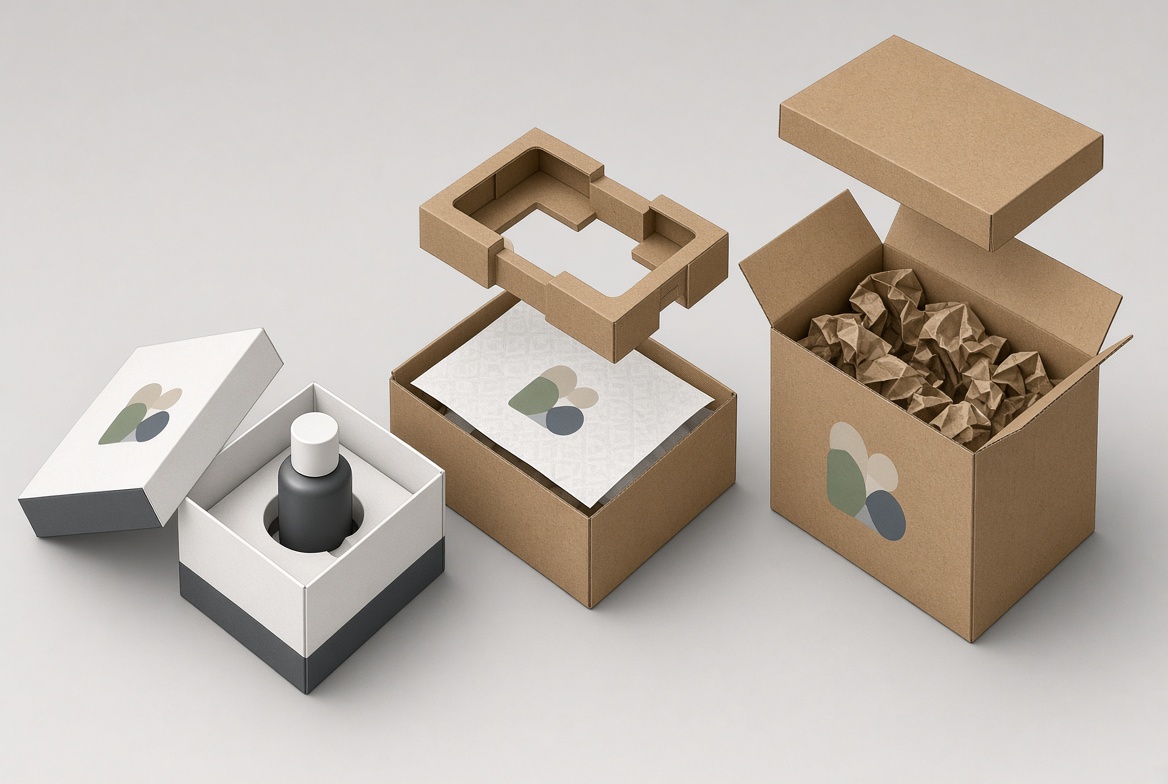
For many brands, the final packaging system combines more than one type. For example, a perfume bottle may sit in a custom rigid gift box for presentation, then be placed inside a corrugated master carton for safe export transport.
A folding carton is one of the most common custom paper packaging formats. It is die-cut from printed paperboard, supplied flat, and folded into shape during packing.
This type of box is suitable when a product needs an attractive retail appearance without the weight or cost of a set-up structure.
Best uses include:
- Skincare and cosmetic products
- Tea, coffee, snacks, and dry food products
- Small electronics and accessories
- Pharmaceutical and personal-care products
- Candles, soaps, and small household items
- Promotional retail products
The major advantage is efficiency. Folding cartons occupy very little warehouse space before assembly. They also offer broad decoration options, including offset printing, spot UV, foil stamping, embossing, debossing, matte lamination, gloss lamination, and window patching.
However, a folding carton is primarily a retail presentation layer, not a high-impact shipping solution. If a product is fragile, heavy, or sent through long-distance parcel networks, it will usually require internal protection and an outer corrugated carton.
Tuck-end boxes are folding cartons with top and bottom flaps that tuck into the box body. They are popular because they are familiar, versatile, and simple to pack.
There are two widely used variations:
In a straight tuck-end box, the top and bottom tuck flaps fold in the same direction. This creates a cleaner front-facing appearance and can be useful when the front panel must look highly polished on a shelf.
Recommended for:
- Cosmetics
- Supplements
- Small electronics
- Personal-care products
- Retail accessories
In a reverse tuck-end box, the top and bottom flaps fold in opposite directions. This structure can improve the packing process for certain products and is frequently used for lightweight retail packaging.
Recommended for:
- Small bottles
- Beauty products
- Stationery
- Health products
- Hanging retail items with added display features
From a manufacturing perspective, the right choice often depends on the product size, automatic filling method, artwork direction, and how the carton will be displayed. A small structural adjustment can make a noticeable difference in line efficiency and visual consistency.
Auto-lock bottom boxes have a pre-glued base that automatically forms and locks when the carton is opened. They cost more than a basic tuck-bottom carton, but they save labor during fulfillment.
This is an especially valuable structure when a brand packs a high volume of products manually or needs a secure bottom for slightly heavier items.
Choose an auto-lock bottom box when:
- Your packing team needs faster assembly
- The product is heavier than a typical lightweight carton item
- Bottom security matters during handling
- You want a premium, stable retail box
- The box will hold jars, bottles, glass containers, or bundled products
For example, a skincare brand packing a glass serum bottle may choose a tuck top with an auto-lock bottom. The structure can be assembled quickly while providing more support than a standard tuck-bottom design.
Snap-lock bottom boxes use interlocking bottom panels rather than a pre-glued automatic base. They are typically more economical than auto-lock bottom boxes, but they require more assembly time.
The base can be strong when properly locked, making this design suitable for brands that need improved load support without the extra cost of pre-gluing.
Best applications include:
- Bottled products
- Giftable food items
- Home fragrance products
- Small appliances
- Midweight beauty products
- Retail kits and bundled sets
This style is a practical middle ground. It provides more strength than a simple tuck bottom while keeping the carton flat and relatively cost-efficient during transport and storage.
Mailer boxes are self-locking, generally one-piece boxes with a lid that folds over the front. Their clean structure and broad printable surfaces make them a favorite for direct-to-consumer brands.
Unlike a plain shipping carton, a custom mailer box can be part of the customer experience. The exterior can communicate the brand before opening, while the interior can reveal a message, pattern, product story, or care instruction.
Mailer boxes work particularly well for:
- Subscription boxes
- Apparel and accessories
- Influencer kits
- DTC cosmetics
- Stationery and lifestyle products
- Promotional sets
- E-commerce gifting
A well-designed mailer box should do more than look attractive. It should fit the product closely enough to reduce movement, leave room for protective tissue or inserts, and remain easy for the customer to open.
When shipping fragile products, use corrugated mailer material, protective inserts, and appropriate transit testing. A visually impressive box that arrives crushed will not create the intended brand impression.
Corrugated boxes are designed primarily for logistics. Their fluted inner layer helps absorb shock, resist compression, and protect products during storage and transit. They are different from ordinary single-layer paperboard cartons and are generally the correct choice for heavy, fragile, or long-distance shipments.
The most familiar style is the regular slotted container, commonly called an RSC. It is made from a single corrugated blank with top and bottom flaps that meet in the center.
Use corrugated shipping boxes for:
- Export cartons
- Warehouse storage
- Bulk product shipments
- E-commerce fulfillment
- Glassware and breakable goods
- Electronics and appliances
- Heavy or multi-unit orders
The most important specification is not only the outer size. Your packaging supplier should also consider board grade, flute type, product weight, stacking requirements, shipping distance, moisture exposure, and void-fill needs.
For international shipping, a box designed only around product dimensions may be inadequate. The structure must account for repeated handling, pallet stacking, container transport, and possible temperature or humidity changes.
Rigid lid-and-base boxes, often called two-piece set-up boxes, consist of a separate lid and tray. They are among the most recognizable formats for premium packaging.
The box is made from thick, non-collapsible board, commonly wrapped with printed art paper, textured specialty paper, fabric, or other decorative materials. Rigid packaging commonly uses dense chipboard in the approximate 1.5–3 mm range, although the appropriate thickness depends on box size, product weight, and intended finish.
This format is ideal for:
- Jewelry and watches
- Fragrance and cosmetics
- Premium tea, chocolate, and spirits
- Corporate gifts
- Fashion accessories
- Wedding and seasonal gift sets
- High-value consumer electronics
A lid-and-base box creates a deliberate opening moment. The slow lift of the lid, the tactile surface, and a fitted insert can turn the package into part of the product itself.
For luxury positioning, details matter. Uneven wrap edges, weak corners, inaccurate foil placement, or poorly fitted inserts can reduce perceived quality immediately. That is why sampling is essential before mass production.
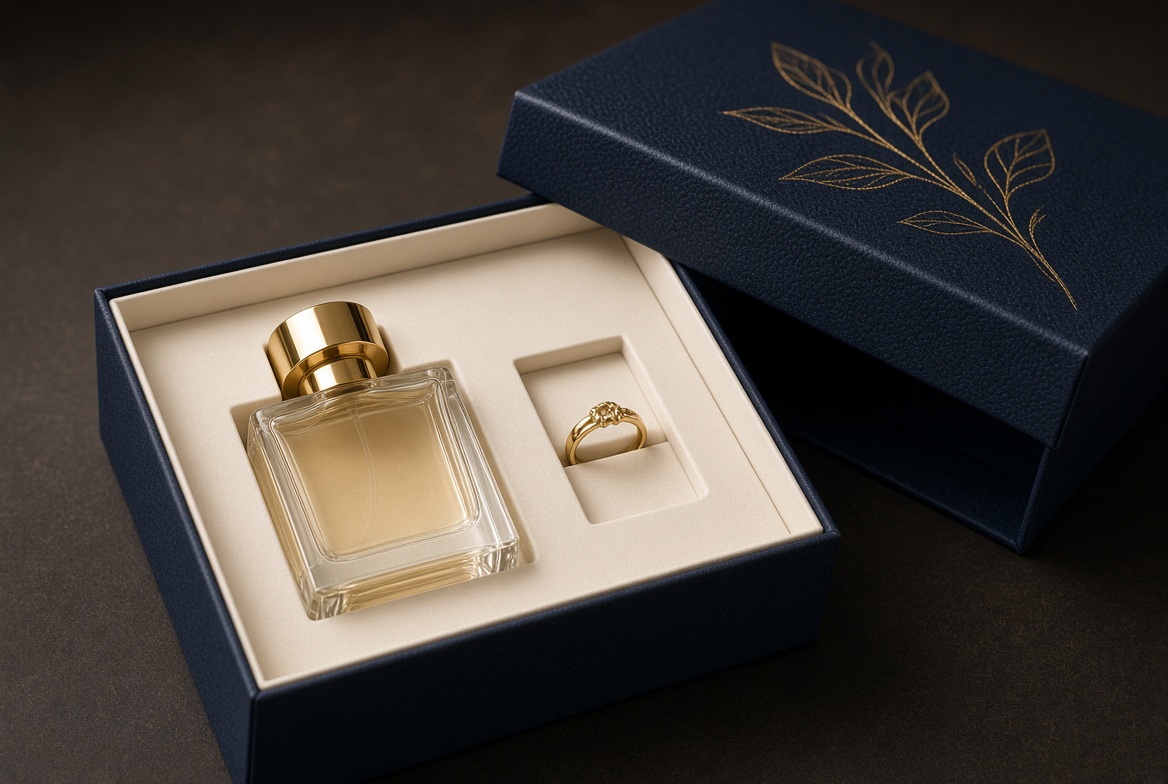
Magnetic closure boxes use concealed magnets to create a secure and satisfying closing action. They can be made as fully assembled rigid boxes or as collapsible rigid boxes that ship flat and are formed before use.
These boxes are especially effective when a brand wants a refined opening-and-closing experience. The magnetic click is small, but it adds a sense of care and permanence.
Common uses include:
- Luxury apparel
- Cosmetic gift sets
- Corporate presentation kits
- Premium wine and spirits accessories
- High-end electronic products
- Influencer and media mailers
- Holiday gift collections
Collapsible magnetic boxes can reduce freight and storage volume compared with traditional permanently assembled rigid boxes. The trade-off is that the construction, magnets, adhesive areas, and assembly instructions need to be engineered carefully.
A drawer box, also known as a slide box or matchbox-style rigid box, has an outer sleeve and an inner tray that slides out. This motion creates a controlled reveal, making it well suited to products that benefit from storytelling and presentation.
Drawer boxes are popular for:
- Jewelry
- Premium cosmetics
- Chocolates and confectionery
- Gift cards and voucher sets
- Technology accessories
- Small fashion items
- Brand sample kits
The outer sleeve provides a strong branding area, while the inner tray can hold a molded pulp insert, EVA foam, paperboard divider, velvet-like lining, ribbon pull, or printed message card.
In our experience, drawer boxes work best when the sliding resistance is carefully controlled. A tray that is too loose feels inexpensive; one that is too tight frustrates the customer. The product weight, tray depth, wrap thickness, and insert design all affect performance.
Display boxes are built to present products at the point of sale. They may include a header card, open front, perforated tear-away section, internal dividers, or countertop footprint.
This box type is less about long-term storage and more about helping products get noticed in a competitive retail environment.
A custom display box can be used for:
- Snacks and confectionery
- Cosmetics and lip products
- Small tools and accessories
- Countertop impulse products
- Seasonal promotions
- Retail sampling programs
- Multi-unit product displays
The best display packaging balances brand visibility with practical replenishment. Retail staff should be able to open, stock, and maintain it quickly. Clear product identification, easy tear-away panels, stable construction, and a compact footprint are often more valuable than overly complex decoration.
The strongest packaging projects begin with the right questions. Instead of selecting a box style based only on appearance, evaluate the complete product journey.
A lightweight soap bar may only need a folding carton. A glass bottle, ceramic product, or premium electronic device may need a rigid box with a fitted insert and a corrugated outer carton.
As a practical rule, paperboard is generally suitable for lightweight retail items, while corrugated packaging becomes increasingly important as product weight, fragility, and transport risk rise.
Ask whether the box is seen by the buyer:
- Before purchase on a retail shelf
- At home after an online delivery
- During a gift-opening moment
- Only inside a shipping carton
- During a corporate presentation or event
If the packaging is part of the customer's first impression, allocate budget to structure, printing, finish, and interior presentation. If it is only for warehouse transport, prioritize protection and logistics efficiency.
A high-quality outer box cannot fully compensate for a poorly designed interior. The insert should hold the product securely, prevent damage, and guide the opening experience.
Common insert choices include:
- Paperboard inserts for an economical, recyclable approach
- Molded pulp inserts for protective fiber-based packaging
- EVA foam for a premium, secure product fit
- Paper dividers for multi-piece gift sets
- Tissue paper and ribbons for softer presentation
- Satin or fabric lining for luxury categories
A useful principle is simple: the product should not rattle, shift, or look lost inside the box.
Premium set-up boxes have substantial visual appeal, but their fully assembled shape can consume more freight volume. Folding cartons and collapsible rigid boxes can be more efficient for international shipments because they can be transported flat.
The right solution is rarely the most expensive box. It is the one that creates the desired customer experience while controlling total landed cost.
| Your priority | Recommended box type | Why it fits |
|---|---|---|
| Low-cost retail packaging | Folding carton or tuck-end box | Lightweight, printable, ships flat |
| Fast manual packing | Auto-lock bottom box | Quick assembly and stable base |
| Heavy or fragile transport | Corrugated shipping box | Better cushioning and compression resistance |
| E-commerce brand experience | Corrugated mailer box | Protective and highly brandable |
| Luxury gifting | Rigid lid-and-base box | Premium feel and strong presentation |
| Premium reusable packaging | Magnetic closure box | Refined opening experience and perceived value |
| Product reveal and storytelling | Drawer box | Controlled sliding reveal and insert flexibility |
| Retail shelf promotion | Display box | Improves visibility and product access |
Even a visually attractive box can underperform when basic packaging decisions are overlooked.
- Choosing material based only on price instead of shipping conditions
- Designing a box before confirming the exact product dimensions
- Ignoring the need for inserts, dividers, or protective void fill
- Using a luxury rigid box as the only protection for parcel shipping
- Overloading the design with too many finishes or messages
- Forgetting barcode placement, regulatory text, or country-of-origin information
- Skipping physical samples and relying only on digital artwork
- Selecting an oversized box that increases material and freight costs
- Not accounting for product changes, such as a new bottle shape or accessory
- Treating the exterior design as more important than the opening experience
The sample stage is where these risks should be discovered. A physical prototype lets your team check size, color, structure, insert fit, closure strength, and overall tactile quality before full-scale production.
A smoother packaging project follows a clear sequence.
1. Share the product specifications. Provide dimensions, weight, photos, fragility level, accessories, and target market.
2. Define the packaging objective. Decide whether the priority is retail display, gift presentation, e-commerce delivery, export protection, or a combination.
3. Select structure and material. Choose between folding carton, corrugated, rigid board, or a multi-layer packaging system.
4. Develop the box dimensions and insert. Build the internal layout around the actual product rather than estimating from an image.
5. Prepare artwork and finishes. Confirm logo position, colors, typography, surface finish, foil, embossing, spot UV, and other details.
6. Review a physical sample. Test appearance, assembly, product fit, closure, and handling before approving production.
7. Plan packing and delivery. Confirm carton quantity, pallet requirements, shipment method, and flat-pack or assembled delivery format.
This process reduces costly surprises and helps ensure that the final box works equally well in the factory, during transport, and in front of the customer.
Every product deserves packaging that fits its weight, value, sales channel, and brand story. A folding carton may be the most efficient choice for a lightweight retail item. A corrugated mailer may be essential for an online subscription box. A rigid magnetic gift box may be the better choice when the packaging itself must communicate quality before the product is even touched.
Maituohong Packaging develops custom paper packaging solutions for brands that need more than a standard box. With over 18 years of experience in high-quality rigid gift boxes and paper packaging production, we can help you select the right structure, material, insert, finish, and packing method for your project.
Send us your product dimensions, quantity, artwork, and packaging goals to request a tailored box recommendation and sample plan.
A folding carton is made from thinner paperboard and is supplied flat for assembly. A rigid box uses thick chipboard or greyboard wrapped in decorative material, so it holds its shape and delivers a more premium presentation. Folding cartons are generally more space-efficient, while rigid boxes are often chosen for luxury products and gifts.
A corrugated mailer box or corrugated shipping carton is usually best for e-commerce shipping because corrugated board provides stronger protection against handling and transit impact. For fragile products, add an insert, cushioning material, and an outer shipping carton when necessary.
Rigid boxes are excellent for presentation, but they are not always sufficient as the only transport layer. For international shipping, place the rigid box inside a properly sized corrugated outer carton and use suitable protective material to prevent movement and corner damage.
Provide the product dimensions, weight, desired box style, quantity, material preference, printing requirements, surface finishes, insert needs, target delivery country, and any artwork or reference images. If the product is fragile or unusually shaped, share product photos or a physical sample when possible.
Traditional rigid boxes are normally delivered fully assembled. However, collapsible rigid boxes can be designed to ship flat and then be formed into shape before packing. This can reduce storage and freight volume while retaining a premium appearance.
The best insert depends on the product and desired brand feel. Paperboard inserts are versatile and fiber-based; molded pulp can provide protective support; EVA foam gives a secure premium fit; fabric-lined or velvet-like inserts are often used for jewelry and luxury accessories. The product should fit firmly without excessive pressure or movement.
Use a well-proportioned rigid structure, high-quality wrap paper, precise printing, clean wrapped edges, a fitted insert, and carefully selected finishes such as foil stamping, embossing, debossing, textured paper, or spot UV. Luxury comes from consistency and detail, not from adding every available finish.
1. [Tycoon Packaging — 10 Different Types of Boxes: A Complete Guide]
2. [QinPrinting — Paperboard vs. Corrugated vs. Rigid Boxes]
3. [PakFactory — Rigid Box Packaging: The Master Guide]
4. [Shorr Packaging — The Ultimate Guide to Corrugated Boxes]
5. [GMS Industries — What Is a Corrugated Box: Types, Uses and Benefits]
6. [The Boxery — The Top 3 Types of Cardboard Boxes Explained]
7. [Huarong Packaging — Luxury Rigid Gift Boxes]
8. [Maituohong Packaging — Custom Gift Box and Paper Packaging Manufacturer]


