
Views: 241 Author: Maituohong Packaging Publish Time: 2026-09-13 Origin: Site


Content Menu
● Why Minimalist Christmas Packaging Feels More Premium
● What Makes a Christmas Gift Box Minimalist?
● 10 Minimalist Christmas Packaging Ideas for Brands
>> 1. Matte White Rigid Boxes With One Foil Detail
>> 2. Kraft Christmas Gift Boxes With Natural Texture
>> 3. Deep Green Boxes With Blind Embossing
>> 4. Monochrome Christmas Packaging
>> 5. A Single Winter Botanical Illustration
>> 6. Custom Sleeves for Flexible Seasonal Campaigns
>> 7. Minimalist Magnetic Closure Gift Boxes
>> 8. Seasonal Belly Bands Instead of Full Printing
>> 9. Personalized Name Tags and Gift Messages
>> 10. Reusable Rigid Boxes With a Second Life
● Choosing the Right Box Structure
● A Practical Design Process for Holiday Packaging
>> Step 1: Define the Gift Experience
>> Step 2: Build a Focused Visual Direction
>> Step 3: Match Materials to the Desired Feel
>> Step 4: Test the Unboxing Before Production
● Expert Guidance: Premium Does Not Mean Excessive
● Create Your Custom Christmas Rigid Boxes
>> What is minimalist Christmas packaging?
>> Which colors work best for minimalist Christmas gift boxes?
>> Are rigid boxes suitable for Christmas gift sets?
>> How can I make Christmas packaging more recyclable?
>> What is the best finish for a luxury Christmas box?
>> Should I choose a magnetic box or a lid-and-base box?
>> Can I use one box design for Christmas and the rest of the year?
>> What information should I prepare before requesting a custom box quote?
Minimalist Christmas packaging is one of the most effective ways for brands to make holiday gifts look premium, intentional, and memorable. Rather than relying on crowded graphics, glitter, or excessive decoration, a well-designed minimalist Christmas gift box uses quality materials, disciplined color choices, tactile finishes, and a few meaningful details to create a stronger unboxing experience.
For businesses selling cosmetics, candles, apparel, confectionery, wine, accessories, corporate gifts, and seasonal product sets, the right custom Christmas packaging does more than protect the product. It communicates brand quality before the customer opens the box. At Maituohong Packaging, our team has spent more than 18 years designing and manufacturing rigid boxes and paper packaging solutions, and we have seen a consistent pattern: restrained design often creates the most luxurious result.
This guide shares practical minimalist Christmas packaging ideas, material recommendations, production considerations, and expert guidance for building custom holiday gift boxes that look festive without looking busy.
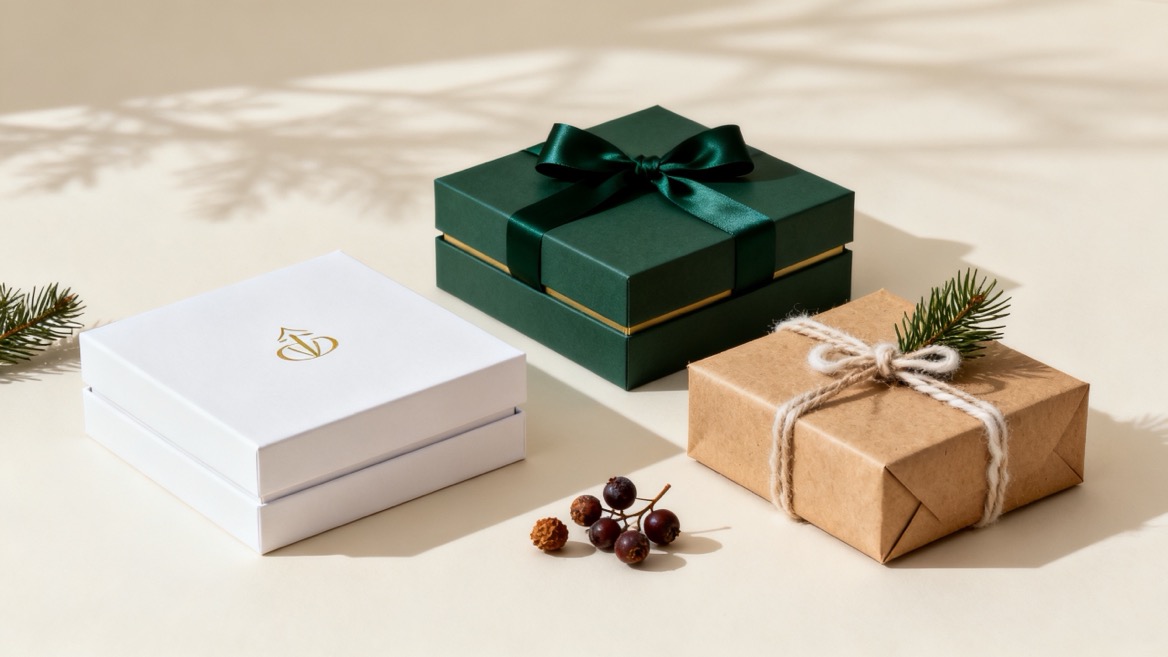
Minimalism is not the absence of design. It is the careful removal of anything that does not add value.
During the Christmas season, consumers see an enormous amount of visual stimulation: red-and-green graphics, snowflakes, metallic patterns, character illustrations, promotional stickers, and discount messaging. A calm, refined package can stand apart precisely because it does not compete for attention in the same way.
A minimalist packaging concept usually focuses on four elements:
- A clear brand mark placed with confidence
- One primary color palette rather than many competing colors
- Tactile materials or finishes that customers can feel
- A small festive cue, such as a ribbon, embossed snowflake, winter botanical illustration, or short seasonal message
The result can feel more expensive than a heavily printed alternative. A matte white rigid box with a blind-embossed logo and a deep green ribbon, for example, can communicate luxury more effectively than a box covered with holiday artwork.
Minimalist packaging also gives brands more flexibility. The same structural box can work across several product lines, while the sleeve, belly band, ribbon, insert card, or label changes for Christmas. This approach helps create a seasonal identity without requiring a completely new packaging structure for every campaign.
A minimalist Christmas gift box should be easy to understand at first glance. Customers should immediately recognize the brand, sense the product category, and feel that the package has been made with care.
The strongest designs tend to follow a "less but better" principle.
| Design Element | Minimalist Approach | Overdesigned Alternative |
|---|---|---|
| Color | One to three coordinated colors | Multiple bright colors competing for attention |
| Branding | Centered logo, subtle monogram, or small foil stamp | Large logos repeated across every panel |
| Graphics | One illustration, icon, or pattern | Dense seasonal illustrations and background patterns |
| Finishing | Embossing, debossing, matte lamination, soft-touch paper | Several unrelated effects used together |
| Ribbon | One premium ribbon or paper band | Large plastic bows and layered decorative accessories |
| Message | “A Little Holiday Joy” or “Made for Gifting” | Several slogans, offers, and promotional claims |
Minimalism does not require a plain white box. It can be warm, colorful, festive, and highly branded. The key is visual hierarchy. One design feature should lead, while the remaining elements support it.
For example, a premium chocolate brand may use a charcoal-grey rigid box, a small gold foil logo, and a single red satin ribbon. A natural skincare brand may choose uncoated kraft paper, dark green ink, a botanical pine illustration, and a recyclable paper seal. Both concepts can feel seasonal and sophisticated without becoming visually crowded.
A matte white rigid box is a classic starting point for luxury Christmas packaging. White feels clean, winter-inspired, and adaptable across many industries.
Use a single foil color to create contrast:
- Gold foil for classic luxury
- Silver foil for a cool winter look
- Copper foil for warmth and craft appeal
- Red foil for a modern festive accent
- Green foil for natural or botanical brands
Keep the artwork limited to the logo, a monogram, a short greeting, or a delicate seasonal icon. A tiny foil star, snowflake, or pine branch can be enough.
For a high-end result, consider a lid-and-base rigid box with a snug fit and a coordinated tissue-paper interior. This structure works especially well for jewelry, premium beauty products, small leather goods, candles, and curated gift sets.
Kraft paper packaging is ideal for brands that want a warm, natural, handmade, or environmentally conscious appearance. Its visible fiber texture brings character without requiring elaborate printing.
A minimalist kraft Christmas box can include:
- Black, dark green, white, or deep red one-color printing
- A simple logo stamp or line illustration
- Cotton twine, paper ribbon, or fabric ribbon
- A small holiday gift tag
- Tissue paper in cream, forest green, or muted red
- A reusable cotton pouch inside the box
This concept is particularly suitable for handmade food, organic skincare, tea, candles, artisan accessories, and corporate gifts with a rustic theme.
However, material choices should match the brand's actual sustainability goals. If recyclability is important, avoid adding plastic windows, glitter coatings, difficult-to-separate decorations, or unnecessary mixed materials. A paper-based box, paper insert, water-based ink system, and paper closure can make disposal simpler for the end user.
Deep green is a highly versatile holiday color. It feels festive, but it is less predictable than bright Christmas red. It also works well with luxury, wellness, beauty, food, and lifestyle products.
A deep green custom rigid box can look exceptional with:
- Blind embossing for a subtle logo
- Debossed botanical line art
- Gold foil only on the brand name
- A cream-colored inner tray
- A dark green or natural cotton ribbon
- A simple "Seasonal Edition" message inside the lid
Blind embossing is especially effective because it creates visual interest through light and shadow rather than extra colors. When customers run their fingers over the logo, they experience the quality of the paperboard and finishing process directly.
This is one of the most understated ways to create a tactile, premium unboxing experience.
Christmas packaging does not need to use traditional holiday colors. A monochrome concept can be modern, editorial, and highly recognizable.
Possible monochrome directions include:
- Black box with black gloss varnish logo
- Cream box with warm beige printing
- Navy blue box with silver details
- Burgundy box with tonal embossed artwork
- Grey box with charcoal graphics
- Pale green box with darker green branding
A monochrome design works best when the materials have contrast. For example, pair a matte box surface with glossy spot UV details, or combine a smooth wrap paper with a textured ribbon.
Use this direction when your brand identity is already minimal and contemporary. It is especially suited to luxury accessories, fragrance, fashion, technology, and premium corporate gifting.
Instead of covering a package in Christmas icons, use one botanical element as the visual signature.
Good options include:
- Pine branches
- Holly leaves
- Mistletoe
- Cedar sprigs
- Winter berries
- Rosemary
- Eucalyptus
- A small star anise illustration for food and beverage gifts
Place the illustration in one corner, wrap it gently around the logo, or print it inside the lid as a hidden detail. A simple line drawing can feel far more refined than a fully illustrated festive scene.
This approach also creates a strong opportunity for brand storytelling. A tea brand may use rosemary and star anise. A skincare brand may use cedar or eucalyptus. A confectionery brand may use cocoa leaves or cinnamon. The packaging then reflects both the season and the product itself.
A custom sleeve is one of the most practical Christmas packaging solutions for brands that already use standard rigid boxes. Rather than changing the entire box design, add a printed sleeve that slides over the box.
The sleeve can contain:
- Christmas campaign artwork
- A short seasonal message
- Product information
- Gift-set contents
- A QR code that leads to a holiday landing page
- A gift note area
- Limited-edition collection details
This format is useful because it reduces the need for multiple full-box versions. After the holiday season, the underlying box can continue to be used for regular products.
For a clean result, keep the sleeve design simple. Use one strong front panel, leave breathing space around the logo, and avoid placing too much copy on every side.
Magnetic closure rigid boxes are popular for premium Christmas gift sets because opening the box creates a sense of occasion. They are commonly used for cosmetics, wine accessories, apparel, corporate gifts, candles, and multi-product kits.
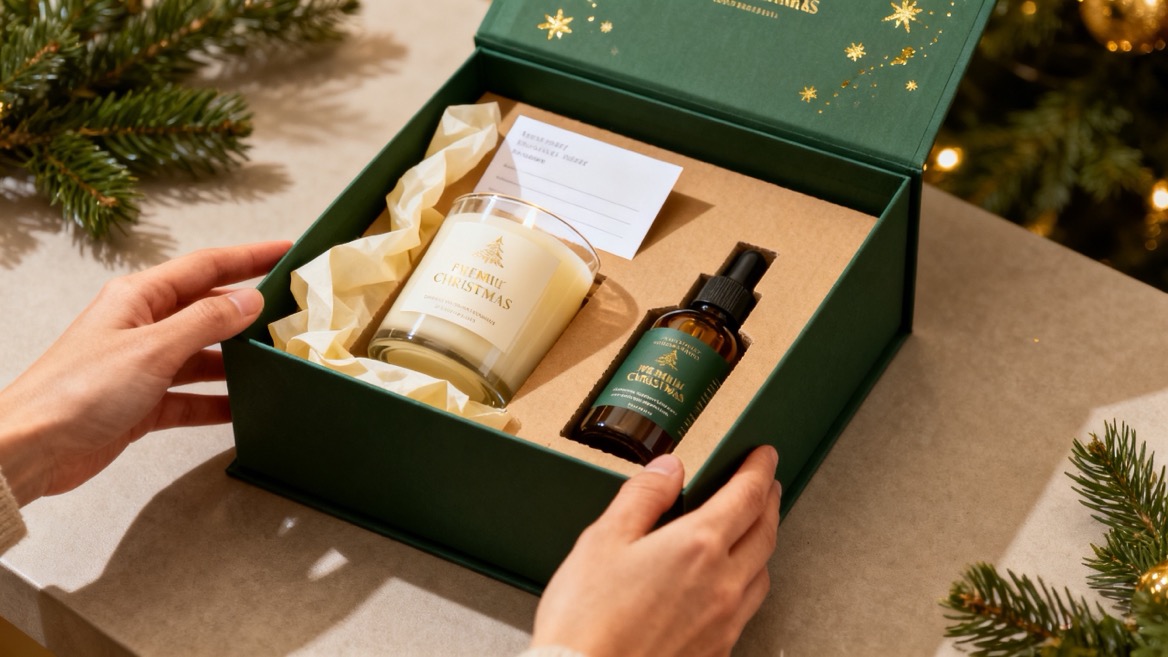
To keep a magnetic box minimalist, focus on the experience inside:
- Print a concise greeting under the lid
- Use a custom paperboard insert to hold each item securely
- Add branded tissue paper or a thin fabric liner
- Include a personalized gift card
- Use a ribbon pull tab only where it improves usability
- Keep exterior artwork restrained
A well-designed insert is essential. Products should not move during shipping, but the unboxing should also feel effortless. The insert should support the product shape, create a clean presentation, and make each item easy to remove.
For fragile products, consider layered protection: a fitted insert, tissue paper, and an outer shipping carton sized to reduce empty space.
A belly band is a narrow strip of paper that wraps around a box. It is a cost-effective way to introduce a Christmas theme without redesigning the entire package.
A minimalist belly band can include a logo, a seasonal color block, a short message, or a small illustration. Because it covers only part of the box, it creates contrast and directs the customer's eye to a single focal point.
This format is useful for:
- Subscription boxes
- Bakery and confectionery packaging
- Candle collections
- Beauty sets
- Corporate thank-you gifts
- Product bundles
- Retail-ready seasonal promotions
For a premium look, use a heavier uncoated paper stock, a textured specialty paper, or a subtle foil detail. If the underlying box is reusable, the customer can remove the belly band and keep the box for storage.
Personalization can make simple packaging feel highly considered. Instead of adding more decorative graphics, add the customer's name, the recipient's name, or a short message.
Examples include:
- "A Holiday Gift for Emma"
- "With Thanks From Our Team"
- "Made to Share"
- "Open for a Little Joy"
- "A Winter Ritual, Just for You"
- "From Our Studio to Your Home"
Personalized elements can be printed on a gift tag, applied as a digital label, inserted as a card, or integrated into a short-run printed sleeve.
For B2B brands, this approach is especially valuable for corporate gifting. A company can place its logo on the outer packaging while using a tasteful insert card to recognize the recipient. The package remains premium rather than promotional.
The most memorable gift packaging often stays with the customer after the product has been used. A sturdy rigid box can become a storage box for accessories, stationery, photos, cosmetics, tea, cables, or small household items.
To encourage reuse, choose a box structure that feels durable and functional:
- Magnetic closure boxes
- Drawer-style rigid boxes
- Lift-off lid boxes
- Collapsible magnetic boxes
- Rigid boxes with fabric pulls
- Round hat boxes for specialty gifts
Use a timeless design rather than a heavily dated Christmas theme. A small seasonal sleeve or removable tag lets the core box stay relevant throughout the year.
This strategy may also improve perceived value. Customers are more likely to view the packaging as part of the gift, not as disposable material.
The best box style depends on your product dimensions, fragility, fulfillment method, order quantity, and target price point.
| Box Structure | Best For | Key Benefit |
|---|---|---|
| Lid-and-base rigid box | Jewelry, cosmetics, candles, confectionery | Classic luxury presentation |
| Magnetic closure box | Gift sets, apparel, corporate gifts | Premium opening experience |
| Drawer box | Small accessories, tea, skincare, electronics | Elegant reveal and easy organization |
| Collapsible rigid box | E-commerce and larger gift sets | Saves storage and shipping space |
| Shoulder-neck rigid box | Fragrance, premium food, luxury retail | Strong structure with a refined reveal |
| Round rigid box | Flowers, candles, specialty products | Distinctive and reusable format |
When selecting a structure, do not begin with decoration. Begin with the product.
Measure the product, accessories, protective material, and necessary clearance. Then decide whether the customer should lift a lid, pull a drawer, unfold a magnetic panel, or open a sleeve. The opening action should suit the product category and brand personality.
A premium fragrance set may benefit from a shoulder-neck box with a slow reveal. A holiday bakery assortment may need a lid-and-base box with a food-safe insert. A corporate gift kit may work best in a magnetic closure box with separate compartments.
Creating a successful Christmas packaging project requires more than selecting colors and uploading a logo. The best results come from a clear production plan.
Ask the following questions before beginning the artwork:
- Who will receive the package?
- Is the product being purchased as a gift, a personal treat, or a corporate item?
- What should the customer feel when opening it?
- Is the package intended for retail shelves, e-commerce shipping, or both?
- Will customers keep and reuse the box?
- Does the design need to work across multiple product sizes?
A luxury customer may value subtle finishing and a smooth opening experience. A corporate buyer may prioritize brand consistency, reliable delivery, and easy personalization. An e-commerce business may need protective inserts and efficient shipping dimensions.
Choose one central creative idea. It may be "winter forest," "quiet luxury," "modern Nordic," "natural craft," "midnight celebration," or "warm family tradition."
Then define:
- One primary color
- One accent color
- One main finishing technique
- One seasonal graphic or visual motif
- One short message
This discipline prevents the design from becoming fragmented. If every element is "special," no element feels special.
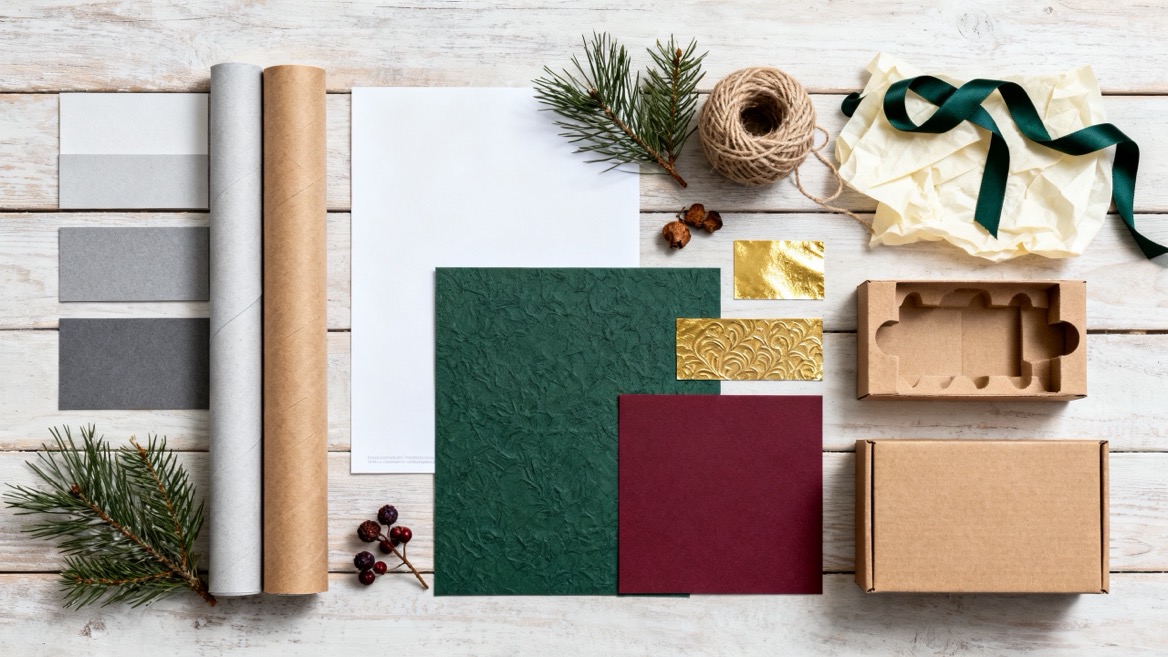
Paper, board thickness, wrap paper, printing technique, and finishing all affect how customers judge quality.
For a luxury minimalist look, consider:
- Greyboard rigid construction for strength
- Premium coated or uncoated wrap paper
- Soft-touch lamination for a velvet-like surface
- Matte lamination for a calm modern finish
- Foil stamping for controlled highlights
- Embossing or debossing for texture
- Spot UV for subtle contrast
- Custom EVA foam, paperboard, pulp, or fabric inserts based on product needs
For a more natural feel, use uncoated paper, kraft paper, visible fibers, and simple one-color printing. For modern luxury, use smooth matte paper with precise foil and clean typography.
Before placing a large order, request a physical sample. A digital artwork file cannot show every practical issue.
Check the sample for:
- Lid tightness and opening comfort
- Alignment of logos, foil, and embossing
- Strength of corners and edges
- Product fit inside the insert
- Color consistency under different lighting
- Ribbon quality and attachment
- Durability during shipping
- Ease of assembly for fulfillment teams
- Recyclability and material separation where relevant
A sample also gives your sales, retail, fulfillment, and marketing teams an opportunity to identify issues before mass production.
From a manufacturing perspective, one of the most common design mistakes is treating every available finishing option as a requirement. Foil, embossing, ribbons, inserts, specialty paper, patterns, laminations, and multiple colors can all be valuable. But when combined without a clear hierarchy, they can increase cost while reducing visual impact.
A better approach is to invest in the details customers actually notice:
- A rigid box that closes cleanly
- Corners that stay sharp
- A logo placed with precision
- A finish that feels pleasant in the hand
- An insert that presents products neatly
- A message that feels personal
- Packaging that arrives in good condition
These details build trust. They also help brands deliver a premium experience even when the overall design is simple.
Minimalist Christmas packaging is therefore not a shortcut. It requires more attention to proportion, material selection, print quality, and construction because there are fewer elements available to hide production imperfections.
A well-made holiday box can turn a product into a gift, a delivery into an experience, and a one-time purchase into a lasting brand memory.
Maituohong Packaging designs and manufactures custom rigid boxes, magnetic gift boxes, drawer boxes, lid-and-base boxes, paper inserts, and tailored paper packaging solutions for brands around the world. With more than 18 years of experience in premium paper packaging production, our team can help you move from an early concept to a production-ready Christmas packaging solution.
Whether you need a minimalist luxury box, recyclable paper packaging, a branded holiday sleeve, or a complete gift-set presentation, share your product size, quantity, target market, and design idea with us. We will help you choose the right structure, materials, finishes, and inserts for a Christmas packaging experience that feels distinctly yours.
Minimalist Christmas packaging uses clean layouts, limited colors, refined materials, and a small number of festive details. Instead of relying on busy graphics, it uses elements such as embossing, foil stamping, ribbons, textured paper, or a single winter illustration to create a premium seasonal appearance.
White, cream, kraft brown, deep green, burgundy, navy, charcoal, black, and muted metallic tones all work well. Select colors that match your brand identity, then add only one or two seasonal accents. Deep green with gold, cream with red, and kraft with dark green are popular combinations.
Yes. Rigid boxes are highly suitable for holiday gift sets because they are sturdy, premium-looking, and customizable. They can include magnetic closures, lift-off lids, drawers, tissue paper, ribbons, dividers, and custom inserts for multiple products.
Use paper-based boxes and inserts, avoid plastic windows and glitter coatings, limit mixed materials, choose recyclable or easily removable decorative elements, and provide clear disposal guidance when appropriate. Confirm material details with your packaging supplier before making environmental claims.
There is no single best finish, but popular luxury options include matte lamination, soft-touch lamination, foil stamping, embossing, debossing, and spot UV. For a minimalist concept, select one primary finishing technique and use it carefully.
Choose a magnetic box for large gift sets, apparel, corporate gifts, or products that benefit from a dramatic opening experience. Choose a lid-and-base box for classic luxury presentation, compact products, confectionery, beauty items, and projects where a more traditional box structure is preferred.
Yes. Use a timeless rigid box as the main packaging, then add seasonal elements such as a sleeve, belly band, ribbon, sticker, gift tag, or insert card. This reduces redesign costs and allows the base box to remain useful after the holiday campaign.
Prepare your product dimensions, product weight, product photos, desired box style, estimated quantity, target market, artwork files if available, preferred materials or finishes, and delivery deadline. If you need an insert, provide the dimensions and number of items that must fit inside the box.
- [MDPI Applied Sciences — Eco-Friendly Design for Sustainable Gift Packaging]
- [State of Matter — Sustainable Holiday Packaging Ideas]
- [99designs — Christmas Packaging Design Inspiration]
- [Tycoon Packaging — Minimalist Christmas Packaging Ideas: The Best Seasonal Guide]


