
Views: 238 Author: Maituohong Packaging Publish Time: 2026-09-17 Origin: Site


Content Menu
● Paper Bags vs. Plastic Bags at a Glance
● What Are Paper Shopping Bags Made Of?
● What Are Plastic Bags Made Of?
● Environmental Differences Between Paper Bags and Plastic Bags
>> Paper Bags: Environmental Advantages
>> Paper Bags: Environmental Limitations
>> Plastic Bags: Environmental Advantages
>> Plastic Bags: Environmental Limitations
● Durability and Load Capacity Comparison
>> What Makes a Paper Bag Strong?
>> Where Plastic Bags Perform Better
● Branding and Customer Experience Differences
>> Why Paper Bags Support Premium Branding
>> When Plastic Bags May Be Appropriate
● Cost Differences Between Paper Bags and Plastic Bags
● How to Choose Between Paper and Plastic Bags
>> Choose Paper Bags When You Need:
>> Choose Plastic Bags When You Need:
>> Choose a Hybrid Approach When Necessary
● Expert Recommendations for Better Paper Bag Design
>> 3. Select Responsible Paper Materials
>> 4. Match the Handle to the Product Weight
>> 5. Give Customers Clear Disposal Guidance
● Final Thoughts: Which Is Better?
>> Are paper bags more environmentally friendly than plastic bags?
>> Are paper bags stronger than plastic bags?
>> Can paper shopping bags be recycled?
>> Why do luxury brands use paper bags?
>> Are plastic bags recyclable?
>> What is the best paper for custom shopping bags?
>> How can brands make paper bags more durable?
When brands compare paper bags and plastic bags, the right choice is rarely as simple as "paper is good and plastic is bad." Each option has different strengths in appearance, durability, cost, resource use, recycling pathways, customer perception, and suitability for specific retail applications.
After more than 18 years working with custom paper packaging, gift boxes, and paper shopping bags, our team has seen a clear shift: businesses increasingly want packaging that protects products, supports a premium brand image, and fits their practical waste-reduction goals. For many retailers, paper shopping bags offer a stronger long-term branding opportunity—but only when the bag is properly specified, responsibly sourced, and designed for actual customer use.
This guide explains the major differences between paper bags and plastic bags, helping retailers, wholesalers, restaurants, fashion brands, and e-commerce sellers choose the right packaging solution.

The following table provides a practical comparison between standard paper shopping bags and common plastic carrier bags.
| Comparison Factor | Paper Bags | Plastic Bags |
|---|---|---|
| Main material | Kraft paper, coated paper, art paper, recycled paper, specialty paper | HDPE, LDPE, PP, or other polymer materials |
| Brand appearance | Premium, natural, tactile, highly printable | Functional, often lower perceived value |
| Custom printing | Excellent for logos, colors, foil stamping, embossing, and finishes | Possible, but usually less refined for premium retail presentation |
| Load-bearing performance | Strong when made with suitable paper weight, handles, and reinforced bottoms | Often strong relative to their low material weight |
| Moisture resistance | Limited without coating or special treatment | Generally high moisture resistance |
| Recyclability | Widely recyclable when clean and made from compatible materials | Technically recyclable in some systems, but collection and sorting vary greatly |
| Decomposition | Can break down more readily in suitable conditions | Persists much longer if discarded into the environment |
| Resource intensity | May require more water, energy, and material weight during production | Often uses less material and may have lower production impacts per single lightweight bag |
| Customer perception | Often associated with quality, sustainability, and gift-ready packaging | Often associated with convenience and low cost |
| Best for | Retail, fashion, cosmetics, gifts, food takeaway, events, premium products | Wet products, low-cost distribution, high-volume utility uses |
The key takeaway is this: plastic can be highly material-efficient, while paper can create stronger branding, recyclability, and end-of-life advantages when thoughtfully designed and reused.
Paper bags are made from paper-based materials, usually kraft paper, white kraft paper, coated paperboard, recycled paper, or specialty papers. The final bag structure can vary significantly according to its intended use.
For example, a lightweight bakery bag has very different requirements from a luxury jewelry shopping bag or a high-capacity apparel carrier bag.
Common paper bag components include:
- Bag body: Brown kraft, white kraft, coated paper, art paper, or recycled paper
- Handles: Twisted paper handles, flat paper handles, cotton rope, ribbon, PP rope, or die-cut handles
- Bottom reinforcement: Folded bottoms, cardboard inserts, or reinforced base boards
- Top reinforcement: Folded top edges or cardboard header cards
- Surface finishes: Matte lamination, gloss lamination, water-based coating, UV coating, foil stamping, embossing, and debossing
- Printing methods: Offset printing, flexographic printing, screen printing, and digital printing
A well-made custom paper shopping bag is not simply a disposable carrier. It can function as a mobile brand asset. Customers often carry it through malls, streets, offices, hotels, airports, and social settings, creating additional exposure beyond the original purchase.
Plastic bags are most commonly made from petroleum-based polymers. The most familiar types are HDPE, LDPE, and polypropylene.
High-density polyethylene bags are usually thin, lightweight, and economical. Grocery carrier bags and many supermarket bags use HDPE because it provides useful strength with very little material.
Typical characteristics include:
- Thin but relatively strong
- Resistant to moisture
- Low unit cost
- Suitable for high-volume distribution
- Often noisy or crinkly in texture
- Less suitable for a premium retail presentation
Low-density polyethylene bags are usually softer, smoother, and more flexible than HDPE bags. Retail apparel bags, mailing bags, and heavier plastic shopping bags may use LDPE.
They offer:
- Better flexibility
- Smooth surface feel
- Good moisture resistance
- Potential for reuse
- Higher material use than very thin HDPE bags
Polypropylene bags may be woven or non-woven. Reusable PP shopping bags are common in supermarkets, promotional campaigns, exhibitions, and bulk retail.
They can be durable, but their environmental performance depends heavily on how many times they are actually reused.
The environmental comparison between paper and plastic bags needs a full life-cycle perspective. Looking only at whether a bag is biodegradable, recyclable, or made from renewable materials can lead to an incomplete conclusion.
A full product assessment considers:
1. Raw material extraction
2. Material processing
3. Bag manufacturing
4. Printing and finishing
5. Shipping and distribution
6. Customer reuse
7. Waste collection
8. Recycling, composting, landfill, or littering
Life-cycle studies consistently show that lightweight plastic bags can require less material, energy, water, and transport weight than single-use paper bags. However, plastic creates a much more serious long-term problem when it escapes waste-management systems and enters streets, rivers, coastlines, or oceans. Research on bag alternatives also emphasizes that the number of times a bag is reused can substantially change its overall impact.
Paper bags have several important environmental benefits.
- Paper is generally made from renewable fiber sources.
- Paper bags can be produced with recycled fiber content.
- Clean paper bags are accepted in many paper-recycling systems.
- Paper is generally more likely to break down than conventional plastic when exposed to suitable environmental conditions.
- Paper packaging can support plastic-reduction programs.
- Natural kraft paper communicates a lower-plastic, more responsible brand position.
- A durable paper bag can be reused for shopping, storage, gift wrapping, or home organization.
Paper also has a major practical advantage in customer perception. In fashion, cosmetics, jewelry, specialty food, gift retail, and premium consumer products, paper packaging often aligns better with a high-value brand experience.
Paper is not impact-free. It is heavier than thin plastic, which can increase transport weight. Paper production can also require substantial water, energy, and processing chemicals, depending on the fiber source, pulp process, recycled content, and finishing method.
Some life-cycle comparisons have found that single-use paper bags can have higher production-stage impacts than lightweight HDPE bags in categories such as water use, energy use, and greenhouse-gas emissions. This does not mean paper bags are a poor choice in every situation. It means the bag should be designed for reuse, right-sized material use, efficient logistics, and compatible recycling rather than treated as a guilt-free disposable item.
Plastic bags have several functional and production-related advantages.
- They are extremely lightweight.
- They can use very little material per bag.
- They are moisture-resistant.
- They can carry goods effectively relative to their weight.
- They may require less fuel during transportation because of low mass.
- Some thicker plastic bags can be reused multiple times.
- They can be suitable for wet, frozen, greasy, or spill-prone products.
For a basic grocery carrier function, a thin plastic bag may have a lower manufacturing footprint than a heavier single-use paper bag. Studies comparing bag systems have repeatedly found that reuse is crucial, and that the light weight of HDPE can lead to lower impacts in several production-related categories.
The greatest weakness of conventional plastic bags is their persistence after disposal.
Plastic bags do not readily break down in the same way as uncoated paper. When improperly discarded, they can remain in the environment for extended periods, fragment into smaller pieces, affect wildlife, block drainage systems, and contribute to visible litter.
Marine litter research has identified plastics as a dominant share of litter found in European seas. Plastic bags are especially problematic because they are lightweight, easily windblown, and prone to escaping collection systems.
In addition, plastic bag recycling is often more complicated than consumers expect. A bag may be technically recyclable, but real-world recycling depends on local collection programs, film sorting systems, contamination levels, and whether consumers return the material to the correct collection point.
A common misconception is that plastic bags are always stronger than paper bags. In reality, strength depends on the full bag specification, not simply the base material.
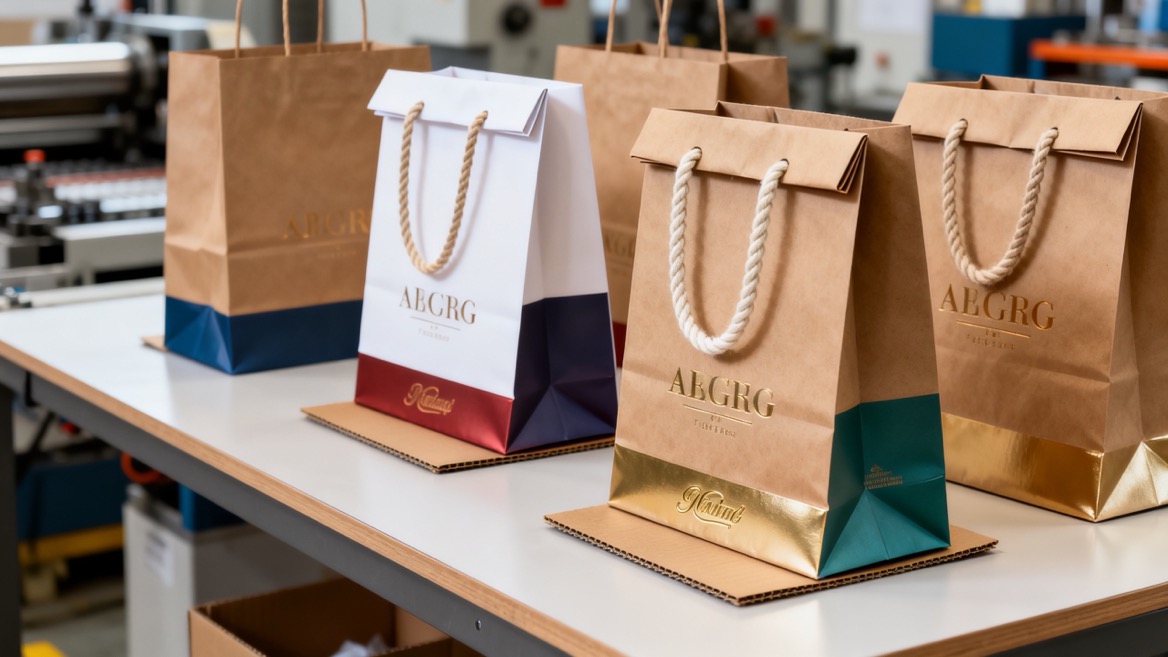
A carefully engineered paper shopping bag can carry substantial weight. Its performance depends on paper thickness, fiber quality, bag dimensions, handle construction, adhesive quality, fold structure, and bottom reinforcement.
For retail brands, the following details matter most:
- Paper weight: Higher GSM generally improves rigidity and carrying capacity
- Kraft fiber quality: Virgin kraft fibers often provide strong tear resistance
- Handle design: Twisted handles, flat handles, rope handles, and reinforced attachments all perform differently
- Bottom board: A bottom insert improves stability for boxed, glass, and heavier products
- Top fold: A reinforced top edge reduces tearing around the handle area
- Bag proportions: Narrow, tall bags and wide, shallow bags distribute weight differently
- Moisture exposure: Humidity and rain can reduce untreated paper strength
For example, a premium cosmetics retailer may use a white kraft paper bag with cotton rope handles, a cardboard bottom insert, and a reinforced folded top. This bag can support heavier gift sets while still creating a refined unboxing and carry experience.
Plastic is generally the better functional choice when products are wet, greasy, frozen, or likely to leak. It is also useful where bags require high moisture resistance and extremely low unit cost.
Typical applications include:
- Fresh meat and seafood packaging
- Frozen food distribution
- Wet umbrellas or swimwear
- Cleaning-product transport
- Lightweight grocery carrier bags
- High-volume promotional distribution
For these applications, a paper bag may require a water-resistant treatment, inner liner, or a different packaging system.
For many consumer-facing businesses, the decision is not only about carrying products. It is about the moment a customer leaves the store.
A paper bag often feels more deliberate, more giftable, and more premium. Customers may keep it, reuse it, photograph it, or carry it in public. This makes the bag part of the overall brand experience.
Paper offers a tactile surface that works particularly well with premium finishing techniques. It can be customized to reflect a brand's identity through color, texture, typography, and structural details.
Popular options include:
- Matte or uncoated kraft textures for natural brands
- White kraft paper for clean, minimal visual identities
- Full-color offset printing for fashion and cosmetics
- Hot foil logos for luxury packaging
- Embossed logos for understated premium branding
- Ribbon handles for gift packaging
- Die-cut handles for modern retail designs
- Spot UV details for high-contrast visual effects
A generic thin plastic bag may carry a logo, but it rarely provides the same sensory and visual value as a professionally designed paper shopping bag.
Plastic bags can still be appropriate when convenience and moisture protection are the primary needs. A value-focused retailer may prioritize very low packaging costs. A grocery retailer may need bags that perform well around condensation, cold products, or spills.
The best decision often comes from matching the bag to the product category rather than applying one material to every business situation.
Plastic bags typically have a lower unit cost, especially for thin, high-volume carrier bags. Paper bags may cost more because they use more material by weight and can involve more complex printing, handle assembly, reinforcement, and finishing.
However, unit price should not be the only comparison point.
A paper shopping bag may deliver additional commercial value through:
- Higher perceived product value
- Better retail presentation
- Stronger brand recall
- Potential for reuse and repeated visibility
- Better alignment with low-plastic packaging policies
- A more gift-ready customer experience
- Improved suitability for premium photography and social sharing
A brand selling a low-cost convenience item may prioritize plastic's cost efficiency. A premium apparel, fragrance, jewelry, or skincare brand may find that a custom paper bag supports a much higher perceived value than the difference in packaging cost.
The most practical choice depends on the product, sales channel, budget, customer expectations, and disposal environment.
Use this decision framework before placing an order.
- A premium retail appearance
- Strong logo visibility and print quality
- Gift-ready packaging
- A natural or low-plastic brand position
- Recyclable paper-based packaging where local systems support it
- High-quality handles and structural reinforcement
- Packaging for fashion, cosmetics, gifts, books, accessories, or specialty foods
- A bag customers are likely to reuse
- High moisture resistance
- Very low unit cost
- Lightweight distribution
- Packaging for wet or frozen products
- High-volume grocery or utility use
- Flexible film packaging
- Protection from rain, spills, and condensation
Some businesses can improve performance by using both materials strategically.
For instance:
- Use durable branded paper bags for primary retail purchases.
- Use compostable or recyclable protective inner packaging where suitable.
- Use moisture-resistant liners only for products that require them.
- Offer reusable bags for loyal customers or higher-value orders.
- Use right-sized packaging to avoid unnecessary material use.
The goal should be to reduce waste without compromising product protection, customer convenience, or brand value.
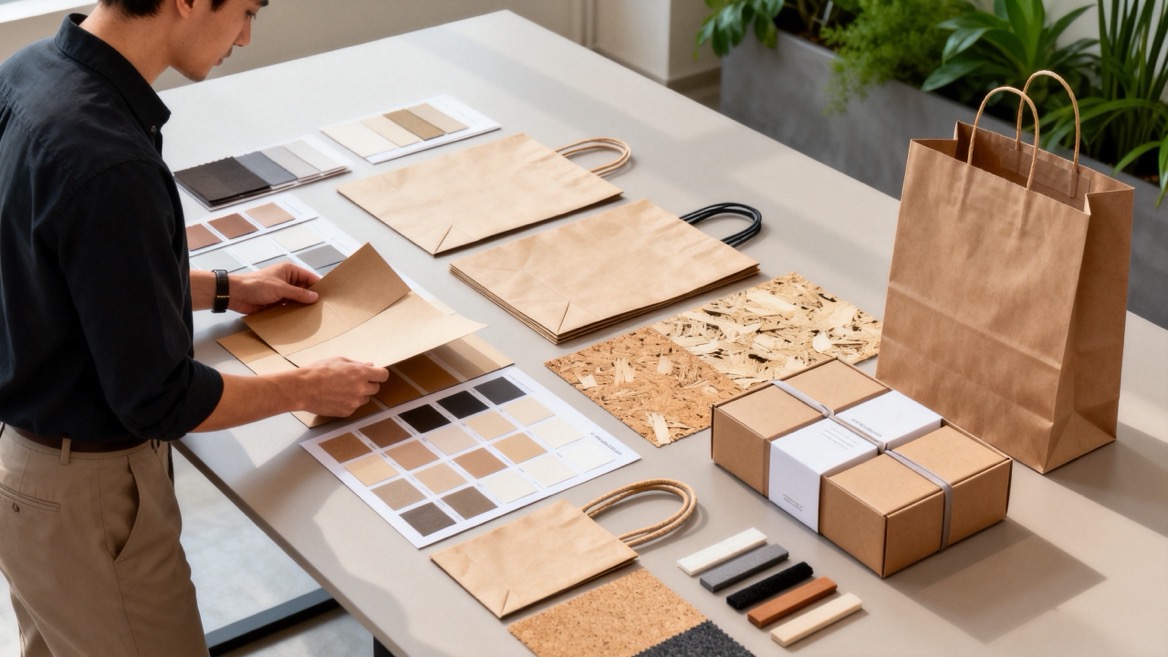
From a packaging manufacturer's perspective, the most sustainable paper bag is not simply the one with a "green" appearance. It is the bag that is used longer, made efficiently, and easy for customers to sort correctly after use.
Here are practical ways to improve paper shopping bag performance.
Choose stronger paper, reliable handle attachments, and a reinforced base when the customer is likely to carry multiple products.
A reusable paper bag creates more value per unit than a bag that tears after one trip.
Do not choose thick paper, oversized dimensions, unnecessary laminations, or decorative components unless they serve a real functional or brand purpose.
Right-sizing the bag reduces material use, shipping volume, and unnecessary cost.
Consider recycled fiber content, responsibly managed fiber sourcing, and uncoated or water-based finishing options where they fit the design requirement.
For brands that need certifications, request relevant material documentation from the packaging supplier before production.
Paper handles may work well for lightweight and medium-weight purchases. Rope handles, reinforced folds, and bottom boards are often better for premium products, gift boxes, bottles, or heavier retail orders.
A small printed instruction can help customers understand whether the bag should be reused, recycled, or separated from non-paper components.
For example: "Reuse this bag. Please remove non-paper accessories before recycling where accepted."
Neither paper bags nor plastic bags are automatically the best answer in every circumstance. The best bag is the one that fits the product, is used repeatedly when possible, and is handled responsibly at the end of its useful life.
Plastic bags can be material-efficient and highly practical, particularly for moisture-sensitive products. But their persistence in the environment and inconsistent collection systems remain major concerns. Paper bags often require more resources to manufacture, yet they can offer meaningful advantages in brand presentation, customer reuse, paper recycling, and reduced long-term litter risk when designed responsibly.
For retailers and product brands, paper shopping bags are often the stronger choice when packaging must communicate quality, support a premium customer experience, and reduce reliance on conventional single-use plastic.
Looking for custom paper shopping bags that balance strength, appearance, and practical material efficiency? Maituohong Packaging can help you develop tailored paper bag solutions with customized sizing, paper options, printing, handles, reinforcements, and premium finishes for your product category and brand identity.
It depends on how the bag is made, transported, reused, and disposed of. Paper bags can be recyclable and more likely to break down if littered, while lightweight plastic bags may use less material and energy during production. Reusing either type of bag is one of the most effective ways to improve its overall performance.
Not always. Strength depends on the bag's design. A reinforced kraft paper bag with strong handles and a bottom board can carry heavy retail products, while plastic generally performs better in wet conditions and can provide high strength at a low material weight.
Many clean, uncoated paper bags can be recycled through paper recycling programs. However, bags with heavy plastic lamination, mixed-material handles, food contamination, or metallic decorations may require different disposal handling depending on local facilities.
Luxury brands use paper bags because paper supports premium printing, tactile finishes, structured shapes, ribbon or rope handles, and gift-ready presentation. A high-quality paper bag can reinforce perceived product value and increase brand visibility after purchase.
Some plastic bags are recyclable, but recycling availability varies. Many flexible plastic films require separate store-drop-off collection rather than standard curbside recycling. Local guidance should always determine the correct disposal method.
Kraft paper is a popular choice because it offers a strong, natural appearance and good tear resistance. White kraft is suitable for clean and colorful designs, while coated paper may be preferred for detailed graphics and luxury finishes. The right paper weight depends on bag size, product weight, handle type, and desired appearance.
Brands can improve durability by using heavier paper, reinforced handle areas, folded tops, strong adhesive construction, bottom boards, and handle materials appropriate for the expected product weight. Testing sample bags with real products before mass production is highly recommended.
2. [United Nations Environment Programme — Single-Use Plastic Bags and Their Alternatives Report]
3. [European Commission — Study on the Life-Cycle Impact of Plastic Carrier Bags]
5. [Columbia Climate School — Plastic, Paper or Cotton: Which Shopping Bag Is Best?]
6. [OSPAR Commission — Scoping Study for Plastic Carrier Bags]
7. [Northern Ireland Assembly Research and Information Service — Carrier Bags: Environmental Impact]
8. [Shenzhen Maituohong Packaging Co., Ltd. — Company Overview]


