
Views: 269 Author: Maituohong Packaging Publish Time: 2026-09-18 Origin: Site


Content Menu
● What Are Small Box Dimensions?
● Why the Right Small Box Size Matters
>> Better control of parcel costs
>> Stronger protection with less empty space
>> More efficient material use
>> A more polished customer experience
● Common Small Mailer Box Sizes by Product Type
>> Small mailer boxes for cosmetics and skincare
>> Small shipping boxes for electronics
>> Small boxes for apparel and accessories
>> Small boxes for candles, mugs, and gift products
● How to Measure a Product for a Small Shipping Box
● Internal vs External Dimensions: The Most Common Source of Errors
● Choosing Between Mailer Boxes and Shipping Boxes
● How Box Size Affects Shipping Charges
● Material Choices for Small Packaging Boxes
>> Rigid boxes
● Common Mistakes When Selecting Small Box Dimensions
>> Choosing a box based only on the product size
>> Ordering external dimensions by mistake
>> Adding excessive "just in case" room
>> Forgetting the effect of inserts
● A Practical Custom Box Specification Checklist
● Expert Recommendation: Start with the Product Journey
● Create a Small Box That Fits Your Product
● FAQs
>> What are standard small box dimensions?
>> How do I measure a small mailer box?
>> Should a small shipping box fit tightly around the product?
>> What is the difference between a mailer box and a shipping box?
>> Can custom small box dimensions reduce shipping costs?
>> What box size should I use for a small candle or glass jar?
>> Are internal dimensions smaller than external dimensions?
>> Should I use millimeters or inches for custom box specifications?
Choosing the right small box dimensions is not simply a matter of fitting a product inside a carton. For e-commerce brands, subscription businesses, retailers, and manufacturers, the dimensions of a mailer box or shipping box directly influence product protection, parcel charges, warehouse efficiency, material use, and the customer's first physical impression of the brand.
At Maituohong Packaging, we have spent more than 18 years designing and manufacturing custom paper packaging, rigid gift boxes, mailer boxes, and shipping boxes. In real production projects, the best small box is rarely the smallest possible box. It is the box that gives the product enough protection, uses space intelligently, presents the brand professionally, and remains practical for packing and delivery.
This guide explains how to measure small box dimensions, compare common sizes, avoid expensive sizing mistakes, and build a custom packaging specification that works from factory packing table to customer doorstep.
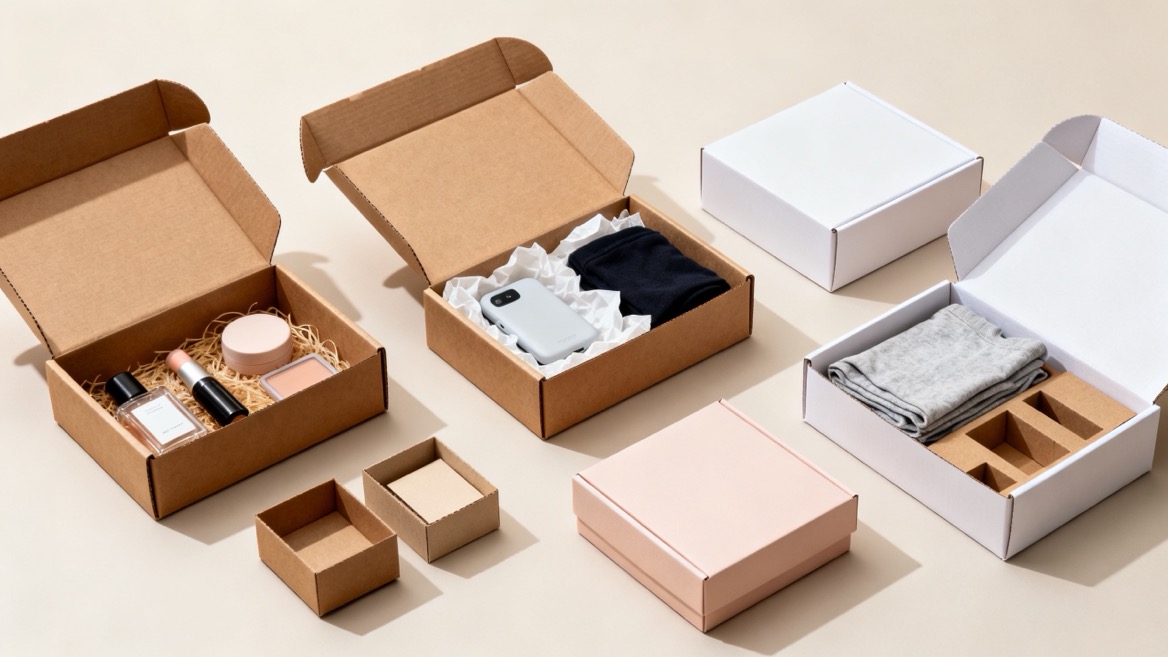
Small box dimensions describe the three measurements of a box:
Length×Width×Height
For example, a mailer box listed as 8 × 6 × 2 inches has:
- Length: 8 inches, usually the longest side
- Width: 6 inches, the shorter horizontal side
- Height: 2 inches, the vertical depth of the assembled box
In metric units, that same box is approximately 203 × 152 × 51 mm.
For packaging buyers, one detail matters more than almost any other: confirm whether a supplier is quoting internal dimensions or external dimensions.
- Internal dimensions describe the usable space available for the product, insert, tissue paper, and protective material.
- External dimensions describe the outside size of the finished box and are more relevant for shipping, pallet planning, storage, and carrier billing.
A box made from thicker corrugated board has less usable internal space than a box with the same external measurements made from thin paperboard. This is why a box that looks correct on a drawing may feel too tight during actual packing.
A well-sized box supports both operational performance and brand experience. Oversized packaging can create avoidable shipping costs and waste. Undersized packaging can lead to difficult packing, crushed corners, scuffed products, or an unprofessional unboxing experience.
Parcel carriers often consider both actual weight and dimensional weight. Dimensional weight reflects how much space a package occupies in a delivery network rather than only how much it weighs. Carriers generally charge using whichever figure is higher.
For shipments billed in pounds, a common calculation is:
Dimensional Weight=(Length×Width×Height)/139
Each carrier, service level, and destination can apply different rules, so buyers should always verify the current requirements for their shipping account. UPS notes that its divisor can vary by rate type, while FedEx explains that shipping charges are based on the greater of actual weight or dimensional weight.
A modest size change can produce a meaningful difference. For instance, reducing a box from 10 × 8 × 4 inches to 9 × 7 × 3 inches cuts external volume from 320 cubic inches to 189 cubic inches. That is a 41% reduction in cubic volume before considering board thickness or product protection requirements.
Empty space inside a shipping box is not always a benefit. If a product can move freely, it can collide with the box walls during transport. Small products such as cosmetics, electronics, candles, jewelry, accessories, stationery, and samples often need a controlled fit rather than a large void.
A practical package should provide room for:
- The product itself
- Protective wrap, tissue, or a paper insert
- Clearance for easy packing and removal
- Compression tolerance for the box material
- A secure closure without bulging or deformation
The goal is not to eliminate every millimeter of air. The goal is to limit harmful movement while giving the product a clean, intentional presentation.
Appropriate small shipping box dimensions can reduce paperboard consumption, void fill, warehouse storage space, and shipping volume. For brands using recyclable kraft mailers or corrugated cartons, right-sizing is one of the most practical ways to reduce unnecessary material use without compromising product presentation.
A smaller footprint may also improve carton utilization during export packing. When master cartons hold more finished units efficiently, brands can improve handling efficiency throughout warehousing and fulfillment.
Customers notice when a tiny product arrives in an unnecessarily large box. It can make the order feel wasteful or poorly planned. Conversely, a correctly sized mailer box gives the impression that the brand has considered every detail.
For premium or gift-oriented products, dimensions also affect visual composition. A compact box can frame the product, printed message, tissue paper, ribbon, or insert card more effectively. The result is a more memorable opening experience without relying on excessive decoration.
The following chart provides useful starting points for common small packaging applications. These are reference sizes, not universal standards. Your final dimensions should be based on the product, protective materials, box style, and packing process.
| Small Box Type | Dimensions in Inches | Dimensions in mm | Typical Uses |
|---|---|---|---|
| Extra-small product box | 3 × 3 × 2 | 76 × 76 × 51 | Jewelry, pins, small samples, accessories |
| Compact folding carton | 4 × 4 × 2 | 102 × 102 × 51 | Soap, small cosmetics, candles, compact items |
| Small mailer box | 6 × 4 × 2 | 152 × 102 × 51 | Stationery, phone accessories, beauty products |
| Small rectangular mailer | 6 × 4 × 3 | 152 × 102 × 76 | Small bottles, bundled accessories, gift sets |
| Small shipping box | 8 × 6 × 4 | 203 × 152 × 102 | Apparel, mugs, small electronics, subscription kits |
| Medium-compact mailer | 9 × 6 × 3 | 229 × 152 × 76 | Books, apparel accessories, curated product kits |
| Small cube box | 6 × 6 × 6 | 152 × 152 × 152 | Candles, jars, mugs, compact gift products |
| Custom mailer box | Custom | Custom | Products requiring precise fit or branded presentation |
When comparing sizes, remember that a 6 × 4 × 2 inch mailer box and a 4 × 6 × 2 inch mailer box may appear similar in volume, but the orientation can affect product placement, print layout, opening direction, insert design, and how efficiently the box fits inside an outer shipping carton.
Beauty products often require a balance between protection and premium presentation. A box that is too large may cause bottles or jars to tip, while a box that is too tight can damage labels, corners, or decorative finishes.
Useful starting sizes include:
- 4 × 4 × 2 inches for soap bars, compact cosmetic sets, and small jars
- 6 × 4 × 2 inches for flat skincare items, masks, makeup palettes, and accessories
- 6 × 4 × 3 inches for small bottles with protective inserts
- 8 × 6 × 3 inches for multi-item gift sets and seasonal kits
For glass containers, consider an internal paper insert, molded pulp tray, folded cardboard divider, or protective wrap. The box itself is important, but internal retention is often what prevents movement and breakage.
Electronics may be compact, but they are often sensitive to impact, vibration, scratches, and static-related handling requirements. A product box may need to fit inside a second corrugated shipping box when shipping individually.
Common starting sizes include:
- 6 × 4 × 2 inches for cables, chargers, earbuds, and adapters
- 7 × 5 × 3 inches for portable devices and accessory bundles
- 8 × 6 × 4 inches for small electronics with paper inserts or cushioning
- 10 × 8 × 4 inches for kits, replacement parts, or multi-component products
For fragile devices, avoid designing only from the product's outer dimensions. Measure the complete packed product, including manuals, protective bags, charging cables, molded trays, and any required clearance.
Apparel packaging needs enough space to prevent difficult folding and excessive compression. Soft products are forgiving, but presentation still matters, especially for branded online orders.
Common options include:
- 8 × 6 × 2 inches for scarves, socks, small accessories, and lightweight garments
- 9 × 6 × 3 inches for folded T-shirts, underwear sets, or compact apparel bundles
- 10 × 8 × 3 inches for premium apparel, loungewear, or gift-ready products
- 12 × 9 × 3 inches for larger folded garments or multi-piece orders
For apparel, a shallow mailer box with a broad lid can improve the reveal moment. It also provides a practical space for branded tissue paper, thank-you cards, care instructions, or promotional inserts.
Products with weight concentrated in one area need particular attention. A rigid gift box may look premium, but a corrugated mailer or outer shipper may still be necessary for parcel delivery.
Useful starting sizes include:
- 4 × 4 × 4 inches for small candle jars
- 6 × 6 × 4 inches for wider candles and small gift boxes
- 8 × 6 × 4 inches for mugs with protective wrapping
- 8 × 8 × 4 inches for gift sets or products with multiple components
For heavier small items, choose board strength based on the product's weight, fragility, stacking conditions, and shipping route. Dimensions alone cannot guarantee performance.
The most reliable way to select a box size is to measure the fully packed product, not only the bare product.
Use this process before requesting a quotation or production sample.
1. Measure the product at its widest points. Record length, width, and height in millimeters whenever possible. Millimeters provide more precision for custom packaging development.
2. Add protective material allowances. Include tissue paper, foam, paper padding, bubble wrap, inserts, divider walls, protective sleeves, or polybags.
3. Add packing tolerance. A product should fit securely, but your packing team still needs enough clearance to load and remove it efficiently.
4. Account for inserts and accessories. Manuals, cables, cards, pouches, refill parts, and promotional items often create sizing issues when added at the last stage.
5. Choose the box structure. A tuck-end carton, self-locking mailer, corrugated shipping box, rigid gift box, or telescoping box each uses material differently.
6. Confirm internal dimensions. Request written confirmation from the manufacturer, especially when the fit is tight or the board grade is thick.
7. Order a physical sample. Pack the actual product under realistic conditions before approving full production.
A useful starting formula is:
Internal Box Dimension=Packed Product Dimension+Required Clearance
For a non-fragile item with little protective material, the clearance may be small. For a fragile or premium product with an insert, the needed clearance can be much greater.
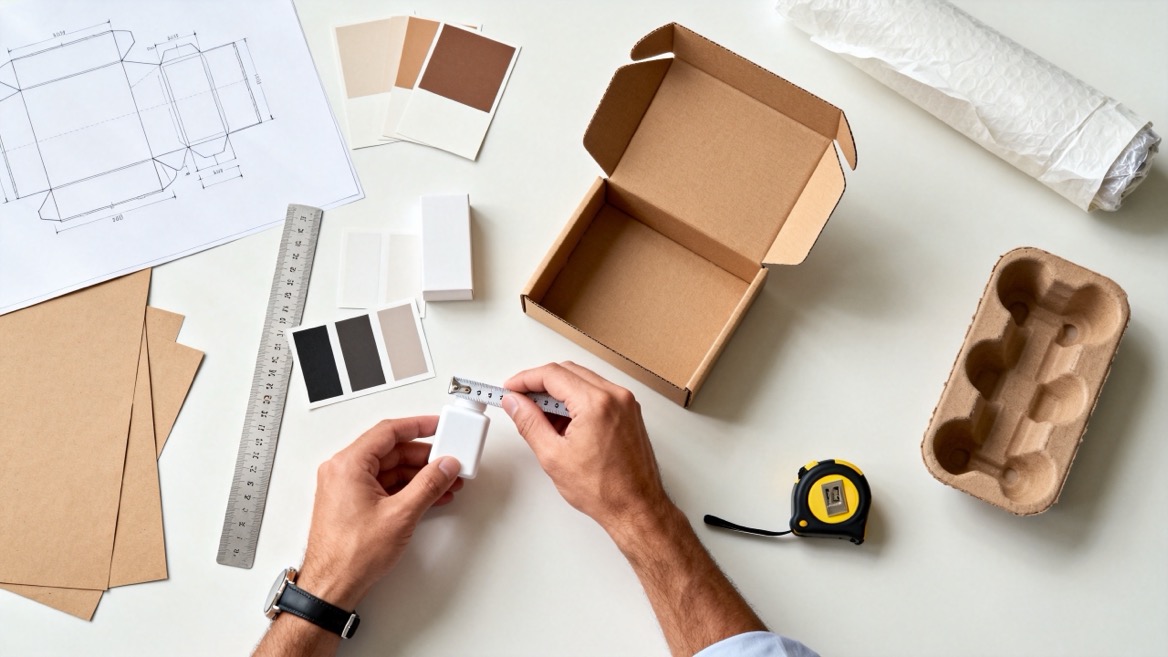
One of the most frequent packaging problems is requesting a box size without defining the measurement basis. This can lead to a box that is visually correct but operationally unusable.
For example, imagine a product that measures 150 × 100 × 45 mm. A buyer may request a 150 × 100 × 45 mm box, assuming the product will fit exactly. In reality, it may not fit at all once board thickness, folding tolerances, product labels, protective tissue, and packing movement are considered.
A better specification could be:
- Product size: 150 × 100 × 45 mm
- Protective wrap: 2 mm per side
- Packing clearance: 3–5 mm per dimension
- Required internal box size: approximately 159 × 109 × 54 mm
- Final external dimensions: determined by box structure and board thickness
This approach gives the packaging manufacturer a usable engineering brief rather than a rough visual reference.
Mailer boxes and shipping boxes are often used interchangeably, but they serve different practical purposes.
| Feature | Mailer Box | Shipping Box |
|---|---|---|
| Typical structure | Self-locking, often one-piece | Regular slotted carton, tuck-top shipper, or corrugated carton |
| Brand presentation | Strong; ideal for direct-to-consumer orders | Usually functional, but can be printed |
| Opening experience | Designed to be visually appealing | Usually focused on transit protection |
| Suitable products | Subscription kits, apparel, cosmetics, gifts | Heavier, fragile, bulkier, or multi-item orders |
| Printing area | Excellent for inside and outside branding | Often used for shipping marks, branding, and handling information |
| Protection level | Depends on board grade and insert design | Can offer stronger corrugated protection |
A branded mailer box can function as both product presentation and outer delivery packaging for lightweight, durable items. However, for glass, ceramics, metal components, or premium rigid boxes, it is often safer to use a branded inner box plus a protective outer shipping carton.
Small box dimensions matter because parcel networks charge for space as well as mass. Both UPS and FedEx explain dimensional weight as a comparison between a package's volume and its actual weight. If the calculated dimensional weight exceeds actual weight, the shipment may be rated using the dimensional figure.
Carriers also round measurements. UPS instructs shippers to measure length, width, and height, then round the dimensions according to its applicable rules before calculating dimensional weight. FedEx similarly describes a process based on multiplying the measured dimensions and dividing by a dimensional factor.
For packaging buyers, this creates a clear design lesson: avoid unnecessary fractions and unused height.
A box measured at 8.2 × 6.1 × 2.1 inches may be treated differently from a cleanly engineered box that stays within lower whole-inch measurements. Before reducing size, however, make sure the packaging can still protect the product and survive transport.
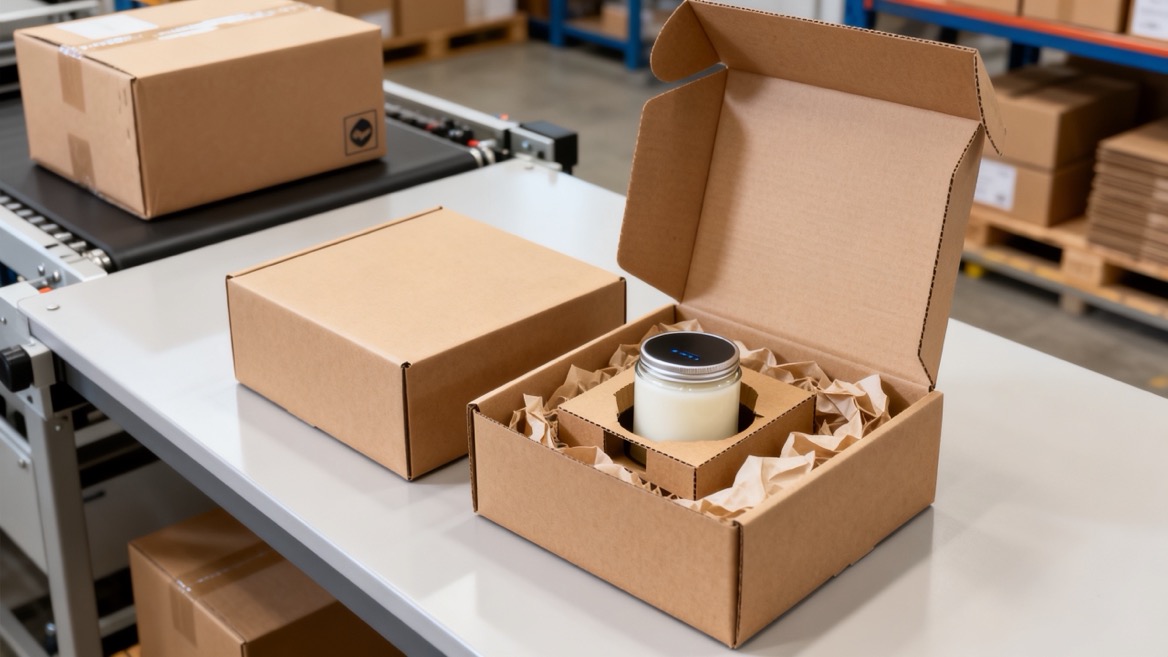
The same box dimensions can perform very differently depending on the board material and construction.
Folding cartons are lightweight and highly printable. They work well for retail packaging, cosmetics, supplements, candles, small consumer goods, and products that will be shipped inside an outer protective carton.
Typical benefits include:
- High-quality color printing
- Smooth surfaces for foil stamping, embossing, and spot finishes
- Efficient flat packing before assembly
- Good suitability for shelves and retail displays
They are not usually the best standalone solution for products exposed to rough parcel handling.
Corrugated mailers use fluted paper material between linerboards, creating better cushioning and compression resistance than standard paperboard. They are commonly used for direct-to-consumer delivery, subscription boxes, accessories, apparel, small electronics, and lightweight gifts.
Typical benefits include:
- Better structural protection
- Stronger performance during handling
- Suitable printing surface for branded delivery packaging
- Recyclable paper-based material options
Rigid boxes are premium presentation boxes often used for luxury gifts, jewelry, cosmetics, electronics, and high-value products. They can create an excellent unboxing experience but may need an outer corrugated shipper for transportation.
Typical benefits include:
- Premium structure and perceived value
- Excellent compatibility with custom inserts
- Strong branding possibilities
- Reusable packaging potential
Kraft-based packaging offers a natural appearance and is popular for brands seeking a simple, organic, or artisan visual identity. It can be used in mailer boxes, cartons, paper sleeves, inserts, and shipping boxes.
Material selection should be based on actual delivery conditions, not visual preference alone. A beautiful package that fails during transit costs more than a slightly stronger box designed correctly from the beginning.
The bare product is only one part of the packaging system. Accessories, inserts, protective materials, and packing tolerances all require space.
Always specify whether your dimensions are internal or external. For fit-sensitive products, internal dimensions should be the starting point.
Extra room can increase material use, shipping volume, and product movement. Instead of making every dimension larger, identify the exact area where clearance is required.
A product may fit in several orientations, but each one affects how the box opens, how graphics are viewed, how the product is removed, and how it is packed into master cartons.
A cardboard insert, foam tray, divider, or molded pulp component can dramatically reduce usable space. Design the box and insert as one system.
Digital dielines and 3D renderings are useful, but physical samples reveal issues that drawings cannot always show: lid tension, product movement, packing speed, surface scuffing, and stackability.
Before contacting a custom packaging manufacturer, prepare the following information. It will make the quotation process faster and reduce revisions.
- Product name and product category
- Product dimensions and weight
- Product photos or technical drawings
- Number of items per box
- Required internal box dimensions
- Preferred external box dimensions, if known
- Box style, such as mailer box, shipping box, folding carton, or rigid gift box
- Required board material and approximate strength
- Need for inserts, dividers, tissue paper, or protective padding
- Printing colors, logo files, and artwork requirements
- Surface finishes, such as matte lamination, gloss lamination, foil stamping, embossing, or spot UV
- Order quantity and target delivery market
- Whether the box will ship directly to consumers
- Whether a physical pre-production sample is required
For parcel-delivered products, it is also wise to consider simulation testing. ISTA's test procedures include general simulation testing for individual packaged products shipped through parcel delivery systems, and its small-package definition includes limits related to volume, longest dimension, and packaged weight.
The strongest packaging decisions come from looking beyond the product dimensions. Think through the entire journey:
1. The product is packed at your facility.
2. It is stored, stacked, and transferred.
3. It may be placed in a master carton.
4. It moves through warehouses and delivery networks.
5. It reaches the customer.
6. The customer opens, handles, reuses, recycles, or shares the packaging.
A small mailer box is successful only when it performs across all six stages. It should be easy for your team to pack, practical for transportation, protective enough for the product, and appealing enough for the customer to remember.
For brands that ship frequently, custom sizing can be especially valuable. A custom box may cost more per unit than a generic stock carton, but it can reduce void fill, lower shipping volume, improve presentation, and decrease product damage. The best choice depends on your product volume, shipment profile, branding goals, and damage-risk level.
The right small box dimensions can reduce wasted space, improve product protection, strengthen brand presentation, and support more efficient shipping. Whether you need a compact mailer box for cosmetics, a corrugated shipping box for electronics, or a premium rigid gift box for a high-value product, the design should begin with the product's real size, packing method, and delivery conditions.
Maituohong Packaging provides custom paper packaging solutions for brands that need practical structure and refined presentation. With more than 18 years of experience in rigid gift boxes, mailer boxes, shipping boxes, folding cartons, and custom inserts, our team can help turn your product measurements into a production-ready packaging solution.
Send us your product dimensions, product photos, target quantity, and preferred box style to receive a tailored packaging recommendation and quotation.
There is no single standard size because small boxes are used for many product categories. Common dimensions include 4 × 4 × 2 inches, 6 × 4 × 2 inches, 6 × 4 × 3 inches, 8 × 6 × 4 inches, and 9 × 6 × 3 inches. The best option depends on your product dimensions, protection needs, and packing method.
Measure the box as length × width × height. Length is normally the longest side, width is the shorter horizontal side, and height is the vertical depth. For product fit, ask for internal dimensions. For shipping and storage planning, use external dimensions.
The box should fit securely, but it should not be so tight that packing is difficult or the product is damaged. Allow space for tissue paper, protective wrap, inserts, and practical packing tolerance. The ideal fit limits harmful product movement without creating excessive empty space.
A mailer box is usually designed to combine product presentation and delivery packaging. It commonly uses a self-locking structure and offers broad printing surfaces. A shipping box is usually designed primarily for transport protection and may be stronger or more suitable for heavier products.
They can. A custom box may reduce unused volume, void fill, and dimensional-weight exposure. However, the box must still provide enough protection for the product and delivery environment. Test samples before finalizing a size for large-volume orders.
Start by measuring the candle or jar together with its label, lid, protective wrap, and any insert. Many small jars fit within 4 × 4 × 4 inch or 6 × 6 × 4 inch boxes, but glass products often require internal retention and a protective outer shipper for parcel delivery.
Yes. Internal dimensions are normally smaller because the board material, folds, and construction take up space. The difference depends on the box style and material thickness. Always confirm the usable internal dimensions when a product requires a close fit.
Millimeters are generally more precise for custom manufacturing and dieline development. Inches are common in some retail and shipping markets. The safest practice is to provide measurements in millimeters and include inch conversions when needed.
- [FedEx: What Is Dimensional Weight?]
- [UPS: Package Dimensions, Size Limits and Weight Guide]
- [FedEx: General Packaging Guidelines]
- [International Safe Transit Association: Test Procedures]


