
Views: 236 Author: Maituohong Packaging Publish Time: 2026-08-18 Origin: Site


Content Menu
● What Are Corrugated Boxes and Folding Cartons?
>> Corrugated Boxes: Built for Protection and Transport
>> Folding Cartons: Built for Presentation and Precision
● Corrugated Boxes vs. Folding Cartons: Core Differences
● Material Structure and Strength
>> Why Corrugated Boxes Handle Shipping Better
>> Why Folding Cartons Prioritize Form and Finish
● Printing, Branding, and Unboxing Experience
>> Folding Cartons Offer More Decorative Freedom
>> Corrugated Boxes Can Still Be Highly Branded
● Cost, Storage, and Production Considerations
>> How Corrugated Box Costs Work
>> How Folding Carton Costs Work
● A Practical Selection Framework
>> 1. Define the Product's Main Risk
>> 2. Define the Customer Experience Goal
>> 3. Match the Package to the Distribution Route
● Sustainability and Material Recovery
● Common Packaging Mistakes to Avoid
>> Using a Folding Carton as a Shipping Box
>> Choosing Oversized Corrugated Boxes
>> Focusing Only on Board Thickness
>> Ignoring the Unboxing Sequence
>> Adding Premium Features Without a Clear Purpose
● Build the Right Custom Packaging System
● FAQ
>> 1. Are corrugated boxes stronger than folding cartons?
>> 2. Can a folding carton be used for e-commerce shipping?
>> 3. Which is better for luxury packaging: corrugated or folding carton?
>> 4. What is the best box for fragile products?
>> 5. Are corrugated boxes recyclable?
>> 6. Are folding cartons recyclable?
>> 7. How do I choose the right corrugated box size?
Choosing between corrugated boxes and folding cartons is not simply a question of appearance. It determines how well a product survives shipping, how customers experience the brand, how efficiently packaging is produced, and how much material is used across the supply chain.
At Maituohong Packaging, we have spent more than 18 years developing custom paper packaging for brands that need both dependable protection and a polished presentation. In practice, the best choice is often not "corrugated box or folding carton?" but which packaging structure should handle each stage of your product journey?
A folding carton may be ideal for shelf presentation. A corrugated shipping box may be essential for transport. In many successful packaging systems, both work together.
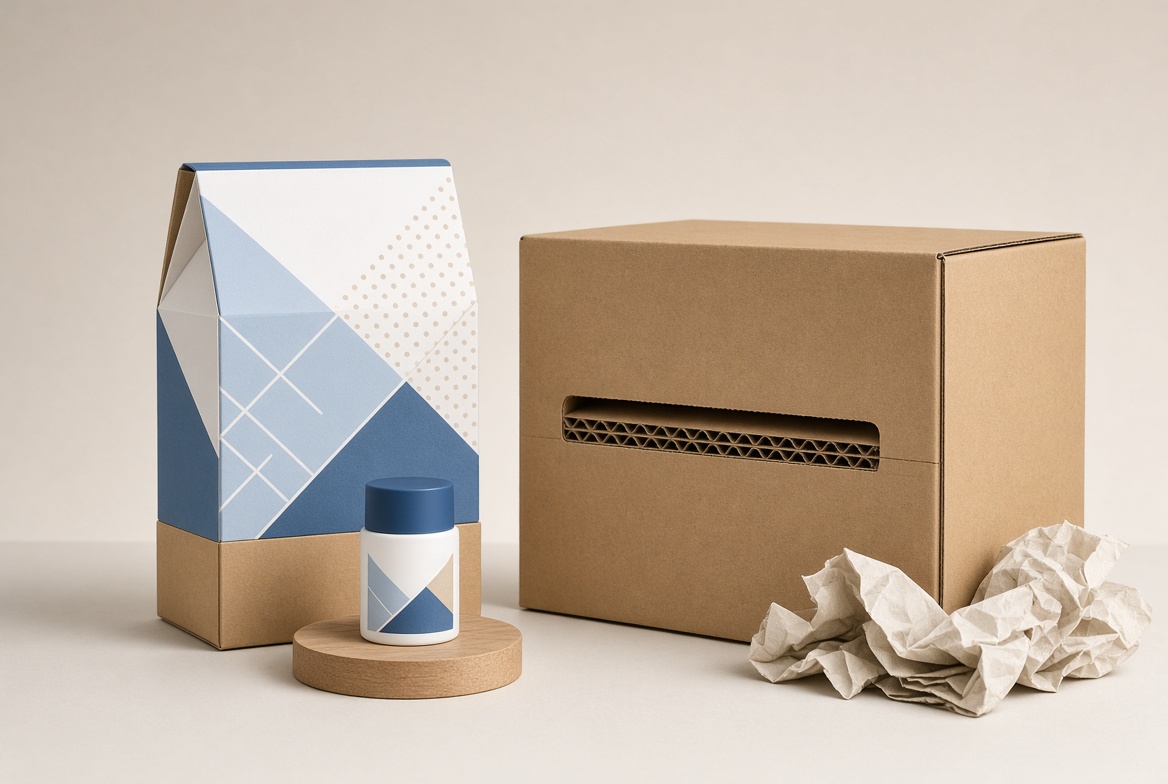
A corrugated box is made from corrugated fiberboard, a layered material that typically includes:
- One or two flat outer sheets, called liners
- A wavy middle sheet, called the fluted medium
- Adhesive that bonds the layers into a rigid structure
The fluted layer creates air spaces between the liners. Those spaces give a corrugated shipping box its cushioning performance, stacking strength, and resistance to crushing.
Corrugated packaging can be produced in several board constructions:
- Single-face: One liner plus one fluted medium
- Single-wall: Two liners with one fluted medium
- Double-wall: Three liners with two fluted media
- Triple-wall: Four liners with three fluted media
For most e-commerce and general distribution needs, single-wall corrugated boxes provide a strong balance of protection, weight, and cost. Double-wall corrugated boxes are more suitable for heavier, fragile, or high-value products.
A folding carton is generally made from paperboard, often supplied as a flat die-cut blank. It is printed, cut, creased, folded, and glued into its final shape.
Common folding carton materials include:
- Solid bleached sulfate paperboard
- Coated recycled paperboard
- Folding boxboard
- Kraft paperboard
- Specialty textured or metallic paperboard
Unlike corrugated board, paperboard does not contain a fluted middle layer. This gives folding cartons a smoother and more refined surface, making them especially suitable for high-quality graphics, retail displays, and branded unboxing.
Typical applications include cosmetics, skincare, food, supplements, electronics accessories, candles, toys, and small consumer goods.
The biggest difference between corrugated boxes and folding cartons is their intended role. Corrugated packaging is engineered primarily for shipping protection. Folding cartons are engineered primarily for retail presentation and product organization.
| Feature | Corrugated Boxes | Folding Cartons |
|---|---|---|
| Primary purpose | Shipping, storage, transport protection | Retail display, product presentation, light protection |
| Material structure | Fluted medium placed between linerboards | Single-layer paperboard |
| Compression strength | High | Low to moderate |
| Cushioning ability | Strong | Limited without inserts |
| Print surface | Good, especially with laminated or litho-label options | Excellent for detailed graphics and finishes |
| Typical shipping format | Usually shipped or used as assembled boxes | Usually shipped flat before folding |
| Best for | E-commerce, export, industrial products, bulky goods | Cosmetics, food, consumer products, gift packaging |
| Unit cost | Often cost-effective for protective transit packaging | Can be economical for high-volume retail packaging |
| Premium appearance | Available, especially with printed liners | Naturally strong for premium branding |
| Moisture tolerance | Can be enhanced with coatings or treatments | Can be enhanced, but requires careful material selection |
Corrugated fiberboard is designed to manage the stresses of distribution. During transit, a box may be stacked in warehouses, compressed by other packages, dropped during handling, or exposed to vibration in trucks and containers.
The flute structure helps absorb shock and distribute pressure across the box. This is why corrugated boxes are widely used for:
- E-commerce fulfillment
- Export shipping
- Industrial equipment
- Appliances and electronics
- Bottles and glass products
- Bulk food and agricultural products
- Heavy retail goods
A strong corrugated box can reduce the need for excess void fill and secondary protective materials. However, protection depends on more than board thickness. The correct box must also account for product weight, dimensions, fragility, stacking height, route length, humidity, and handling conditions.
Folding cartons are lighter and more visually flexible. Their smooth paperboard surface supports fine text, photography, color matching, foil stamping, embossing, debossing, spot UV, and other decorative finishes.
For a brand selling skincare, tea, supplements, fragrances, or premium accessories, a folding carton often becomes a key part of the first physical interaction with the product.
But a folding carton should not be treated as a replacement for a protective shipping box unless the product and distribution route are very low risk. A premium folding carton may arrive damaged if it is shipped alone through a parcel network.
Expert recommendation: use a folding carton as the primary product package, then place it inside a correctly sized corrugated mailer box or shipping box for delivery.
If your packaging needs intricate imagery, a refined color palette, or luxury finishes, folding cartons usually provide the best foundation.
They are particularly effective for products that compete on retail shelves or rely on visual distinction online. Common options include:
- Full-color offset printing
- Matte or gloss lamination
- Soft-touch finishes
- Hot foil stamping
- Raised embossing
- Window cut-outs
- Custom inserts
- Tamper-evident structures
- Brand storytelling printed inside the carton
A folding carton can make a lightweight product feel more valuable. It can also organize multiple components, such as a bottle, accessory, instruction card, and sample sachet, into one clean presentation.
Modern custom corrugated boxes are no longer limited to plain brown shipping cartons. They can be printed inside and outside, made with kraft or white surfaces, and enhanced with branded tape, inserts, mailer structures, or laminated printed wraps.
For direct-to-consumer brands, the unboxing moment begins with the shipping box. A custom mailer box can include:
- Exterior logo printing
- Interior brand messages
- Product-care instructions
- QR codes
- Cross-sell messages
- Seasonal campaign artwork
- Custom die-cut inserts
For example, a cosmetics brand may use a high-end folding carton for its serum bottle, then ship it in a branded corrugated mailer box with protective paper fill. This creates both a premium first impression and reliable parcel protection.
Corrugated packaging cost is influenced by:
- Board grade and flute type
- Box dimensions
- Material weight
- Printing method
- Order quantity
- Die-cut complexity
- Shipping distance
- Special coatings or treatments
Because corrugated board uses more material than folding carton board, a corrugated box may have a higher material cost for the same physical dimensions. However, it can reduce overall packaging expense by preventing product damage, minimizing returns, and reducing the need for separate protective materials.
For export businesses, this calculation is especially important. A low-cost box that fails during long-distance transportation can create much larger costs through product loss, replacement orders, customer dissatisfaction, and damaged brand perception.
Folding cartons are usually shipped flat, which can make storage and freight efficient before assembly. They can also be highly cost-effective at scale, especially for standardized retail products.
However, their total cost can rise when brands add premium finishes, complex die cuts, multi-piece inserts, or multiple specialty processes. A luxury folding carton may be the right investment for a high-margin product, but may not be appropriate for a low-cost commodity item.
The right approach is to evaluate total delivered value, not only unit price.
When deciding between corrugated boxes and folding cartons, use the following process.
Ask what can go wrong during storage and delivery.
- Is the product heavy?
- Is it fragile?
- Is it sensitive to crushing?
- Will it travel internationally?
- Will it be shipped individually by courier?
- Will it be stacked in a warehouse?
- Does it require moisture or abrasion resistance?
The higher the physical risk, the more likely you need corrugated packaging for the outer layer.
Then identify where the customer first sees the package.
- On a retail shelf
- In an e-commerce parcel
- At a trade show
- In a subscription box
- As a gift
- In a distributor's warehouse
If the product is sold through retail channels, folding cartons may be crucial for shelf communication. If the primary purchase experience is online, a branded corrugated mailer may have greater impact.
A product shipped from a factory to a distributor may need a different solution from a product shipped directly to consumers.
A common three-layer system is:
1. Primary packaging: The product container, pouch, bottle, or wrap
2. Secondary packaging: A folding carton that presents and organizes the product
3. Tertiary packaging: A corrugated shipping box that protects multiple units during transport
This layered approach often gives brands the best mix of visual appeal and logistical reliability.

Both corrugated boxes and folding cartons are paper-based packaging formats, but environmental performance depends on material sourcing, recycled content, coatings, inks, adhesives, local collection systems, and whether consumers can easily separate packaging components.
Corrugated packaging has a strong recovery infrastructure in many markets. The Fibre Box Association reported that the average corrugated box in the United States contains 52% recycled content. It also reported a 93.6% recovery rate for old corrugated containers in 2022.
These figures are encouraging, but they should not be used as a substitute for good packaging design. The most responsible solution is usually one that uses the right amount of material, protects the product effectively, avoids unnecessary mixed materials, and is simple for customers to flatten and recycle.
For folding cartons, brands should consider whether premium treatments affect recyclability. Heavy plastic lamination, non-paper windows, magnets, and difficult-to-separate inserts can complicate recovery. When possible, choose recyclable paperboard structures and clearly communicate disposal instructions.
A folding carton may look strong enough, but it can crush or scuff during courier delivery. If it is the retail-facing package, protect it with an outer corrugated mailer or shipping carton.
An oversized box wastes material and creates empty space that allows products to move. Excess movement increases the chance of impact damage.
A thicker board is not automatically a better solution. Flute profile, box style, product weight, internal fit, stacking requirements, and transit testing all matter.
A shipping box should not be treated as an afterthought. For e-commerce brands, it is often the first branded object a customer touches.
Foil, embossing, windows, and specialty coatings can be valuable, but only when they support product positioning. Decorative complexity that does not improve function or perceived value can increase cost without improving conversion.
Choose corrugated boxes when you need:
- Strong shipping and stacking performance
- Cushioning for fragile products
- Packaging for e-commerce or export
- Protection for heavy or bulky items
- A branded mailer box experience
- Reliable outer packaging for retail cartons
Choose folding cartons when you need:
- Premium shelf presentation
- Fine printing and decorative finishes
- Lightweight packaging for smaller products
- Compact flat storage before assembly
- Product information panels
- Retail-ready packaging with a refined appearance
Choose both when your product needs to look premium and travel safely. This is often the most practical option for beauty, electronics, food, gifts, subscription products, and high-value consumer goods.

The difference between corrugated boxes and folding cartons is not about which format is universally better. It is about selecting the structure that matches your product, brand, and distribution environment.
At Maituohong Packaging, we help brands develop custom mailer boxes, shipping boxes, folding cartons, rigid gift boxes, and coordinated paper packaging systems. Whether you need durable export packaging, a premium retail carton, or a complete unboxing experience, our team can help you turn product requirements into a practical packaging solution.
Contact Maituohong Packaging today to discuss your product dimensions, order quantity, printing needs, shipping route, and packaging goals. We can help you choose a custom box structure that protects your products and represents your brand professionally.
Yes. Corrugated boxes are generally stronger because their fluted inner layer provides cushioning and compression resistance. Folding cartons are better suited to presentation, light protection, and retail display.
It can be used inside an e-commerce shipment, but it is usually not sufficient as the only outer package. For better protection, place the folding carton inside a corrugated mailer box or shipping box.
Folding cartons are usually better for luxury visual presentation because they support detailed printing and decorative finishes. For luxury products shipped by courier, combine a folding carton with a branded corrugated outer box.
A properly designed corrugated shipping box is usually the better choice. Select the appropriate board grade, box dimensions, internal inserts, and protective void-fill material based on the product's weight and fragility.
In many regions, corrugated boxes are widely accepted in paper recycling systems. Customers should remove non-paper materials, flatten the box, and follow local recycling guidelines.
Many folding cartons are recyclable, especially those made from standard paperboard. However, recyclability can be affected by heavy lamination, plastic windows, magnets, and mixed-material components.
Measure the product's length, width, and height, then allow only enough additional space for the required protective material. The ideal size prevents product movement while avoiding unnecessary empty volume.
1. [Fibre Box Association — Corrugated Is Recyclable]
2. [Fibre Box Association — Boxes Remain a Recycling Success Story]
3. [Fibre Box Association — Corrugated Packaging Industry Data Services]
4. [Paperboard Packaging Council — 2025–26 Trends Report]
5. [Packaging Corporation of America — The Myth of 100% Recycled Content]
6. [Fibre Box Association — Corrugated Life Cycle Assessments]


