
Views: 220 Author: Maituohong Packaging Publish Time: 2026-08-20 Origin: Site


Content Menu
● What Is a Tuck Top Auto Bottom Box?
>> Common uses
>> Common uses
● Tuck Top Auto Bottom vs. Mailer Box: Core Differences
● Assembly Speed and Fulfillment Efficiency
>> Why auto bottom boxes pack quickly
>> Why mailer boxes simplify e-commerce packing
● Product Protection and Shipping Performance
>> When a tuck top auto bottom box provides better support
>> When a mailer box offers better all-around protection
● Brand Experience: Retail Display vs. Unboxing
>> Tuck top auto bottom boxes feel retail-ready
>> Mailer boxes create a stronger reveal moment
● Cost Factors That Matter More Than Box Price
>> Tuck top auto bottom cost profile
● Sustainability Considerations
● Which Box Should You Choose?
● Get a Custom Packaging Recommendation
>> Are tuck top auto bottom boxes stronger than mailer boxes?
>> Can a mailer box be used as a shipping box?
>> Do tuck top auto bottom boxes require tape?
>> Which box is better for e-commerce packaging?
>> Which box is better for retail shelves?
>> Can both box styles be customized?
>> Are paper mailer boxes recyclable?
Choosing between a tuck top auto bottom box and a mailer box affects far more than appearance. It influences packing speed, shipping protection, unboxing experience, material use, fulfillment cost, and how customers perceive your product when it arrives.
At Maituohong Packaging, we have spent more than 18 years designing and manufacturing custom paper packaging for brands that need both practical protection and a premium presentation. In our experience, neither option is universally "better." The right choice depends on your product weight, shipping channel, assembly process, branding goals, and expected customer interaction.
This guide explains the key differences between tuck top auto bottom boxes and mailer boxes, with practical selection advice for e-commerce brands, subscription businesses, retailers, and export-focused manufacturers.
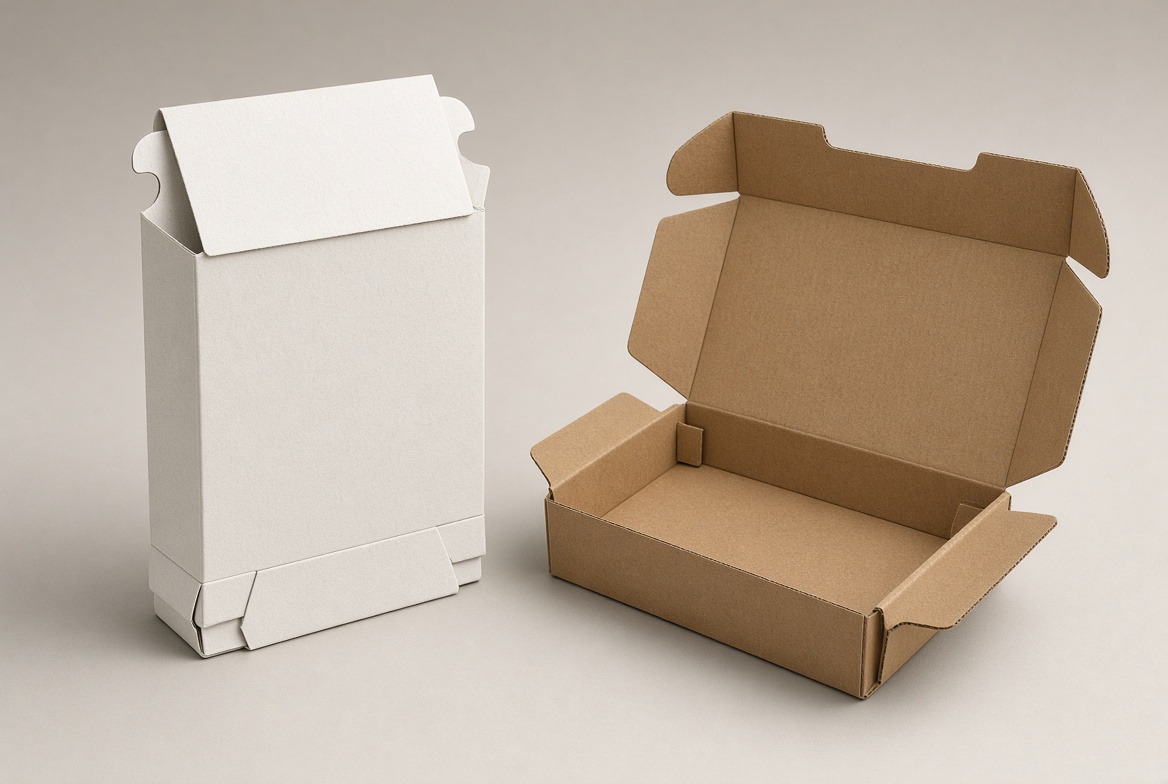
A tuck top auto bottom box is a folding carton with a tuck-in top closure and a pre-glued, automatically locking bottom. When the box is opened into shape, the bottom panels fold into position and lock together without requiring tape.
It is often called an auto bottom box, crash lock bottom box, or self-locking bottom carton. The key feature is the bottom structure: it arrives flat but quickly forms a secure base during assembly.
- A top tuck flap that closes by inserting into the front panel
- A pre-glued automatic bottom that locks when the carton is opened
- Usually made from paperboard, corrugated board, or laminated specialty board
- A vertical, retail-friendly structure
- Optional dust flaps for better product containment
- Stronger bottom support than a standard straight tuck end carton
This box style is especially useful when a product needs to stand upright on a shelf or when employees need to pack products quickly.
Tuck top auto bottom packaging is commonly used for:
- Bottles, jars, candles, and cosmetics
- Small electronics and accessories
- Tea, coffee, food supplements, and gift products
- Hardware, tools, and industrial parts
- Apparel accessories and retail merchandise
- Products that are relatively heavy for their carton size
The automatic bottom gives the box a practical advantage for products that place pressure on the base.
A mailer box is a one-piece, die-cut box with an attached lid and interlocking side flaps. It is typically made from corrugated board, although premium paperboard mailers are also available for lighter products.
Unlike a tuck top auto bottom box, a mailer box opens like a hinged package. The lid folds over the product, while side wings lock into the front panel to create a compact, protective structure.
- One-piece construction with an integrated lid
- Interlocking side panels and front tuck closure
- Wide printable surface inside and outside the box
- Usually supplied flat for efficient storage
- Can often be packed without adhesive tape
- Stronger edge and sidewall protection than many standard folding cartons
A custom mailer box can serve as both the product presentation box and the shipping-ready outer box, depending on the product, board grade, shipping distance, and fulfillment conditions.
Mailer boxes are widely used for:
- E-commerce orders
- Subscription boxes
- Apparel and fashion accessories
- Beauty kits and sample sets
- Gift sets and influencer mailers
- Books, stationery, and printed products
- Small electronics
- Direct-to-consumer products requiring a memorable unboxing experience
For brands selling online, the mailer box is often chosen because it combines protection, efficiency, and visual storytelling.
The most important difference is structural purpose. A tuck top auto bottom box is generally designed to hold a product upright, while a mailer box is designed to enclose and protect a product during delivery.
| Feature | Tuck Top Auto Bottom Box | Mailer Box |
|---|---|---|
| Box structure | Vertical folding carton with tuck top and locking base | One-piece box with hinged lid and locking side flaps |
| Main strength | Fast assembly and strong bottom support | Protective enclosure and strong unboxing presentation |
| Typical orientation | Upright | Flat or horizontal |
| Best for | Bottles, jars, retail products, heavier compact goods | E-commerce kits, apparel, gift sets, subscription products |
| Assembly time | Very fast after opening due to pre-glued bottom | Quick, but requires folding side flaps and lid |
| Shipping suitability | Often needs an outer shipping carton | Can sometimes ship directly, depending on product and board |
| Branding area | Good exterior panel space | Excellent interior and exterior storytelling space |
| Material consumption | Often lower for compact upright products | May use more board because of the integrated lid and side panels |
| Unboxing experience | Functional and product-focused | More premium, layered, and brand-focused |
| Unit cost drivers | Pre-gluing, board grade, size, printing | Die-cut complexity, board grade, printing, inserts, quantity |
Both structures can be customized with printing, embossing, foil stamping, spot UV, windows, inserts, partitions, and protective coatings. The difference is how those features support the actual product journey.
For high-volume manual packing, assembly time matters. A few seconds saved per order can become meaningful when a fulfillment team packs hundreds or thousands of units per day.
A tuck top auto bottom box has a pre-glued base. Once the packer pushes the box open, the bottom locks into place. The product is inserted, and the top flap is tucked closed.
This makes it a strong option when:
- Products are packed vertically
- Pack stations need consistent speed
- The product is already protected by an inner bag, tray, or wrap
- The box will be placed into a master carton for transport
- The business needs a neat retail carton without lengthy assembly
However, the box must be manufactured accurately. If the glue points, crease lines, or board grain are poorly controlled, the bottom may not open smoothly or lock evenly.
Mailer boxes do not have a pre-glued automatic base, but they can still be assembled quickly. The packer folds the side flaps inward, places the product inside, and closes the lid.
For many online sellers, the practical benefit is that one mailer can reduce the need for a separate presentation carton and shipping box. This is especially useful for lightweight, non-fragile products with a predictable size.
A mailer box can also be designed with inserts that hold products in a fixed position. This reduces movement, improves presentation, and can lower damage risk.
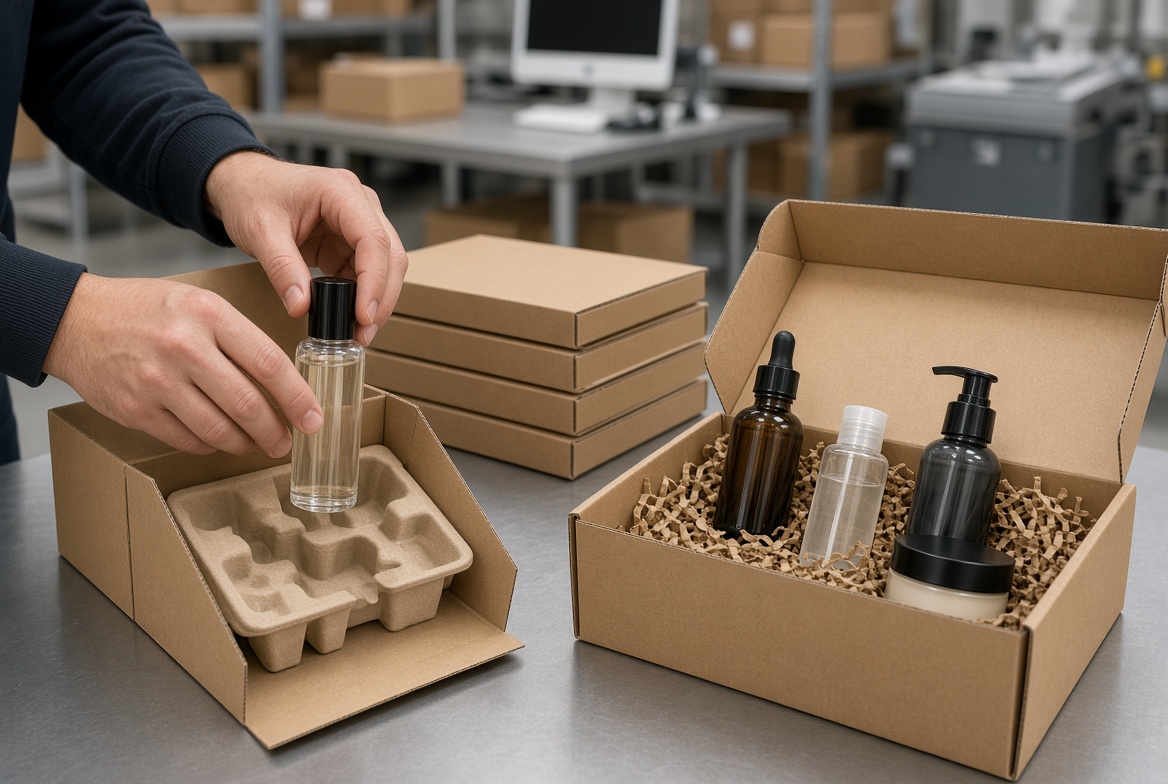
Packaging should be selected based on the full distribution journey, not only the product's appearance on a desk or retail shelf.
A box that looks premium but fails during parcel delivery creates costly returns, replacement shipments, and damaged brand trust.
The auto-lock base is valuable when the product is compact but heavy. Examples include glass bottles, candle jars, metal accessories, hardware sets, and certain cosmetics.
The bottom structure distributes weight more effectively than a basic tuck-end carton. Yet it is important to understand its limitation: a strong bottom does not automatically mean the entire box is ready for courier transport.
For fragile or high-value products, use an outer corrugated shipper, internal cushioning, or a fitted insert. The right system should protect the product from impact, compression, vibration, and edge damage.
Mailer boxes are usually more suitable for direct shipment because their overlapping panels create a more enclosed structure. Corrugated mailers can provide useful rigidity around the sides, corners, and lid.
Still, direct shipping should never be assumed based on box style alone. It depends on:
- Product weight and fragility
- Board flute and board grade
- Box dimensions
- Void space inside the package
- Distribution distance
- Parcel carrier handling conditions
- Whether the package is stacked under heavier shipments
- The use of protective inserts or cushioning
Testing is the practical answer. The International Safe Transit Association provides procedures for evaluating packaged products in delivery environments, including testing for individual products shipped through parcel systems.
A tuck top auto bottom box and a mailer box create very different customer experiences.
This structure presents a product in a familiar, upright format. It works well when customers need to see product information quickly on the front, side, or back panel.
Use it when your packaging needs to emphasize:
- Product name and specifications
- Ingredient lists or usage instructions
- Barcode placement
- Shelf visibility
- A clean premium carton format
- Vertical display in retail stores
For example, a skincare brand may use a rigid-feel paperboard tuck top auto bottom box for a glass serum bottle. The box stands neatly on a shelf, carries regulatory information, and supports the bottle weight at the bottom.
A mailer box gives brands more opportunity to communicate after the customer opens the package. The inside lid can carry a welcome message, QR code, product-care instructions, campaign artwork, or cross-selling content.
This makes mailer boxes particularly effective for:
- Subscription programs
- New product launches
- Gift packaging
- Social-media-oriented campaigns
- Limited-edition kits
- Multi-item sets
A well-designed mailer turns the opening process into part of the product experience. But the design should remain functional. Excessive decoration, difficult closures, or oversized dimensions can increase cost without improving usability.
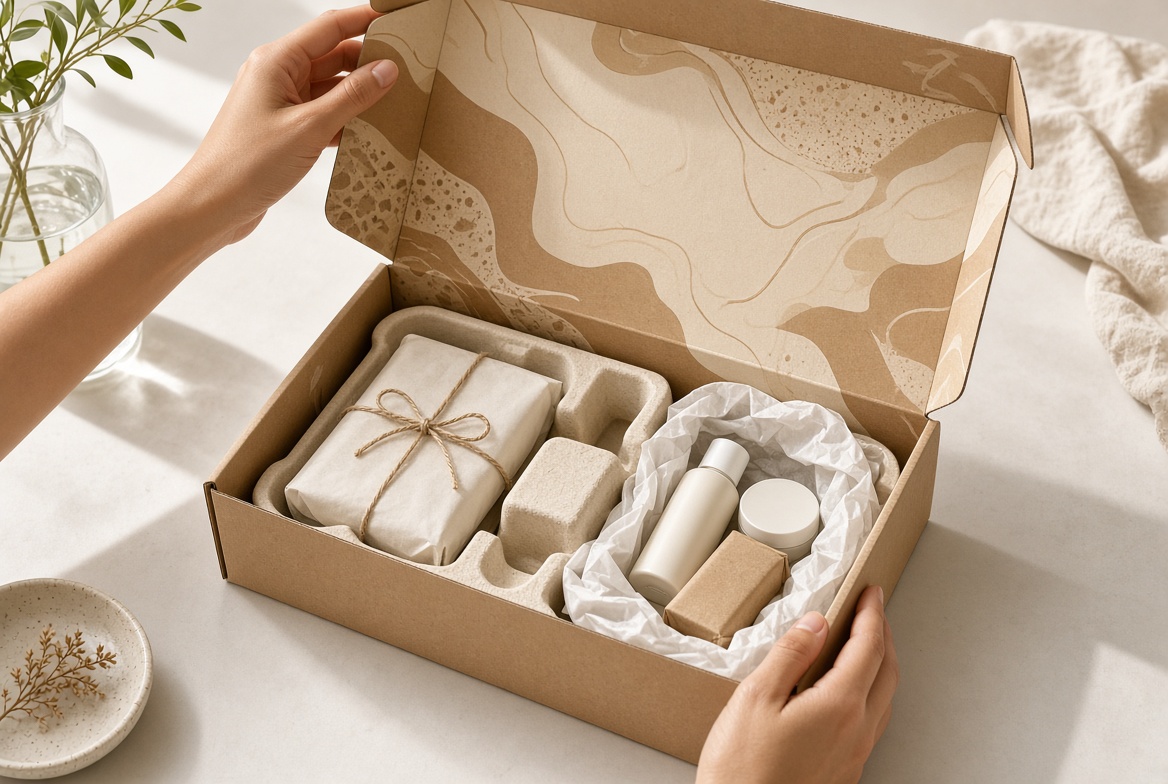
The lowest unit price is not always the lowest packaging cost. A better decision compares the complete operational cost.
Tuck top auto bottom boxes can cost more than simple folding cartons because they require pre-gluing and more complex converting. However, they may lower labor time because the base forms automatically.
They are often cost-effective when:
- Product dimensions are compact
- Packing volume is high
- The product must stand upright
- A separate inner tray is not required
- Faster packing offsets the conversion cost
Mailer boxes may have higher material use than a simple retail carton, especially in corrugated board. However, they can reduce total costs when they replace multiple packaging layers.
They may eliminate or reduce the need for:
- A separate retail box
- A second shipping carton
- Excess void fill
- Branded tape or printed shipping labels
- Additional manual assembly steps
The right calculation is total delivered packaging cost, not just the cost per empty box.
When advising customers on custom packaging, we start with product behavior rather than a preferred box style.
Use this five-step framework before requesting a quotation.
1. Measure the actual product. Record length, width, height, weight, and the most fragile points. Do not use only the product's nominal dimensions.
2. Map the delivery route. Identify whether the box will go to a retail store, distributor, warehouse, fulfillment center, or directly to the consumer.
3. Define the protection system. Decide whether the product needs an insert, divider, tissue paper, foam alternative, corrugated pad, or outer shipping carton.
4. Choose the customer experience. Determine whether the priority is shelf display, product information, gift presentation, quick opening, or a shareable unboxing moment.
5. Prototype and test. Review a physical sample before full production. Check fit, closure performance, stacking, print quality, product movement, and real packing speed.
This approach prevents a common mistake: selecting packaging based only on a digital mockup.
Both tuck top auto bottom boxes and mailer boxes can be designed with fiber-based materials that support recycling streams. However, recyclability depends on the entire design, not simply whether the box is made from paper.
Coatings, laminated films, metallic decoration, adhesive labels, plastic windows, and mixed-material inserts can affect how easily a package is processed after use.
European corrugated-packaging guidance identifies material composition, inks, coatings, lamination, adhesives, decoration, and integrated components as important recyclability considerations.
To support practical recovery and simpler material handling, consider:
- Uncoated or water-based printed paper and corrugated board
- Right-sized packaging that reduces unnecessary material
- Paper-based inserts instead of mixed plastic-and-paper components
- Easy-to-remove labels and accessories
- Designs that avoid unnecessary laminated films
- Recyclable corrugated board for shipping-focused mailers
Corrugated packaging also has established recovery infrastructure in major markets. The Fibre Box Association reported a 90.5% three-year average recovery rate for old corrugated containers in the United States during 2019–2021.
Choose a tuck top auto bottom box if your product is relatively heavy, compact, upright, and retail-oriented. It is especially useful when rapid assembly and bottom support are priorities.
Choose a mailer box if you sell online, need better all-around enclosure, want a stronger unboxing experience, or plan to package multiple products together.
Choose a combined packaging system if your product is fragile, premium, or shipped internationally. For example, use a tuck top auto bottom retail carton inside a corrugated mailer or shipping carton. This gives the product a polished presentation while adding transport protection.
The best packaging is not defined by a trend or a single box style. It is the one that fits your product securely, supports efficient fulfillment, communicates your brand clearly, and arrives in excellent condition.
Maituohong Packaging can help you compare custom tuck top auto bottom boxes and custom mailer boxes based on your product dimensions, weight, shipping method, printing requirements, and target market. Share your product details and packaging goals to receive a practical structure recommendation, dieline guidance, material suggestions, and a tailored quotation.
Not in every situation. A tuck top auto bottom box has strong base support, which is useful for heavier upright products. A corrugated mailer box generally provides more complete sidewall and edge protection for direct parcel shipping.
Yes, many corrugated mailer boxes can be shipped directly. However, suitability depends on product weight, fragility, board grade, internal fit, shipping route, and carrier handling. Physical samples and transit testing are recommended before launch.
Usually, no. Their automatic bottom locks during assembly, and the top flap tucks into the front panel. For security-sensitive products or long-distance shipping, tamper seals, labels, or outer shipping cartons may still be appropriate.
Mailer boxes are usually the better choice for e-commerce because they offer a more protective structure and a stronger unboxing experience. For fragile or heavy products, combine the mailer with a fitted insert or an additional shipping carton.
Tuck top auto bottom boxes are often better for retail display. Their upright shape provides clear front-facing branding and product information, while the locking base supports products such as bottles, jars, and heavier compact items.
Yes. Both can be customized by size, material, board thickness, printing method, finish, insert design, window cutout, embossing, foil effect, and structural details. The best choices depend on the product and distribution requirements.
They can be, particularly when made from corrugated board and designed without hard-to-separate plastic films, non-repulpable coatings, or mixed-material components. Always assess the complete packaging system rather than the box material alone.
1. [International Safe Transit Association: Test Procedures]
2. [International Safe Transit Association: Guidelines for Selecting and Using Test Procedures]
3. [FEFCO: Corrugated Packaging Recyclability Guidelines]
4. [Fibre Box Association: Corrugated Packaging Life Cycle Assessments]
5. [Fibre Box Association: Corrugated Packaging Recycling and Life Cycle Information]
6. [Stora Enso: Packaging Test Lab and Transit-Test Services]


