
Views: 277 Author: Maituohong Packaging Publish Time: 2026-08-16 Origin: Site


Content Menu
● Why Standard Box Sizes Matter
● Understand Box Dimensions: L × W × H
● How to Measure Products for Custom Boxes
>> Step 1: Measure the Finished Product
>> Step 2: Add Packaging Components
>> Step 3: Allow Functional Clearance
>> Step 4: Build and Test a Sample
● Mailer Box vs. Shipping Box Dimensions
● Choose Material Based on Product Weight
>> Recommended Material Direction
● Avoid These Common Sizing Mistakes
>> Designing Without an Insert Plan
>> Using the Same Box for Every Product
>> Forgetting Real Packing Conditions
● A Practical Sizing Formula for E-Commerce Boxes
● Shipping Cost and Dimensional Weight
● Work With a Custom Packaging Manufacturer
>> What are the most common standard shipping box sizes?
>> Should I measure the product or the finished retail package?
>> How much extra room should a shipping box have?
>> What is the difference between internal and external box dimensions?
>> Can a mailer box be used as a shipping box?
>> Which box material is best for heavy products?
>> How can I reduce shipping costs through box sizing?
Choosing the right standard box sizes is not about selecting the closest carton from a catalog. It is about designing a packaging system that protects the product, controls shipping costs, supports efficient packing, and creates a better customer experience.
At Maituohong Packaging, we have spent more than 18 years developing custom paper packaging, rigid gift boxes, mailer boxes, and shipping boxes for brands with different product weights, sales channels, and transport requirements. Our practical advice is simple: start with the product, then design the box around the real packing and delivery journey—not the other way around.
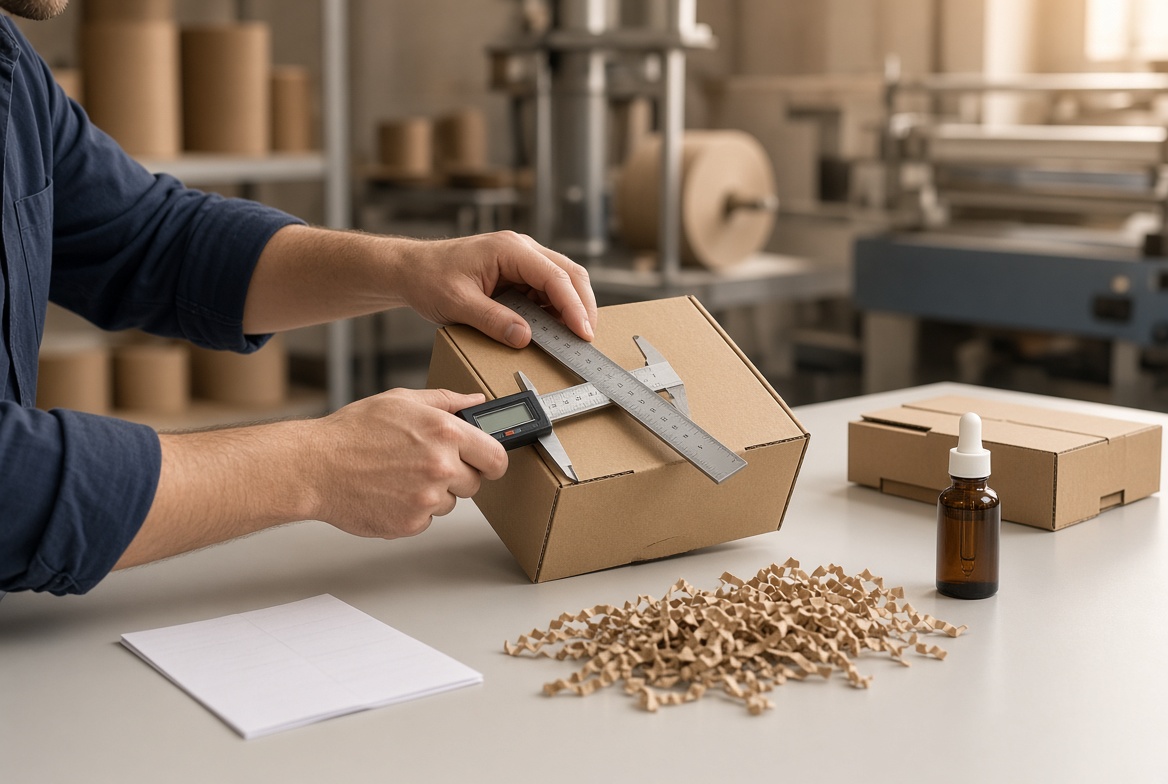
A box that is too large can increase material use, dimensional-weight charges, and the likelihood of damage caused by product movement. A box that is too small may crush the product, put pressure on seams, or leave no room for protective inserts.
The ideal packaging dimensions create a balance between:
- Product protection
- Packing speed
- Material efficiency
- Shipping cost control
- Shelf or unboxing presentation
- Storage and pallet efficiency
For e-commerce and export businesses, this decision has a direct commercial impact. Carriers commonly calculate charges using either actual weight or dimensional weight, depending on which is higher. In other words, a lightweight but oversized box can still be expensive to ship.
Most paper packaging dimensions are written as:
Length × Width × Height
For mailer boxes and shipping boxes, the usual convention is:
- Length: the longest side of the box opening
- Width: the shorter side of the box opening
- Height: the distance from the bottom to the top of the box
For example, a box listed as 12 × 9 × 4 inches has:
- A 12-inch length
- A 9-inch width
- A 4-inch height
Always confirm whether a supplier is quoting internal dimensions or external dimensions. This distinction matters, especially for corrugated shipping boxes, rigid boxes, and packaging with thick inserts.
Internal dimensions determine whether the product fits.
External dimensions affect carrier measurements, warehouse storage, master-carton planning, and freight costs.
The most reliable way to choose a box size is to measure the complete packed product—not only the product itself.
For example, a skincare bottle may be 50 × 50 × 150 mm, but its final packaging may also include a folding carton, molded pulp tray, instruction leaflet, tissue paper, and tamper seal. Designing a box based only on the bottle dimensions can lead to a costly rework.
Measure the product at its widest and tallest points.
Record:
- Length
- Width
- Height
- Product weight
- Fragile components
- Irregular shapes, handles, caps, cords, or accessories
Use a caliper or tape measure and keep units consistent. Millimeters are generally better for custom packaging development because they reduce rounding errors.
List every component that will enter the box:
- Inner carton
- Protective paper
- Foam or molded pulp insert
- Divider
- Product manual
- Thank-you card
- Accessories
- Sealing label
- Sample sachet or promotional item
A package with multiple pieces needs more than "empty space." It needs a planned arrangement that prevents movement and supports fast assembly.
A small clearance is necessary so the product can be packed smoothly without damaging the box or slowing down fulfillment.
As a practical starting point:
| Packaging situation | Suggested clearance |
|---|---|
| Simple non-fragile product | 2–5 mm per side |
| Product with folded paper protection | 5–10 mm per side |
| Fragile product with insert | Based on insert design |
| Multi-product gift set | Based on layout and divider spacing |
| Heavy product in corrugated shipper | Allow room for protective structure |
Do not add excessive empty space "just in case." It often creates a new problem: the product shifts during transport, and the larger outer dimensions can increase freight charges.
Before placing a full production order, request a blank or printed sample. Pack the real product exactly as it will be packed in daily operations.
Check:
- Does the product slide inside the box?
- Is the lid, tuck flap, or mailer closure easy to close?
- Does the box bulge after sealing?
- Can workers pack it quickly?
- Does the product remain stable after a drop or vibration test?
- Does the outer box still look premium after shipping?
A box can look perfect as a flat dieline but fail in the real world. Sampling is where the design becomes operational packaging.
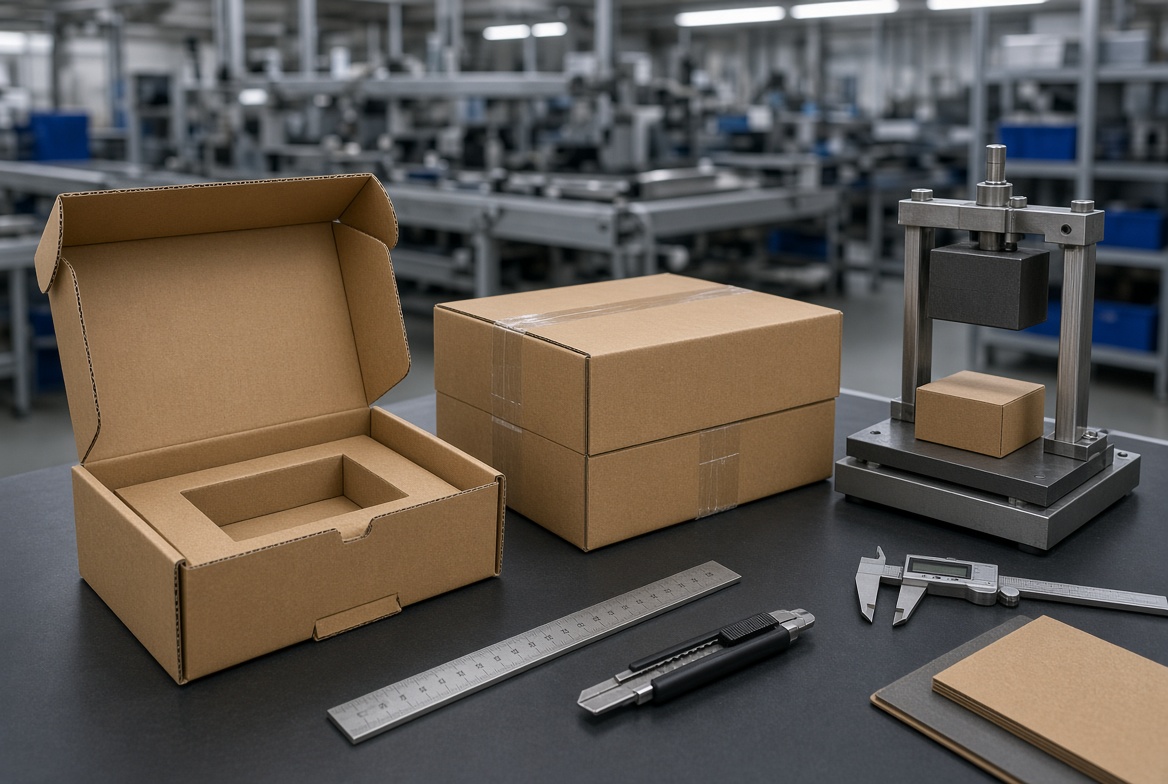
There is no single universal size for every product category. However, common starting dimensions can help brands shortlist suitable mailer box and shipping box formats.
| Box category | Common dimensions (inches) | Typical use |
|---|---|---|
| Small mailer box | 6 × 4 × 2, 8 × 6 × 2 | Jewelry, accessories, small cosmetics, samples |
| Compact shipping box | 8 × 6 × 4, 10 × 8 × 4 | Apparel, supplements, small electronics |
| Medium shipping box | 12 × 9 × 4, 12 × 10 × 6 | Gift sets, shoes, home goods |
| Large shipping box | 16 × 12 × 8, 18 × 14 × 10 | Bulk products, larger retail packs |
| Apparel mailer box | 10 × 8 × 2, 12 × 10 × 3 | T-shirts, scarves, light garments |
| Shoe box | 13 × 8 × 5, 14 × 10 × 5 | Shoes, footwear gift packaging |
| Subscription box | 10 × 8 × 4, 12 × 10 × 4 | Curated kits, recurring shipments |
| Pizza-style mailer box | 8 × 8 × 2, 10 × 10 × 2 | Flat products, books, apparel, gift sets |
These sizes are useful references, not final specifications. Your product layout, board grade, insert type, and courier rules should guide the final dimensions.
A mailer box is usually designed for direct-to-customer delivery. It often has a self-locking structure, integrated dust flaps, and a more polished unboxing experience. It can carry branding inside and outside the box, making it ideal for subscription products, apparel, cosmetics, gifts, and small consumer goods.
A shipping box is generally designed for transport protection. It is often made from corrugated cardboard and may be used as an outer carton for retail-ready products, mailer boxes, or multiple units.
| Feature | Mailer box | Shipping box |
|---|---|---|
| Main purpose | Presentation and direct delivery | Transport and bulk protection |
| Typical material | E-flute or F-flute corrugated board | B-flute, C-flute, BC-flute, or heavier board |
| Closure | Self-locking tuck structure | Tape, glue, or self-locking flaps |
| Branding potential | High | Usually functional, but printable |
| Best for | E-commerce orders and subscriptions | Warehousing, export, wholesale, heavier goods |
For many brands, the strongest solution is a two-box system: a branded mailer box inside a protective corrugated shipping carton. This keeps the customer-facing packaging clean while adding protection for long-distance delivery.
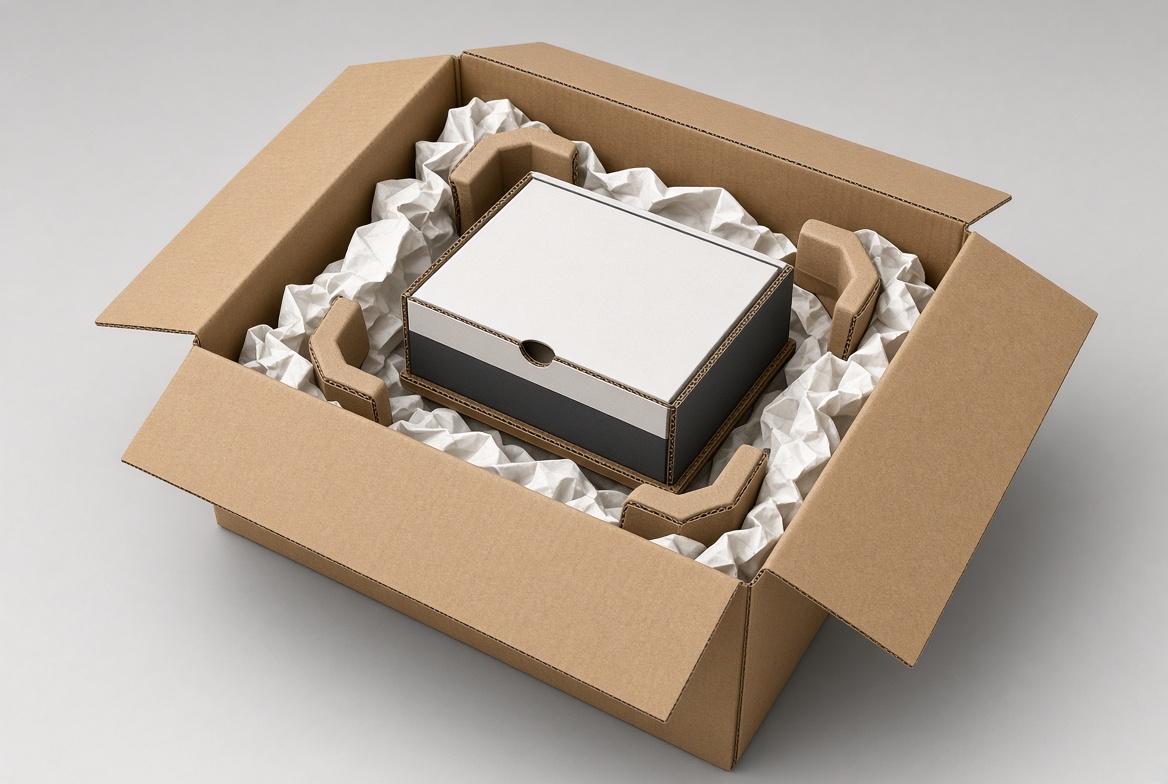
Box dimensions alone do not determine protection. The paperboard structure and material grade are equally important.
A small box carrying a heavy product can fail more easily than a large box carrying a lightweight product. Consider product weight, stacking conditions, humidity exposure, shipping distance, and whether the parcel may be dropped or compressed.
- Lightweight products: E-flute or F-flute corrugated mailer boxes can offer a clean appearance with useful protection.
- Medium-weight products: E-flute, B-flute, or reinforced corrugated structures are often appropriate.
- Heavy or fragile products: Use stronger corrugated material, internal partitions, edge protection, or molded inserts.
- Premium gift packaging: Rigid board boxes provide a high-end feel, but they usually need an outer shipping carton for transit.
- Eco-focused packaging: Recyclable kraft paper, corrugated board, paper inserts, and molded pulp can reduce reliance on plastic-based protection.
A well-designed insert is often more effective than simply increasing box thickness. It can hold the product in one position, improve presentation, and reduce the need for loose void fill.
Large empty spaces allow products to move during handling. This can cause scratches, broken corners, crushed retail packaging, or damaged fragile items.
It can also increase dimensional shipping charges. FedEx explains that dimensional weight reflects the space a package occupies compared with its actual weight, and the chargeable weight may be the greater of actual or dimensional weight.
A fragile product should not be "protected" by packing paper alone unless testing confirms it works. For bottles, electronics, glass, ceramic products, or multi-piece kits, plan the insert at the same time as the outer box.
A box may fit the product perfectly but create problems later if its external dimensions do not fit the master carton, pallet pattern, warehouse shelf, or carrier size limits.
A single-box strategy can simplify purchasing, but it often creates wasted space and inconsistent protection. Brands with several product sizes may benefit from a small, standardized range of packaging formats instead.
Packaging should be tested with real production conditions, including actual workers, real packing materials, transit handling, and final sealing methods. A box that is difficult to assemble can increase labor time and packing errors.
Use this simple process when planning your next custom mailer box or shipping carton:
1. Measure the finished product, including retail packaging.
2. Add the thickness of every insert, wrap, and printed insert card.
3. Add only the clearance needed for smooth assembly.
4. Confirm internal dimensions.
5. Check external dimensions after board thickness is included.
6. Calculate approximate parcel volume and compare shipping options.
7. Test packed samples for drops, compression, vibration, and product movement.
8. Finalize the dieline only after the sample passes practical checks.
For example, if a finished product measures 220 × 150 × 45 mm and requires 5 mm of protective clearance on each side, the minimum internal space would be approximately:
230 × 160 × 55 mm
If the product needs a corrugated insert, the final internal dimensions may need to increase further. The correct answer comes from the complete packaging system, not a single formula.
Dimensional weight is especially important for lightweight products in large boxes, such as apparel, pillows, beauty kits, and promotional gift sets.
The calculation commonly follows this structure:
Dimensional Weight=(L×W×H)/Carrier Divisor
Carrier rules vary by service and destination. FedEx states that its dimensional-weight calculation for many U.S., Puerto Rico, and international shipments uses a divisor of 139 when dimensions are measured in inches. USPS also uses package volume and dimensional-weight rules for certain parcels and zones.
Before finalizing a box size, ask your logistics team or courier for:
- Current dimensional-weight divisor
- Measurement rounding rule
- Oversize and additional-handling thresholds
- Maximum length-plus-girth limits
- International destination restrictions
This early check can prevent a packaging decision from becoming a recurring freight-cost problem.
Standard sizes are helpful starting points, but custom packaging performs best when it is developed around your product, protection requirements, branding goals, and shipping method.
At Maituohong Packaging, we help brands develop mailer boxes, shipping boxes, rigid gift boxes, folding cartons, and paper-based protective packaging from concept to production. Our team can support structural recommendations, material selection, printing options, sample development, and export-ready packaging planning.
Send us your product dimensions, weight, packing method, target quantity, and destination market. We will help you identify a practical box structure and custom size that protects your product while supporting a premium delivery experience.
Common options include 8 × 6 × 4 inches for small products, 12 × 9 × 4 inches for medium e-commerce orders, and 16 × 12 × 8 inches for larger or multi-item shipments. The best size depends on product dimensions, protection needs, and shipping method.
Measure the finished packed unit. Include retail cartons, labels, instruction manuals, accessories, protective wraps, and any insert that will travel inside the box.
For simple products, 2–5 mm of clearance per side may be sufficient. Fragile products or items using inserts require more space based on the protective structure. Excessive empty space should be avoided.
Internal dimensions describe the usable space inside the box. External dimensions include board thickness and are relevant for courier billing, storage, master cartons, and pallet planning.
Yes, especially for lightweight and moderately protected products. However, fragile, high-value, heavy, or export-bound products may need an additional corrugated outer shipping carton.
Heavy products usually require stronger corrugated board, such as B-flute, C-flute, or double-wall corrugated board, depending on weight and transit conditions. Inserts and reinforced structures may also be necessary.
Reduce unnecessary empty space, select dimensions that fit the product closely, avoid crossing carrier thresholds where possible, and check dimensional-weight rules before finalizing production.
- [Tycoon Packaging — Standard Box Sizes: Determine the Packaging Dimensions]
- [FedEx — What Is Dimensional Weight?]
- [FedEx — General Packaging Guidelines]
- [USPS — How to Measure a Package]
- [USPS Postal Explorer — Parcel Dimensions and Length Plus Girth]


