
Views: 243 Author: Maituohong Packaging Publish Time: 2026-08-19 Origin: Site


Content Menu
● Folding Gift Boxes vs. Other Box Types
● Why Brands Choose Custom Folding Gift Boxes
>> Premium Presentation Without Permanent Bulk
>> Stronger Brand Recognition at Every Touchpoint
>> Adaptable for Many Product Categories
● How to Choose the Right Folding Gift Box Structure
>> 1. Start With the Actual Product
>> 2. Select a Closure That Fits the Customer Journey
>> 3. Engineer the Insert Before Finalizing the Exterior
>> 4. Test the Complete Pack System
● Materials and Finishes That Support a Premium Result
>> Greyboard and Wrapped Paper
● Designing for Responsible Material Recovery
>> Choosing the Box Before Defining the Product Pack-Out
>> Overcomplicating the Unboxing Experience
>> Treating the Shipping Carton as an Afterthought
>> Approving Color Without a Physical Proof
● Work With an Experienced Folding Gift Box Manufacturer
● FAQ
>> What is the difference between a folding gift box and a folding carton?
>> Are folding gift boxes strong enough for shipping?
>> Can I add a custom insert to a folding gift box?
>> What printing finishes work best for luxury folding gift boxes?
>> Can folding gift boxes be shipped flat?
>> What information is needed for a custom folding gift box quotation?
>> How long does it take to develop a custom folding gift box?
A folding gift box combines the premium presence of a rigid gift box with a flat-packed structure designed for more efficient storage and shipping. For brands selling cosmetics, apparel, candles, specialty foods, corporate gifts, and direct-to-consumer products, it can turn a routine delivery into a memorable brand experience—without committing to the bulk of a fully assembled box.
At Maituohong Packaging, our team has spent more than 18 years developing custom paper packaging for export-oriented brands. In practice, the best folding gift box is not selected only by appearance. It must balance product protection, opening experience, brand presentation, assembly efficiency, shipping volume, and material compatibility.

A folding gift box is a premium paperboard box engineered to ship or store flat and then be assembled into its final three-dimensional form when needed. Unlike standard lightweight folding cartons used for many retail products, premium folding gift boxes commonly use rigid greyboard, wrapped paper, reinforced fold lines, magnets, ribbons, adhesive strips, or interlocking structures.
The result is a packaging format that can look refined on arrival while reducing the warehouse space required before fulfillment.
A well-designed custom folding gift box can serve several jobs at once:
- Protect a product during handling and delivery
- Present the product in a polished, gift-ready format
- Communicate the brand through materials, printing, and finishing
- Create a satisfying unboxing sequence
- Improve storage and inbound logistics through flat packing
- Support a consistent product presentation across online and offline channels
For premium products, packaging is often the first physical touchpoint between a brand and its customer. The surface texture, box closure, print quality, and interior arrangement all influence whether the product feels considered or generic.
Choosing the right structure begins with understanding what each format is designed to do. A folding gift box is not automatically the right answer for every product, especially when the item is very heavy, highly fragile, temperature-sensitive, or shipped long distances without a protective outer mailer.
| Packaging Type | Typical Structure | Main Strength | Best For | Key Consideration |
|---|---|---|---|---|
| Folding gift box | Flat-packed rigid board structure | Premium look with reduced storage volume | Gifts, apparel, beauty sets, candles, subscription kits | Requires reliable fold-line and closure engineering |
| Traditional rigid box | Pre-assembled non-collapsible box | Strong luxury presentation | Jewelry, high-end electronics, luxury gifting | Takes more warehouse and shipping space |
| Folding carton | Lightweight paperboard carton | Efficient, versatile retail packaging | Cosmetics, food, small consumer goods | Usually offers less perceived luxury and protection |
| Corrugated mailer box | Fluted corrugated board | Transport protection and shipping strength | E-commerce shipping, heavier products | Often needs an inner presentation box for premium gifting |
| Paper bag with insert | Flexible paper construction | Convenient retail carry-out format | Events, boutiques, light items | Provides limited product protection |
The practical choice often involves a two-layer packaging system: a branded folding gift box for presentation, placed inside a correctly sized corrugated shipper for transport. This approach protects both the product and the unboxing experience.
A conventional rigid box arrives at the warehouse already assembled. That creates a large-volume storage burden, especially for seasonal gift programs or multi-SKU launches.
A collapsible rigid box can be stored flat before use. For brands with limited fulfillment space, this can make inventory handling more manageable while retaining a premium finished form after assembly.
The value is not simply "saving space." It is the ability to use a higher-end packaging style without making logistics unnecessarily complicated.
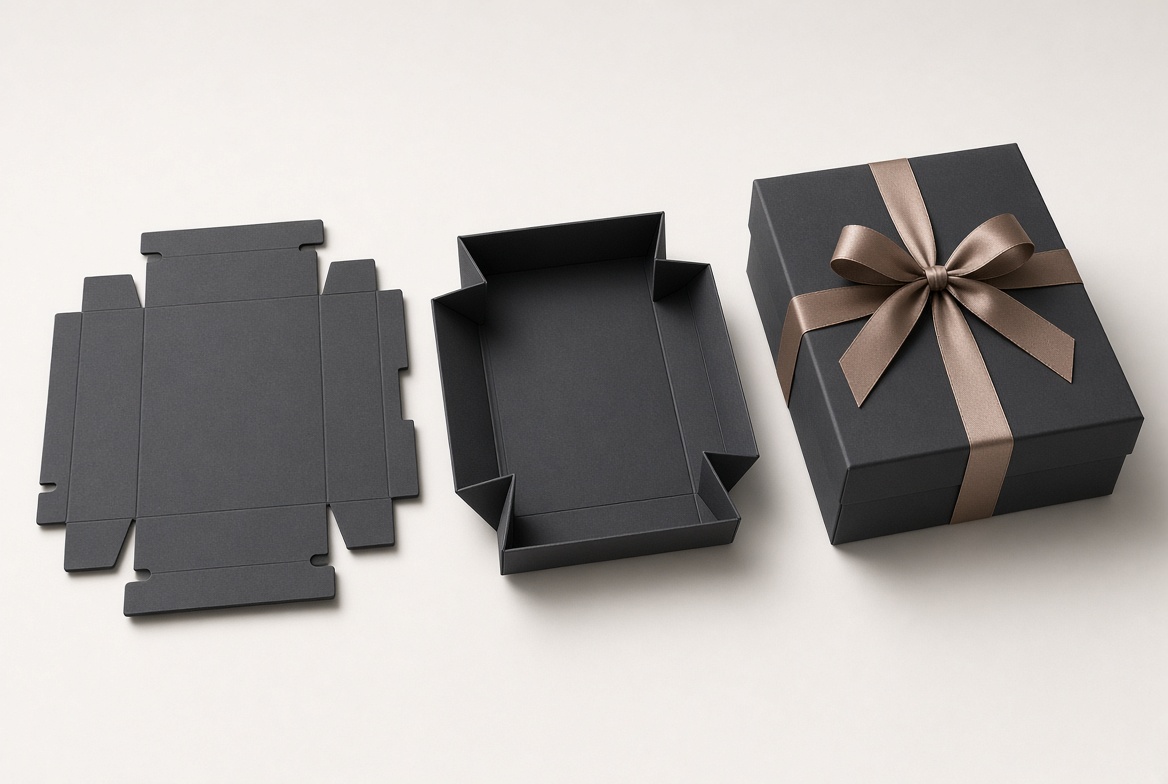
A folding gift box gives brands more room to tell a visual story than a basic shipping carton. The exterior can carry a restrained logo, a seasonal illustration, a color system, or a tactile paper finish. The interior can guide the customer toward the product with a printed message, insert card, ribbon pull, or custom-fit tray.
Useful brand elements include:
- Foil stamping for a refined metallic accent
- Embossing or debossing for texture without excessive ink coverage
- Spot UV to contrast matte and glossy areas
- Soft-touch lamination for a smooth, velvety surface
- Textured specialty paper for a more tactile premium impression
- Custom inserts that hold products in position and improve presentation
- Magnetic closures or ribbon closures for a deliberate opening moment
The goal is not to use every finish. In many successful projects, one carefully selected material and one standout finishing detail feel more premium than a design crowded with effects.
Custom folding gift boxes are suitable for a broad range of products when the internal structure matches the product's weight, dimensions, and fragility.
Common uses include:
- Skincare and cosmetic gift sets
- Fragrance and candle packaging
- Apparel, scarves, and accessories
- Corporate welcome kits and event gifts
- Tea, coffee, chocolate, and specialty food sets
- Subscription boxes
- Small electronics and accessories
- Holiday and promotional gift collections
For products that move inside the box, the outer structure alone is not enough. A die-cut paperboard insert, molded pulp tray, foam insert, EVA insert, or fabric-lined tray may be needed depending on the product and desired presentation.
The most attractive design can still fail if it is difficult to assemble, does not fit the product, or opens during transport. Before approving artwork, establish the structural requirements.
Measure the finished product—not an early prototype—and include all components that will be packed with it.
Record:
1. Length, width, and height
2. Product weight
3. Fragile areas, sharp edges, or pressure-sensitive surfaces
4. Accessories, manuals, cables, tissue paper, or inserts
5. Whether the customer should see the product immediately upon opening
6. Whether the box will be shipped individually or inside an outer carton
Allow enough clearance for the insert, protective wrap, and practical loading. A box that is technically the correct size may still feel cramped or damage the product if there is no assembly tolerance.
Different closures create different expectations.
| Closure Style | Customer Experience | Suitable Applications |
|---|---|---|
| Magnetic flap | Smooth, premium, repeatable opening | Apparel, beauty sets, corporate gifts |
| Ribbon closure | Decorative and gift-oriented | Seasonal gifts, fashion, wedding favors |
| Adhesive strip | Fast assembly and secure closure | E-commerce campaigns, high-volume fulfillment |
| Tuck flap | Simple and economical | Lightweight gift sets, promotional packs |
| Drawer structure | Layered reveal and strong visual impact | Jewelry, cosmetics, premium accessories |
A magnetic closure can feel impressive, but it may not be necessary for every project. If a product is opened once and recycled promptly, a simple self-locking structure may offer a more appropriate balance of function and material use.
The interior is where protection and presentation meet. An insert should prevent shifting, make loading efficient, and guide the customer's attention.
For example, a two-piece skincare set may need a die-cut board insert that separates glass bottles, while a premium scarf may need only tissue paper and a printed wrap card. Using a complex insert where it is not needed can increase cost and slow fulfillment without improving the customer experience.
A folding gift box should be tested as part of the complete packaging system, including the product, inner insert, protective materials, and outer shipping carton.
Ask these practical questions:
- Does the box remain square after assembly?
- Do the magnets align consistently?
- Does the product shift when the box is turned?
- Can the fulfillment team pack it quickly?
- Does the outer shipper leave enough protective clearance?
- Does the box still look presentable after normal transit handling?
- Can customers understand how to open it without instructions?
A physical sample is essential. Digital artwork can show color and layout, but it cannot reveal whether a fold line cracks, an insert is too tight, or an opening sequence feels awkward.
The material choice should reflect the product category, target price point, shipping conditions, and design concept.
Many collapsible premium boxes use rigid greyboard wrapped with printed art paper, kraft paper, textured specialty paper, or uncoated paper. Board thickness should be selected according to box dimensions and product weight.
Larger boxes or heavier products usually need stronger board and reinforced construction. If the board is too light, panels can warp and the finished box may not feel premium. If it is unnecessarily heavy, material use and shipping weight increase without adding meaningful value.
Offset printing is often selected for detailed imagery, accurate brand colors, and larger-volume premium projects. Digital printing can be useful for lower quantities, rapid sampling, variable artwork, or limited campaigns.
Finish selection should be driven by real use conditions:
- Matte lamination can help protect printed surfaces and produce a refined appearance.
- Gloss lamination can make colors appear more vivid but may show fingerprints more easily.
- Water-based coatings can suit projects seeking a simpler paper-forward construction.
- Foil and embossing add impact, but fine details should be tested on the chosen paper.
- Dark solid colors need careful handling because scuffs can be more visible.
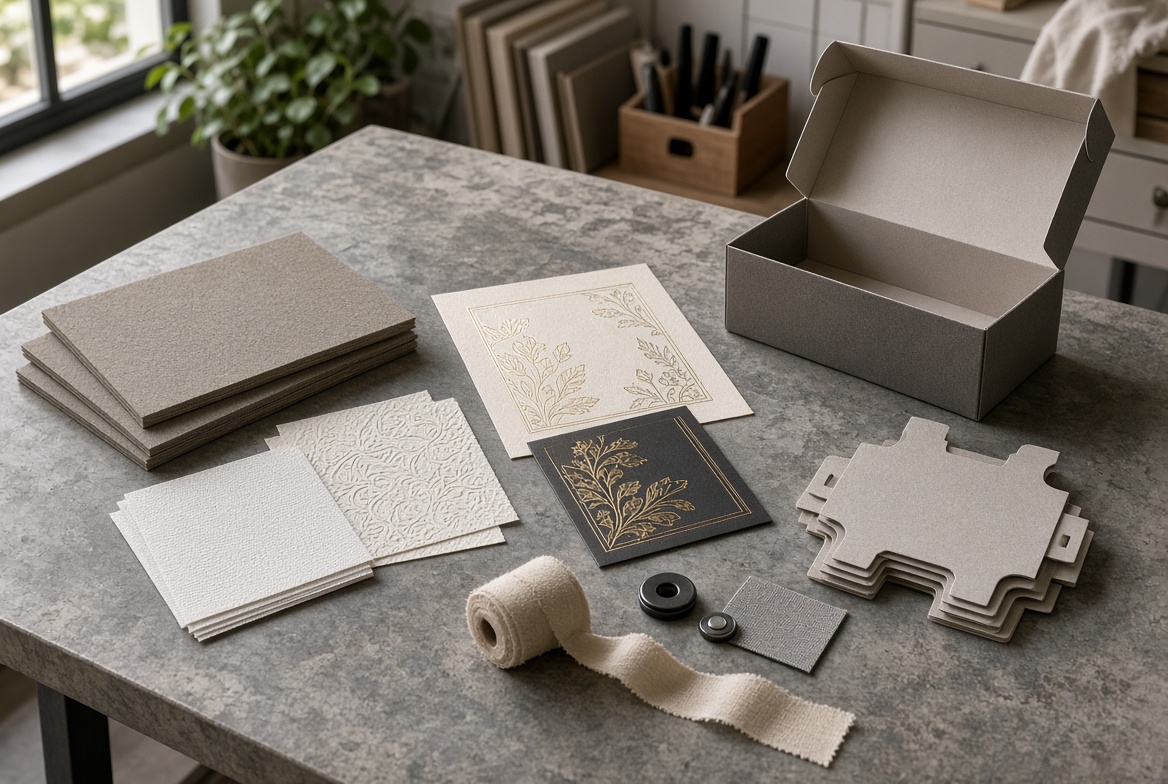
Paper-based packaging can be a strong choice for brands seeking renewable fiber-based materials, but the final recovery outcome depends on the entire construction and local collection systems. A box with paperboard, magnets, plastic film, foam, metallic elements, or heavy lamination should not be described with overly broad environmental claims.
Industry research on folding cartons indicates that the fiber portion of folding carton materials can be recovered through paper and board recycling streams, while non-paper components may affect pulp yield, sorting, or processing requirements. Coatings, laminations, adhesives, and decorative elements should therefore be considered during the design stage rather than treated as an afterthought.
Practical design choices include:
- Use paper-based components where they meet performance needs
- Avoid unnecessary mixed-material decoration
- Choose inserts that match the product's protection requirement
- Make removable non-paper elements easy to separate where practical
- Use clear disposal instructions that match the intended sales market
- Verify material claims with suppliers and applicable local requirements
A responsible packaging decision is not about making the broadest claim. It is about choosing materials intentionally, communicating accurately, and ensuring the structure performs throughout its real life cycle.
Even well-designed boxes can create operational issues when the project is developed only from a visual perspective.
A beautiful box may become unusable if the product, insert, accessories, and protective wrapping are not planned together. Confirm the entire pack-out sequence before locking dimensions.
Every additional layer, ribbon, sleeve, insert, or closure can increase labor and material use. A premium experience should feel intuitive, not slow or frustrating.
Flat-packed boxes require assembly. For large fulfillment programs, even a few additional seconds per box can affect labor planning. Ask for an assembly sample and involve the fulfillment team early.
A folding gift box is a presentation package, not always a shipping package. Select an outer corrugated carton and internal protection based on the real distribution route.
Color can look different on a monitor, uncoated paper, textured paper, and laminated surfaces. For branded packaging, review a physical proof or production sample under realistic lighting.
The best custom folding gift box is a coordinated system—not just a printed shell. It should fit the product securely, reflect the brand naturally, assemble efficiently, and arrive in a condition customers are pleased to receive.
Maituohong Packaging brings more than 18 years of experience in premium rigid gift boxes and custom paper packaging solutions. From structural consultation and material selection to printing, finishing, inserts, sampling, and production, our team can help turn a packaging concept into a practical finished product.
Share your product dimensions, target quantity, preferred box style, artwork requirements, and destination market with Maituohong Packaging. Our packaging specialists will help you develop a custom folding gift box that balances presentation, protection, and operational efficiency.
A folding gift box generally uses a more premium, rigid construction and may include features such as magnetic closures, wrapped paper, and reinforced fold lines. A folding carton is usually made from lighter paperboard and is widely used for retail products such as cosmetics, food, and small consumer goods.
They can protect products well when designed correctly, but most premium folding gift boxes should be placed inside an appropriately sized corrugated shipping carton for transit. The correct insert and outer protective packaging depend on product weight, fragility, and transport conditions.
Yes. Common options include die-cut paperboard inserts, EVA foam, foam, molded pulp, fabric-lined trays, and divider systems. The right insert depends on product shape, weight, fragility, and desired unboxing experience.
Popular choices include matte lamination, soft-touch lamination, foil stamping, embossing, debossing, spot UV, textured paper, and custom printed interiors. The best option depends on the brand style, expected handling, and production budget.
Yes. This is one of their main advantages. Collapsible rigid gift boxes are typically stored and transported flat before assembly, helping brands use warehouse space more efficiently than with pre-assembled rigid boxes.
Provide product dimensions and weight, desired box style, quantity, artwork files or brand guidelines, preferred material and finish, insert requirements, target delivery market, and any special compliance or shipping needs. A product sample is also valuable for confirming fit and protection.
Timing depends on structure complexity, material sourcing, artwork readiness, sampling requirements, and order quantity. The project normally moves through structural review, artwork confirmation, sample approval, production, quality inspection, and shipping preparation.
1. [Tycoon Packaging — The Art & Science of Folding Cartons Box Packaging in Detail]
2. [European Carton Makers Association — Statement on the Recyclability of Folding Cartons]
3. [Pro Carton — Recyclability of Folding Cartons and Material Combinations Report]
4. [FFI/PTS Report — Recyclability of Folding Cartons]
5. [European Carton Makers Association — Industry Topics]
6. [FachPack — Fibre-Based Packaging Breaks the 7-Cycle Myth]


