
Views: 236 Author: Maituohong Packaging Publish Time: 2026-08-25 Origin: Site


Content Menu
● Custom Packaging Boxes vs. Corrugated Boxes: Quick Comparison
● What Are Custom Packaging Boxes?
>> Common Types of Custom Packaging Boxes
>> Why Brands Choose Custom Packaging
>> Corrugated Board Structures
● The Fundamental Difference: Purpose vs. Construction
>> When Corrugated Boxes Are the Better Choice
● Branding, Printing, and Unboxing Experience
● Sustainability and Material Recovery
● How to Choose the Right Option
● Create Packaging That Performs
● FAQ
>> 1. Are custom packaging boxes the same as corrugated boxes?
>> 2. Are corrugated boxes better for shipping?
>> 3. What is the best box for e-commerce packaging?
>> 4. Can corrugated boxes be printed with custom designs?
>> 5. Should I use a rigid box or a corrugated box for a luxury product?
>> 6. Are corrugated boxes recyclable?
>> 7. How do I choose between single-wall and double-wall corrugated boxes?
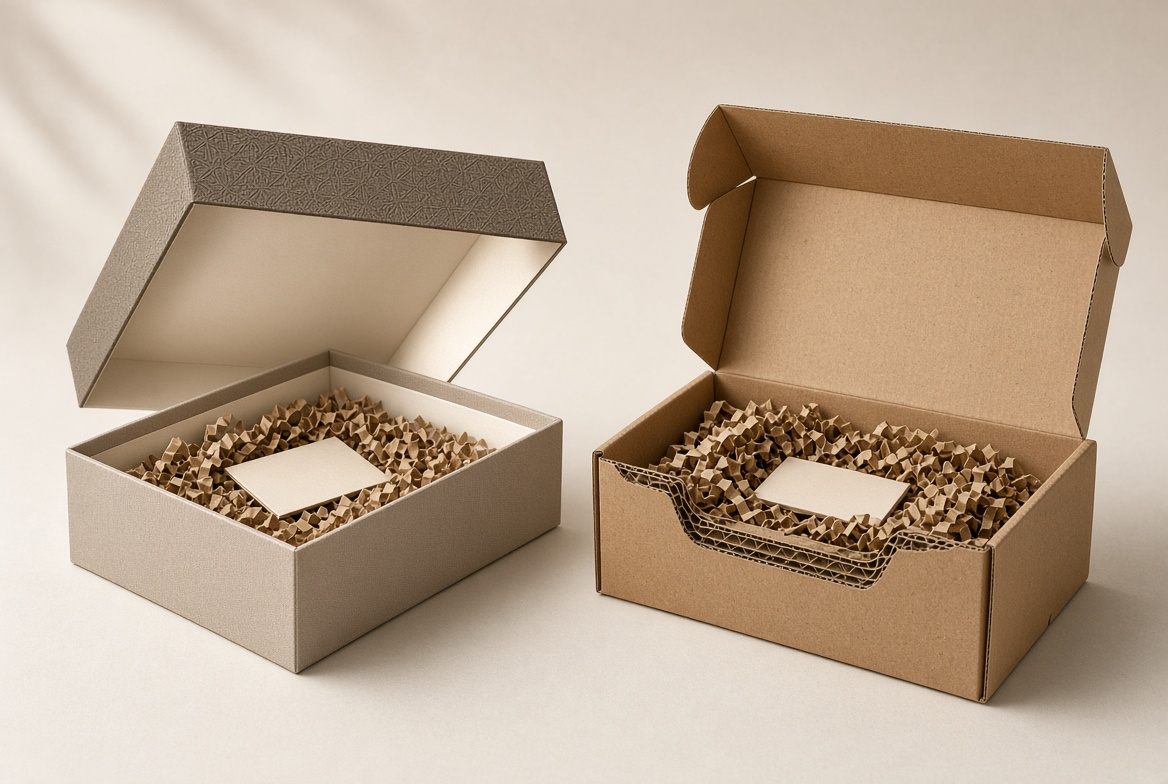
Choosing between custom packaging boxes and corrugated boxes is not simply a choice between "branded" and "plain" packaging. Custom packaging describes a tailored solution built around a product, brand, and customer experience, while corrugated boxes describe a specific protective material structure designed primarily for transport, storage, and handling.
At Maituohong Packaging, we have spent more than 18 years designing and manufacturing paper packaging for brands that need both presentation and performance. In practice, many successful packaging programs combine the two: a custom-designed mailer box may be made from corrugated board, while a premium rigid gift box may need a corrugated shipping carton for outer protection.
| Factor | Custom Packaging Boxes | Corrugated Boxes |
|---|---|---|
| Core meaning | A packaging solution customized for a brand, product, or campaign | A box made from corrugated fiberboard |
| Main purpose | Product presentation, brand identity, customer experience, and fit | Shipping protection, stacking strength, and logistics efficiency |
| Material options | Paperboard, kraft paper, rigid board, corrugated board, specialty papers, and more | Corrugated fiberboard with linerboard and fluted medium |
| Design flexibility | Very high; includes structure, size, print, finish, inserts, and opening style | High for dimensions and printing, but usually more transport-focused |
| Protection level | Depends on selected material and structure | Usually strong, especially for shipping and heavy products |
| Best for | Retail, gift sets, cosmetics, apparel, subscription boxes, and branded e-commerce | Transport cartons, mailers, bulk distribution, industrial goods, and export shipments |
| Customer impression | Can create a premium, memorable unboxing experience | Functional, durable, and increasingly brandable |
| Typical cost basis | Varies widely according to materials, printing, finishes, and complexity | Often cost-efficient for protective shipping at scale |
The most important point is this: custom packaging is a strategy; corrugated packaging is a material category. They are not always competing choices.
Custom packaging boxes are made specifically for the dimensions, product requirements, visual identity, and distribution method of a business. Rather than selecting a standard stock box, the brand determines how the package should look, open, protect, communicate, and feel.
A custom box can be a folding carton, rigid gift box, corrugated mailer box, drawer box, magnetic closure box, tube, or specialty structure. It may include custom printing, foil stamping, embossing, spot UV, matte lamination, inserts, tissue paper, ribbons, or QR-code-enabled product information.
- Custom mailer boxes for e-commerce, subscription products, apparel, and promotional kits
- Rigid setup boxes for luxury goods, electronics, jewelry, cosmetics, and gift sets
- Folding cartons for lightweight retail products such as skincare, food, supplements, and accessories
- Custom shipping boxes for direct-to-consumer delivery and branded fulfillment
- Kraft packaging boxes for natural, handmade, organic, or environmentally conscious product lines
- Product boxes with inserts for fragile products, multi-piece kits, and premium presentations
The value of custom packaging comes from alignment. The box should fit the product well, protect it through its journey, support efficient packing, and clearly communicate why the customer should value what is inside.
A custom packaging box is often the first physical interaction between a brand and its customer. This makes details such as opening style, material texture, color accuracy, and internal organization commercially meaningful.
Custom packaging can help brands:
- Create a more recognizable shelf or delivery experience
- Reduce unnecessary empty space and loose movement inside the box
- Support upselling through printed product stories, inserts, and bundles
- Make premium products feel more valuable
- Improve consistency across retail, wholesale, and e-commerce channels
- Deliver a more shareable unboxing experience
For example, a skincare brand may use a printed folding carton for retail display, while a premium holiday gift set may use a rigid box with a custom EVA, paperboard, or molded-pulp insert. Both are custom packaging boxes, but neither necessarily needs the heavy-duty structure of a standard transport carton.
Corrugated boxes are made from corrugated fiberboard, a layered paper-based material. In its most common single-wall form, it consists of two flat outer sheets called linerboards with a fluted, wavy medium between them. This structure adds rigidity, cushioning, and compression resistance without making the package excessively heavy.
Corrugated packaging is widely used because it is lightweight, practical, versatile, and suitable for large-scale distribution. The Fibre Box Association reported that the U.S. corrugated industry produced 401 billion square feet of corrugated material in 2022, equivalent to about 40 billion packages.
Different corrugated structures suit different products and shipping conditions.
| Corrugated Type | Structure | Suitable Applications |
|---|---|---|
| Single-wall | One fluted medium between two liners | Standard e-commerce orders, apparel, books, small appliances |
| Double-wall | Two fluted mediums and three liners | Fragile, heavier, stacked, or longer-distance shipments |
| Triple-wall | Three fluted mediums and four liners | Industrial goods, export shipments, heavy equipment, large products |
| E-flute or micro-flute | Thin flute profile with a smoother printable surface | Branded mailers, retail-ready e-commerce boxes, lightweight products |
| B-flute | Strong crush resistance and good puncture protection | Canned goods, heavier consumer products, shipping cartons |
| C-flute | A common balance of cushioning and stacking strength | General shipping, storage, and distribution |
Double-wall corrugated boxes provide two layers of fluting and are commonly selected where crush resistance, puncture protection, and heavy handling performance are important. Triple-wall corrugated board can serve as a lower-weight alternative to wood crates for some heavy-duty applications.
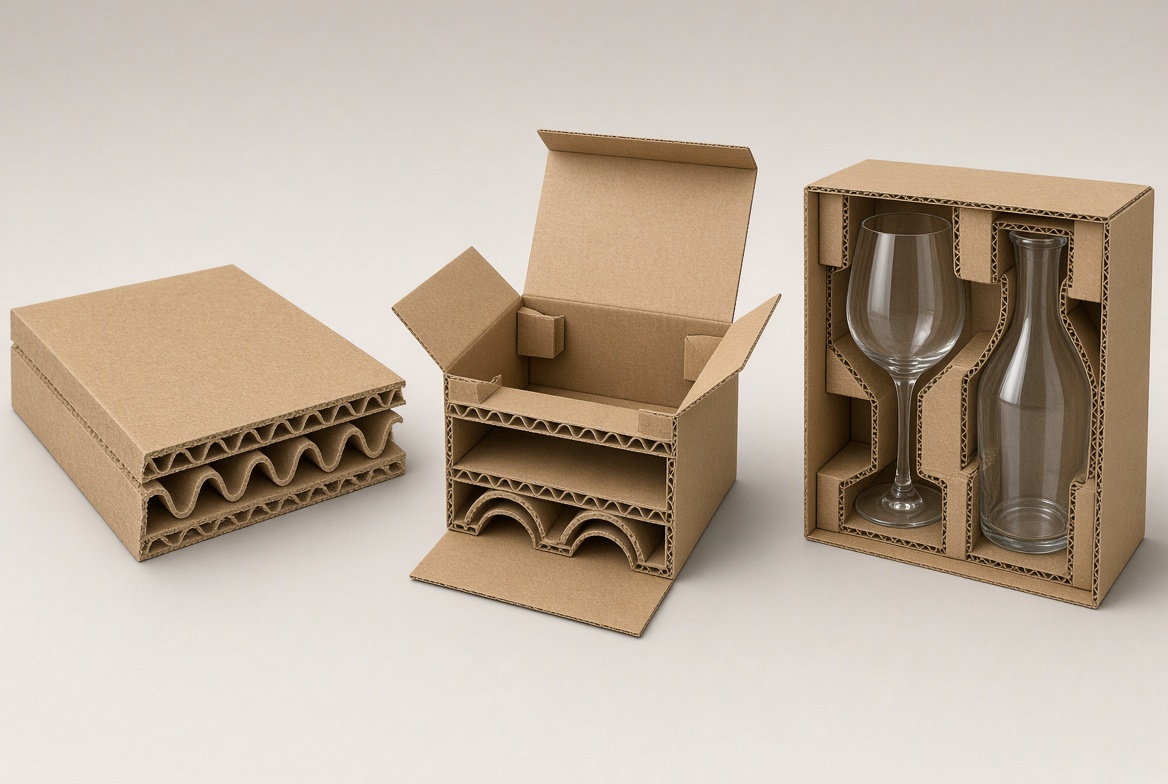
The confusion between custom packaging boxes and corrugated boxes often comes from treating both terms as materials. They are not.
A corrugated box is identified by what it is made of. A custom packaging box is identified by how it is designed and used.
A corrugated carton can be completely unprinted and standard-sized. It can also be a highly customized branded mailer with inside printing, tear strips, self-locking tabs, custom inserts, and retail-quality graphics.
Likewise, a custom packaging box may be made from rigid greyboard, folding carton board, kraft paperboard, or corrugated board depending on the product and delivery channel.
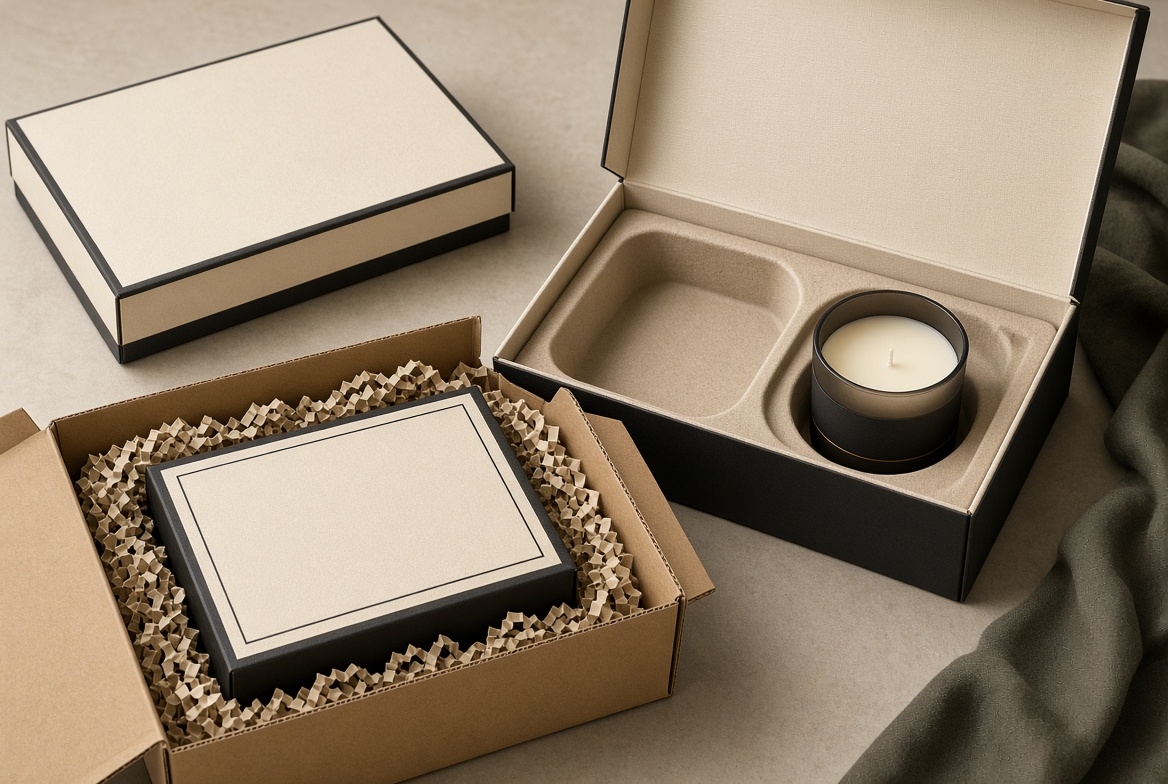
Consider a premium candle brand selling online:
1. The candle is placed in a custom rigid gift box to create a premium presentation.
2. A molded-pulp or paperboard insert holds the glass vessel securely.
3. The gift box is placed inside a corrugated shipping box for parcel delivery.
4. Void fill or a fitted corrugated insert prevents movement during transit.
In this case, the brand needs both solutions. The custom box sells the product; the corrugated box protects it.
Corrugated boxes are generally the stronger option when a package must withstand shipping networks, stacking, warehouse handling, or export transport. The fluted center layer helps absorb impacts and improves resistance to crushing.
However, protection is not determined by corrugated board alone. The real performance of a shipping package depends on:
- Product weight and center of gravity
- Product fragility and surface sensitivity
- Box dimensions and empty space
- Flute type and board grade
- Internal inserts, dividers, and cushioning
- Stacking conditions
- Route length, climate, and handling frequency
- Closure method, including tape, glue, or self-locking tabs
A thin, oversized corrugated box with poor void control can fail even when the board itself looks strong. Conversely, a right-sized custom mailer with fitted inserts may provide excellent protection for lightweight but delicate products.
Choose corrugated packaging when you need:
- Reliable protection during courier or freight shipping
- Strong stacking performance for storage and warehousing
- Better puncture resistance for heavy or irregular products
- A package for long-distance or export transportation
- A lightweight alternative to heavier protective formats
- Cost-effective bulk shipping protection
For fragile glass, ceramics, electronics, or products with multiple components, use corrugated board together with well-designed internal supports rather than relying on box strength alone.
Custom packaging usually has the advantage when the primary goal is visual impact. Folding cartons and rigid boxes commonly provide smoother print surfaces and support sophisticated finishing techniques.
These options are especially useful for products sold in retail environments or products where presentation strongly affects perceived value.
Corrugated boxes can also be highly effective brand tools. E-flute and micro-flute mailer boxes offer a more refined surface for printing while retaining useful structural strength. They are popular for subscription boxes, apparel deliveries, direct-to-consumer beauty products, and influencer kits. Micro-flute corrugated material is valued for combining a compact profile, structural integrity, and detailed graphics.
A strong custom packaging project usually considers more than a logo on the lid.
- Structural style: mailer, tuck-end, drawer, magnetic closure, two-piece lid-and-base, or auto-bottom
- Dimensions: designed around the actual product and protective insert
- Material: paperboard, kraft board, corrugated board, rigid board, or a hybrid structure
- Printing: inside and outside printing, color matching, patterns, product instructions, or storytelling
- Finish: matte or gloss lamination, foil, embossing, debossing, spot UV, or textured paper
- Internal protection: dividers, paper inserts, corrugated pads, pulp trays, or custom partitions
- Opening experience: tear strips, ribbon pulls, tabs, concealed magnets, or resealable closures
The most effective designs make the package easier to open, understand, store, recycle, and reuse.
There is no universal answer to which option costs less. A plain standard corrugated carton is usually economical, but a fully customized corrugated mailer with premium printing and inserts may cost more than a simple folding carton.
The total packaging cost should include more than the unit price.
| Cost Driver | Why It Matters |
|---|---|
| Board grade | Stronger or multi-wall corrugated board generally uses more material |
| Box size | Oversized packaging increases material, storage, and shipping costs |
| Print coverage | Full-color printing, internal printing, and special colors increase complexity |
| Finishing | Foil, embossing, lamination, and special coatings add value and cost |
| Inserts | Custom inserts improve protection but require extra materials and assembly |
| Order quantity | Larger production runs often reduce the per-unit cost |
| Freight efficiency | Right-sized boxes can reduce dimensional-weight charges and void-fill needs |
| Damage rate | A better box may cost more initially but reduce returns and replacement costs |
A practical rule is to evaluate cost per successful delivery, not just cost per box. If an inexpensive carton leads to damaged products, poor reviews, or expensive repacking, it may be the more costly choice over time.
Paper-based packaging can support circular material use when brands select recyclable materials, avoid unnecessary mixed-material components, and provide clear disposal guidance.
Corrugated packaging has a well-established recovery stream. The Fibre Box Association states that the average corrugated box contains 52% recycled content and that old corrugated container recovery has remained around 90% over the past decade. The American Forest & Paper Association reported a 93.6% cardboard recycling rate in the United States for 2022.
These figures are encouraging, but recyclability should be considered at the design stage. A paper box may become harder to recover if it uses excessive plastic lamination, permanent foam components, hard-to-separate magnets, or heavily contaminated contents.
For a more practical paper-packaging approach:
1. Right-size the box to reduce material use and shipping volume.
2. Match protection to actual risk instead of automatically choosing the heaviest board.
3. Use recyclable paper-based inserts where they can replace mixed-material cushioning.
4. Avoid unnecessary components that make separation difficult.
5. Print simple disposal instructions where local recycling systems support them.
6. Test the finished package, not only the material sample, before production.
Use custom packaging boxes when your product requires strong visual presentation, precise product fit, retail appeal, or a premium unboxing experience. Use corrugated boxes when shipping performance, stacking strength, and logistical protection are the priority.
For many brands, the best answer is a layered packaging system:
- Retail product: Custom folding carton or rigid box
- Direct-to-consumer order: Printed corrugated mailer box
- Fragile premium item: Custom product box plus corrugated outer shipper
- Bulk wholesale order: Corrugated master carton with internal dividers
- Export shipment: Double-wall or triple-wall corrugated packaging matched to product weight and route conditions
Before finalizing a specification, request physical samples and test them with the actual product. Check fit, opening experience, printing quality, closure reliability, stacking behavior, and transit protection. Packaging decisions should be based on the complete supply chain, not only on a digital rendering.
The difference between custom packaging boxes and corrugated boxes is not about choosing appearance over protection. The strongest packaging programs use the right structure, board grade, print treatment, and insert system for each stage of the customer journey.
Maituohong Packaging can help you develop custom mailer boxes, shipping boxes, rigid gift boxes, folding cartons, and protective paper packaging that fit your product, brand standards, and fulfillment requirements. Share your product dimensions, weight, order quantity, print requirements, and shipping method to start building a packaging solution that protects products and elevates every delivery.
No. Custom packaging boxes are designed around specific product, branding, and functional requirements. Corrugated boxes are made from a specific fluted fiberboard material. A custom packaging box can be corrugated, but it can also be made from paperboard, rigid board, or other paper-based materials.
Usually, yes. Corrugated boxes are widely used for shipping because their fluted structure adds cushioning, compression strength, and puncture resistance. The correct board grade, box size, and internal protection are still essential.
For lightweight to medium-weight products, a custom corrugated mailer box is often an excellent choice. It can combine self-locking construction, shipping protection, branding space, and an appealing unboxing experience.
Yes. Corrugated boxes can be customized with logos, colors, product instructions, patterns, QR codes, inside printing, and campaign graphics. E-flute and micro-flute corrugated materials are particularly suitable when a more refined print appearance is needed.
Use a rigid box when presentation and perceived value are important. If that luxury product will be shipped by courier, place the rigid box inside a properly sized corrugated shipping box with suitable internal protection.
Corrugated boxes are generally recyclable where paper and cardboard collection is available. Remove non-paper components when possible, keep the material dry and clean, and follow local collection rules. Cardboard recycling in the United States reached 93.6% in 2022, according to the American Forest & Paper Association.
Single-wall corrugated board is suitable for many standard e-commerce and consumer products. Double-wall board is generally better for heavier, fragile, high-value, or long-distance shipments because it offers improved resistance to crushing and punctures.
1. [Fibre Box Association — The Corrugated Packaging Industry]
2. [American Forest & Paper Association — Recycling Information and Cardboard Recovery Data]
3. [UPrinting — Custom Box Material Comparisons: Cardboard, Kraft, Corrugated, and More]


