
Views: 243 Author: Maituohong Packaging Publish Time: 2026-08-26 Origin: Site


Content Menu
● What Are Standard Cereal Box Dimensions?
>> Common Cereal Box Size Chart
● Why Cereal Box Dimensions Matter
● How to Measure Cereal Box Dimensions Correctly
>> A Simple Measurement Process
● How to Calculate Cereal Box Volume
>> Weight Does Not Define Box Size
● Choosing the Right Cereal Box Size
>> Product and Inner Bag Requirements
● Materials and Construction for Cereal Cartons
● Practical Design Tips From a Packaging Manufacturer
>> Keep Key Information on the Front Panel
>> Plan the Side Panels Carefully
>> Test Before Mass Production
● Common Cereal Box Dimension Mistakes
● Create Custom Cereal Boxes With Maituohong Packaging
>> What are the standard cereal box dimensions?
>> How tall is a standard cereal box?
>> What size is a mini cereal box?
>> Does cereal weight determine carton size?
>> What material is used for cereal boxes?
>> Can cereal boxes be customized?
Choosing the right cereal box dimensions is not simply a matter of fitting a product inside a carton. For cereal brands, co-packers, retailers, and emerging food businesses, the box size affects shelf visibility, shipping efficiency, product protection, material consumption, and the customer's perception of value.
At Maituohong Packaging, we have spent more than 18 years designing and manufacturing custom paper packaging. From our production experience, the best cereal carton is not necessarily the largest or thickest option. It is the box that fits the inner bag properly, presents the brand clearly, survives distribution, and works efficiently across retail shelves and shipping cartons.
This guide explains standard cereal box sizes, how to calculate cereal box volume, how to measure a carton accurately, and how to develop custom cereal packaging that is practical, attractive, and production-ready.
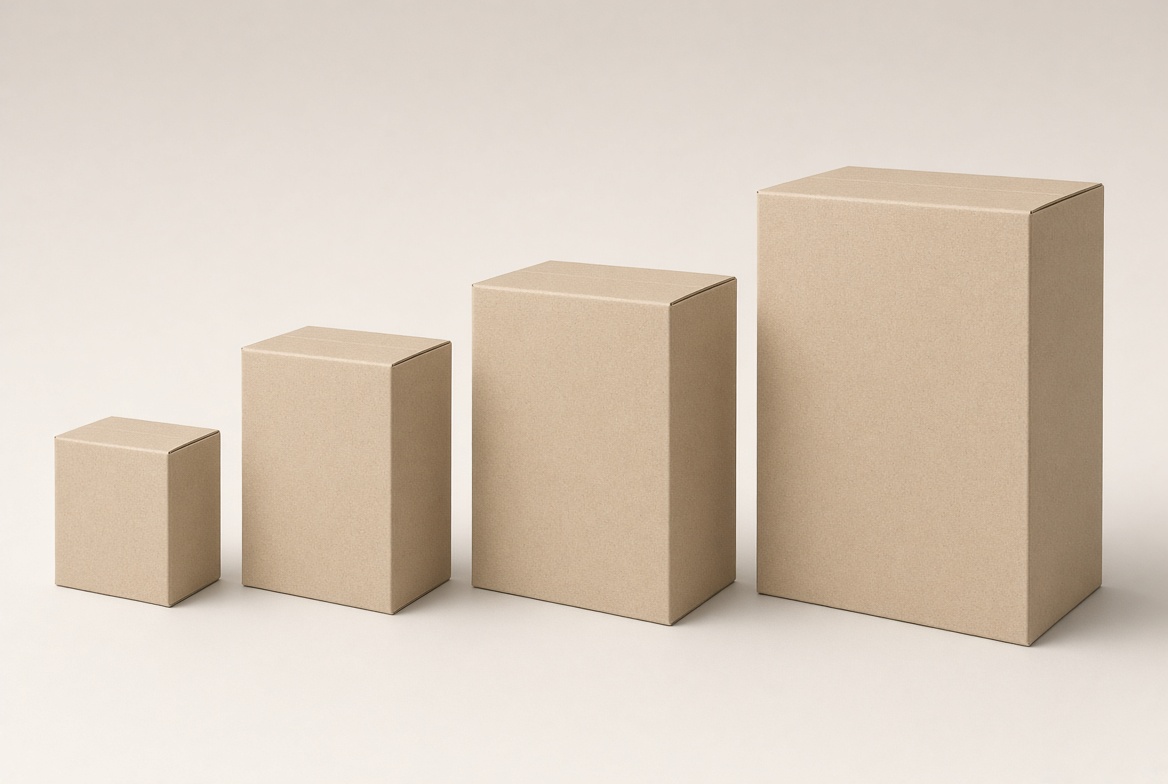
A common regular cereal box is approximately 12 inches high × 8 inches wide × 2.25 inches deep.
In metric units, that is approximately:
- 304.8 mm × 203.2 mm × 57.2 mm
- 30.5 cm × 20.3 cm × 5.7 cm
However, there is no universal cereal box dimension that fits every product. Final measurements vary according to cereal density, net weight, bag format, retail channel, shipping arrangement, and the visual direction of the brand.
For example, a light puffed cereal can require a larger internal volume than a denser granola product with the same net weight. This is why packaging development should begin with the actual product fill volume—not only the product's weight.
| Cereal Box Type | Typical Dimensions (H × W × D) | Typical Use |
|---|---|---|
| Mini cereal box | 5–6 × 3.5–4.5 × 1–1.5 in | Samples, hotels, school meals, variety packs |
| Single-serve cereal box | 6–8 × 4–5 × 1.25–1.75 in | Individual portions and travel formats |
| Regular cereal box | 11.5–12.5 × 7.5–8 × 2–2.5 in | Mainstream retail cereal |
| Family-size cereal box | 12.5–14 × 8.5–10 × 2.5–3.5 in | Multi-serving household packs |
| Jumbo cereal box | 13.5–15 × 9.5–11 × 3–4 in | Bulk retail and club-store formats |
| Custom cereal carton | Made to specification | Specialty cereal, premium brands, e-commerce |
Important: These are planning ranges, not fixed industry rules. The final dieline should always be based on the finished inner bag, target fill level, packing method, and distribution test requirements.
The outer cereal carton has several jobs. It provides a printable brand surface, protects the sealed product bag, improves pallet handling, and gives retailers a format that fits their shelf plan.
A poorly sized carton can create problems that are easy to overlook during early design stages:
- Oversized boxes use more paperboard and take up unnecessary freight space.
- Undersized boxes may crush the product bag, distort panels, or create poor top-flap closure.
- Incorrect depth can reduce shelf stability or cause inefficient case packing.
- Weak material selection can lead to scuffing, panel bowing, and damaged corners.
- Inconsistent dimensions can complicate automated filling, case packing, and retail shelf replenishment.
The carton dimensions also shape consumer expectations. A tall, narrow package may look premium and modern. A wider family-size carton can communicate abundance and value. A compact single-serve format may be more suitable for hospitality, airline, school, or subscription-box use.
Cereal box measurements are usually stated as:
Height×Width×Depth
For a standing cereal carton:
- Height is the vertical measurement from the bottom panel to the top panel.
- Width is the front-facing measurement across the main display panel.
- Depth is the side-panel measurement from front to back.
Before approving a custom cereal box, measure both the inner bag and the finished outer carton. The outer dimensions are important for shelf planning and shipping. The internal dimensions are critical for bag clearance, smooth insertion, and reliable production.
1. Fill the cereal into its intended inner bag at the planned net weight.
2. Seal the bag using the actual production method.
3. Measure the filled bag's height, width, thickness, and natural expansion.
4. Add practical clearance for insertion and easy packing.
5. Create a prototype carton based on the proposed dieline.
6. Test closure, bag fit, shelf standing, case packing, and transport resistance.
7. Confirm the final dimensions before full-scale production.
In our experience, the prototype stage is where many costly mistakes are prevented. A dimension that looks correct on a digital drawing may behave differently once a filled bag is placed inside the carton.
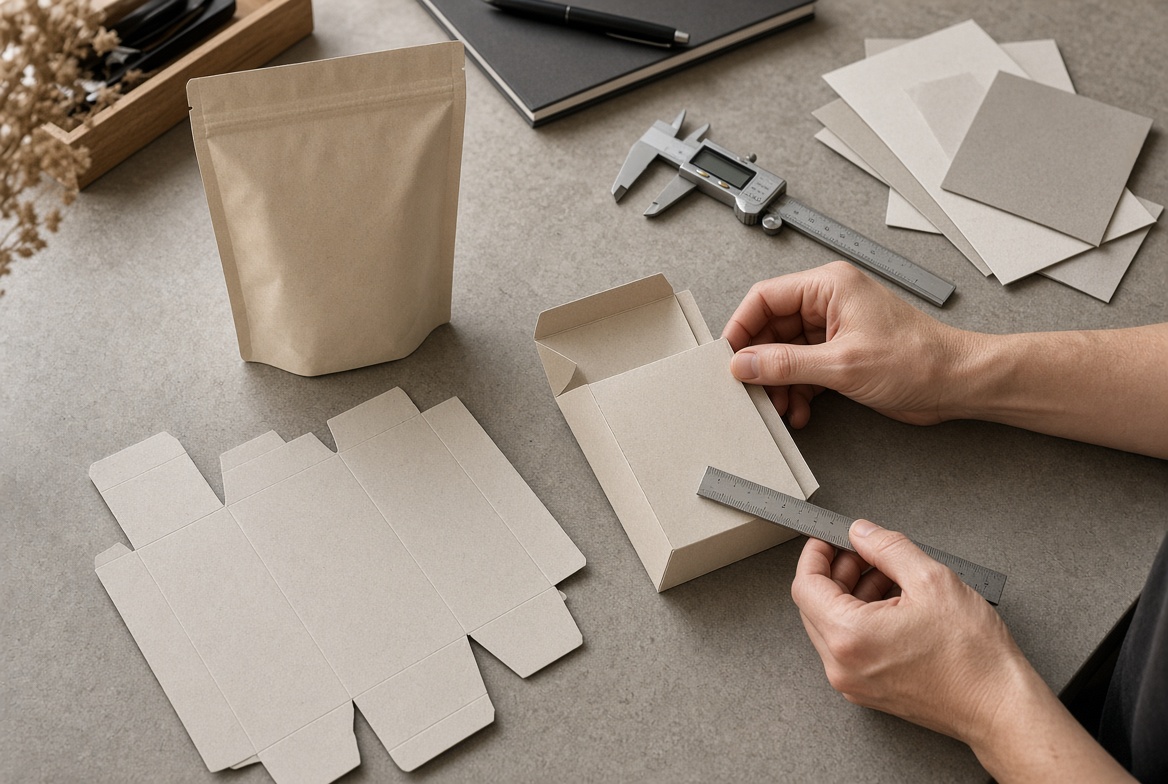
The basic formula is:
Volume=Height×Width×Depth
For a cereal box measuring 12 × 8 × 2.25 inches:
12×8×2.25=216 cubic inches
This result represents the approximate external geometric volume. It should not be treated as the exact usable product capacity.
The usable internal space is lower because of paperboard thickness, folded flaps, glue areas, and the room needed for the inner bag. In addition, cereal fills are irregular. Flakes, puffs, clusters, and granola do not behave like a solid block.
A common packaging mistake is assuming that two products with the same net weight need the same carton. They may not.
For example:
- A 12-ounce dense granola may fit into a relatively compact carton.
- A 12-ounce puffed cereal may need a substantially larger volume.
- A cereal with delicate clusters may require more headspace to reduce crushing.
- A product with promotional inserts may require extra internal clearance.
Use net weight for labeling and product selling. Use actual filled-bag volume for packaging development.
A custom carton should balance product requirements with commercial realities. The most successful projects usually consider the following factors together rather than making decisions based on a single dimension.
Start with the product itself. Consider the cereal's bulk density, particle size, fragility, dust level, and fill method. The inner bag should fit without being compressed excessively, while avoiding a visibly empty carton.
For cereal sold in flexible barrier bags, the outer carton is generally a secondary protective and branding layer. The inner bag must provide the appropriate freshness and moisture barrier for the food product.
Retailers may have preferred shelf heights, shelf depths, case quantities, and planogram requirements. A box that is too tall may not fit a shelf. A carton that is too deep may create awkward facings or reduce the number of units that fit in a row.
Before finalizing dimensions, confirm:
- Available shelf height
- Shelf depth
- Desired number of front-facing units
- Retail case configuration
- Barcode placement requirements
- Display-ready packaging needs
A cereal box should not be designed in isolation. It must work inside a master carton, on a pallet, and throughout the distribution process.
A small change in box width or depth can affect the number of units per shipping case. That can influence material use, warehouse storage, pallet utilization, and transportation cost.
As a practical rule, design the retail carton and shipping carton together. This helps avoid a situation where an attractive individual box creates inefficient case dimensions.
Packaging proportions influence how a product is perceived before the customer reads a word.
| Brand Goal | Useful Structural Direction |
|---|---|
| Premium or organic cereal | Clean, tall format with refined finishing and uncluttered panels |
| Family-value cereal | Larger format with clear serving and value messaging |
| Kids' cereal | Bold front panel, easy-to-read graphics, strong shelf visibility |
| Single-serve cereal | Compact format, simple opening, efficient multipack arrangement |
| E-commerce cereal | Stronger outer protection and dimensions optimized for shipping |
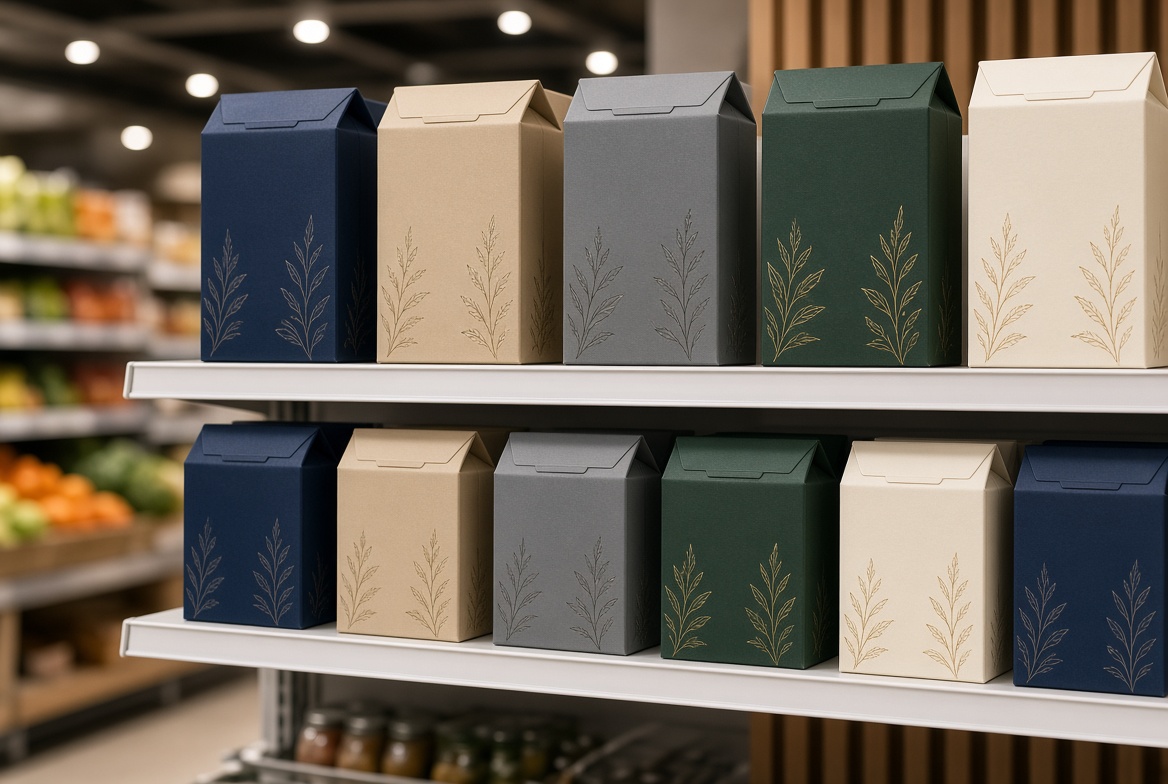
Most cereal cartons are made from paperboard, selected for print quality, stiffness, low weight, and recyclability potential. The exact grade and caliper should match the box dimensions, product weight, printing design, and logistics demands.
For standard dry-food applications, common considerations include:
- SBS paperboard: Smooth print surface and premium visual appearance.
- FBB paperboard: A lightweight but stiff option for many folding-carton applications.
- Recycled paperboard: Can support recycled-content goals when suitable for the packaging structure and market requirements.
- Kraft-based paperboard: Often chosen when a natural, rustic, or eco-conscious visual style is desired.
- Protective coatings: Useful where scuff resistance, moisture resistance, or enhanced print durability is required.
Paper and paperboard are widely used for food packaging, but food-contact compliance depends on the full material system. This includes the inner bag, inks, coatings, adhesives, and any other components that may contact food directly or indirectly.
For this reason, the cereal carton and the primary food-contact packaging should be evaluated as separate but connected parts of one packaging system.
Over the years, we have seen that the best packaging projects are built through early coordination between the brand, food producer, designer, and carton manufacturer.
The front panel is the most valuable visual area. It should clearly communicate:
- Product name
- Flavor or variety
- Main consumer benefit
- Net weight
- Brand identity
- Product image or serving suggestion, where appropriate
Avoid overcrowding the front panel. A well-proportioned cereal carton gives the design enough breathing room to remain readable at shelf distance.
Side panels are often underestimated. They can carry nutritional information, preparation guidance, ingredients, brand storytelling, QR codes, certifications, and product claims.
If the box depth is too narrow, important text can become difficult to read or may force an overly small font size. This is one reason why a deeper carton can sometimes improve the overall user experience, even when the product volume does not strictly require it.
A physical sample is essential. Test the prototype with the actual filled bag and evaluate:
- Box opening and closing performance
- Side-seam strength
- Top-flap alignment
- Resistance to crushing
- Printing alignment
- Bag insertion speed
- Packing efficiency in master cartons
- Appearance after transport simulation
A strong carton is not defined only by board thickness. Good structural design, correct grain direction, accurate scoring, suitable glue application, and realistic testing are equally important.
Avoid these frequent issues when developing custom cereal packaging:
- Choosing a box based only on competitor dimensions.
- Using net weight without checking real fill volume.
- Ignoring headspace and bag expansion.
- Designing the retail carton before the shipping case.
- Selecting board thickness before structural testing.
- Forgetting shelf-height limitations.
- Making side panels too narrow for required information.
- Approving artwork before confirming the final dieline.
- Treating the outer carton as the main freshness barrier when the inner bag is responsible for product protection.
The right cereal box dimensions can improve product protection, shelf presentation, packing efficiency, and the perceived value of your brand. Whether you need compact single-serve cartons, standard retail cereal boxes, family-size packaging, or a completely custom folding-carton structure, the process should begin with your product and distribution needs.
At Maituohong Packaging, we combine more than 18 years of paper packaging manufacturing experience with practical structural design support. We help brands develop high-quality folding cartons that fit their product, visual identity, production process, and commercial goals.
Contact Maituohong Packaging today to discuss your cereal carton size, material, printing, finish, and custom packaging requirements.
A common regular cereal box measures approximately 12 × 8 × 2.25 inches. Actual dimensions vary by cereal type, net weight, inner bag volume, and retail requirements.
Most regular cereal cartons are around 11.5 to 12.5 inches tall. Family-size and jumbo cartons are commonly taller, depending on their product capacity and shelf requirements.
Mini cereal boxes are often about 5 to 6 inches high, 3.5 to 4.5 inches wide, and 1 to 1.5 inches deep. They are commonly used for samples, hospitality packs, and individual servings.
Not by itself. Cereal density varies significantly. A lightweight puffed cereal may require a larger carton than a denser cereal with the same net weight. The filled inner bag volume is the most reliable starting point.
Most cereal boxes use paperboard, such as SBS, FBB, kraft-based board, or recycled paperboard. The right choice depends on the desired print quality, stiffness, sustainability objectives, product weight, and supply-chain conditions.
Yes. Custom cereal cartons can be developed in different heights, widths, depths, board grades, printing methods, coatings, embossing options, and structural formats. A prototype should be tested before mass production.
1. [Tycoon Packaging — What Are Cereal Box Dimensions? Know Everything in Detail]
2. [W.K. Kellogg Co. — Kellogg's Fun Pak Product Specifications]
4. [Trellis — Kellogg's Reshapes Cereal Boxes, Cuts Materials]
5. [Gentlever — How Tall Is a Box of Cereal?]
6. [U.S. Food and Drug Administration — Food Contact Substances]


