
Views: 277 Author: Maituohong Packaging Publish Time: 2026-08-23 Origin: Site


Content Menu
● What Are Tissue Box Dimensions?
● Standard Tissue Box Dimensions by Format
● How to Measure a Tissue Box Correctly
>> Internal vs. External Dimensions
● Choosing the Right Box Size for Tissue Count
● Rectangular, Cube, and Flat Tissue Boxes
● The Tissue Dispensing Opening Matters
● Materials for Custom Tissue Boxes
● A Practical Formula for Custom Tissue Box Dimensions
● Packaging Design Tips for Better Shelf Impact
● Common Tissue Box Sizing Mistakes
● Work With Maituohong Packaging
>> What is the most common tissue box size?
>> What size is a cube tissue box?
>> Should I provide internal or external tissue box dimensions?
>> How much extra space should be left inside a tissue box?
>> Can I customize the tissue box opening?
>> What material is best for premium tissue box packaging?
>> Can tissue boxes use recycled or certified paper materials?
Choosing the right tissue box dimensions is not simply a matter of making a box look attractive. The size of a facial tissue box affects sheet protection, dispensing performance, shelf presence, shipping efficiency, material use, and the customer's everyday experience.
At Maituohong Packaging, we have spent more than 18 years developing custom paper packaging and premium rigid paper boxes. From our production experience, the best tissue box is designed around the tissue stack first—not around an assumed "standard size." This guide explains how to select practical tissue box dimensions, evaluate common formats, and build a custom box that works reliably from packing line to end user.
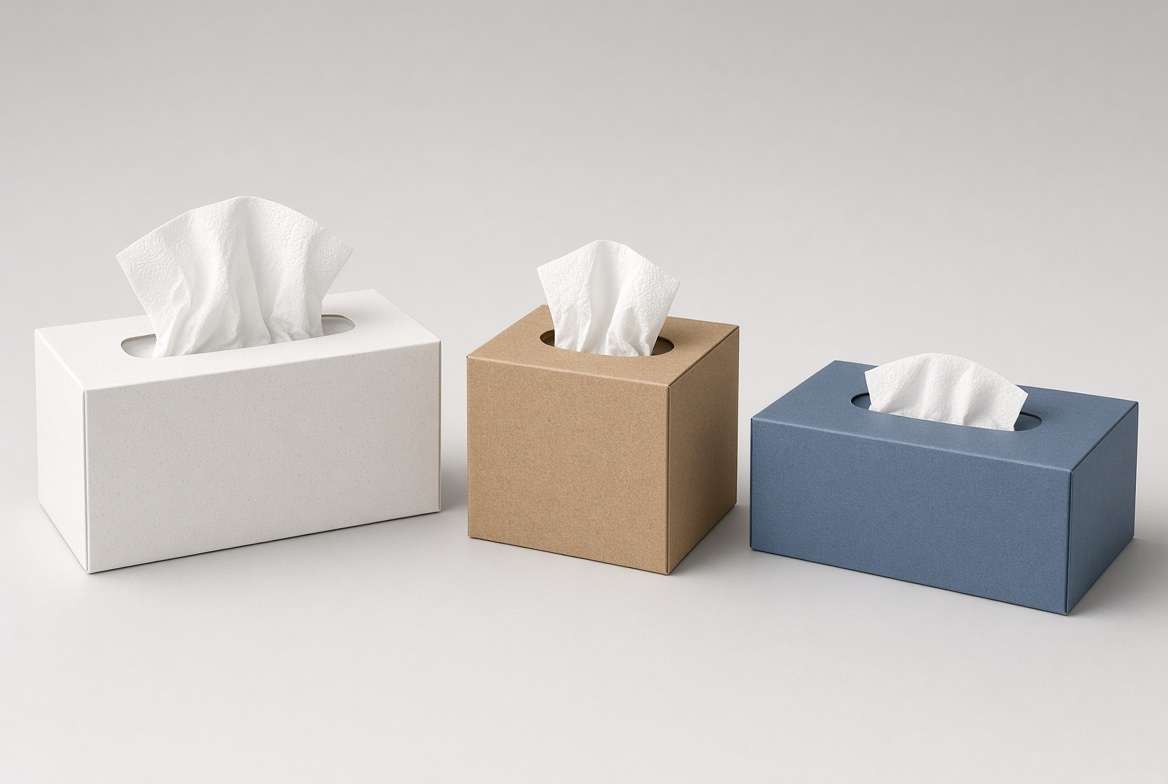
Tissue box dimensions describe the external measurements of a box:
- Length (L): The longest horizontal side
- Width (W): The shorter horizontal side or depth
- Height (H): The vertical measurement from the base to the top panel
For example, a rectangular facial tissue box may be listed as:
8.875 × 4.75 × 3.47 inches
or
225 × 121 × 88 mm
However, external dimensions are only one part of the specification. A custom tissue box manufacturer must also calculate:
- Internal usable space
- Tissue sheet folded size
- Tissue stack height
- Tissue count
- Board thickness
- Folding and gluing allowances
- Dispensing opening size
- Packing and shipping requirements
A box that looks correct on a drawing can still fail in production if the internal clearance is too tight or the dispensing opening is incorrectly positioned.
There is no single global standard for all facial tissue boxes. Sizes differ according to tissue count, sheet fold, retail channel, brand positioning, and the intended place of use.
The table below shows commonly used tissue box dimensions as a practical starting point.
| Tissue Box Type | Typical Dimensions (Inches) | Typical Dimensions (mm) | Common Use |
|---|---|---|---|
| Standard rectangular box | 8.875 × 4.75 × 3.47 | 225 × 121 × 88 | Homes, offices, retail shelves |
| Slim rectangular box | 8.875 × 4.75 × 2.28 | 225 × 121 × 58 | Lower tissue counts, promotional packs |
| Deep rectangular box | 8.875 × 4.75 × 4.63 | 225 × 121 × 118 | Family packs and high-count tissues |
| Cube tissue box | 4.5 × 4.5 × 5.0 | 114 × 114 × 127 | Cars, desks, bathrooms, hospitality |
| Flat tissue box | Approx. 8.3 × 7.8 | Approx. 211 × 198 | Professional and commercial environments |
| Pocket tissue pack | 4.0 × 2.0 × 1.0 | 102 × 51 × 25 | Travel, sampling, convenience retail |
| Tall slim tissue box | 3.25 × 3.25 × 8.75 | 83 × 83 × 222 | Premium, decorative, space-saving formats |
A common rectangular consumer box is close to 8.875 × 4.75 × 3.47 inches, but this should never be copied blindly. A 72-count pack, 120-count pack, and 230-count pack can require substantially different heights even when length and width remain similar.
When requesting a quotation, buyers should clearly state whether they need internal dimensions or external dimensions. Confusing the two is one of the most frequent causes of avoidable sampling revisions.
Use this sequence:
1. Measure the tissue stack after folding and compression.
2. Record the stack length, width, and height.
3. Add appropriate clearance for loading and smooth dispensing.
4. Account for the thickness of the selected paperboard.
5. Confirm the final external dimensions after structural design.
6. Test the box with actual tissues before mass production.
For a rigid or premium paperboard tissue box, board thickness may have a more visible effect on final dimensions than it does for a lightweight folding carton. The structure must be designed accordingly.
Internal dimensions refer to the usable space inside the box. These measurements determine whether the tissues fit properly.
External dimensions refer to the finished dimensions visible to customers, retailers, and shipping teams.
For example, a box with an external height of 90 mm may have an internal height of approximately 88 mm or less, depending on board thickness, folded edges, and construction style. If a tissue stack is 88 mm high, this design may be too tight.
A well-designed tissue box should allow the tissue stack to enter without crushing while avoiding excessive empty space that makes the product feel loose or low-value.
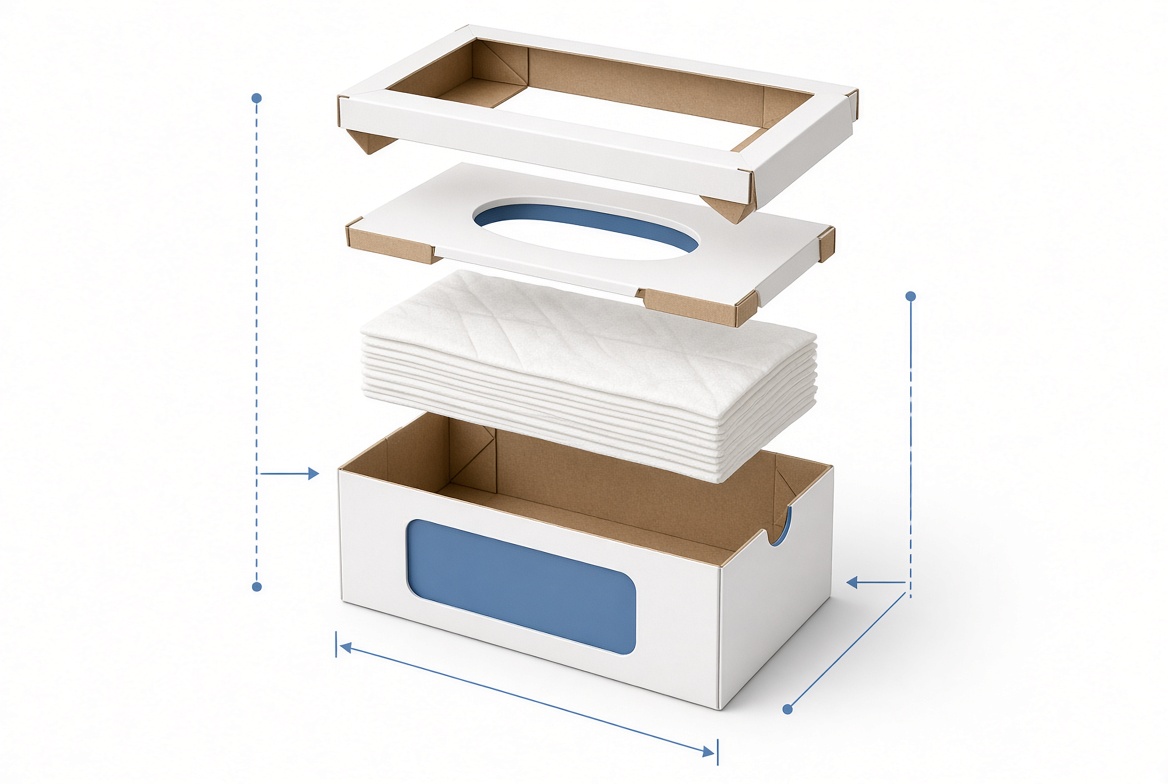
The number of sheets is one of the most important factors when determining tissue box dimensions. More sheets generally increase box height, but tissue thickness, embossing, ply count, and fold style also matter.
| Tissue Count | Recommended Packaging Direction | Typical Application |
|---|---|---|
| 10–20 sheets | Pocket pack or mini carton | Travel, hotel welcome kits, samples |
| 50–90 sheets | Cube or slim rectangular box | Cars, desks, bathrooms |
| 100–160 sheets | Standard rectangular box | Everyday household use |
| 180–230 sheets | Deep rectangular box | Family packs, offices, schools |
| 250+ sheets | Custom high-capacity box or refill format | Institutions and high-traffic locations |
Do not estimate dimensions based on tissue count alone. A 100-sheet stack made with soft, embossed 3-ply tissues may take more vertical space than a higher-count stack made with thinner 2-ply tissues.
The tissue stack is the master specification. The carton should be engineered around the real product sample, not a generic size chart.
Rectangular boxes are the most recognizable format for facial tissues. They work well on shelves, tables, counters, and office desks because they have a stable base and a familiar dispensing direction.
They are particularly suitable for:
- Household tissue products
- Retail-ready tissue packaging
- Private-label facial tissues
- Premium printed paperboard cartons
- Multipack and family-size formats
For many brands, a rectangular box around 9 inches long and 4.5–5 inches wide offers a balanced combination of shelf efficiency and tissue capacity.
Cube tissue box dimensions are often close to 4.5 × 4.5 × 5 inches, although custom options can be larger or smaller. This compact format has a small footprint and works especially well in limited spaces.
Cube boxes are ideal for:
- Car interiors
- Hotel guest rooms
- Restaurant tables
- Bathroom counters
- Cosmetic counters
- Reception desks
- Corporate promotional gifts
A cube format also provides four large printable side panels, which makes it useful for seasonal artwork, brand storytelling, product illustrations, and premium visual design.
Flat tissue boxes are wider and lower than standard rectangular tissue boxes. They are often used in professional, hospitality, medical, and commercial settings where a low-profile box fits neatly into dispensers or designated shelf spaces.
This format can be useful when the product must slide into a tray, wall dispenser, bedside cabinet, or hospitality amenity display.
The top opening is not a decorative afterthought. It directly affects how the consumer uses the product.
A poorly designed opening can cause several problems:
- Tissues tear during pulling
- Multiple sheets come out at once
- The next tissue does not pop up properly
- The opening collapses after repeated use
- Dust enters the box too easily
- The top panel loses visual appeal
For standard facial tissue boxes, the opening should be sized and shaped around the actual fold pattern. Oval, curved rectangle, leaf-shaped, wave-shaped, and die-cut openings are common choices.
From a manufacturing viewpoint, opening design should be tested with the real tissue material. A soft, highly embossed tissue behaves differently from a thinner, smoother sheet. Even a small change in tissue friction can alter the dispensing experience.
Material choice affects both appearance and functional performance. The right board should protect the tissues, print cleanly, and remain stable in transport and everyday use.
Common options include:
- White paperboard: Suitable for clear branding, colorful printing, and retail presentation
- Coated paperboard: Provides a smooth surface for detailed graphics and premium finishes
- Kraft paperboard: Creates a natural, understated appearance for eco-conscious positioning
- Recycled paperboard: Can support recycled-content packaging programs where product requirements allow
- Rigid board with wrapped paper: Best for luxury tissue boxes, reusable gift packaging, and hospitality presentation
For brands making sustainability claims, material selection and labeling should be verified carefully. Forest certification claims require appropriate chain-of-custody controls and approved label use; they should not be treated as a generic design feature.
A reliable custom tissue box design starts with a simple sizing formula:
Internal Box Size=Compressed Tissue Stack Size+Loading and Dispensing Clearance
Then:
External Box Size=Internal Box Size+Paperboard Construction Allowance
The required clearance will vary by construction. In general, the box should provide enough space for smooth loading and dispensing without allowing the stack to shift excessively.
Before approving production, ask your packaging supplier for:
- A structural dieline
- A plain white sample
- A printed pre-production sample, if artwork is complex
- A test using your actual tissue stack
- Carton-packing information
- Shipping volume and palletization details
This process is especially important for custom folding gift box-style tissue packaging, premium hotel amenities, subscription boxes, and branded corporate gifts.
Tissue packaging is used frequently and often remains visible in the home or workplace. That makes it a long-lasting brand touchpoint rather than a disposable outer carton.
Consider these design choices:
- Use a clear front panel with a strong product name.
- Keep dispensing instructions simple and visible.
- Select colors that match the use environment, such as calm neutrals for hospitality or bright colors for family products.
- Add tactile finishes, such as soft-touch lamination, embossing, or foil stamping, for premium collections.
- Use side panels for brand story, product benefits, care instructions, or sustainability information.
- Ensure important legal and product information remains readable after the box is opened.
For premium positioning, a reusable rigid tissue box can become part of interior décor. For mass retail, a lightweight folding carton may provide a more efficient balance of cost, shipping volume, and display impact.
Even visually attractive tissue boxes can underperform when basic structural details are missed.
Avoid these common mistakes:
- Designing the carton before confirming tissue stack dimensions
- Specifying external dimensions only
- Ignoring paperboard thickness
- Using a dispensing opening that is too narrow or too large
- Choosing a box height with no tolerance for production variation
- Forgetting retail shelf and master-carton requirements
- Overusing decorative finishes that reduce readability
- Making unsupported environmental claims
- Skipping physical dispensing tests before mass production
A successful box must work as a packaging structure, a retail display tool, a shipping unit, and an everyday consumer product.
Maituohong Packaging specializes in custom paper packaging, folding gift boxes, rigid paper boxes, and tailored packaging solutions. With more than 18 years of manufacturing experience, we help brands develop tissue box packaging that balances practical dimensions, premium appearance, printing quality, and efficient production.
Whether you need a compact cube tissue box, a standard rectangular facial tissue carton, a luxury reusable tissue box, or a fully customized promotional design, our team can support the process from concept and structural development to sampling and mass production.
Send us your tissue size, sheet count, preferred box style, artwork requirements, and target order quantity. We will help you develop a tissue box that fits your product precisely and presents your brand professionally.
A common rectangular facial tissue box measures approximately 8.875 × 4.75 × 3.47 inches. Actual dimensions vary according to tissue count, ply, folding method, and brand requirements.
A typical cube tissue box is approximately 4.5 × 4.5 × 5 inches. Cube boxes are popular for cars, desks, bathrooms, hotel rooms, and compact retail displays.
Provide both whenever possible. Internal dimensions ensure the tissues fit and dispense correctly, while external dimensions are important for retail shelves, master cartons, shipping, and visual presentation.
The allowance depends on tissue thickness, fold style, box material, and loading method. Your packaging supplier should test the actual tissue stack and add controlled clearance that prevents crushing without allowing excessive movement.
Yes. You can customize the opening shape, size, position, and reinforcing method. However, the final design should be tested with the actual tissues to make sure sheets pull out smoothly and consistently.
For a premium disposable retail box, coated paperboard is often a strong choice because it supports high-quality printing and finishing. For reusable luxury packaging, rigid board wrapped with specialty paper can offer a more substantial presentation.
Yes, depending on the material, printing requirements, and product positioning. Any recycled-content or forest-certification claim should be verified with your packaging supplier and supported by the correct documentation and labeling controls.
1. [Tycoon Packaging — Tissue Box Dimensions: Comprehensive Guide]
2. [Kleenex — Ultra Soft Facial Tissues Rectangular Box]
3. [Kleenex — Trusted Care Facial Tissues Rectangular Box]
4. [Kimberly-Clark Professional — Kleenex Professional Facial Tissue Flat Box]
5. [Forest Stewardship Council — FSC Certification Information]


