
Views: 217 Author: Maituohong Packaging Publish Time: 2026-09-12 Origin: Site


Content Menu
● What Are Paper Carrier Bags?
● Euro Tote Bags vs. Paper Carrier Bags
● Structural Differences That Matter
>> Paper Carrier Bag Construction
● Material Choices and Their Impact
>> Materials for Euro Tote Bags
>> Materials for Paper Carrier Bags
● Handles: A Small Detail With Major Consequences
● Printing and Finishing Differences
● Choosing the Right Bag for Your Product
>> Choose Paper Carrier Bags When
● A Practical Weight-and-Use Test
● Design for Reuse, Not Just One Trip
● Responsible Material Decisions
● Work With a Packaging Manufacturer Early
>> Are Euro tote bags stronger than paper carrier bags?
>> What is the main difference between a Euro tote bag and a paper carrier bag?
>> Which bag is better for luxury packaging?
>> Can paper carrier bags be customized with a logo?
>> Are Euro tote bags reusable?
>> What paper weight should I choose for a custom paper shopping bag?
>> Should I choose matte or gloss lamination for a Euro tote bag?
Choosing between Euro tote bags and paper carrier bags is not simply a question of appearance. It affects perceived product value, carrying performance, production budget, printing possibilities, customer reuse, and how clearly a retail brand communicates its positioning.
At Maituohong Packaging, we have spent more than 18 years producing custom paper packaging and rigid cardboard gift boxes for brands across retail, fashion, beauty, food, gifting, and e-commerce. In practice, the most successful bag choice begins with one question: What should the customer feel when they pick up the bag?
A Euro tote is usually designed to make an item feel premium, gift-worthy, and memorable. A paper carrier bag is typically designed to move products efficiently, reliably, and economically. Both can be attractive, customizable, and reusable, but they serve different commercial purposes.
This guide compares Euro tote bags vs. paper carrier bags from a manufacturer's perspective, helping buyers, packaging designers, retail teams, and sourcing managers make a more informed decision.

A Euro tote bag is a premium paper shopping bag with a structured body, reinforced construction, and decorative handles. It is commonly used by fashion boutiques, jewelry stores, cosmetics brands, department stores, luxury retailers, and high-end gift businesses.
Euro tote bags are often made with coated art paper, specialty paper, textured paper, or heavy kraft paper. Their construction usually includes reinforced top folds, bottom boards, and strong rope, ribbon, cotton, or paper-twist handles. Many premium Euro totes also use matte or gloss lamination, foil stamping, embossing, debossing, spot UV, or other finishing techniques.
A typical Euro tote bag is intended to do more than carry a purchase. It is part of the customer experience.
Key characteristics of Euro tote bags include:
- Heavy and structured paperboard-like paper construction.
- Reinforced top and bottom areas.
- Cotton rope, satin ribbon, grosgrain ribbon, or premium paper handles.
- High-definition logo printing and decorative surface treatments.
- A strong visual connection with luxury retail packaging.
- Higher perceived value and stronger potential for customer reuse.
Industry suppliers commonly position Euro totes as a more refined form of paper shopping bag, typically featuring reinforced tops and bottoms, gusseted construction, and rope or ribbon handles. Many standard Euro tote formats use paper around 180 gsm or above, although the final material specification should always be based on bag size, product weight, handle type, and intended use.
A paper carrier bag is a general-purpose paper shopping bag designed for convenient product carrying. It is a broad category that can include kraft bags with twisted-paper handles, flat-handle paper bags, die-cut handle bags, and other practical retail bag formats.
Paper carrier bags are widely used by supermarkets, takeaway food brands, bookstores, pharmacies, apparel retailers, bakeries, trade-show exhibitors, and e-commerce businesses. They are valued for their balance of cost, capacity, custom printing potential, and fast production scalability.
Unlike Euro tote bags, paper carrier bags do not necessarily need reinforced boards, decorative handles, or premium laminated finishes. Their primary job is to carry products safely from the store to the customer's destination.
That does not mean a paper carrier bag has to look basic. With the right kraft paper, handle configuration, print treatment, and bag proportions, a carrier bag can still look polished and brand-consistent.
Common paper carrier bag features include:
- Natural brown kraft, white kraft, recycled kraft, or coated paper options.
- Twisted-paper handles, flat-paper handles, or die-cut handles.
- Side gussets and square bottoms for larger capacity.
- One-color to multi-color logo printing.
- Lower material usage than a luxury tote in many cases.
- Efficient packing, shipping, and in-store storage.
For brands that need practical, custom paper shopping bags at scale, carrier bags often provide the best value-to-performance ratio.
The difference between Euro tote bags and paper carrier bags becomes much clearer when their structure, materials, cost level, appearance, and end use are compared side by side.
| Comparison Factor | Euro Tote Bags | Paper Carrier Bags |
|---|---|---|
| Primary purpose | Premium brand presentation and product carrying | Practical product carrying and everyday retail use |
| Typical market position | Luxury, premium, boutique, gifting, fashion, beauty | Mainstream retail, food service, grocery, events, e-commerce |
| Paper material | Often coated art paper, textured paper, specialty paper, or heavy kraft | Usually kraft paper, recycled paper, white kraft, or standard coated paper |
| Typical paper weight | Commonly heavier, often around 180 gsm or above depending on design | Can range from lightweight to medium-heavy grades based on load requirements |
| Handle options | Cotton rope, PP rope, paper rope, ribbon, grosgrain ribbon, die-cut options | Twisted-paper handle, flat-paper handle, die-cut handle, paper rope |
| Reinforcement | Top fold reinforcement, bottom board, handle patches, optional side boards | Reinforced handle patches or bottom support where needed; boards are less common |
| Surface finish | Matte lamination, gloss lamination, foil, embossing, debossing, spot UV | Flexographic printing, screen printing, offset printing, simple coatings |
| Perceived value | High | Functional to mid-range |
| Reuse potential | High, especially in fashion and gifting | Moderate to high, depending on paper strength and design |
| Cost per unit | Higher | Usually lower |
| Best for | Gift boxes, luxury goods, cosmetics, apparel, accessories, premium events | Food, pharmacy, general merchandise, books, clothing, promotions, daily retail |
The most important distinction is simple: Euro totes are experience-led bags, while paper carrier bags are efficiency-led bags.
A Euro tote bag is built to hold its shape. It should look strong before the customer puts anything inside it, and it should remain visually attractive when carried through a store, mall, hotel lobby, airport, or event venue.
Most premium Euro tote bags include several structural elements:
- Top turnover: A folded top edge that creates a cleaner look and provides extra strength around the handle area.
- Handle reinforcement patch: An internal paper patch that distributes stress around rope or ribbon holes.
- Bottom board: A stiff insert that supports boxed products and improves the bag's upright presentation.
- Side gussets: Folded side panels that create capacity while allowing the bag to fold relatively flat.
- Knotted handles or handle hardware: Rope handles may be knotted inside the bag, while metal eyelets can add a decorative, premium detail.
- Fin seam: A neat vertical side seam that supports a clean exterior appearance.
A well-made Euro tote must be designed as a complete system. Thick paper alone does not guarantee good performance. Handle-hole spacing, patch size, adhesive strength, bottom-board fit, gusset depth, and product weight all need to work together.
Paper carrier bags are generally simpler and faster to manufacture. Their construction prioritizes load capacity, material efficiency, and repeatability.
A common kraft paper carrier bag may include:
- Square bottom: A folded and glued base that lets the bag stand upright.
- Side gussets: These expand to hold boxes, containers, or multiple products.
- Twisted-paper handles: Strong paper cords attached to the interior of the bag.
- Flat-paper handles: Cost-effective handles commonly used for takeaway, pharmacy, and food retail bags.
- Handle patch: A paper reinforcement layer inside the bag where the handle is attached.
- Water-based adhesive: Used for bag seams, bottom folding, and handle attachment.
The design is less ornamental, but it can still be technically demanding. A large carrier bag with an insufficient handle patch, weak adhesive, or unsuitable paper grade may fail even if the visual design looks excellent.

Material selection is one of the biggest differences between Euro tote bags and paper carrier bags.
Euro totes often use materials chosen for visual quality as much as strength.
Popular options include:
- Coated art paper: Smooth surface, excellent for detailed color printing, photographic graphics, and sharp logos.
- C1S or C2S paper: Coated on one or both sides, often selected for polished retail packaging.
- Specialty paper: Linen, felt, metallic, pearlescent, soft-touch, leather-grain, or other textured paper.
- Heavy kraft paper: Suitable for brands that want a premium but natural look.
- Duplex construction: Two layers of paper bonded together for increased thickness and a refined interior/exterior appearance.
For luxury bags, the paper surface can be as important as the logo. A fashion brand may select matte black paper with blind embossing. A skincare company may use soft-touch lamination with copper foil. A premium tea brand may choose textured ivory paper and cotton rope handles.
Paper carrier bags are more likely to prioritize durability, print economy, and responsible fiber use.
Common choices include:
- Brown kraft paper: Strong, natural-looking, and widely recognized for a practical retail appearance.
- White kraft paper: Cleaner and brighter for branded printing while retaining the strength of kraft fibers.
- Recycled paper: A suitable option when the brand's material story emphasizes recovered fiber content.
- Coated paper: Used when sharper print quality or stronger color coverage is required.
- Grease-resistant paper: Important for selected food-service applications.
Paper bag designs for the European market increasingly need to consider recyclability, material reduction, labeling, and the separability of non-paper components. The European Union's Packaging and Packaging Waste Regulation applies across the EU from August 2026, with further requirements phased in later, including broader recyclability requirements for packaging by 2030.
For this reason, many brands are reviewing lamination films, plastic handle components, metallic decorations, and barrier coatings earlier in the design process rather than treating them as a final visual decision.
Handles influence both bag performance and brand perception.
| Handle Type | Typical Use | Appearance | Carrying Comfort | Cost Level |
|---|---|---|---|---|
| Cotton rope | Euro tote bags | Premium and soft | Excellent | High |
| Satin or grosgrain ribbon | Gift and luxury bags | Elegant and decorative | Good for lighter products | High |
| Paper rope | Euro totes and premium carriers | Natural and polished | Good | Medium |
| Twisted-paper handle | Kraft carrier bags | Practical and familiar | Good | Low to medium |
| Flat-paper handle | Takeaway and retail carrier bags | Minimal and efficient | Moderate | Low |
| Die-cut handle | Small product bags | Clean and simple | Limited for heavy loads | Low to medium |
A frequent sourcing mistake is selecting a handle based only on appearance. A satin ribbon may look beautiful, but it may not be suitable for a heavy rigid gift box. A twisted-paper handle may carry substantial weight, but it may not deliver the premium tactile feeling expected by a luxury cosmetics customer.
The best handle is the one that matches the product weight, customer journey, bag size, and brand position.
Euro tote bags are ideal for brands that need packaging to perform as a physical brand asset.
Common premium finishing options include:
- Matte lamination for a smooth, understated look.
- Gloss lamination for color vibrancy and surface protection.
- Soft-touch lamination for a velvet-like feel.
- Hot foil stamping in gold, silver, copper, holographic, or custom colors.
- Embossing for a raised logo effect.
- Debossing for a pressed-in logo effect.
- Spot UV for gloss contrast on selected artwork.
- Metallic inks for subtle luxury branding.
- Printed interior panels for a more immersive unboxing experience.
These details can turn a paper bag into an extension of a rigid gift box. When a customer receives a premium product in a well-designed Euro tote, the packaging can reinforce the feeling that the item is special before the box is even opened.
Paper carrier bags can support many printing styles, but their design approach is often more direct and high-volume oriented.
Common options include:
- One-color logo printing.
- Two-color branding.
- Flexographic printing for economical large-volume production.
- Offset printing for more complex artwork.
- Water-based inks for selected paper bag applications.
- Full-surface artwork for promotions or seasonal campaigns.
- White ink printing on brown kraft paper.
- Minimal black printing for a clean, natural retail aesthetic.
For many retail brands, a simple kraft bag with a clear logo, readable web address, and recognizable brand color works better than an over-designed carrier bag. The bag should support the customer's purchase experience, not compete with the product.
Use this decision framework before requesting a quotation.
A Euro tote bag is usually the stronger choice if you sell:
- Luxury apparel, accessories, jewelry, watches, or footwear.
- Cosmetics, fragrance, skincare, or premium wellness products.
- Wine, specialty foods, teas, candles, or high-value gifts.
- Rigid gift boxes that need a matching outer bag.
- Corporate gifts and VIP event packages.
- Boutique products where the packaging should encourage reuse.
Choose this option when brand elevation, presentation, and customer emotion matter as much as transport.
A paper carrier bag is usually the better choice if you sell:
- Takeaway meals, bakery goods, coffee products, or grocery items.
- Everyday fashion, books, pharmacy products, or household goods.
- Large-volume retail merchandise.
- Trade-show materials and promotional samples.
- Products that need economical, dependable carry packaging.
- Items with frequent repeat purchases and fast store turnover.
Choose this option when function, cost control, storage efficiency, and scalable production are the main priorities.
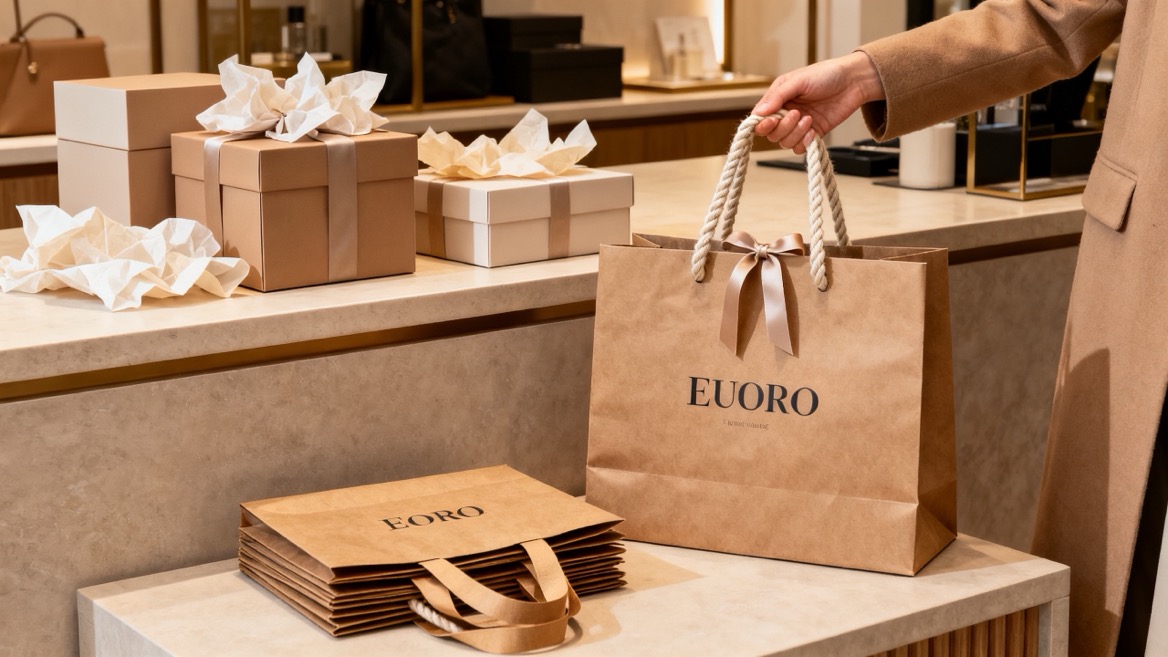
Before finalizing a bag specification, ask your packaging supplier to review the actual product rather than only an estimated weight.
A practical evaluation should include:
1. Weigh the complete purchase, including the product, inner box, tissue paper, inserts, brochures, and accessories.
2. Measure the packed dimensions, not just the dimensions of the product itself.
3. Define the carrying distance, such as a short walk from a counter or a longer commute after shopping.
4. Consider the customer's grip, especially for large bags, sharp-edged boxes, or premium products carried for extended periods.
5. Test the filled bag repeatedly, including lifting, swinging, standing upright, and carrying with one hand.
6. Review humid or rainy conditions if the bag will be used in markets with wet weather.
7. Check visual performance after loading, because a luxury tote should not lose its structure once filled.
For example, a fragrance brand may initially select a standard paper carrier bag because one perfume box is relatively light. However, customers may purchase two or three gift sets at the same time. Once tissue paper, promotional cards, and a rigid box are included, the carrier bag may become overloaded. A reinforced Euro tote with a bottom board and cotton rope handle may offer a much better final experience.
A bag that customers reuse can extend brand visibility beyond the retail counter.
Euro tote bags naturally have stronger reuse potential because of their thicker paper, durable handles, and decorative quality. Customers may keep them for gift giving, storage, carrying small purchases, or organizing personal items.
Paper carrier bags can also be reused successfully, especially when they are made from strong kraft paper with secure handles. A simple but attractive carrier bag can become a reusable lunch bag, book bag, or household storage bag.
To improve reuse potential:
- Select a bag size that has value beyond the original purchase.
- Avoid overly seasonal designs unless they are part of a limited campaign.
- Use durable handle attachment methods.
- Keep brand information clear but not excessively promotional.
- Design a bag customers would feel comfortable carrying in public.
- Match the paper weight to real product loads rather than using the minimum possible specification.
Responsible packaging is not achieved by choosing paper alone. The full construction matters.
A paper bag can become more difficult to recover when it includes materials that are hard to separate, excessive film lamination, unsuitable coatings, or unnecessary decorative components. At the same time, removing all reinforcements without testing may lead to bag failure, wasted packaging, and a poor customer experience.
The right approach is to balance appearance, strength, material efficiency, and end-of-life considerations.
For buyers sourcing custom paper shopping bags, this means asking clear questions:
- Is the paper sourced through a documented chain of custody?
- Can the supplier provide material specifications for paper, handles, adhesives, inks, and coatings?
- Are the handle and surface-finish choices aligned with the target market's recovery systems?
- Can the bag be designed with less material while maintaining required performance?
- Does the bag size closely match the packed product dimensions?
- Are decorative elements necessary for the intended customer experience?
FSC chain-of-custody certification is particularly relevant when brands want traceability claims relating to responsibly sourced forest-based materials. Buyers should verify the specific certificate claim and code associated with the supplied product, rather than relying only on broad statements that a supplier is "FSC certified."
The most cost-effective paper bag is not always the bag with the lowest unit price. A poorly specified bag can cause handle failures, excess material use, low perceived value, shipping inefficiency, or an inconsistent brand experience.
At Maituohong Packaging, we recommend involving a packaging manufacturer during the early design stage, particularly when your project includes rigid gift boxes, premium Euro tote bags, custom inserts, special paper, or complex finishing.
A complete bag development discussion should cover:
- Product dimensions and fully packed weight.
- Target retail channel and customer profile.
- Expected order quantity.
- Paper type, weight, and surface finish.
- Handle material and reinforcement method.
- Printing colors and finishing details.
- Required load performance.
- Packing method and shipping requirements.
- Brand sustainability goals.
- Sample approval requirements.
Ready to choose between a premium Euro tote and a practical paper carrier bag? Share your product dimensions, estimated packed weight, desired bag size, artwork, and target quantity with Maituohong Packaging. Our team can help you develop a custom paper shopping bag that protects your products, fits your brand, and delivers the right customer experience.
Not always, but Euro tote bags are often designed for heavier or higher-value products because they commonly use thicker paper, reinforced tops, bottom boards, and stronger rope or ribbon handle systems. A properly engineered paper carrier bag can also carry substantial weight when its paper grade, handle patch, adhesive, and dimensions are correctly specified.
The main difference is their purpose. A Euro tote bag focuses on premium presentation, structure, and brand experience. A paper carrier bag focuses on economical, practical, and reliable product carrying for everyday retail use.
Euro tote bags are generally better for luxury packaging. Their heavy paper, reinforced structure, premium handles, and decorative finishes make them suitable for cosmetics, jewelry, fashion, gifts, and rigid gift boxes.
Yes. Custom paper carrier bags can be printed with logos, brand colors, slogans, illustrations, QR codes, promotional messages, and seasonal campaign graphics. Brown kraft paper with one- or two-color printing is a popular option, while white kraft or coated paper can support more detailed artwork.
Yes. Euro totes are often reused because they are durable, visually attractive, and designed with stronger handles and heavier paper. Reuse depends on the bag's construction, product load, storage conditions, and the customer's willingness to keep it.
There is no single best paper weight. The right choice depends on bag dimensions, product weight, handle type, gusset size, bottom construction, and desired appearance. Premium Euro totes commonly use heavier paper, while practical carrier bags can use lighter or medium paper grades when engineered for the intended load.
Choose matte lamination for a refined, modern, understated look. Choose gloss lamination when you want brighter colors, stronger visual contrast, and a more polished appearance. Soft-touch lamination is another premium option for beauty, fashion, and gifting brands that want a distinctive tactile effect.
1. European Commission. [New EU rules on packaging enter into application].
2. European Commission. [New packaging rules for less waste and easier recycling].
3. Publications Office of the European Union. [Packaging and Packaging Waste Regulation (EU) 2025/40].
4. Action Packaging. [Luxury Shopping Bags in Bulk: Premium Paper Eurotote Bags].
5. American Retail Supply. [Euro Tote Bags, Retail Packaging].
6. Global Bioenergy Partnership. [Paper Bag Certification, Regulations & Import Duties Guide].
7. Newlong Holland. [EU Packaging Rules for Paper Bags: PPWR Guide].


