
Views: 248 Author: Maituohong Packaging Publish Time: 2026-10-15 Origin: Site


Content Menu
● Kraft Paper vs. Coated Paper Packaging: Quick Comparison
● What Is Kraft Paper Packaging?
>> Where Kraft Paper Works Best
● What Is Coated Paper Packaging?
>> Print Coatings and Barrier Coatings Are Different
● Kraft Paper vs. Coated Paper: Printing and Appearance
>> Kraft Paper Creates a Material-Led Identity
>> Coated Paper Supports Graphics-Led Packaging
● Strength and Protection: Compare the Complete Structure
>> Mailer Boxes and Shipping Boxes
>> Rigid Boxes and Magnetic Boxes
● Moisture, Grease, and Surface Durability
● Sustainability and Recycling: Look Beyond Brown Paper
>> Responsible Sourcing Is Not a Recycling Claim
>> Evaluate the Finished Package
● Which Packaging Material Costs Less?
● Best Applications Across Custom Packaging Formats
● Expert Insight: Separate the Structural and Visual Decisions
>> Layer One: What Must the Structure Do?
>> Layer Two: What Must the Surface Communicate?
● A Practical Five-Step Sampling Process
● Plan Your Custom Packaging With Maituohong Packaging
>> Is kraft paper always stronger than coated paper?
>> Can kraft paper packaging look luxurious?
>> Is coated paper packaging recyclable?
>> Can I print full-color designs on kraft paper?
>> Which material is better for magnetic gift boxes?
>> Does coated paper need lamination?
The differences between kraft paper and coated paper packaging go beyond a brown surface versus a glossy finish. Your choice affects print quality, structural performance, production costs, customer perception, and recycling compatibility. Neither material is universally better: the right option depends on what your packaging must protect, communicate, and deliver.
At Maituohong Packaging, our perspective comes from more than 18 years of designing and manufacturing custom paper packaging, including magnetic boxes, mailer boxes, rigid boxes, folding gift boxes, and paper shopping bags.
Our starting principle is fit-for-purpose: select the complete packaging construction first, then choose the paper surface that supports it.
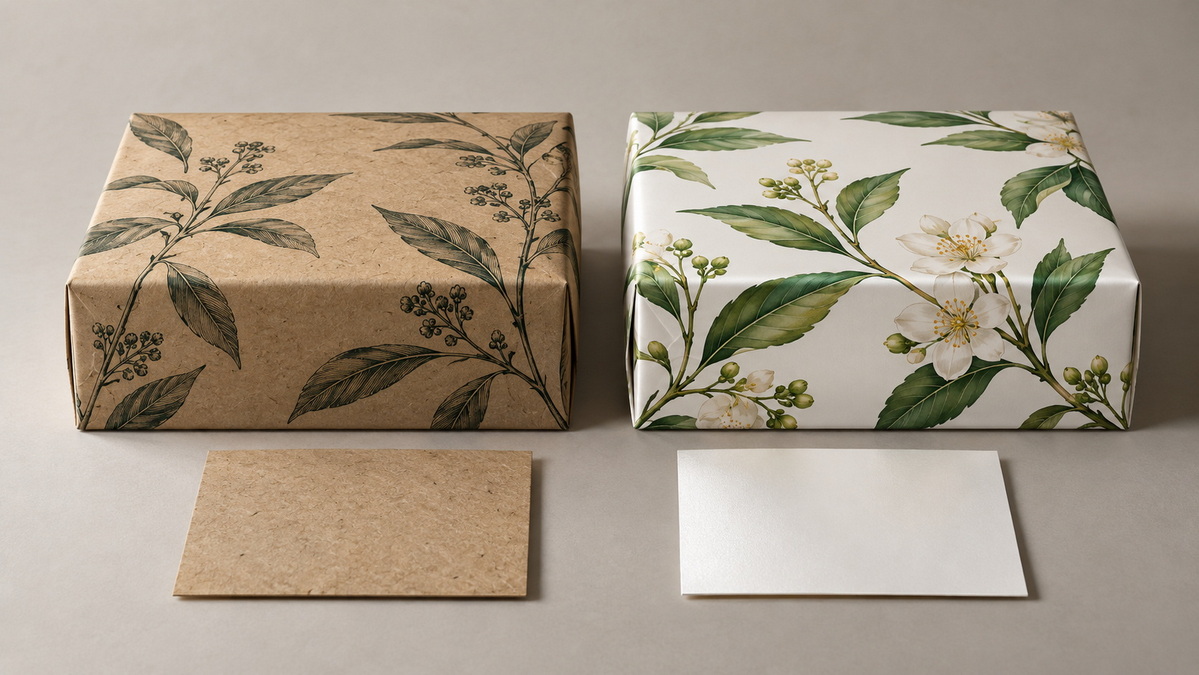
For this comparison, "kraft paper" generally means uncoated kraft, while "coated paper" means paper with a print-enhancing surface coating.
| Comparison factor | Kraft paper packaging | Coated paper packaging |
|---|---|---|
| Material identity | Defined by its pulp-making process | Defined by its surface treatment |
| Typical appearance | Brown or white, often with visible texture | Smooth, with matte, silk, or gloss finishes |
| Printing strengths | Simple graphics, typography, natural visual styles | Detailed images, gradients, and color-rich artwork |
| Strength | Strong grades available; performance varies by specification | Depends on the underlying paper or board |
| Moisture protection | Untreated grades offer limited protection | Print coating alone does not establish moisture resistance |
| Brand impression | Natural, tactile, understated | Refined, polished, graphics-focused |
| Cost | Depends on grade, weight, printing, and construction | Depends on grade, coating, printing, and finishing |
| Recycling | Assess the complete package | Assess coatings, laminates, adhesives, and local collection |

Kraft paper is made using the kraft pulping process. Packaging grades can combine strength, flexibility, and printability, making them suitable for bags, wrapping, and other converted packaging applications.
Importantly, kraft paper is not always brown. White kraft grades are also available, and surface finishes range from relatively textured to smooth.
Kraft paper is worth considering when your packaging needs:
- A tactile, natural-looking surface.
- Clear typography and restrained graphics.
- Strong paper for shopping bags or wrapping.
- A consistent visual identity across gift and shipping packaging.
However, "kraft" is not a complete specification. Virgin-fiber content, recycled content, grammage, surface finish, and strength properties can differ substantially.
A kraft-wrapped rigid box, for example, derives much of its rigidity from the board underneath—not from the wrapping paper alone.
Coated paper has a surface layer designed to modify characteristics such as smoothness and print performance. Print coatings commonly contain mineral pigments and binders.
A smoother, more uniform surface can support detailed graphics and controlled image reproduction. Coated papers are available in different finishes; coated does not automatically mean glossy.
This distinction matters when specifying packaging:
- Print coatings improve the printing surface.
- Barrier coatings address requirements such as grease or moisture resistance.
- Film laminations add a separate layer for selected protective or decorative purposes.
A coated gift box is therefore not automatically waterproof, grease-resistant, or suitable for direct food contact.
Kraft and coated are not mutually exclusive categories, either. Kraft paper can receive a coating. Ask suppliers to identify both the base paper and its surface treatment.
Brown kraft introduces its own color into the design. That background can influence the appearance of printed inks, particularly lighter colors.
For a restrained design, this interaction may be desirable. Dark typography, simple illustrations, and generous unprinted space allow the paper itself to become part of the brand experience.
If your artwork requires bright colors or pale details, request a physical print sample. White ink, a white underprint, or white kraft may provide a more suitable starting point.
Coated paper is often a practical choice for:
- Product photography.
- Fine illustrations.
- Gradients and detailed patterns.
- Color-rich retail presentations.
Nevertheless, a paper description cannot guarantee accurate brand colors. The substrate, ink system, printing process, and finishing must work together.
My recommendation is to approve important colors on the intended production material rather than judging them only on a screen.
"Kraft is stronger" is too broad to guide a packaging purchase.
Certain kraft grades provide excellent strength, but a finished package also depends on board thickness, fiber composition, grain direction, creasing, joints, and structural design.
For corrugated mailers, the liner is only one component. The fluted medium, board combination, dimensions, and closure design also influence performance.
A kraft-lined shipping box and a printed, coated-paper-faced box should be compared using their complete specifications—not their appearance alone.
Evaluate the package with the intended product and cushioning system.
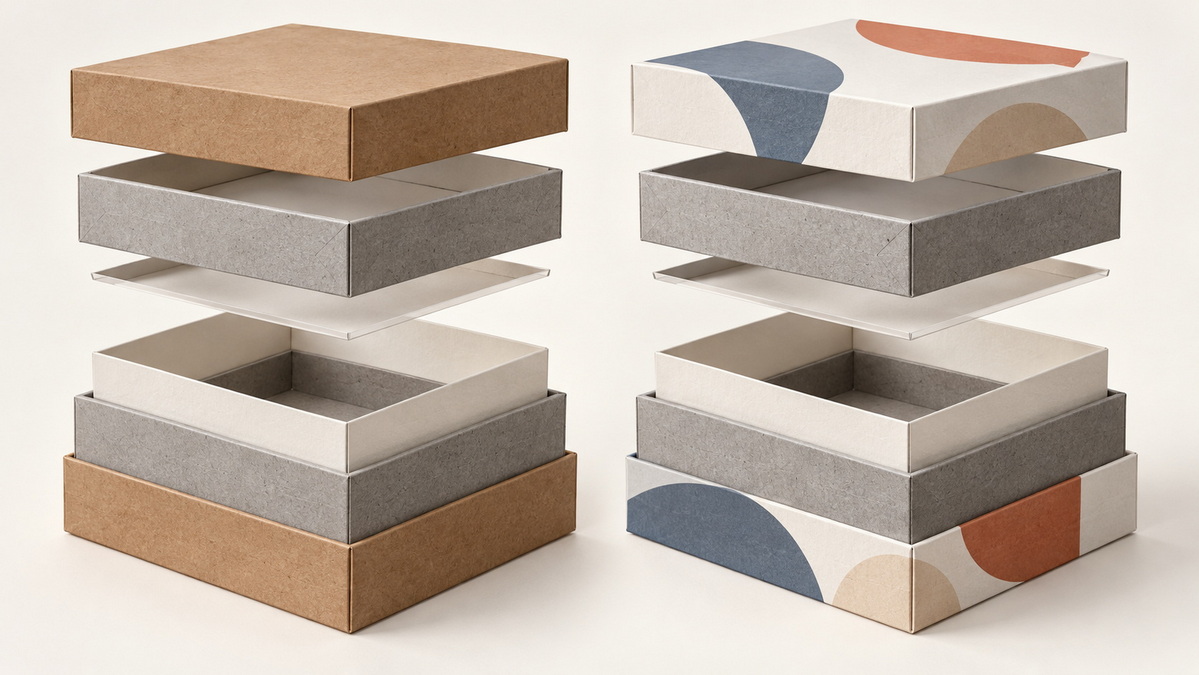
In rigid gift boxes, the board core supplies most of the rigidity. The outer wrapping paper contributes appearance, touch, and surface performance.
For magnetic boxes, also inspect:
- Wrapped corners and edges.
- Hinge flexibility.
- Magnetic closure alignment.
- Paper adhesion.
- Surface damage after handling.
For folding gift boxes, repeated opening and folding deserve particular attention. A beautiful paper sample does not prove that the converted box will perform well.
Neither untreated kraft paper nor ordinary print-coated paper should be treated as a universal moisture barrier.
Start with the actual exposure conditions:
- Occasional damp handling.
- Humid storage.
- Condensation around chilled products.
- Grease from direct contact.
- Extended outdoor exposure.
These are different technical problems and may require different materials.
A decorative finish may reduce visible scuffing without providing the barrier needed to protect the product. Likewise, a moisture-resistant material may still require carefully designed seams and closures.
For food applications, request documentation covering the intended contact conditions. Paper color and finish cannot establish compliance.
Brown packaging does not automatically have a lower environmental impact. White or coated packaging is not automatically unrecyclable.
A meaningful assessment considers material sourcing, recycled content, package weight, product protection, finishing, and the recycling systems in the destination market.
FSC labels communicate different sourcing categories:
- FSC 100% identifies material from FSC-certified forests.
- FSC Recycled identifies products made from reclaimed materials.
- FSC Mix identifies qualifying combinations of certified, recycled, and controlled sources.
These labels do not establish that a finished package is accepted in every local recycling program.
Film laminations, adhesives, windows, barrier treatments, and other components can affect recycling performance.
Industry guidance recommends assessing how the complete construction behaves during processing rather than relying on a broad material label.
A useful development is the 2025 Version 3 of Cepi's recyclability test method. It provides a laboratory framework for evaluating paper-based materials under conditions representing conventional recycling processes.
For buyers, the practical lesson is straightforward: request evidence for the finished construction and intended market before approving recyclability claims.
There is no dependable rule that kraft paper always costs less than coated paper.
A basic kraft design may be economical, but premium kraft, white ink, specialty printing, and complex converting can change the calculation. Coated paper may deliver detailed artwork efficiently without additional decorative treatments.
Compare quotations using the same:
1. Finished dimensions and construction.
2. Paper grade, weight, and board specification.
3. Print coverage and number of colors.
4. Finishes, inserts, and accessories.
5. Order quantity and packing method.
6. Delivery terms and testing requirements.
Also consider storage and freight. A collapsible gift box may change shipping economics, while a fully assembled rigid box may better suit another operational need.
The useful comparison is total delivered packaging cost—not paper price alone.
| Packaging format | When kraft deserves consideration | When coated paper deserves consideration |
|---|---|---|
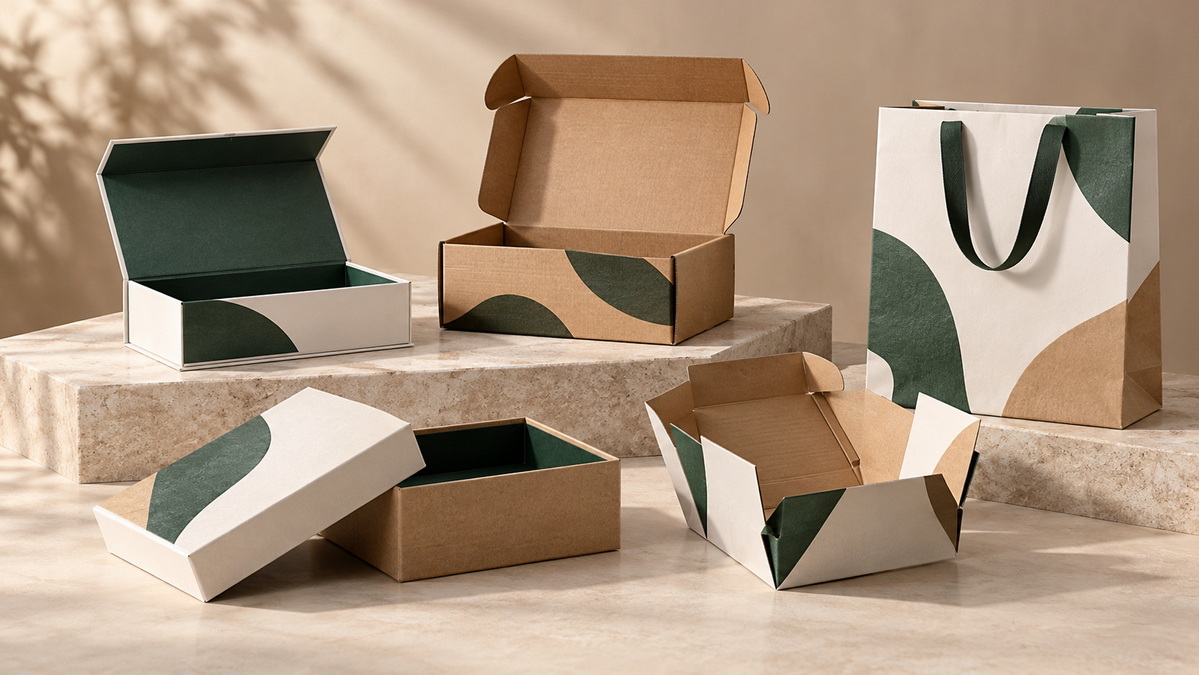
| Magnetic boxes | Tactile, understated gift presentation | Detailed decoration and polished presentation |
| Rigid boxes | Natural-looking wraps and minimal graphics | Photography, patterns, and color-rich designs |
| Folding gift boxes | Material-focused branding | Graphics-led retail or promotional packaging |
| Mailer boxes | Simple branding and natural presentation | More elaborate printed exterior designs |
| Paper shopping bags | Texture-led identity and suitable strength grades | Detailed graphics and smooth presentation |
These are starting points, not fixed rules. Product weight, handling conditions, and construction remain decisive.
The most useful question is not simply, "Should we use kraft or coated paper?"
Instead, divide the decision into two layers.
Define product weight, fragility, opening experience, storage conditions, and distribution requirements.
Define the desired texture, artwork detail, brand colors, and finishing.
Consider two illustrative briefs—not reported customer results:
- A skincare gift set needs a rigid structure and detailed printed decoration. A coated wrap may suit the visual requirement, while the core board and insert provide protection.
- An apparel subscription needs a straightforward unboxing experience and restrained branding. A kraft-faced mailer may suit the concept, provided the complete structure passes the required evaluation.
This approach avoids asking the surface paper to solve every packaging problem.
Before committing to production, use a controlled comparison.
1. Define the non-negotiables. Record dimensions, product weight, artwork requirements, destination market, and exposure conditions.
2. Build comparable prototypes. Keep the structure consistent when comparing paper surfaces.
3. Check appearance. Inspect colors, small text, folds, corners, and finish under consistent lighting.
4. Evaluate handling and distribution. Check scuffing, closures, bag handles, and packed-product performance.
5. Approve a documented sample. Record the paper specification, printing, finishing, and acceptance criteria.
A folded or assembled prototype reveals issues that a flat swatch cannot.
Share your product dimensions, weight, artwork, order quantity, destination market, and preferred opening experience with Maituohong Packaging.
With more than 18 years of custom paper packaging experience, our team can help compare kraft and coated-paper options across magnetic boxes, mailers, rigid boxes, folding gift boxes, and shopping bags.
Request a material comparison and structural sample before approving your production specification.
No. Strength depends on the paper grade and finished construction. For boxes, evaluate the board, joints, dimensions, and protective inserts as well as the outer paper.
Yes. Luxury can come from texture, proportion, precise construction, restrained graphics, and carefully chosen finishes. A natural surface does not prevent a premium presentation.
It can be. Recycling compatibility depends on the complete construction, including coatings, laminations, adhesives, and other components, as well as the destination market's collection and processing systems.
Yes, but brown kraft influences the printed appearance. Approve a physical sample, particularly when artwork includes pale colors, photography, or tightly controlled brand colors.
Either can work. Choose the outer paper for the desired appearance and touch, then verify the board structure, wrapping quality, hinge performance, and magnetic closure.
Not necessarily. Add lamination only when a defined protective or decorative requirement justifies it. Consider alternative finishes and assess their performance and recycling implications.
1. Mondi. "Kraft Paper." Manufacturer information on brown and white grades, surface finishes, strength, and packaging applications. [View source]. [mondigroup]
2. Mondi. "Food-Safe Kraft Paper Solutions." Examples of smooth white and brown kraft grades, wet-strength options, and coating-compatible kraft papers. [View source]. [mondigroup]
3. Sappi. "Standard Flexible Packaging Papers." Manufacturer information covering coated and uncoated packaging papers and finish options. [View source]. [sappi]
4. Holmen. "Paperboard Barriers & Coatings." Technical distinctions among barrier treatments and their protective functions. [View source]. [holmen]
5. Cepi. "Paper-Based Packaging Recyclability Guidelines." Guidance on coatings, material combinations, testing, and market-specific recycling requirements. [View source]. [cepi]
6. Cepi. "Cepi Recyclability Test Method Version 3." Published March 13, 2025; laboratory assessment of paper-based packaging recyclability. [View source]. [cepi]
7. Forest Stewardship Council. "What the FSC Labels Mean." Definitions of FSC 100%, FSC Recycled, and FSC Mix. [View source]. [fsc]
8. American Forest & Paper Association. "Design Guidance for Recyclability." Guidance addressing coatings, adhesives, films, and other packaging components. [View source]. [afandpa]


