
Views: 265 Author: Maituohong Packaging Publish Time: 2026-10-16 Origin: Site


Content Menu
● What Is DIY Packaging—and When Does It Make Sense?
● Choose the Right Box Before Adding Your Branding
>> Measure the Complete Product Arrangement
● Seven DIY Packaging Ideas That Balance Appearance and Practicality
>> 1. Use a Custom Stamp on Plain Paper Packaging
>> 2. Combine Stock Boxes With Branded Stickers
>> 3. Add a Printed Paper Sleeve
>> 4. Create a Controlled Tissue-Paper Reveal
>> 5. Include a Useful Thank-You Card
>> 6. Personalize Paper Shopping Bags
>> 7. Use Inserts to Organize Gift Sets
● Calculate the Real Cost of DIY Packaging
>> An Illustrative Labor Calculation
>> Compare Equivalent Packaging Systems
● Build Protection Into the Packaging Process
>> Use a Repeatable Prototype Checklist
>> Keep Decoration Away From Functional Areas
● Make Environmental Claims Specific and Verifiable
>> Describe What You Can Substantiate
● Know When to Move From DIY to Custom Packaging
● Turn Customer Feedback Into Better Packaging Decisions
● Create Packaging That Fits Your Next Stage of Growth
● Frequently Asked Questions About DIY Packaging
>> What Is the Cheapest Way to Brand Plain Boxes?
>> Can a Magnetic Gift Box Be Shipped Without an Outer Carton?
>> Is Kraft Paper Packaging Always Recyclable?
>> How Can Handmade Packaging Look More Professional?
>> When Should I Request Custom Packaging Samples?
DIY packaging can help a small business create a distinctive presentation without immediately investing in fully printed boxes. The best DIY packaging ideas combine affordable branding, reliable protection, and a packing process your team can repeat.
At Maituohong Packaging, our perspective comes from more than 18 years of experience designing and manufacturing custom paper packaging. We believe the starting point is straightforward: protection comes before decoration.
A beautiful package still needs to hold its contents securely, survive its intended journey, and open without frustration. This guide explains how to balance those requirements, calculate the real cost of handmade details, and recognize when custom packaging becomes the more practical choice.
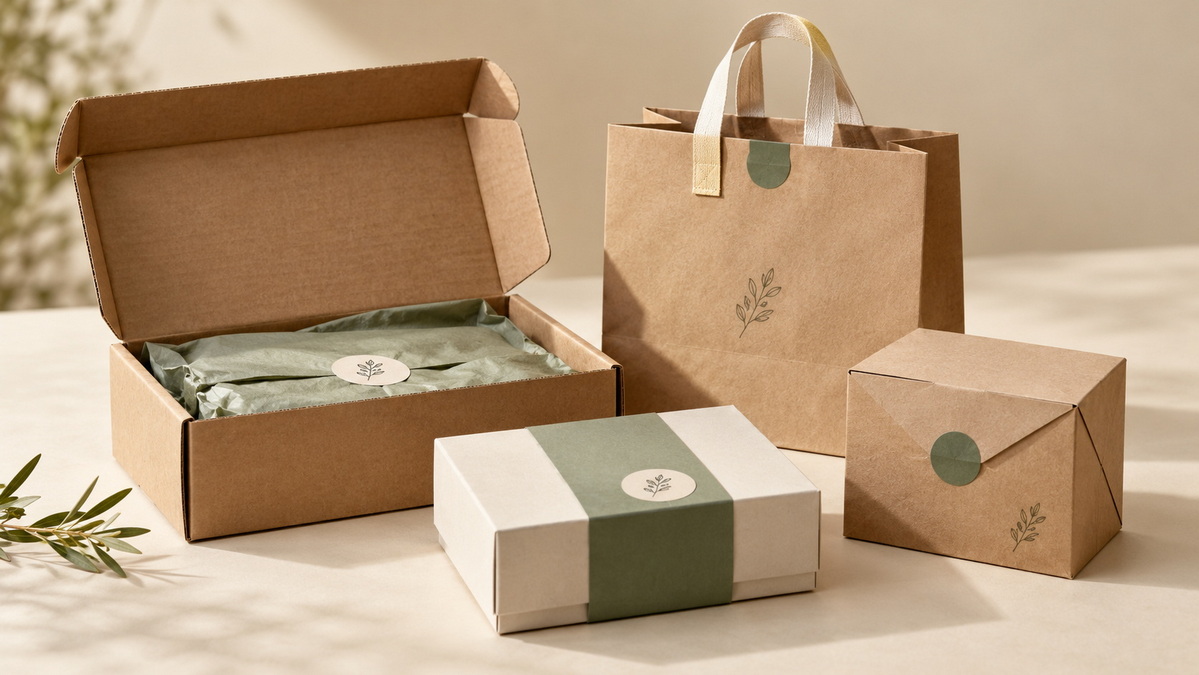
DIY packaging usually means customizing ready-made packaging with stamps, labels, sleeves, tissue paper, or handwritten messages. It does not require making a shipping box from scratch.
For many businesses, the most workable approach is a hybrid: buy a suitable box, then add selected branded details.
This approach is worth considering when:
- You are testing a new product or brand identity.
- Order volumes fluctuate.
- Seasonal designs change frequently.
- Personalization matters more than elaborate printing.
- You need flexibility before committing to larger quantities.
However, DIY is not automatically the cheapest option. Handwork, inconsistent finishes, storage requirements, and packing mistakes can offset savings on plain boxes.
My recommendation is to evaluate the complete packing process, not just the price of the empty container.
A gift box and a shipping box perform different jobs. Selecting the structure first prevents expensive compromises later.
| Packaging type | Suitable starting point | Key consideration |
|---|---|---|
| Corrugated mailer box | Subscription products and online orders | Match construction and cushioning to the contents |
| Corrugated shipping box | Larger orders or products needing an outer carton | Check strength, closure, and packed weight |
| Rigid gift box | Premium retail presentation | May require a protective shipping carton |
| Magnetic closure box | Curated gifts and presentation sets | Magnetic closure alone is not a shipping seal |
| Folding gift box | Seasonal gifting and space-conscious storage | Confirm the assembled structure supports the product |
| Paper shopping bag | Retail purchases and event handovers | Check handle attachment and loaded carrying performance |
Measure products as they will actually be packed, including protective wrapping, accessories, and inserts.
Separate internal dimensions from external dimensions when requesting samples or quotations. The internal space determines fit; the finished outer dimensions affect storage and shipping calculations.
Avoid choosing an oversized box simply because it looks generous. Unnecessary space creates more work for your cushioning system.
A stamp can create a consistent identity across kraft boxes, paper bags, and thank-you cards.
Keep the design simple. Fine lettering and large solid areas may reproduce unevenly on textured surfaces.
Test the ink on the actual material, allow it to dry, and check for transfer onto neighboring packages. A placement guide can help different team members stamp consistently.
Stickers are useful for seasonal messages, product identification, and tissue-paper closures.
Choose dimensions that fit the application rather than covering the largest possible area. An oversized sticker across a fold can wrinkle or lift.
Do not assume an ordinary label makes packaging tamper-evident. That function requires an appropriate material, construction, and verification process.
A sleeve can give a plain gift box a more finished appearance while keeping the underlying box reusable across product lines.
Use it for a product name, short instructions, or a limited-edition design.
Check the fit on a filled sample. A sleeve that fits an empty box may become too tight once the contents change its shape.
Tissue paper offers a simple way to introduce brand color without printing every surface.
Standardize the sheet size, folding sequence, and closure position. Too many layers increase handling time and can make opening unnecessarily awkward.
For pale textiles or sensitive finishes, check whether colored tissue transfers under the expected storage conditions.
A card earns its place when it helps the recipient.
Consider including:
- Product care instructions.
- A short setup guide.
- Clear customer-support details.
- A personal message relevant to the purchase.
Avoid filling the card with competing promotions. One clear message is easier to understand and keeps the presentation focused.
A plain paper bag with a neat stamp or label can work well for boutiques, exhibitions, and local collection orders.
Test the bag with the intended contents. Check handles, seams, and the base rather than judging suitability by appearance alone.
Position decorations away from fold lines and handle attachments so they do not interfere with normal use.
An insert can separate products and make the arrangement easier to understand.
For early prototypes, a carefully cut paperboard divider can help evaluate layout. Do not treat an attractive prototype as evidence of transport performance.
Confirm that products can be removed comfortably and that the insert does not press against fragile closures, decorative finishes, or vulnerable components.
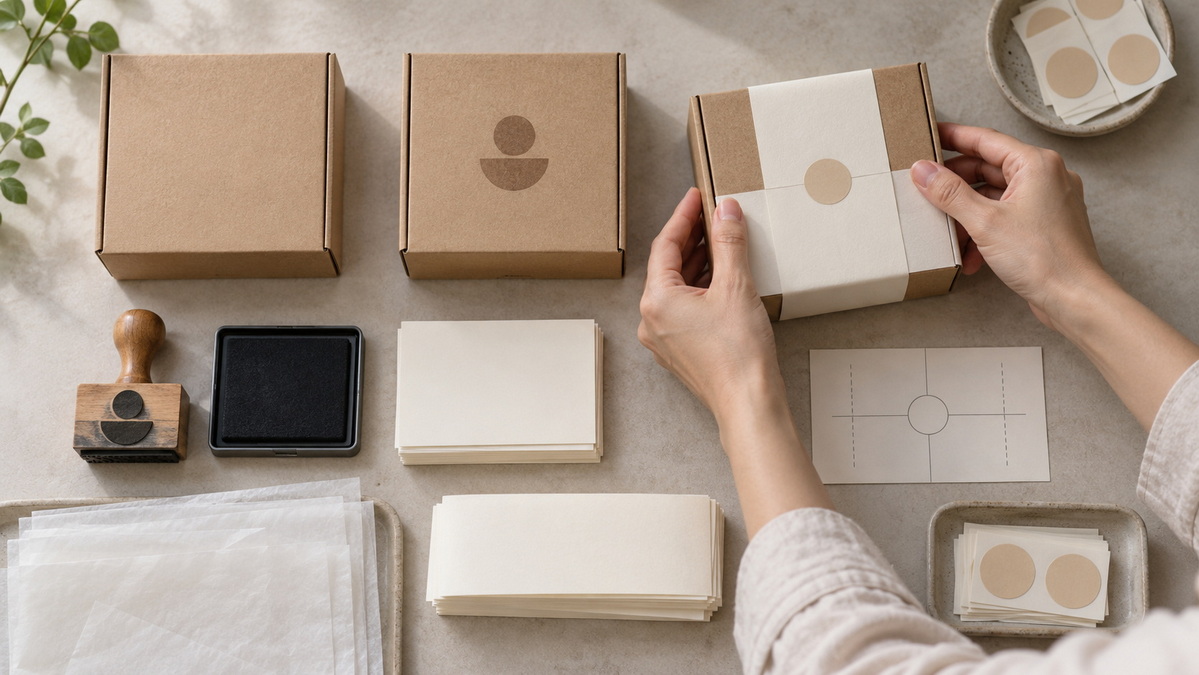
The purchase price of a plain box is only part of the cost.
A more useful comparison includes:
Packaging cost per order = materials + packing labor + allocated setup costs + waste + expected damage-related costs.
Track shipping and storage separately when they differ between options.
Suppose decorating and assembling a package takes three minutes. At an assumed labor rate of $18 per hour, that work costs $0.90 per order.
At 1,000 orders, the same process requires 50 labor hours and $900 in labor.
These are hypothetical figures, not Maituohong pricing or reported customer results. Their purpose is to show why inexpensive materials do not necessarily create an inexpensive finished package.
Time a representative batch rather than your fastest individual attempt. Include preparation, replenishing materials, cleaning, and correcting mistakes.
A meaningful quotation comparison should cover the same product arrangement and delivery requirements.
Compare:
- Plain boxes plus manual decoration.
- Stock boxes with professionally printed sleeves.
- Custom printed mailer boxes.
- Custom gift boxes with an outer shipping carton.
Include setup charges, freight, assembly time, storage space, and expected unused stock. The lowest unit price may not produce the lowest total cost.
Decorative materials and protective materials are not interchangeable.
Loose paper shred may improve presentation, but its performance depends on the product, quantity, arrangement, and shipping conditions. Likewise, a padded mailer is not automatically suitable for glass, ceramics, or heavy products.
Carrier guidance emphasizes strong outer containers, appropriate cushioning, and limiting movement inside the package.
Before placing a larger order:
1. Pack the actual product and every included accessory.
2. Check separation between items and vulnerable surfaces.
3. Close the package and look for bulging or unsupported areas.
4. Confirm that closures remain secure during normal handling.
5. Inspect labels, opening points, and product-removal access.
6. Record the materials and packing sequence.
An informal movement check can identify obvious problems, but it does not establish shipping performance. Fragile, valuable, or damage-prone products may need laboratory testing selected for their distribution conditions.
Leave shipping labels, barcodes, and closure seams clear.
Keep twine, ribbons, or botanical accents inside a suitable outer carton when they form part of the gift presentation. Loose exterior decoration can complicate handling.
Also inspect glitter, shredded paper, and decorative particles for contamination concerns. A cleaner design is often easier to pack consistently and more comfortable to open.
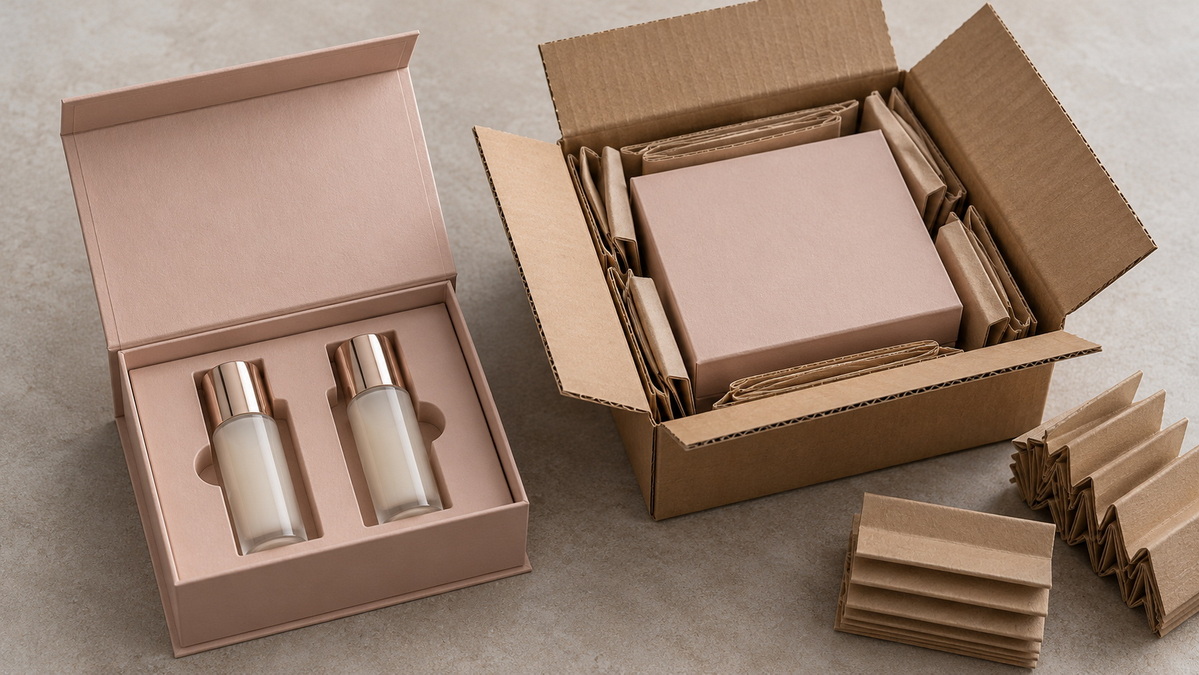
Brown paper, botanical decoration, and a handmade appearance do not establish environmental benefits.
Evaluate the complete packaging system, including coatings, adhesives, windows, magnets, ribbons, and inserts. Material composition and local collection arrangements both matter.
For U.S. marketing, federal guidance says recyclable claims should be qualified when appropriate recycling facilities are unavailable to at least 60% of consumers or communities where the product is sold.
Instead of a broad statement such as "planet-friendly packaging," consider a precise description supported by documentation.
For example:
- State a verified recycled-content percentage.
- Explain which components should be separated.
- Describe a reusable feature without promising customers will reuse it.
- Identify local recycling limitations where relevant.
Keep supplier declarations and material specifications with the artwork approval records. If the construction changes, review the environmental wording again.
There is no universal order quantity at which custom packaging becomes the better choice.
The decision depends on labor, design stability, product requirements, storage, and the supplier's commercial terms.
Signs that a change deserves investigation include:
- Packing delays are affecting dispatch.
- Branding varies noticeably between operators.
- Repeated manual steps create avoidable errors.
- Product movement remains difficult to control.
- Your design is stable enough for a production run.
A hybrid solution may remain appropriate. A custom mailer with a handwritten card can preserve personal attention while removing repetitive decoration work.
For premium gift sets, a fitted rigid box or magnetic closure box may improve organization and presentation. Confirm the outer shipping requirements separately.
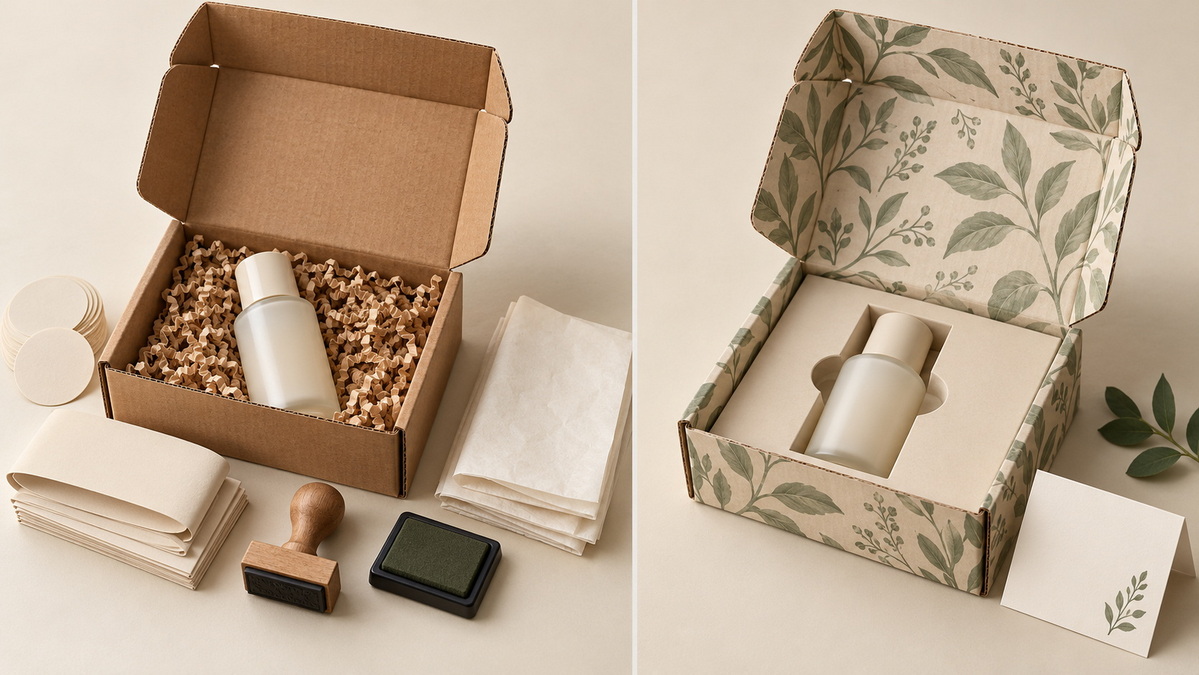
Customer comments are most useful when translated into observable problems.
For example, "beautiful but difficult to open" should prompt an examination of tape placement, pull tabs, insert clearances, and opening instructions.
Do not treat every packaging complaint as a request for more material. Identify the failure first.
| Feedback theme | What to investigate | Possible response to test |
|---|---|---|
| Product arrived loose | Internal movement and insert fit | Revise restraint or cushioning |
| Box was difficult to open | Closures and opening sequence | Simplify access |
| Too much packaging | Empty space and redundant layers | Reduce unnecessary components |
| Presentation looked inconsistent | Manual placement and folding | Introduce guides or printed elements |
These are illustrative feedback categories, not actual customer quotations. After making a change, monitor the relevant complaint type and check that the revised design has not created another problem.
DIY packaging works best when every element has a purpose.
Maituohong Packaging manufactures custom magnetic boxes, mailer and shipping boxes, rigid boxes, folding gift boxes, and paper shopping bags.
Send your product dimensions, packed weight, order quantity, sales channel, destination market, and preferred presentation. Request a structural sample and a quotation that separates materials, printing, inserts, assembly, and freight so you can compare your next packaging option clearly.
A simple stamp or a small label is worth comparing first. The cheaper finished option depends on materials, application speed, drying time, and waste. Test both on your chosen surface before buying in volume.
Do not assume it can. Magnetic closure boxes prioritize presentation, and the closure alone does not establish transport protection. Evaluate the complete packed product and use a suitable outer carton when necessary.
No. Coatings, contamination, attached materials, and local recycling systems can affect acceptance. Check the finished construction and qualify claims appropriately rather than relying on the paper's appearance.
Limit the number of decorative elements and standardize their placement. Use consistent box sizes, label positions, tissue folds, and card dimensions. Repeatability usually contributes more than adding extra decoration.
Request samples when you need to verify fit, opening, finish, assembly, or protection before committing to production. Use the intended products and accessories, not approximate substitutes.
1. PakFactory. "Affordable DIY Packaging Ideas For Your Small Business." Published August 2, 2023. Source article reviewed for its discussion of stamps, stickers, cards, wrapping materials, and interior presentation. The rewritten article adds operational analysis rather than reproducing the original wording. [pakfactory]
2. UPS. "How to Pack a Box or Pallet for Shipping." Carrier guidance supporting the discussion of strong outer containers, appropriate cushioning, and limiting movement. Product-specific requirements should be checked before shipment. [ups]
3. UPS. "Packaging Guidelines." Detailed carrier guidance on container strength, item separation, cushioning, and double-boxing where appropriate. [ups]
4. Federal Trade Commission. "Environmental Claims: Summary of the Green Guides." Source for the recycling-access threshold, qualification of recyclable claims, and substantiation of recycled-content statements. [ftc]
5. Federal Trade Commission. "Guides for the Use of Environmental Marketing Claims," 16 CFR Part 260. Detailed guidance on evaluating environmental claims, including the effect of components that limit recyclability. [ftc]


