
Views: 214 Author: Maituohong Packaging Publish Time: 2026-10-14 Origin: Site


Content Menu
● Start With the Three Layers of Cosmetic Packaging
● 10 Cosmetic Packaging Design Ideas for Beauty Brands
>> 1. Minimalist Skincare Packaging With Clear Information Hierarchy
>> 2. Magnetic Closure Boxes for Premium Cosmetic Gift Sets
>> 3. Folding Gift Boxes for Space-Conscious Packaging Programs
>> 4. Custom Paper Inserts That Organize the Unboxing Experience
>> 5. Color-Coded Cosmetic Cartons for Larger Product Ranges
>> 6. Embossed and Debossed Details for Understated Luxury
>> 7. Selective Foil Accents for Premium Beauty Packaging
>> 8. Custom Mailer Boxes for Direct-to-Consumer Beauty Orders
>> 9. Seasonal Sleeves Around a Consistent Core Box
>> 10. Coordinated Paper Shopping Bags for Retail Gift Purchases
● How to Choose the Right Cosmetic Packaging Structure
● Sustainable Cosmetic Packaging: Make Specific, Defensible Claims
● Reserve Space for Cosmetic Labeling Before Designing Artwork
● A Five-Step Process for Testing Cosmetic Packaging Samples
>> Step 1: Confirm Fit With Actual Products
>> Step 2: Evaluate the Opening Experience
>> Step 3: Inspect Appearance and Assembly
>> Step 4: Validate the Shipping Configuration
>> Step 5: Approve a Documented Reference Sample
● Compare Total Packaging Cost, Not Just the Box Price
● Develop Packaging Around Your Product and Delivery Needs
● Frequently Asked Questions About Cosmetic Packaging Design
>> What is the best packaging for a cosmetic gift set?
>> Can a magnetic gift box be used as a shipping box?
>> Are folding gift boxes less expensive than assembled rigid boxes?
>> How can a small beauty brand create premium packaging?
>> What should a cosmetic packaging quotation include?
>> How can brands avoid misleading sustainability claims?
The best cosmetic packaging design ideas combine visual identity, product protection, and everyday usability. A beautiful skincare box may attract attention, but it also needs to hold the bottle securely, communicate essential information, and arrive in good condition.
For beauty brands, packaging decisions extend beyond colors and logos. Box structure, inserts, finishing, storage, and shipping all influence the customer experience.
At Maituohong Packaging, our focus is custom paper packaging, supported by more than 18 years of experience in premium rigid gift boxes and paper packaging solutions. From this manufacturing perspective, structure deserves as much attention as decoration.
This guide explores ten practical design directions, followed by a framework for choosing, testing, and sourcing cosmetic packaging.
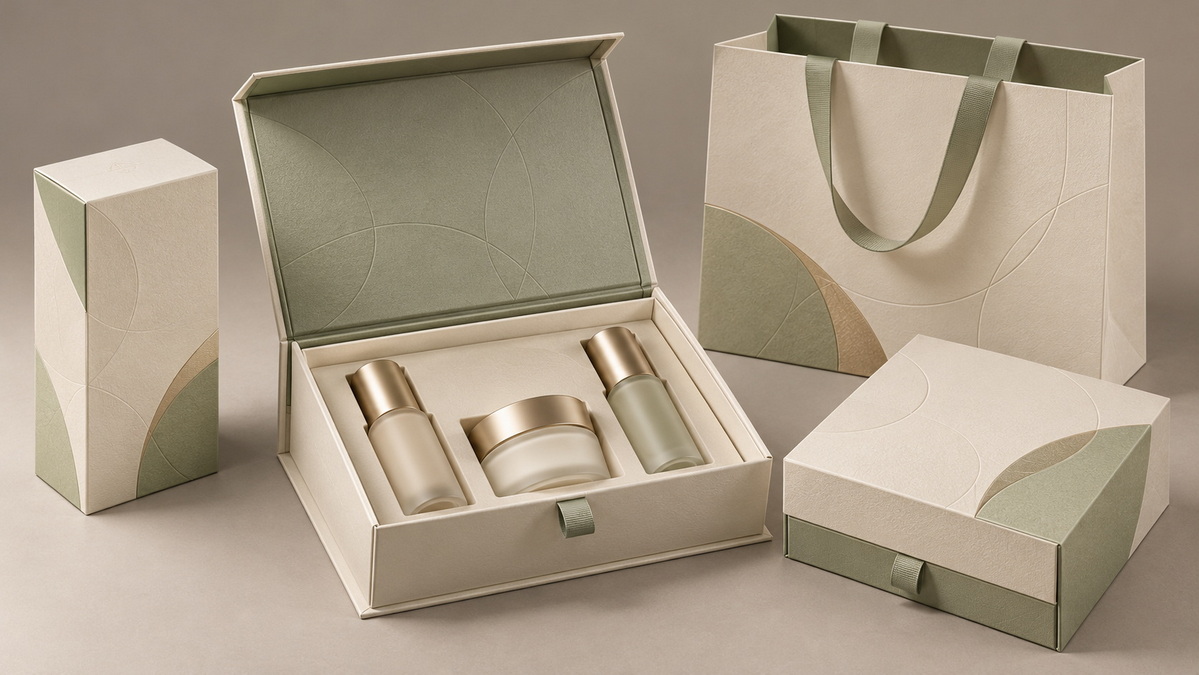
Before developing artwork, separate the packaging system into three layers:
- Primary packaging: The bottle, jar, tube, or compact that directly contains the formula.
- Secondary packaging: The folding carton, rigid box, sleeve, or gift box surrounding the container.
- Shipping packaging: The corrugated mailer or shipping box used for distribution.
Each layer solves a different problem. A serum bottle needs formula compatibility and a reliable closure. Its presentation box needs secure positioning and clear communication. Its shipping packaging needs protection against distribution hazards.
This article focuses on secondary paper packaging and shipping solutions. Neither replaces compatibility testing between the cosmetic formula and its primary container.
Minimalism works best when it makes product selection easier.
Give the brand name, product type, and variant a predictable position. Use sufficient contrast and readable typography rather than shrinking essential information to preserve empty space.
For a coordinated skincare range, keep the layout consistent while changing one distinguishing element, such as a color band.
The practical test is simple: can customers quickly distinguish the cleanser from the moisturizer?
A magnetic closure box creates a deliberate opening experience and provides a substantial presentation format for beauty collections.
It suits discovery kits, fragrance gifts, and multi-product skincare sets.
However, the closure alone does not protect the contents. The insert must control movement without making products difficult to remove.
Before approving the design, check lid alignment, closure performance, finger access, and the way the box behaves when fully loaded.
Collapsible rigid gift boxes offer a premium presentation while allowing the empty structure to ship or store flat.
They are worth considering when assembled-box volume creates storage or inbound freight pressure.
However, compare the complete operating process. Flat delivery may reduce empty-box volume, but assembly requires labor.
Request an assembled sample and review corner alignment, panel rigidity, closure consistency, and the time needed to prepare each box.
A good insert makes the product arrangement feel intentional.
Die-cut paperboard, folded corrugated structures, and molded fiber are possible options, depending on product weight, geometry, and presentation requirements.
Avoid selecting an insert from an overhead rendering alone. Test it with the actual containers.
Customers should be able to remove each item comfortably, while the products remain adequately restrained during handling.
Color coding can help customers navigate shades, ingredients, or skincare routines.
Keep the underlying layout stable, then assign a controlled color system to each category.
Do not rely on color alone. Include readable variant names so the system remains useful under different lighting conditions and for customers who have difficulty distinguishing colors.
Approve physical print samples, particularly when matching colors across different paper stocks.
Embossing raises a design; debossing presses it into the surface.
Either can add tactile character without covering the entire box in decorative effects.
A restrained approach might combine textured paper with a single embossed logo.
Ask the manufacturer to assess fine lines, small lettering, and artwork placement. A detail that looks crisp on screen may lose definition when applied to the selected paper and board construction.
Foil can highlight a logo, border, or collection name.
Use it selectively so it supports the visual hierarchy rather than competing with product information.
Large decorative areas are not automatically more effective. They may introduce additional production considerations without improving readability.
Review registration, adhesion, and visible marking on a physical sample. Dark surfaces and reflective finishes deserve particular attention because cosmetic imperfections can be conspicuous.
A direct-to-consumer package needs to perform beyond the product photography session.
Consider a branded corrugated mailer with a protective insert, or a separate shipping box surrounding the presentation packaging.
The right arrangement depends on product fragility, order configuration, and the delivery route.
Do not assume a decorative rigid box is suitable for parcel shipment by itself. Evaluate the complete packed order, including its contents and cushioning.
A reusable design system can simplify seasonal launches.
Keep the core box structure consistent and change a printed sleeve, belly band, or card for holiday collections and promotional campaigns.
This approach can reduce the number of structural variations that a brand needs to manage.
It works best when product dimensions and arrangement remain compatible. A shared exterior size does not guarantee that one insert will safely accommodate every collection.
Paper shopping bags extend the packaging experience beyond the checkout counter.
Match the bag to the filled gift box rather than selecting dimensions from appearance alone.
Review handle comfort, load capacity, bottom support, and the ease of placing or removing the box.
For a coherent presentation, repeat a limited set of visual elements across the carton, gift box, tissue paper, and shopping bag.
Start with the sales channel, product configuration, and protection requirements. Then decide which appearance best supports those needs.
| Packaging format | Suitable starting point | Key consideration |
|---|---|---|
| Folding carton | Individual skincare or makeup products | Print area, fit, and closure |
| Magnetic rigid box | Premium gift sets and discovery collections | Insert design and assembled volume |
| Collapsible rigid box | Gift programs with storage constraints | Assembly effort and structural consistency |
| Corrugated mailer | Direct-to-consumer orders | Complete-package transit performance |
| Paper shopping bag | Retail purchases and gifting | Filled weight and carrying comfort |
A single product launch may require more than one format.
For example, a folding carton can provide retail presentation, while a corrugated mailer protects the order during delivery. A magnetic gift box may still need a separate shipping container.
Compare complete packaging systems, not isolated boxes.
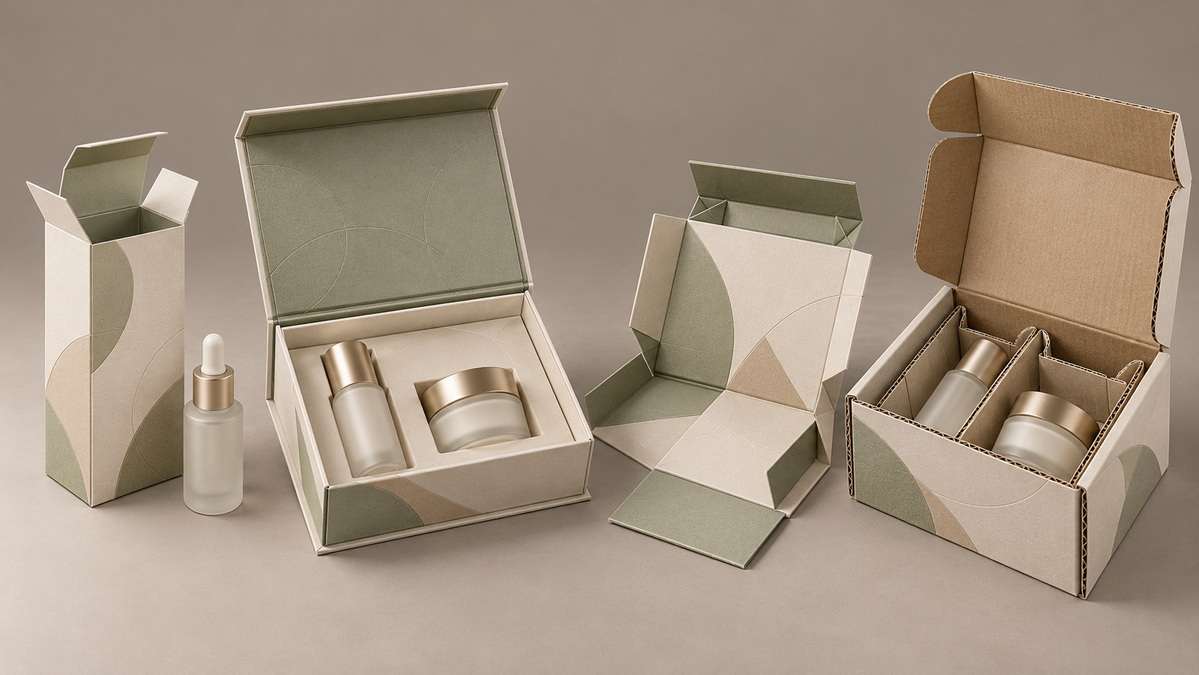
Paper-based packaging does not automatically justify an unrestricted environmental claim.
The finished package may include magnets, coatings, adhesives, inserts, and decorative components. These details can affect how the package should be described and handled after use.
A practical review should ask:
1. Can unnecessary material or empty space be removed?
2. Can customers separate different components easily?
3. Is recycled content documented for the relevant component?
4. Are disposal instructions appropriate for the destination market?
5. Does the claim describe the box accurately without implying more?
For U.S. marketing, the FTC's published Green Guides advise qualifying recyclable claims when appropriate recycling facilities are unavailable to at least 60% of consumers or communities where the product is sold.
Recycled content and recyclability are different claims. Evidence for one does not establish the other.
Use precise language rather than broad statements such as "completely eco-friendly."
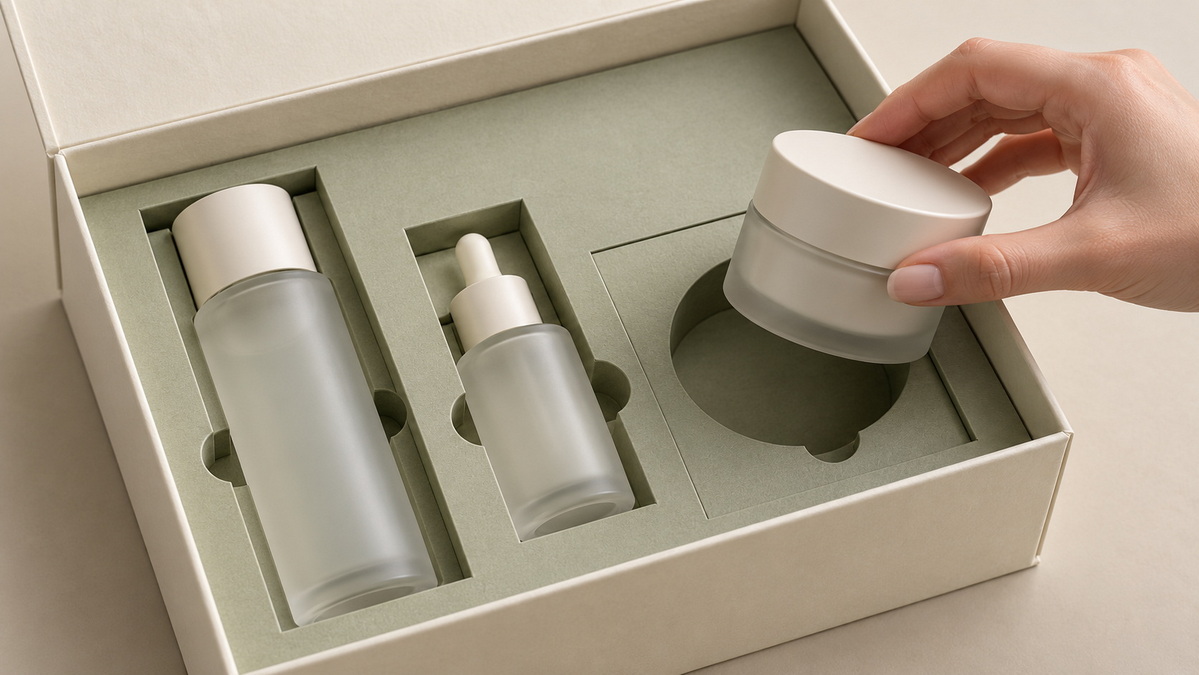
A packaging layout is not complete if required information has nowhere to go.
For cosmetics sold in the United States, FDA guidance addresses information on outer packaging, including product identity, net quantity, ingredient declarations, business information, and applicable warnings.
Requirements depend on the product and packaging configuration. Products regulated as both cosmetics and drugs need additional consideration.
Before approving the dieline, reserve space for:
- Product identity and variant information.
- Net contents and ingredient information.
- Required business details and warnings.
- Barcodes and operational identification.
- Any additional market-specific statements.
Do not assume a QR code can replace required on-pack information.
Have the responsible regulatory reviewer approve the final artwork before production.
Use filled containers or representative samples with matching dimensions and weight.
Check caps, pumps, shoulders, and bottle bases—not just the widest diameter.
Document acceptable movement and removal effort.
Ask someone unfamiliar with the design to open the package.
Watch for unclear opening points, difficult tabs, excessive force, and inaccessible products.
A premium presentation should not require an explanation.
Review print alignment, wrapping, corners, glue marks, surface damage, and closure consistency.
Agree on acceptance criteria before placing a production order.
Test the actual combination of product, insert, presentation box, and shipping container.
Choose a distribution-testing procedure appropriate to the route and package. Do not treat one successful informal drop as proof of shipping readiness.
Record materials, dimensions, artwork, finishes, insert construction, and packing method.
Keep an approved reference sample so later inspections have a shared comparison point.
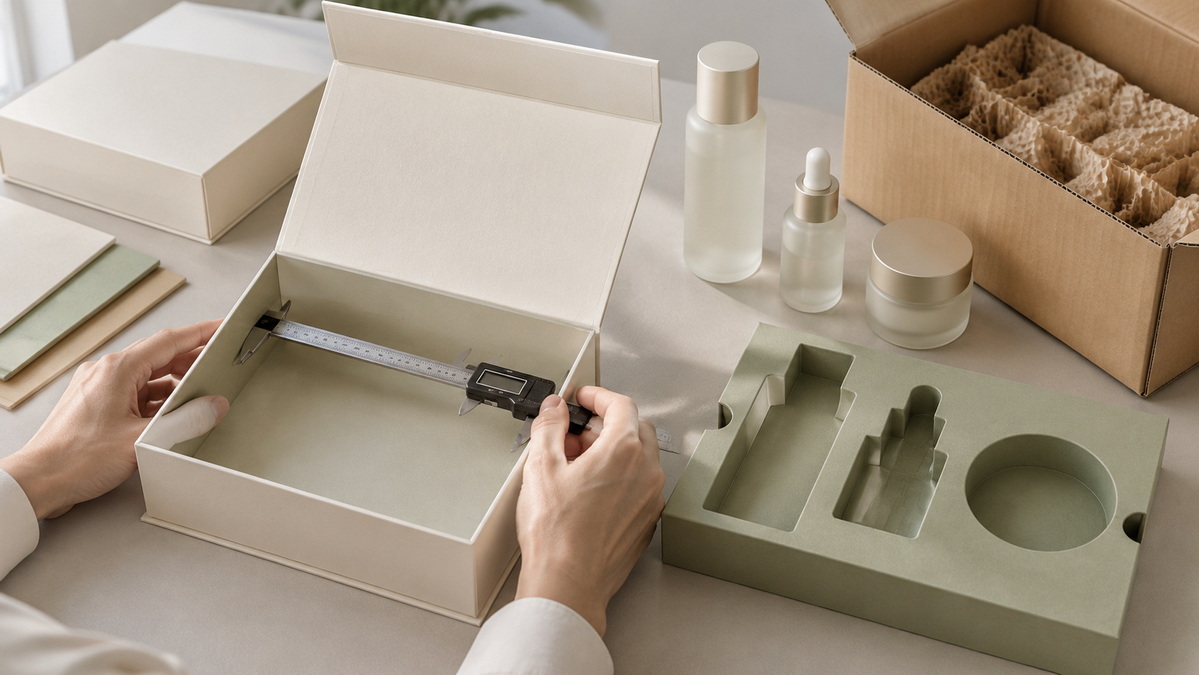
A lower unit quotation does not necessarily produce a lower delivered cost.
Compare the same specification and include:
- Tooling and sample development.
- Inserts and decorative finishes.
- Assembly and packing labor.
- Shipping volume and freight.
- Storage requirements.
- Potential damage and replacement costs.
An oversized box may look impressive while adding unnecessary material and shipping volume.
Likewise, a flat-packed structure may offer logistical advantages but require additional assembly.
Ask suppliers to explain the trade-offs between two realistic constructions. This produces a more useful comparison than requesting the cheapest version of an undefined design.
Effective cosmetic packaging connects brand presentation with practical performance.
Maituohong Packaging manufactures custom magnetic boxes, rigid boxes, folding gift boxes, mailer and shipping boxes, and paper shopping bags.
Send your product dimensions, filled weights, quantities, destination market, and design references to request a tailored quotation. Ask for a structure proposal and physical sample before approving production.
A rigid or magnetic closure box is often a suitable starting point for premium presentation. The final choice should reflect product weight, arrangement, budget, and distribution requirements.
Not automatically. Many magnetic boxes are presentation packaging. Determine whether a separate corrugated container is necessary by evaluating the complete shipment.
Not always. Compare manufacturing cost, empty-box freight, storage, and assembly labor. The total depends on the specification and operating process.
Prioritize accurate fit, consistent printing, readable typography, and one carefully chosen finishing detail. A controlled design can feel more considered than a package with many competing effects.
Provide product dimensions, filled weight, quantities, delivery destination, preferred structure, artwork requirements, and insert needs. Include target timing and the intended shipping method.
Describe specific, documented attributes. Distinguish recycled content from recyclability, assess the complete package, and review claims for the market where the product will be sold.
1. [PakFactory — "10 Best Cosmetic Packaging Design Ideas"]
Original article reviewed for its visual inspiration, brand examples, and general packaging-selection discussion. This rewritten article replaces the brand-led list with a manufacturing and purchasing framework. [pakfactory]
2. [U.S. Food and Drug Administration — "Cosmetics Labeling Guide"]
Primary guidance supporting the discussion of outer containers, principal display panels, ingredient declarations, and labeling layout. [fda]
3. [U.S. Food and Drug Administration — "Cosmetics Labeling Regulations"]
Regulatory overview supporting the discussion of product identity, net quantity, business information, and warning statements. [fda]
4. [Federal Trade Commission — "Environmental Claims: Summary of the Green Guides"]
Guidance supporting the distinction between recycled-content and recyclable claims, including the published 60% availability threshold for qualifying recycling claims. [ftc]
5. [Federal Trade Commission — "Green Guides"]
Background on substantiating environmental claims and avoiding misleading environmental marketing. [ftc]
6. [Greyhound Box — "ISTA 3-Series Standard: What You Need to Know"]
Secondary industry explanation supporting the recommendation to select distribution testing according to shipment conditions rather than relying on appearance or informal handling checks. [greyhoundbox.co]


