
Views: 258 Author: Maituohong Packaging Publish Time: 2026-10-01 Origin: Site


Content Menu
>> Core Characteristics of Mailer Boxes
● What Is a Corrugated Shipping Box?
>> Core Characteristics of Corrugated Shipping Boxes
● Mailer Boxes vs. Corrugated Shipping Boxes at a Glance
● Structural Differences That Affect Performance
>> How Board Construction Changes the Result
● Product Protection: Which Box Is Stronger?
>> Choose a Corrugated Shipping Box When
● Branding and Unboxing Experience
>> High-Value Branding Options for Mailer Boxes
>> Useful Branding Options for Shipping Boxes
● Cost Differences Beyond Unit Price
>> Consider the Total Packaging Cost
● A Practical Selection Framework for Buyers
>> Step 2: Map the Distribution Route
>> Step 3: Choose Protection Level
>> Step 4: Set Brand Priorities
>> Step 5: Test Before Scaling
● Industry Example: One Product, Two Box Types
● Sustainability Considerations
>> Better Material Decisions for Paper Packaging
● Why Work With Maituohong Packaging?
>> Are mailer boxes made from corrugated cardboard?
>> Are corrugated shipping boxes stronger than mailer boxes?
>> Can a mailer box be used as a shipping box?
>> Which box is best for subscription packaging?
>> Which box is better for export shipments?
>> Can I print inside a corrugated mailer box?
>> How do I choose the correct corrugated board strength?
Mailer boxes and corrugated shipping boxes are both essential paper packaging formats, but they solve very different business problems. A mailer box is usually selected for branded presentation, product fit, and a memorable unboxing experience, while a corrugated shipping box is designed primarily for load-bearing strength, stacking performance, and reliable protection across demanding distribution routes.
For brands, retailers, subscription businesses, wholesalers, and exporters, choosing between mailer boxes vs. corrugated shipping boxes affects more than appearance. It can influence product damage, freight efficiency, packing speed, warehouse space, customer perception, and total packaging cost.
At Maituohong Packaging, we have spent more than 18 years designing and manufacturing custom paper packaging, including premium rigid gift boxes, mailer boxes, and corrugated shipping boxes. From our production experience, the best answer is rarely that one box is universally better. The right decision depends on product weight, fragility, shipping channel, order volume, branding priorities, and transport conditions.
This guide explains the practical differences between mailer boxes and corrugated shipping boxes, helping buyers select a structure that supports both product protection and commercial growth.
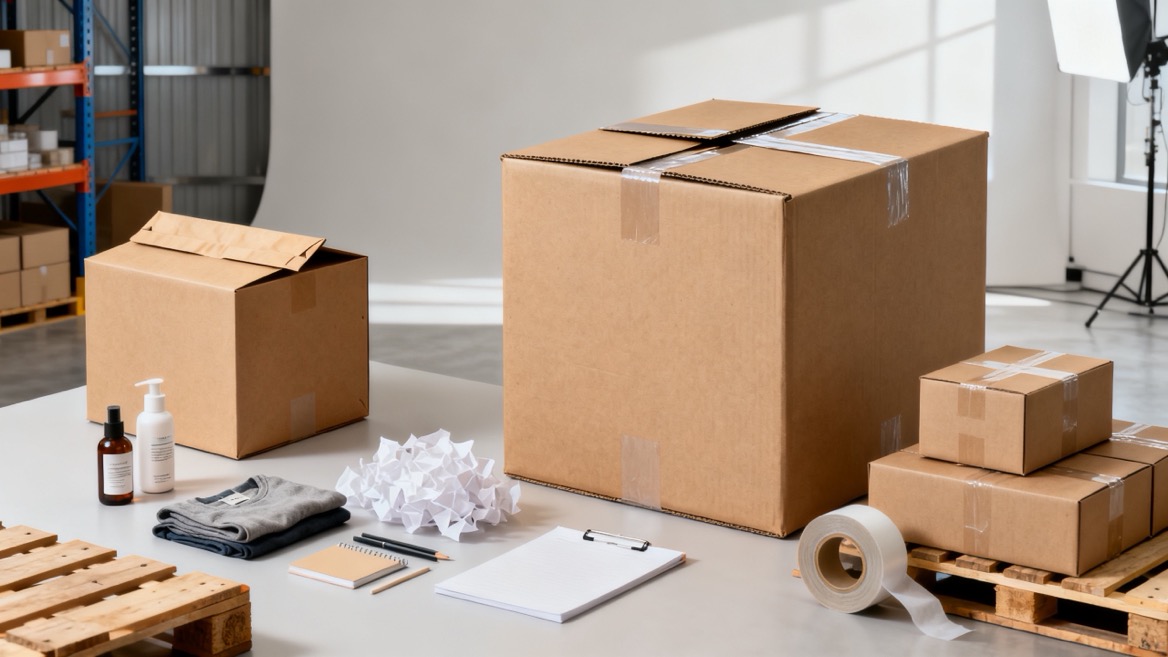
A mailer box is a self-locking paper packaging structure with integrated dust flaps and a tuck-in front closure. It normally arrives flat, folds quickly, and can often be assembled without tape.
Many mailer boxes use corrugated board, especially E-flute, F-flute, B-flute, or combinations selected according to the product's weight and desired printing quality. They are frequently used for direct-to-consumer shipping, subscription packaging, promotional kits, gift sets, apparel, cosmetics, and lightweight electronics.
The biggest advantage of a mailer box is that it combines protective packaging and brand presentation in one format.
- Self-locking construction with a tuck-front closure
- Fast assembly without a separate bottom seal in many designs
- Suitable for inside and outside printing
- Compact structure with a polished, retail-ready appearance
- Available in corrugated board, paperboard, or specialty laminated materials
- Ideal for lightweight to medium-weight products
- Often used as the final customer-facing package
A custom mailer box can carry a brand logo, campaign message, product instructions, QR code, seasonal graphics, or a printed interior message. This makes it a powerful packaging option for companies that want to create an intentional delivery experience.
A corrugated shipping box is designed mainly to protect products during storage, handling, palletization, and transportation. The most common style is the Regular Slotted Carton, often called an RSC box.
Unlike mailer boxes, corrugated shipping boxes are typically optimized for logistics. They can be manufactured in single-wall, double-wall, or triple-wall corrugated board. Their flaps are normally sealed with packing tape, water-activated tape, or a reinforced adhesive system.
A shipping box may hold one product, multiple retail units, inner cartons, protective inserts, or bulk industrial components. It is widely used in B2B distribution, export shipping, warehouse fulfillment, machinery parts, household goods, electronics, food products, and large-volume e-commerce operations.
- Flap-based structure that usually requires sealing tape
- Strong suitability for warehousing, stacking, and long-distance transport
- Can use heavier flute profiles and multi-wall board
- Easy to produce in many dimensions and high quantities
- Suitable for outer cartons, master cartons, and export cartons
- Compatible with pallets, stretch wrapping, and logistics labels
- Designed around product protection rather than premium presentation
Corrugated board strength is often evaluated through measurements such as Edge Crush Test, commonly known as ECT. This measurement helps indicate the board's resistance to edge compression and provides useful guidance for stacking performance. However, the correct board grade must always be matched to the actual product, box dimensions, storage duration, stacking height, humidity exposure, and distribution conditions.
| Feature | Mailer Boxes | Corrugated Shipping Boxes |
|---|---|---|
| Primary purpose | Branding, presentation, direct delivery | Protection, logistics, bulk transport |
| Common structure | Self-locking tuck-front box | Flap-style carton, often RSC |
| Assembly | Usually fast and tape-free | Usually requires tape or adhesive |
| Customer-facing appearance | High | Moderate to basic |
| Branding potential | Excellent inside and outside | Good, mainly exterior printing |
| Typical board options | E-flute, F-flute, B-flute | B-flute, C-flute, BC-flute, heavy-duty board |
| Shipping strength | Suitable for light to medium products | Suitable for medium, heavy, and bulk products |
| Stacking performance | Limited to moderate | Moderate to high, depending on board specification |
| Best for | Subscription kits, gifts, apparel, beauty products | Industrial goods, bulk orders, export shipments |
| Typical product experience | Premium unboxing | Efficient delivery and protection |
| Cost focus | Higher visual value per unit | Better logistics efficiency at scale |
The most important difference between these two packaging formats is not the printed design. It is the structural purpose.
A mailer box uses interlocking panels. Its lid folds over the front wall and inserts into the body of the box. This creates an attractive, secure package with a clean shape. However, its structure does not always distribute vertical compression in the same way as a taped corrugated shipping carton.
A corrugated shipping box generally has top and bottom flaps. Once those flaps are taped, the carton becomes a more unified shipping container. This structure is often better suited to heavy loads, tall pallet stacks, repeated handling, and longer distribution routes.
The same box style can perform very differently depending on corrugated board selection.
- E-flute offers a thinner profile, good print surface, and a refined appearance. It is popular for branded mailer boxes and retail-oriented packaging.
- B-flute provides stronger puncture resistance and is often selected for e-commerce and moderate-weight products.
- C-flute is common for general shipping cartons because it balances cushioning and compression performance.
- BC double-wall board combines flute profiles to create a stronger solution for heavy products, bulk packs, and export cartons.
- Triple-wall board may be used for exceptionally heavy or industrial loads where a standard carton is not sufficient.
Box strength is never determined by flute type alone. Product weight, size, center of gravity, void space, shipping method, moisture exposure, warehouse stacking, and interior protection all affect final performance.
For most heavy-duty logistics applications, corrugated shipping boxes are stronger than mailer boxes. They are easier to scale into heavier board grades, larger dimensions, and reinforced constructions.
That does not mean mailer boxes are weak. A well-designed mailer box made from suitable corrugated board can provide excellent protection for many products. The key is matching the structure to the real shipping environment.
- Your products are lightweight or medium weight
- Your brand experience matters as much as functional protection
- You sell apparel, books, stationery, cosmetics, candles, accessories, or gift sets
- You want a tape-free unboxing experience
- Your products need a polished, ready-to-present outer package
- You are shipping mainly through parcel delivery rather than heavy freight
- You can use inserts, tissue paper, dividers, or protective wraps where needed
- Your products are heavy, fragile, or bulky
- You ship in master cartons or wholesale quantities
- Your boxes will be stacked in warehouses or on pallets
- You are exporting products over long routes
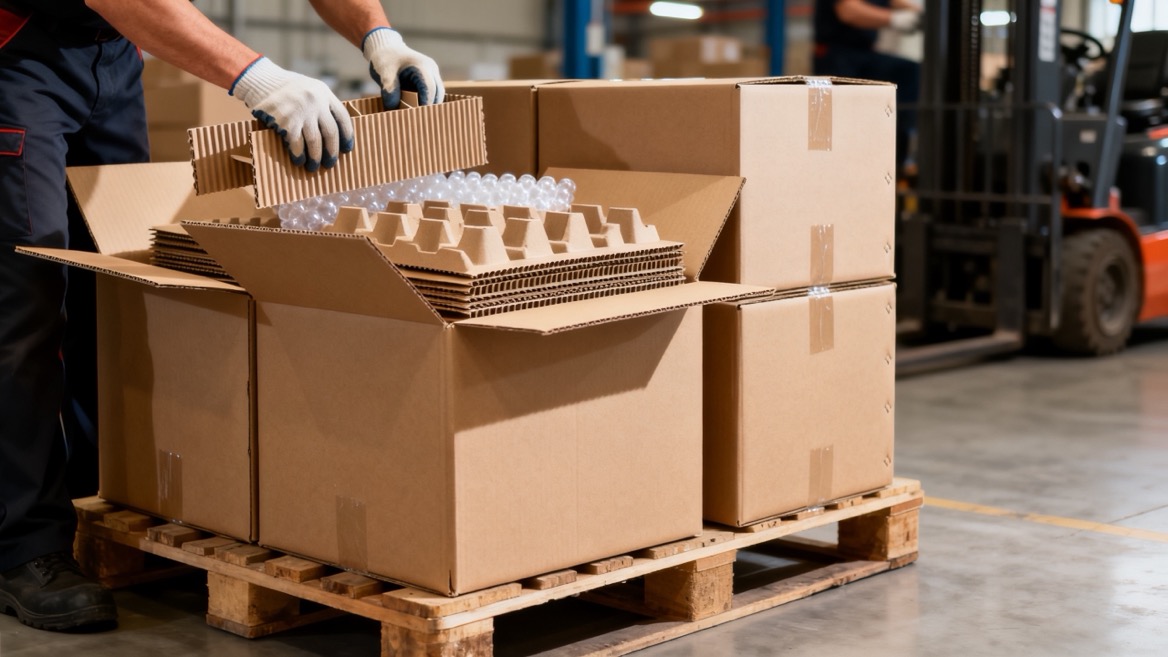
- Your products require significant void fill, foam, molded pulp, or corrugated partitions
- You need an outer carton around retail-ready product packaging
- Your shipment faces frequent handling, transfer points, or long storage periods
Practical rule: If the package must protect products through multiple logistics stages before reaching another business, prioritize the corrugated shipping box. If the package will arrive directly at the end customer and become part of the brand moment, a custom mailer box may offer greater overall value.
This is where mailer boxes usually outperform standard shipping boxes.
A mailer box can be designed as a complete brand environment. The outside can communicate recognition. The inside can create surprise, guide product use, introduce a campaign, or encourage social sharing.
For example, a skincare brand may use a kraft mailer box with a black one-color logo outside, a full-color interior message, a custom insert for bottles, and a printed thank-you card. The product is protected, but the packaging also becomes part of the customer experience.
A standard corrugated shipping box can also be branded. Companies often print logos, handling instructions, QR codes, barcodes, shipping marks, or sustainability messages. However, the box normally serves as a transport container rather than a luxury presentation object.
- Full-color digital or offset printing
- Flexographic printing for scalable production
- Interior printing
- Spot colors matched to brand identity
- Matte, gloss, soft-touch, or anti-scratch lamination
- Foil stamping for premium campaigns
- Embossing and debossing
- Custom inserts and dividers
- Tear strips for easier opening
- Branded tissue paper, cards, and stickers
- One-color or two-color flexographic logo printing
- Shipping marks and handling symbols
- Product category identification
- QR codes for reorder pages or product information
- Warehouse scan labels
- Sustainability messaging
- Custom printed tape
- Exterior brand graphics for promotional shipments
For large B2B orders, simple exterior printing can be more commercially effective than complex decoration. It helps identify cartons quickly while keeping unit cost under control.

It is easy to compare mailer box and shipping box prices only by unit cost. That approach often creates the wrong conclusion.
A mailer box may have a higher unit price because of its structure, printing, finishing, and tighter quality requirements. However, it may reduce the need for a separate retail box, marketing insert, or gift wrap. In that case, the total packaging system may become more efficient.
A shipping box is usually more economical for bulk protection, especially when plain or simply printed. It is often the better option for master cartons and export logistics because it can protect multiple products in one shipment.
Before selecting a box format, calculate these elements:
1. Box material and printing cost
2. Product assembly time
3. Tape, labels, inserts, and void-fill cost
4. Dimensional weight and freight cost
5. Warehouse storage space
6. Damage and return rate
7. Customer presentation value
8. Reorder and inventory management complexity
A poorly sized box can increase shipping costs and require extra void fill. A box that is too weak can cause damage claims and replacement costs. A box that is too heavy can raise freight charges without improving the customer experience.
The best packaging design protects the product with the lowest reasonable material use, not simply the thickest board.
When our team evaluates a packaging project, we recommend starting with product and logistics facts rather than visual preference alone.
Measure the actual packed product, not only the product itself.
Consider:
- Length, width, and height
- Unit weight
- Fragile points
- Sharp edges
- Product surface sensitivity
- Number of items per shipment
- Required accessories or documents
Ask where the box will travel and how it will be handled.
- Direct parcel delivery
- Cross-border e-commerce
- Retail distribution
- Wholesale order fulfillment
- Palletized freight
- Ocean shipment
- Long-term warehouse storage
Determine whether the product needs:
- Minimal protection
- Light cushioning
- Corrugated inserts
- Dividers
- Molded pulp trays
- Foam protection
- Double-wall corrugated outer cartons
- Moisture-resistant treatment for specific shipping conditions
Decide whether the package must function as:
- A shipping container only
- A retail-ready box
- A gift-ready package
- A subscription box
- A promotional campaign asset
- A reusable storage box
For high-value, fragile, or export-bound products, prototype testing is essential. Parcel delivery simulations can assess the effects of vibration, shock, drops, compression, and other transport stresses. Individual packaged products shipped through parcel networks can be evaluated under standardized test procedures designed to simulate common delivery hazards.
Do not approve a packaging format only from a digital rendering. Request physical samples, perform pack-out checks, and review the box after handling tests.
A consumer electronics brand sells premium headphones through its online store and also supplies retail partners.
For direct online orders, the company may use:
- A printed mailer box
- A fitted corrugated insert
- A branded interior panel
- A compact outer dimension to reduce shipping space
For wholesale retail shipments, the same company may use:
- Individual retail boxes for the headphones
- Several retail units packed inside a corrugated shipping box
- Protective dividers or void fill
- Exterior carton labels for warehouse receiving
- Reinforced tape for transport security
In this example, the mailer box creates a stronger customer experience for single-unit deliveries. The corrugated shipping box protects multiple units during B2B transport. Using both formats is often more effective than trying to force one box to do every job.
Paper-based packaging can support practical recycling goals when material choices are considered carefully. Corrugated boxes have historically demonstrated strong recycling performance in the United States, with government data reporting a 96.5% recycling rate for corrugated boxes in 2018.
However, recyclability depends on the complete packaging system. Heavy plastic lamination, mixed-material components, excessive adhesives, contamination, and difficult-to-separate inserts can complicate recovery.
- Use appropriately sized boxes to reduce unnecessary material
- Choose recyclable corrugated board where suitable
- Minimize mixed-material construction
- Use paper-based inserts when practical
- Avoid unnecessary plastic coatings
- Design cartons for efficient flat packing
- Use water-based inks when compatible with the selected printing process
- Clearly communicate disposal guidance where relevant
A sustainable packaging strategy should also reduce breakage. A recyclable box that fails in transit is not an efficient solution, because replacement products, reshipments, and additional packaging create avoidable waste.
Maituohong Packaging supports brands and B2B buyers that need more than a standard carton. With over 18 years of experience in high-quality rigid gift boxes and custom paper packaging, we help clients evaluate the full packaging system.
Our approach considers:
- Product dimensions and weight
- Protection requirements
- Board selection and box construction
- Branding needs
- Printing and finishing options
- Packing efficiency
- Export and shipping conditions
- Sample development before volume production
Whether you need a branded custom mailer box, a durable corrugated shipping box, or a combined inner-and-outer packaging solution, the goal should be the same: protect the product, support your brand, and control total delivery cost.
Share your product dimensions, estimated weight, order quantity, shipping method, and design requirements with Maituohong Packaging to receive a tailored box recommendation and sample development plan.
Yes. Many mailer boxes are made from corrugated cardboard, especially E-flute, F-flute, or B-flute board. The selected material depends on required strength, desired print quality, product weight, and packaging appearance.
In most heavy-duty applications, yes. Corrugated shipping boxes can use larger dimensions, taped flap closures, double-wall board, and stronger constructions for stacking and long-distance transport. However, a properly engineered mailer box can still provide reliable protection for many e-commerce products.
Yes, particularly for lightweight to medium-weight products shipped directly to customers. The box must be correctly sized, made from suitable board, and supported with inserts or cushioning when the product is fragile.
Many standard mailer box designs do not need tape because they use self-locking flaps. Some brands still add tamper-evident labels, tear strips, or sealing stickers for security and presentation.
Mailer boxes are usually the preferred choice for subscription packaging because they offer strong branding opportunities, convenient assembly, attractive interior printing, and a positive unboxing experience.
Corrugated shipping boxes are generally better for export shipments, especially for heavy products, multiple units, long transport routes, warehouse handling, and palletized freight. The final design should consider moisture, stacking loads, and interior protection.
Yes. Interior printing is one of the most popular mailer box customization options. It can include a welcome message, brand story, product instructions, promotional offer, care information, or campaign graphics.
Start with product weight, box dimensions, shipping route, stack height, storage time, and fragility. Then review board options with your packaging manufacturer and validate the design through samples and relevant handling tests.
1. U.S. Environmental Protection Agency. [Paper and Paperboard: Material-Specific Data]
2. U.S. Environmental Protection Agency. [Containers and Packaging: Product-Specific Data]
3. International Safe Transit Association. [ISTA Test Procedures]
4. International Safe Transit Association. [Procedure 3A Overview: Packaged Products for Parcel Delivery System Shipment]
5. Fibre Box Association. [Corrugated Board Specifications and Edge Crush Test Guidance]
6. Eurofins. [A Quick Guide to ISTA Packaging]
7. Smithers. [ISTA 3A Packaging Testing Standard]


