
Views: 263 Author: Maituohong Packaging Publish Time: 2026-09-27 Origin: Site


Content Menu
● Standard Cereal Box Dimensions
● How to Calculate Custom Cereal Box Dimensions
>> 1. Measure the Filled Inner Pouch
>> 2. Add Reasonable Clearance
>> 3. Confirm the Carton Board Thickness
>> 4. Check Shelf and Shipping Requirements
>> 5. Test Before Mass Production
● Cereal Box Measurements: External vs. Internal Size
● Choosing the Right Paperboard Material
● Design the Cereal Box Panel by Panel
>> Front Panel: Build Fast Recognition
>> Back Panel: Add Useful Brand Value
>> Side Panels: Use Narrow Space Strategically
>> Bottom and Top Panels: Support Function
● Food Labeling and Barcode Considerations
● Reduce Waste Through Smarter Structural Design
● Common Cereal Box Design Mistakes
>> Designing From Net Weight Alone
>> Copying a Competitor's Box Size
>> Ignoring Freight Efficiency
>> Skipping a Physical Prototype
● Work With an Experienced Packaging Manufacturer
● FAQs About Cereal Box Dimensions
>> What is the standard size of a cereal box?
>> How do I measure a cereal box correctly?
>> What size cereal box is suitable for a family pack?
>> What paperboard is best for cereal packaging?
>> Should the cereal box be larger than the inner bag?
>> Where should the barcode be printed on a cereal box?
>> Can cereal boxes be recycled?
Choosing the right cereal box dimensions is not simply a matter of fitting product into a carton. The size, board strength, panel layout, food-contact configuration, shipping efficiency, and shelf presence all affect how a cereal brand performs from production line to retail shelf.
At Maituohong Packaging, we have spent more than 18 years designing and manufacturing premium paper packaging, rigid boxes, and custom folding gift boxes. From a packaging manufacturer's perspective, the best cereal carton starts with the product, the inner bag, the filling volume, and the retail channel—not with a generic box measurement.
This guide explains standard cereal box sizes, how to calculate custom dimensions, and how to create a folding paperboard cereal box that looks credible, protects the product, and works efficiently in distribution.
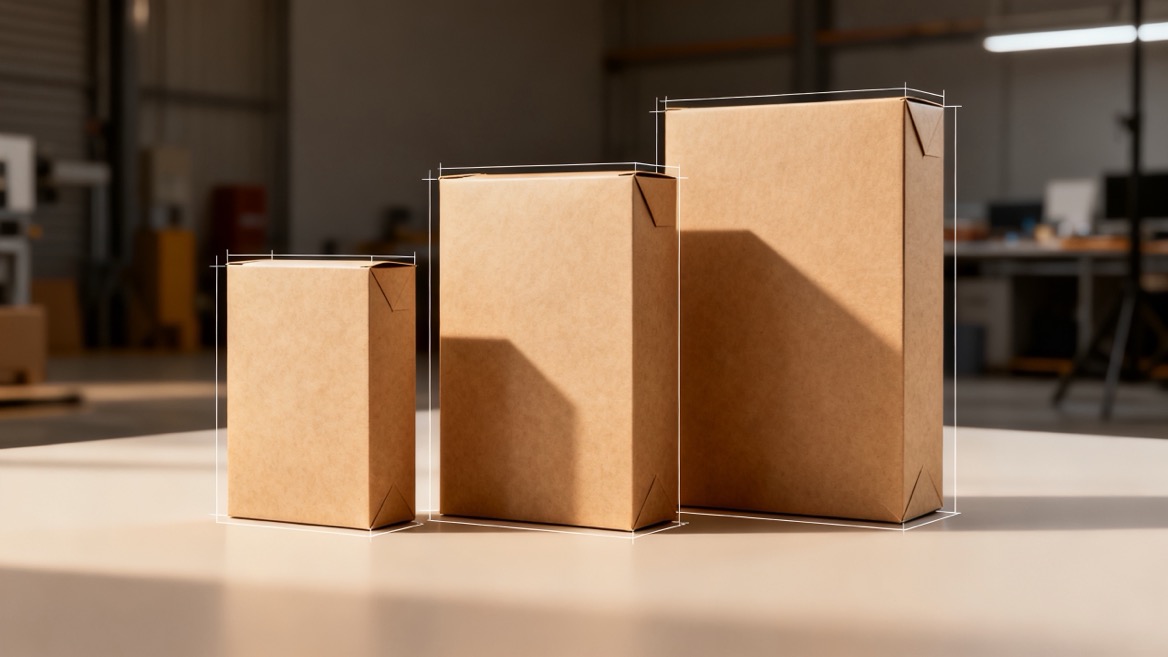
A cereal carton has several jobs at the same time. It must protect the sealed inner pouch, carry required product information, present the brand attractively, scan reliably at checkout, and stack efficiently during transport.
A box that is too large can make the product look underfilled and increase freight costs. A carton that is too tight may crush the inner bag, complicate automated packing, or create bulging panels. A carton with poorly planned artwork may leave too little room for ingredients, allergen statements, nutrition information, or a scannable barcode.
For cereal manufacturers, private-label buyers, and emerging food brands, the right size helps achieve the following:
- Better shelf appearance with consistent front-facing display
- Improved product protection for delicate flakes, granola, puffs, and clusters
- More efficient freight packing through stronger pallet and master-carton utilization
- Clearer consumer communication through well-planned information panels
- Lower material waste by avoiding oversized cartons
- More credible brand presentation through proportion, print quality, and structural accuracy
- Smoother retail scanning with a barcode placed on a flat, unobstructed panel
The carton is often the first physical touchpoint between a food brand and a shopper. Its dimensions should therefore be treated as a commercial decision, not an afterthought.
There is no single universal cereal box size. Dimensions vary according to cereal density, net weight, inner bag size, retail market, shelf planogram, and brand positioning. However, many standard folding cartons fall within predictable ranges.
The measurements below refer to the finished external box size, expressed as length × width × depth. In cereal packaging, the front-facing vertical measurement is usually called height.
| Cereal carton type | Typical height | Typical width | Typical depth | Common use |
|---|---|---|---|---|
| Small or single-serve cereal box | 6–8 in. / 152–203 mm | 4–5 in. / 102–127 mm | 1.5–2.5 in. / 38–64 mm | Travel packs, kids' portions, sampling |
| Standard cereal box | 10–12 in. / 254–305 mm | 6–8 in. / 152–203 mm | 2–3 in. / 51–76 mm | Mainstream retail cereal |
| Large cereal box | 12–14 in. / 305–356 mm | 7–9 in. / 178–229 mm | 2.5–3.5 in. / 64–89 mm | Large-volume or premium cereal |
| Family-size cereal box | 13–15 in. / 330–381 mm | 8–10 in. / 203–254 mm | 3–4 in. / 76–102 mm | Family packs and warehouse retail |
| Multipack outer carton | Custom | Custom | Custom | Several individual cereal packs |
These are planning ranges, not fixed production specifications. Two cereal products with the same net weight may need different carton dimensions because their bulk density differs greatly.
For example, 500 g of compact granola requires less internal volume than 500 g of airy corn flakes. The inner pouch, nitrogen flushing, headspace, and sealing method can also change the required dimensions.
The most reliable method is to begin with the real filled inner bag. Do not design the outer carton solely from a target net weight or a competitor's box.
A practical sizing process follows five steps.
Measure the actual product pouch after filling, sealing, and settling. Record:
- Finished pouch height
- Maximum pouch width
- Maximum pouch thickness
- Seal allowance
- Product headspace
- Corners or gussets that may expand during handling
The pouch should be measured in its natural condition. Do not compress it unnaturally, because cereal can shift and expand during transport.
The outer carton needs enough clearance for easy insertion and removal, but not so much that the inner bag moves excessively.
For many cereal cartons, a starting allowance of approximately 2–5 mm per relevant side can be practical. The correct tolerance depends on:
- Bag material and stiffness
- Filling method
- Cereal fragility
- Carton board caliper
- Manual or automatic packing process
- Climate and storage conditions
- Required production speed
A high-speed automatic line may need more carefully controlled tolerances than a small-batch hand-packing operation.
The internal usable space is smaller than the external size because paperboard has thickness. This matters especially for narrow cartons, premium coated boards, and cartons with multiple folds.
A carton specified as 200 × 150 × 60 mm externally does not provide exactly 200 × 150 × 60 mm of internal product space. The board caliper, creases, glue flap, and structural folds all influence the finished internal dimensions.
A carton can fit the product perfectly and still perform poorly in retail or logistics. Before approving dimensions, confirm:
- Shelf height restrictions
- Required front-facing width
- Retailer planogram expectations
- Master-carton dimensions
- Pallet pattern
- Container utilization
- E-commerce shipping conditions
- Display-ready packaging requirements
A slightly narrower carton may enable more units per shelf row. A slightly shorter box may improve pallet stability. These decisions can have a meaningful effect at volume.
A physical prototype is essential. It allows the brand and manufacturer to evaluate fit, opening performance, panel alignment, shelf impact, and artwork readability before full production.
A proper sample review should include:
1. Filled inner pouch insertion
2. Carton closing and glue performance
3. Drop or handling simulation
4. Shelf-facing review
5. Barcode scanning test
6. Master-carton packing trial
7. Artwork and regulatory-panel review
Expert tip: Always approve a sample using the actual cereal pouch and real product weight. An empty carton sample is useful for print and structure review, but it cannot fully confirm product fit.
Many packaging problems begin when buyers and suppliers use "box size" without clarifying whether they mean external or internal dimensions.
External dimensions describe the finished carton's outside measurements. They are important for:
- Retail shelf planning
- Shipping carton design
- Pallet loading
- Freight calculations
- Warehouse storage
- Product photography and merchandising
Internal dimensions describe the actual usable space inside the carton. They are important for:
- Inner bag fit
- Product clearance
- Automated packing
- Preventing crushed pouches
- Preventing excess movement during transport
When requesting a quotation, provide both the preferred finished outer size and the dimensions of the filled inner bag whenever possible. This gives the packaging manufacturer a stronger basis for recommending suitable board, tolerances, and structure.
Most cereal cartons use folding carton board rather than corrugated shipping board. The material must provide sufficient stiffness, clean folding performance, and a print-friendly surface.
The ideal choice depends on the product weight, retail position, design style, moisture exposure, and transportation route.
| Material option | Best for | Key advantages | Considerations |
|---|---|---|---|
| SBS paperboard | Premium retail cereal cartons | Bright white surface, strong print reproduction, clean appearance | Often selected when visual quality is a priority |
| FBB paperboard | Standard and premium food cartons | Stiffness, good printing, balanced performance | Can be a versatile option for many folding cartons |
| Kraft paperboard | Natural or organic brand positioning | Warm, natural visual character and strong brand differentiation | Printed colors may appear less vivid than on white board |
| Recycled paperboard | Value-oriented or sustainability-focused applications | Supports recycled-material positioning | Food-contact and barrier requirements must be reviewed carefully |
| Coated specialty board | Premium promotional or gift-style cereal packaging | Enhanced visual effect and tactile quality | May require careful recycling and coating evaluation |
The outer carton is normally not the direct food-contact layer. In many cereal formats, the cereal is first sealed in a food-safe inner bag, while the paperboard carton provides structure, branding, and secondary protection.
For this reason, the inner bag and outer carton should be developed together. The pouch protects freshness and provides a barrier; the carton protects shape, creates shelf impact, and carries printed information.
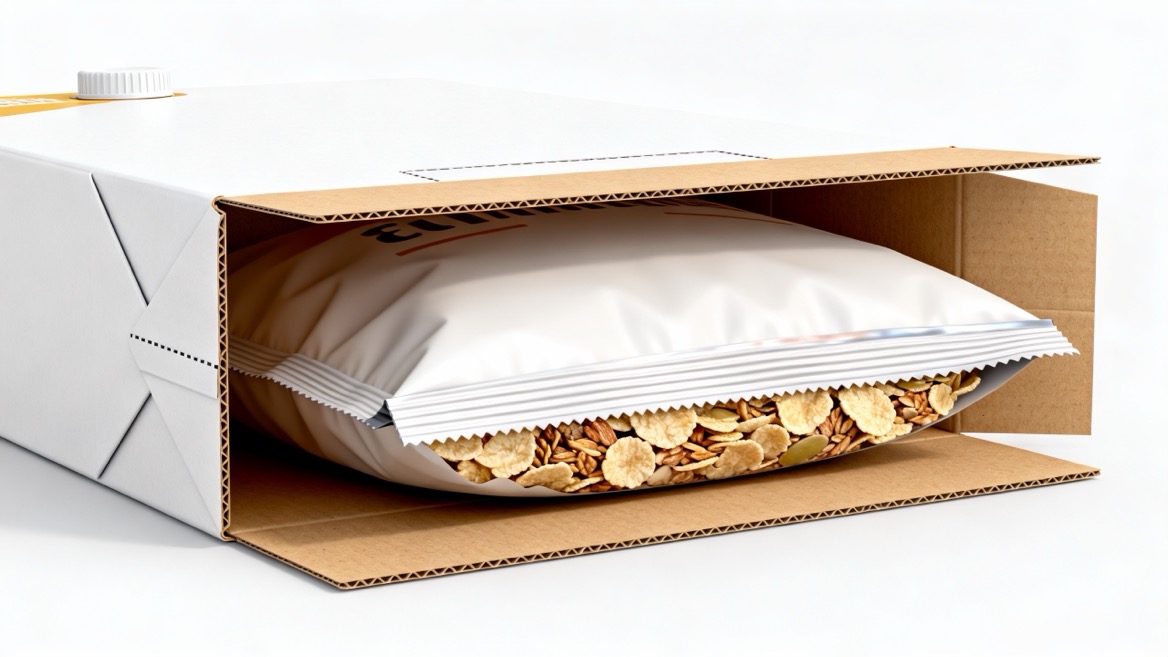
A cereal box is a six-panel communication tool. Every panel should have a clear job.
The front panel usually carries the strongest visual message. It should make the product understandable in a few seconds.
Prioritize:
- Brand name
- Product name
- Main flavor or variety
- Product imagery
- Key benefit statements that are properly supported
- Net quantity
- Clear visual hierarchy
Avoid overcrowding the front with too many icons, claims, or paragraphs. A strong front panel is usually simple, recognizable, and readable from several feet away.
The back panel offers more room for storytelling, serving suggestions, recipes, games, educational content, brand values, or QR-driven engagement.
Useful back-panel content can include:
- Serving ideas
- Ingredient highlights
- Product-origin story
- Family activity or children's puzzle
- Recycling guidance
- Recipe inspiration
- Clear nutrition information where required
The most effective back panel gives the shopper a reason to pick up the box rather than repeating the front-panel message.
Side panels are often overlooked. They can hold concise but valuable content, including:
- Ingredient list
- Allergen statement
- Manufacturer or distributor details
- Storage instructions
- Brand tagline
- Product story
- Social-media details where relevant
Keep typography clear. Long paragraphs in narrow side panels are difficult to read and make the packaging look crowded.
The top panel can include opening instructions, a small brand message, or a tamper-evident label area. The bottom panel must be structurally reliable because it carries the product load when the box stands upright.
A well-designed bottom closure reduces the risk of opening during transit and helps the carton remain square on the shelf.
Packaging artwork must leave sufficient protected space for mandatory information. Food brands should confirm applicable regulations for the markets in which they sell.
For packaged food sold in the United States, the food name and net quantity statement are generally required on the principal display panel, while nutrition information and other required details are commonly placed on the information panel. Net quantity refers to the food inside the package, not the total filled package weight..pdf)
A practical cereal carton artwork checklist includes:
- Product identity
- Net quantity
- Ingredient declaration
- Allergen declaration where required
- Nutrition information where required
- Name and address of responsible business
- Country-of-origin information where applicable
- Lot code or date-code area
- Barcode
- Storage instructions
- Recycling or disposal guidance when relevant
Barcode placement should not be treated as a last-minute design detail. For common retail cartons, GS1 guidance generally favors placement on the lower-right area of the back panel, with sufficient blank space around the code and no interference from folds, edges, or glossy distortions.
A barcode should be placed on a flat, smooth surface. Avoid locating it across a crease, near a cut line, over heavy artwork, or too close to the carton edge.
Sustainable cereal packaging is not only about choosing paper-based material. It also depends on reducing unnecessary material, improving transport efficiency, and making the carton easier to recover after use.
A practical approach includes:
- Right-sizing the carton around the actual pouch
- Avoiding oversized headspace that misleads consumers
- Selecting recyclable paperboard where suitable
- Minimizing unnecessary plastic lamination
- Using coatings compatible with the intended recovery stream
- Designing master cartons for efficient palletization
- Printing clear disposal instructions where appropriate
The broader paper-packaging industry continues to develop testing and voluntary standards for coated and treated fiber packaging, with the aim of ensuring that materials can be repulped through commonly used recycling systems.
For a brand, the most credible sustainability claim is specific and supportable. Instead of broad statements, communicate exactly what the carton is made of, what portion is recyclable in the intended market, and how consumers should dispose of it.
Even attractive cereal packaging can fail if structural and production details are ignored.
Net weight does not reliably determine carton volume. Cereal density varies significantly. Always size from the filled pouch.
A competitor's dimensions may suit a different bag, fill weight, retail channel, or production method. Use competitor packs as visual references, not as final engineering specifications.
A carton that looks impressive individually can create wasted space in master cartons and pallets. Evaluate the complete packaging system.
Excess air inside the carton can lead to product movement, corner damage, poor shelf perception, and consumer dissatisfaction. Product protection and perceived value must remain balanced.
A cereal carton has limited readable space. Make information clear, prioritize the front panel, and protect barcode and regulatory areas from decorative elements.
Digital dielines are essential, but they cannot fully show how a carton behaves with a real product inside. A filled prototype is the best way to catch fit and handling issues early.
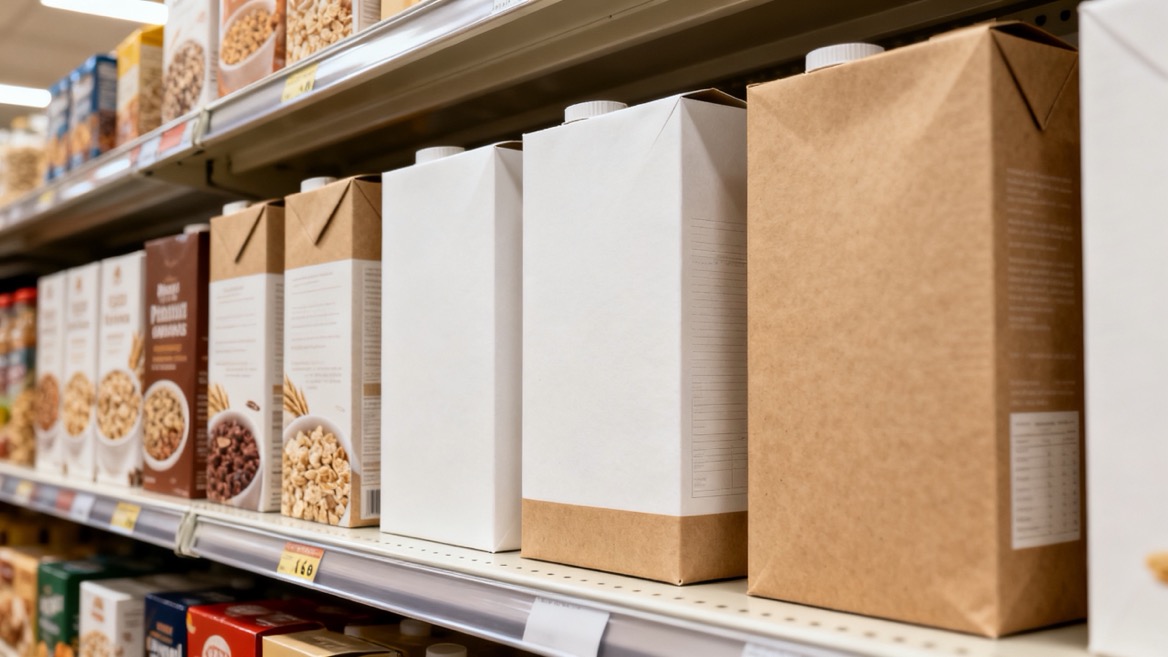
A well-designed cereal carton combines structural precision with visual appeal. It should fit the filled product, protect the inner bag, present the brand clearly, scan correctly, and move efficiently through retail and logistics channels.
For custom cereal cartons, our recommended process is straightforward:
1. Share your cereal type, net weight, filled pouch size, and target market.
2. Confirm preferred carton style, dimensions, board material, and print finish.
3. Review a dieline and structural recommendation.
4. Approve a physical prototype with the actual product.
5. Finalize artwork, production specifications, and quality standards.
6. Proceed with controlled mass production and delivery planning.
Maituohong Packaging brings more than 18 years of paper packaging manufacturing experience to custom folding cartons, rigid gift boxes, and tailored packaging projects. We help brands turn product requirements into production-ready packaging that is functional, visually refined, and suitable for real retail conditions.
Need a custom cereal box that fits your product—not a generic template? Contact Maituohong Packaging with your pouch dimensions, target quantity, artwork requirements, and destination market to begin a tailored packaging review.
A standard cereal box is often approximately 10–12 inches high, 6–8 inches wide, and 2–3 inches deep. However, the best dimensions depend on the product's filled inner pouch, cereal density, net weight, and shelf requirements.
Measure the external height, width, and depth of the finished carton. For custom production, also measure the filled inner bag and specify whether your dimensions refer to internal or external carton size.
Many family-size cereal cartons are about 13–15 inches high, 8–10 inches wide, and 3–4 inches deep. The final specification should be based on the pouch volume, desired net weight, and shipping configuration.
SBS and FBB are widely used choices for printed folding cartons because they provide stiffness and good print quality. Kraft-style board can be suitable for natural or organic brand positioning, while the final choice should consider print needs, product weight, and required packaging performance.
Yes. The carton needs controlled clearance for bag insertion, board thickness, sealing variation, and handling. However, too much internal space can allow product movement and make the package appear underfilled.
The lower-right area of the back panel is commonly preferred for retail cartons. Leave adequate clear space around the barcode, and avoid folds, seams, edges, highly reflective coatings, or textured surfaces that could affect scanning.
Many paperboard cereal cartons can be recycled where local programs accept paper packaging. Recycling outcomes may vary depending on coatings, laminations, inks, local collection systems, and whether the inner plastic bag is separated from the carton.
1. [Tycoon Packaging — What Measurements Does a Cereal Box Have?]
2. [U.S. Food and Drug Administration — Guidance for Industry: Food Labeling Guide]
3. [U.S. Food and Drug Administration — Food Labeling Guide PDF]
4. [GS1 US — Barcode Placement and Printing Guidelines]


