
Views: 277 Author: Maituohong Packaging Publish Time: 2026-09-30 Origin: Site


Content Menu
● Why Cookie Packaging Matters for Food Brands
● The Best Cookie Packaging Ideas by Use Case
>> 1. Folding Cookie Boxes for Everyday Retail
>> 2. Window Cookie Boxes That Let the Product Sell Itself
>> 3. Rigid Cookie Gift Boxes for Premium Assortments
>> 4. Single Cookie Packaging for Events and Samples
>> 5. Cookie Packaging for Shipping and Delivery
● Cookie Packaging Materials and Formats Compared
● How to Choose the Right Cookie Box Size
● Design Details That Make Cookie Boxes Feel Premium
>> Add Tactile Finishes Strategically
>> Make Information Easy to Find
● Sustainable Cookie Packaging Without Vague Claims
● A Practical Cookie Packaging Development Process
>> 1. Define the Product and Sales Channel
>> 2. Select the Food-Contact Strategy
>> 3. Choose a Structure Before Final Artwork
>> 4. Build a Physical Prototype
>> 5. Test the Full Shipping System
>> 6. Approve Color and Finish Samples
● Common Cookie Packaging Mistakes to Avoid
● Create Custom Cookie Packaging With Maituohong Packaging
>> What is the best packaging for shipping cookies?
>> Should cookies touch a paper box directly?
>> What size box should I use for a dozen cookies?
>> Are window cookie boxes suitable for premium gifts?
>> How can I make cookie packaging look more expensive?
>> What is a sustainable option for cookie packaging?
>> Can custom cookie boxes be used for corporate gifts?
Great cookie packaging does more than hold baked goods. It protects texture, communicates quality, supports food-contact requirements, creates a memorable gift experience, and helps a bakery or food brand look distinctive at the moment of purchase.
At Maituohong Packaging, we have spent more than 18 years designing and manufacturing custom rigid gift boxes, folding gift boxes, and paper packaging for brands that need packaging to feel as considered as the product inside. The most effective cookie packaging ideas combine practical protection with a clear visual identity: the box should keep cookies intact, make the flavor and occasion easy to understand, and give customers a reason to choose your brand again.
Whether you sell handmade cookies at a local market, ship subscription boxes, supply corporate gifts, or launch seasonal collections, this guide will help you select a cookie box structure, material, insert, print finish, and presentation style that fits your product and sales channel.
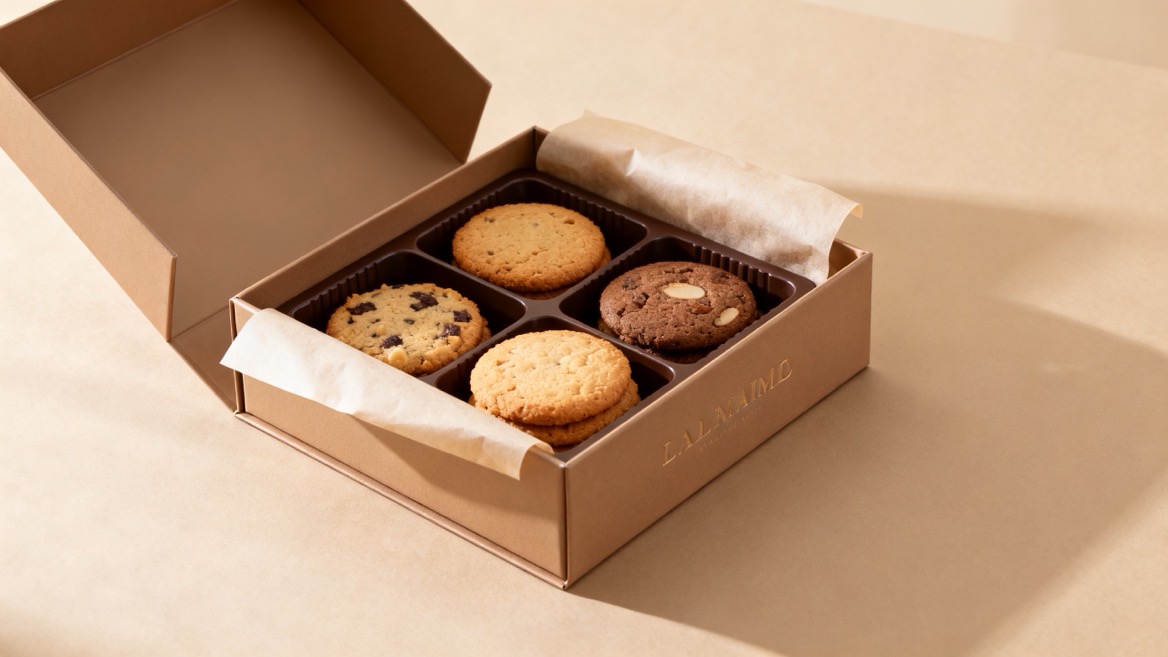
Cookies are delicate products. Crisp cookies can break in transit, decorated cookies can smudge, and soft cookies can lose their intended texture when the inner pack does not provide the right barrier. At the same time, customers often make a purchase decision before tasting anything.
That is why custom cookie packaging should perform five jobs at once:
- Protect cookies from breakage, crushing, moisture exposure, and surface damage.
- Present the product in a way that matches its price point and gifting value.
- Build brand recognition through color, typography, logo placement, and consistent details.
- Communicate essential information such as ingredients, allergens, storage guidance, and best-before information.
- Support distribution across retail shelves, direct shipping, events, foodservice, and corporate gifting.
For direct food contact, brands should verify that the selected material system—including the paper, coating, adhesive, ink, film, and inner wrap—is appropriate for its intended use. In the United States, food-contact substances are subject to safety requirements, and packaging components that contact food may require authorization or a suitable compliance basis for their specific use.
A beautiful box is important. But a box that looks premium while allowing cookies to crack, dry out, or arrive with oil stains creates a costly mismatch between expectation and experience.
The best format depends on how many cookies you sell, how fragile they are, how far they travel, and whether the purchase is everyday, celebratory, or premium. Instead of choosing a style only because it looks attractive, start with the customer's buying occasion.
A folding carton is one of the most flexible solutions for bakeries, cafés, supermarkets, and seasonal cookie launches. It ships flat before assembly, which helps reduce storage space, and it can be produced in many shapes, sizes, and print styles.
A tuck-end box, sleeve box, or auto-bottom carton can work especially well for stacked cookies, small assortments, or individually wrapped products.
Best for:
- Retail cookie packs
- Café counter displays
- Bakery takeout orders
- Holiday cookie assortments
- Promotional or sample packs
For a more polished result, pair a folding carton with an internal tray or food-safe bag. The outer carton becomes the branding surface, while the inner pack supports freshness and containment.
A window box is ideal when your cookies have strong visual appeal. Think iced sugar cookies, macarons, sandwich cookies, colorful sprinkles, stamped shortbread, or artisan assortments.
The window should be used deliberately. A large opening can create a tempting product view, but it can also reduce the printable surface and may affect structural strength if not properly engineered. A smaller die-cut window can be equally effective while preserving more room for branding and mandatory product information.
Useful window shapes include:
- A simple rectangle for a clean retail look
- A round or scalloped opening for handmade or festive cookies
- A custom die-cut shape that echoes a logo or seasonal motif
- A narrow strip window for cookie stacks
- Multiple small windows for assorted flavors
For brands using a plastic-free positioning, discuss alternatives carefully. The visual window material, sealing method, and end-of-life claims should match the actual packaging construction and local collection realities rather than relying on broad environmental language.
For luxury gifting, corporate programs, wedding favors, and high-value seasonal collections, a rigid paperboard box creates a very different perception from a standard folding carton.
A rigid cookie gift box can include a lift-off lid, shoulder-and-neck structure, drawer style, hinged lid, ribbon pull, or magnetic closure. These formats offer a strong unboxing moment and allow more refined details such as embossed logos, foil stamping, textured paper wraps, and custom inserts.
A rigid box is especially suitable when:
- The cookies are priced as a premium gift.
- The assortment includes several flavors or compartments.
- The brand wants customers to reuse the box.
- The package is designed for corporate or holiday gifting.
- Product presentation matters as much as protection.
For example, a premium holiday assortment can use a rigid two-piece box with six divided compartments, a printed flavor card, tissue paper, and a food-safe inner barrier. The outer package feels gift-worthy; the insert stops the cookies from moving; the product card adds a more personal and informed experience.
Single cookie packaging is practical for wedding favors, hotel welcome gifts, school events, cafés, trade shows, promotional giveaways, and individually sold decorated cookies.
A transparent food-safe bag with a branded topper card is a simple option for lower-volume events. For a more elevated look, consider a custom paper sleeve, a small folding box, or a die-cut card with a sealed cookie bag behind it.
Make single-cookie packs more effective by adding:
- A flavor name or short product story
- Ingredient and allergen information where required
- A QR code that leads to ordering or gifting information
- A personalized event message
- A "baked for" date or small-batch identifier
- A clear storage instruction
The goal is not to overcrowd the pack. A small format needs a visual hierarchy: first the brand, then the cookie or flavor, then essential details.
Shipping is where many attractive packaging ideas fail. A cookie box designed only for shelf display may not survive vibration, drops, compression, and repeated handling in a parcel network.
For shipped cookies, build the packaging as a system, not as one box:
1. Use a food-safe primary wrap, pouch, tray, or sealed inner container.
2. Use a fitted insert, divider, or cavity tray to limit movement.
3. Place the product in a durable inner presentation box.
4. Add cushioning or void fill where necessary.
5. Use a correctly sized corrugated mailer or shipping carton.
6. Test a packed sample before scaling production.
Transport testing commonly evaluates risks such as drops, shock, vibration, compression, and environmental conditions. The International Safe Transit Association provides testing procedures ranging from basic strength screening to broader shipment simulations.
For fragile decorated cookies, avoid leaving empty space inside the box. Movement is often more damaging than the impact itself. A custom insert that holds each cookie or stack in position can substantially improve arrival condition while making the unboxing experience feel intentional.
| Packaging Format | Best Use | Main Strength | Important Consideration |
|---|---|---|---|
| Folding carton | Retail packs and bakery orders | Cost-efficient, printable, ships flat | Often needs an inner food-safe wrap or tray |
| Window box | Visually appealing cookies | Shows the product before purchase | Window size and film choice need careful planning |
| Rigid gift box | Premium assortments and gifting | Strong presentation and reuse value | Higher material and freight cost |
| Paper sleeve | Cookie stacks and small packs | Minimal, flexible, brandable | Does not provide full barrier protection alone |
| Paper pouch | Casual bakery sales | Lightweight and convenient | Choose a suitable grease and moisture solution |
| Tray with outer box | Assortments and fragile cookies | Organizes products and reduces movement | Requires accurate cookie dimensions |
| Corrugated mailer | Direct shipping | Strong external protection | Should be paired with an inner presentation pack |
| Tin or reusable container | Seasonal and collectible gifts | High perceived value and reusability | Requires separate branding and packing planning |
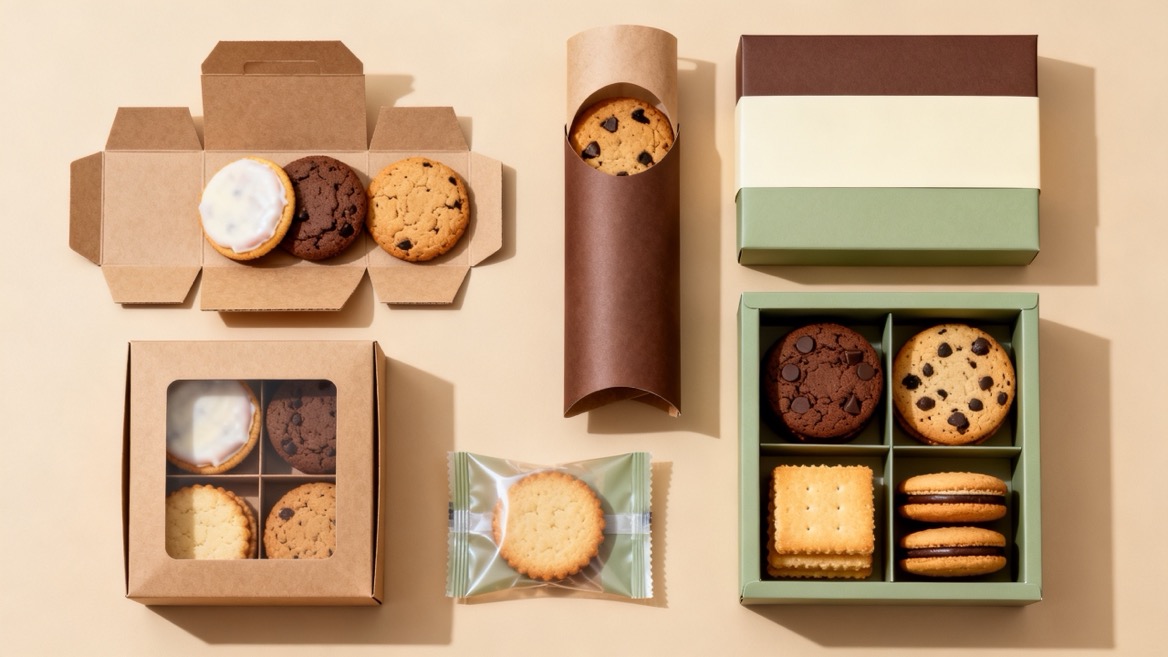
Choosing the right dimensions is not just a visual decision. Oversized packaging increases material use, freight volume, and movement during transit. Packaging that is too tight can damage icing, crush edges, or make the product difficult to remove.
Measure the real packed product, not only the cookie itself.
Record:
- Cookie diameter, length, width, and thickness
- Number of cookies per pack
- Stack height or tray arrangement
- Space needed for liners, wraps, or dividers
- Tolerance for handmade size variation
- Clearance needed for decorated surfaces
- Outer-box dimensions required for shipping
A practical approach is to create a physical mockup before finalizing the dieline. Put actual cookies inside, close the box, turn it in different directions, and check whether the cookies shift. Then test the product after the intended storage period, not only immediately after packing.
Premium packaging does not always require a complicated structure. Often, a clear concept and one or two well-executed details create a stronger result than excessive decoration.
Color should help customers identify the product category, flavor, season, or gift occasion quickly.
For example:
- Warm kraft, cream, and deep brown can suggest handmade, natural, or artisanal cookies.
- Bright pastel colors can suit birthday cookies, spring collections, or family gifting.
- Dark navy, burgundy, forest green, and metallic accents work well for holiday or corporate gifts.
- A restrained white box with one accent color can feel modern and premium.
Keep the color system consistent across labels, inserts, thank-you cards, and shipping materials. Consistency builds recognition faster than adding more graphics.
Finishes can turn a standard cookie box into a gift-worthy package. The right option depends on your brand position and budget.
Popular choices include:
- Matte lamination for a soft, understated appearance
- Gloss accents for colorful graphics or product images
- Foil stamping for logos, holiday messages, or limited editions
- Embossing or debossing for a tactile logo
- Spot UV to highlight patterns or brand elements
- Textured specialty paper for upscale gift boxes
- Ribbon pulls or belly bands for a ceremonial opening experience
Use finishes to direct attention, not to cover every surface. A small gold-foil logo on a well-designed matte box often feels more refined than multiple competing effects.
Food packaging should balance visual appeal with clarity. Put the most important information where buyers expect to see it, and keep the layout readable at real viewing distance.
A useful information order is:
1. Brand name
2. Product name or flavor
3. Cookie count or net weight
4. Key product benefit or occasion
5. Ingredient and allergen details
6. Storage and handling guidance
7. Batch, date, or traceability information when needed
If a box has multiple flavors, an insert card can reduce clutter on the exterior while helping customers identify what is inside each compartment.
Many cookie brands want packaging that uses less material, supports recycling, includes recycled content, or offers renewable fiber-based components. These goals are worthwhile, but environmental claims should be specific and verifiable.
Rather than describing every paper package as "eco-friendly," explain what has actually been designed into the pack. For example:
- "Folding carton made with paperboard from responsibly managed sources."
- "Right-sized carton designed to reduce empty shipping space."
- "Reusable rigid gift box intended for keepsakes or storage."
- "Mono-material paperboard construction where suitable for local recycling systems."
- "Reduced plastic components compared with the previous packaging format."
The Sustainable Packaging Coalition emphasizes the importance of clear and credible consumer-facing recycled-content claims, while its resources also address challenges such as food residue in paper packaging recovery.
For cookie packaging, sustainability has to work alongside food protection. A package that uses less material but leads to broken product, shorter shelf life, or food waste is not necessarily the better overall solution. The strongest approach is to right-size the pack, avoid unnecessary layers, select suitable materials, and design for the actual disposal pathways available to customers.
A custom box project runs more smoothly when brand, product, and logistics decisions are made together. Use the following process to reduce revisions and avoid surprises after production begins.
Start with the cookie type, pack count, shelf-life target, and selling environment. A cookie sold at a bakery counter needs different packaging from one shipped nationwide or presented as a corporate gift.
Decide whether cookies touch the box directly or sit inside a separate bag, tray, liner, or wrap. Confirm appropriate materials for the intended food-contact application with your packaging supplier and compliance team.
The box style determines usable print areas, fold lines, window placement, insert dimensions, and shipping performance. Final artwork should follow the approved structure, not the other way around.
Test actual cookies in a sample. Check fit, opening experience, stacking, product movement, and the appearance of the package after handling.
If the product is mailed, test the finished primary pack, insert, presentation box, cushioning, and shipping carton together. Do not evaluate the cookie box in isolation.
For branded packaging, review print proofs and material samples under normal lighting. Foil, paper texture, matte coatings, and printed colors can look different from a screen mockup.
The most expensive packaging mistakes are usually preventable during design development.
- Choosing a visually impressive box that lacks internal protection.
- Assuming a window package automatically keeps cookies fresh.
- Leaving too much empty space around delicate cookies.
- Designing before measuring actual product dimensions.
- Forgetting that ingredient, allergen, and storage information needs space.
- Using sustainability claims that do not match the complete material structure.
- Treating the shipping carton as an afterthought.
- Selecting premium finishes before confirming budget, lead time, and freight needs.
- Skipping a real product-fit and transit test.
A cookie box should be designed around the product's real risks. For a brittle butter cookie, breakage may be the primary concern. For a soft cookie, the barrier and freshness plan may matter more. For decorated cookies, vertical clearance and surface protection often become critical.
The right packaging turns cookies into a stronger retail product, a more memorable gift, and a more reliable shipped order. From flat-packed folding cartons and window cookie boxes to high-end rigid gift boxes with custom inserts, Maituohong Packaging can help translate your product requirements into a practical, brand-ready paper packaging solution.
Share your cookie size, quantity per box, target market, desired box style, artwork needs, and distribution method. Our team can help you develop a custom packaging structure that protects the product, reflects your brand, and creates a better experience from first look to final bite.
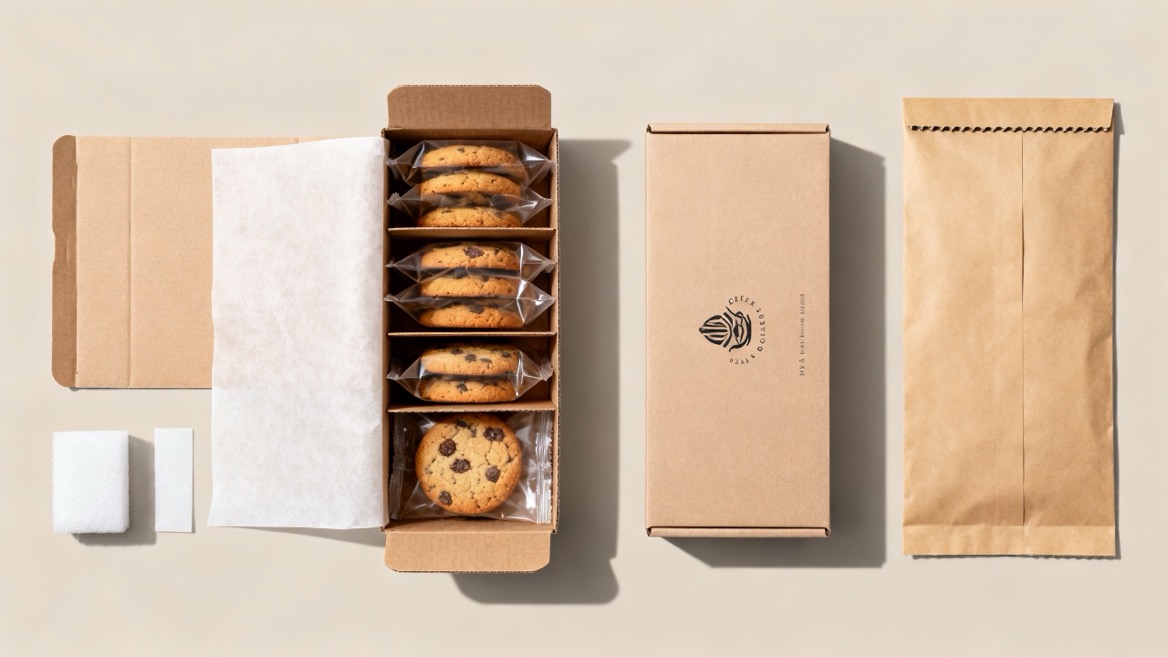
The best approach is a layered system: a food-safe inner wrap or tray, a fitted insert or divider to stop movement, an inner presentation box, and a protective corrugated shipping carton. Fragile cookies should not move freely inside the package.
That depends on the intended food-contact use and the materials in the box system. If cookies directly contact the packaging, confirm that the paperboard, coatings, inks, adhesives, and any other components are appropriate for food contact. Many brands use a separate food-safe inner bag, liner, or tray for additional protection.
Measure the packed arrangement, including cookie diameter, thickness, liners, separators, and clearance for decorated surfaces. A dozen cookies may fit in very different box sizes depending on whether they are stacked, arranged in one layer, individually wrapped, or placed in compartments.
Yes. A window can make premium cookies more appealing because customers can see the craftsmanship. For a luxury look, combine a carefully sized window with thick paperboard, a custom insert, matte finish, foil detail, or a printed sleeve.
Use a clear brand color system, high-quality paperboard, clean typography, an organized insert, and one focused finishing detail such as foil stamping, embossing, textured paper, or a ribbon pull. Premium presentation comes from coherence and fit, not from adding every possible decorative feature.
A practical option may include a right-sized paperboard carton, a minimal number of material layers, and a clearly stated disposal or recycled-content claim where substantiated. The correct solution must still protect the cookies and fit the food-contact and shelf-life requirements of the product.
Yes. Corporate cookie gifts work particularly well with rigid boxes, compartment trays, branded sleeves, custom message cards, and seasonal color palettes. Personalization can include a recipient name, company logo, event message, or flavor card.
2. [U.S. Food and Drug Administration: Food Ingredients and Packaging]
3. [International Safe Transit Association: Test Procedures]
4. [Intertek: ISTA Packaging Testing]
5. [Sustainable Packaging Coalition: Resource Library]
6. [Tycoon Packaging: Cookie Packaging Ideas—Complete Guide]


