
Views: 224 Author: Maituohong Packaging Publish Time: 2026-09-26 Origin: Site


Content Menu
● What Is a Paper Shopping Bag?
● Rigid Boxes vs. Paper Bags at a Glance
● Differences in Structure and Materials
>> Rigid Boxes Use Thick Paperboard Cores
>> Paper Bags Depend on Paper Weight and Construction
● Differences in Product Protection
>> Rigid Boxes Provide Better Protection
>> Paper Bags Are Not a Substitute for Protective Packaging
● Differences in Brand Experience
>> Rigid Boxes Create a Controlled Unboxing Moment
>> Paper Bags Create Public Brand Visibility
● Cost, Storage, and Logistics Differences
● When Should You Choose Rigid Boxes?
● When Should You Choose Paper Shopping Bags?
● How to Choose the Right Packaging Format
>> 1. What Is the Product Value?
>> 2. How Fragile Is the Product?
>> 3. Where Will Customers Receive the Product?
>> 4. What Brand Positioning Do You Want?
>> 5. What Happens After Purchase?
● A Combined Packaging Strategy Often Works Best
● Material Responsibility and End-of-Life Considerations
>> 1. Are rigid boxes more expensive than paper bags?
>> 2. Can paper shopping bags carry heavy products?
>> 3. Are rigid boxes suitable for e-commerce packaging?
>> 4. Which is better for luxury packaging: a rigid box or a paper bag?
>> 5. Can rigid boxes be customized with inserts?
>> 6. What paper is best for custom shopping bags?
>> 7. Can rigid boxes and paper bags use the same branding design?
>> 8. Are paper bags recyclable?
Choosing between rigid boxes and paper shopping bags is not simply a matter of appearance. Each format performs a different job in the customer journey, from protecting a premium product to carrying purchases out of a retail store.
At Maituohong Packaging, we have spent more than 18 years designing and producing custom paper packaging for brands across retail, gifting, cosmetics, fashion, food, electronics, and promotional markets. In practice, the best packaging decision starts with one question: What must the package do for the product, the buyer, and the brand?
A rigid box is designed to protect, present, and elevate a product. A paper bag is designed to carry, communicate, and extend a brand's visibility beyond the point of sale. Both can be customized with premium materials, printing, and finishing, but they differ significantly in structure, cost, durability, customer experience, and ideal use cases.
This guide explains the key differences between rigid boxes and paper bags, helping brand owners, purchasing managers, designers, and retailers choose the right custom paper packaging solution.
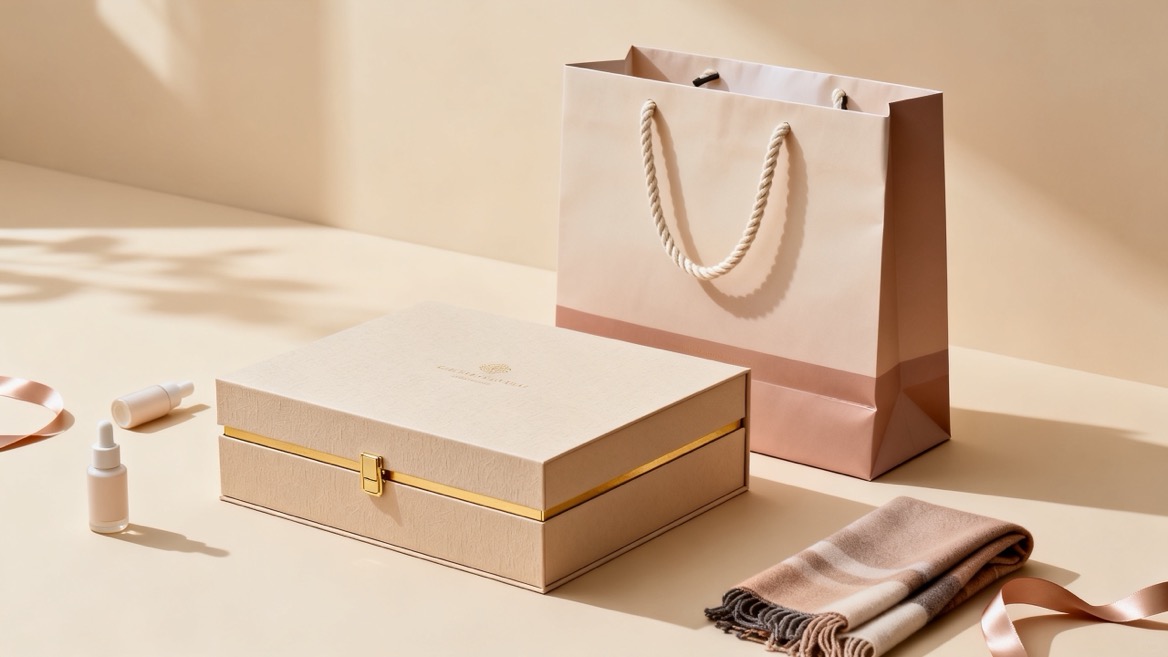
A rigid box, also called a setup box, is a non-collapsible paperboard box made from thick greyboard or chipboard. Unlike folding cartons, rigid boxes keep their shape before, during, and after use.
They are commonly used for premium products because they offer strong protection and a more memorable opening experience.
Typical rigid box structures include:
- Two-piece lid and base boxes
- Magnetic closure boxes
- Drawer boxes
- Shoulder and neck boxes
- Book-style boxes
- Hinged lid boxes
- Collapsible magnetic boxes
- Round rigid boxes
- Custom-shaped gift boxes
Rigid boxes are often wrapped with printed art paper, specialty paper, textured paper, kraft paper, fabric, or other decorative materials. Brands can add finishes such as foil stamping, embossing, debossing, spot UV, soft-touch lamination, and ribbons.
The result is packaging that feels substantial in the hand and visually supports a high-value product.
A paper shopping bag is a portable packaging format designed primarily for carrying products from a store, event, showroom, or delivery collection point.
Paper bags are usually made from kraft paper, coated paper, art paper, white card paper, recycled paper, or specialty paper. Their strength depends on paper weight, handle construction, bottom reinforcement, side gussets, and the product load they need to carry.
Common paper shopping bag styles include:
- Twisted-handle kraft paper bags
- Flat-handle paper bags
- Cotton rope handle bags
- Ribbon handle gift bags
- Die-cut handle bags
- Luxury laminated paper bags
- Boutique shopping bags
- Food-service takeaway paper bags
- Foldable paper bags with reinforced bottoms
Paper bags are highly visible in retail environments. They travel with customers, appear in public spaces, and can become an effective extension of a brand's offline identity.
A well-designed custom paper bag can turn an ordinary purchase into a recognizable brand experience.
The fundamental difference is simple: a rigid box protects and presents the product itself, while a paper bag carries one or more packaged products.
| Feature | Rigid Boxes | Paper Shopping Bags |
|---|---|---|
| Primary purpose | Product protection and premium presentation | Carrying products and increasing retail visibility |
| Structure | Thick, non-collapsible paperboard | Foldable paper-based carrying bag |
| Durability | High | Medium to high, depending on paper and handles |
| Product protection | Excellent for delicate and premium items | Limited; depends on internal product packaging |
| Brand perception | Luxury, gift-ready, high-value | Retail-ready, practical, visible, approachable |
| Storage efficiency | Requires more space unless collapsible | Usually folds flat for efficient storage |
| Production complexity | Higher | Lower to medium |
| Unit cost | Usually higher | Usually lower |
| Best for | Cosmetics, jewelry, electronics, gifts, premium food | Apparel, boutiques, events, takeaway, retail purchases |
| Reuse potential | High for storage and gifting | Moderate to high for shopping and daily carrying |
| Typical customization | Inserts, magnets, foil, embossing, specialty wraps | Handles, printing, lamination, gussets, foil, ribbons |
For many premium brands, the strongest solution is not choosing one over the other. It is using both formats together.
For example, a luxury skincare brand may place each product set in a magnetic rigid box, then provide a branded rope-handle paper bag for customers to carry the purchase out of the store.
Rigid boxes are built around a dense board structure. The board is typically much thicker than the paper used for standard folding cartons or shopping bags.
This construction gives rigid boxes several important advantages:
- Better compression resistance
- Greater shape stability
- Improved protection for fragile products
- A more substantial hand feel
- A premium unboxing experience
- More possibilities for internal inserts
The outer wrap can be selected based on brand positioning. A minimalist wellness brand may choose uncoated textured paper. A luxury jewelry brand may prefer soft-touch laminated paper with gold foil. A sustainable retail brand may choose recycled kraft paper with one-color printing.
The rigid board gives the package its strength. The wrap gives the package its personality.
Paper shopping bags are lighter and more flexible. Their performance depends heavily on engineering details.
Important design elements include:
- Paper type
- Paper grammage
- Handle material
- Handle attachment method
- Bottom board reinforcement
- Side gusset size
- Bag height and width
- Product weight
- Moisture exposure during use
A small cosmetic paper bag may work well with coated paper and ribbon handles. A grocery or takeaway bag may require strong kraft paper, reinforced handles, and a durable bottom fold.
The key is matching the bag construction to the real carrying conditions. A beautiful bag that fails when loaded with products can damage customer confidence very quickly.
If your product is fragile, expensive, oddly shaped, or intended as a gift, a rigid box is usually the stronger choice.
Rigid boxes can be designed with custom inserts made from:
- Paperboard
- EVA foam
- EPE foam
- Molded pulp
- Velvet-covered inserts
- Satin-lined trays
- Paper pulp trays
- Folded paper dividers
These inserts keep products in place and reduce movement during shipping, handling, and display.
For example, a glass perfume bottle needs more than attractive outer packaging. It needs a secure internal cavity, controlled spacing, and enough structural support to prevent impact damage. A rigid box with a fitted insert is much more suitable than a paper bag alone.
Paper bags can carry products, but they are not generally intended to protect an individual item from crushing, impact, or rough handling.
They work best when the products inside already have protective packaging, such as:
- Rigid boxes
- Folding cartons
- Corrugated shipping boxes
- Bottles with secure caps
- Wrapped apparel
- Protective retail cartons
A paper shopping bag should be viewed as an outer carrying format, not as the only protective layer for valuable products.
A rigid box gives a brand more control over the moment when a customer first sees and touches the product.
The lid lift, magnetic closure, drawer pull, ribbon opening, and interior reveal can all create anticipation. This makes rigid boxes especially effective for products that are purchased as gifts or positioned as premium.
A well-made rigid box tells the customer:
- This product has value
- The brand pays attention to details
- The purchase is worth keeping
- The product is suitable for gifting
- The brand experience continues after the sale
For products such as watches, fragrance, premium tea, candles, jewelry, electronics, and corporate gifts, the packaging can strongly influence perceived quality.

Paper bags work differently. Their strongest moment often happens after the transaction.
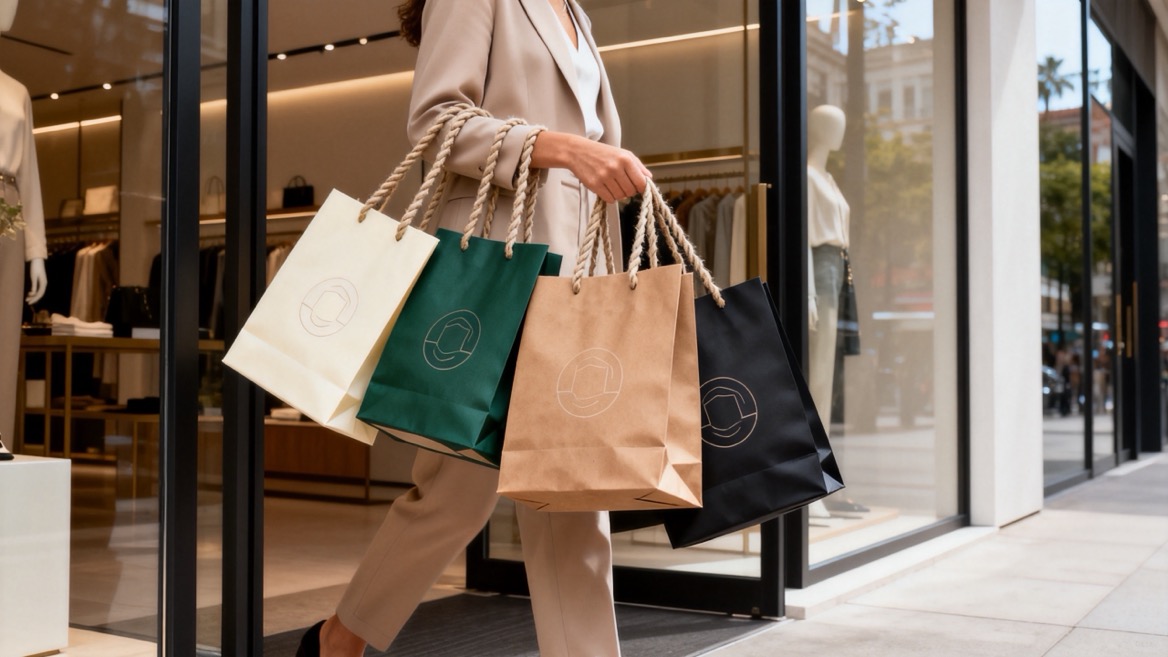
When customers leave a store carrying a branded paper shopping bag, the bag becomes mobile brand communication. It may be seen on streets, in offices, at restaurants, in shopping malls, and on public transportation.
This makes paper bags particularly valuable for:
- Fashion boutiques
- Department stores
- Beauty retailers
- Trade shows
- Gift shops
- Product launches
- Hotel retail stores
- Specialty food brands
- Premium bakery businesses
A rigid box creates a private opening experience. A paper bag creates a public carrying experience.
Rigid boxes generally cost more to produce because they require more material, more manual assembly, more wrapping steps, and more complex finishing processes.
They also occupy more warehouse space because standard rigid boxes do not fold flat.
Paper bags are usually more economical for large retail volumes. They can often be shipped and stored flat, helping retailers use warehouse and back-of-store space more efficiently.
| Factor | Rigid Boxes | Paper Shopping Bags |
|---|---|---|
| Material consumption | Higher | Lower |
| Assembly process | More complex | Simpler |
| Manual labor requirement | Often higher | Often lower |
| Flat packing | Limited, unless collapsible | Excellent |
| Storage efficiency | Lower | Higher |
| Shipping volume | Higher | Lower |
| Suitable order volume | Medium to high, depending on design | Small to very high |
| Premium finish potential | Very high | High |
However, lower unit cost should not be the only purchasing criterion.
A premium product placed in an under-designed package may reduce perceived value. At the same time, a low-margin product placed in an overly elaborate rigid box may create unnecessary cost pressure.
The right decision comes from balancing product value, packaging function, brand positioning, sales channel, and order volume.
Choose custom rigid boxes when the package needs to protect, impress, or support a premium price point.
Rigid boxes are especially suitable for:
- Luxury cosmetics and skincare
- Jewelry and watches
- Perfume and candles
- Premium wine and spirits
- Consumer electronics
- Mobile accessories
- Gift sets
- High-end confectionery
- Corporate gifts
- Fashion accessories
- Limited-edition products
- Subscription gift boxes
Rigid boxes are also ideal when customers are likely to keep the packaging for storage, display, gifting, or reuse.
A reusable box can extend your brand presence long after the original purchase.
Choose custom paper shopping bags when the priority is product carrying, retail convenience, brand exposure, or efficient distribution.
Paper bags are especially suitable for:
- Apparel stores
- Shoe stores
- Cosmetics counters
- Gift shops
- Trade-show giveaways
- Boutique retailers
- Coffee and bakery businesses
- Bookstores
- Department stores
- Event merchandise
- Promotional campaigns
- Retail product collections
Paper bags are often the best choice when shoppers buy multiple items at one time. They simplify carrying while creating a polished retail presentation.
For a fashion brand, a sturdy matte-laminated paper bag with cotton rope handles can support a premium image without requiring every product to use a high-cost outer box.
Before selecting rigid boxes or paper bags, review the following five questions.
Higher-value products usually benefit from stronger protection and a more refined presentation.
A premium watch, gift set, or skincare collection often needs a rigid box. A T-shirt, brochure, or accessory purchase may only need a branded paper bag.
Products made of glass, ceramic, metal, or sensitive electronic components need better protection.
If the product can crack, scratch, bend, or move during transit, a rigid box with a tailored insert is often the safer option.
For e-commerce, the product may need several layers of protection:
1. Internal product insert
2. Rigid box or folding carton
3. Protective shipping material
4. Corrugated shipping carton
For physical retail, the experience may involve a product box plus a paper shopping bag.
If your brand promise is luxury, exclusivity, craftsmanship, or gifting, rigid boxes can reinforce that position.
If your brand promise is convenience, accessibility, stylish retail, or sustainable daily use, paper bags may be more suitable.
Think beyond the checkout counter.
Will the customer store the product in the package? Will they carry it through a shopping district? Will they give it as a gift? Will they reuse the package at home?
The answers can reveal which format delivers more value.
The most effective packaging system often uses rigid boxes and paper bags as complementary tools.
Consider this example:
A premium candle brand sells three-candle gift sets in retail stores. Each set is placed in a custom rigid box with a foam-free paper insert, foil-stamped logo, and magnetic closure. At checkout, the customer receives a matching rope-handle paper shopping bag.
This system achieves several goals at once:
- The rigid box protects the candle jars
- The box makes the set feel gift-ready
- The paper bag makes carrying easier
- The bag increases brand visibility outside the store
- The matching colors and finishes create a consistent brand identity
- The customer receives a complete premium experience
This approach is especially effective for brands that sell through both retail stores and online channels.
Paper-based packaging can support responsible material choices, but the environmental result depends on more than whether a package is made from paper.
Brands should consider:
- Recycled content
- Responsible fiber sourcing
- Ink selection
- Lamination choices
- Plastic components
- Ease of material separation
- Reusability
- Local recycling capabilities
- Packaging weight
- Product-to-package ratio
According to U.S. Environmental Protection Agency data, approximately 46 million tons of paper and paperboard were recycled in the United States in 2018, representing a recycling rate of 68.2 percent. However, actual recovery depends on local collection systems and the specific material combination used in a finished package.
A rigid box with magnets, foam, ribbons, and laminated surfaces may offer excellent reuse value, but it can require more thoughtful material separation at end of life. A simple kraft paper bag may be easier to recycle when clean and free from non-paper additions.
The practical goal is not to make broad claims. It is to design packaging that is fit for purpose, appropriately sized, durable enough for its job, and transparent about its material features.
Rigid boxes and paper shopping bags serve different but equally important roles in custom paper packaging.
Choose rigid boxes when your priority is premium presentation, product protection, gifting, and a memorable opening experience. Choose paper shopping bags when your priority is convenient carrying, efficient storage, retail visibility, and customer mobility.
For many brands, the strongest solution is a coordinated system that combines both.
At Maituohong Packaging, we help brands develop custom rigid boxes, paper shopping bags, gift packaging, and complete paper packaging systems based on product requirements, target market, budget, brand style, and practical production needs. Share your product dimensions, estimated order quantity, artwork requirements, and target market, and our packaging team can help you identify a suitable structure, material, and finishing direction.
Yes. Rigid boxes are usually more expensive because they use thicker board, more materials, more assembly steps, and often more decorative finishing processes. Paper bags are usually more cost-effective for high-volume retail use.
They can, but the bag must be engineered for the expected load. Strong kraft paper, reinforced bottoms, suitable paper weight, and properly attached handles are important for carrying heavier products safely.
Rigid boxes are suitable for e-commerce product presentation, but they usually need to be placed inside a protective corrugated shipping carton. The rigid box alone may not provide enough protection against all shipping impacts.
A rigid box is generally better for luxury product presentation because it provides a stronger structure, more refined finishes, and a better unboxing experience. A paper bag works well as a premium retail carry bag alongside the rigid box.
Yes. Rigid boxes can include paperboard inserts, molded pulp trays, EVA foam, EPE foam, velvet inserts, dividers, and other internal structures that keep products secure and organized.
The best paper depends on the product weight, brand image, printing needs, and budget. Kraft paper is practical and durable, while coated art paper can create a more polished premium appearance.
Yes. Using the same logo, colors, typography, finishing style, and visual language across rigid boxes and paper bags creates a more consistent customer experience and stronger brand recognition.
Many paper bags can be recycled, especially if they are clean and made primarily from paper. However, recyclability can be affected by heavy lamination, plastic handles, metal elements, ribbons, adhesives, and local recycling rules.
1. U.S. Environmental Protection Agency. "[Paper and Paperboard: Material-Specific Data]."
Data on paper and paperboard generation, recycling, combustion, and landfill disposal in the United States.
2. American Forest & Paper Association. "[What We're Doing to Advance Paper Recycling]."
Information on access to paper recycling programs and paper-product recovery infrastructure.
3. Forest Stewardship Council. "[Chain of Custody Certification]."
Information on verified supply-chain controls for forest-based materials.
4. Forest Stewardship Council US. "[Chain of Custody Certification]."
Information on certified material traceability, labeling requirements, and responsible sourcing claims.
5. Metsä Board. "[High-Quality Gift Packaging Uses Considerably Less Material]."
Discussion of packaging material optimization and lightweighting considerations for gift packaging.
6. Packaging Dive. "[Exports Pulled Down 2024 Paper Recycling Rate]."
Reporting on American Forest & Paper Association recycling-rate data and recovered fiber utilization.
7. American Forest & Paper Association. "[Homepage]."
Industry information on paper recycling and recovered fiber use.


