
Views: 246 Author: Maituohong Packaging Publish Time: 2026-08-11 Origin: Site


Content Menu
>> Main components of a two piece rigid box
● What Is a Shoulder Neck Box?
>> Main components of a shoulder neck rigid box
● Shoulder Neck Boxes vs. Two Piece Boxes
● Structural Performance and Protection
>> Shoulder neck box protection
● Unboxing Experience and Brand Perception
>> The experience of two piece boxes
>> The experience of shoulder neck boxes
● Manufacturing Complexity and Cost Factors
>> Why two piece boxes are usually more economical
>> Why shoulder neck boxes cost more
● Choosing the Right Box Structure
>> Choose a two piece box when
>> Choose a shoulder neck box when
● A Practical Specification Checklist
● Expert Design Insights for Premium Rigid Packaging
● FAQ
>> 1. Is a shoulder neck box the same as a two piece box?
>> 2. Which option is better for luxury packaging?
>> 3. Are shoulder neck boxes more durable?
>> 4. Can two piece boxes include custom inserts?
>> 5. Which box is more suitable for perfume packaging?
>> 6. Can both box types use sustainable materials?
>> 7. What information is needed for a custom rigid box quotation?
When selecting premium rigid packaging, the decision often comes down to Shoulder Neck Boxes versus Two Piece Boxes. Both structures protect products, create a substantial hand feel, and support high-end decoration. However, their construction, opening experience, production requirements, and ideal applications are very different.
At Maituohong Packaging, we have spent more than 18 years designing and producing custom rigid paper packaging for international brands. In practice, the best box is not always the most complex one. It is the structure that matches the product, brand position, retail environment, fulfillment method, and target cost.
This guide explains the real differences between shoulder neck rigid boxes and two piece rigid boxes, helping buyers, designers, and product teams make a more confident packaging decision.

A Two Piece Box is a classic rigid box structure made from two separate components: a removable lid and a base. The lid slides over the base and can cover a small part, most of, or nearly all of the base height.
It is also commonly called a lid and base box, lift-off lid box, or telescopic rigid box. The familiar unboxing action is simple: the customer lifts the lid away from the base.
Two piece rigid boxes are popular because they are versatile, visually clean, and relatively efficient to manufacture. They can be adapted for cosmetics, clothing, confectionery, candles, electronics, stationery, gift sets, and many other consumer products.
- Lid: The outer cover that fits over the base.
- Base: The lower structure that holds the product.
- Rigid board: Usually greyboard or chipboard, providing stiffness and protection.
- Wrapping paper: Printed, textured, colored, or specialty paper laminated around the board.
- Insert: An optional internal component that holds the product in place.
A two piece box can look highly luxurious with the right materials. Soft-touch paper, foil stamping, embossing, debossing, ribbon pulls, metallic papers, and custom inserts can significantly elevate a simple lid-and-base structure.
A Shoulder Neck Box is a more sophisticated rigid packaging structure with three primary components: a lid, a base, and an internal neck or shoulder section.
The shoulder is fixed inside the base and rises above its outer wall. When the lid closes, it rests against this raised internal structure. This creates a visible step, often called the shoulder line, between the lid and base.
Unlike a standard two piece box, the shoulder neck box has an engineered stopping point. The lid does not simply slide down the outside of the base. It meets the inner neck at a precise position, which creates a more controlled and refined closure.
This structure is widely used for luxury fragrance, premium spirits, jewelry, watches, technology accessories, skincare, collectible items, and executive gift sets.
- Lid: A removable top cover, often with a shallow or medium-depth profile.
- Outer base: The visible lower wall of the box.
- Neck or shoulder: A raised inner tray fixed to the base.
- Rigid board: The structural material for all key components.
- Wrap paper and decoration: The exterior and interior finishing materials.
- Protective insert: Foam, molded pulp, paperboard, EVA, velvet, or fabric components.
The added shoulder gives the box a layered appearance and makes the product presentation feel more deliberate.
The most important distinction is structural. A two piece box uses a lid and base. A shoulder neck box adds an internal neck between them.
| Feature | Shoulder Neck Box | Two Piece Box |
|---|---|---|
| Structure | Three-piece construction: lid, shoulder, and base | Two-piece construction: lid and base |
| Closure | Lid stops against the raised shoulder | Lid slides over the outside of the base |
| Visual effect | Layered, architectural, and highly premium | Clean, classic, and adaptable |
| Alignment | More controlled lid position | Depends on lid-to-base tolerance |
| Production complexity | Higher | Lower |
| Material usage | Usually higher | Usually lower |
| Assembly time | More detailed | More efficient |
| Typical cost level | Medium to high | Low to medium, depending on finish |
| Best for | Fragrance, spirits, luxury gifts, jewelry, premium electronics | Cosmetics, apparel, gifts, candles, retail products |
| Unboxing feel | Deliberate and ceremonial | Straightforward and familiar |
Both options can be fully customized. The choice is not about whether one is "better." It is about which structure better supports the product story.
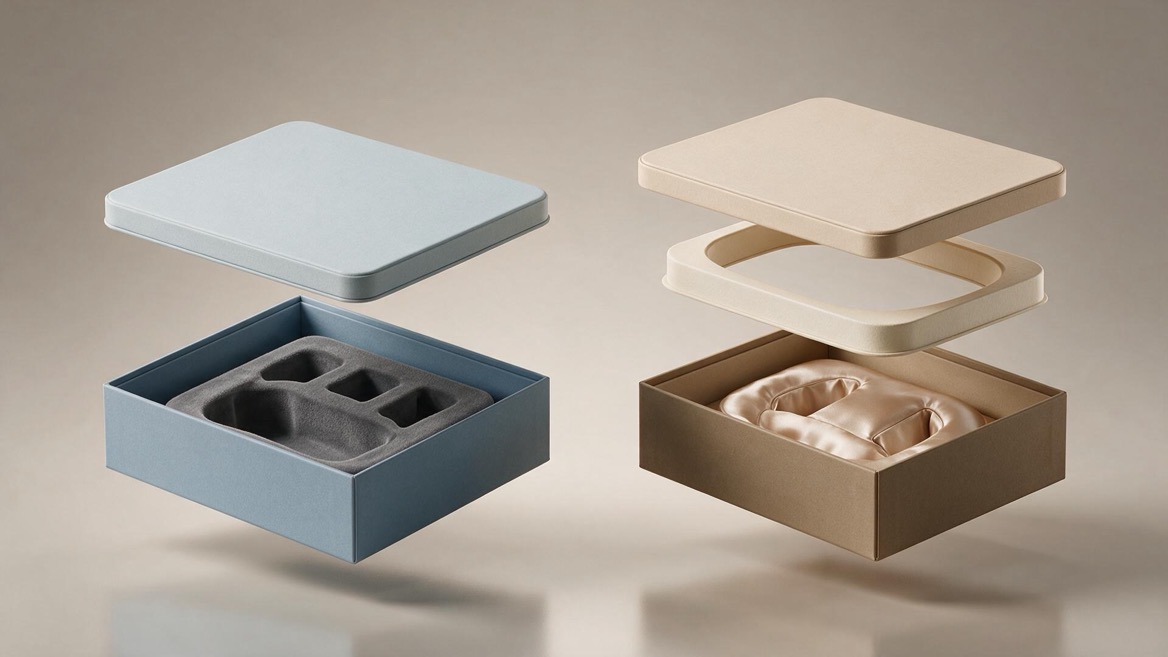
Rigid packaging must do more than look attractive. It must protect the product during storage, transport, retail handling, and gifting.
A two piece box offers dependable protection when the lid overlaps the base by an appropriate depth. A deeper lid provides more side-wall coverage and can help reduce dust exposure during retail display.
For lightweight products, a standard lid depth may be enough. For fragile or premium products, the box can be strengthened through thicker board, reinforced corners, fitted inserts, and protective tissue paper.
The key advantage is flexibility. The lid depth can be adjusted to suit the desired look, product weight, and opening resistance.
A shoulder neck box provides an additional layer of structural control. Because the lid closes against the shoulder, the neck helps maintain alignment and supports the lid during stacking and handling.
This makes shoulder neck boxes especially suitable for products that need a stable, high-precision presentation, including glass bottles, fragrance containers, watches, and delicate gift sets.
The internal neck can also reduce visible gaps between the lid and base. That detail may appear small, but in luxury packaging, visual precision strongly affects perceived quality.
A box is often the first physical interaction between a customer and a brand. The opening action influences whether the packaging feels practical, celebratory, exclusive, or memorable.
Two piece boxes deliver a familiar lift-off action. Customers immediately understand how to open them, which makes them convenient for retail, replenishment, and repeat use.
This design works well when the brand wants the product itself to be the central visual focus. Once the lid is lifted, the full product display is revealed at once.
A premium two piece box can create a strong impression through:
- Foil stamping on a minimalist lid
- Textured paper that communicates craftsmanship
- Color contrast between the lid and base
- Custom inserts that frame the product
- Ribbon pulls for easier lid removal
- Inside printing for a surprise brand message
Shoulder neck boxes create more anticipation. The visible shoulder line suggests that the packaging has been carefully engineered rather than simply assembled.
When the lid is lifted, the product is revealed in stages. First, the customer sees the lid. Then the neck. Finally, the product inside the base. This sequence adds a sense of ceremony.
For a premium fragrance launch, for example, a shoulder neck box can use a metallic neck in contrast with a matte outer base. The neck becomes a design feature rather than a hidden structural part.
This is why shoulder neck rigid boxes are often selected for products where presentation is part of the purchase value.
Cost should be evaluated beyond the unit price. A lower-cost structure is not always the better commercial decision if it fails to deliver the expected shelf impact or customer experience.
Two piece rigid boxes generally require fewer structural components. The production flow is easier to standardize, and quality inspection is more straightforward.
The main cost drivers include:
- Box dimensions
- Rigid board thickness
- Lid depth
- Wrap paper type
- Printing colors
- Surface finishing
- Insert materials
- Order quantity
- Manual assembly requirements
For brands needing a polished result at a controlled budget, the two piece box is often the most efficient choice.
A shoulder neck box requires an additional internal structure. This increases material consumption, forming steps, wrapping precision, and assembly time.
The shoulder must fit accurately with both the lid and base. If tolerances are too loose, the lid may feel unstable. If they are too tight, opening may become difficult or damage the wrap paper after repeated use.
The added investment is justified when the product category benefits from a more elevated structure. For example, a premium skincare gift set with multiple components may use the shoulder as both a visual feature and a support system for a fitted insert.
The most effective selection process starts with the product, not the decoration.
- Budget efficiency is a major consideration.
- The product needs a simple, recognizable opening method.
- You require flexible lid depth options.
- The packaging will be produced in larger quantities.
- The product has a broad retail or e-commerce application.
- The branding depends on strong graphics, colors, or finishes rather than complex construction.
- You need a practical box for apparel, candles, cosmetics, gift items, or accessories.
- Luxury positioning is central to the product strategy.
- The packaging must create a more ceremonial reveal.
- Product alignment and closure precision are important.
- You are packaging glass, fragrance, jewelry, watches, spirits, or premium technology.
- The visible layered structure supports your brand identity.
- The box will be displayed in boutiques, gifting campaigns, or high-value retail environments.
- You want the packaging itself to feel collectible or reusable.
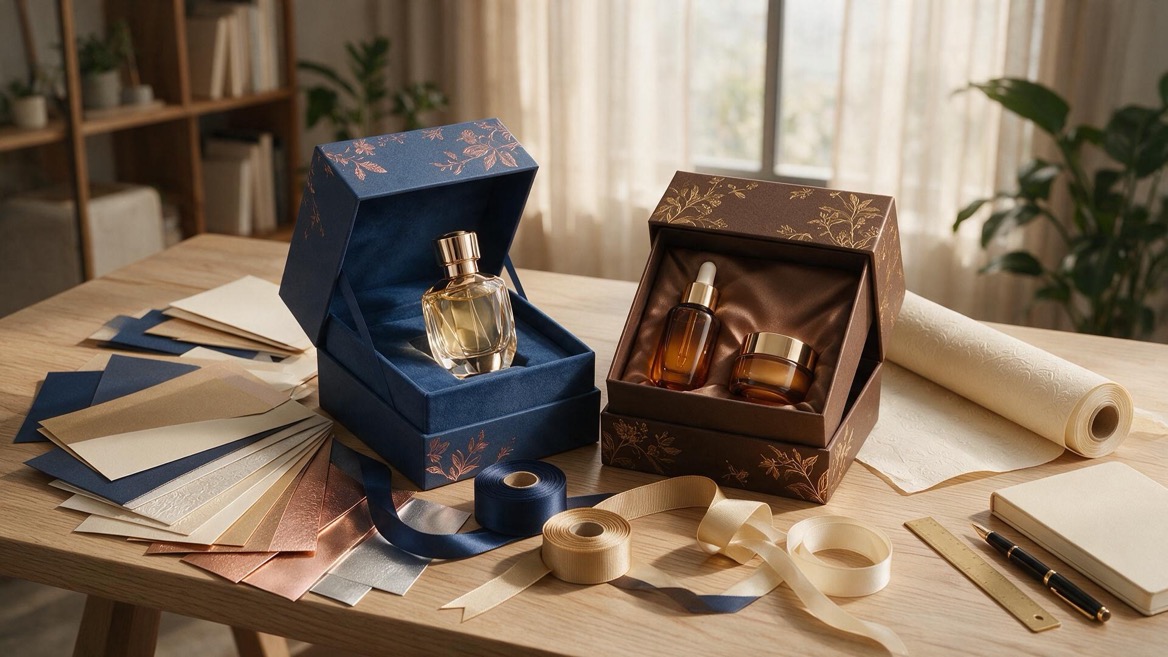
Before requesting a quotation, define the basic requirements clearly. Better information at the sampling stage helps avoid avoidable revisions, cost changes, and production delays.
1. Confirm product dimensions and weight. Measure the actual finished product, not only the product drawing.
2. Allow clearance space. Consider tissue paper, protective bags, inserts, and ease of removal.
3. Select the opening direction. Decide whether the lid should lift freely, fit tightly, or use a ribbon pull.
4. Choose the board thickness. Heavier products may require thicker rigid board or reinforced inserts.
5. Define exterior and interior papers. The inside of the box is part of the experience, especially for premium products.
6. Plan decoration early. Foil, embossing, spot UV, textured stocks, and special papers may affect lead time and cost.
7. Test the shipping condition. A beautiful box should also survive master-carton packing, warehouse handling, and final delivery.
8. Review a physical sample. Digital mockups are useful, but a physical sample reveals opening resistance, paper texture, corner quality, and product fit.
From a manufacturing perspective, the strongest packaging programs solve structural and visual questions together.
A shoulder neck box should not be chosen only because it appears more expensive. Its internal neck needs to serve a purpose: improving lid alignment, supporting a layered reveal, concealing an insert edge, or reinforcing a premium visual language.
Likewise, a two piece box should not be treated as a basic option. With precise proportions, high-quality wrapping paper, and a well-designed insert, it can look exceptionally refined.
One useful approach is to match structure to product value:
- A product with a simple shape but strong branding may benefit from a two piece box with bold finishing.
- A product with a high perceived value, detailed craftsmanship, or gifting purpose may benefit from a shoulder neck box with a visible structural reveal.
- A multi-item set may use either structure, but the insert design becomes critical for keeping every component stable and visually balanced.
The best result comes when the box feels intentional from the moment a customer sees it until the moment they remove the product.
Shoulder neck boxes and two piece boxes are both proven solutions for premium paper packaging. The two piece box provides versatility, efficiency, and a timeless lift-off presentation. The shoulder neck box offers a more engineered closure, layered appearance, and elevated unboxing experience.
At Maituohong Packaging, we help brands evaluate box structures, materials, inserts, printing techniques, and production details before mass manufacturing begins. Share your product dimensions, target quantity, reference design, and desired finishing requirements to develop a custom rigid box that protects your product and presents your brand with confidence.
No. A two piece box has a separate lid and base. A shoulder neck box includes a third internal component: the raised neck or shoulder fixed within the base.
A shoulder neck box usually creates a more premium structural impression because of its layered closure and precise lid position. However, a two piece box can also look luxurious when paired with high-quality paper, finishing, and inserts.
They can provide improved lid alignment and additional structural support. Overall durability still depends on board thickness, product weight, insert design, wrapping quality, and shipping protection.
Yes. Two piece rigid boxes can use paperboard, foam, EVA, velvet, molded pulp, fabric, or other customized inserts to protect and display the product.
Shoulder neck boxes are often a strong option for perfume because they provide a refined reveal and stable structure for glass bottles. A well-designed two piece box can also work effectively for fragrance collections with a more cost-sensitive target.
Yes. Both structures can use responsibly sourced paper, recycled greyboard, paper-based inserts, water-based inks, and reduced-plastic finishing options. Material selection should be reviewed together with protection and visual requirements.
Provide the product dimensions, product weight, box size, desired structure, order quantity, insert requirement, artwork, surface finishes, target market, and delivery expectations.
- Newlifepack, "[Common Rigid Box Structures]," structural descriptions of lift-off lid and shoulder/neck boxes. [newlifepack]
- Meiyin Packaging, "[The Ultimate Guide to Two Piece Rigid Boxes]," overview of lid-and-base construction, applications, and cost positioning. [meiyinpackaging]
- Wynalda, "[Types of Rigid Boxes: A Guide to Premium Packaging]," overview of shoulder neck rigid-box construction and typical luxury applications. [wynalda]
- PackCCP, "[A Comprehensive Guide to the Rigid Box Manufacturing Process]," discussion of rigid board, inserts, manufacturing processes, and material options. [packccp]
- James Cropper, "[Luxury Packaging]," perspectives on tailored luxury paper packaging and material-led presentation. [paperandpackaging.jamescropper]


