
Views: 249 Author: Maituohong Packaging Publish Time: 2026-11-19 Origin: Site


Content Menu
● Packaging Coating vs. Lamination: Understand the Difference
● Packaging Coating Comparison: Which Finish Fits Your Project?
● Aqueous, UV, and Specialty Finishes Explained
>> Aqueous Coating for Everyday Paper Packaging
>> UV Coating for Gloss and Graphic Contrast
>> Soft-Touch and Anti-Scuff Finishes
● How to Choose Packaging Coatings by Box Type
>> Magnetic Boxes and Luxury Rigid Boxes
>> Mailer Boxes and Shipping Boxes
● Three Practical Checks That Prevent Expensive Mistakes
>> 1. Separate Decorative Protection from Barrier Performance
>> 2. Treat Food-Contact Suitability as a Complete-System Question
>> 3. Evaluate Recyclability Beyond the Finish Name
● A Five-Step Packaging Finish Approval Process
>> Step 1: Write a Performance Brief
>> Step 2: Compare Samples on the Actual Material
>> Step 3: Approve a Fully Constructed Sample
>> Step 4: Agree on Tests and Acceptance Criteria
>> Step 5: Retain an Approved Reference Sample
● Compare Total Cost, Not Just the Coating Price
● Specify Your Next Packaging Finish with Confidence
>> 1. What Is the Best Coating for Custom Paper Boxes?
>> 2. Is Matte Lamination Better Than Gloss Lamination?
>> 3. Can Spot UV Be Applied Over Matte Lamination?
>> 4. Does Aqueous Coating Make Packaging Food-Safe?
>> 5. Does Lamination Make a Shipping Box Waterproof?
>> 6. How Can I Reduce Packaging Finishing Costs?
Choosing the right packaging coating means balancing appearance, surface protection, production compatibility, and cost. The best finish for a magnetic gift box may be unnecessary for a shipping carton—and unsuitable for a paper shopping bag with demanding fold requirements.
At Maituohong Packaging, our perspective comes from more than 18 years of experience in designing and producing premium rigid gift boxes and custom paper packaging. We recommend starting with how customers will handle the package, not simply how the finish looks in a photograph.
This guide compares aqueous coating, UV coating, varnish, and film lamination, then explains how to specify and approve the right finish before production.
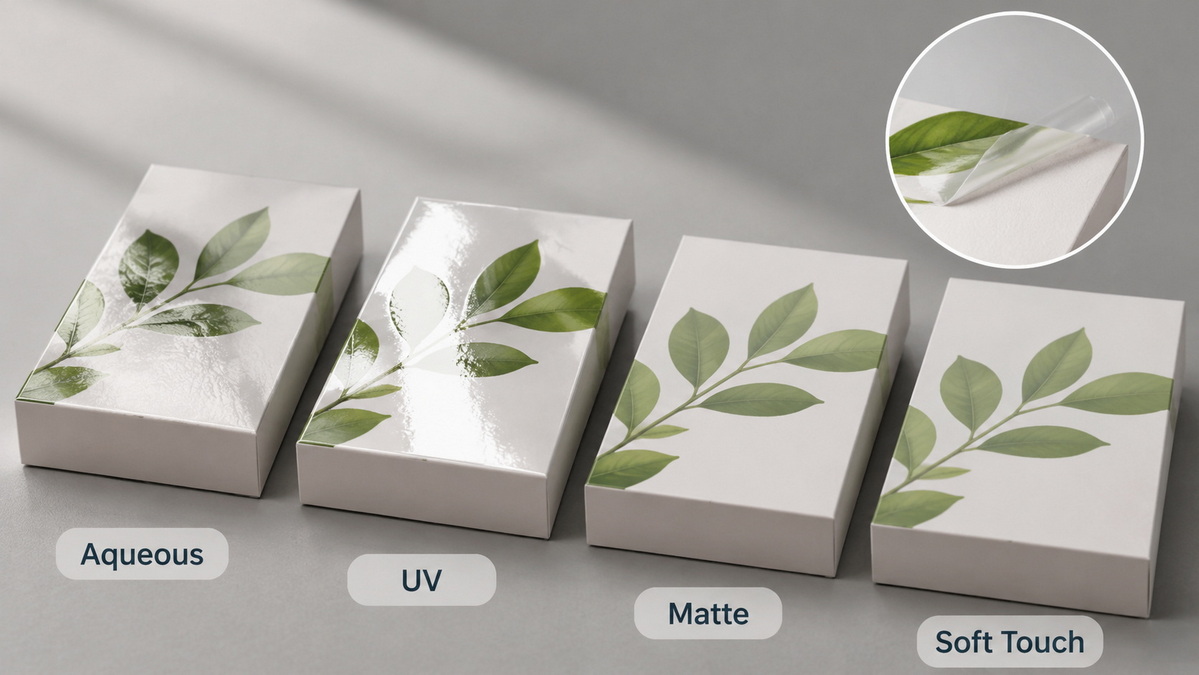
A coating is generally applied as a liquid and then dried or cured. Common examples include aqueous coatings, conventional varnishes, and UV-curable coatings.
Film lamination bonds a separate film to the printed sheet. Although buyers often group both processes under "packaging finishes," their construction and performance differ.
That distinction matters when discussing recyclability, folding, gluing, and surface protection.
Also separate appearance from function. "Matte" describes sheen, not a specific manufacturing process. A matte aqueous coating, matte UV coating, and matte film can produce different results.
When requesting quotations, specify the finish technology as well as the desired look.
Use this table to shortlist options, then confirm performance on your actual paper, artwork, and box construction.
| Finish | Main purpose | Typical applications | What to verify |
|---|---|---|---|
| Aqueous coating | General print protection with controlled sheen | Folding cartons, selected corrugated applications, paper bags | Rub resistance, drying, folding, and adhesive compatibility |
| Conventional varnish | Basic protection or visual effects | Printed cartons and selected paper packaging | Drying time, odor, and resistance requirements |
| Flood UV coating | Strong surface gloss or other specified effects | Retail cartons and printed packaging sheets | Cure, adhesion, fold performance, and downstream processing |
| Spot UV coating | Selective contrast over logos or graphics | Gift boxes and premium retail packaging | Registration and compatibility with the underlying surface |
| Gloss film lamination | Glossy appearance and surface protection | Gift boxes, printed wraps, shopping bags | Film adhesion, creasing, and environmental claims |
| Matte or soft-touch lamination | Low-glare or tactile presentation | Rigid boxes and premium gift packaging | Scuffing, fingerprints, foil adhesion, and glue areas |
No finish wins every category. Compare shortlisted alternatives against a defined acceptance standard rather than selecting from a finish name alone.
Aqueous coating uses water as its principal carrier and can provide useful handling protection with different sheen levels.
It is a practical option when you want to protect printed graphics without automatically adding a separate film layer. However, "water-based" does not mean plastic-free, universally recyclable, or automatically suitable for food contact.
Performance depends on the formulation, application weight, substrate, drying conditions, and converting process.
Ask your manufacturer which formulation suits the intended use—not simply whether aqueous coating is available.
UV coatings cure through exposure to ultraviolet light. They can deliver pronounced visual effects and useful surface resistance.
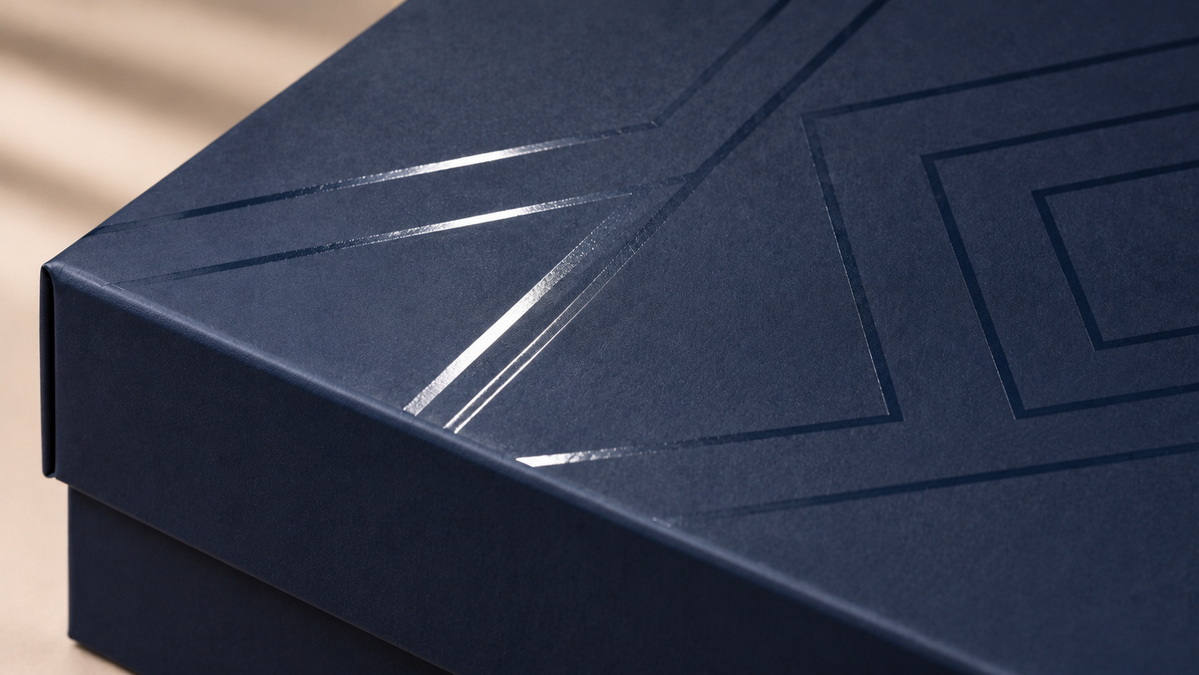
Flood UV covers a broad area. Spot UV highlights selected elements, such as a logo, illustration, or product name.
For premium packaging, restraint often produces a clearer visual hierarchy than covering every graphic with gloss.
Confirm adhesion, curing, and folding performance. UV coating should not be described as inherently more environmentally friendly than lamination without evidence supporting that comparison.
Soft-touch finishes create a tactile impression, but the term may describe either a coating or a film.
Anti-scuff finishes target resistance to visible handling damage. They are not automatically scratch-proof, and different products can perform differently.
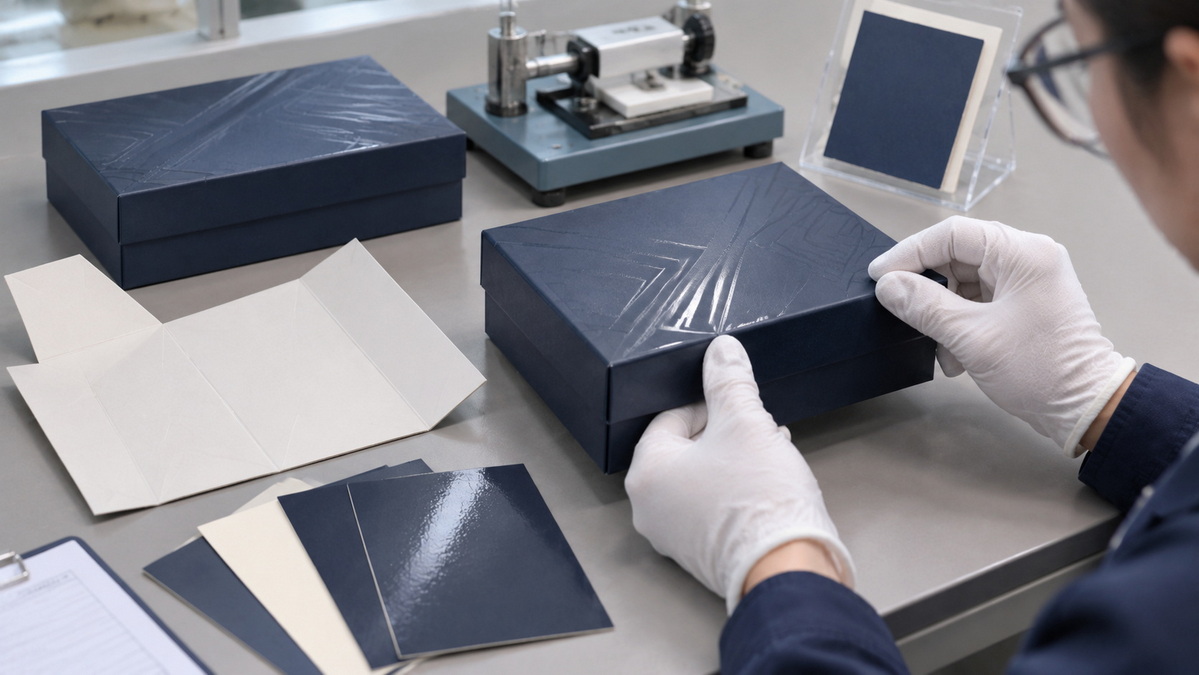
For dark artwork, compare samples after repeated handling and rubbing. A finish that looks excellent immediately after production may show marks during packing, transport, or retail display.
Specify the required result and test method instead of relying on a premium-sounding description.
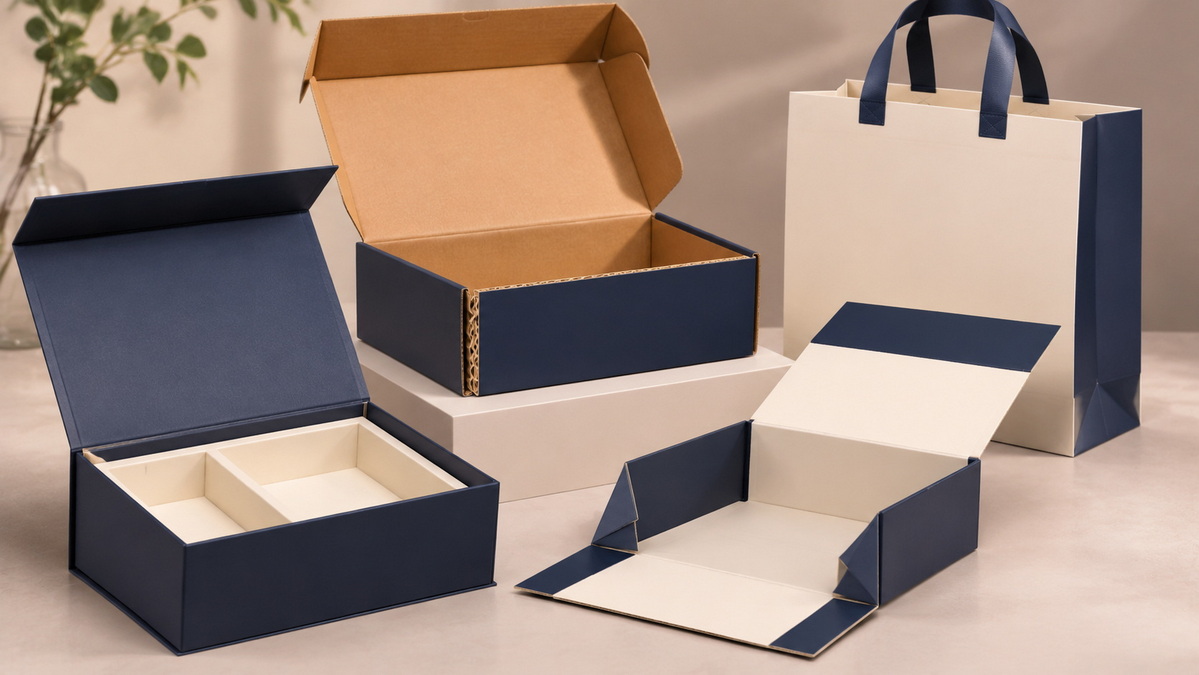
Rigid boxes combine structural board with an outer covering material. The finish usually protects and decorates that covering; it does not replace the structural board.
For printed magnetic boxes, matte lamination is one possible starting point. Gloss lamination may better support vivid artwork, while an uncoated specialty paper may suit a more natural presentation.
Check the corners, wrapped edges, hinges, and adhesive interfaces. Foil stamping, embossing, and spot UV require a compatible material stack and an agreed production sequence.
For repeated opening and closing, approve a constructed sample rather than a flat printed sheet.
Start with transport protection: board grade, flute structure, dimensions, inserts, and closure design.
A decorative coating cannot compensate for an under-specified shipping box.
Uncoated kraft may be appropriate for a straightforward shipping application. Printed mailers may benefit from a compatible protective coating, depending on the printing system and handling conditions.
Aqueous coatings are not categorically excluded from corrugated packaging. Suitability depends on the equipment, liner, formulation, and converting route.
For litho-laminated mailers, inspect the finished graphics for visible flute texture and test folds after the printed sheet is bonded to corrugated board.
Folding gift boxes introduce a critical requirement: the surface must survive creasing and assembly.
For collapsible rigid constructions, inspect hinge areas, repeated folding, wrapped edges, and adhesive components. For folding-carton constructions, inspect score lines and glue flaps.
A visually attractive finish can still fail if it cracks at a crease or interferes with bonding.
Approve samples in both their flat-packed and assembled conditions.
Shopping bags experience flexing, rubbing, and concentrated loads around handles.
Coating selection should therefore accompany decisions about paper weight, reinforcement, handle construction, and bottom strength.
Gloss or matte film can change appearance and surface durability, while a compatible coating may provide an alternative.
Neither approach makes the complete bag waterproof. Seams, edges, handle holes, and unprotected paper remain potential weaknesses.
Test bags with the intended carrying load and realistic handling conditions.
A decorative finish may help resist rubbing or occasional splashes. That does not establish grease resistance, water-vapor performance, or suitability for refrigeration.
If your product needs a functional barrier, define the exposure:
- What substance will contact the packaging?
- For how long?
- At what temperature and humidity?
- Does the package contain a separate liner or primary container?
Request an appropriate barrier specification and supporting testing. Avoid converting "moisture-resistant surface" into a claim that the finished box is waterproof.
A food gift box may contain individually wrapped products or food placed directly against the packaging. These are different applications.
Suitability depends on the complete construction, including paper, inks, coatings, adhesives, barriers, and intended use.
Even exterior printing can require assessment because substances may transfer through materials or between stacked surfaces.
For food-related projects, provide the food type, contact arrangement, storage time, temperature, and destination market. Request relevant supplier documentation and determine whether finished-packaging testing is necessary.
A generic "food-safe coating" statement is not enough.
Recyclability depends on the complete package and the recovery systems available in its intended market.
Coatings, films, adhesives, magnets, handles, and inserts can all affect assessment. Water-based chemistry alone does not establish that a package will be collected and successfully recycled.
An important technical development is the February 2025 revision of the European laboratory method for evaluating paper and board recyclability in conventional recycling mills. Its approach examines processing behavior rather than relying on material names alone.
For purchasing decisions, request evidence relevant to the final construction and target market. Laboratory results do not, by themselves, establish local collection availability.
Record the product weight, packaging dimensions, sales channel, storage conditions, destination, and expected handling.
Identify the priority: appearance, rubbing resistance, tactile feel, barrier performance, or cost.
Rank these requirements so the manufacturer can explain trade-offs.
Review two or three finishes using the proposed paper and representative artwork.
Include dark solids, fine text, folds, and planned embellishments. A generic sample book helps with direction but cannot confirm the performance of your specific construction.
Inspect corners, hinges, glue joints, handle areas, and lid fit.
Open, close, fold, and assemble the packaging as customers will. For mailers, check how the finished surface behaves around locking tabs and closure points.
Useful checks may include:
- Dry rubbing and visible ink transfer.
- Coating or film adhesion.
- Crease cracking after assembly.
- Foil and spot UV adhesion.
- Blocking, where stacked surfaces stick together.
- Loaded handling and transport simulation.
Define conditions and acceptable results in advance. Informal rubbing can screen samples, but repeatable comparisons require controlled procedures.
Keep a signed sample and a written specification covering materials, finish, appearance, and performance.
Photographs alone cannot reliably communicate gloss, texture, or tactile feel.
Agree on how production variations and defects will be evaluated before placing the order.
A lower finishing price does not always produce a lower delivered packaging cost.
Compare quotations using the same artwork, dimensions, material, quantity, and acceptance requirements.
Review:
- Setup and tooling charges.
- Material and application costs.
- Additional finishing passes.
- Sampling and testing.
- Production waste and replacement risk.
- Packing, freight, and storage implications.
Illustrative scenario: a dark magnetic gift box may justify an anti-scuff finish, while a simple kraft shipping carton may gain little from decorative lamination. These are decision examples, not reported customer results.
The right investment protects the customer experience without adding unnecessary complexity.
The strongest packaging specification connects the finish to a clear purpose, a compatible construction, and an approved performance standard.
At Maituohong Packaging, we help buyers develop custom magnetic boxes, mailer and shipping boxes, rigid boxes, folding gift boxes, and paper shopping bags.
Send your product dimensions, approximate weight, artwork, order quantity, destination market, and preferred appearance. Request a comparison of suitable finishing options and a constructed sample before confirming bulk production.
There is no universal best coating. Aqueous coating, UV coating, and film lamination serve different requirements. Choose according to substrate, appearance, handling, converting processes, and verified performance.
Neither is inherently better. Matte reduces glare and creates a restrained appearance. Gloss emphasizes shine and visual impact. Compare both on actual artwork, particularly where dark colors or frequent handling are involved.
Yes, compatible combinations are possible. However, the film surface, UV formulation, adhesion, registration, and production sequence must be checked. Approve a representative sample before full production.
Not automatically. Food-contact suitability depends on formulation, application, packaging construction, intended exposure, and applicable requirements. Request documentation relevant to the actual use.
No. Film may improve surface resistance, but exposed edges, seams, folds, and closures remain vulnerable. Waterproof performance requires an appropriately designed and tested complete packaging system.
Simplify unnecessary decorative processes, compare compatible alternatives, and prioritize the surfaces customers handle most. Confirm that savings do not compromise required appearance, assembly, or protection.
1. PakFactory — "What Coating To Use For What Type of Packaging," by Crystal Chan. Original article reviewed for its coating categories, packaging applications, and claims requiring qualification. [pakfactory]
2. Cepi, ACE, Citpa, and FEFCO — "Paper-Based Packaging Recyclability Guidelines." Guidance on coatings, laminates, material combinations, recognized testing, and differences between destination-market collection systems. [cepi]
3. Cepi — "Cepi Recyclability Test Method Version 3," published March 13, 2025; method finalized in February 2025. Supports the discussion of pulping, screening, sheet formation, and evaluating technical recyclability in conventional mills. [cepi]
4. Cepi — "Food Contact Guidelines for the Compliance of Paper and Board Materials and Articles," 2019. Supports the complete-construction approach to food-contact assessment, supplier documentation, applied coatings, adhesives, inks, and migration considerations. [cepi]
5. PRINTING United Alliance / TAGA — "Rapid FTIR Press-Side Testing to Confirm the Cure of UV/EB Coatings." Technical abstract supporting the importance of proper curing for coatings intended for indirect food-packaging applications. /t170054.pdf?sfvrsn=caa9afcb_2)[printing]
6. PRINTING United Alliance / TAGA — "Advances in UV/EB Chemistry and Printing Technology." Technical discussion of UV curing, resistance properties, ink–coating compatibility, and formulation-dependent recycling behavior. /t990194.pdf?sfvrsn=2ef3fda7_2)[printing]


