
Views: 243 Author: Maituohong Packaging Publish Time: 2026-11-22 Origin: Site


Content Menu
● What Is Carton Packaging Made From?
● Carton Packaging vs. Corrugated Boxes vs. Rigid Boxes
● How to Choose Paperboard for Custom Carton Packaging
>> SBS: A White Surface for Detailed Graphics
>> FBB: A Multilayer Option for Retail Cartons
>> SUS: Strength with an Unbleached Fiber Base
>> Recycled Paperboard: Specify Performance, Not Just Content
● How Folding Cartons Are Manufactured
● Custom Carton Design: Balance Presentation and Function
>> Choose the Closure Around the Product
>> Design the Insert Before Finalizing Box Dimensions
● Three Practical Checks Before Approving Carton Packaging
>> 1. Evaluate the Complete Shipping System
>> 2. Compare Total Cost, Not Just Box Price
>> 3. Validate Environmental Claims
● Packaging Selection Example: A Three-Piece Skincare Set
● What to Send a Custom Packaging Manufacturer
● Plan Your Custom Packaging with Maituohong Packaging
● Frequently Asked Questions About Carton Packaging
>> Is carton packaging the same as cardboard packaging?
>> Can a folding carton be shipped without an outer box?
>> What is the difference between a folding carton and a folding gift box?
>> Are magnetic boxes suitable for shipping?
>> What determines the price of custom carton packaging?
>> Is all paper carton packaging recyclable?
Carton packaging is paperboard-based packaging designed to contain, protect, and present products. In retail packaging, the term usually refers to folding cartons: printed paperboard boxes supplied flat and assembled when needed. Choosing the right custom carton packaging, however, requires more than selecting an attractive shape.
Buyers also need to consider product weight, shipping conditions, assembly time, material specifications, and the customer's opening experience.
At Maituohong Packaging, our perspective comes from more than 18 years in custom paper packaging design and production. Our starting point is straightforward: choose the structure around the product and its delivery journey, then develop the appearance.
This guide explains how carton packaging works, where it differs from rigid boxes and corrugated mailers, and what to confirm before ordering.
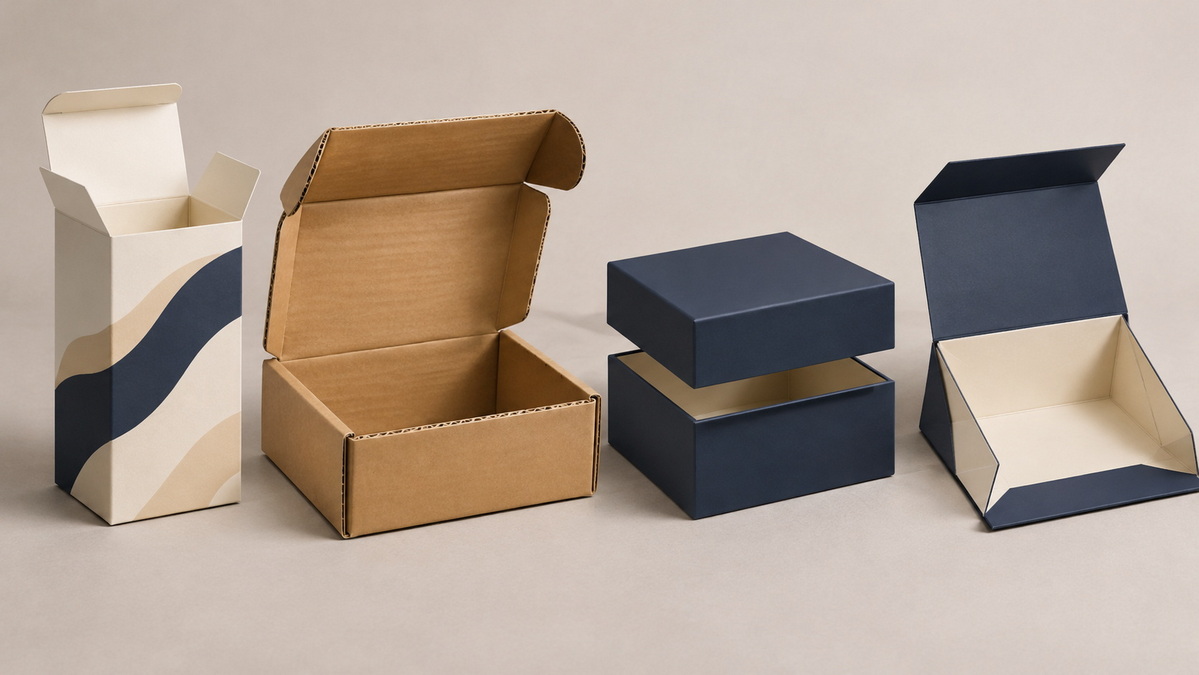
Folding cartons are typically made from paperboard, a fiber-based material that can be printed, creased, cut, and glued into a three-dimensional package.
Paperboard may contain virgin fibers, recovered fibers, or a combination. Its performance depends on fiber composition, thickness, construction, coating, and conversion quality—not simply whether it looks white or brown.
A retail carton commonly includes:
- Printed panels for branding and product information.
- Crease lines that control folding.
- Closure flaps or a glued bottom.
- Optional dividers, inserts, or display windows.
A folding carton should not automatically be treated as a shipping container. A skincare carton, for example, may present a bottle effectively on a shelf but still need cushioning and an outer corrugated box for parcel delivery.
These packaging formats serve different purposes. Understanding their differences prevents expensive specification mistakes.
| Packaging type | Typical construction | Suitable applications | Main consideration |
|---|---|---|---|
| Folding carton | Creased paperboard | Cosmetics, personal care, lightweight retail products | May require separate transit protection |
| Corrugated mailer or shipping box | Fluted medium between linerboards | Parcel delivery and transport packaging | Board grade and structure must suit the load |
| Rigid box | Thick board covered with decorative paper | Premium gifts, jewelry, presentation sets | Assembled boxes occupy more storage space |
| Collapsible rigid gift box | Rigid panels with engineered folding joints | Premium packaging with flat-storage requirements | Assembly method and joint durability need checking |
| Magnetic closure box | Usually rigid or collapsible board construction with magnets | Gift sets and premium presentation | Magnets are a closure feature, not a strength specification |
A folding gift box can mean either a lightweight folding carton or a collapsible rigid box. Include a reference image or structural drawing when requesting quotations.
Paper shopping bags serve another role: carrying and presenting purchases. They complement product boxes but should not replace protective shipping packaging.
Solid bleached sulfate, or SBS, is typically made from bleached chemical pulp. Its white surface makes it a useful candidate for detailed graphics, premium cosmetics, and products requiring a clean presentation.
Do not assume that every SBS grade has the same recycled content or performance. Request the actual mill specification.
Folding boxboard, or FBB, typically combines mechanical-pulp middle layers with chemical-pulp outer layers.
It is widely used in retail packaging, including personal care, confectionery, and pharmaceutical applications. Suitability still depends on the particular grade and finished package requirements.
Solid unbleached sulfate, or SUS, is typically based on unbleached chemical pulp. Its printing surface may be coated, so the visible appearance is not always simply natural brown.
Confirm the intended print surface before approving artwork or color expectations.
White-lined chipboard commonly uses predominantly recovered fibers. It can be appropriate for many applications, but recycled content alone does not establish fitness for purpose.
Ask about:
- Surface smoothness and print consistency.
- Thickness and stiffness.
- Crease performance.
- Product-contact suitability where relevant.
GSM measures weight per unit area, not thickness or guaranteed strength. Compare grammage alongside caliper, stiffness, grain direction, and the performance of a converted sample.
Understanding the production sequence helps buyers identify where approvals matter.
1. Define the product and distribution requirements. Record dimensions, weight, fragility, sales channel, and packing method.
2. Develop the structure. Create a dieline showing panels, flaps, glue areas, and crease positions.
3. Make a structural sample. Check fit, closure, assembly, and product removal.
4. Prepare and approve artwork. Confirm text, graphics, barcodes, and finishing locations.
5. Print and finish the sheets. Apply the specified printing, coatings, or decorative processes.
6. Die-cut, crease, and glue. Convert the sheets into the approved carton structure.
7. Inspect and pack. Check agreed quality points before dispatch.
A plain structural sample verifies fit and construction. It does not establish final print color or surface appearance. Those require separate approval against suitable production references.
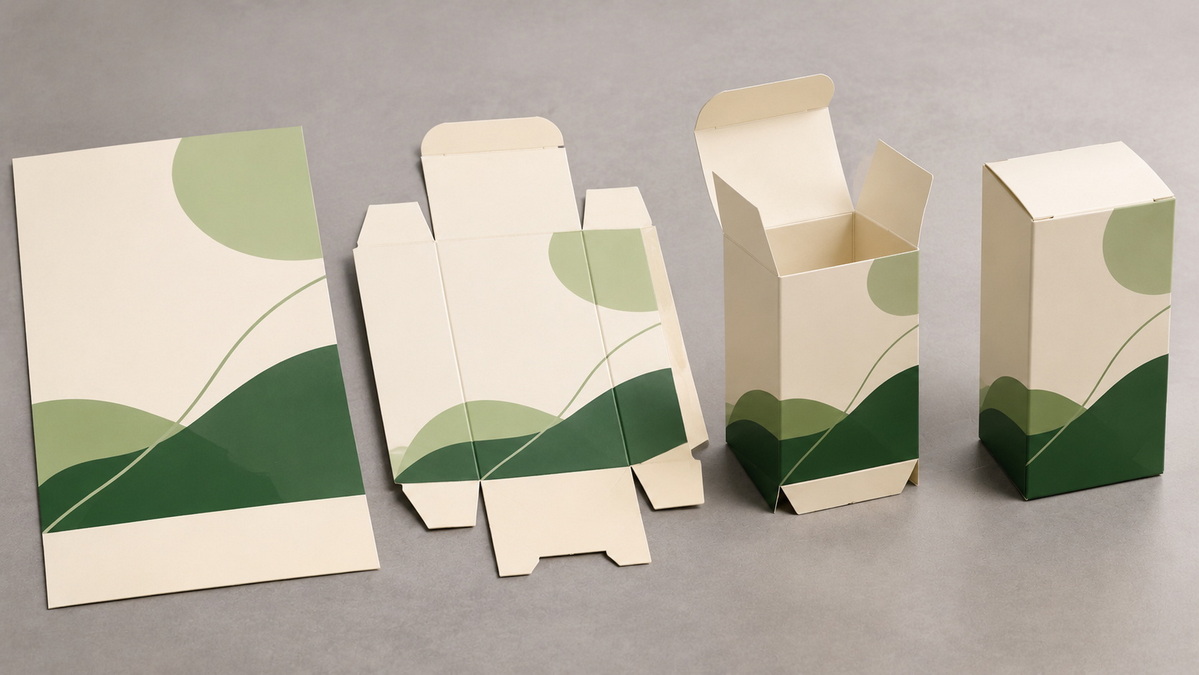
Tuck-end cartons can suit lightweight products and straightforward assembly. Crash-lock or auto-bottom constructions may help where bottom security and packing speed matter.
No closure style has a universal weight capacity. Board selection, box dimensions, glue quality, and handling conditions all influence performance.
For a heavy candle jar or glass bottle, evaluate the bottom, insert, and outer shipping package together.
An insert should restrain the product without making removal difficult. It should also separate components that might collide or scratch each other.
Check:
- Movement during handling.
- Clearance around delicate surfaces.
- Access for fingers during removal.
- Space for accessories and instructions.
- Assembly time at the packing station.
An oversized box is not necessarily more protective. Extra space can allow movement unless the internal structure controls it.
Foil stamping, embossing, debossing, spot UV, and textured papers can support a premium presentation.
Our recommendation is to give each finish a purpose. A restrained embossed logo may be more effective than several competing effects.
Review the finished sample for cracking along folds, scuffing, adhesive compatibility, and barcode readability. On brown substrates, confirm whether white ink is needed to achieve the intended appearance.
A beautiful retail box can fail during delivery if the surrounding packaging is inadequate.
Test the product with its actual carton, insert, cushioning, outer box, and sealing method. Define acceptable product damage and packaging damage before testing begins.
For eligible individual parcels, ISTA 3A is one possible general-simulation procedure. Its published scope covers packaged products weighing 70 kg or less shipped through parcel delivery systems.
A laboratory should confirm the appropriate procedure and edition for your distribution route. Passing a test does not guarantee damage-free delivery under every condition.
The cheapest quotation may become more expensive after assembly, storage, freight, and damage are considered.
Compare the total of:
- Packaging purchase cost.
- Tooling and setup charges.
- Inserts and accessories.
- Packing labor.
- Storage and freight.
- Expected damage and replacement costs.
A collapsible rigid box may reduce empty-box storage space, but it also introduces an assembly step. A conventional rigid box may simplify packing while occupying more warehouse volume.
Request comparable quotations using the same dimensions, materials, finishes, quantities, and delivery terms.
Paper-based does not automatically mean recyclable everywhere.
Laminations, barriers, adhesives, windows, magnets, and other components can affect how a finished package is collected and processed.
For products sold in the United States, the Federal Trade Commission's published guidance says recyclable claims should be qualified when suitable facilities are unavailable to at least 60% of consumers or communities where the item is sold.
Before printing an environmental statement:
1. Identify exactly what the claim covers.
2. Obtain supporting material documentation.
3. Review the complete package construction.
4. Check requirements in the destination market.
5. Provide disposal instructions appropriate to that market.
Likewise, do not assume a coating is suitable for direct food contact because it is water-based. Suitability depends on its formulation, intended use, and applicable requirements.
Consider a hypothetical set containing a glass serum bottle, a cream jar, and an accessory. This is a planning example, not a reported customer project.
For retail shelves, individual folding cartons may provide product information and support display consistency.
For a premium gift set, a rigid magnetic box with a fitted insert may create a more deliberate presentation.
For direct-to-consumer delivery, either format may still require a corrugated outer package and suitable cushioning.
The decision should follow the channel:
| Priority | Packaging direction to evaluate |
|---|---|
| Efficient individual retail presentation | Folding cartons with appropriate internal support |
| Premium multi-product gifting | Rigid or collapsible rigid gift box with fitted insert |
| Direct parcel delivery | Tested corrugated packaging around the complete product system |
The lesson is not that one box is universally better. Packaging should be matched to the job it must perform.

A clear brief makes quotations more useful and reduces avoidable revisions.
Prepare the following:
- Product dimensions, weight, photographs, and preferably a physical sample.
- Required box style and intended internal dimensions.
- Sales channels and destination markets.
- Initial order quantity and expected repeat demand.
- Printing and finishing requirements.
- Insert, accessory, and assembly needs.
- Target budget and delivery location.
- Required arrival date.
- Relevant product-contact or documentation requirements.
Also ask the manufacturer to distinguish sample preparation, production, and transportation timelines.
Before production, agree on an approved reference sample and measurable inspection criteria. Include structural fit, closure function, artwork, surface appearance, insert positioning, and packing method.

The right packaging balances protection, presentation, packing efficiency, and delivery cost.
Maituohong Packaging brings more than 18 years of experience in custom magnetic boxes, mailer and shipping boxes, rigid boxes, folding gift boxes, and paper shopping bags.
Send our team your product dimensions, weight, quantity, destination, and preferred box style. Request a structure review and sample plan before confirming production, so the final specification supports both your brand presentation and your product's journey.
Not exactly. "Cardboard" is a broad everyday term that may describe paperboard, corrugated board, or thick board. For purchasing, specify the material and structure rather than relying on that word alone.
Sometimes, but suitability must be established for the product and delivery conditions. Many printed retail cartons need an outer corrugated package, especially when they contain fragile or valuable items.
A folding carton is generally made from creased paperboard. A folding gift box may instead be a collapsible rigid structure. Confirm the construction, assembly method, and board specification.
They can form part of a shipping system, but magnetic closure alone does not establish transit protection. Evaluate product restraint, closure security, cushioning, and the outer package together.
Dimensions, board grade, quantity, printing, finishes, inserts, tooling, assembly, and delivery terms all contribute. Compare quotations against an identical specification rather than comparing headline unit prices.
No universal claim is appropriate. Recyclability depends on the finished construction and the collection and processing systems available in the destination market. Check coatings and non-paper components before making claims.
1. [PakFactory — "What Is Paperboard Packaging?"] Published and last updated January 30, 2023. Original article reviewed for topic coverage, terminology, production descriptions, and areas requiring clarification. Its customer examples and unsupported material percentages have not been adopted as Maituohong claims. [pakfactory]
2. [Pro Carton — "Glossary of Carton and Cartonboard Terms"]. Technical reference for cartonboard fiber sources and the typical construction of SBS, SUS, FBB, and white-lined chipboard. [procarton]
3. [Pro Carton — Cartonboard Fact File]. Reference for grammage, thickness, multilayer construction, and the distinction between principal cartonboard grades. [procarton]
4. [International Safe Transit Association — Test Procedures]. Reference for general-simulation testing and the scope of Procedure 3A for individual parcel-delivery packages. [ista]
5. [International Safe Transit Association — Procedure 3A Overview]. Published overview supporting the 70 kg scope, testing of packaged products, pre-test damage criteria, and limitations of general transport simulation. Laboratories should confirm the applicable current procedure. [ista]
6. [Federal Trade Commission — "Environmental Claims: Summary of the Green Guides"]. Reference for qualified recyclable claims and the stated 60% availability threshold in the United States. [ftc]
7. [Paperboard Packaging Alliance — Resources]. Points packaging designers to guidance on how non-fiber components, coatings, and additives can affect paper-packaging recyclability. [paperboardpackaging]


