
Views: 240 Author: Maituohong Packaging Publish Time: 2026-11-20 Origin: Site


Content Menu
● Why Monthly Subscription Box Design Changes Become Difficult
● Build a Modular Subscription Packaging System
>> Keep the Structural Platform Stable
>> Choose Packaging Around the Delivery Experience
● Create a Monthly Packaging Calendar That Works Backward
>> Establish Six Approval Gates
>> Plan Multiple Releases Together
● Control Monthly Design Changes With One Source of Truth
>> Use a Simple Change Classification
>> Make Approval Status Unambiguous
● Prepare Print-Ready Subscription Box Artwork
>> Check More Than the Appearance
>> Distinguish Digital Proofs From Physical Samples
● Revalidate Protection When the Assortment Changes
>> Test the Complete Packed Configuration
● Budget for the Delivered Experience, Not Just the Box
>> An Illustrative Cost Comparison
● Measure Whether Monthly Design Changes Actually Help
● Improve Sustainability Through Controlled Design Decisions
● Make Your Next Monthly Launch Easier to Manage
>> 1. Should Subscription Brands Redesign Their Boxes Every Month?
>> 2. Are Mailer Boxes Better Than Rigid Boxes for Subscriptions?
>> 3. Can We Keep the Same Box When Products Change?
>> 4. How Can We Reduce Monthly Artwork Errors?
>> 5. How Far Ahead Should We Order Custom Subscription Packaging?
>> 6. What Should We Send a Packaging Manufacturer for a Quote?
Subscription box success depends on making each delivery feel fresh without rebuilding your packaging operation every month. Managing monthly design changes for subscription brands requires more than creative artwork. It requires a repeatable system connecting product selection, structural design, printing, approvals, and fulfillment.
At Maituohong Packaging, our perspective starts with the physical package: how it protects the contents, communicates the theme, and performs during packing and delivery. With more than 18 years of experience designing and manufacturing custom paper packaging, we believe the strongest approach combines a dependable packaging structure with carefully controlled creative updates.
The goal is simple: give subscribers something new to discover while keeping production predictable.

A subscription brand operates on overlapping calendars. While customers open this month's box, the team may be approving next month's artwork and sourcing products for the following release.
A seemingly minor change can affect several departments. A taller bottle may require a different insert. A new finish may introduce another approval step. A revised box size may change shipping costs or packing methods.
Typical pressure points include:
- Product dimensions confirmed after packaging development begins.
- Seasonal artwork approved too close to production.
- Multiple files circulating without a clear final version.
- Packaging quantities based on outdated subscriber forecasts.
- Attractive prototypes that prove awkward to assemble.
My recommendation is to treat every monthly release as a controlled product launch—not simply a new graphic wrapped around an existing box.
The most useful distinction is between what must remain consistent and what should change.
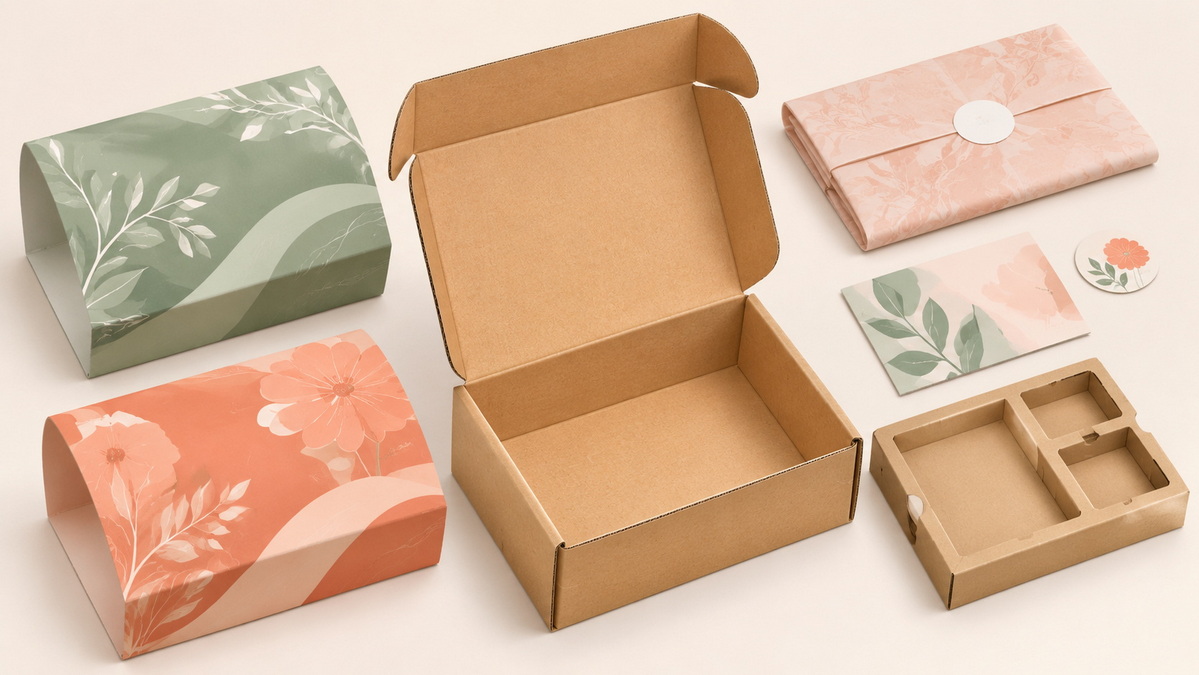
A modular packaging system separates the protective structure from the monthly storytelling layer.
The structural platform may include the outer box dimensions, board specification, closure, and a small family of inserts. The storytelling layer can include printed sleeves, tissue paper, cards, labels, or selected artwork panels.
This approach gives creative teams room to experiment without automatically triggering structural redevelopment.
However, standardization has limits. Products must still fit securely. Do not force a heavier or more fragile assortment into an existing structure merely to preserve consistency.
Different paper packaging formats serve different roles:
| Packaging format | Suitable subscription application | Monthly update approach | Main consideration |
|---|---|---|---|
| Mailer box/shipping box | Recurring direct-to-consumer deliveries | Change artwork, liners, or inserts | Validate protection with the actual contents |
| Rigid box | Premium gifting and collectible editions | Update wrapped graphics or add a sleeve | Assess storage volume and outer shipping protection |
| Magnetic box | Premium presentation and curated gift subscriptions | Refresh sleeves, interior graphics, or cards | Review closure security and protective shipping needs |
| Folding gift box | Presentation-led programs with storage constraints | Update print or interchangeable components | Confirm assembly time and structural suitability |
| Paper shopping bag | Store collection, events, and gifting | Change seasonal artwork or tags | Generally an accessory, not a parcel shipping container |
Maituohong Packaging manufactures these formats, allowing brands to discuss both presentation packaging and the protective shipping system rather than treating them as interchangeable.
There is no universal production timetable for custom subscription boxes. Printing methods, finishes, order quantities, material availability, and transport routes all affect the schedule.
Instead of assuming a standard turnaround, work backward from the date packaging must arrive at the fulfillment location.
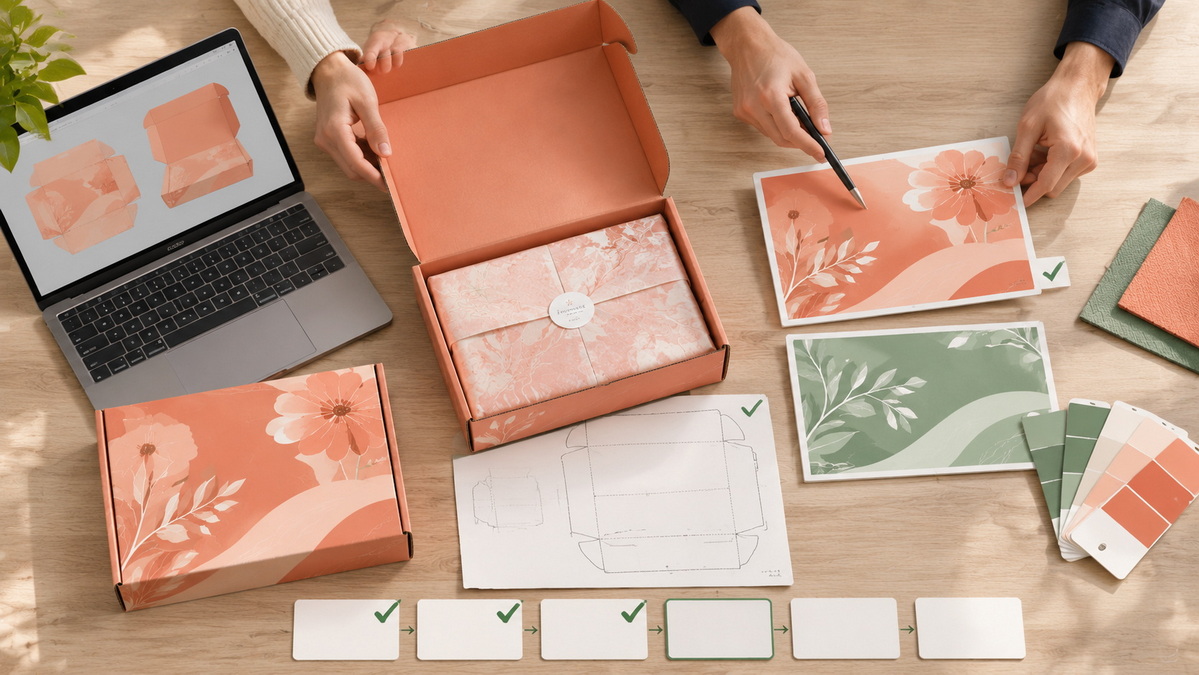
Use the following sequence as a planning framework:
1. Confirm the assortment: record product dimensions, weights, fragility, and relevant handling requirements.
2. Confirm the structure: approve the box, insert arrangement, and packing sequence.
3. Approve the creative concept: settle the theme, copy, graphics, and monthly components.
4. Complete technical artwork review: check the production file against supplier specifications.
5. Release production: approve the agreed proof, quantities, specifications, and delivery terms.
6. Verify fulfillment readiness: check incoming packaging and trial-pack the actual assortment.
Assign an owner and deadline to each gate. A missed structural approval should trigger a schedule review, not an assumption that printing can recover the lost time.
A rolling three-release plan is a useful starting point:
- Current release: monitor packing, shipping, and customer feedback.
- Next release: finalize artwork and production approvals.
- Following release: confirm products and identify structural risks.
This is a proposed operating model, not a mandatory industry timetable. Adjust the planning horizon to your actual procurement and delivery requirements.
A shared folder is not enough if nobody knows which file is approved.
Each monthly release should have one production record connecting its artwork, structural specification, quantity, proof approval, and delivery instructions.
Classify requests before accepting them:
| Change category | Example | Required review |
|---|---|---|
| Graphic | New illustration or theme copy | Artwork review and proof approval |
| Material or finish | Different paper, coating, or foil | Supplier feasibility, appearance, cost, and schedule |
| Structural | New dimensions, insert layout, or closure | Fit, assembly, protection, and testing implications |
| Commercial | Revised quantity or destination | Capacity, purchasing, freight, and delivery plan |
Even graphic changes need scrutiny. A new background can create contrast problems, while revised copy can move essential information too close to a cut or fold.
Use file names such as:
`Brand_Release_BoxComponent_Revision_ApprovalStatus`
Record who approved the file and when. Archive superseded versions separately, and prohibit production from email attachments that do not match the release record.
After approval, require a written change request explaining the cost, timing, and validation consequences. This protects creative flexibility without allowing uncontrolled revisions.
Monthly packaging design becomes more reliable when designers work from the manufacturer's current dieline—the template identifying cuts, folds, and other structural features.
Do not resize a previous template without confirming the structure.
Before production, review:
- Finished dimensions and artwork orientation.
- Bleed and safe areas specified by the printer.
- Image quality at the final printed size.
- Agreed color settings and spot-color definitions.
- Fonts and the required file format.
- Separate identification of foil, embossing, or coating areas.
- Removal or correct handling of nonprinting guides.
- Readability of product information and scannability of codes.
There is no single bleed measurement suitable for every packaging project. Follow the supplier's requirements for the specific structure and production process.
A digital proof helps confirm layout, wording, and artwork placement. It does not fully demonstrate paper texture, structural fit, foil appearance, or production color.
For a new structure or significant material change, request an appropriate physical sample. Agree which characteristics that sample represents and which remain subject to production approval.
Technical preflight checks are valuable, but they cannot determine whether the monthly theme is correct or whether the supplied product list is current.
A familiar exterior can conceal a very different shipping risk.
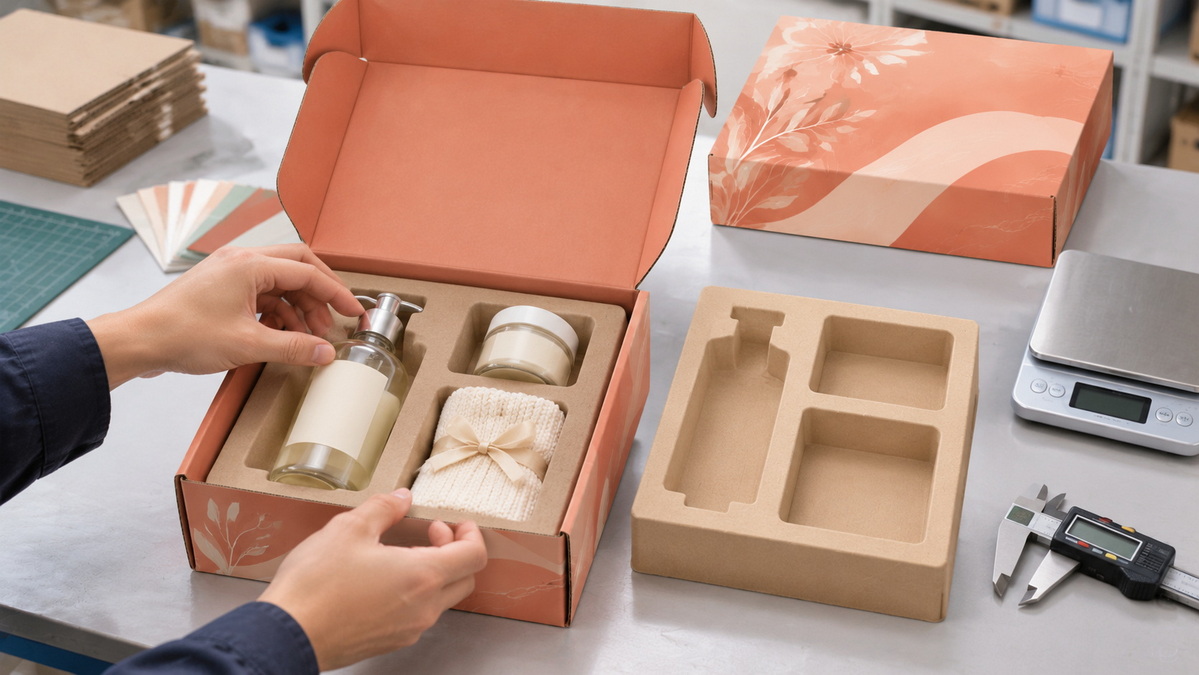
Replacing fabric accessories with glass containers changes more than presentation. Product weight, movement, leakage risk, and contact points may all require reassessment.
Evaluate the products, inserts, outer box, and closures together. A strong empty box does not establish that the packed assortment will survive distribution.
ISTA Procedure 3A addresses individual packaged products shipped through parcel delivery systems at weights of 70 kg or less. The appropriate protocol still depends on the distribution environment and package characteristics.
ISTA guidance also calls for repeating tests when the product, package, or process changes. Build that review into monthly approvals rather than treating a previous test as permanent coverage.
Define acceptable outcomes before testing. These may include no broken products, no leakage, readable labels, and an agreed limit on cosmetic packaging damage.
The quoted unit price is only one part of monthly subscription packaging cost.
Compare proposals using the same specifications and include:
- Artwork preparation and applicable tooling.
- Samples and approval requirements.
- Boxes, inserts, tissue, and printed literature.
- Assembly and packing labor.
- Storage and freight.
- Obsolete monthly materials.
- Replacements associated with packaging failures.
A cheaper box can become more expensive if it adds packing time or increases damage.
Suppose a brand ships 5,000 boxes per month. A packaging update adds $0.12 per shipment, or $600.
If packaging-related replacements fall from 100 to 50 shipments, and each replacement costs $18, the avoided replacement expense is $900. The illustrative net benefit is $300 before other cost changes.
These figures are hypothetical, not Maituohong customer results. They show why purchasing decisions should consider the full delivered outcome rather than unit packaging price alone.
Creative freshness should be evaluated alongside operational performance.
A practical monthly dashboard can track:
| Metric | What it reveals |
|---|---|
| On-time artwork approval | Whether the creative process protects the schedule |
| Packaging-related replacement rate | Whether protection is adequate |
| Average packing time | Whether assembly remains practical |
| Obsolete packaging quantity | Whether monthly customization creates waste |
| Packaging cost per delivered order | The combined purchasing and operating picture |
| Packaging-specific customer feedback | Problems with opening, presentation, or disposal |
Define each metric consistently. For example, distinguish damaged products from cosmetic marks on the shipping box.
Do not attribute subscription retention improvements to packaging alone. Product selection, pricing, delivery reliability, and service also change customer behavior. Use comparable groups where practical, and treat packaging feedback as evidence—not proof of causation.
Monthly novelty does not require a completely new packaging construction.
Consider retaining suitable structural components while changing only the theme-bearing elements. Order month-specific materials carefully to reduce leftovers, and review whether decorative layers serve a useful purpose.
Evaluate the complete design, including coatings, adhesives, inserts, magnets, and mixed-material components. Avoid assuming that every paper-based package belongs in every local recycling stream.
Disposal instructions and environmental statements should match the actual materials and the markets receiving the box. Ask suppliers for supporting documentation before publishing claims.
Subscription box success comes from balancing surprise with control. Keep the customer-facing story fresh while making specifications, approvals, and production decisions consistent.
Maituohong Packaging brings more than 18 years of custom paper packaging experience across magnetic boxes, mailer boxes, rigid boxes, folding gift boxes, and paper shopping bags.
Send us your next three release themes, product dimensions, estimated quantities, and delivery requirements. Request a packaging review to identify which components can remain consistent, which should change monthly, and what needs validation before production.
Not necessarily. Keep a suitable structural platform and refresh selected graphics, sleeves, cards, or tissue. Redesign the structure when product fit, protection, customer usability, or commercial requirements justify the change.
They serve different purposes. Mailer boxes can combine shipping and presentation functions, while rigid boxes emphasize presentation. The right choice depends on the assortment, distribution conditions, budget, and whether additional shipping protection is needed.
Only after reviewing the new packed configuration. Check dimensions, weight, movement, fragility, and insert compatibility. Changes to products, packaging, or packing processes should trigger a testing review.
Use the current dieline, maintain one approved production record, complete technical checks, and assign a final approver. Archive old versions and require written authorization for changes after production release.
Build the schedule with your manufacturer. Include product confirmation, samples, artwork approval, production, inspection, transport, and contingency. A monthly shipment cycle does not mean every custom packaging order can be completed within one month.
Provide product dimensions and weights, quantities, delivery destination, preferred box format, artwork requirements, finishes, and the required arrival date. Include representative products or samples when discussing fit and protection.
1. Adobe. "How to Prepare Print-Ready Files: Bleed to PDF." Guidance on printer specifications, bleed, safe areas, file preparation, proofs, and approved-file archiving.
[https://www.adobe.com/express/learn/blog/how-to-prepare-print-ready-files] [adobe]
2. Adobe Acrobat. "Preflight Profiles." Explains how technical inspection profiles check PDF properties against defined production criteria.
[https://helpx.adobe.com/acrobat/using/preflight-profiles-acrobat-pro.html] [helpx.adobe]
3. Adobe Acrobat. "Correcting Problem Areas With the Preflight Tool." Describes checks and corrections involving fonts, color, images, and print-production requirements.
[https://helpx.adobe.com/acrobat/using/correcting-problem-areas-preflight-tool.html] [helpx.adobe]
4. International Safe Transit Association. "Test Procedures." Describes general simulation performance testing and the scope of Procedure 3A for parcel delivery shipments.
[https://ista.org/test_procedures.php] [ista]
5. International Safe Transit Association. "Getting Started With Design & Testing." Provides guidance on representative samples, defining damage tolerances, and retesting after product, packaging, or process changes.
[https://www.ista.org/getting_started_with_design.php] [ista]


