
Views: 201 Author: Maituohong Packaging Publish Time: 2026-11-18 Origin: Site


Content Menu
● What Is Stealth Packaging for High-Value E-Commerce Goods?
● Start With the Threat, Not the Box Style
>> Opening and Resealing During Transit
>> Accidental Damage or Product Loss
● Design a Discreet Exterior Without Weakening Compliance
>> Remove Unnecessary Value Signals
>> Keep Shipping Information Accurate
● Use a Two-Layer Packaging Architecture
● Make Tampering Visible Without Claiming Prevention
>> Match the Seal to the Actual Surface
● Engineer the Interior to Protect the Product
>> Control Movement With Product-Specific Inserts
>> Optimize Size Without Eliminating Protection
● Validate Shipping Performance and Security Separately
>> Track One: Distribution Performance
>> Track Two: Tamper-Evidence Performance
● A Practical Development Example: A Premium Watch Shipment
● Measure the Commercial Value of Anti-Theft Packaging
>> Calculate a Break-Even Target
● Build Security Into the Procurement Brief
● Develop a Discreet Packaging System With Maituohong
>> 1. Does Stealth Packaging Prevent Package Theft?
>> 2. Are Magnetic Gift Boxes Suitable for Shipping High-Value Goods?
>> 3. Can Luxury Branding Remain Part of the Unboxing Experience?
>> 4. Is Security Tape Enough to Protect a Valuable Parcel?
>> 5. Does Declared Value Mean a Shipment Is Insured Against Theft?
>> 6. Can Stealth Packaging Be Designed With Paper-Based Materials?
Stealth packaging for high-value e-commerce goods starts with a simple principle: protect the product without advertising its value. Effective anti-theft design combines an understated exterior, reliable closures, protective inserts, and a delivery process suited to the shipment's risk.
For premium brands, this creates a practical challenge. Customers expect an impressive unboxing experience, but visible luxury branding can work against discretion during transit. My recommendation is to separate those functions: keep the shipping exterior ordinary and let the presentation packaging deliver the brand experience inside.
Maituohong Packaging brings more than 18 years of experience in designing and producing custom paper packaging, including magnetic boxes, mailer boxes, rigid boxes, folding gift boxes, and paper shopping bags. For these formats, security should be considered at the structural design stage—not added after the artwork is approved.
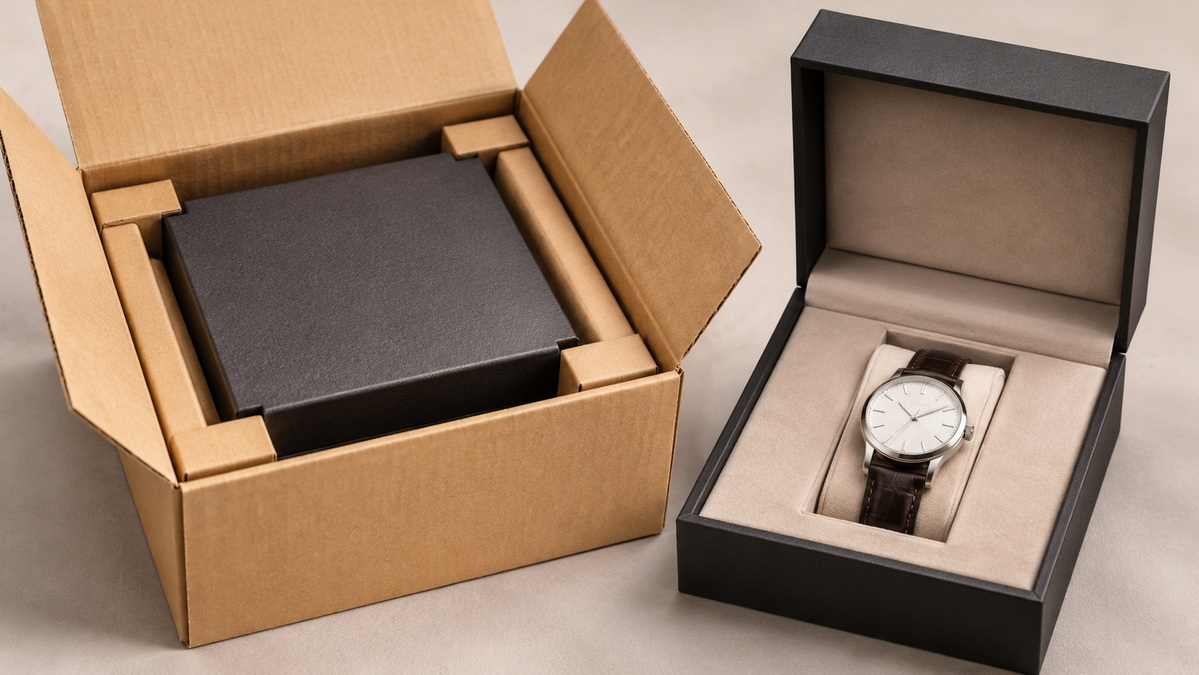
Stealth packaging is a deliberately discreet shipping approach that limits unnecessary clues about a parcel's contents, brand, or commercial value.
It is not about concealing information from customs authorities or carriers. Required declarations, addresses, handling instructions, and regulated labels must remain accurate and visible where required.
An effective design addresses three different objectives:
- Reduce unnecessary signals that a parcel contains valuable merchandise.
- Make unauthorized opening more noticeable.
- Protect the contents against ordinary distribution hazards.
These objectives overlap, but they are not interchangeable. A plain carton can still have weak closures. A sealed carton can still contain an inadequately protected product. Strong packaging considers the complete system.
Importantly, no paper-based package is theft-proof. Stealth packaging is one layer of risk management, not a guarantee against theft.
Before choosing materials or finishes, identify the problem you need to solve.
When an entire parcel disappears after delivery, a stronger lid offers limited protection. A discreet exterior may reduce visible product clues, but delivery controls remain important.
For suitable high-value orders, investigate signature services, staffed collection locations, or other controlled handover options. Availability and coverage depend on the carrier and service.
Here, the concern is unauthorized access followed by an attempt to make the package appear unopened.
Tamper-evident closures and documented packing procedures can help reveal interference. However, transit damage can also affect seals, so visible damage requires investigation rather than an automatic conclusion of theft.
Crushed corners, split seams, and loose contents can create claims that resemble security incidents.
This is why anti-theft packaging must also be protective shipping packaging. Security features cannot compensate for an unsuitable carton or a poorly supported product.
The outside of the parcel should communicate what delivery personnel need—not what a potential thief might find interesting.
For a discreet shipping box, consider:
- Plain kraft or understated single-color surfaces.
- No external product photographs.
- No promotional references to luxury, jewelry, or premium electronics.
- No unnecessary product names or retail prices.
- Minimal decorative finishes on the transport carton.
A neutral exterior is a design recommendation, not proof of a measurable theft reduction. Its purpose is to avoid volunteering information that the delivery process does not require.
Never substitute false descriptions, understate declared values, or remove mandatory markings to make a shipment less recognizable.
FedEx's guidance for high-value shipments emphasizes accurate product descriptions and values for customs clearance. Discretion must therefore coexist with truthful documentation.
If the shipping label prominently identifies a recognizable brand, review whether a lawful, accurate fulfillment or trading name is available. Confirm this with the carrier and relevant business requirements rather than inventing an unrelated sender identity.
For many premium products, the most practical arrangement is two-layer packaging: an ordinary transport carton around a branded presentation box.
The outer layer handles shipping exposure. The inner layer handles presentation, organization, and customer experience.
| Packaging format | Recommended role | Security consideration |
|---|---|---|
| Corrugated shipping box | Outer transport protection | Specify suitable construction, closures, and cushioning |
| Corrugated mailer box | Compact shipping format | Evaluate flap access and seal every intended opening |
| Magnetic rigid box | Premium presentation | A magnetic closure alone does not indicate interference |
| Folding gift box | Presentation with compact storage | Assess assembled corners and closure strength |
| Paper shopping bag | Retail presentation or enclosed accessory | Do not treat an ordinary bag as a secure parcel shipper |
For Maituohong Packaging, this approach allows magnetic boxes and rigid gift boxes to retain their premium finishes without exposing them directly to transit handling.
It also separates replacement decisions. A damaged outer carton does not necessarily mean the presentation box needs redesigning.
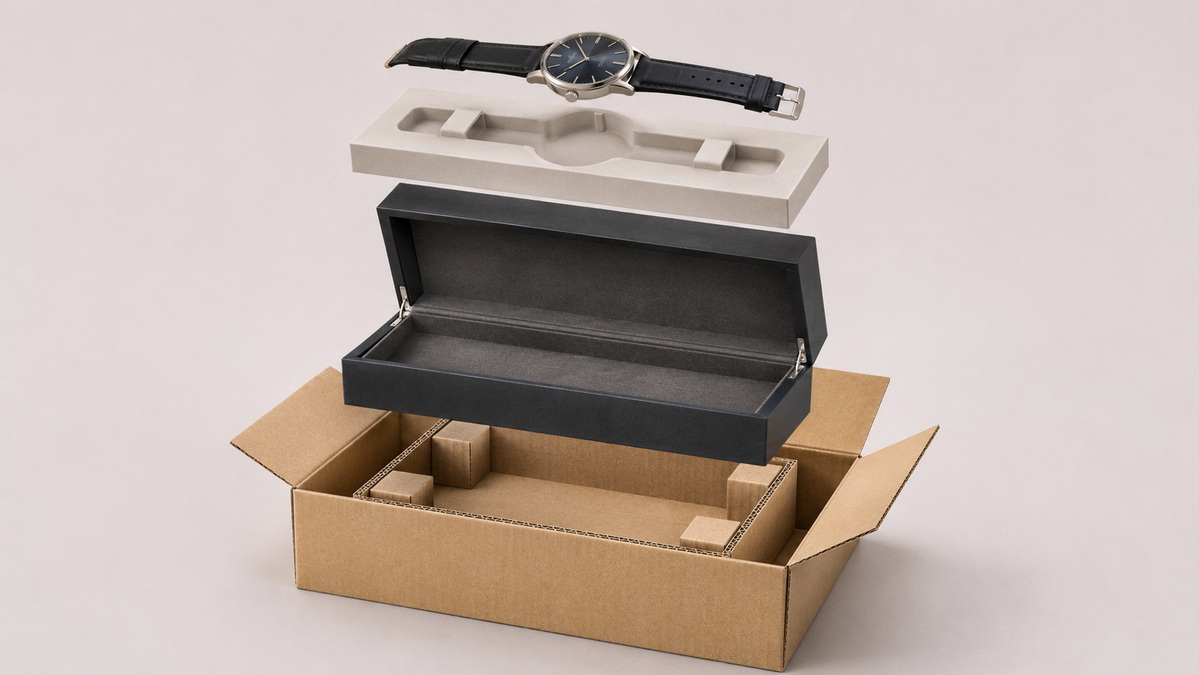
A useful distinction is between tamper-evident and theft-proof.
Tamper-evident features are designed to show signs of opening or interference. They do not make unauthorized access impossible.
Potential options include:
- Destructible paper seals that tear during removal.
- Void labels that leave a visible message or pattern.
- Security tapes with identifiable markings.
- Tear-strip closures designed for one-time opening.
Performance depends on the complete combination of adhesive, coating, board surface, application conditions, and storage environment.
A label that performs well on an uncoated carton may behave differently on a laminated gift box. Test the intended production materials rather than approving a security feature from a supplier photograph.
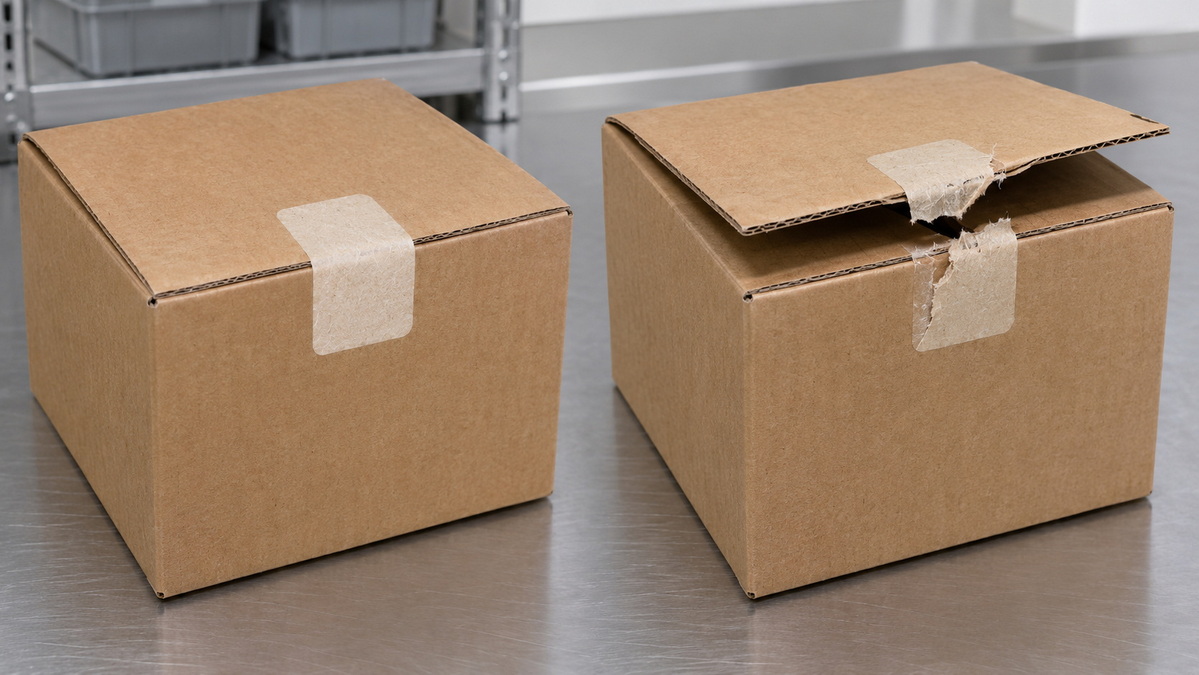
One prominent seal does little if another flap opens without disturbing it.
Review:
- Main opening flaps.
- Bottom closures.
- Side seams and exposed tabs.
- Return-opening features.
- Any opening introduced by the assembly method.
Customers should have a clear, convenient opening route. The objective is visible evidence of interference, not a frustrating unboxing experience.
A discreet carton should not become a compromise on product protection.
Loose products can shift, collide, or damage their presentation packaging. Depending on the item, consider paperboard partitions, corrugated supports, molded pulp, or other suitably tested cushioning materials.
Evaluate the product's:
- Weight and center of gravity.
- Fragile surfaces and protruding components.
- Sensitivity to abrasion.
- Required clearance from the outer carton.
- Orientation during unpacking.
There is no universal insert thickness or board specification for every high-value shipment. Define the product and distribution conditions first.
Oversized cartons increase empty space and material use. Undersized cartons can leave too little room for cushioning.
The appropriate target is the smallest validated package—not simply the smallest package that closes.
For premium gift packaging, also check whether the insert protects the decorative box itself. A product may arrive undamaged while scuffing or crushing makes the gift presentation unacceptable.
Transport testing and tamper assessment answer different questions.
ISTA Procedure 3A addresses individual packaged products prepared for parcel delivery, within its specified weight scope. It simulates distribution hazards; it does not certify that packaging prevents theft.
A practical validation program should therefore include two tracks.
Select a suitable protocol with a qualified laboratory. Evaluate the complete packed product, including:
- Shipping carton.
- Presentation box.
- Inserts and cushioning.
- Closures and labels.
- Actual or representative contents.
Set acceptance criteria before testing. These may cover product function, cosmetic condition, presentation quality, and closure integrity.
Conduct controlled checks to determine whether opening leaves recognizable evidence.
Assess seal adhesion, normal handling damage, customer opening effort, and the consistency of visible indicators.
Avoid presenting an internal tamper assessment as an independent security certification. Describe exactly what was tested and what the results demonstrate.
Consider a hypothetical watch brand shipping a product in a magnetic rigid box. This is a design example, not a documented Maituohong customer case.
The initial concept uses a branded gift box inside a loosely filled shipping carton. The revised specification could include:
1. A plain corrugated outer carton with no product imagery.
2. A fitted support that restrains the presentation box.
3. Tamper-evident closures across the intended access points.
4. A recorded packing check linking the shipment to its order.
5. A delivery service selected for the product's value and destination.
The magnetic box remains the centerpiece of the customer experience, but it is no longer expected to perform every shipping and security function.
The next step is testing—not claiming that the redesign has already reduced theft.
A stronger-looking package is not automatically a better investment. Measure outcomes against the additional material, labor, and shipping costs.
Track these categories independently:
- Confirmed whole-parcel theft.
- Reported missing contents.
- Visible tampering.
- Transit damage.
- Delivery disputes.
- Presentation damage without product damage.
Combining everything into one "loss rate" can hide the real problem.
Suppose a proposed packaging upgrade costs $0.80 per shipment and the average net cost of a qualifying loss is $400.
The upgrade would need to prevent one such loss per 500 shipments to recover its direct packaging cost. This illustrative calculation excludes changes in freight, labor, customer retention, and investigation expenses.
The calculation establishes a target. It does not predict that the packaging will achieve it.
For a pilot, compare similar products, destinations, carriers, and delivery services. Record the sample size and avoid drawing strong conclusions from a handful of incidents.
A useful supplier brief connects security objectives with manufacturing requirements.
Provide Maituohong Packaging with:
- Product dimensions, weight, and fragility.
- Presentation box dimensions and finish.
- Shipping destinations and distribution method.
- Current damage or loss concerns.
- Preferred opening and return experience.
- Expected order volume and assembly process.
- Restrictions on materials and decoration.
Ask for a coordinated proposal covering the outer shipper, inner presentation box, insert, closure positions, and validation plan.
This is more useful than asking for a "stronger box" without defining the failure it must prevent.
For magnetic boxes, folding gift boxes, mailers, and rigid boxes, request samples that reflect the intended materials and finishing processes before approving production.
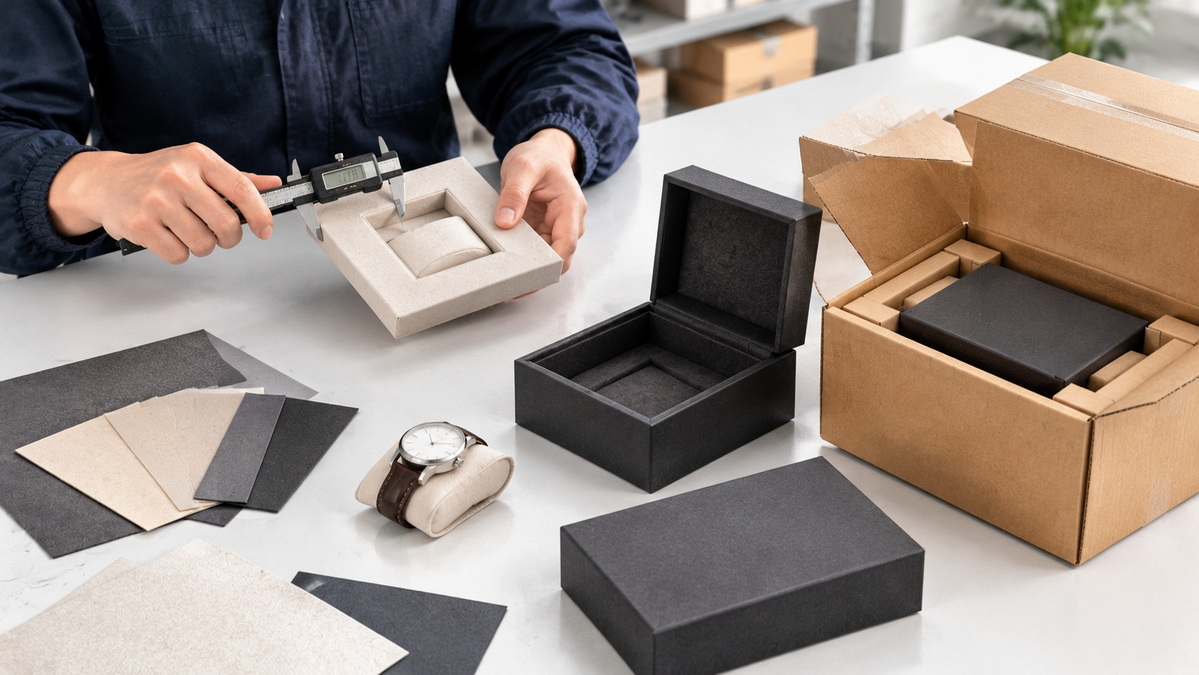
Effective anti-theft design balances discretion, visible evidence of interference, product protection, and customer convenience.
With more than 18 years of paper packaging experience, Maituohong Packaging can be approached with a coordinated brief for custom magnetic boxes, rigid boxes, folding gift boxes, mailer boxes, shipping cartons, and paper shopping bags.
Share your product specifications, shipping conditions, current packaging concerns, and branding requirements. Request a packaging proposal and physical samples so the complete system can be evaluated before production.
No packaging can guarantee prevention. Stealth packaging limits unnecessary content and value signals. It should work alongside appropriate delivery controls, secure fulfillment procedures, and suitable financial protection.
They can serve as premium inner packaging. However, the magnetic closure alone does not provide tamper evidence or establish shipping suitability. Evaluate the complete package, usually including a protective outer carton.
Yes. Place premium printing, decorative finishes, and brand storytelling inside the shipping carton. This preserves a discreet exterior while allowing the presentation box to deliver the intended experience.
No. Tape addresses only part of the system. Its effectiveness depends on adhesion, application, closure coverage, and inspection. It cannot prevent whole-parcel theft or replace cushioning and suitable delivery arrangements.
Do not assume so. Carrier liability, declared value, insurance, and delivery-theft protection can have different conditions. UPS distinguishes these options in its package-protection guidance. Review eligibility, exclusions, evidence requirements, and limits before shipping.
Yes, a design can use corrugated cartons, paperboard inserts, and paper presentation packaging. However, assess the complete construction—including adhesives, coatings, and labels—before making recyclability claims.
1. FedEx Business Insights, "How To Keep Your High-Value Shipments Safe And Secure." Supports the discussion of cushioning, tamper-evident tape, tracking, and accurate customs descriptions and values. [fedex]
2. International Safe Transit Association, "Test Procedures," including Procedure 3A. Supports the distinction between distribution simulation and security assessment. [ista]
3. International Safe Transit Association, "3A Overview: Packaged-Products for Parcel Delivery System Shipment 70 kg (150 lb) or Less." Defines the procedure's scope and general simulation purpose. [ista]
4. UPS, "Package Protection Solutions." Explains distinctions among standard carrier liability, declared value, and eligible additional protection options. Terms and availability require shipment-specific verification. [ups]


