
Views: 277 Author: Maituohong Packaging Publish Time: 2026-09-23 Origin: Site


Content Menu
>> Packaging Display vs. Retail-Ready Packaging
● Why Packaging Displays Matter in Retail
>> Support Faster Retail Replenishment
>> Strengthen Brand Recognition
● Main Types of Packaging Displays
● How to Design an Effective Packaging Display
>> 1. Define the Retail Environment First
>> 2. Choose Materials Based on Function
>> 3. Design for Product Access
>> 4. Keep the Visual Hierarchy Simple
>> 5. Test the Display Before Full Production
● Packaging Information and Compliance Considerations
● A Manufacturer's Perspective: Details That Affect Final Quality
● Common Display Packaging Mistakes to Avoid
>> Designing Only for Full Stock
>> Underestimating Shipping Stress
>> Treating Sustainability as a Print Claim
● Choose a Custom Display Packaging Partner
>> What is a packaging display?
>> What is the difference between a display box and a shipping box?
>> What products work best in countertop displays?
>> What materials are used for retail display packaging?
>> Can rigid boxes be used for retail displays?
>> How do I make a display package easy for retailers to use?
>> Should a display package include product information?
>> What should I provide before requesting a custom quotation?
A packaging display is more than a box that holds products. It is a retail tool that helps shoppers see, understand, reach, and choose an item quickly—whether it sits on a counter, at the end of an aisle, on a shelf, or on a peg hook.
For brands selling snacks, cosmetics, stationery, small electronics, candles, gift items, and many other consumer goods, well-engineered display packaging can improve shelf presentation, simplify store replenishment, and create a more consistent brand experience. At Maituohong Packaging, we have spent more than 18 years designing and manufacturing premium rigid boxes and customized paper packaging, and one lesson remains clear: the best display packaging balances visual impact with practical retail performance.

Packaging display refers to packaging designed not only to protect and transport products, but also to present them directly to shoppers in a retail environment.
Unlike a standard shipping carton, a display package is designed for the sales floor. It may hold individual products upright, organize them by flavor or color, reveal the products through a cut-out window, or carry key messages at eye level. In many cases, the outer package becomes the display itself after a retailer removes a perforated cover or opens a tray.
A good retail packaging display should answer four shopper questions within seconds:
- What is this product?
- Why should I consider it?
- Which option should I choose?
- Can I pick it up easily?
This is why display packaging should be considered early in product development—not added after the individual product box has already been finalized.
The two terms are closely related, but they are not always identical.
22222
Retail-ready packaging is often judged by how easily it can be opened, stocked, shopped, recycled, and removed after use. It should reduce unnecessary handling for store staff while keeping products tidy and accessible for customers.
In a crowded retail setting, shoppers are exposed to many competing products, claims, colors, and price points. A packaging display gives a brand a controlled physical space to communicate before a customer touches the product.
A thoughtfully designed display can support both the retailer and the brand.
Products placed in standard rows can easily disappear among similar items. A display creates a visual block that helps shoppers notice the brand from a distance.
This is especially important for:
- New product launches
- Seasonal collections
- Limited-edition gift sets
- Small items that may be overlooked on large shelves
- Products with multiple colors, scents, flavors, or variants
- Promotions that need clear in-store communication
A display does not need to be oversized to work. A compact counter display with a clear header card, strong brand colors, and a simple product message may be more effective than a complicated unit filled with excessive graphics.
Attractive packaging alone is not enough. Customers also need to locate the product, understand the assortment, and remove an item without damaging nearby units.
A shopper-friendly display should provide:
- A clear view of the product and front-facing label
- Logical product grouping
- Easy hand access
- Stable product positioning
- Visible size, flavor, color, or version distinctions
- A front wall low enough for products to be seen and reached comfortably
The easier the display is to shop, the more likely it is to create a smooth buying experience rather than frustration.
Retail staff often work under time pressure. If products must be unpacked individually, positioned one by one, and reorganized repeatedly, the display can become costly and inconsistent in practice.
A retail-ready paperboard display can help by allowing staff to:
1. Open the outer case or remove a perforated cover.
2. Place the pre-packed unit directly on the shelf or counter.
3. Present products in the intended arrangement with minimal handling.
4. Remove and flatten the empty display for disposal or recycling.
Retail-ready packaging is commonly expected to be easy to open, easy to stock, easy for customers to shop, easy to recycle or remove, and easy for store teams to identify.
A display gives brands more surface area than an individual product carton. This space can carry a brand story, product benefit, campaign visual, QR code, usage illustration, or promotional message.
However, more printable area should not mean more clutter.
The strongest display designs normally prioritize:
- One main message
- One recognizable visual style
- One clear product category cue
- One primary action for the shopper
For example, a cosmetics display may lead with a color story and shade organization. A snack display may lead with flavor cues and a visible product image. A luxury gift collection may use refined textures, foil accents, clean typography, and carefully controlled spacing.
The ideal structure depends on product size, product weight, retail location, replenishment method, and the brand's desired level of presentation.
Countertop displays are compact units placed near checkout counters, service desks, coffee counters, reception areas, or small retail surfaces.
They are especially suitable for lower-priced, lightweight, and frequently purchased products, including:
- Chocolates and confectionery
- Lip balm and beauty accessories
- Small candles
- Keychains
- Stationery
- Accessories
- Trial-size personal-care items
- Gift cards and promotional products
A strong countertop display should be stable, easy to refill, and readable from a close distance. The header card is often the most valuable branding area because it can be seen before shoppers look down at individual products.
Shelf-ready trays are designed to move from a distribution case to a retail shelf with minimal effort. Products are pre-arranged inside the tray, and the retailer simply removes an outer cover or opens a perforated panel.
This format is practical for products such as:
- Snack bars
- Cookies
- Tea bags
- Skincare products
- Small bottles
- Health and wellness items
- Consumer electronics accessories
The key is balance. The tray must protect the products during transport, yet open cleanly without leaving torn edges, exposed glue, or confusing graphics on the shelf.
Endcaps are located at the end of retail aisles, where they can receive higher shopper attention than standard shelf positions. These displays are often used for promotional campaigns, seasonal selling periods, cross-category merchandising, or high-volume products.
Typical applications include:
- Holiday gift sets
- Back-to-school stationery
- Beverage multipacks
- Beauty launches
- Toys and collectibles
- Wellness promotions
- Seasonal food and confectionery
Because endcap space is valuable, a display must be structurally reliable and visually direct. Retail buyers usually want a unit that is easy to install, safe in a busy environment, and aligned with store layout requirements.
Peg hook displays use a hanging tab, reinforced opening, or die-cut hole so products can be placed on retail hooks.
This format is useful for:
- Jewelry and accessories
- Small tools
- Phone accessories
- Cosmetics
- Craft supplies
- Hardware items
- Toys
- Stationery
The top hanging area must be strong enough to carry the product weight without tearing. At the same time, the front panel should leave enough room for branding, product information, and any required warnings or instructions.
Floor displays are freestanding units placed in open retail areas, near store entrances, beside aisles, or within promotional zones.
They often use corrugated paperboard because it provides a favorable balance of printability, strength, cost control, and recyclability for temporary campaigns. Corrugated cardboard is widely used for temporary retail-ready display formats such as shelf trays and floor displays.
Floor displays are useful when a brand needs strong presence for:
- Product launches
- Large seasonal promotions
- Retail events
- Bulk purchases
- Multi-product collections
- Sampling campaigns
- Cross-merchandising opportunities
For luxury products, gifting, boutique retail, cosmetics, fragrance, jewelry, and premium food categories, rigid boxes can elevate the product beyond a standard folding carton.
A rigid box display may include:
- Wrapped greyboard construction
- Magnetic closure
- Ribbon pull
- Foam or paperboard inserts
- Debossed logos
- Foil stamping
- Embossing
- Textured specialty paper
- Spot UV details
- Custom dividers or compartments
The display unit should complement the premium product experience. A beautifully made rigid box loses impact if it is crowded inside a weak, poorly organized retail tray. The outer display and inner gift box should feel like part of the same brand system.
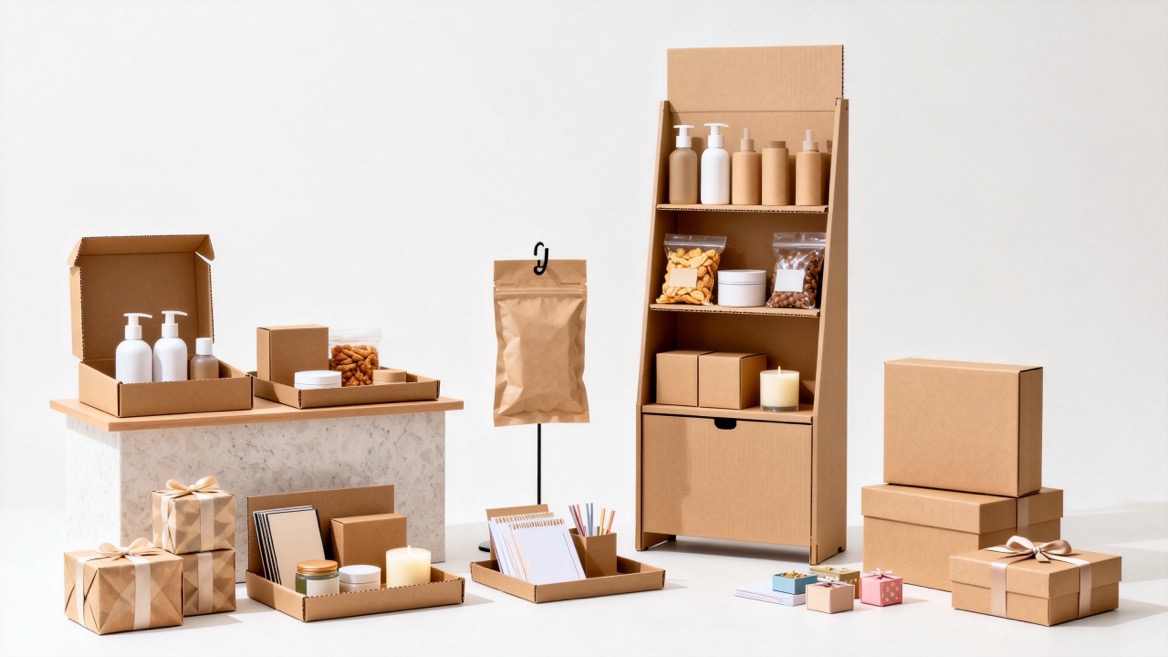
A display succeeds when structural design, printing, product protection, and in-store operation work together. Below is a practical process that brands can follow before moving into production.
Start with the actual selling environment, not only the product dimensions.
Ask these questions:
- Will the unit sit on a counter, shelf, hook, aisle end, or floor?
- What display dimensions can the retailer accept?
- How many units should each display hold?
- Will customers pick up products from the front, top, or side?
- Does the display need to fit a specific shelf depth?
- Will the retailer require barcodes on the shipper, tray, and individual product?
- How will staff replenish the unit?
- Does the display need to survive long-distance shipping?
A display designed for a boutique counter may fail entirely in a supermarket shelf environment. The location determines the structure.
The material should reflect the product's weight, retail lifespan, shipping conditions, and desired brand level.
11111
For premium retail packaging, materials should never be selected by appearance alone. Test whether the board can support the actual product weight, maintain shape during transport, and remain presentable after repeated shopper interaction.
A common mistake is creating tall front walls that carry beautiful graphics but hide the products inside. Another is designing a tray that looks impressive in a digital mockup but makes products difficult to remove.
Check the following before approval:
- Can shoppers see the product name?
- Can they remove one item using one hand?
- Will remaining products stay upright after several units are removed?
- Is the front wall low enough for visibility?
- Are heavy products properly supported?
- Are dividers needed to prevent products from leaning or shifting?
- Does the display stay stable when partly empty?
A display should still look organized after the first few customers have selected products—not only when it is fully stocked.
Customers often make quick decisions in-store. The display should communicate its most important message immediately.
A practical visual hierarchy is:
1. Brand or collection name
2. Product category
3. Main benefit or campaign message
4. Variant identifiers
5. Supporting details or promotional information
For example, a tea gift display may use the brand name at the top, "Premium Herbal Tea Collection" beneath it, flavor categories along the shelf edge, and a short message about the gifting occasion. It does not need a paragraph of copy on every panel.
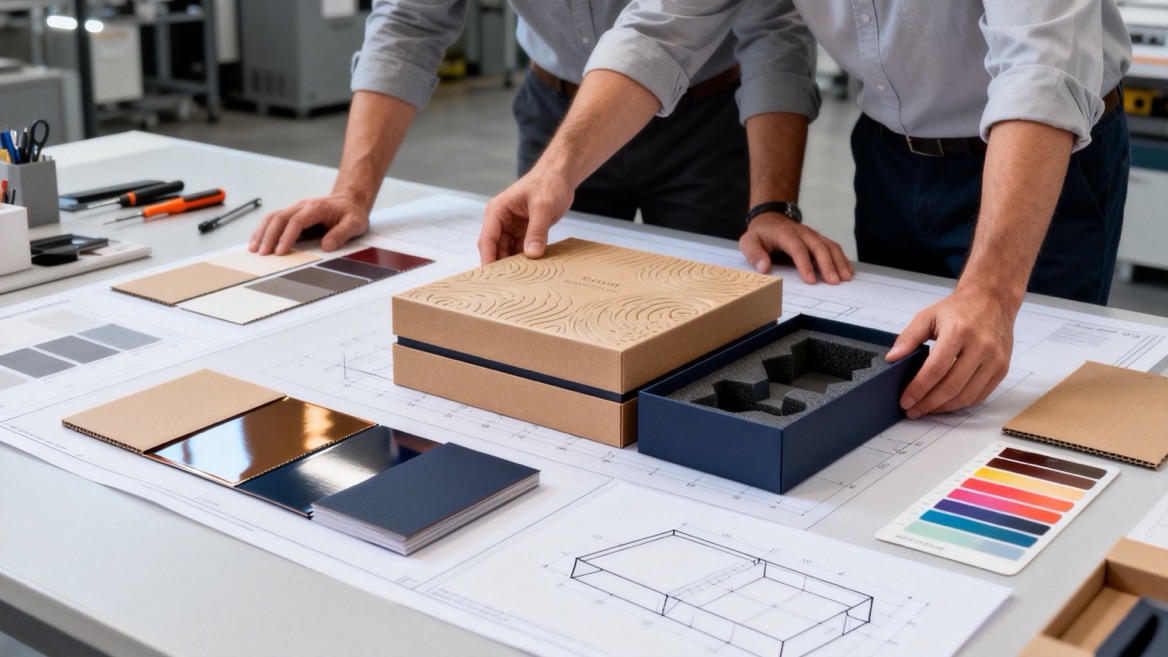
Before large-scale manufacturing, review a physical sample—not only a flat artwork file or 3D image.
A proper sample review should test:
- Product fit
- Weight capacity
- Folding and assembly accuracy
- Perforation performance
- Shipping protection
- Shelf placement
- Customer access
- Print color consistency
- Stability after partial sell-through
- Barcode readability
- Retailer-specific requirements
For international projects, it is also important to test the display with the actual products, inserts, master cartons, and shipping configuration. A structurally sound display can still fail if it is packed poorly inside the export carton.
A display should enhance communication, but it must not obscure required product information.
For food products sold in the United States, labeling requirements may include statements such as product identity, net quantity, ingredient information, nutrition information, and manufacturer, packer, or distributor details, depending on the product and applicable rules. Food labels must be truthful and not misleading.
The outer display should never replace legally required information on the individual product package unless the format and applicable regulations specifically allow it.
When designing retail packaging, brands should verify:
- Product name placement
- Net quantity statements
- Ingredient and allergen declarations where applicable
- Nutrition information where required
- Country-of-origin marking requirements
- Barcode placement
- Safety warnings
- Age recommendations
- Recycling instructions
- Retailer-specific packaging rules
For food-contact packaging, the safety of materials and substances that contact food is also a key consideration. The U.S. Food and Drug Administration regulates food-contact substances used in packaging and containers.
From a packaging manufacturer's point of view, the appearance of a display is only one part of the project. Small structural decisions can influence cost, durability, assembly time, freight efficiency, and final presentation.
At Maituohong Packaging, we recommend reviewing these details at the beginning:
- Product weight: Heavy glass bottles, jars, and multi-piece sets require stronger board and reinforced structure.
- Packing quantity: The number of products per display affects tray depth, divider design, and master-carton configuration.
- Shipping route: Export packaging should account for stacking, humidity, vibration, handling, and long transit periods.
- Display lifespan: A two-week promotional unit and a six-month retail fixture require different materials and construction.
- Print finish: Matte lamination, foil stamping, embossing, textured paper, and spot UV can create a premium feel, but should match the product category and budget.
- Assembly method: Pre-glued, flat-packed, or retailer-assembled formats affect labor and logistics.
- Sustainability goals: Brands should consider material efficiency, recyclable paper-based components, and designs that avoid unnecessary mixed materials.
The best custom packaging display is not simply the most decorative option. It is the version that delivers the intended retail experience while remaining practical to manufacture, transport, stock, and recycle.
Even visually attractive projects can underperform when practical details are missed.
Too many claims, colors, typefaces, and icons can make a display difficult to understand. Choose one central message and support it with a clean visual system.
A display that is even slightly too wide, tall, or deep may be rejected by a retailer or placed in a less effective location. Confirm shelf, counter, and aisle requirements before finalizing the die line.
A display should remain neat when it is 50 percent empty. Use dividers, angled trays, or appropriate depth to prevent a messy appearance during sell-through.
Paper packaging can be damaged by compression, moisture, rough handling, and repeated movement. Ensure the outer shipper provides real protection for the display and products inside.
Environmental statements should be accurate and supported by the actual materials, coatings, adhesives, and disposal options used. Avoid broad claims that cannot be substantiated.
The right display packaging should do more than look attractive in a product photo. It should help your product arrive safely, stand out in retail, remain easy to shop, and support the premium quality customers expect from your brand.
Maituohong Packaging provides customized paper packaging solutions for brands that need more than standard cartons. With more than 18 years of experience in premium rigid boxes, gift packaging, paperboard structures, and custom printing, our team can help develop display packaging that fits your product, retail environment, and branding goals.
Whether you need a countertop display, shelf-ready tray, promotional gift set, luxury rigid box, or a complete retail presentation solution, share your product dimensions, quantity, target market, artwork requirements, and preferred materials. We can help turn your packaging concept into a display-ready solution built for real retail conditions.
A packaging display is a package or display structure designed to present products directly to shoppers. It can organize products, communicate brand information, improve visibility, and make product selection easier in retail spaces.
A shipping box is mainly designed to protect goods during transit. A display box is designed to present products at the point of sale. Some retail-ready formats combine both functions by shipping products safely and converting into a shelf or counter display.
Countertop displays work well for small, lightweight, frequently purchased products such as candy, cosmetics, lip balm, accessories, stationery, keychains, candles, and travel-size personal-care items.
Common materials include folding paperboard, corrugated cardboard, rigid greyboard, specialty wrapping paper, and internal paperboard dividers. The correct choice depends on product weight, display location, shipping conditions, and the desired presentation level.
Yes. Rigid boxes are especially suitable for premium gift sets, luxury cosmetics, fragrance, jewelry, high-end confectionery, and specialty products. They can be displayed in branded trays, boutique units, or custom retail fixtures.
Use a structure that opens quickly, requires minimal individual product handling, fits the intended shelf or counter space, keeps products organized, and can be removed or flattened efficiently after sell-through.
Yes, but the display should not block required information on individual products. Use the display for key branding, category guidance, campaign messaging, and shopping cues, while ensuring each product package carries all required labeling.
Prepare product dimensions, product weight, quantity per display, target market, display location, preferred material, printing requirements, desired finishing effects, shipping method, and artwork files if available.
1. [Tycoon Packaging — Understanding Packaging Displays Mean & Their Importance]
2. [Jamestown Container — The Complete Guide to Retail Ready Packaging]
3. [Creative Displays Now — What Is Retail-Ready Packaging?]
4. [U.S. Food and Drug Administration — Food Labeling Guide]
5. [Electronic Code of Federal Regulations — 21 CFR Part 101: Food Labeling]
6. [U.S. Food and Drug Administration — Food Ingredients & Packaging]


