
Views: 243 Author: Maituohong Packaging Publish Time: 2026-10-04 Origin: Site


Content Menu
● Paperboard, Corrugated Board, and Rigid Boxes: What Is the Difference?
● Four Common Paperboard Grades for Packaging
>> 1. SBS Paperboard: A White Base for Premium Printing
>> 2. FBB Paperboard: High Bulk and Efficient Stiffness
>> 3. CCNB and Coated Recycled Board: Recovered-Fiber Options
>> 4. CUK and Unbleached Kraft Board: Strength with a Brown Fiber Base
● Paperboard Grades Comparison: A Practical Starting Point
● How to Choose Paperboard for Custom Rigid Boxes
>> Separate the Structural Core from the Decorative Wrap
>> Specify Board Thickness Against the Actual Design
● GSM, Caliper, and Stiffness: What Buyers Need to Understand
● A Five-Step Material Selection and Sampling Process
>> Step 1: Define the Product and Packaging Job
>> Step 2: Set the Visual Priorities
>> Step 3: Build a Small Material Shortlist
>> Step 4: Approve a Representative Sample
>> Step 5: Agree on Validation Before Production
● Choosing Finishes Without Compromising Performance
● Recyclability: Evaluate the Complete Package
● What to Include in Your Packaging Quote Request
● Plan Your Custom Packaging with Maituohong Packaging
>> What Is the Best Paperboard Grade for Premium Packaging?
>> Can CCNB Be Used for Food Packaging?
>> Does Higher GSM Always Mean a Stronger Box?
>> Which Material Is Used Inside a Rigid Gift Box?
>> Are Paperboard Boxes Always Recyclable?
Choosing the right paperboard grades for packaging affects more than how a box looks. It influences print quality, structural performance, finishing options, and production cost. For custom rigid boxes, material selection also requires a distinction between the board that provides strength and the paper that creates the visible finish.
At Maituohong Packaging, we bring more than 18 years of experience in designing and producing custom paper packaging, including high-quality rigid gift boxes. Our approach starts with the product, its presentation, and its journey—not simply a preferred paper grade.
This guide explains four common paperboard families and shows how to translate material specifications into a practical packaging decision.
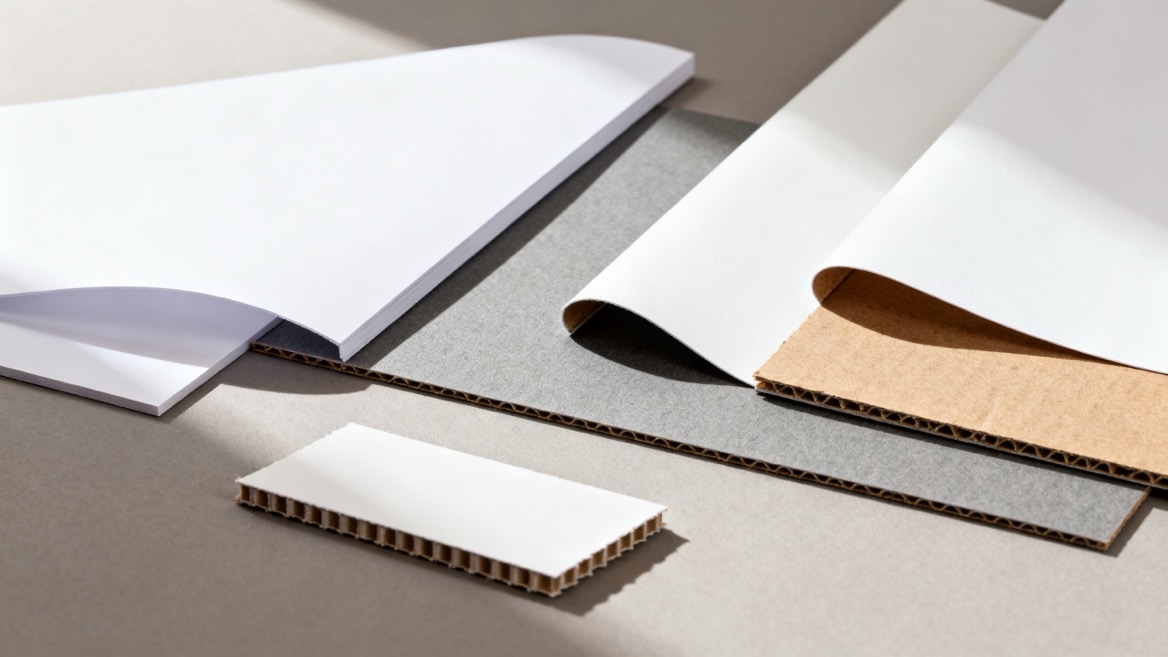
Paperboard is a fiber-based sheet material used for folding cartons, sleeves, and other packaging components. Its performance depends on fiber composition, construction, thickness, surface treatment, and moisture conditions.
"Cardboard" is a broad everyday term rather than a precise purchasing specification. Corrugated board has a fluted layer between liners and is commonly used for shipping protection.
Rigid boxes use a different construction. A thick, non-bending board forms the structural shell, while a separate paper wraps the exterior and sometimes the interior.
That distinction matters because a premium printing surface does not automatically provide the support required for a rigid gift box. A successful design combines a suitable structural board, wrapping material, insert, and protective shipping system.
Solid bleached sulfate, or SBS, is made from bleached virgin chemical pulp. Its white structure and commonly coated printing surface make it a popular choice for packaging that requires detailed graphics and a clean appearance.
Typical applications include cosmetics, healthcare products, confectionery, and premium retail cartons.
SBS is worth considering when your design includes:
- Fine typography or detailed illustrations.
- Light backgrounds and carefully controlled brand colors.
- Embossing, foil stamping, or selective coatings.
- Visible edges or interiors where whiteness matters.
However, the grade name alone does not guarantee finishing performance. Coating quality, board specification, tooling, and production settings still influence the result.
SBS also should not be treated as automatically waterproof or automatically unsuitable for moisture-sensitive applications. Request a specification matched to the product and its expected environment.
Folding boxboard, or FBB, generally combines chemical-pulp outer layers with a bulkier mechanical or chemi-mechanical pulp core.
This layered construction can provide useful stiffness at a relatively low basis weight. FBB is widely used for folding cartons in cosmetics, healthcare, food, and other retail categories.
For buyers, the important question is not whether FBB is universally "stronger" than SBS. It is whether a particular FBB specification provides the required stiffness, print finish, and converting performance.
Compare samples for:
- Front-surface smoothness and color reproduction.
- Reverse-side appearance where the interior is visible.
- Crease quality and resistance to cracking.
- Shape retention after filling and handling.
FBB can be an effective option for a lightweight retail carton. It is not a direct substitute for the thick structural board used in a traditional rigid box.
Clay coated news back, or CCNB, belongs within the broader market of coated recycled paperboard. Related commercial descriptions include duplex board and white-lined chipboard, although terminology and specifications vary by region.
These boards typically combine recovered fibers with a printable coated face. They are commonly considered for dry-product cartons, household goods, and other applications where cost control matters.
The surface may support attractive printing, but buyers should evaluate the actual sheet rather than assume that every recycled grade delivers the same result.
Check:
- Surface consistency and print sharpness.
- Board stiffness at the proposed thickness.
- Appearance of the unprinted reverse side.
- Performance under expected humidity conditions.
Recycled content is a meaningful material attribute, but it does not establish food-contact suitability or the environmental performance of the complete package. Obtain documentation for the exact material and intended application.
Coated unbleached kraft, or CUK, uses unbleached kraft fibers. Its underlying structure is naturally brown, while a coated printing face can provide a smooth, white surface.
The long fibers used in this board family contribute to strength and tear resistance. Common applications include beverage multipacks and demanding retail packaging.
Do not assume that CUK necessarily has a polyethylene barrier. The printing coating and any additional functional barrier are separate specification questions.
Also distinguish CUK from uncoated brown kraft paper. They can create very different visual results.
If your design relies on a natural brown surface, evaluate printed proofs carefully. The substrate color affects ink appearance, especially for light colors and photographic graphics.
| Material family | Typical appearance | Main reason to consider it | Important buying check |
|---|---|---|---|
| SBS | White through the sheet; often coated | Premium graphics and clean presentation | Exact finish, stiffness, and application requirements |
| FBB | Coated face with a layered structure | High bulk and useful stiffness-to-weight performance | Caliper, reverse-side appearance, and crease quality |
| CCNB / coated recycled board | Coated face with a recycled-fiber body | Recovered-fiber content and cost-sensitive cartons | Surface consistency, moisture exposure, and documentation |
| CUK | Brown fiber body with a coated printing face | Strength and tear resistance | Coating specification and required barriers |
| Non-bending chipboard / greyboard | Usually covered rather than directly displayed | Structural support for rigid boxes | Thickness, flatness, corner construction, and wrap compatibility |
This comparison is a shortlist, not a universal ranking. Prices and performance vary with the mill, specification, order quantity, location, and converting process.
For a rigid gift box, construction matters more than choosing one prestigious material name.
The core maintains the box shape. The wrap controls much of the visible appearance and tactile experience. The insert locates the product and helps prevent movement.
Depending on the design, wrapping options may include coated printing paper, uncoated specialty paper, or textured paper. Each needs to work with the selected adhesive and wrapping process.
Ask your supplier to identify these components separately. "Premium paper box" is not a complete material specification.
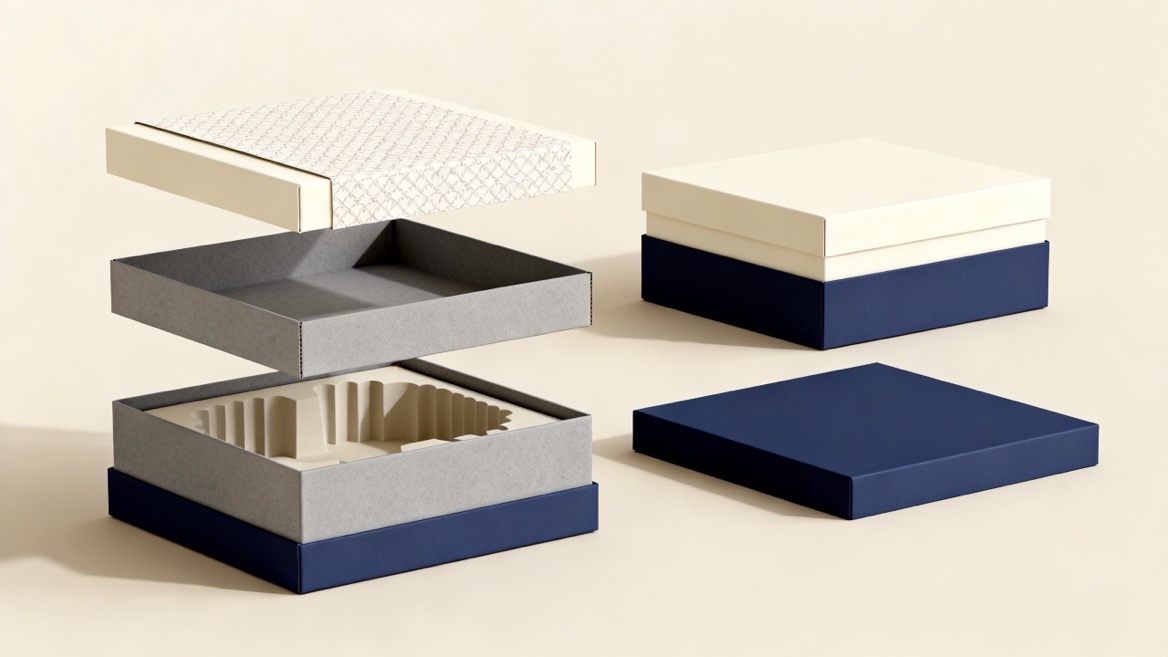
A compact jewelry box and a large presentation box create different structural demands, even when both use the same board family.
Before recommending a core, the manufacturer should review:
- Product weight and dimensions.
- Unsupported panel spans.
- Lid style and opening mechanism.
- Insert layout and clearance.
- Expected stacking and transport conditions.
Increasing thickness may improve rigidity, but it also affects weight, material consumption, wrapping behavior, and assembly. The goal is an appropriate structure, not the thickest available board.
GSM means grams per square meter. It describes mass per unit area, not thickness.
Caliper describes sheet thickness. Stiffness describes resistance to bending. These properties are related, but they are not interchangeable.
Two boards with the same GSM can have different calipers because their fiber composition, density, and construction differ. A bulkier FBB may therefore behave differently from a denser sheet at a similar basis weight.
When comparing quotations, request:
1. The exact grade and supplier specification.
2. GSM and caliper.
3. Relevant stiffness data, where available.
4. Grain direction and converting requirements.
5. A physical sample of the proposed material.
Never approve a substitution solely because the replacement has the same GSM. Compare its suitability in the finished packaging.
Record the product dimensions, weight, fragility, and surface sensitivity. Explain whether the box is a retail carton, a gift presentation box, or part of an e-commerce shipping system.
A presentation box and a transit package perform different jobs.
Identify which features are essential: accurate colors, a bright interior, a textured touch, metallic decoration, or restrained natural styling.
This prevents unnecessary spending on finishes that do not support the intended customer experience.
Compare two or three realistic constructions rather than many unrelated papers. For rigid boxes, evaluate the core, wrap, and insert together.
Request quotations using the same dimensions, quantity, and finishing assumptions.
Review a sample using the proposed materials and construction. Confirm which elements are production-representative and which are simulated.
Inspect corner wrapping, adhesive marks, panel alignment, lid fit, insert access, and decoration quality. Load the actual product whenever possible.

Define the handling, storage, and distribution checks appropriate to the project.
A visually attractive sample is not proof of transit performance. Test the complete packaging system, including the outer shipping carton and protective components where applicable.
Matte and gloss treatments change appearance. Embossing adds relief. Foil stamping provides metallic or colored decoration. Spot coatings create selective contrast.
Choose these treatments around the substrate and box construction.
For example, decoration positioned near a wrapped corner may behave differently from decoration on a flat panel. A textured paper may also produce a different foil result from a smooth coated sheet.
Ask for a finishing trial when the design depends on fine detail or demanding registration. Evaluate scuffing, adhesion, readability, and consistency—not just the first impression.
Neither "virgin fiber" nor "recycled fiber" answers every environmental question.
Recyclability depends on the finished packaging, available collection systems, and the recycling processes used in the destination market.
Coatings, laminations, adhesives, windows, inserts, and other components can influence compatibility. Multiple fiber layers alone do not establish that a board is difficult to recycle.
For rigid boxes, review the whole assembly rather than only the greyboard core.
Practical questions include:
- Can non-paper components be removed easily?
- Are decorative treatments necessary?
- Is recyclability evidence available for the proposed construction?
- Does the intended market accept this type of packaging?
Avoid broad claims such as "fully sustainable" unless their scope and supporting evidence are clear.
A detailed brief helps manufacturers compare suitable materials and reduces avoidable revisions.
Send:
- Product dimensions, weight, and photographs.
- Required internal box dimensions.
- Preferred structure and opening style.
- Order quantity and delivery destination.
- Artwork and finishing expectations.
- Insert requirements.
- Budget range and launch timing.
- Any food-contact or other application requirements.
For color-critical projects, state how color approval will be handled. For repeat orders, ask how material changes and approved samples will be controlled.
Send Maituohong Packaging your product dimensions, weight, target quantity, preferred box style, and artwork requirements.
Our team can help develop a material shortlist and sampling plan for your custom rigid boxes or paper packaging. Start with a representative sample so that appearance, fit, and construction can be reviewed before production approval.
There is no universal best grade. SBS is commonly selected for premium printed cartons, while FBB can provide effective stiffness-to-weight performance. Rigid boxes require a separate assessment of the structural core, wrap, and insert.
Not in every application. Compare the actual specifications, including thickness, stiffness, surface quality, interior appearance, and converting behavior. The better choice is the one that meets the project requirements efficiently.
Do not assume suitability from the grade name. Confirm the intended contact conditions and obtain documentation for the exact board, inks, coatings, and other relevant components.
No. GSM measures sheet mass per area. Box performance also depends on thickness, fiber structure, grain direction, geometry, joints, moisture, and the complete packaging design.
Non-bending chipboard or greyboard is commonly used as the structural core. Decorative paper usually covers it, while a separate insert may support and position the product.
No. Assess the complete package and the recycling infrastructure in its destination market. Additional materials and treatments may affect compatibility with available processes.
1. [PakFactory — "4 Popular Types of Paperboard Grades For Packaging"]
Original article used as the starting point for restructuring and identifying topics requiring clarification. Its generalized environmental and performance claims were not adopted without qualification. [pakfactory]
2. [Paperboard Packaging Council — "4 Types of Paperboard"]
Industry reference for SBS, CUK, coated recycled paperboard, and non-bending chipboard; supports the material-family descriptions and typical applications. [paperbox]
3. [Holmen — "General Technical Information About Paperboard"]
Manufacturer technical reference covering paperboard construction, grammage, thickness, and end-use considerations. [holmen]
4. [Iggesund / Holmen — "Manipulating the Stiffness of Your Packaging"]
Technical discussion supporting the distinction between sheet thickness and bending stiffness. [iggesund]
5. [4evergreen — "Circularity by Design Guideline," Version 4, February 2026]
Cross-industry guidance supporting evaluation of finished paper-based packaging against relevant recycling processes rather than blanket recyclability claims. [4evergreenforum]


