
Views: 294 Author: Maituohong Packaging Publish Time: 2026-10-03 Origin: Site


Content Menu
● Custom Shipping Boxes vs. Standard Boxes: A Quick Comparison
● What Are Custom Shipping Boxes and Standard Boxes?
>> Custom Shipping Boxes: Packaging Built to a Specification
>> Standard Boxes: Stock Packaging with Established Sizes
● 1. Size and Fit: The Most Important Structural Difference
>> How Custom Dimensions Improve Product Fit
>> When Standard Sizes Work Well
● 2. Protection: Custom Does Not Automatically Mean Stronger
>> Board Strength and Package Design Matter More Than the Label
>> Rigid Gift Boxes and Shipping Cartons Serve Different Purposes
● 3. Branding and Unboxing: Integrated Design vs. Added Decoration
● 4. Cost: Compare the Complete Packed Shipment
>> Illustrative Break-Even Calculation
● 5. Shipping Efficiency: A Practical Dimensional-Weight Example
● 6. Lead Time, Minimum Orders, and Inventory Flexibility
● 7. Sustainability: Evaluate Material Use and Local Recovery
● 8. A Six-Step Process for Choosing the Right Box
>> Step 1: Build a Product and Order Profile
>> Step 2: Establish a Stock-Box Baseline
>> Step 3: Develop a Custom Prototype
>> Step 4: Evaluate the Loaded Package
>> Step 5: Run a Controlled Shipping Trial
>> Step 6: Compare Landed Results
● 9. Expert Insight: Specify Performance Before Appearance
● Request a Packaging Comparison from Maituohong Packaging
>> Are Custom Shipping Boxes Always Better Than Standard Boxes?
>> What Is the Difference Between a Mailer Box and a Shipping Box?
>> Can Standard Boxes Be Branded?
>> Will Custom Boxes Reduce Shipping Costs?
>> How Should I Choose the Right Box Strength?
>> What Information Should I Provide for a Custom Box Quote?
Custom shipping boxes and standard boxes differ primarily in how closely they match your product, shipping requirements, and brand identity. Custom boxes are manufactured to an agreed specification; standard boxes come in predetermined sizes and constructions. The better choice depends on protection, packing efficiency, order volume, and total delivered cost—not appearance alone.
At Maituohong Packaging, our perspective comes from more than 18 years of experience in designing and producing high-quality rigid gift boxes and paper packaging solutions. When comparing packaging options, we recommend starting with one question: What must this package accomplish between your packing station and your customer's doorstep?
This guide compares both options and explains how to make a practical, evidence-informed decision.
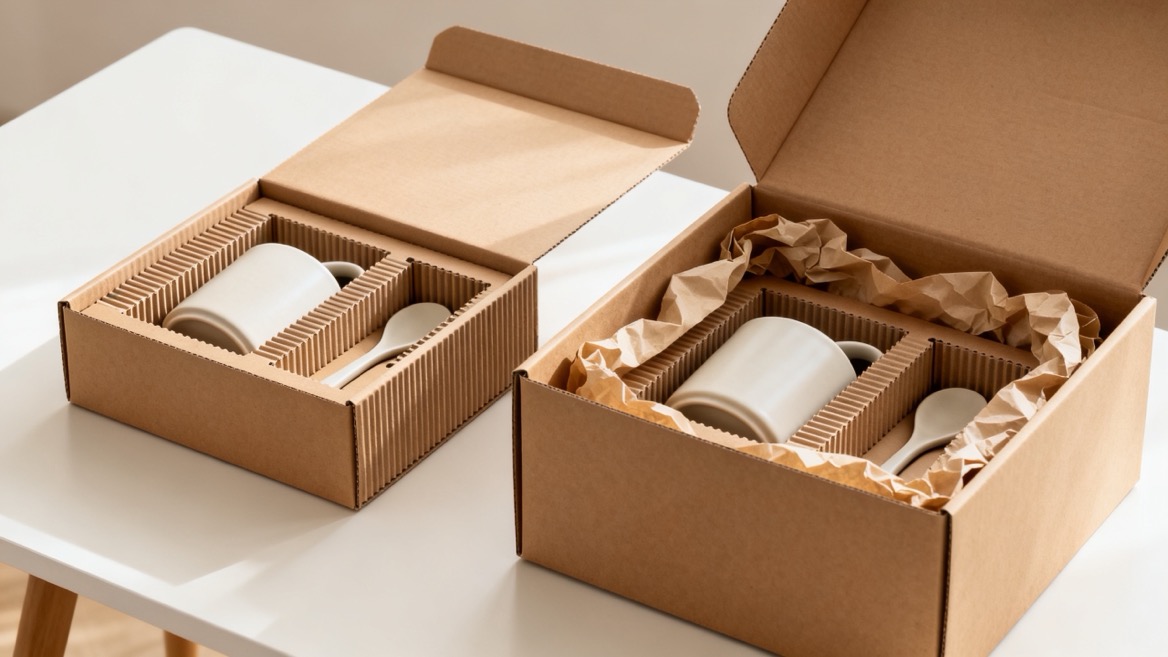
| Comparison factor | Custom shipping boxes | Standard boxes |
|---|---|---|
| Dimensions | Specified around the product and protective materials | Selected from available stock sizes |
| Construction | Board, structure, and inserts can be specified | Limited to the supplier's stocked configurations |
| Branding | Integrated printing and presentation options | Usually plain, with optional labels or separate branding |
| Initial investment | May include design, tooling, and sampling costs | Usually requires less initial commitment |
| Availability | Requires specification approval and production | Often available quickly from stock |
| Protection | Can be engineered for a particular product | Effective when size, strength, and cushioning are appropriate |
| Inventory | Requires forecasting and replenishment planning | Offers flexibility for changing product assortments |
| Best fit | Repeat products, distinctive presentation, defined shipping requirements | Variable orders, urgent shipments, early-stage demand |
Neither category guarantees better performance. A correctly selected standard carton can outperform a poorly specified custom box.
Custom shipping boxes are produced according to requirements such as dimensions, board grade, closure design, printing, and internal protection.
Customization does not necessarily mean colorful artwork. A plain corrugated carton made to a precise size is still custom packaging.
It also does not require an unusual structure. A familiar flap-style shipping carton can be manufactured in custom dimensions. FEFCO's internationally used design-code system helps buyers and manufacturers communicate common corrugated box structures consistently.
Standard boxes are ready-made cartons offered in predetermined dimensions and material specifications.
They are useful when businesses need immediate availability, handle many product sizes, or have not yet established predictable demand.
Here, "standard boxes" means stock corrugated shipping cartons—not thin folding cartons or decorative gift boxes. Keeping these categories separate matters because presentation packaging and transport packaging perform different jobs.
Custom-size shipping boxes allow the packaging to accommodate the product, its retail packaging, and the necessary protective materials.
The goal is not the smallest possible box. It is the smallest suitable package that still provides adequate protection.
A close-fitting carton may reduce unnecessary movement and void fill. However, fragile products still need space for cushioning or a purpose-designed insert.
When developing specifications, distinguish between:
- Internal dimensions, which determine usable packing space.
- External dimensions, which affect carrier measurements and storage.
- Product dimensions, including accessories and retail packaging.
Confusing internal and external measurements can produce a box that fits the drawing but not the shipment.
A stock carton is often sufficient when an available size already accommodates the product safely.
The problem arises when "close enough" creates excessive empty space or forces packers to improvise. Compare the finished package rather than the empty box alone.
Both custom and standard shipping boxes can use corrugated board with different strength characteristics.
Assess the complete packaging system:
- Product weight and fragility.
- Board specification and box dimensions.
- Cushioning and internal restraints.
- Closure method.
- Expected handling and stacking conditions.
An edge crush test, or ECT, measures resistance to edgewise compression. A burst test measures resistance to pressure applied to the board. Neither measurement alone proves that a finished package will protect a specific product.
UPS guidance emphasizes appropriate box strength, cushioning, and secure sealing. Its published strength tables are guidelines, not universal guarantees.
A rigid gift box may create a premium presentation, but it should not automatically be treated as a transport carton.
For some products, the suitable arrangement is a rigid presentation box inside a protective corrugated shipping box.
Likewise, a custom mailer box with a hinged lid may work as the outer package, but its suitability depends on the loaded package, closure security, and distribution conditions.
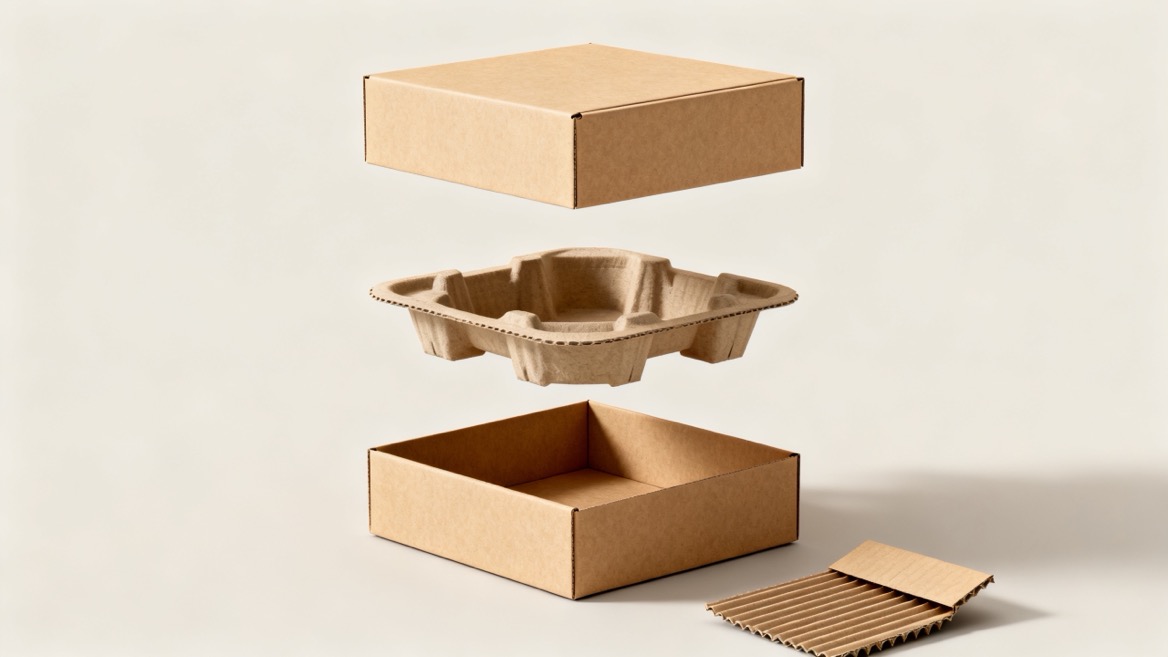
Custom printed shipping boxes offer control over exterior graphics, interior messaging, and opening sequence.
This can support a consistent experience for subscription products, gift sets, and direct-to-consumer orders. However, attractive packaging should not interfere with label placement, opening instructions, or protective performance.
Standard boxes can also support branding through:
- Printed labels.
- Branded tape.
- Paper inserts.
- A separate presentation box.
From a packaging-design perspective, I would prioritize structural reliability before decorative finishes. A clean, well-fitted plain carton is more useful than elaborate packaging that arrives damaged.
Avoid assuming that premium printing automatically increases repeat purchases. That outcome requires customer and commercial evidence.
Standard boxes often involve less upfront commitment. Custom boxes may introduce sampling, tooling, printing setup, or minimum-order requirements.
Nevertheless, the purchase price of the carton is only one cost component.
A meaningful comparison includes:
1. Box purchase price.
2. Protective materials and inserts.
3. Packing labor.
4. Shipping charges.
5. Expected damage and replacement costs.
6. Storage and inventory exposure.
7. Initial development costs.
Suppose a custom box costs $0.25 more per shipment but saves $0.12 in filler and $0.18 in packing labor.
The assumed net operating saving is $0.05 per shipment. With $500 in initial development costs, the simple break-even point is 10,000 shipments.
This is a hypothetical example, not a Maituohong quotation or an observed customer result. It excludes freight, financing, storage, and damage costs.
The useful principle is total-cost comparison: customization becomes financially attractive only when measurable benefits outweigh its additional costs.
Some carriers calculate billable weight using both actual weight and dimensional weight, charging on the greater value.
Dimensional weight reflects the space a package occupies relative to its weight. FedEx's published explanation uses a divisor of 139 for the inch-and-pound calculation described on its page.
Consider these hypothetical external dimensions:
| Package | External dimensions | Volume | Calculated dimensional weight |
|---|---|---|---|
| Stock carton | 14 × 10 × 8 inches | 1,120 cubic inches | Approximately 8.06 lb |
| Custom carton | 12 × 9 × 6 inches | 648 cubic inches | Approximately 4.66 lb |
The custom package occupies approximately 42% less volume.
That does not mean freight costs fall by 42%. Actual weight, rounding rules, service, destination, contract terms, and surcharges affect the final charge.
Measure the sealed package, including bulges. Confirm current carrier rules before using this calculation for purchasing decisions.
Stock boxes are generally easier to obtain quickly, provided the required size and grade are available.
Custom packaging requires agreement on specifications and a production schedule. Printing or structural revisions may add approval steps.
No single minimum order quantity applies across all custom boxes. Requirements depend on construction, manufacturing process, printing method, and supplier.
For uncertain demand, standard cartons can reduce the risk of unused inventory. For stable, repeat products, custom packaging may justify a planned replenishment cycle.
A hybrid approach is often worth evaluating: custom boxes for high-volume products and stock cartons for irregular orders.
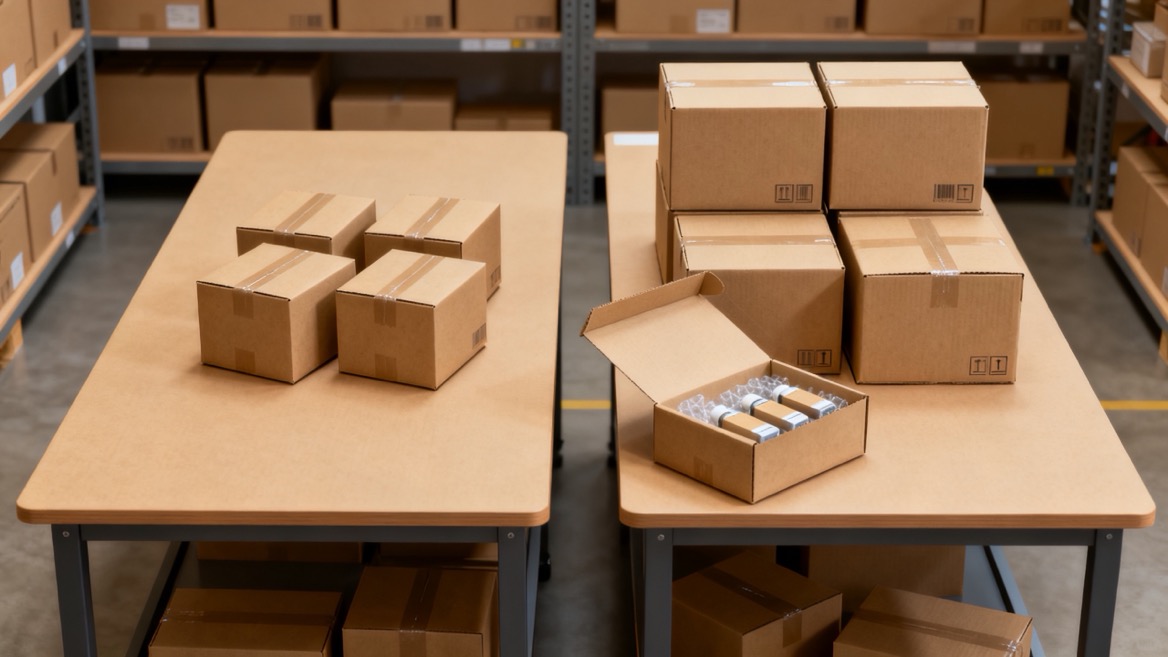
Neither custom nor standard boxes are automatically the more sustainable option.
A right-sized package may use less filler and occupy less transport space. However, complex finishes, unnecessary layers, and excess inventory can offset those advantages.
Useful questions include:
- Can the design protect the product with fewer components?
- Are different materials easy to separate?
- Is the packaging accepted by the customer's local recycling system?
- Are recycled-content claims supported by documentation?
- Could damage prevention avoid replacement shipments?
As historical context, the U.S. EPA reported an 80.9% recycling rate for paper and paperboard packaging in 2018.
That figure is dated, geographically specific, and not a recycling guarantee for an individual box. Avoid turning industry-level statistics into unsupported product claims.
Record dimensions, weight, fragile areas, accessory combinations, and common order quantities.
Design around real shipment patterns rather than one idealized sample.
Pack the product in the best available standard carton.
Record packed dimensions, material consumption, packing time, and package weight. This creates a fair benchmark.
Specify the proposed internal dimensions, board grade, structure, cushioning, and closure.
Check that operators can assemble and pack it consistently.
Test the product, carton, inserts, cushioning, and closure together.
ISTA Procedure 3A is intended for individual packaged products weighing 150 lb or less shipped through parcel delivery systems. A qualified testing provider can help determine whether it suits the intended distribution route.
Compare prototypes and baseline cartons using similar products and shipment conditions.
Track damage, packing time, material use, and actual carrier charges. Do not treat a few successful deliveries as proof of universal performance.
Select the option that performs best against your protection, cost, operational, and presentation requirements.
Keep written approval records so production follows the tested specification.
One common purchasing mistake is approving artwork before resolving the structural specification.
A better sequence is:
1. Define product and shipping requirements.
2. Select structure and protection.
3. Confirm fit and packing workflow.
4. Validate performance.
5. Finalize graphics and finishes.
Ask suppliers to document dimensions, tolerances, board specifications, printing requirements, sample approvals, and agreed quality checks.
This makes quotations more comparable and reduces misunderstandings between purchasing teams, designers, and manufacturers.
Maituohong Packaging brings more than 18 years of design and production experience in rigid gift boxes and paper packaging solutions.
To begin a focused custom shipping box or mailer box discussion, share your product dimensions, packed weight, monthly order volume, destination markets, and current packaging challenges.
Request a comparison covering structure, protective materials, printing options, sampling, and production terms—not simply a price for an empty box.
No. They are useful when tailored dimensions, protection, or presentation offer measurable benefits. A correctly selected standard carton may be the better choice for variable products or uncertain demand.
A mailer box typically uses a folding, hinged-lid structure. "Shipping box" is a broader transport-packaging term. A mailer can function as a shipping box when its loaded-package performance is suitable.
Yes. Labels, printed tape, and inserts can add branding without a fully custom carton. Compare the added material and labor costs with integrated printing.
They may reduce dimensional-weight exposure when they eliminate unnecessary volume. Savings are not guaranteed; calculate charges using actual packed dimensions and applicable carrier terms.
Consider product weight, fragility, dimensions, cushioning, closure, and distribution conditions. Use board specifications as a starting point, then validate the complete package rather than relying on thickness alone.
Provide product dimensions, packed weight, quantity, intended box style, printing requirements, protective needs, and destination markets. Identify whether dimensions are internal or external.
- [FedEx — What Is Dimensional Weight?]
Source for dimensional-weight principles and the published divisor used in the illustrative comparison. [fedex]
- [UPS — Packaging Guidelines]
Source for box-strength guidance, cushioning, closure considerations, and the limitations of strength tables. [ups]
- [UPS — How to Pack a Box or Pallet for Shipping]
Source for practical guidance on rigid shipping containers, weight limits, and protective materials. [ups]
- [International Safe Transit Association — Test Procedures]
Source for the stated scope of Procedure 3A for parcel-delivery packaged products weighing 150 lb or less. [ista]
Source for the internationally applied corrugated packaging design-code system. [fefco]
- [U.S. Environmental Protection Agency — Containers and Packaging: Product-Specific Data]
Source for the historical 2018 U.S. paper and paperboard packaging recycling figure. [epa]


