
Views: 233 Author: Maituohong Packaging Publish Time: 2026-08-12 Origin: Site


Content Menu
● What Is Perforated Packaging?
● Why Brands Choose Perforated Paper Packaging
>> Easier Unboxing for Customers
>> Better Retail Shelf Execution
>> More Flexible Brand Communication
>> Simplified Returns and Reuse
● Types of Perforation Used in Custom Boxes
● How Perforated Packaging Is Made
● Designing a Tear Line That Opens Cleanly
>> Start With the User's Hand Movement
>> Match Perforation Strength to the Packaging Job
● Perforated Mailer Boxes for E-Commerce
● Retail-Ready Perforated Shipping Boxes
● Material Choices for Perforated Packaging
>> Rigid Board
● Sustainable Design Without Empty Claims
● A Pre-Production Checklist for Brands
● Work With a Packaging Partner That Understands the Details
>> What is the difference between a perforation and a die cut?
>> Can perforated packaging be used for luxury gift boxes?
>> Will a perforated mailer box open during shipping?
>> Can I print instructions next to the tear strip?
>> Is perforated paper packaging suitable for retail displays?
>> Can perforated boxes be made with recycled paperboard?
>> Do I need a physical sample before production?
Perforated packaging turns an ordinary box into a more useful customer experience. A precisely engineered tear line can create an easy-open mailer, a retail-ready display carton, a detachable coupon panel, or a reusable storage box—without sacrificing the protection and presentation expected from premium paper packaging.
At Maituohong Packaging, we have spent more than 18 years designing and manufacturing custom folding gift boxes, rigid paper boxes, mailer boxes, and shipping packaging. From a production perspective, successful perforated packaging is not simply "adding dotted cuts." It is the careful balance of board selection, structural engineering, printing, folding direction, packing method, and the customer's final opening action.
This guide explains how perforated paper packaging works, where it delivers the most value, how to select the right structure, and what brands should confirm before moving into mass production.

Perforated packaging is paperboard or corrugated packaging with a controlled line of small cuts, slits, or bridges. This line allows a customer, retailer, or warehouse team to tear away a specific part of the packaging in a clean and intended direction.
Unlike a fully die-cut opening, a perforation keeps the panel connected during production, transportation, and display. The package remains structurally complete until the user applies force to the designated tear point.
Common perforated packaging formats include:
- Tear-open mailer boxes for e-commerce orders
- Retail-ready shipping boxes with removable front panels
- Folding cartons with detachable product information cards
- Gift boxes with pull-tab opening strips
- Subscription boxes with easy-open tear strips
- Counter displays converted from shipping cartons
- Product sample packs with removable sections
- Reusable boxes with detachable protective inserts
A well-designed perforation can make packaging feel more intuitive. A poorly designed one can cause frustration, torn graphics, damaged corners, or premature opening during shipment.
That difference is why perforation must be considered at the structural-design stage—not added as an afterthought.
Perforated box packaging is popular because one detail can solve several commercial problems at once: customer convenience, display efficiency, shipping protection, and branding.
Customers increasingly expect packaging to open without scissors, knives, or excessive force. A tear strip or tear-away panel gives users a clear starting point and a controlled opening path.
For e-commerce brands, this matters because the first physical interaction often happens at home, after the parcel has travelled through several logistics steps. An easy-open mailer box reduces unnecessary friction at the moment of delivery.
A perforated opening can also support a more refined unboxing sequence:
1. The customer identifies the opening tab.
2. The strip tears along the intended path.
3. The top panel opens without crushing the box.
4. The product presentation remains neat.
5. The box may be reused for storage or returns.
For premium products, the goal is not just to make the package open faster. It is to make the opening feel deliberate.
Retail-ready packaging often needs to perform two jobs. It must protect products during transport, then convert quickly into an organized shelf display.
A perforated front panel can allow store staff to remove part of the carton and reveal products inside. This reduces the need to unpack individual units and helps create a clean presentation with fewer handling steps.
This format is especially useful for:
- Cosmetics and skincare products
- Snacks and confectionery
- Small electronics accessories
- Stationery and craft items
- Supplements and wellness products
- Seasonal gift sets
- Promotional product bundles
The most effective retail-ready design keeps the display panel stable after opening. If the remaining tray is too shallow, too flexible, or poorly reinforced, products can lean forward or collapse during customer selection.
A perforated section can do more than open a box. It can reveal a message, a printed story, a special offer, care instructions, or a QR code.
For example, a beauty brand may use a tear-away sleeve panel to reveal a message such as "Your evening ritual starts here." A coffee brand may add a detachable brewing guide. A gift brand may include a removable note card inside the lid.
These details can strengthen the brand experience without requiring separate printed inserts.
For direct-to-consumer brands, dual-strip mailer boxes can improve the return journey. One perforated strip opens the delivery box; a second adhesive strip allows the customer to reseal it if a return is needed.
Reusable packaging should still feel premium after the first opening. That means the perforation must tear cleanly, avoid rough paper fibers, and leave the remaining box structure strong enough for a second use.
Not all perforations are the same. The correct choice depends on the board grade, opening direction, product weight, packaging structure, and desired user experience.
| Perforation Type | How It Works | Best For | Key Consideration |
|---|---|---|---|
| Straight-line perforation | Small cuts run along a direct line | Tear strips, opening panels, detachable cards | Must align with the intended pulling direction |
| Curved perforation | Cuts follow an arc or custom shape | Gift boxes, decorative reveals, shaped display panels | Curves require careful bridge control |
| Micro-perforation | Very small, closely spaced cuts | Premium cartons and subtle tear lines | May need more pulling force |
| Macro-perforation | Larger, more visible cuts | Retail-ready cartons and corrugated displays | Can reduce panel strength if overused |
| Zip-strip perforation | A narrow strip tears away to open the box | Mailers, subscription boxes, delivery packaging | Requires a highly visible starting tab |
| Push-through perforation | A panel is pressed out rather than pulled | Product windows, hanging tabs, promotional displays | Must avoid accidental activation in transit |
The term "bridge" refers to the uncut connection between perforation cuts. Larger bridges increase strength but make the line harder to tear. Smaller bridges create easier opening but can raise the risk of accidental breakage.
This is one of the most important engineering decisions in perforated packaging.
Perforated packaging is usually created during die-cutting. A custom cutting die includes both cutting rules and perforating rules. Cutting rules cut completely through the board, while perforating rules create alternating cuts and bridges.
For high-quality results, the manufacturer should evaluate the entire converting process:
- Paperboard, greyboard, corrugated board, or specialty paper selection
- Board thickness and grain direction
- Perforation length and bridge spacing
- Folding direction
- Lamination or coating requirements
- Embossing, debossing, foil stamping, and spot UV placement
- Adhesive areas and glue strength
- Product weight and internal support
- Shipping orientation and stacking method
A perforation that performs well on an uncoated folding carton may behave differently after matte lamination, soft-touch film, or heavy ink coverage. Surface treatments can affect how the tear starts and how cleanly the paper fibers separate.
For this reason, a structural sample is more valuable than judging a perforation line from a flat digital artwork file.
The best perforated packaging appears simple because the engineering is invisible. Customers should immediately understand where to start, how to pull, and what will happen next.
Before drawing the tear line, define the action. Will the customer pull a tab upward, tear from left to right, press out a panel, or remove a strip around the box?
A tear line that works against the natural movement of the hand will feel awkward. It may also cause the box to twist, crush, or split beyond the intended area.
For a mailer box, the most natural interaction is usually a front-facing tab followed by a horizontal tear strip across the top. For a retail display carton, the opening may begin at a side notch and continue along the front panel.
Customers should not have to search for the opening mechanism. A visible tab, thumb notch, arrow icon, printed instruction, or color contrast can make the interaction clearer.
Useful opening prompts include:
- "Pull Here"
- "Tear to Open"
- "Open for Display"
- "Lift and Tear"
- A simple arrow graphic
- A contrasting pull-tab color
The instruction should be short and placed next to the action point. Avoid hiding it under a fold, inside a complex illustration, or near several competing visual elements.
Do not position important logos, faces, small typography, foil details, or legal information directly across a perforation line. Even a clean tear will create a visual interruption.
Instead, use the tear line as part of the layout. It can frame a message, divide an outer sleeve from an inner reveal, or guide the customer toward the next part of the unboxing journey.
A lightweight gift-card sleeve and a corrugated shipping carton should not use the same perforation specification.
For stronger board, the tear line may need longer cuts or a dedicated pull strip. For thin paperboard, a very aggressive perforation may create accidental tearing during folding, gluing, or carton filling.
Always test the design in its real use condition, including product loading, warehouse handling, master-carton packing, and delivery.
A perforated mailer box combines the visual appeal of a custom box with the practical requirements of parcel delivery. It is particularly suited to apparel, cosmetics, accessories, books, lifestyle products, subscription kits, and small gift sets.
A strong e-commerce mailer design usually includes:
- A self-locking structure or secure adhesive closure
- A reinforced front edge
- A clearly marked opening strip
- Space for branded exterior printing
- Interior print for a stronger reveal moment
- Product protection through inserts, tissue paper, or dividers
- Optional second adhesive strip for returns
The opening system should not weaken the box before delivery. A package can look excellent when opened by hand in a showroom but fail when exposed to compression, vibration, temperature changes, and repeated handling in a delivery network.
A practical approach is to test several opening strengths. One version may be easier to tear but less secure; another may be highly durable but require excessive force. The right option is the one that protects the product while still feeling effortless to the end user.
Retail-ready packaging can reduce shelf replenishment time by allowing one outer carton to become a display tray. The principle is simple: ship products in a protective box, then remove a perforated panel to create a ready-to-stock display.
However, the structure must be planned around the product itself.
Ask these questions before finalizing the design:
1. How many product units will the carton hold?
2. Will products stand upright after the front panel is removed?
3. Does the remaining tray height provide enough support?
4. Can staff open the carton without tools?
5. Will the display remain stable after partial product sell-through?
6. Are barcodes, batch details, and handling marks positioned correctly?
7. Is the front panel easy to remove without damaging the tray?
For heavy or tall products, a deeper tray, side supports, or internal dividers may be necessary. For lightweight products, a lower front panel can improve visibility and encourage customer interaction.

Material selection determines the appearance, durability, opening quality, and end-of-life options of the finished package.
Folding carton board is suitable for lightweight retail packaging, sleeves, product cartons, promotional packs, and detachable printed panels. It supports sharp printing and can be combined with special finishes.
It is often the preferred option when the package must look refined and the product does not require heavy-duty shipping protection.
Corrugated board provides more cushioning and stacking strength. It is commonly used for mailer boxes, shipping boxes, display cartons, and larger subscription packaging.
E-flute and F-flute are popular for branded mailers because they offer a relatively smooth print surface with useful protection. Thicker flute profiles may be required for heavier products or longer shipping routes.
Rigid board is ideal for luxury gift boxes, premium presentation boxes, and high-value product packaging. Perforation can be used on paper sleeves, outer wraps, removable seals, or internal components rather than directly on the main rigid structure.
For a premium unboxing experience, the perforated component should complement—not compromise—the box's solid feel.
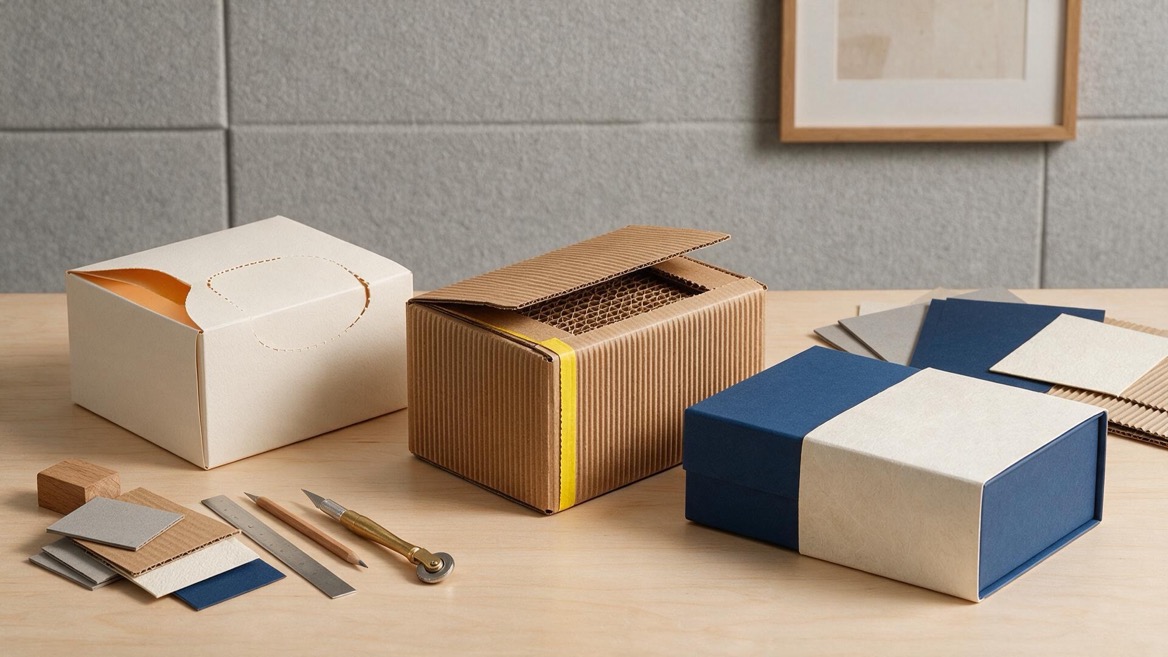
Paper packaging can support resource-conscious packaging design, but material claims should always match the actual construction, local collection system, and intended use.
A better approach is to evaluate the full packaging system:
- Can the box use recycled-content paperboard?
- Can unnecessary layers, inserts, or oversized empty space be reduced?
- Can the design avoid mixed materials that are difficult to separate?
- Can the customer understand how to dispose of each component?
- Can the box be reused before it reaches its end of life?
- Does the package use only the coating, lamination, and decoration needed for its function?
A recyclable-looking package is not automatically recyclable everywhere. Collection and processing systems differ by market. Clear material selection, simple construction, and accurate disposal guidance are more credible than broad environmental claims.
For brands selling into the European Union, packaging requirements are becoming more structured under the Packaging and Packaging Waste Regulation, which generally applies from 12 August 2026. Packaging teams should review product-specific obligations early, especially when selling across multiple markets.
Before approving custom perforated packaging, confirm the following details with your manufacturer:
- Product dimensions, weight, and fragility
- Target sales channel: retail, e-commerce, wholesale, or gifting
- Required opening action
- Preferred packaging material and surface finish
- Tear-line location and direction
- Pull-tab wording or icon
- Product insert, divider, or cushioning needs
- Artwork safe zones around the perforation
- Quantity and target delivery date
- Shipping destination and transit conditions
- Sample approval process
- Carton packing configuration
- Return or reuse requirements
- Material and compliance documentation needed for the destination market
This preparation shortens the development cycle and reduces the risk of receiving packaging that looks correct but performs poorly in use.
Perforated packaging works best when creative design and production engineering are developed together. The objective is not merely to make a box easy to tear. It is to create a package that protects the product, supports efficient fulfillment, presents the brand professionally, and gives customers a satisfying opening experience.
At Maituohong Packaging, we develop custom folding gift boxes, rigid boxes, mailer boxes, and shipping packaging around the real needs of each product and sales channel. Whether you need a luxury gift box with a detachable sleeve, an easy-open e-commerce mailer, or a retail-ready perforated display carton, our team can help turn your packaging concept into a production-ready solution.
Send us your product dimensions, artwork, target quantity, and preferred box style to begin your custom packaging project.
A die cut cuts completely through the material and creates a separate opening, shape, or window. A perforation creates partial cuts that keep the material connected until the customer tears or pushes it open.
Yes. It is often used on outer sleeves, tear seals, detachable cards, and internal presentation components. For rigid gift boxes, the main structure should remain strong while the perforated element adds a controlled opening or reveal.
It should not if the board grade, tear-line strength, closure method, and transit conditions are properly tested. A production sample should be packed with the actual product and evaluated under realistic shipping conditions before mass production.
Yes. A short prompt such as "Pull Here" or "Tear to Open" improves usability. Keep the wording close to the starting tab and separate it from critical branding or product information.
Yes. Retail-ready cartons often use perforated panels that staff remove to convert a shipping carton into a display tray. The remaining structure must be strong enough to support products throughout the retail selling period.
In many cases, yes. The final specification should be selected based on required strength, print finish, product weight, and the recycling or material requirements of the destination market.
Yes. A physical sample is strongly recommended because perforation performance depends on the actual material, board thickness, coating, folding, glue areas, and product load—not only on artwork.
- [Tycoon Packaging, "Perforated Packaging: The Ultimate Guide"]
- [European Commission, "Packaging Waste"] [environment.ec.europa]
- [EUR-Lex, "Regulation (EU) 2025/40 on Packaging and Packaging Waste"] [eur-lex.europa]
- [U.S. Environmental Protection Agency, "Recycling Basics and Benefits"] [epa]
- [International Safe Transit Association, "Test Procedures"] [ista]


