
Views: 258 Author: Maituohong Packaging Publish Time: 2026-09-24 Origin: Site


Content Menu
● What Are Gift Boxes and Paper Bags?
● Gift Boxes: Built for Protection and Presentation
>> When Gift Boxes Are the Better Choice
>>> Rigid Gift Boxes
>>> Drawer Boxes
● Paper Bags: Designed for Carrying and Brand Visibility
>> When Paper Bags Are the Better Choice
>> Common Types of Paper Shopping Bags
>>> Kraft Paper Bags
● Key Differences in Structure and Performance
>> Storage and Freight Efficiency
● Design Differences: Where Each Format Tells Your Brand Story
>> Best Design Elements for Gift Boxes
>> Best Design Elements for Paper Bags
● How to Choose Between a Gift Box and a Paper Bag
>> Use a Gift Box If Your Priority Is:
>> Use a Paper Bag If Your Priority Is:
>> Use Both If You Want a Complete Premium Experience
● Material Selection Matters More Than Many Buyers Expect
>> Questions to Ask Before Selecting Materials
● Expert Checklist for Custom Packaging Buyers
>> Choosing a Bag Based Only on Appearance
>> Ignoring the Full Customer Journey
● Partner With a Custom Paper Packaging Manufacturer
● FAQ
>> 1. What is the main difference between a gift box and a paper bag?
>> 2. Are paper bags cheaper than gift boxes?
>> 3. Which packaging is better for luxury products?
>> 4. Can I customize gift boxes and paper bags with my logo?
>> 5. Are paper shopping bags suitable for heavy products?
>> 6. Should I use a gift box and a paper bag together?
>> 7. What should I consider when choosing sustainable paper packaging?
Gift boxes and paper bags are both essential forms of custom paper packaging, but they serve very different commercial purposes. Gift boxes protect and present the product, while paper shopping bags carry, promote, and extend the customer experience beyond the point of purchase.
For brands sourcing custom packaging, the better choice is rarely "gift boxes versus paper bags." In most successful retail, gifting, and e-commerce projects, the best result comes from matching each format to its role—or using both together as a coordinated packaging system.
At Maituohong Packaging, our team has spent more than 18 years designing and manufacturing rigid gift boxes, custom paper bags, and other paper-based packaging solutions. From luxury retail projects to promotional campaigns and branded product launches, one lesson is consistent: packaging performs best when its structure, materials, printing, and customer journey are planned together.

A gift box is a structured package designed to hold, protect, display, and elevate a product. It may be a rigid box, folding carton, magnetic closure box, drawer box, lid-and-base box, or custom-shaped presentation box.
A paper bag is a flexible or semi-structured carrier designed for transportation, retail presentation, and brand visibility. Common styles include kraft paper bags, luxury paper shopping bags, twisted-handle bags, ribbon-handle bags, flat-handle bags, and laminated boutique bags.
Although both are made from paper-based materials, their construction and function are fundamentally different.
| Feature | Gift Boxes | Paper Bags |
|---|---|---|
| Primary role | Product protection and premium presentation | Product carrying and brand exposure |
| Typical structure | Rigid, semi-rigid, or folding structure | Flexible paper construction with handles |
| Best for | Gifts, luxury items, cosmetics, jewelry, electronics, premium sets | Retail purchases, events, takeaways, promotional items |
| Protection level | High, especially with inserts and rigid board | Moderate; depends on paper weight and handle design |
| Unboxing value | High | Medium to high |
| Reusability | Often reused for storage or gifting | Often reused for shopping, carrying, or gifting |
| Customization focus | Shape, inserts, closure, finishes, interior presentation | Handles, logo placement, paper texture, print visibility |
| Cost per unit | Usually higher | Usually lower |
| Shipping efficiency | Can require more space, especially rigid boxes | Often shipped flat to reduce freight volume |
The correct format depends on what the packaging must accomplish before, during, and after the sale.
Gift boxes are designed to make a product feel intentional, valuable, and ready to give. They are especially effective when a brand needs to create a memorable opening experience.
A well-designed custom gift box does more than contain an item. It controls the first physical impression a customer has of the product.
Gift boxes are usually the right option when your product needs:
- Higher protection during storage, transport, or retail display
- A luxury presentation that supports a premium price point
- Internal organization for multiple products, accessories, or components
- A gifting-ready format for holidays, launches, and corporate programs
- A stronger unboxing experience for online and social-media-driven sales
- A reusable package that remains in the customer's home after purchase
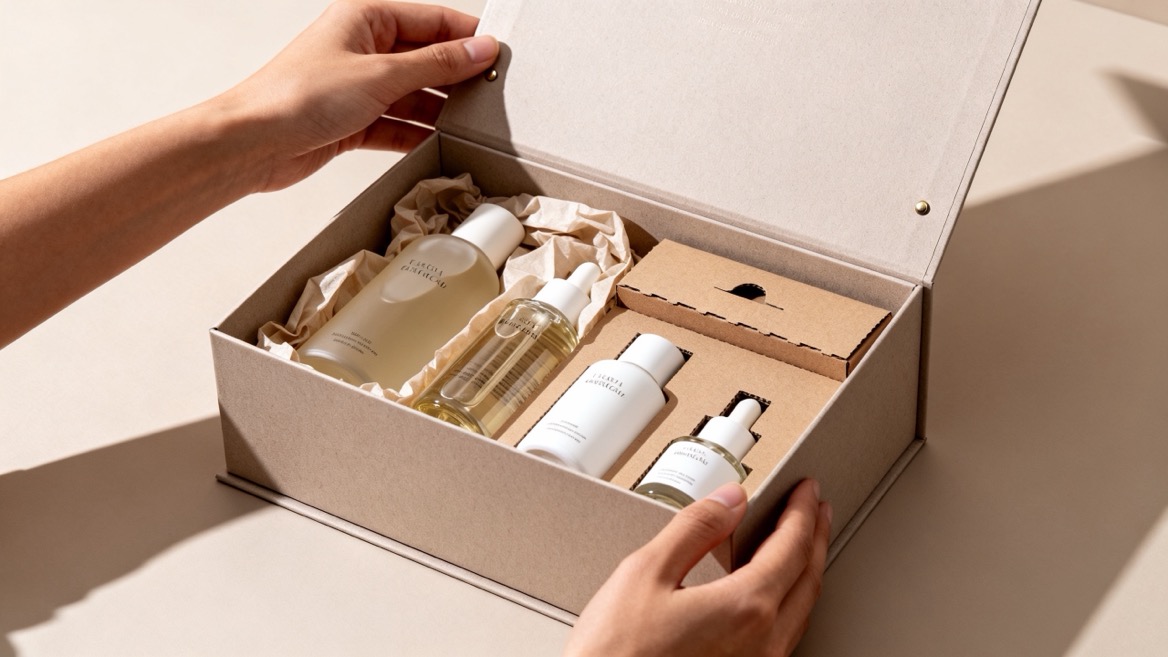
For example, a skincare brand selling a serum, facial cream, and applicator should not rely on a standard paper bag as the primary package. A rigid gift box with a custom EVA foam, paperboard, or molded-pulp insert can hold each item securely while making the set look more valuable.
Different box structures support different customer experiences.
Rigid gift boxes use thick greyboard or chipboard wrapped with printed paper, textured paper, specialty paper, or other decorative materials. They are commonly used for luxury cosmetics, jewelry, wine, electronics, high-end apparel, and premium gift sets.
Their key advantage is structural strength. A rigid box can protect delicate or high-value products while communicating a strong sense of quality.
Magnetic boxes use concealed magnets to create a clean opening and closing experience. They are popular for premium subscriptions, influencer kits, holiday gift sets, and luxury retail packaging.
The magnetic closure creates a clear moment of interaction. That detail can make the packaging feel more refined, especially when combined with ribbon pulls, foil stamping, soft-touch lamination, or custom inserts.
Drawer boxes, also called slide boxes, use an outer sleeve and an inner tray. They work well for jewelry, candles, cosmetics, accessories, and compact electronics.
The sliding motion gives the opening experience a sense of discovery. It also provides a practical surface area for branding on both the sleeve and inner tray.
Lid-and-base gift boxes are one of the most versatile formats. The lid separates from the base, creating a familiar and elegant presentation style.
This structure is suitable for apparel, confectionery, gift sets, stationery, and seasonal promotional products. It can be simple and economical or highly customized with specialty paper, embossing, inserts, and ribbons.
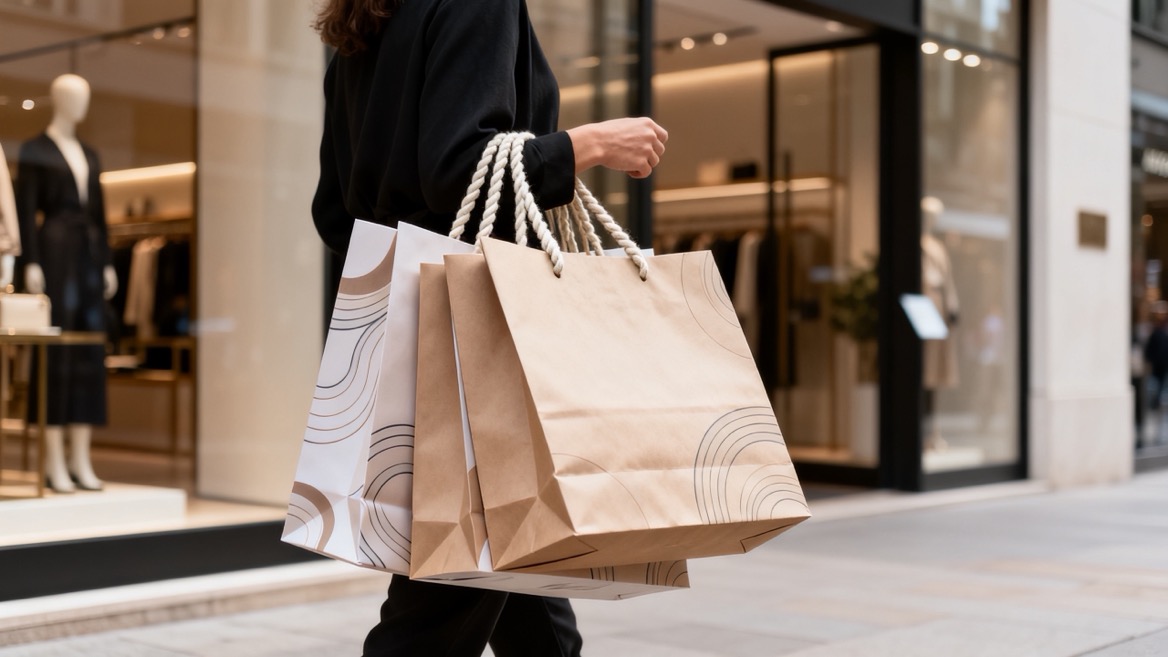
Paper bags are the visible final touchpoint in many retail transactions. A customer may carry the bag through a shopping mall, airport, exhibition hall, hotel lobby, or city street. In that moment, the bag becomes a mobile brand surface.
A custom paper shopping bag is not simply a container. It is a practical advertising format that customers voluntarily carry.
Paper bags are generally the better option when your priority is:
- Easy product carrying after an in-store purchase
- High-volume retail distribution
- Event, exhibition, or promotional giveaways
- Visible brand exposure outside the store
- A lower-cost branded packaging solution
- Flat-packed storage and shipping efficiency
- A reusable carrier for clothing, catalogs, samples, and gifts
For example, a fashion boutique may place folded apparel in tissue paper, then use a luxury paper shopping bag with cotton rope handles and foil-stamped branding. The bag helps customers carry the purchase safely while reinforcing the boutique's visual identity in public.
Kraft paper bags are known for their natural texture and practical strength. They are frequently used by food retailers, supermarkets, coffee brands, bookshops, boutiques, and sustainable product brands.
Brown kraft communicates a natural, simple, and resource-conscious appearance. White kraft provides a cleaner base for colorful branding and detailed printing.
Luxury paper bags commonly use coated art paper, specialty paper, textured paper, or laminated paper. They may include cotton rope handles, grosgrain ribbon handles, satin ribbon handles, reinforced top cards, and cardboard bottom inserts.
These bags are popular for cosmetics, jewelry, fashion, fragrances, premium gifts, and department-store retail. Their value lies in combining carrying performance with a polished visual identity.
Twisted-handle paper bags use paper handles made from twisted paper cord. They are cost-effective, practical, and suitable for takeaway products, gifts, groceries, retail items, and promotional materials.
They are a useful option when brands need a paper-based solution with dependable carrying capacity and a more natural look.
Flat-handle paper bags have flat paper handles attached inside or outside the bag. They are often used for food service, bakery packaging, retail products, and quick-service environments.
Their simple construction makes them practical for high-volume use and easy storage.
The most important difference between gift boxes and paper bags is not appearance. It is how each format manages weight, impact, product movement, and customer interaction.
Gift boxes offer better protection because they can use rigid board, corrugated board, reinforced corners, fitted inserts, and layered internal structures.
Paper bags can carry products safely, but they do not prevent internal movement as effectively. A bag may protect items from light handling and short-distance transport, yet it cannot replace a box when a product is fragile, heavy, or presentation-sensitive.
Choose a gift box when the product is:
- Fragile
- High-value
- Easily scratched
- Made of glass, ceramic, metal, or delicate components
- Sold as a multi-piece set
- Intended for long-distance shipping after packing
Choose a paper bag when the product is:
- Already packaged in its own protective box
- Lightweight to medium-weight
- Purchased in-store
- Designed for quick customer carrying
- Part of an event or promotional distribution program
Paper bags are engineered around handles, bottom reinforcement, paper thickness, and load distribution. The bag's performance depends on the relationship between the product weight and the bag's construction.
A bag that looks premium but has weak handle attachment can fail at the most important moment: when a customer carries it.
For heavier items, consider:
- Reinforced folded tops
- Bottom boards
- Stronger kraft paper
- Cotton rope handles
- Paper rope handles with reinforced handle patches
- Wider gussets for better product stability
Gift boxes can hold substantial weight, but they are not automatically designed for hand carrying. If customers need to transport the box directly, a matching paper bag is often the more practical solution.
Paper bags are usually supplied flat-packed. This reduces warehouse space and freight volume, especially for large retail programs.
Rigid gift boxes take up more space because their structure is fixed. Collapsible rigid boxes can reduce transport volume, but they require careful engineering to maintain a premium look after assembly.
For high-volume procurement, packaging buyers should compare more than unit price. They should evaluate:
Total Packaging Cost=Unit Cost+Freight+Storage+Assembly+Damage Risk
A lower-cost box may become less economical if it takes up excessive warehouse space. Likewise, a low-cost bag can become expensive if its construction causes product damage or handle failures.
Gift boxes and paper bags give brands different spaces for storytelling.
A gift box creates a more private brand experience. The customer sees it at home, during gifting, or while opening the product. This makes it ideal for detailed design, product education, premium finishes, and emotional presentation.
A paper bag creates a more public brand experience. It is visible in retail environments, at events, and in transit. This makes logo clarity, color recognition, and handle quality especially important.
Gift boxes are ideal for:
- Foil stamping
- Embossing and debossing
- Spot UV
- Soft-touch lamination
- Textured specialty paper
- Printed interior messages
- Custom inserts
- Ribbon closures
- Magnetic closures
- Product information cards
- Brand story panels
Paper bags are ideal for:
- Large logo placement
- High-contrast brand colors
- Minimalist typography
- Reinforced handles
- Interior printing
- Foil-stamped logos
- Matte or gloss lamination
- Ribbon, cotton, or paper rope handles
- Side gusset graphics
- QR codes for campaigns or product information
The most effective paper bag designs are often simple. A clear logo, balanced spacing, premium material, and strong handle construction usually create more impact than overcrowded artwork.
Before selecting packaging, ask what the package must do in the customer journey.
1. Protecting a fragile or premium product.
2. Creating a luxury unboxing moment.
3. Organizing multiple items with an insert.
4. Making the item ready for gifting.
5. Supporting a higher perceived product value.
6. Presenting a product in e-commerce, retail displays, or subscription programs.
1. Helping customers carry purchases easily.
2. Increasing brand visibility outside the store.
3. Supporting retail, exhibitions, events, or takeaway sales.
4. Reducing packaging storage volume.
5. Providing a reusable branded carrier.
6. Keeping packaging costs efficient at higher volumes.
For many brands, the strongest packaging solution combines the two.
A cosmetics company may use a magnetic gift box with a custom insert for the product set, then place the box in a branded luxury paper bag for retail carry-out. The box protects and presents the products. The bag makes the purchase easier to carry and increases public visibility.
This combination works especially well for:
- Luxury retail
- Jewelry and watches
- Cosmetics and beauty sets
- Fashion and accessories
- Corporate gifts
- Wine and gourmet products
- Holiday campaigns
- Influencer and media kits
- Premium promotional events
The choice of paper, board, coating, adhesive, handles, and finishing affects both the appearance and the end-of-life pathway of packaging.
Paper-based packaging can be widely recyclable, but actual recyclability depends on local collection systems and the materials used. The U.S. Environmental Protection Agency reported that paper and paperboard had a 68.2 percent recycling rate in 2018, although recycling outcomes differ by product type and region.
For practical packaging development, avoid assuming that every paper package has the same environmental profile.
- Is the paper from responsibly managed sources?
- Does the project require FSC-certified materials?
- Does the bag or box use a plastic film laminate?
- Are the handles, ribbons, magnets, and inserts easy to separate?
- Is recycled content appropriate for the required print quality and strength?
- Will the package be reused by customers?
- Does the design use more material than necessary?
- Is the package compatible with the recycling infrastructure in the target market?
The Forest Stewardship Council notes that responsible sourcing is important because paper and cardboard packaging can still contribute to deforestation and illegal logging when materials are not sourced responsibly. FSC also reports that 66 percent of surveyed consumers expect companies to ensure wood- and paper-based products do not contribute to deforestation.
For brands, the practical lesson is clear: sustainability claims should match the actual materials, construction, and available certification.
Before approving a gift box or paper bag order, review the project from a product, production, and logistics perspective.
- Confirm the finished product dimensions.
- Include tolerance for inserts, tissue paper, manuals, or accessories.
- Test product fit before mass production.
- Verify the required stacking strength.
- Check whether the product needs edge, corner, or impact protection.
- Provide vector logo files when possible.
- Define Pantone colors if color consistency is essential.
- Review artwork on the actual selected paper.
- Request a physical sample for premium projects.
- Confirm the location of barcodes, legal information, and QR codes.
- Test the gift box opening and closing process.
- Check magnet alignment, ribbon length, and insert fit.
- Test paper bag handles with realistic product weight.
- Confirm bottom-board strength.
- Review whether customers can comfortably carry the package.
- Ask about minimum order quantity.
- Confirm production lead time before campaign launch.
- Calculate carton dimensions and shipping volume.
- Discuss whether boxes can be shipped flat or assembled.
- Build quality inspection requirements into the purchase order.
The most expensive packaging problems often happen before production—not during it.
A bag may look elegant in a digital mockup but perform poorly if the paper weight, handle reinforcement, or bottom structure is not suitable for the product.
Always test the bag with the actual product weight.
More layers, thicker board, and additional accessories do not always create more value. If the structure is too complicated, it can increase cost, assembly time, freight volume, and material use without improving the customer experience.
The best gift box is not necessarily the most complex one. It is the one that protects the product and makes the brand feel intentional.
A beautiful gift box may frustrate a customer if there is no practical bag to carry it. A stylish paper bag may disappoint if the product inside feels under-protected.
Think from warehouse to retail shelf, from checkout counter to customer home, and from first touch to reuse or disposal.
Gift boxes and paper bags are not interchangeable. Gift boxes are designed to protect, present, and elevate products. Paper bags are designed to carry purchases, create visibility, and keep your brand moving beyond the store.
The best packaging choice depends on your product, target market, budget, order volume, transport requirements, and desired customer experience.
Maituohong Packaging provides customized paper shopping bags, rigid gift boxes, magnetic boxes, folding cartons, and coordinated paper packaging solutions. Our team can help you evaluate structure, material, printing, finish, inserts, handle options, and production feasibility before you commit to mass production.
Contact Maituohong Packaging today to discuss your custom gift box or paper bag project and request a tailored packaging solution for your brand.
A gift box is primarily used to protect and present a product, while a paper bag is primarily used to carry a product and promote the brand during transport. Gift boxes usually offer stronger structure and a more premium opening experience.
In most cases, yes. Paper bags generally use less material and can be shipped flat, which may reduce storage and freight costs. However, the final price depends on paper type, size, printing, handle style, finishing, order quantity, and reinforcement requirements.
Gift boxes are usually better for luxury products because they offer greater protection, premium materials, custom inserts, and stronger presentation value. A luxury paper bag can be added as a carry-out package for retail purchases.
Yes. Both formats can be customized with logos, brand colors, artwork, foil stamping, embossing, debossing, spot UV, lamination, and specialty papers. Gift boxes can also include custom inserts, ribbons, magnets, and interior printing.
They can be, but the bag must be engineered for the product weight. Strong kraft paper, reinforced handle patches, sturdy handle materials, bottom boards, and appropriate gusset sizing can improve performance. Testing with the actual packed product is strongly recommended.
Use both when you need premium product presentation and convenient customer carrying. This is common in luxury retail, cosmetics, apparel, jewelry, corporate gifting, and seasonal gift sets.
Consider paper sourcing, recycled content, certification, coatings, adhesives, inks, handles, reusable design, material reduction, and recycling availability in the target market. Avoid making broad environmental claims unless they accurately reflect the full packaging construction.
1. [U.S. Environmental Protection Agency — Paper and Paperboard: Material-Specific Data]
2. [Forest Stewardship Council — Paper and Packaging]
4. [American Forest & Paper Association — Packaging]
5. [Maituohong Packaging — Paper Shopping Bags]
6. [Maituohong Packaging — Custom Gift Packaging]
7. [Alibaba Verified Supplier Profile — Shenzhen Maituohong Packaging Co., Ltd.]


