
Views: 212 Author: Maituohong Packaging Publish Time: 2026-08-01 Origin: Site


Content Menu
● What Is a Magnetic Closure Box
● Why the Closure Mechanism Changes Everything
● The Unboxing Experience Factor
● Cost and Production Considerations
● Market Context and Sustainability Pressure
Choosing between a magnetic closure box and a standard rigid box comes down to one question: do you need a hardware-driven closing mechanism, or a simpler structural shell? Both are premium paperboard packaging formats, but they diverge in construction, cost, and the unboxing experience they deliver. After nearly two decades designing and producing custom hardcase packaging at Maituohong Packaging, I've watched brands agonize over this exact decision — and the answer almost always depends on product value, shelf presentation, and reuse expectations.

A rigid box is built around a thick paperboard core — usually 1,000 to 2,500 gsm greyboard — wrapped in printed paper, textured stock, or specialty finishes like linen or leatherette. The category includes lift-off lid boxes, two-piece telescope boxes, drawer-style boxes, and book-style boxes with hinged lids. Its defining trait is structural rigidity: the box holds its shape without folding flat, making it feel substantial the moment a customer picks it up.
Rigid boxes rely on friction, a snug lid-to-base fit, or a simple flap tuck to stay closed. There's no embedded hardware — the strength comes purely from the board thickness and wrap construction.
A magnetic closure box is a specialized subtype of rigid box that adds one critical feature: a hidden magnetic mechanism that snaps the lid shut. Typically, a flat neodymium magnet is set into the lid's front panel during the wrapping stage, paired with a steel plate or opposite-polarity magnet embedded in the base. When the lid comes within roughly 5–10 mm of the base, the magnets pull it into place automatically — no ribbon, tape, or clasp required.
This is why the format is often marketed as a "book-style" or "flip-top" magnetic box: the base stays fixed, and the lid opens like a book cover, held shut by concealed magnetic force.
The easiest way to understand the distinction is that every magnetic closure box is a rigid box, but not every rigid box has a magnetic closure. The table below breaks down where the two formats genuinely diverge.
| Feature | Rigid Box (standard) | Magnetic Closure Box |
|---|---|---|
| Core material | 1,000–2,500 gsm greyboard | 1,000–1,500 gsm greyboard, hinged construction |
| Closing mechanism | Friction fit, tuck flap, or lift-off lid | Embedded magnet + steel plate/opposite magnet |
| Assembly complexity | Lower — two separate pieces or simple wrap | Higher — precise magnet placement during wrapping |
| Unit cost | Moderate | 15–30% higher due to hardware and labor |
| Reuse appeal | Good, but lid can loosen over time | Strong — consistent "click" closure for repeat use |
| Typical use case | Retail shelf display, shipping cartons | Gift sets, cosmetics, electronics, jewelry |
| Minimum order quantity | Varies by supplier | As low as 50 units at some factories |
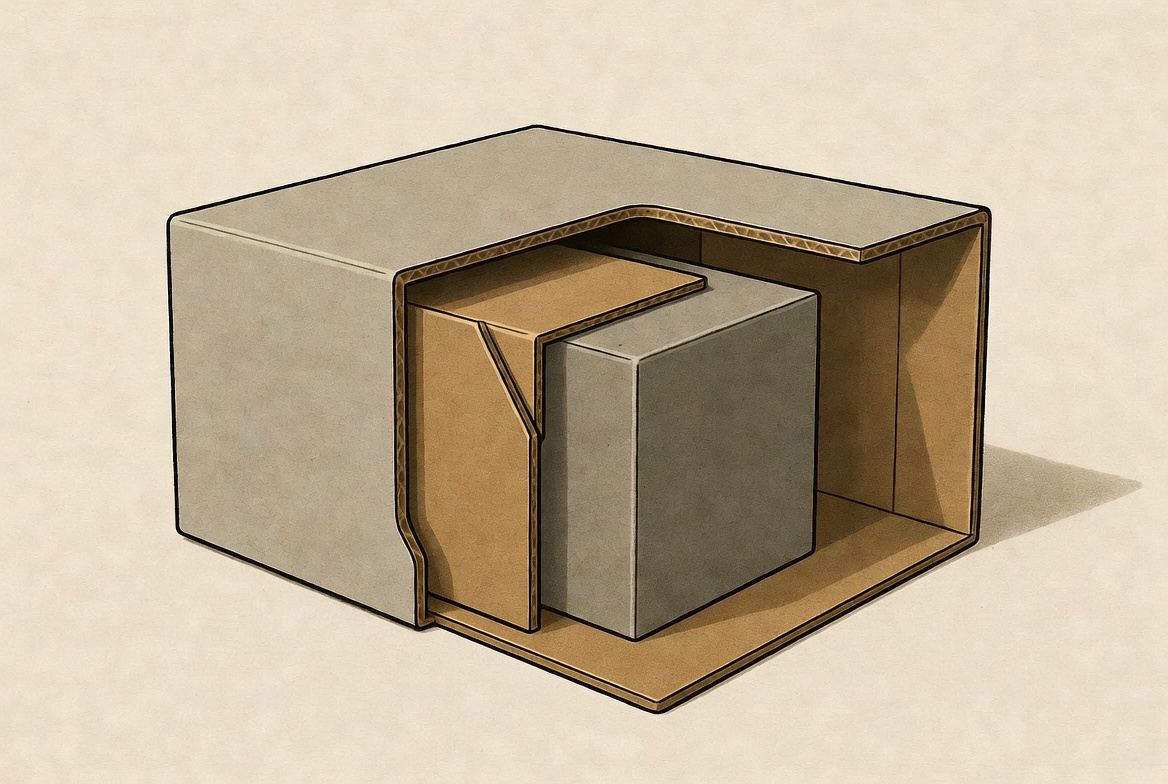
The magnet isn't a cosmetic add-on — it changes how the box is engineered from the first design draft. Because the lid and base must align within millimeters for the magnets to catch cleanly, tooling and prototyping take longer, and quality control checkpoints increase during production.
I've seen brands underestimate this in the sampling phase. A rigid box tolerates minor dimensional variance without affecting function. A magnetic box does not — a 2mm misalignment means the lid won't snap shut, or worse, closes off-center and looks unfinished on camera, which matters enormously for unboxing content.
Beyond structure, the two formats create measurably different customer experiences.
- Rigid boxes communicate quality through weight, print finish, and clean edges — ideal when the product itself is the star.
- Magnetic closure boxes add a tactile, almost ritualistic moment: the audible "click" as the lid seats itself, which brands increasingly use as a deliberate part of their storytelling.
- Reusability favors magnetic boxes slightly, since the closure doesn't loosen with repeated opening the way a friction-fit lid can.
- Perceived value rises faster with magnetic closures in gifting, cosmetics, and electronics categories, where the box itself becomes part of the product experience.

Magnetic closure boxes generally cost 15% to 30% more per unit than equivalent rigid boxes, driven by the added materials (magnets, steel counterplates) and the extra precision labor during wrapping. For high-volume runs, this premium narrows as tooling costs amortize, but for smaller orders, it remains a meaningful line item.
A practical framework I give clients evaluating this trade-off:
1. Calculate box cost as a percentage of retail price. If packaging exceeds 8–10% of product price, a magnetic upgrade needs strong justification.
2. Assess reuse likelihood. Products customers keep and reopen (jewelry, tech accessories) justify the magnetic premium; single-use shipping cartons usually don't.
3. Test on camera first. If your product relies on influencer or social unboxing content, the magnetic snap frequently outperforms a plain lift-off lid in engagement.
4. Confirm supplier tolerance control. Ask any manufacturer for their dimensional tolerance spec on magnetic alignment before committing to a production run.
Packaging decisions today can't be made in isolation from broader material trends. The global rigid packaging market was valued at roughly USD 475.8 billion in 2025 and is projected to climb toward USD 500 billion in 2026, growing at a compound annual rate near 6% through the next decade. That growth is happening alongside tightening regulation: the EU's Packaging and Packaging Waste Regulation becomes applicable in August 2026, tying compliance fees directly to recyclability performance.
This matters for both formats. Rigid boxes made from recyclable, FSC-certified board align more easily with these emerging rules than magnetic versions, since embedded metal hardware can complicate recycling streams unless the magnet is designed for easy separation. Buyers sourcing at scale should ask suppliers directly whether magnetic components are removable or recyclable-stream compatible — a question that's becoming standard in RFQs as of 2026.
Having produced both formats for clients across cosmetics, electronics, and specialty retail, my rule of thumb is straightforward: choose rigid boxes when structural strength and cost efficiency matter most; choose magnetic closure boxes when the unboxing moment itself is part of your brand's value proposition. Neither format is universally "better" — they solve different problems, and the right choice depends on your product's price point, target customer, and how much weight your packaging carries in the purchase decision.
If you're weighing custom rigid packaging or magnetic closure boxes for an upcoming product launch, request a sample kit and a tolerance specification sheet from your manufacturer before finalizing tooling — this single step prevents the majority of production delays we see on magnetic box orders.
Is a magnetic closure box always more expensive than a standard rigid box?
Generally yes, magnetic versions typically cost 15% to 30% more per unit due to embedded hardware and added assembly precision.
Can magnetic closure boxes be recycled?
It depends on whether the magnet and steel plate are designed for easy separation from the paperboard; brands should confirm this with their manufacturer given tightening packaging regulations.
What is the minimum order quantity for custom magnetic closure boxes?
Some manufacturers offer MOQs as low as 50 units, making the format accessible for smaller or limited-edition product runs.
Do rigid boxes without magnets stay closed as securely?
Standard rigid boxes rely on friction fit or tuck flaps, which are secure for shipping but can loosen slightly with repeated opening compared to a magnetic snap.
Which format is better for gifting and luxury products?
Magnetic closure boxes are generally preferred for gifting and premium categories because the tactile "click" closure enhances perceived value during the unboxing moment.
How long has rigid and magnetic packaging been a mainstream industry standard?
Rigid box construction has been a packaging staple for decades, while magnetic closure variants have grown rapidly in adoption over the past several years as brands prioritize unboxing experience.
- Rigid Boxes vs Magnetic Closure Boxes: Which Fits Your Product — [Link]
- Magnetic Closure Rigid Boxes: The Standard for Packaging, SOK Pack — [Link]
- Rigid Boxes with Magnetic Closures: Premium Packaging Guide — [Link]
- Custom Magnetic Closure Rigid Boxes, QinPrinting — [Link]
- Custom Magnetic Rigid Boxes, BookPrintingChina — [Link]
- An Ultimate Guide to Magnetic Closure Boxes — [Link]
- Custom Magnetic Flap Closure Boxes, RCB Packaging — [Link]
- Rigid Packaging Market Size, Growth Report (2034), Polaris/Market Research — [Link]
- Sustainable Packaging Statistics 2026: Market Size and Trends — [Link]


