
Views: 212 Author: Maituohong Packaging Publish Time: 2026-08-29 Origin: Site


Content Menu
● Rigid Boxes vs. Foldable Boxes at a Glance
● Difference in Structure and Construction
● Product Protection and Durability
● Shipping, Storage, and Logistics Costs
● Unboxing Experience and Brand Perception
● Design Flexibility and Customization Options
>> Common Rigid Box Customization Options
>> Common Foldable Box Customization Options
● Cost Comparison: Which Box Is More Affordable?
● When Should You Choose Rigid Boxes?
● When Should You Choose Foldable Boxes?
● Sustainability Considerations for Paper Packaging
● A Practical Decision Checklist
● Work With an Experienced Paper Packaging Manufacturer
>> 1. Are rigid boxes better than foldable boxes?
>> 2. Are foldable boxes strong enough for premium products?
>> 3. Do foldable gift boxes look cheap?
>> 4. Which is more expensive: a rigid box or a foldable box?
>> 5. Can rigid boxes be recycled?
>> 6. Are magnetic gift boxes available in both styles?
>> 7. What products are best for rigid packaging?
Choosing between rigid boxes and foldable boxes is not simply a matter of selecting a packaging style. It is a decision that affects product protection, freight efficiency, shelf presentation, unboxing experience, perceived value, production lead time, and long-term brand positioning.
After more than 18 years of designing and producing custom paper packaging at Maituohong Packaging, we have seen one principle hold true across cosmetics, apparel, jewelry, electronics, wine, premium food, and corporate gifting: the best box is the one that matches the product's value, logistics model, and customer experience.
Rigid boxes are designed to create a premium, substantial, gift-ready impression. Foldable boxes, also called folding gift boxes or collapsible boxes, are designed to reduce shipping volume while still delivering a refined presentation after assembly. Although both are widely used in premium paper packaging, their structures, costs, strengths, and commercial uses are very different.
This guide explains the key differences between rigid boxes and foldable boxes, with practical advice to help brands, retailers, importers, and packaging buyers choose the right solution.

A rigid box, often called a set-up box, is made from thick paperboard that keeps its shape without folding flat. Unlike a standard carton, a rigid box arrives fully formed and ready to use.
The core structure is typically made from greyboard, chipboard, or other dense paperboard. It is then wrapped with printed art paper, specialty paper, textured paper, fabric, PU material, or other decorative surfaces. This construction gives the box a solid, luxurious feel.
Rigid boxes are commonly used for:
- Luxury cosmetics and skincare sets
- Jewelry and watches
- Perfume and fragrance packaging
- Premium electronics
- High-end apparel and accessories
- Wine, spirits, tea, and gourmet food
- Corporate gifts and promotional kits
- Holiday gift collections
- Subscription boxes with a premium positioning
A rigid box can be designed in many styles, including lift-off lid boxes, magnetic closure boxes, drawer boxes, book-style boxes, shoulder-and-neck boxes, round boxes, hinged-lid boxes, and custom-shaped presentation boxes.
The greatest advantage of a rigid box is simple: it creates an immediate sense of quality before the customer even sees the product.
A foldable box is a paper packaging box designed to ship and store flat before use. It is sometimes called a collapsible gift box, foldable rigid box, flat-pack gift box, or folding gift box.
Unlike a traditional rigid box, a foldable box has scored fold lines and pre-applied adhesive components. The user opens or folds the structure into its final shape when needed. Many premium foldable gift boxes use magnetic closures, self-locking tabs, double-sided adhesive tape, or hook-and-loop systems to make assembly easier.
Foldable boxes are popular for brands that want a premium gift-box appearance but need to reduce warehouse space and international shipping costs.
They are often used for:
- Apparel and fashion accessories
- E-commerce gift sets
- Beauty and skincare products
- Promotional gift boxes
- Seasonal and holiday packaging
- Corporate merchandise
- Bakery, confectionery, and specialty food gifts
- Subscription box programs
- Retail packaging with limited storage space
A well-made foldable box can look highly refined after assembly. However, it is important to understand that it does not perform exactly like a permanently constructed rigid box.
The following comparison table highlights the most important differences between rigid boxes and foldable boxes.
| Feature | Rigid Boxes | Foldable Boxes |
|---|---|---|
| Structure | Fully assembled, non-collapsible | Ships flat and is assembled when needed |
| Material | Thick paperboard wrapped with decorative paper | Paperboard structure with fold lines and assembly points |
| Storage space | Requires more warehouse space | Requires much less storage space |
| Shipping volume | Higher due to pre-assembled form | Lower because boxes are packed flat |
| Product protection | Excellent structural protection | Good protection, depending on design and assembly |
| Premium appearance | Very high | High after assembly |
| Assembly | No customer assembly required | Requires folding or opening before use |
| Unit cost | Usually higher | Often lower for shipping and storage |
| Best for | Luxury, high-value, fragile, gift-ready products | E-commerce, promotional gifts, seasonal campaigns, space-sensitive brands |
| Customization | Extensive | Extensive, but structure must support folding |
| Reusability | Often high | Moderate to high, depending on material and closure |
The most important distinction is this: rigid boxes prioritize structure and luxury presentation, while foldable boxes prioritize logistics efficiency and flexible storage.
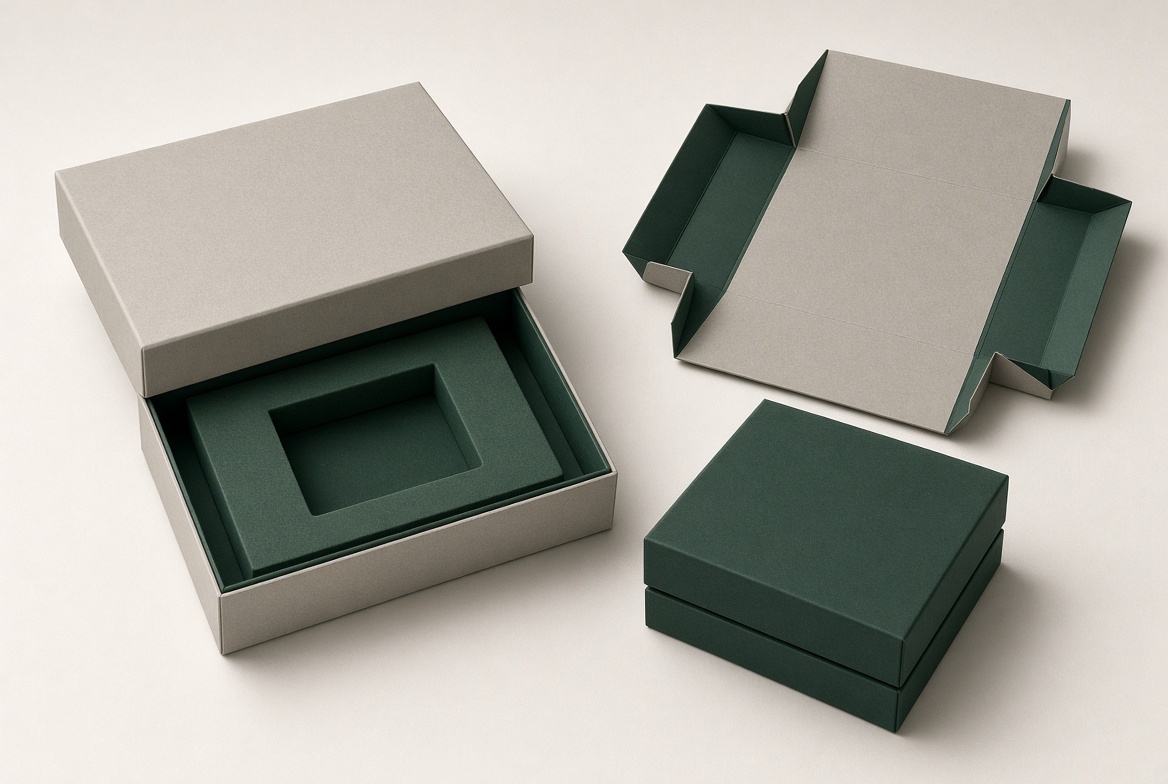
Rigid boxes are manufactured from thick board that is cut, wrapped, and glued into a permanent shape. The board thickness is much greater than that of standard folding cartons, giving the packaging a firm and stable feel.
A premium rigid box often includes several layers:
1. A strong paperboard base structure
2. Printed or specialty wrapping paper
3. Surface finishing, such as lamination or varnish
4. Decorative elements, such as foil stamping or embossing
5. Inner trays, inserts, ribbons, or protective components
Because the box is already assembled, it maintains its shape throughout warehousing, transport, retail display, and customer use.
Foldable boxes are engineered with carefully positioned scoring lines, folding panels, and adhesive areas. They are manufactured to remain flat during transport and storage, then expanded into a three-dimensional box.
A high-quality foldable gift box may include:
- Pre-glued corner panels
- Magnetic closure flaps
- Double-sided adhesive strips
- Folded side walls
- Reinforced bottom panels
- Printed paper wrapping
- Internal cardboard inserts
- Ribbon handles or decorative closures
The engineering process is critical. If the scoring, folding direction, adhesive placement, or material thickness is not properly controlled, the box may not assemble smoothly or hold its final shape consistently.
From a manufacturing perspective, foldable box production requires close attention to fold endurance, adhesive performance, corner alignment, and assembly speed.
For products that need maximum protection, rigid boxes usually have the advantage.
The thick board structure of a rigid box helps resist crushing, bending, and deformation. This makes rigid packaging particularly suitable for fragile, high-value, or presentation-sensitive products.
Examples include:
- Glass perfume bottles
- Luxury skincare jars
- Watches and jewelry
- Consumer electronics
- Premium tea tins
- Wine bottles
- Delicate gift sets
- Ceramic or glass products
A rigid box can also support more complex internal packaging. Foam inserts, EVA trays, molded pulp, paperboard dividers, satin-lined trays, velvet inserts, and die-cut paper supports can all be integrated into the design.
Foldable boxes can still provide strong protection, especially when reinforced with internal inserts or corrugated shipping cartons. However, their foldable structure means they may be less resistant to compression than a fully assembled rigid box.
Expert recommendation: If the product is fragile, expensive, heavy, or likely to be displayed in-store, a rigid box is often the safer choice.
This is where foldable boxes offer a major commercial advantage.
Rigid boxes are shipped in their final assembled form. Even when empty, they occupy significant volume. For large orders, this can increase freight cost, warehouse requirements, and inventory management pressure.
Foldable boxes solve this problem by shipping flat.
A flat-packed foldable box can significantly reduce the cubic volume needed for transport and storage. For importers, distributors, and e-commerce brands with limited warehouse space, this difference can be commercially meaningful.
When comparing packaging cost, buyers should not focus only on the unit price. They should evaluate the total landed cost, which includes:
- Box unit price
- Freight charges
- Customs and handling costs
- Warehouse storage
- Assembly labor
- Damage rate
- Inventory turnover
- Packaging fulfillment speed
A rigid box may cost more to ship because it occupies more space. A foldable box may require more assembly time, but it can lower logistics expenses and make inventory storage easier.
For brands shipping products globally, a foldable gift box often offers a better balance between premium appearance and operational efficiency.
Packaging creates a psychological moment. Before customers touch the product, they touch the box.
Rigid boxes are especially effective when a brand wants to create a ceremonial or luxury unboxing experience. The weight, firmness, smooth opening motion, and internal presentation can make the product feel more valuable.
A magnetic rigid box, for example, can create a memorable opening experience through:
- A controlled lid movement
- A clean magnetic closing sound
- Printed interior messages
- Tissue paper or ribbon reveals
- Custom inserts that hold each item in place
- High-end textures such as linen paper, soft-touch lamination, or embossing
Foldable boxes can also create a strong customer experience. Once assembled, many premium magnetic foldable boxes look similar to rigid gift boxes from the outside. They are particularly useful for seasonal gifts, online retail, and promotional campaigns.
However, rigid boxes usually provide a stronger impression of permanence and luxury because they are structurally solid from the first touch.
According to packaging industry analysis, consumers often evaluate packaging based on quality, convenience, and product protection, not appearance alone. A premium package should therefore balance visual appeal with practical usability and reliable performance.
Both rigid boxes and foldable boxes can be highly customized. The difference is that rigid boxes allow more structural freedom, while foldable boxes require the design to remain compatible with flat packing and repeated folding.
- Magnetic closures
- Ribbon closures
- Lift-off lids
- Drawer structures
- Shoulder-and-neck designs
- Hinged book-style boxes
- Round or oval shapes
- Custom inserts
- Foil stamping
- Embossing and debossing
- Spot UV
- Soft-touch lamination
- Textured paper
- Fabric wrapping
- Metal logos and decorative elements
- Magnetic front closures
- Flat-pack book-style structures
- Printed exterior and interior panels
- Ribbon pulls
- Adhesive corner assembly
- Folded bottom panels
- Custom paper inserts
- Matte, gloss, or soft-touch finishes
- Foil logos
- Embossed branding
- Window cut-outs
- Seasonal graphics
For both formats, the choice of finishing should support the brand's product category. A jewelry brand may benefit from velvet inserts and foil logos. A natural skincare company may prefer uncoated paper, subtle embossing, and a minimal printed design. A fashion brand may choose bold color blocking, ribbon handles, and a magnetic closure.
Rigid boxes usually have a higher unit cost because they require more board material, more manual or semi-manual assembly, additional wrapping processes, and more storage space during shipping.
Foldable boxes often have a lower total logistics cost because they are packed flat. However, the final cost depends on several variables:
- Box dimensions
- Paperboard thickness
- Printing colors
- Finishing requirements
- Closure style
- Internal insert complexity
- Order quantity
- Shipping destination
- Assembly requirements
- Material availability
It is not always correct to assume that foldable boxes are cheaper. A highly detailed foldable magnetic box with specialty paper, custom inserts, foil stamping, and complicated assembly may cost more than a simple rigid lid-and-base box.
The right question is not, "Which box is cheapest?" Instead, ask:
> "Which packaging format delivers the best total value for our product, supply chain, and brand experience?"
Choose rigid boxes when your product needs a strong premium presentation, superior protection, or a reusable packaging format.
Rigid boxes are ideal when:
- Your product has a high retail value
- You sell luxury or gift-oriented products
- Product protection is a top priority
- Your packaging is part of the customer experience
- You need a strong retail display presence
- Customers may keep the box for storage or reuse
- You are creating limited-edition, launch, or holiday gift sets
- Your brand needs a more upscale perceived value
For example, a premium skincare gift set containing glass bottles, a facial tool, and several small jars may benefit from a magnetic rigid box with a die-cut insert. The rigid structure protects the items, keeps them organized, and creates a polished reveal when the customer opens the box.
Choose foldable boxes when you need a premium packaging appearance but want to reduce freight volume and storage costs.
Foldable boxes are ideal when:
- You operate an e-commerce business
- You need to store large quantities of empty packaging
- Your shipping routes are long or international
- You offer seasonal or promotional gift sets
- Your product is relatively lightweight
- You need flat-packed packaging for fulfillment operations
- You want a premium magnetic box without the shipping volume of a rigid box
- You need flexible inventory management
For example, an apparel brand selling scarves, shirts, belts, or fashion accessories may choose a foldable magnetic gift box. The packaging can be stored flat in a fulfillment center and assembled quickly when an order is received.
Paper-based packaging can support responsible packaging goals, but the actual result depends on material selection, printing, coatings, adhesives, inserts, and local recycling systems.
A box should not be described as environmentally preferable simply because it is made from paperboard. Heavy plastic lamination, difficult-to-remove magnets, metallic films, foam inserts, and mixed materials can affect recycling pathways.
To make more responsible packaging choices, consider:
- Using paper from responsibly managed sources
- Selecting recyclable or recyclable-friendly paperboard grades
- Reducing unnecessary layers and oversized structures
- Replacing plastic inserts where suitable
- Using paperboard dividers or molded pulp inserts
- Avoiding excessive coatings and difficult-to-separate components
- Designing the packaging for reuse where appropriate
- Providing clear disposal guidance for customers
Recent industry discussion has emphasized that paper packaging must be evaluated as a complete system. Coatings, adhesives, and decorative materials can influence how effectively fibers are recovered during recycling.
For premium brands, a practical approach is to combine visual quality with material restraint. A well-designed uncoated paper wrap, embossed logo, paper insert, and reusable box can often feel more authentic than a package with excessive plastic decoration.
Before selecting rigid boxes or foldable boxes, review the following questions with your packaging supplier.
1. What is the product's weight, fragility, and retail value?
2. Will the box be used for retail display, e-commerce shipping, gifting, or all three?
3. How much warehouse space is available?
4. Will empty boxes be shipped internationally?
5. Does the customer need to assemble the packaging?
6. Is a luxury unboxing experience essential to the brand?
7. Will the packaging include custom inserts or multiple products?
8. Is the box likely to be reused after purchase?
9. What finishing details are essential, and which are optional?
10. What is the full landed cost, including freight and storage?
Answering these questions early can prevent costly redesigns and help ensure that packaging performs properly from production to final delivery.
At Maituohong Packaging, we understand that custom packaging must do more than look attractive. It must protect the product, support efficient logistics, communicate brand value, and create a positive opening experience.
With more than 18 years of experience in rigid box and foldable gift box production, our team can help evaluate your product requirements and recommend a packaging structure that fits your target market, budget, and distribution model.
Whether you need a luxury magnetic rigid box, a collapsible foldable gift box, a custom drawer box, or a fully tailored paper packaging solution, we can support your project from structural design and material selection to sampling, production, and export packaging.
Contact Maituohong Packaging today to discuss your custom rigid box or foldable box project and request a packaging recommendation tailored to your product.
Rigid boxes are not always better; they are better for luxury presentation, product protection, and high-value gift packaging. Foldable boxes are often better for brands that need to reduce shipping volume and warehouse storage requirements.
Yes. High-quality foldable boxes can be suitable for many premium products, especially apparel, cosmetics, gifts, and accessories. For heavy or fragile products, additional inserts or a rigid box structure may be more suitable.
No. A well-designed foldable gift box with magnetic closure, specialty paper, foil stamping, and custom printing can look highly premium. The key difference is that it ships flat and requires assembly.
Rigid boxes usually have a higher unit and shipping cost because they are fully assembled and take up more volume. Foldable boxes may reduce freight and storage costs, but the final price depends on the size, materials, printing, finishing, and order quantity.
Many rigid boxes can be recycled, especially when made primarily from paperboard and paper wrapping. However, magnets, foam, plastic lamination, metallic films, and mixed materials may need to be removed or handled separately depending on local recycling rules.
Yes. Magnetic closure designs are available in both rigid boxes and foldable boxes. Rigid magnetic boxes provide a more permanent, substantial structure, while foldable magnetic boxes offer flat-packed shipping efficiency.
Rigid packaging is commonly used for jewelry, watches, perfume, cosmetics, electronics, premium food, wine, tea, corporate gifts, and luxury retail products.
1. [McKinsey & Company — Sustainable Packaging 2025: Top Barriers for Packaging Purchasers]
3. [BASF — Paper Packaging Repulpability and Recyclability]
4. [Two Sides — 2025 Trend Tracker Reveals Consumer Preferences for Packaging]
5. [Easy Box Packaging — Rigid Box or Folding Carton? How to Pick the Right One]
6. [CN Horda — Rigid Box vs Folding Carton: Key Differences]


