
Views: 269 Author: Maituohong Packaging Publish Time: 2026-09-11 Origin: Site


Content Menu
● Why Quality Assurance Matters in Paper Packaging
● Quality Assurance vs. Quality Control
● What "Good Quality" Means for Mailer and Shipping Boxes
>> Material Strength and Board Consistency
>> Structural Accuracy and Folding Performance
>> Print, Color, and Surface Finish
● A Practical Quality Assurance Process for Custom Packaging
>> Step 1: Convert the Brief into Measurable Specifications
>> Step 2: Review the Packaging Structure Before Mass Production
>> Step 3: Inspect Materials Before Production
>> Step 4: Monitor Critical Production Points
>> Step 5: Conduct Final Inspection and Shipping Verification
● Common Packaging Defects and How to Prevent Them
>> Cracked or Broken Fold Lines
>> Misaligned Printing or Color Variation
>> Scuffing and Surface Damage
● How Buyers Can Choose a Reliable Packaging Manufacturer
● Packaging Quality and Sustainable Decisions
● Our Perspective After 18+ Years in Paper Packaging
● Request a Custom Packaging Review
>> What is quality assurance in packaging?
>> Why is quality assurance important for custom mailer boxes?
>> What should I test before ordering shipping boxes in bulk?
>> How can I reduce product damage during shipping?
>> Is thicker cardboard always better for shipping boxes?
>> How do I keep printed packaging consistent across repeat orders?
>> Can sustainable paper packaging still provide strong protection?
For brands that ship products directly to customers, quality assurance in custom mailer boxes and shipping boxes is not an optional factory step—it is a product-protection and brand-performance system. A box may look excellent when it leaves the packing line, but its real value is proven only after it has been stacked, transported, handled, exposed to changing conditions, delivered, and opened.
At Maituohong Packaging, we have spent more than 18 years designing and producing premium rigid gift boxes, mailer boxes, shipping boxes, and custom paper packaging. That experience has taught us a simple lesson: a packaging specification is only as strong as the controls behind it. Board grade, structural design, printing accuracy, adhesive performance, die-cut precision, packing method, and batch consistency all influence whether a customer receives an experience worth repeating.
A dependable packaging partner does more than manufacture a box. They help reduce avoidable damage, protect presentation quality, make replenishment more predictable, and create packaging that performs consistently at scale.

Quality assurance is the planned system used to prevent packaging defects before they reach the customer. It is different from final inspection alone.
Final inspection can identify visible issues after production. Quality assurance begins much earlier. It influences material selection, artwork approval, tooling, production setup, in-process checks, testing, recordkeeping, and corrective action.
For a custom mailer box or shipping box, a small inconsistency can become a large commercial problem. A slightly weak score line may cause cracking during folding. Incorrect board thickness can reduce stacking performance. A color shift can make a premium brand look inconsistent. Weak adhesive bonding can cause a box to open during transit.
These issues are not merely cosmetic. They can affect:
- Product protection during warehousing, shipping, and last-mile delivery
- Unboxing experience for retail, subscription, and direct-to-consumer buyers
- Brand consistency across repeat orders and international markets
- Fulfillment efficiency when boxes do not fold, seal, or pack as expected
- Return and replacement costs caused by damage or presentation failures
- Buyer confidence in a supplier's ability to support long-term growth
Packaging quality is especially important in e-commerce. Customers often judge a brand before they use the product itself. A damaged, crushed, poorly printed, or poorly fitted shipping box can immediately reduce trust.
Industry reporting also highlights the business impact of damage and returns in online retail. High return rates and product damage make protective packaging design an operational priority, not just a visual one.
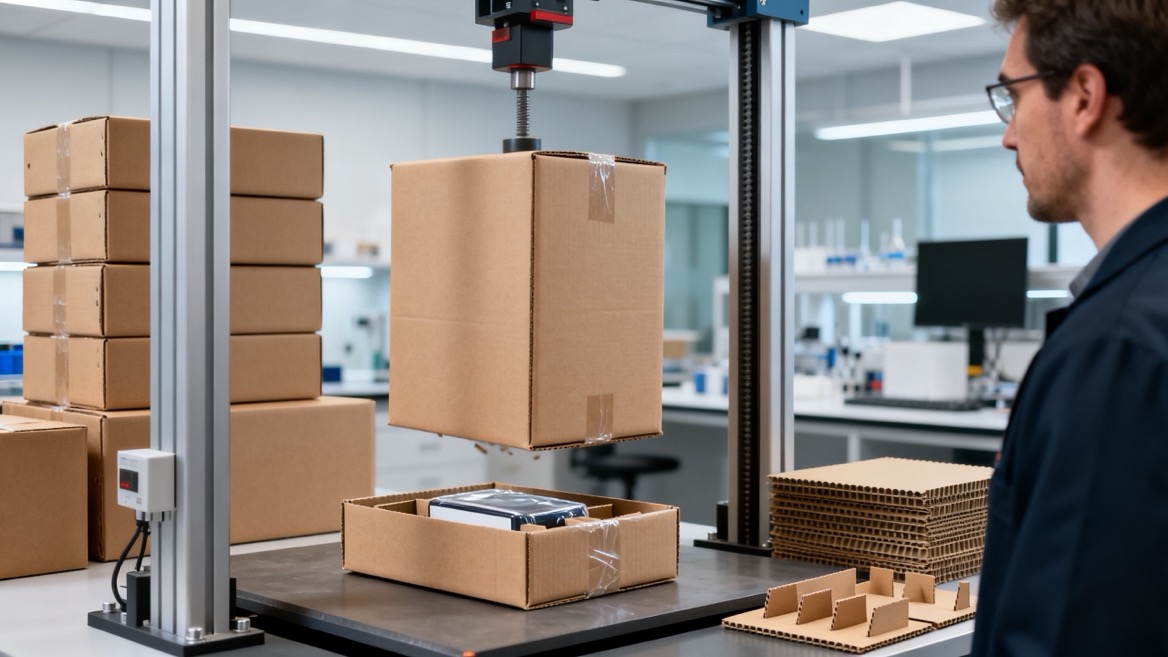
These terms are often used interchangeably, but they serve different purposes.
| Area | Quality Assurance | Quality Control |
|---|---|---|
| Main purpose | Prevent defects through planned systems | Identify defects through inspection |
| Timing | Before and during production | During and after production |
| Focus | Process consistency, documentation, prevention | Product conformity, measurements, sorting |
| Example | Approving board specifications and production procedures | Checking dimensions, print color, and glue bonding |
| Business value | Reduces recurring errors and uncertainty | Stops unacceptable products from being shipped |
The strongest packaging operations use both.
Quality assurance creates the conditions for repeatable results. Quality control verifies that the actual production output meets the agreed specification.
For example, if a customer requires a black printed mailer box with a matte finish, accurate logo placement, self-locking tabs, and a secure adhesive strip, inspection at the end is not enough. The manufacturer should define the approved artwork, board requirements, color expectations, die-line tolerances, folding method, adhesive application, and packing configuration before full production begins.
A high-quality custom box is not simply a box made from thicker paperboard. The correct material and construction depend on the product, fulfillment model, shipping route, storage environment, and desired customer experience.
For a lightweight apparel order, efficient protection and clean presentation may be the priority. For cosmetics, electronics, candles, glassware, or premium gift sets, a more protective structure, internal insert, reinforced edge, or rigid outer box may be necessary.
A practical quality standard for custom paper packaging should consider the following areas.
Paperboard and corrugated materials must be selected according to the product's actual shipping demands. The board must provide suitable stiffness, compression resistance, puncture resistance, and folding performance.
A well-designed box can still fail if the material varies between batches. Inconsistent board caliper, moisture content, flute quality, or paper composition may lead to weak panels, unstable stacking, poor printing, or uneven folding.
For shipping boxes, buyers should confirm:
- Required board construction and flute type
- Expected product weight and packed weight
- Shipping distance and carrier handling conditions
- Whether boxes will be palletized or stacked
- Exposure to humidity, temperature variation, or extended storage
- Need for inserts, dividers, pads, or protective void fill
The right board is not always the heaviest board. It is the board that provides reliable performance without unnecessary material use, freight cost, or packing inefficiency.
Mailer boxes depend on precise die-cutting and scoring. Tabs must engage properly. Locking features must hold. Fold lines must be clean and positioned correctly. Corners must form squarely.
If the structure is inaccurate, warehouse teams may need extra time to assemble each box. In severe cases, the box may not close securely, may lean after folding, or may fail during shipment.
Before production, a packaging manufacturer should evaluate:
- Internal dimensions versus actual product dimensions
- Allowance for protective materials and inserts
- Ease of assembly for fulfillment staff
- Opening and closing experience for the end customer
- Tamper-evident or resealable features, if required
- Compatibility with automated packing equipment, if applicable
A box that saves five seconds during assembly can create meaningful labor savings when thousands of units are packed every week.
For branded paper packaging, visual consistency is part of product quality. Buyers may notice color variation quickly, especially on logos, large solid backgrounds, premium black designs, metallic details, and minimalistic artwork.
Color management should begin with approved artwork and physical samples, not assumptions based only on a screen display. Screen colors vary, while paper type, coating, ink coverage, printing method, and finishing process all affect the final result.
Key appearance checks may include:
- Correct logo placement and orientation
- Clear text and barcodes
- Consistent brand colors
- Sharp registration between colors
- No scuffing, scratches, streaks, or unwanted marks
- Uniform lamination, varnish, embossing, foil stamping, or spot effects
- Clean die-cut edges and properly aligned windows or labels
For premium rigid gift boxes, surface quality often carries even greater weight. A minor scratch, dent, glue stain, corner gap, or misaligned lid can make an otherwise high-value product look lower-grade.
Reliable packaging quality requires a controlled workflow from first inquiry through shipment. The most effective approach is proactive: identify risk early, confirm expectations clearly, and inspect critical points before defects multiply.
"Strong," "premium," "eco-friendly," and "high quality" are useful starting points, but they are not complete production specifications.
A more useful brief defines measurable requirements, such as:
- Box style and internal dimensions
- Product weight and dimensions
- Board material, thickness, and construction
- Artwork files, color targets, and print coverage
- Surface finishes and special effects
- Closure method and adhesive requirements
- Insert, divider, or cushioning requirements
- Acceptable appearance standards
- Packaging quantity per carton and pallet requirements
- Destination market and shipping method
This reduces ambiguity before design and tooling begin.
A physical sample is one of the most valuable decision points in a packaging project. It allows the buyer to evaluate fit, opening experience, assembly speed, appearance, and protection in real conditions.
At this stage, the team should place the actual product inside the box whenever possible. Product photos and dimensions help, but they do not always reveal issues caused by unusual shapes, fragile edges, accessory placement, or packaging tolerances.
Questions to ask during sample review include:
1. Does the product fit securely without excessive empty space?
2. Is the box easy for staff to assemble and seal?
3. Does the packaging protect vulnerable areas of the product?
4. Are the logo, colors, and surface finishes aligned with the brand?
5. Can a customer open the package without damaging the product or struggling with the closure?
6. Does the box remain stable when stacked with other packed units?
Material checks should happen before a full production run starts. This helps prevent an entire batch from being made with unsuitable board, damaged sheets, inconsistent color, or an incorrect finish.
Typical checks include board condition, material identity, print substrate, dimensions, visual cleanliness, and compatibility with the approved sample.
This is particularly important for repeat orders. Even when the artwork remains unchanged, paper supply, finishing conditions, and seasonal humidity can affect the finished box. A repeat order should be treated as a controlled production project—not assumed to be identical without verification.
Quality checks during production are more efficient than waiting until the end. When an issue is found early, the production team can adjust the machine, tooling, adhesive application, print registration, or process settings before waste increases.
For mailer boxes and shipping boxes, important in-process checks often include:
- Die-cut alignment and score quality
- Fold accuracy and panel dimensions
- Print registration and color consistency
- Glue location, amount, and bond strength
- Surface-finish condition
- Correct assembly of multi-piece structures
- Function of locking tabs, peel-and-seal strips, or tear strips
- Packing count and outer-carton protection
In-process inspection protects both quality and delivery schedules. It reduces the chance that a defect is discovered only after a full production batch has been completed.
Final inspection confirms that finished packaging matches the approved requirements. It should cover visual quality, functional performance, quantity, packing security, and labeling.
A useful final inspection checklist includes:
| Inspection Area | What to Verify |
|---|---|
| Dimensions | Box size, insert fit, and tolerance against approved specifications |
| Structure | Folds, tabs, locking points, lid fit, seams, and corners |
| Printing | Artwork accuracy, color consistency, legibility, and registration |
| Surface quality | Scratches, stains, dents, scuffs, glue marks, and finish uniformity |
| Function | Assembly, closure, opening, and adhesive or tear-strip performance |
| Quantity | Units per bundle, carton, pallet, and total order quantity |
| Outer packing | Carton strength, moisture protection, labels, and pallet stability |
The final step is shipping verification. A well-made box can still arrive in poor condition if it is packed loosely, compressed in an unsuitable outer carton, exposed to moisture, or loaded without adequate pallet protection.
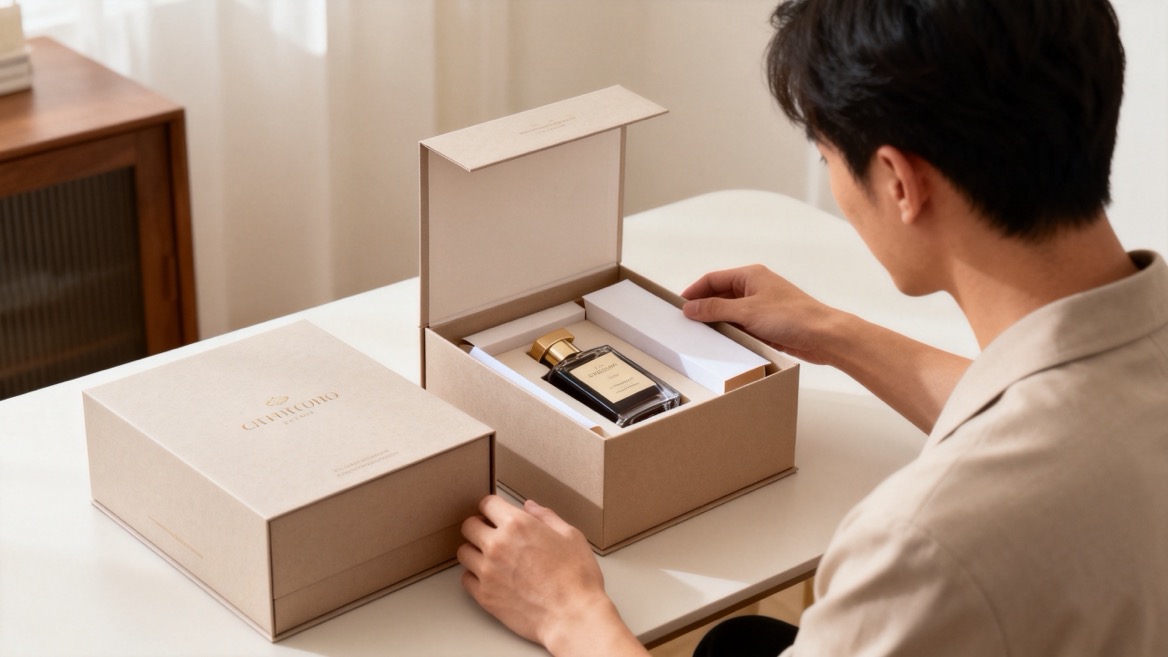
Understanding recurring failure points helps buyers ask better questions and helps manufacturers build more reliable processes.
Cracking can occur when the board, coating, score depth, grain direction, or folding process is not properly matched.
Prevention: confirm board suitability, test score lines, use correct folding orientation, and inspect early production pieces before continuing at full speed.
Weak glue bonds can create boxes that open during assembly, storage, or transportation.
Prevention: verify adhesive type, application position, curing conditions, bond strength, and handling time before packing.
Misregistration and inconsistent color can make a brand mark look unprofessional, especially on premium packaging.
Prevention: approve clear color standards, conduct press checks where appropriate, compare production pieces against approved samples, and monitor large solid-color areas closely.
A box may be technically correct in size but still allow a product to move, collide, or become damaged in transit.
Prevention: test with actual products, account for accessories and protective components, and use inserts or dividers where necessary.
Matte, dark-colored, laminated, or foil-stamped packaging can be vulnerable to rubbing and marks during production and shipping.
Prevention: use suitable protective packing methods, control handling, separate finished units when necessary, and check outer-carton conditions before dispatch.
A supplier's product gallery may show attractive boxes, but buyers should also evaluate the systems behind the images.
Ask potential packaging partners these practical questions:
- How do you approve materials and artwork before production?
- Can you provide structural samples for product-fit testing?
- What checkpoints are used during printing, die-cutting, gluing, and packing?
- How are nonconforming products identified and handled?
- Can you maintain consistency for repeat orders?
- How do you protect finished boxes during international transportation?
- What documentation can you provide for specifications, inspections, and shipment details?
- How do you support changes when a product or fulfillment process evolves?
A reliable manufacturer should answer clearly, explain the process in practical terms, and ask thoughtful questions about the product being packed. The best supplier relationships are collaborative. The buyer shares real shipping and product requirements, while the manufacturer turns those requirements into a feasible, repeatable packaging solution.
Structured quality-management systems are widely used to help organizations deliver products consistently and meet customer and applicable requirements. ISO 9001 is one recognized framework built around documented processes, customer focus, continual improvement, and consistent delivery.
Quality and sustainability should work together.
Using less material is not automatically a better outcome if the package fails, the product is damaged, or replacement shipments become necessary. Likewise, a recyclable paper-based box is more useful when it is designed to be appropriately sized, easy to separate from non-paper components, and durable enough for its intended shipping journey.
A practical approach is to focus on fit-for-purpose packaging:
- Right-size the box to reduce unnecessary empty space
- Select materials that match the actual protection requirement
- Minimize unnecessary plastic components where suitable alternatives exist
- Design inserts that protect products without overcomplicating recycling
- Use clear assembly and packing instructions to reduce fulfillment errors
- Evaluate repeat damage patterns and improve the design based on real shipment feedback
Circular packaging principles generally emphasize reducing unnecessary material, increasing recycled-content use where feasible, and making packaging easier to recycle or reuse within real-world collection systems.
After more than 18 years in custom paper packaging, we believe quality is built through details that are easy to overlook until something goes wrong.
A mailer box needs to fold cleanly during a busy packing shift. A shipping box needs to protect the product beyond the factory door. A rigid gift box needs to feel refined in the customer's hands. A repeat order needs to reflect the same brand standards as the first.
That is why quality assurance should be present throughout the packaging journey—from design consultation and material selection to sampling, production monitoring, final inspection, and export packing.
At Maituohong Packaging, we work with brands that need more than a generic box. We help turn product requirements, brand expectations, and shipping conditions into custom mailer boxes, shipping boxes, rigid gift boxes, and paper packaging solutions built for consistent performance.
If you are sourcing custom mailer boxes, shipping boxes, or premium paper packaging, start with the real conditions your packaging must handle: product weight, dimensions, shipping route, fulfillment process, brand standards, and target customer experience.
Contact Maituohong Packaging to discuss your custom packaging project, request a sample, and build a packaging specification designed to protect both your products and your brand.
Quality assurance in packaging is a planned system used to prevent defects and ensure packaging meets agreed requirements consistently. It can include specification review, material approval, sampling, in-process checks, final inspection, documentation, and corrective action.
Custom mailer boxes must assemble correctly, protect the product, display brand artwork accurately, and survive handling during shipment. Quality assurance helps prevent issues such as weak tabs, cracked folds, poor print alignment, incorrect sizing, and failed adhesive strips.
Before bulk production, test the box with the actual product. Check fit, product movement, stacking, assembly speed, closure security, print appearance, and performance under realistic shipping conditions. If the product is fragile, consider testing inserts, dividers, or additional cushioning.
Use a box designed around the product's weight, dimensions, fragility, and shipping conditions. Reduce empty space, add suitable internal protection, verify board strength, and confirm that outer cartons and pallet packing protect finished goods during transport.
No. Thicker material may add cost, weight, and bulk without solving the actual problem. The best choice depends on product weight, box dimensions, stacking needs, transit distance, moisture exposure, and internal packaging design.
Keep approved artwork, material specifications, color references, finishes, dielines, and sample standards on record. Ask your supplier to verify materials and critical production conditions for each repeat order rather than assuming all runs will be identical.
Yes. Sustainable packaging can provide strong protection when it is properly engineered. The goal is not simply to use less material; it is to use the appropriate material, box structure, and internal protection so products arrive safely while unnecessary waste is reduced.
1. International Organization for Standardization. "[ISO 9001:2015 Quality Management Systems]."
2. Sustainable Packaging Coalition. "[Sustainable Packaging Coalition]."
3. Packaging Digest. "[The Sustainability of Ecommerce Packaging Is in Question]."
4. Brown Packaging. "[ISO 9001 Certified Packaging Company: What Does This Mean?]."
5. Korpack. "[ISO Certification: Packaging Solutions for Complex Businesses]."
6. Alpha Packaging. "[Quality Assurance in Packaging]."
7. EcoEnclose. "[Moving Your Fulfillment Center to a Sustainable Packaging Strategy]."
8. Woola. "[50+ Ecommerce Packaging Statistics for Smarter Brands]."


