
Views: 239 Author: Maituohong Packaging Publish Time: 2026-11-23 Origin: Site


Content Menu
● How Do Dual-Adhesive Strip Boxes Work?
>> The Three-Part Closure System
● Why Return-Ready Packaging Matters
● Start With the Right Box Structure
>> Corrugated Mailer Boxes and Shipping Boxes
>> Rigid Boxes, Magnetic Boxes, and Folding Gift Boxes
● Design the Closure for Two Journeys
>> Preserve a Clean Return Bonding Area
>> Match Adhesive to the Finished Surface
>> Avoid Arbitrary Strip Specifications
● Make Opening and Resealing Intuitive
>> Separate the Three Customer Actions
>> Design Around Labels and Barcodes
● Protect the Product on the Return Journey
● A Practical Validation Plan for Dual-Adhesive Strip Boxes
>> Step 1: Check Packing-Line Compatibility
>> Step 2: Evaluate Outbound Transport Protection
>> Step 3: Open and Repack Like a Customer
>> Step 4: Evaluate the Used Package Again
● Measure Value With a Controlled Pilot
● Make Sustainability Claims Specific
● What to Include in Your Packaging Brief
>> 1. Are dual-adhesive strip boxes reusable indefinitely?
>> 2. Can customers return the box without additional tape?
>> 3. Can these boxes carry premium printing?
>> 4. Are dual-strip boxes suitable for fragile products?
>> 5. What is the difference between a tear strip and an adhesive strip?
>> 6. Will return-ready packaging reduce return rates?
A return should not begin with a search for packing tape. Well-designed dual-adhesive strip boxes give customers a simpler option: open the original parcel, keep the packaging, and use a protected second adhesive strip when sending an item back.
For brands, however, adding another strip is only the beginning. Successful return-ready packaging must survive delivery, open cleanly, preserve its resealing surface, and protect the product on a second journey.
At Maituohong Packaging, our approach draws on more than 18 years of designing and producing customized paper packaging. We believe a returnable box should be evaluated as a complete customer journey—not simply a shipping carton with an extra closure.
This guide explains how to specify, test, and improve dual-adhesive strip mailer boxes for practical, customer-friendly returns.
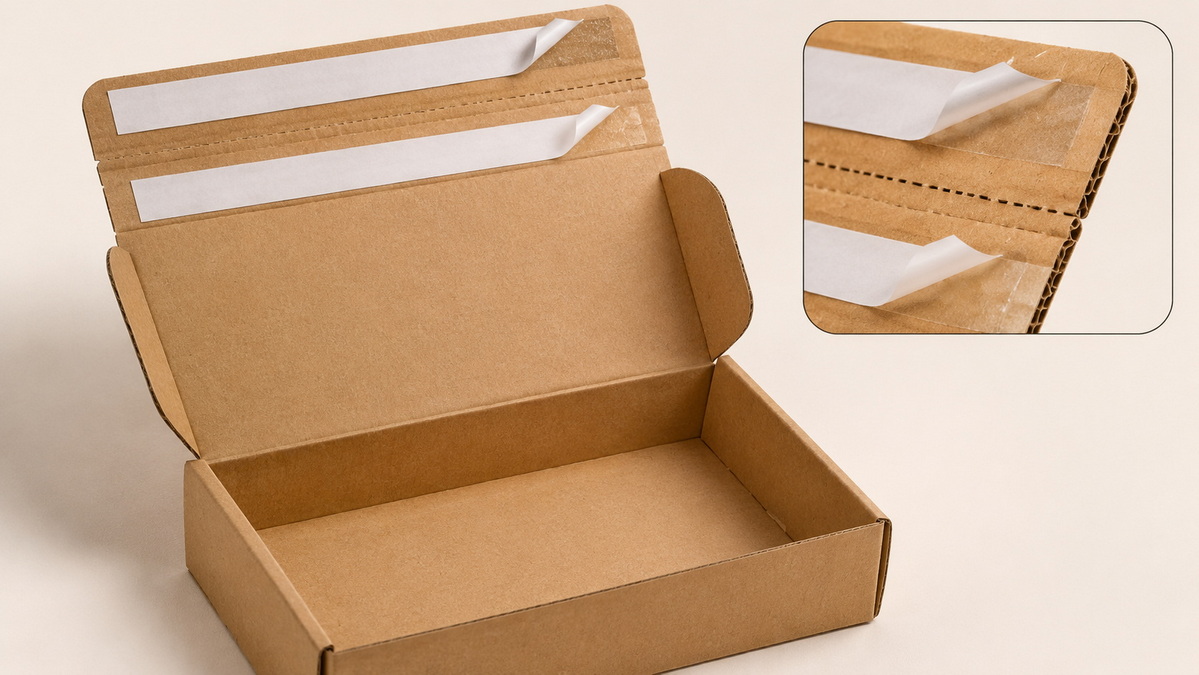
Dual-adhesive strip boxes use two separate adhesive closures, usually protected by removable release liners. One closes the outbound shipment. The other remains unused until the customer needs to return the product.
A tear strip or engineered opening feature allows customers to access the contents without destroying the return closure.
| Component | Purpose | Critical design requirement |
|---|---|---|
| Outbound adhesive strip | Seals the original shipment | Bonds reliably to the specified surface |
| Tear strip | Creates a controlled opening | Opens without damaging the remaining flap |
| Return adhesive strip | Reseals the package | Remains protected and usable after delivery |
The precise arrangement depends on the box structure. The essential requirement is that opening the outbound seal leaves enough undamaged material for a secure return closure.
Importantly, this is not usually the same adhesive being reopened and reused. Two separate strips provide two distinct sealing events.
Customers may need to return a product because of sizing, suitability, damage, or a change of mind. Packaging cannot eliminate those reasons, but it can remove avoidable work from the return process.
A well-executed design can reduce the need to:
- Find another shipping box.
- Purchase or locate packing tape.
- Repair a torn opening flap.
- Guess how to repack the product.
- Contact customer service for packaging instructions.
There are potential operational benefits, too. More consistent return packaging may make parcels easier to handle and inspect. However, lower costs and fewer damaged returns should be treated as outcomes to measure—not automatic results of adding a second strip.
The most useful design question is straightforward: can a first-time customer prepare a secure return without improvising?
Corrugated structures are a practical starting point for dual-adhesive strip packaging because the closure, opening feature, and protective walls can be developed together.
However, flute designation alone does not determine performance. Board grade, dimensions, product weight, humidity exposure, inserts, and handling conditions all influence the finished package.
Ask for a structure matched to the actual product and shipping environment rather than selecting solely by appearance.
Premium presentation packaging serves a different purpose from a shipping carton.
For many gift and retail applications, the practical solution is to place a magnetic box, rigid box, or folding gift box inside a return-ready corrugated mailer. The inner packaging provides presentation; the outer structure manages transport and return closure.
A magnetic lid should not be assumed to provide a secure parcel-shipping seal. Similarly, decorative paper shopping bags are not substitutes for validated shipping protection.
For Maituohong Packaging customers, this distinction helps keep presentation requirements separate from transport-performance requirements.
The second adhesive strip needs a suitable surface after the customer opens the package.
That surface should not be torn away, covered by an outbound label, or left heavily contaminated by dust and exposed fibers. The dieline must preserve both sufficient flap overlap and an intact bonding area.
During prototype review, inspect the opened box—not just the assembled sample.
Adhesive selection should consider:
- Uncoated kraft or coated paper.
- Printed and unprinted sealing areas.
- Varnish, lamination, and other finishes.
- Packing and storage temperatures.
- Expected transit conditions.
- The interval before a possible return.
Do not approve a closure based only on an unprinted board sample if production boxes will have a different finish.
Ask the supplier to specify application conditions and storage guidance. Then validate the selected adhesive on representative production materials.
There is no universal adhesive width, flap overlap, or tear-strip position suitable for every package.
These dimensions must work together with product weight, box geometry, converting tolerances, and closure loads. A wider strip cannot compensate for a poorly supported flap or an unsuitable bonding surface.
Treat the complete closure system as the design unit.
Customers should immediately understand the difference between opening, repacking, and resealing.
Suggested on-box instructions include:
1. "Pull here to open."
2. "Keep this box if you may need to return your order."
3. "To return: repack, remove the unused liner, and press firmly."
Use arrows and simple illustrations where they clarify the sequence. Do not rely on color alone to distinguish the strips.
The return liner should remain easy to identify after opening, with a graspable starting point that customers can locate without tools.
Return-ready packaging needs a deliberate label plan.
Reserve space for the outbound shipping label without obstructing the opening feature. Provide a suitable return-label area and explain how customers should remove or fully cover obsolete shipping labels and barcodes, following carrier instructions.
Keep the tear path clear of labels, tape, and essential product information. A well-designed opening system becomes frustrating if the warehouse accidentally covers it.
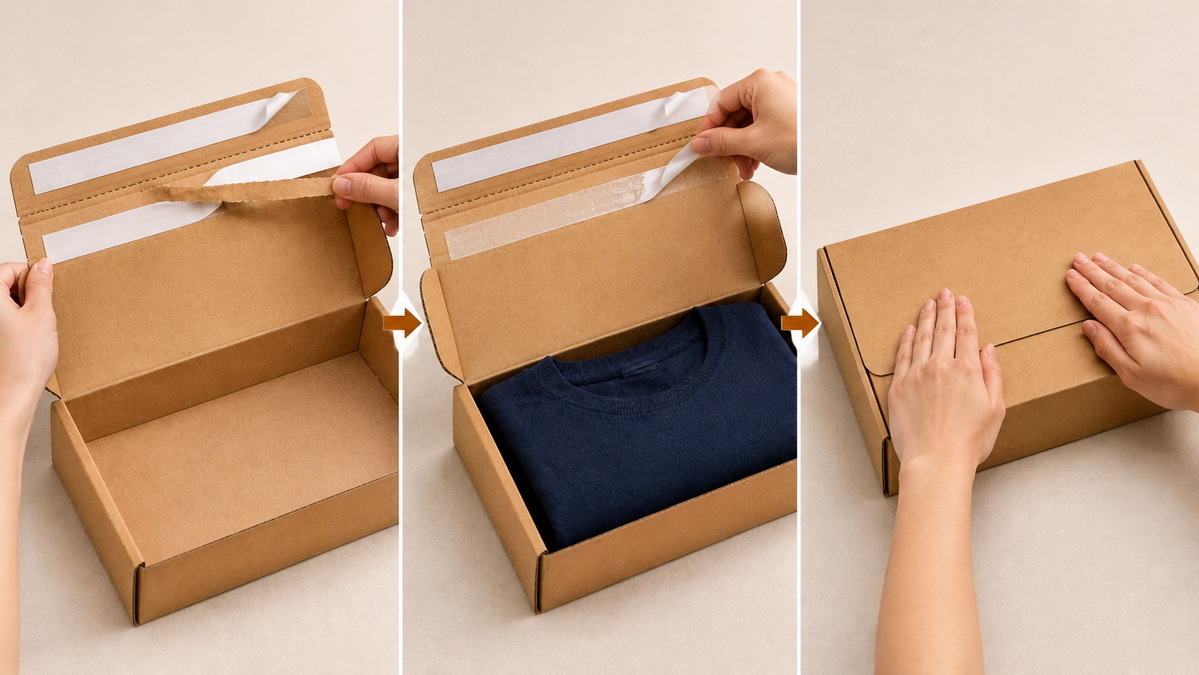
A second adhesive strip restores closure; it does not restore crushed corners, missing inserts, or lost cushioning.
Return protection therefore depends on the whole package.
Use inserts that customers can understand and replace easily. If a product requires a specific orientation, make that orientation visible through the insert shape or a short diagram.
For partial returns, check what happens when some items are missing. A multi-product gift set may arrive securely packed but leave a single returned item loose inside a large cavity.
Review:
- Product movement after partial removal.
- Protection of fragile edges and surfaces.
- Whether essential inserts are likely to be retained.
- Whether the return configuration needs additional instructions.
Customers should also know not to reuse a box that is wet, badly crushed, or structurally damaged.
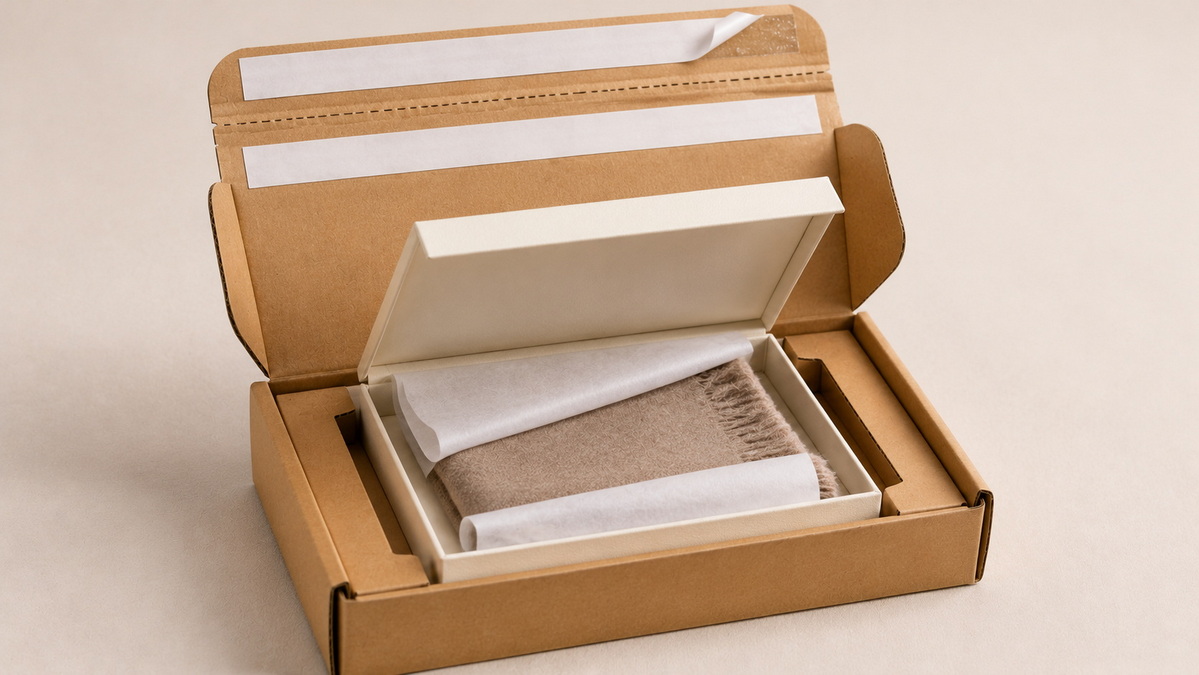
Begin with the outbound operation.
Can staff identify the correct liner quickly? Does the flap align consistently? Can the seal receive adequate pressure at the intended packing speed?
Record mis-seals and rework during a pilot run. A closure that performs well when carefully assembled by a designer may behave differently during routine fulfillment.
Select a transport test appropriate to the product and distribution route.
ISTA Procedure 3A is a general simulation procedure for individual packaged products shipped through parcel delivery systems, covering packages weighing up to 70 kg or 150 lb. It is a useful reference where applicable, not a universal guarantee of shipping performance.
Agree on the test scope and acceptance criteria with a qualified laboratory.
After outbound evaluation, ask participants unfamiliar with the design to open the package and prepare a return.
Observe rather than immediately explain.
Record whether they:
- Find the opening tab.
- Tear along the intended path.
- Preserve the return flap.
- Retain and replace essential protection.
- Identify the unused adhesive strip.
- Position the return label correctly.
These observations reveal problems that visual approval alone can miss.
Reseal the opened package and assess its return performance under an agreed protocol.
Include realistic storage delays before resealing where relevant. The second strip may remain unused for weeks, so fresh-sample performance is not enough.
Define failure clearly: premature opening, unacceptable product movement, damaged contents, or loss of essential package integrity.
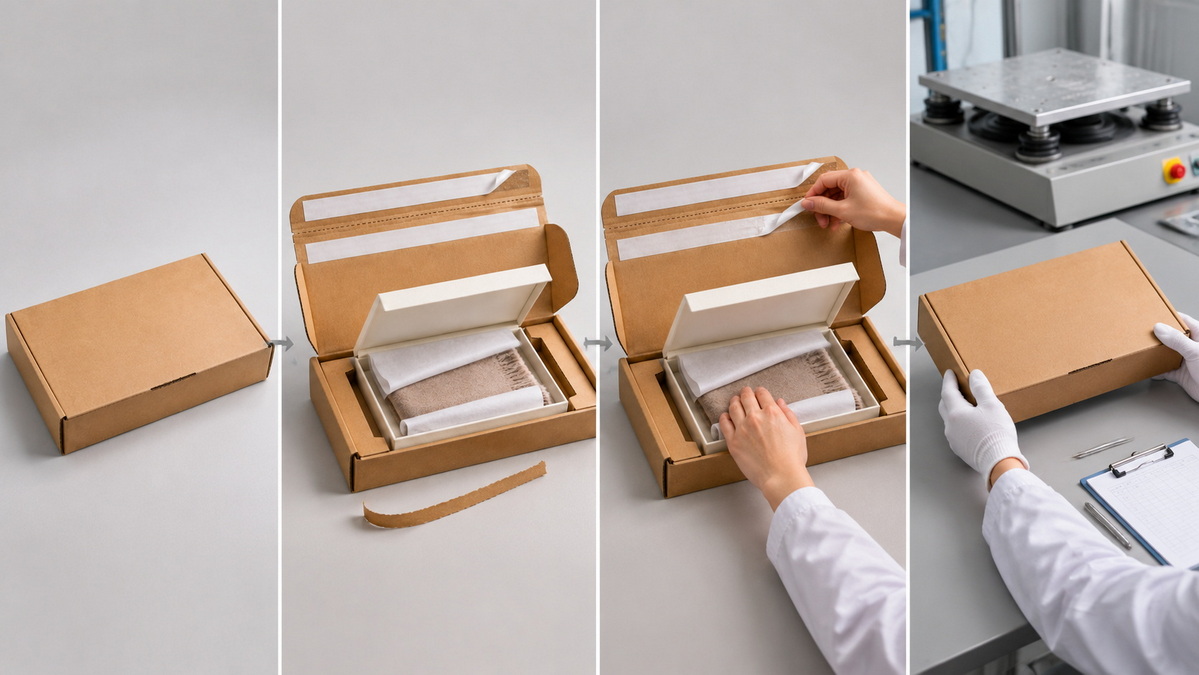
The financial case should compare total operating costs, not just unit box prices.
Track the following before and during a pilot:
| Metric | What it helps reveal |
|---|---|
| Outbound packing time | Fulfillment efficiency |
| Closure-related rework | Sealing consistency |
| Return-packaging support contacts | Instruction clarity |
| Return damage rate | Second-journey protection |
| Return receiving time | Handling consistency |
| Packaging cost per dispatched order | Overall cost impact |
Consider a hypothetical example, not a Maituohong customer result.
If a return-ready box costs $0.12 more and a business dispatches 10,000 orders, the added packaging spend is $1,200. At a 20% return rate, that equals $0.60 per returned order before any operational savings.
The pilot must establish whether reduced labor, replacement packaging, support work, or damage costs justify that premium. Include outbound benefits, but avoid counting the same saving twice.
Using the original box for a return can avoid the need for a replacement shipping container. That does not automatically prove a lower total environmental impact.
Additional board, adhesives, release liners, transport damage, and actual reuse rates all affect the assessment.
Recyclability also depends on more than the paper content. Adhesives, coatings, labels, and decorative finishes can influence processing, while local collection and mill capabilities vary.
A responsible approach is to:
- Minimize unnecessary material.
- Avoid oversized packaging.
- Review non-fiber components.
- Provide locally appropriate disposal guidance.
- Support environmental claims with evidence.
"Designed for one outbound shipment and one return" is more precise than suggesting unlimited reuse.
Before requesting custom dual-adhesive strip boxes, prepare:
- Product dimensions, weight, and fragility.
- Single-item and multi-item order configurations.
- Expected return window and partial-return scenarios.
- Shipping destinations and known environmental conditions.
- Packing method and target production speed.
- Printing, coating, and presentation requirements.
- Label dimensions and placement.
- Sample-testing and acceptance requirements.
At Maituohong Packaging, our product range includes custom mailer and shipping boxes, magnetic boxes, rigid boxes, folding gift boxes, and paper shopping bags.
Send us your product specifications, current packaging photographs, and return-process challenges. Request a structural review and prototype plan focused on easy opening, dependable resealing, and protection across both journeys.
No. Most are intended for one outbound shipment and one return closure. Further reuse depends on the package's condition and an appropriate resealing method.
That is the design objective. It must be validated for the specific package and product. Customers should follow return instructions and avoid relying on a damaged box.
Yes, but finishes near the sealing area require careful review. Test adhesive performance on the actual printed or coated material rather than assuming all surfaces behave alike.
They can form part of the solution. Fragile products also need suitable cushioning, movement control, and validated protection after opening and repacking.
A tear strip controls opening. An adhesive strip closes the package. Their positions must be coordinated so opening does not destroy the return closure.
Not necessarily. Its primary purpose is to simplify return handling. Product suitability, sizing information, quality, and order accuracy require separate attention.
1. International Safe Transit Association. *Test Procedures.* Official guidance on test-series selection, general simulation testing, and the scope of Procedure 3A. Supports the transport-testing discussion. [ista]
2. International Safe Transit Association. *3A Overview: Packaged-Products for Parcel Delivery System Shipment, 70 kg (150 lb) or Less.* Defines the procedure's application and limitations. The proposed outbound–opening–return validation sequence above is an editorial recommendation, not a claim that Procedure 3A specifically prescribes that sequence. [ista]
3. American Forest & Paper Association. *Design Guidance for Recyclability for Paper-based Packaging* (2021). Research-based guidance on how adhesives, coatings, labels, and other non-fiber elements can affect paper recycling. Supports the qualified recyclability discussion. [afandpa]
4. Labelprint24. *Carton Box With Hinged Lid and Adhesive Strip—FEFCO 0885.* Commercial product documentation illustrating a corrugated structure combining a tear-opening feature with two adhesive closures for outbound and return use. [labelprint24]
5. UL Solutions. *ISTA Packaging Test and Certification.* Independent testing-service guidance describing transport evaluation through vibration, impact, drop, and temperature testing. [ul]


