
Views: 281 Author: Maituohong Packaging Publish Time: 2026-08-31 Origin: Site


Content Menu
● Why Source Book Style Rigid Boxes From China?
>> Why Certification Requires More Than a PDF
● What Defines a High-Quality Book Style Rigid Box?
● Top 10 Book Style Rigid Box Manufacturers in China
>>> Core Strengths
>>> Questions to Ask Before Ordering
>> 2. Dongguan Xianda Packaging Co., Ltd.
>>> Core Strengths
>> 3. Shenzhen XingKun Packing Products Co., Ltd. / XK Display
>>> Core Strengths
>>> Core Strengths
>>> Core Strengths
>> 6. Shenzhen Xinhe Packaging and Similar Magnetic-Box Specialists
>>> Core Strengths
>>> Core Strengths
>>> Core Strengths
>>> Core Strengths
>> 10. Audited Regional Specialist for High-Complexity Programs
>>> Core Strengths
● Internal Sourcing Insight: The Hidden Risk Is Often the Spine, Not the Lid
● Buyer's Guide: How to Source With Less Risk
>> Step 1: Write a Complete Request for Quotation
>> Step 2: Compare Like for Like
>> Step 3: Approve Samples in Stages
>> Step 4: Control Quality Before Shipment
>> Choosing by Unit Price Alone
>> Approving a Digital Artwork Proof as a Production Sample
>> Ignoring Material Substitution Risk
>> Assuming Every Certificate Applies to Every Order
>> Underestimating Freight Volume
● FAQ
>> 1. How can I verify that a supplier's ISO certificate has not expired?
>> 2. What is a reasonable MOQ for a custom magnetic Book Style Rigid Box?
>> 3. How do I prevent a supplier from using thinner or lower-density board than approved?
>> 4. Are FSC-certified book-style rigid boxes automatically plastic-free?
>> 5. What should I test before placing a large production order?
China remains one of the most practical sourcing locations for custom Book Style Rigid Box programs because its packaging supply chain combines rigid-board conversion, offset printing, specialty finishing, magnet assembly, inserts, and export logistics in concentrated manufacturing regions. For procurement teams that need a stable long-term supplier—not simply the lowest quotation—the right choice depends on verifiable process control, structural engineering, material traceability, and communication quality.
This guide reviews ten China-based manufacturers and supplier options for book-style rigid boxes, also called magnetic flip-top boxes, clamshell rigid boxes, presentation boxes, or hinged-lid gift boxes. It is written for buyers of cosmetics, jewelry, fragrance, electronics, apparel, premium gifts, and subscription products that require repeatable quality at commercial scale.
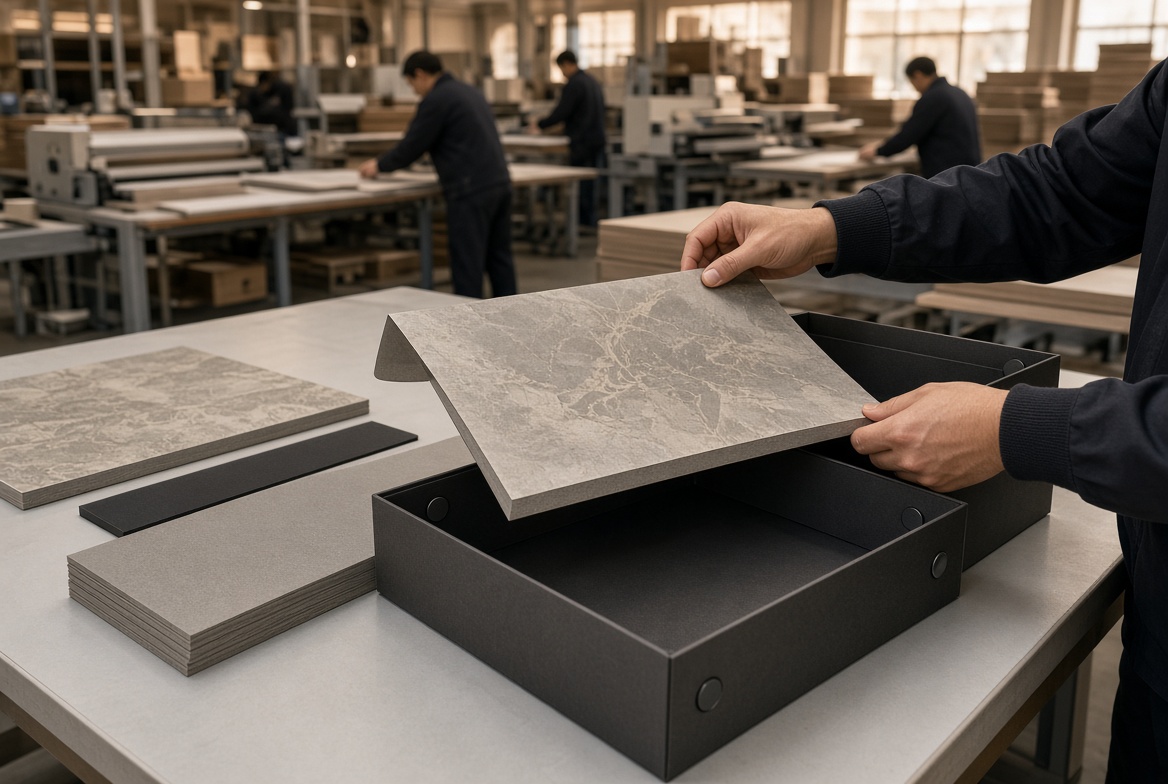
A book-style rigid box is a premium, non-collapsible paperboard package with a hinged lid that opens like a book. The closure is commonly magnet-based, although ribbon ties, tuck tabs, elastic bands, or friction-fit structures may also be used. Its perceived value comes from structural precision as much as surface decoration: a beautiful foil-stamped wrap cannot compensate for warped boards, misaligned lids, weak magnet adhesion, or exposed greyboard edges.
China's role in this category is supported by specialized regional supply chains:
- Dongguan and Shenzhen, Guangdong: Strong in consumer electronics, cosmetics, jewelry, promotional packaging, printing, display production, and export-oriented custom manufacturing.
- Guangzhou and Foshan, Guangdong: Connected to beauty, personal-care, fashion, retail, and gift-product ecosystems, with broad access to finishing and assembly resources.
- Shanghai and the Yangtze River Delta: Often suitable for brands seeking premium printing, presentation packaging, international logistics support, and coordinated production for complex retail programs.
- Zhejiang and neighboring manufacturing hubs: Offer mature sourcing networks for paper products, consumer goods, gift packaging, accessories, and ecommerce-oriented programs.
The scale of China's paper-packaging ecosystem also supports buyer choice. One 2025 market estimate places China's paper-packaging market at USD 175.8 billion, with projected expansion through 2034; separate market research estimates paper and paperboard accounted for 45.83% of China's packaging market in 2025. These figures should be treated as market-research estimates rather than factory-level output data, but they illustrate the depth of available material, printing, and converting resources.
For international purchasers, the advantage is not that every Chinese factory is interchangeable. The advantage is that a disciplined buyer can find factories aligned with different requirements: lower-volume brand launches, high-volume retail campaigns, FSC material programs, complex inserts, premium printing, or cost-sensitive OEM replenishment.
The manufacturers in this guide were selected as relevant options for buyers seeking custom rigid paper packaging, especially book-style and magnetic presentation boxes. Inclusion is based on publicly available company information, product focus, market visibility, apparent custom-production capability, and relevance to export-oriented buyers.
This is not a laboratory audit, a financial rating, or a guarantee of future performance. A purchasing decision should be based on project-specific validation.
| Evaluation area | What procurement teams should verify | Why it matters for book-style boxes |
|---|---|---|
| Manufacturing scope | Whether the company produces rigid boxes in-house or primarily coordinates production | In-house control can reduce handoff risk during wrapping, magnet insertion, assembly, and final inspection |
| Structural capability | CAD dielines, white samples, board-cutting accuracy, hinge development, insert engineering | The box must open smoothly, close consistently, and protect the actual product |
| Printing and finishing | Offset-printing capability, color control, foil stamping, embossing, debossing, lamination, spot UV | Premium presentation relies on clean finishing and repeatable brand colors |
| Material control | Greyboard density and thickness, wrap paper, adhesive specification, magnet grade, insert materials | Material substitution is a common hidden cause of weak, warped, or inconsistent boxes |
| Quality process | Incoming inspection, in-process checks, final inspection, AQL plan, pre-shipment review | Manual assembly creates variation unless checkpoints are defined and documented |
| Compliance evidence | FSC Chain of Custody, ISO 9001, ISO 14001, social-compliance reports, destination-market testing where needed | Certificates must apply to the actual legal entity, facility, scope, and current period |
| Commercial fit | MOQ, response time, willingness to support sampling, artwork review, and change control | A large factory may not be the best fit for a growing brand or complex pilot order |
| Export readiness | Export packaging, carton marking, palletization, shipping documentation, Incoterm clarity | Rigid boxes occupy substantial freight volume and require protective packing |
A supplier-provided certificate is a starting point, not final proof. ISO explains that it does not issue certifications itself; certification is carried out by independent certification bodies. Buyers can use the International Accreditation Forum's CertSearch database or contact the issuer and accreditation body to check current status.
For responsible fiber claims, buyers should search the supplier's legal entity, certificate code, or license code using FSC's public certificate search tools. FSC's search platform provides current certification and licensing information and supports searches by organization and other criteria.
The practical question is not, "Does the sales brochure display an ISO or FSC logo?" The correct question is: "Does the certificate cover this exact production site, is it currently valid, and does its scope match the material and process being offered for my order?"
Before comparing suppliers, procurement teams should understand the construction details that determine whether a book-style rigid box performs well in retail, ecommerce fulfillment, and repeated consumer handling.
A standard magnetic book-style box commonly includes:
1. Rigid greyboard or chipboard structure
Often specified by thickness, density, and stiffness. The correct board depends on box dimensions, product weight, insert design, and intended handling conditions.
2. Printed outer wrap
Art paper, coated paper, textured specialty paper, uncoated paper, or other decorative stock is printed and wrapped around the greyboard. This stage determines much of the visual quality.
3. Hinged lid and spine
The hinge gap and wrap tension must be engineered so that the lid opens smoothly without cracking, lifting, or pulling the paper wrap apart.
4. Magnet closure system
Magnet position, polarity, adhesive quality, and board reinforcement affect closing force and alignment. The magnetic feel should be tested after assembly, not assumed from the artwork file.
5. Internal tray or insert
Common options include EVA foam, paperboard platforms, molded pulp, paper inserts, ribbon lifts, PET trays, flocked foam, and die-cut card structures.
6. Surface finishing
Matte or gloss lamination, anti-scuff film, soft-touch film, aqueous coating, hot foil stamping, embossing, debossing, spot UV, and textured papers can be combined according to brand positioning.
The cheapest quotation may not reflect the same physical specification. Two suppliers can quote an apparently identical "1200 gsm rigid board magnetic box" while using different board density, recycled content, wrap paper, magnet size, adhesive, reinforcement, and finishing process.
For that reason, buyers should specify—not merely describe—the following:
- Finished outer dimensions and acceptable tolerances.
- Board thickness, density, and source requirements.
- Printed wrap paper type, weight, grain direction, and color standard.
- Magnet quantity, diameter or dimensions, pull-force expectation, and polarity arrangement.
- Lamination or coating type, especially if scuff resistance matters.
- Insert material, fit tolerance, and retention performance.
- Required odor, migration, or restricted-substance documentation where applicable.
- Carton packout, corner protection, pallet configuration, and shipping marks.
For ordinary paper gift packaging, CE marking is generally not a standard requirement because CE applies to specific regulated product categories rather than to all consumer packaging. RoHS normally applies to electrical and electronic equipment and related restrictions; it may become relevant when packaging includes electronic components, lights, batteries, or other regulated items, but it should not be used as a generic substitute for packaging-material compliance.
For paper packaging, a buyer may instead need to consider:
- FSC Chain of Custody requirements for certified material claims.
- REACH-related substance expectations for the destination market.
- Packaging and Packaging Waste Regulation or other local packaging rules for EU-bound goods.
- Food-contact requirements when the rigid box is intended to contact food directly.
- Heavy-metal, phthalate, odor, migration, or restricted-substance tests when required by a retailer, brand policy, or product category.
- Ink, coating, adhesive, and recycled-content declarations when sustainability reporting is required.
Ask the supplier to identify which documents apply to your product and destination. Avoid accepting a generic "all certifications available" claim without a document list tied to the actual purchase order.
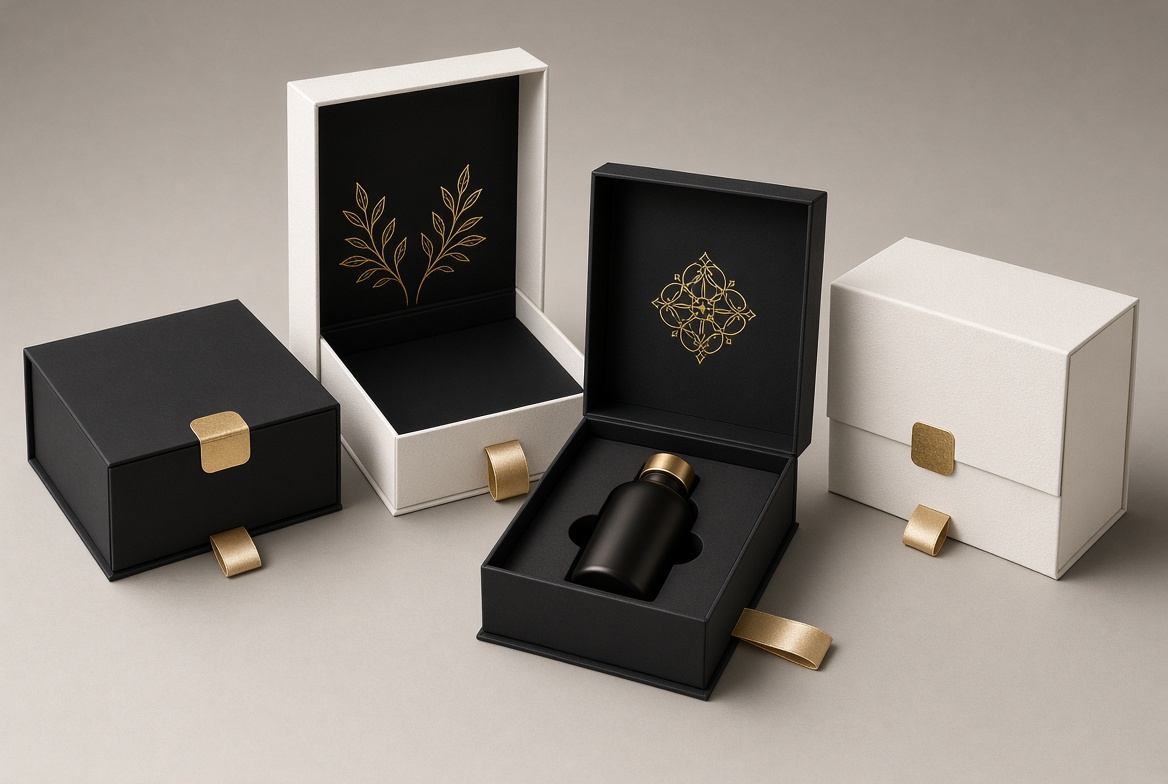
The following table is designed to help procurement teams identify potential supplier fit. "Typical MOQ" is an indicative sourcing range, not a promised commercial term. Final MOQ is influenced by size, board grade, printing method, specialty paper, magnets, inserts, finishing, and whether a new tooling or sampling process is required.
| Supplier | Location / manufacturing base | Main focus | Likely buyer fit | Typical MOQ discussion range* | Publicly stated certification or compliance angle |
|---|---|---|---|---|---|
| Maituohong Packaging | China; export-oriented custom paper packaging | Rigid boxes, folding cartons, corrugated boxes, bags, labels, inserts | Small and mid-sized brands needing detailed OEM support and one-stop coordination | Often project-dependent; request a quotation for pilot and production volumes | Publicly states ISO 9001, FSC, and ISO 14001 certification; verify current site-specific status |
| Dongguan Xianda Packaging Co., Ltd. | Dongguan, Guangdong | Custom gift boxes, jewelry boxes, food boxes, rigid packaging | Buyers seeking an established Dongguan rigid-box source | Usually quote-dependent | Public pages cite FSC, BSCI, Disney-related credentials, and other test/report availability; verify scope |
| Shenzhen XingKun Packing Products Co., Ltd. / XK Display | Shenzhen, Guangdong | Printing, packaging boxes, displays, paper products | Brands requiring packaging plus printed or display-related items | Often quote-dependent | Public materials mention recycled paperboard and FSC-certified options |
| Bonito Packaging | China-focused custom packaging supply | Rigid boxes, folding cartons, mailers, corrugated and display packaging | Ecommerce and growth-stage brands prioritizing flexible custom programs | Often quote-dependent | Public sustainability materials mention FSC options, recycled content, and aqueous coatings |
| Shanghai DE Printed Box | Shanghai | Rigid paper boxes, presentation boxes, tubes, set-up boxes | Buyers seeking premium presentation-box finishing | Usually quote-dependent | Buyers should request current factory-specific certification evidence |
| Shenzhen Xinhe Packaging / related book-style suppliers | Guangdong | Magnetic flip boxes, presentation boxes, custom gift packaging | Buyers with non-standard book-style structures | Usually quote-dependent | Ask for material, ink, adhesive, and export documentation |
| BookPrintingChina | China | Custom rigid boxes and book-related print packaging | Publishers, gift brands, presentation-kit buyers | Usually quote-dependent | Request current quality-management and material traceability records |
| ChinaBookPrinter | China | Rigid gift boxes and printed paper packaging | Brands requiring printed rigid packaging and presentation formats | Usually quote-dependent | Request site-specific certification and production-control records |
| Luxury Custom Packaging | China | Book-style rigid boxes and luxury custom packaging | Buyers focused on visually premium gift-box formats | Usually quote-dependent | Confirm manufacturing location, finishing scope, and current audit documentation |
| Custom rigid-box specialist shortlisted through regional factory audit | Dongguan / Shenzhen / Guangzhou | Project-specific | Buyers with high annual volume, unusual inserts, or retailer-specific compliance needs | Based on audited supplier capability | Require current certificate, report, traceability, and production sample package |
Maituohong Packaging is a practical option for buyers that need custom rigid boxes but do not want their project treated as a simple commodity order. The company positions itself as a one-stop paper-packaging manufacturer covering rigid boxes, folding cartons, corrugated boxes, paper shopping bags, labels and stickers, and box inserts. This broader product scope can be useful when a brand wants a coordinated launch kit rather than purchasing each paper component from a different factory.
For book-style rigid boxes, Maituohong Packaging is especially relevant to small and medium-sized brands, emerging premium labels, ecommerce sellers, and procurement teams that need responsive development support. Its public materials describe a process that begins with consultation and design, followed by quotation, custom sampling, sample confirmation, mass production, final inspection, packing, and delivery coordination. This sequential workflow is important because a book-style rigid box should not enter mass production until the buyer has approved actual structure, color, finish, closure, and insert fit.
- OEM customization depth: Suitable for custom dimensions, magnetic flap structures, printed wraps, specialty papers, foil stamping, embossing, inserts, and coordinated external packaging.
- Balanced commercial positioning: The company presents itself as focused on controlling total project cost through material, process, and production planning rather than reducing quality through unspecified substitutions.
- Communication-oriented support: Its stated approach emphasizes direct work with packaging specialists, useful for buyers who need a factory to identify structural risks before sampling.
- Quality process visibility: Public information identifies IQC, IPQC, FQC, and OQC checkpoints, which correspond to incoming, in-process, finished-product, and outgoing quality control stages.
- Sustainability positioning: The company states that it is FSC and ISO 14001 certified and uses responsibly sourced, recyclable, and eco-friendly materials where possible. It also states ISO 9001 certification and high-precision six-color Heidelberg printing capability. These claims should be verified against current certificate records and factory scope before a buyer makes certified-material claims on a finished product.
Maituohong Packaging may be a particularly good shortlist candidate when the buyer needs:
- A supplier willing to discuss design and manufacturability before production.
- Book-style boxes paired with paper inserts, printed sleeves, corrugated shipper boxes, labels, or retail cartons.
- A lower-to-medium-volume program where response time, sampling coordination, and willingness to support changes are as important as pure line capacity.
- A cost-conscious premium-box program where the buyer still requires documented quality checkpoints.
- A long-term OEM relationship rather than a one-time, price-only transaction.
- Can the factory provide a board sample and material specification sheet for the proposed greyboard?
- What is the exact magnet specification, placement tolerance, and adhesion-control method?
- Can the supplier provide a pre-production sample made from the final intended materials and finishes?
- Does the FSC certificate cover the relevant site and Chain of Custody process for the proposed order?
- What inspection standard will be used for lid alignment, corner wrapping, color variation, scuffs, glue marks, and magnet closing performance?
Dongguan Xianda Packaging Co., Ltd. is an established custom packaging supplier in Dongguan. Its public materials state that it was established in 2006, operates two factories in Dongguan totaling more than 15,000 square meters, and employs more than 200 people. Those are useful scale signals for procurement teams, although buyers should independently verify current capacity, equipment allocation, and availability for the intended production period.
Dongguan has a dense network of paperboard, printing, finishing, assembly, and export resources, making it a logical region for book-style rigid boxes, jewelry boxes, cosmetics boxes, and premium gift packaging. Xianda's product coverage includes gift packaging and category-specific boxes such as jewelry and food packaging.
- Longer operating history: Publicly stated establishment year of 2006.
- Relevant rigid-gift packaging experience: Product content highlights gift, jewelry, food, and customized packaging formats.
- Scale signal: Two factories and more than 15,000 square meters are stated on its public product page.
- Credential visibility: The company's website refers to BSCI, FSC, Disney-related credentials, and testing/report availability. Buyers should request original, in-date certificates and verify the legal entity and facility named on them.
- Material options: Xianda publicly mentions FSC-certified paper or cardboard, water-based glue, recycled materials, and rPET for certain jewelry packaging programs.
Xianda can be a suitable option for buyers looking for an established Dongguan source for standardized or customized gift-box programs, particularly when they want experience in categories such as jewelry, confectionery, promotional gifts, and consumer packaging.
Public certificates and product claims do not automatically confirm that every new order will use the specified inputs. Request the current document package for your project:
- Certificate number and validity period.
- Certificate holder's legal name and plant address.
- Scope of the certificate.
- FSC transaction or claim documentation where relevant.
- Proposed material list.
- Pre-production sample approval sheet.
- Lot traceability or material batch records for high-risk programs.
Shenzhen XingKun Packing Products Co., Ltd., commonly associated with the XK Display website, presents itself as a printing and packaging company founded in 2004. Public information identifies its Shenzhen location in Bao'an District and describes its work across printed packaging and display-related products.
For a book-style rigid-box buyer, XK Display may be relevant when the packaging program also requires printed collateral, presentation materials, retail display components, product inserts, or coordinated paper-based promotional elements.
- Established Shenzhen presence: Publicly stated founding year of 2004.
- Broader printing and packaging coverage: Useful for projects combining boxes with inserts, cards, manuals, display components, or promotional printed items.
- Sustainability options: Its public packaging page mentions 100% recycled paperboard and FSC-certified options. The company also describes an after-sales process in which staff follow up on customer usage and feedback.
- Regional advantage: Shenzhen is closely connected to electronics, consumer technology, accessory brands, and export logistics, which can suit premium tech-product presentation boxes.
- Electronics accessories and consumer-device packaging.
- Brand kits that include rigid boxes, printed inserts, sleeves, instruction cards, and retail-display elements.
- Procurement teams that value Shenzhen-region coordination and multilingual export communication.
For book-style boxes, ask whether the rigid-box line, wrap operation, magnet insertion, and finishing are all under direct control at the quoted site. A company may be excellent at printed display materials while subcontracting parts of rigid-box production. Subcontracting is not automatically a problem, but it should be disclosed because it affects quality ownership, lead time, and corrective-action responsibility.
Bonito Packaging is positioned as a custom-packaging source serving brands that need rigid boxes, folding cartons, mailers, corrugated boxes, and display packaging. Its public content emphasizes flexible OEM-oriented support, cost control, responsive communication, and fit for small to medium-sized, export-focused brands.
The company's sustainability content states that paper and cardboard packaging includes at least 50% recycled content and that some options comply with FSC requirements and use aqueous coatings instead of plastic laminates. These are meaningful options for brands working toward recycled-content or plastic-reduction goals, but buyers should confirm availability by specific board grade, paper finish, color, print design, and order quantity.
- Flexible program orientation: Public positioning is aligned with emerging brands, ecommerce companies, and buyers requiring custom OEM packaging.
- Broad packaging portfolio: Rigid boxes can be coordinated with folding cartons, mailers, shipping boxes, and displays.
- Sustainability discussion: The company publicly identifies recycled-content and aqueous-coating options.
- Buyer education: Its materials emphasize verifying factory-specific certificates rather than relying on a generic sales document, which is a useful procurement principle.
- Ecommerce brands moving from plain shipping packaging to a premium unboxing experience.
- Small and medium-sized brands needing custom support without the procurement complexity of a large multinational packaging group.
- Subscription products, beauty products, branded gifts, direct-to-consumer launches, and influencer kits.
- Buyers evaluating recycled-content or low-plastic finishing options.
A sustainability claim must be converted into production specifications. Ask for:
- Recycled-content percentage for the exact board and wrap paper being quoted.
- Whether the proposed coating is aqueous, film lamination, or another finish.
- Whether the selected paper is available with an FSC claim and what claim can appear on shipping documents.
- How anti-scuff performance compares between the sustainable finish and a traditional laminated alternative.
- Whether the selected material has color, texture, and lead-time limitations.
Shanghai DE Printed Box is a relevant supplier option for buyers seeking rigid paper boxes, cardboard gift boxes, presentation boxes, rigid paper tubes, and set-up boxes. Its public rigid-box content refers to finishing techniques including spot UV, embossing, debossing, foil stamping, soft-touch coating, and lamination. It also identifies clamshell-style rigid boxes as a name used for book-style rigid boxes.
- Premium presentation-box focus: Suitable for projects in which visual finish is a primary purchasing criterion.
- Finishing range: Publicly referenced capabilities include several premium decorative processes.
- Shanghai location: Can be attractive to buyers already sourcing printed materials, luxury goods, cosmetics, or retail programs within the Yangtze River Delta.
- Corporate presentation kits.
- Premium cosmetics and fragrance packaging.
- High-end beverage, gift, or collector-product boxes.
- Rigid boxes requiring tactile surfaces, foil, embossing, or complex graphic execution.
Premium finishing creates more opportunities for variation. Your sample approval should define:
- Foil color and foil-placement tolerance.
- Emboss/deboss depth and registration.
- Acceptable scuff level under matte or soft-touch finishes.
- Color targets under the chosen lighting condition.
- Corner-wrap and spine-wrap acceptance standard.
- Whether the surface finish can withstand tape removal, shipping abrasion, or retail handling.
Shenzhen-area suppliers that publicly offer book-style rigid boxes can be relevant for buyers needing magnetic flip-top structures, multi-panel gift boxes, or custom presentation packaging. A public example describes a structure with triangular side panels and a central flip-top inner box secured by hidden magnets—an illustration of how the basic book-box concept can be extended into more elaborate promotional packaging.
- Structural variety: Potential fit for non-standard opening systems, magnetic panels, nested boxes, and premium launch kits.
- Shenzhen ecosystem: Strong alignment with consumer electronics, accessories, beauty devices, and export-oriented product launches.
- Design-led packaging potential: Useful when standard rectangular book boxes are insufficient for the desired unboxing experience.
- Product launches requiring a memorable opening sequence.
- Electronics, gaming accessories, collectors' products, luxury accessories, or influencer seeding kits.
- Brands that need packaging engineering alongside graphic execution.
Complex structures increase failure points. The buyer should test:
- Opening and closing cycle durability.
- Magnet polarity and closing alignment.
- Glue creep in hot or humid conditions.
- Shipping compression and corner protection.
- Insert retention after drop and vibration testing.
- Whether the package can be packed efficiently into export cartons without crushing decorative features.
BookPrintingChina presents custom rigid boxes as a packaging category within its broader print-production offering. It describes its custom rigid-box service as affordable, durable, and high quality.
This kind of supplier can be relevant for book publishers, stationery brands, educational products, boxed sets, premium printed products, and brands whose packaging program is closely linked to book, catalog, card, or paper-product manufacturing.
- Print-adjacent sourcing: May suit products that combine books, cards, printed manuals, or stationery with a rigid presentation box.
- Custom rigid-box availability: Useful as a shortlist source for buyer inquiries and comparative sampling.
- Potential coordination benefits: A single supply partner may simplify color and schedule coordination between printed contents and outer packaging.
- Limited-edition books and collector sets.
- Card decks, board games, stationery, journals, and premium paper goods.
- Brand gift boxes containing printed inserts or publications.
Ask whether the box and printed contents will be produced at the same site and whether color is controlled against a common approved standard. If multiple sites are involved, require a defined color-management and schedule-control process.
ChinaBookPrinter offers rigid gift boxes made from thick cardboard with an external printed paper wrap. Its product information notes that rigid gift boxes are a more premium and more costly format than common card-paper boxes, which is an accurate commercial distinction buyers should understand before comparing quotes.
- Clear rigid-box relevance: The company describes thick-cardboard construction and printed outer wrapping.
- Potential fit for printed-product suppliers: Similar to book-printing-focused vendors, it may suit programs that join print production and presentation packaging.
- Accessible starting point for quotes: Useful for market comparison if a buyer needs multiple sample routes.
- Gift sets, premium book packages, games, stationary, and printed consumer products.
- Buyers seeking a structured box rather than a folding carton.
The term "thick cardboard" is not a sufficient specification. Convert it into measurable requirements:
- Board thickness in millimeters.
- Board density or grade.
- Finished-box compression expectation.
- Box weight and product weight.
- Insert design and product retention.
- Sidewall and lid alignment tolerance.
Luxury Custom Packaging markets book-style rigid boxes as custom packaging intended to protect and present products. Its public content identifies itself as a Chinese supplier of book-style rigid-box packaging.
- Direct relevance to the target structure: The supplier's public positioning focuses on book-style rigid packaging.
- Luxury presentation emphasis: Potentially suitable for buyers that place high value on visual impact and premium product presentation.
- Useful comparison candidate: Can help buyers benchmark structural options, finishes, and sales responsiveness against other shortlisted vendors.
- Jewelry, perfume, premium gifts, cosmetics, watches, accessories, and boutique retail.
- Brands requiring a presentation-led package with protective structure.
Luxury vocabulary should be converted into measurable acceptance criteria. Request actual samples, not only photographs. Review the sample under retail lighting and after handling, and inspect:
- Edge cleanliness.
- Paper-wrap tension.
- Corner consistency.
- Foil registration.
- Magnet closure.
- Odor.
- Scuff resistance.
- Interior insert fit.
- Export-carton protection.
The tenth recommendation is deliberately not a single named website: for high-volume, high-complexity, or retailer-controlled packaging programs, buyers should consider conducting a targeted factory audit in Dongguan, Shenzhen, Guangzhou, or Shanghai rather than selecting solely from online supplier lists.
This approach is especially appropriate when the product requires:
- More than one magnet closure.
- Multi-piece rigid structures.
- Luxury specialty paper with tight color consistency.
- Custom molded pulp, EVA, flocked foam, or paper-engineered inserts.
- Premium finishes with strict brand standards.
- Direct shipments to multiple countries or retail distribution centers.
- High annual volume and formal corrective-action requirements.
- Fit over familiarity: An audited specialist can be selected for the exact process your project requires.
- Better risk control: Buyers can inspect material storage, board-cutting, print control, wrapping, assembly, inspection, carton packing, and document systems before placing a large order.
- Scalability validation: A site visit can verify whether claimed capacity is dedicated, real, and available.
Do not select an audited factory based only on a clean showroom or attractive samples. Audit the actual production floor and review current work in process. Ask to see:
- Incoming material records.
- Approved sample archive.
- In-process inspection sheets.
- Nonconforming-product area.
- Rework controls.
- Final inspection records.
- Carton drop-test or compression-test records if available.
- Customer complaint and corrective-action examples with confidential details removed.
One of the most overlooked issues in book-style rigid-box sourcing is the relationship between spine gap, wrap-paper grain direction, board thickness, and hinge tension.
A supplier may send a beautiful hand-made sample that opens perfectly. Then, during mass production, the box may open too tightly, crack at the fold, spring back instead of lying flat, or develop uneven lid alignment. This can happen even when the external artwork and board thickness appear unchanged.
Why? The hinge behavior depends on several connected variables:
- The gap between the cover board and the spine board.
- The gap between the lid board and the base board.
- The thickness and stiffness of the wrap paper.
- The direction of the paper grain.
- The amount of adhesive and how much moisture it introduces.
- The drying conditions after wrapping.
- The sequence of magnet installation and final assembly.
- The product insert's pressure against the lid and base.
Do not approve a book-style rigid box based only on a visual mockup. Require a functional pre-production sample using the final intended board, wrap paper, magnet configuration, coating, insert, and product—or a dimensional dummy with comparable weight.
Then run a simple buyer-side check:
1. Open and close the box at least 20 times.
2. Check whether the lid sits square after repeated use.
3. Inspect the hinge for paper cracking, lifting, or whitening.
4. Place the actual product and insert inside.
5. Test closure force with the final contents.
6. Leave samples in a warm room and a cool, dry room for 24 hours.
7. Compare lid alignment and magnet performance after conditioning.
8. Pack the sample as it will be shipped and perform a basic handling or drop simulation.
This basic test catches many failures that polished product photographs will never reveal.
A useful RFQ should include more than dimensions and artwork. Provide:
- Product name and intended market.
- Finished outer dimensions, internal dimensions, and orientation.
- Product weight and dimensions.
- Box style: magnetic book-style, ribbon closure, tuck flap, two-panel, multi-panel, or other.
- Board specification target.
- Wrap-paper type and print requirements.
- Surface finish.
- Foil, embossing, debossing, or spot-UV requirements.
- Magnet details or desired closing feel.
- Insert material and product-retention requirement.
- Quantity by SKU and expected annual volume.
- Target delivery date and shipping destination.
- Required compliance documents.
- Required Incoterm, such as EXW, FOB, CIF, DAP, or DDP.
- Whether freight is quoted separately from product price.
A vague request such as "Please quote luxury magnetic rigid box, 1,000 pcs" invites quotations that are impossible to compare fairly.
Build a comparison sheet with the same assumptions for every supplier. The most important columns are:
| Quote variable | What to compare |
|---|---|
| Board | Thickness, density, recycled content, source, and whether it is single or laminated board |
| Wrap paper | Brand, weight, coated/uncoated status, specialty texture, and grain direction |
| Printing | Color process, Pantone matching, proofing method, and color tolerance |
| Finish | Matte film, gloss film, soft-touch film, aqueous coating, anti-scuff treatment, foil, embossing |
| Closure | Magnet size, count, placement, polarity, and closure strength |
| Insert | Material, thickness, retention design, and whether it is packed separately |
| Sampling | Plain white sample, printed dummy, pre-production sample, sample cost, and lead time |
| Production | Stated lead time after artwork and sample approval |
| Inspection | AQL level, defect definitions, third-party inspection acceptance |
| Logistics | Unit weight, carton quantity, carton dimensions, cubic volume, pallet plan, and export packing |

For complex book-style boxes, use staged approval instead of jumping directly from artwork to mass production.
1. Structural white sample
Confirm dimensions, opening direction, insert fit, and closure behavior before spending on premium finishing.
2. Material and finish swatch review
Compare specialty papers, lamination, foil, embossing, and insert materials.
3. Printed pre-production sample
Confirm the final combination of structure, graphic artwork, color, finish, magnets, inserts, and product fit.
4. Golden sample retention
Keep a signed or digitally documented approval sample. Define who holds it, how it is labeled, and which version controls mass production.
5. First-article inspection
For larger orders, request photos, measurements, or a remote review of the first production batch before the entire run proceeds.
For high-value packaging, the most useful quality plan is based on clear defects, not general phrases like "good quality."
Examples of critical checks:
- Wrong artwork or missing legal text.
- Wrong product dimensions or incorrect opening direction.
- Incorrect magnet polarity or failed closure.
- Board delamination, severe warpage, or crushed corners.
- Major color mismatch from approved sample.
- Visible glue stains, exposed greyboard, severe scratches, or torn wrap paper.
- Incorrect insert size that fails to retain the product.
- Missing FSC or other material documentation where contractually required.
- Incorrect carton labeling or count.
For large orders, arrange a pre-shipment inspection after at least 80% of goods are packed. The inspection should compare production pieces with the approved sample and the written specification—not merely judge whether the boxes look attractive.
Rigid boxes create a freight challenge because they ship as formed structures rather than flat-packed cartons. Their cubic volume can become a larger cost driver than their physical weight.
Ask each supplier for:
- Finished-box unit weight.
- Pieces per master carton.
- Master-carton dimensions and gross weight.
- Total carton count.
- Total cubic meters.
- Pallet dimensions and pallet count, if applicable.
- Corner protection, polybag, tissue wrap, or divider details.
- Whether magnets or metallic components affect shipping documentation.
- Whether the quote includes inland trucking, export clearance, and port charges.
For launches with uncertain demand, consider whether a redesigned box can retain the premium book-style look while reducing void space or using a lighter insert. The objective is not to cheapen the packaging; it is to reduce total landed cost intelligently.
A low quoted unit price may exclude key components such as magnets, inserts, lamination, carton protection, sample charges, inland freight, export documentation, or higher-grade board. Compare total landed cost and written specification before comparing unit price.
A PDF can confirm layout, but it cannot prove board stiffness, hinge quality, foil registration, scuff resistance, color appearance, or magnet performance. Always approve a physical sample for a premium rigid box.
A factory can maintain the same external dimensions while changing the board grade, wrap paper, magnet size, or protective finish. Prevent this with an approved material list, retained sample, and inspection checklist.
A certificate may be expired, may cover a different facility, or may not cover the process or material relevant to your project. Use the issuer, IAF CertSearch, and FSC public search tools to verify status and scope.
A rigid book-style box may look compact individually but consume substantial carton volume at scale. Request a full packing list before confirming the purchase order.
A successful Book Style Rigid Box sourcing program is not built around a supplier name alone. It is built around a controlled process: detailed specifications, verified certification, physical sampling, documented acceptance criteria, in-process communication, inspection, and freight planning.
For buyers seeking a flexible partner for custom rigid gift boxes and coordinated paper packaging, Maituohong Packaging is a strong first supplier to evaluate. Its stated strengths include end-to-end packaging coordination, custom structural development, Heidelberg six-color printing, FSC and ISO-related quality and environmental positioning, and a documented inspection workflow that includes IQC, IPQC, FQC, and OQC. This combination can be especially suitable for small and medium-sized brands that need responsive communication and deeper OEM support, not simply a standard box quotation.
Prepare a clear RFQ, request comparable material specifications from at least three shortlisted suppliers, and approve a functional pre-production sample before mass production. A properly specified box protects the product, supports brand perception, and reduces costly quality disputes after shipment.
Request the full certificate, including the legal company name, factory address, certificate number, standard, scope, certification body, issue date, and expiry date. Then search the certification status through IAF CertSearch or contact the named certification body directly. ISO explains that it does not issue company certificates itself; independent certification bodies do.
Do not accept a cropped logo, a certificate without an address, or an ISO claim that cannot be tied to the quoted production facility.
There is no universal MOQ. It depends on box size, board, printed-paper quantity, finish, magnet configuration, insert complexity, and machine or manual labor requirements. A simple standard-size box may support a lower order quantity than a box using special textured paper, multiple magnets, custom foam, multi-color foil, or a non-standard engineering design.
The practical approach is to request prices at three quantities—for example, pilot quantity, initial commercial quantity, and annual-volume quantity—while keeping every material specification identical.
Add the board specification to the purchase order and approved sample sheet. State board thickness, density or grade, supplier/brand where necessary, and whether substitutions require written approval. Request an offcut or material swatch from mass production, and include board thickness and box squareness in pre-shipment inspection criteria.
For critical products, ask for incoming-material records or photos showing the board labels and batch identification.
No. FSC relates to responsible forest management and Chain of Custody claims for forest-based materials; it does not automatically mean the entire box is plastic-free. A rigid box can use FSC-certified paper while still including plastic lamination, PET windows, EVA foam, magnets, synthetic ribbons, or other non-paper elements.
If plastic reduction is a priority, specify each component separately: unlaminated or aqueous-coated paper, paper-engineered insert, paper ribbon alternative, recycled-content board, and the minimum necessary magnet configuration.
At minimum, test the approved physical sample for:
- Product fit and removal.
- Lid opening and closing performance.
- Magnet alignment and closure strength.
- Hinge durability after repeated opening.
- Color, foil, embossing, and surface-finish accuracy.
- Scuff and scratch resistance.
- Corner strength and board warpage.
- Insert retention.
- Carton packing and basic transit handling.
- Odor or material concerns if the box is used with cosmetics, food-adjacent products, or sensitive consumer goods.
For retailer programs or high-value products, add drop, vibration, compression, climatic conditioning, and third-party material testing as needed.
- [China General Administration of Customs: Trade Statistics] — Official source for China's external trade statistics and major export data. [english.customs.gov]
- [ISO: Certification Information and Verification Guidance] — Explains that certificates are issued by independent certification bodies and outlines verification through IAF CertSearch. [iso]
- [FSC Public Certificate Search] — Search current FSC certificate and licensing information by organization, certificate code, and other criteria. [search.fsc]
- [Maituohong Packaging: Company Profile and Manufacturing Process] — Public information on its paper-packaging scope, printing, customization, sustainability positioning, and quality-control process. [mthpackagingbox]
- [China Paper Packaging Market Overview] — Market-research estimate for China's paper-packaging market size and projected development. [imarcgroup]
- [China Packaging Market Analysis] — Market research discussing paper and paperboard's share of China's packaging market. [mordorintelligence]


