
Views: 297 Author: Maituohong Packaging Publish Time: 2026-06-20 Origin: Site


Content Menu
● What Does Packaging Really Mean in Modern Business?
● Why Packaging Matters More Than Ever for Your Brand
● The Three Levels of Packaging Explained Clearly
>> Primary Packaging: The Customer's First Touch
>> Secondary Packaging: Grouping and Merchandising
>> Tertiary Packaging: Bulk Logistics and Storage
● Core Functions of Packaging: More Than a Box
>> 1. Protection and Product Integrity
>> 2. Information and Compliance
>> 3. Branding and Differentiation
>> 4. Convenience and Experience
● Packaging Materials: Why Paperboard and Rigid Boxes Lead
>> Paper and Paperboard (Carton and Rigid Boxes)
>> Plastics and Flexible Films
>> Emerging Eco‑Friendly Materials
● Types of Packaging Structures That Drive Results
>> Rigid Packaging: For Premium Protection and Branding
>> Folding Cartons: Efficient and Flexible
>> Specialty and Protective Packaging
● The Package as a "Silent Salesperson"
● How a Strategic Packaging Program Drives Business Results
● Expert Insight: Lessons from 18+ Years in Custom Paper Packaging
● Case Snapshot: Elevating a Gift Box Program with Rigid Paperboard
● Practical Checklist: How to Choose the Right Packaging for Your Product
● Measuring Packaging Performance with Real Data
● Sustainability and Circular Design in Paper Packaging
● Collaborating Effectively with a Custom Packaging Manufacturer
● Summary Table: Packaging Levels and Their Roles
● Clear Next Step: Turn Your Next Box into a Brand Asset
● Frequently Asked Questions (FAQ)
Packaging is far more than "the box around a product" – it is a strategic system that protects your goods, shapes your brand, and quietly drives sales at every touchpoint from factory to unboxing. [magetop]
When I walk a production floor or review a client's ecommerce dashboards, I see packaging doing far more than "holding" a product – it is a system that connects manufacturing, logistics, branding, and customer experience into one coherent whole. At its core, packaging is the material and structure used to enclose, protect, and present a product from the point of manufacture to the final user, but in practice it functions as your first physical interaction with the customer. [vrid]
From the rigid paperboard gift box that protects a premium skincare set to the folding carton that carries a new smartphone, the best packaging solutions are intentionally engineered for their product's journey: warehouse stacking, transit shocks, shelf display, and the final unboxing moment. For companies like Maituohong Packaging, that means treating every box not as a commodity, but as a precision tool designed around performance, perception, and profitability. [serps]
The importance of packaging today goes far beyond simple containment or compliance. Across hundreds of projects, I've seen that brands that invest in smarter packaging enjoy lower damage rates, stronger brand recall, and higher repeat purchase rates than those that treat packaging as an afterthought. [blog.hubspot]
Key ways packaging impacts your business:
- Cost control and risk reduction: Robust packaging reduces product breakage, returns, and warranty claims, especially in ecommerce channels where parcels face multiple handling points. [magetop]
- Brand differentiation: On a crowded shelf or a busy social media feed, bold, well‑crafted packaging becomes a silent elevator pitch that differentiates your product in seconds. [magetop]
- Customer loyalty: A thoughtful unboxing experience – clean opening, premium textures, and clear instructions – increases perceived value and encourages positive reviews and repeat purchases. [blog.hubspot]
In short, every box is a business lever: it can either compress margins through waste and returns or unlock growth through better perception and efficiency. [gushwork]
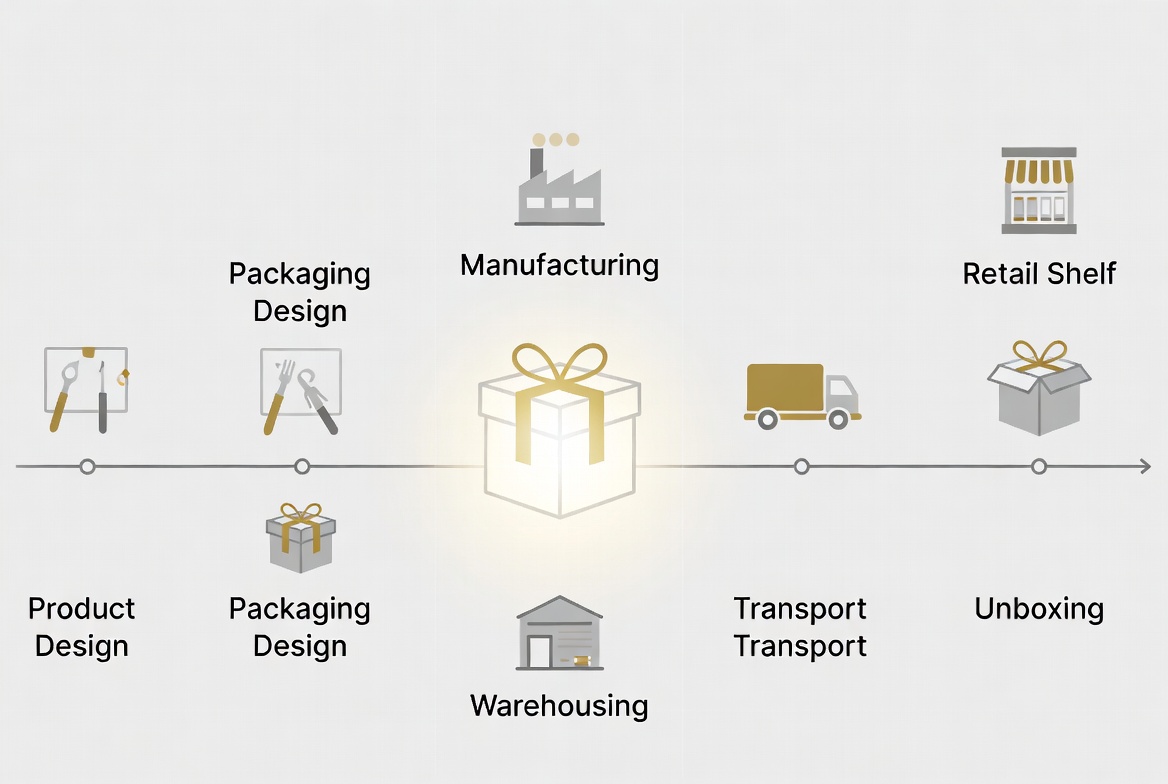
To build a reliable packaging strategy, it helps to think in layers. Most manufacturers work with three main levels: [vrid]
Primary packaging is the immediate container in direct contact with your product. Think of: [magetop]
- A rigid paperboard gift box for a luxury watch
- A folding carton around a pharmaceutical blister pack
- A printed box that reveals a cosmetic bottle perfectly centered inside
This layer must protect the product, communicate essential information, and deliver the intended brand experience the moment a customer opens it. [shopify]
Secondary packaging groups multiple primary units for handling, stocking, and display. A corrugated carton holding 12 paperboard boxes, or a branded sleeve that bundles three cosmetic sets, both qualify as secondary packaging. In retail, this layer often doubles as a ready‑to‑display (RPD) solution, allowing staff to open and place products quickly while keeping brand elements consistent. [serps]
Tertiary packaging is what logistics teams think about: pallets, large shipping cartons, and export crates used to move large volumes safely through regional or global supply chains. Here, stackability, compression strength, and load stability matter as much as printing or aesthetics. [vrid]
When we audit a packaging program for a manufacturer, we evaluate four core functions that must work together. [vrid]
Protection is non‑negotiable. Packaging must shield products from mechanical shock, humidity, contamination, and tampering during storage and transit. [magetop]
Typical protection strategies include:
- Custom‑fit inserts (paperboard, molded pulp, or foam) to prevent movement and impact
- Double‑wall or high‑burst‑strength board for heavier or fragile items
- Additional edge protection and corner reinforcements for export shipments
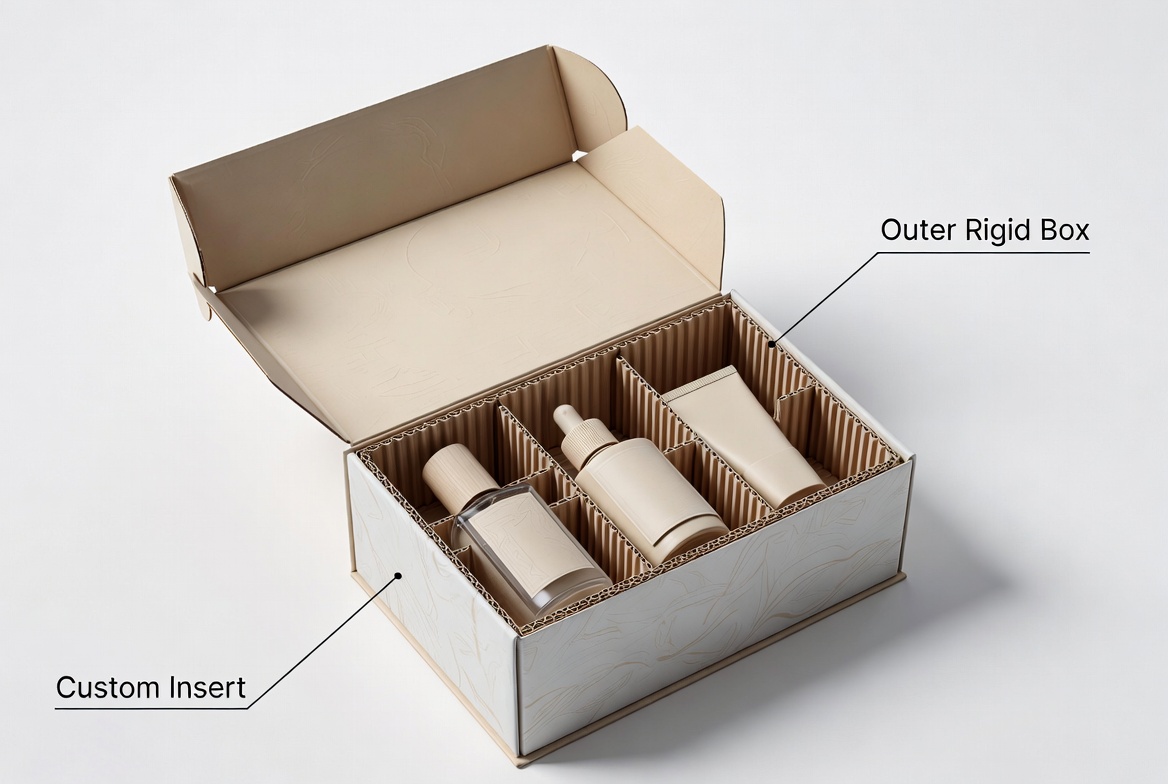
In practice, a custom paperboard gift box for glass cosmetics might combine a rigid outer shell with a die‑cut internal insert, significantly reducing breakage rates while reinforcing the brand's premium position. [serps]
Every package is also a communication surface. It must clearly show: [magetop]
- Product name and variant
- Usage and care instructions
- Safety warnings and regulatory icons
- Material and disposal information (e.g., recycling or sustainability symbols)
Precise, compliant labeling not only avoids legal issues; it directly builds trust by helping customers feel safe and informed in their purchase decisions. [blog.hubspot]
In many categories, customers cannot test the product before buying – they rely on packaging to infer quality. Elements like color, typography, texture, and structural design combine to communicate: [magetop]
- Is this product premium or budget‑friendly?
- Is the brand sustainable and responsible?
- Is the product suited for gifting or everyday use?
For a custom packaging manufacturer, the ability to convert brand stories into physical structures – from minimalist white rigid boxes to vibrant foil‑stamped cartons – becomes a key competitive advantage. [vrid]
Well‑considered packaging makes life easier for both users and staff. Examples include: [magetop]
- Easy‑open tear strips for ecommerce parcels
- Resealable closures for food or personal care products
- Stackable, space‑efficient carton designs for retailers
These small details translate into real value: shorter packing times, faster shelf replenishment, fewer customer frustrations, and better post‑purchase satisfaction. [serps]
Choosing the right material is one of the most important decisions in any packaging project. Each material comes with its own performance, cost, and sustainability profile. [vrid]
For brands that value both sustainability and premium feel, paper‑based materials are often the best choice. [shopify]
Key advantages:
- Versatility: Suitable for everything from folding cartons to rigid gift boxes and inserts
- Printability: High‑quality graphics, foil stamping, embossing, and specialty coatings are easily applied
- Sustainability: Many boards use recycled content and are recyclable in most markets
Manufacturers like Maituohong Packaging typically specialize in rigid paperboard gift boxes and custom paper packaging, offering structural design and finishing options that align with brand goals and logistics constraints. [mthpackagingbox]
Plastic remains common where moisture resistance and high barrier performance are critical. However, many brands are actively replacing or reducing plastics due to regulatory pressure and consumer demand for greener packaging. [shopify]
Molded pulp, bio‑based films, and other alternative materials are increasingly used, especially in electronics, cosmetics, and small home goods. These materials can be paired with paperboard outer boxes to create fully recyclable or compostable solutions that still feel premium in hand. [blog.hubspot]
From a structural perspective, manufacturers and brands typically work with three broad types of packaging. [vrid]
Rigid paperboard boxes and gift boxes:
- Offer superior compression strength and shape stability
- Provide a solid, premium unboxing feel that supports higher price positioning
- Allow sophisticated finishing (e.g., magnetic closures, ribbon pulls, custom inserts)
These make rigid boxes ideal for high‑value products, gift sets, and brand‑building hero SKUs. [serps]
Folding cartons, often made from paperboard, balance cost efficiency with marketing impact. They ship flat, assemble easily, and offer ample area for branding, product information, and barcode placement. [magetop]
Beyond standard boxes, specific applications may require:
- Child‑resistant designs
- Tamper‑evident closures
- Display‑ready or shelf‑ready packaging for retail environments
These specialized structures often combine different materials and components while maintaining a cohesive brand look. [vrid]
Marketers often describe packaging as a silent salesperson, and in my consulting work that phrase proves accurate. In a supermarket aisle or on an ecommerce listing, your packaging is frequently the only "salesperson" the customer sees. [blog.hubspot]
Why this matters:
- Customers make split‑second decisions based on color, clarity, and perceived quality. [magetop]
- Clear benefits and strong visual hierarchy on the box can boost conversion without changing the product itself. [vrid]
- Unboxing experiences are often shared on social platforms, turning packaging into unpaid advertising. [blog.hubspot]
When packaging is engineered and designed strategically, it supports brand storytelling, price justification, and customer delight without a single spoken word. [serps]
High‑performing brands treat packaging as a long‑term strategic asset, not a one‑time design project. For manufacturers and brand owners, a structured packaging strategy typically includes: [vrid]
- Lifecycle thinking: From raw board selection and printing to shipping, storage, and end‑of‑life recycling. [shopify]
- Channel‑specific optimization: Different solutions for retail shelves, ecommerce shipping, wholesale, and export markets. [serps]
- Cost‑to‑value analysis: Balancing material thickness, finishing, and structural complexity against product margin and positioning. [magetop]
Regularly reviewing damage data, freight costs, customer reviews, and retailer feedback allows you to iterate packaging designs and stay ahead of both competitors and regulations. [blog.hubspot]
From the perspective of a paper packaging specialist with more than 18 years in rigid gift boxes and custom printed cartons, a few patterns consistently separate top‑performing packaging programs from the rest. [mthpackagingbox]
1. Start with the product's journey, not just its dimensions.
Teams often send only product measurements, but the real design breakthrough happens when we understand how the product is stored, shipped, displayed, and opened. [vrid]
2. Design structure and graphics together.
A structurally sound box with weak graphics underperforms, and vice versa. When structure and design are developed in parallel, brands achieve stronger shelf presence and more efficient production. [magetop]
3. Standardize where possible, customize where it counts.
Using a family of shared structural "platforms" (e.g., standard rigid box sizes) and customizing graphics or inserts can dramatically cut tooling costs while keeping each SKU on brand. [serps]
Consider a mid‑size cosmetics brand moving from simple folding cartons to rigid paperboard gift boxes for its holiday collections. Working with a custom packaging manufacturer, the brand: [magetop]
- Reduced transport damage by introducing internal paperboard inserts and reinforced corners
- Improved shelf visibility with foil‑stamped logos and textured wrapping paper
- Increased repeat purchase intent, as seen in post‑purchase surveys referencing the "beautiful box" and "luxury feel"
By treating the box as part of the product, not just a cost center, the brand justified a higher price point and gained new retail placements. [serps]
To turn these concepts into action, brands can use a simple decision framework when briefing a packaging partner. [vrid]
1. Define the product and journey
- Weight, fragility, and dimensions
- Distribution channels (retail, ecommerce, wholesale)
- Typical transport distances and conditions
2. Clarify brand and positioning
- Target customer profile
- Desired perception (luxury, eco‑friendly, minimalist, playful)
- Core brand colors and visual guidelines
3. Set constraints and priorities
- Budget per unit and volume forecast
- Sustainability targets (e.g., plastic‑free, recyclable)
- Lead time and manufacturing capabilities
4. Collaborate on structure and materials
- Decide between rigid, folding, or hybrid formats
- Select board grades, wrapping papers, and inserts
- Plan finishing (varnish, embossing, foils, windows)
5. Prototype and test
- Physical mock‑ups for stacking, opening, and display
- Drop tests and compression tests for logistics
- User feedback on unboxing clarity and satisfaction
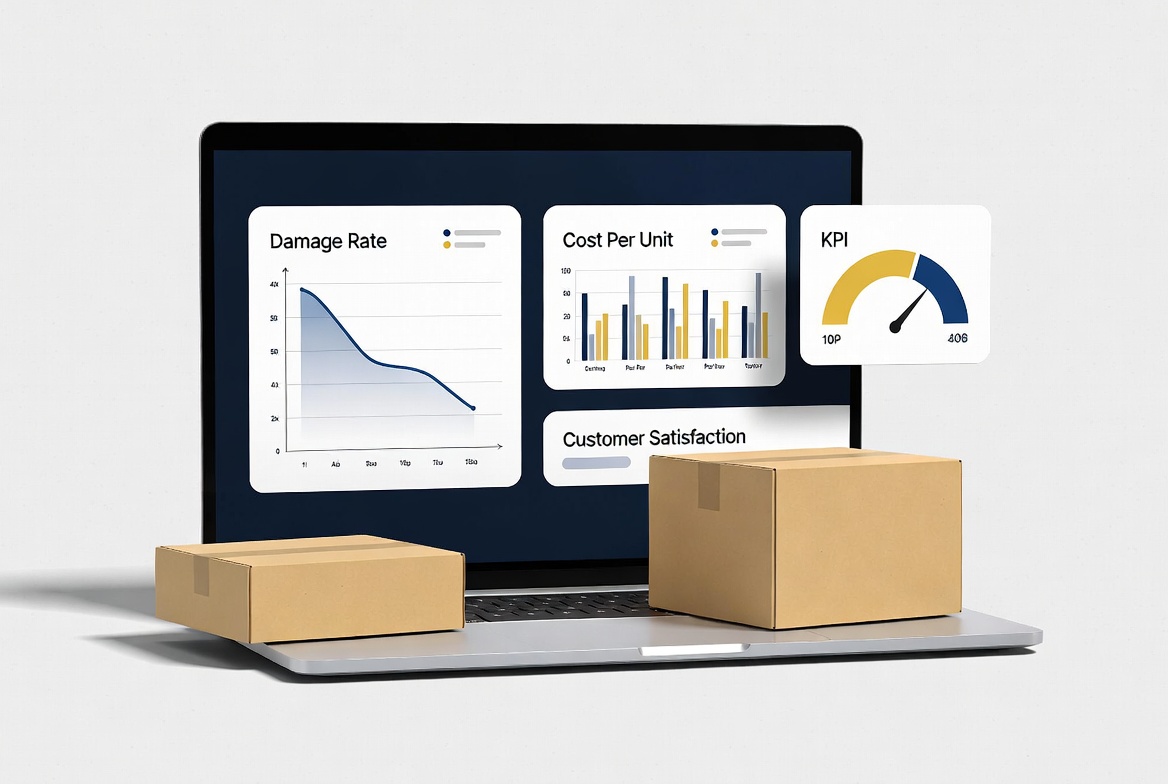
High‑performing manufacturers and brands increasingly treat packaging decisions as data‑driven experiments rather than fixed choices. [serps]
Key metrics you can track:
- Damage and return rates: Percentage of orders returned due to packaging‑related damage or leaks
- Packaging cost as a share of product cost: Useful for ensuring alignment with price and margin
- Pick‑and‑pack speed: Time needed for warehouse staff to assemble and pack each order
- Customer satisfaction and reviews: Mentions of packaging quality, design, or unboxing experience
By linking these metrics to specific packaging designs, brands can justify investments in better materials or structures and demonstrate clear ROI in the form of fewer returns, higher ratings, and increased repeat orders. [gushwork]
For many buyers, especially in ecommerce and premium retail, sustainability is no longer optional. Paper‑based packaging, when designed thoughtfully, can play a central role in a brand's sustainability story. [shopify]
Practical ways to make paper packaging more sustainable:
- Use recycled or FSC‑certified paperboard where appropriate
- Design structures that reduce offcuts and material waste
- Clearly mark recycling information on the box to guide proper disposal
- Replace plastic trays or windows with die‑cut paperboard solutions
With regulatory and consumer pressure increasing, brands that move early to low‑plastic, high‑recyclability packaging will enjoy both reputational and operational advantages. [blog.hubspot]
A strong packaging result rarely comes from a one‑way brief; it emerges from structured collaboration between brand and manufacturer. [vrid]
To get the most from a specialist like Maituohong Packaging:
- Share detailed context: product specifications, sales channels, logistics constraints, and sustainability goals
- Invite early design input: structural engineers can highlight risks or opportunities before artwork is finalized
- Plan for scalability: ensure chosen structures and finishes can be produced reliably at forecast volumes and lead times
When treated as a strategy partner rather than a commodity supplier, your packaging manufacturer can help you prevent problems, innovate faster, and keep your packaging aligned with evolving market demands. [mthpackagingbox]
| Packaging Level | Main Purpose | Typical Materials / Structures | Key Stakeholders Involved |
|---|---|---|---|
| Primary | Protect and present the product to end user (magetop) | Rigid paperboard boxes, folding cartons (magetop) | Brand, marketing, packaging designer (vrid) |
| Secondary | Group units for handling and display (magetop) | Corrugated cartons, branded sleeves (magetop) | Logistics, retail operations (serps) |
| Tertiary | Bulk shipping and storage (magetop) | Pallets, large corrugated shipping cartons (magetop) | Supply chain, warehousing, transport (vrid) |
If your current packaging feels like "just a box," you are leaving value on the table. Whether you're planning a new product launch or upgrading an existing line, this is the ideal moment to rethink your packaging as a strategic tool that reduces risk, elevates your brand, and delights your customers. [blog.hubspot]
If you manufacture or sell products that deserve better protection and a stronger shelf or unboxing presence, partner with an experienced custom paper packaging specialist like Maituohong Packaging to design a rigid paperboard or premium carton solution tailored to your exact needs. [mthpackagingbox]
1. What is the main purpose of packaging in business?
The primary purpose of packaging is to protect products, communicate essential information, and support branding from manufacturing through delivery to the end user. [magetop]
2. Why are rigid paperboard boxes popular for premium products?
Rigid paperboard boxes offer high structural strength, premium tactile feel, and excellent print and finishing options, making them ideal for luxury, gift, and presentation packaging. [serps]
3. How does packaging influence customer perception?
Customers often equate well‑designed, sturdy packaging with higher product quality, which can justify premium pricing and improve brand trust and loyalty. [magetop]
4. What makes packaging sustainable?
Sustainable packaging uses responsibly sourced, recyclable, or biodegradable materials, reduces unnecessary volume, and clearly guides consumers on disposal or recycling. [shopify]
5. How can I know if my current packaging is effective?
Track metrics such as damage and return rates, packaging cost per unit, pick‑and‑pack efficiency, and customer reviews mentioning packaging to evaluate performance and identify improvement opportunities. [serps]
1. Paper Mart Blog – “What Do You Mean by Packaging? Understanding the Power Behind Every Box”. https://blog.papermart.com/packaging-guide/what-do-you-mean-by-packaging-understanding-the-power-behind-every-box/
2. Magetop – “How SEO Can Transform the Packaging Industry: A Guide for Manufacturers”. https://www.magetop.com/blog/how-seo-can-transform-the-packaging-industry-a-guide-for-manufacturers/
3. Vrid – “Packaging Content Strategy Guide”. https://vrid.ai/seo-guide/packaging/content-strategy
4. Journaleus – “Google E‑E‑A‑T Optimization for Bloggers: Complete 2025 Guide”. https://journaleus.com/articles/google-eeat-optimization-bloggers
5. HubSpot – “Using the New “E” in E‑E‑A‑T To Generate Interest in Your Brand”. https://blog.hubspot.com/marketing/google-eeat-update
6. SERPs.io – “SEO Guide for Packaging Company: Rankings, Traffic & Leads (2026)”. https://serps.io/resources/seo-guide/packaging-company
7. Maituohong Packaging – “Folding Carton FAQ”. https://www.mthpackagingbox.com/folding-carton-FAQ829734.html
8. Shopify China – “产品包装终极指南(2026)”. https://www.shopify.com/zh/blog/ecommerce-packaging
9. Gushwork – “How SEO Helps Packaging Manufacturers Generate More Leads”. https://www.gushwork.ai/blog/seo-packaging-manufacturers


