
Views: 222 Author: Maituohong Packaging Publish Time: 2026-06-17 Origin: Site


Content Menu
● What Is Packaging? (Manufacturer's Perspective)
● The Core Purposes of Packaging
>> 1. Protection and Product Integrity
>> 2. Communication and Brand Storytelling
>> 3. Customer Experience and Unboxing
● Why Packaging Matters in Modern Marketing
>> First Impressions and Purchase Decisions
>> Brand Recognition on Crowded Shelves
>> Cost Efficiency Without Looking Cheap
● The Four Main Levels of Packaging
● Key Factors That Affect Packaging Performance
● Packaging vs. Industrial Packaging
● Common Packaging Materials for Custom Boxes
● Sustainability and Eco-Friendly Packaging Strategy
● Expert Guide: How to Improve Your Product Packaging (Step-by-Step)
>> Step 1: Clarify Your Packaging Goals
>> Step 2: Understand Your Customer and Use Case
>> Step 3: Optimize Structure Before Decoration
>> Step 4: Integrate Branding and Clear Information
>> Step 5: Test, Measure, and Iterate
● Example: How Custom Rigid Boxes Support Brand Growth
● When to Partner With a Custom Packaging Manufacturer
● Why Choose Maituohong Packaging?
● Call to Action: Start Your Next Packaging Project With Us
● FAQs About Product Packaging
Pro packaging is not just a box – it is a strategic tool that shapes how buyers perceive your brand, judge your quality, and decide whether to contact your sales team or move on to a competitor. Drawing on more than 18 years of manufacturing experience at Maituohong Packaging, this guide explains what packaging is, why it matters for modern brands, and how to design custom paper and rigid cardboard boxes that actually win orders—not just look good on a shelf. [magetop]
In B2B manufacturing, packaging is the engineered system that protects a product, communicates its value, and delivers a consistent brand experience from factory to end user. It covers everything from structure design and material selection to printing, finishing, and logistics planning. [magetop]
For consumer brands, packaging is often the very first "sales conversation" between your product and your customer. Research shows that the way a product is packaged strongly influences purchase decisions and brand perception. For industrial buyers, the same is true, but the focus shifts more toward durability, compliance, and total landed cost over the full lifecycle of the packaging. [altitudemarketing]
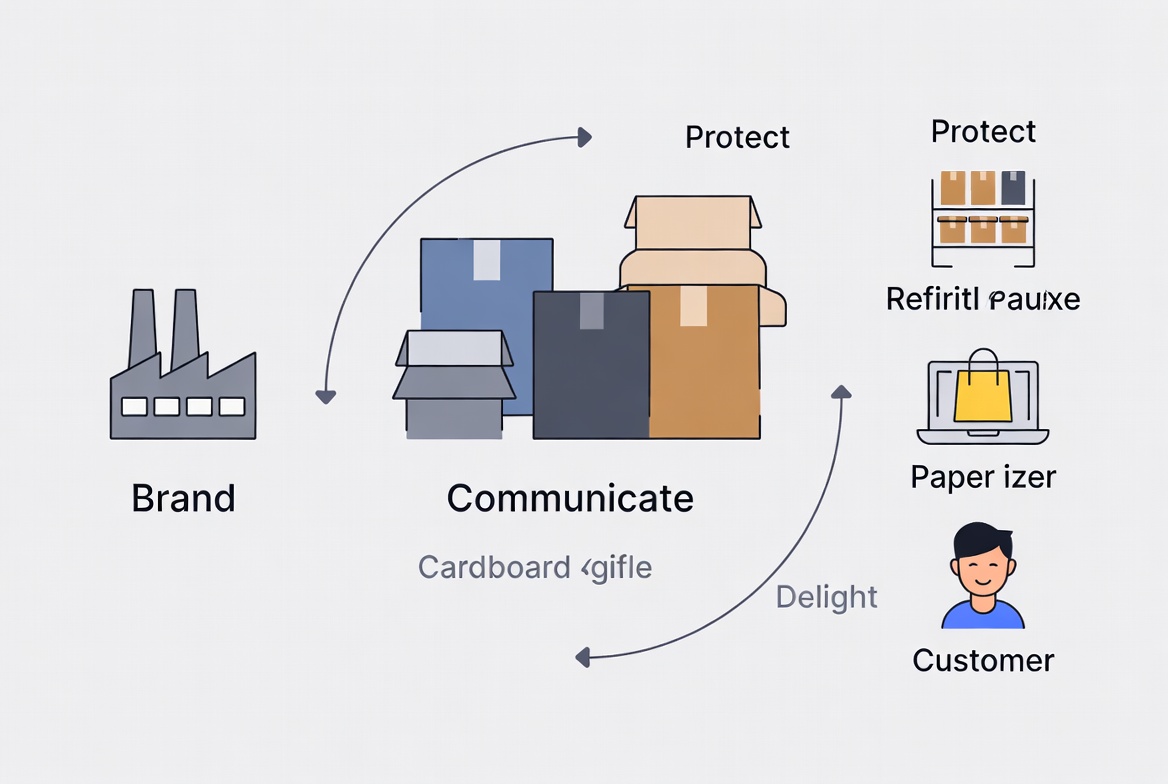
The most fundamental job of packaging is to keep the product safe and usable from your production line to the customer's hands. During transportation, products face vibration, stacking pressure, temperature changes, and moisture, and poor structural design or weak materials can lead to breakage, leakage, or contamination. [4-pack]
Key protection functions include:
- Mechanical protection against shock, vibration, and compression
- Barrier protection against moisture, oxygen, dust, and light
- Tamper-evidence and hygiene, especially for food, cosmetics, and pharmaceuticals [4-pack]
- Shelf-life extension through proper sealing and material selection [magetop]
Your packaging works as a silent salesperson: it tells buyers what the product is, who it is for, and why they should trust you. This goes beyond logos and colors to include claims, certifications, usage instructions, QR codes, and brand values such as sustainability or premium craftsmanship. [anthesisgroup]
Effective packaging communication should:
- Clearly show the product name and key benefit
- Make usage, storage, and safety instructions easy to scan
- Communicate brand positioning (luxury, eco, functional, playful, etc.)
- Support regulatory and compliance requirements where needed [4-pack]
In the era of e‑commerce and social media, unboxing has become a marketing channel in itself. For high-end and gift products, rigid cardboard gift boxes, magnetic closure boxes, or custom inserts can transform a simple purchase into a memorable brand experience. [ecwid]
Small but powerful experience details include:
- Smooth opening and closing experience
- Tidy inner structure (no messy void fill or crushed inserts)
- Surprise elements like thank-you cards, samples, or QR codes
- Finishing touches such as soft-touch lamination or textured paper [ecwid]
Just as curb appeal influences whether you step inside a house, the appearance and feel of packaging heavily influence whether a customer picks up or clicks on your product. Studies show that a large percentage of shoppers perceive well-designed packaging as a sign of higher quality and are more likely to choose these products over similar alternatives. [magetop]
In one practical example from our client work, simply upgrading from a thin folding carton to a rigid cardboard gift box with custom inserts increased product review scores and repeat purchase rates, particularly for gifting use cases. [ecwid]
On a shelf—or on an e‑commerce listing—your packaging must stand out within seconds. Distinctive structural design, color blocking, and consistent brand assets help buyers quickly recognize your products even when competitors offer similar formats and price points. [magetop]
For B2B and industrial customers, recognition also comes from:
- Clear product labeling and barcoding
- Consistent packaging dimensions across SKUs
- Visual cues that indicate fragile, heavy, or hazardous contents [altitudemarketing]
Many brands struggle to balance premium appearance with realistic cost targets. Low-cost packaging does not have to look low-value if materials, structures, and printing processes are chosen strategically. For example, a well-designed rigid paperboard box can achieve a luxury look at a lower cost than metal tins or glass containers, while still delivering excellent protection. [magetop]
Approaches we see working in practice include:
- Optimizing size to reduce material waste and shipping volume [4-pack]
- Using smart structural engineering instead of costly embellishments
- Standardizing some components (inserts, base structures) across different products
Primary packaging is the first layer of material that is directly in contact with the product. It must protect the product, support hygiene, and often carries the main branding visible to end consumers. [magetop]
Examples:
- A glass bottle for skincare serum
- A kraft paper pouch for coffee beans
- A rigid cardboard gift box for luxury electronics or cosmetics
Secondary packaging is an additional layer that typically groups or protects one or more primary units. It can serve both logistical and marketing purposes, especially in retail displays. [magetop]
Examples:
- A printed cardboard sleeve around a rigid inner box
- A branded corrugated carton holding multiple primary units
- SHRINK-wrapped multi-packs grouped for promotion
Tertiary packaging focuses on transportation and bulk handling. Its main job is to move multiple secondary-packaged products safely and efficiently through the supply chain. [4-pack]
Examples:
- Corrugated shipping cartons on wooden pallets
- Stretch-wrapped pallet loads for export containers
Quaternary packaging supports mass handling and long-distance distribution, especially in global logistics. These systems often interface with forklifts, container loading, and automated warehousing. [magetop]
Examples:
- Palletized crates for overseas shipments
- Returnable plastic containers for closed-loop logistics
From a manufacturer's standpoint, successful packaging is not just about graphic design; it must perform in real-life conditions.
The main factors include:
- Distance: Long export routes increase the risk of damage from repeated handling and stacking. [magetop]
- Mode of transportation: Air, sea, road, and rail create different vibration and humidity conditions that packaging must withstand. [4-pack]
- Handling methods: Manual vs. automated handling impacts how corners, edges, and closures are designed. [magetop]
- Product sensitivity: Food, cosmetics, and electronics require specific barrier properties and structural protection to avoid spoilage or malfunction. [4-pack]
As a custom packaging manufacturer, we typically run transport simulations, stacking tests, or pilot shipments for higher-risk projects to validate performance before mass production. [4-pack]
Although the terms are related, they serve different purposes and buyers.
Standard packaging focuses on consumer-facing products and retail or e‑commerce experiences. It emphasizes branding, shelf appeal, and user experience while still meeting basic protection and regulatory requirements. [magetop]
Typical examples:
- Cosmetic boxes, perfume boxes, chocolate gift boxes
- Subscription boxes and e‑commerce mailer boxes
Industrial packaging is primarily about moving and storing goods in bulk safely and efficiently. It must withstand long journeys, rough environments, and heavy stacking. [specright]
Typical examples:
- Heavy-duty corrugated boxes
- Pallets, crates, drums, and FIBCs for industrial materials
- Protective packaging for components and machinery
For many of our customers, we design both: a refined rigid gift box for retail and a robust shipping solution for bulk movement, ensuring that the total system is optimized for cost, protection, and visual impact.
Choosing the right material is one of the most critical decisions in packaging design. It affects cost, durability, environmental footprint, and perceived value.
Widely used materials include:
- Paperboard and kraft boxes – Versatile, printable, and recyclable, ideal for custom folding cartons and gift boxes. [anthesisgroup]
- Grey-board / chipboard – Used in rigid cardboard boxes where a firm, premium structure is required. [magetop]
- Corrugated board – Provides higher strength for shipping cartons and e‑commerce mailers. [magetop]
- Foam or molded pulp inserts – Protect fragile items and keep products securely positioned. [magetop]
- Plastic and metal containers – Used where barrier performance or reusability is critical. [magetop]
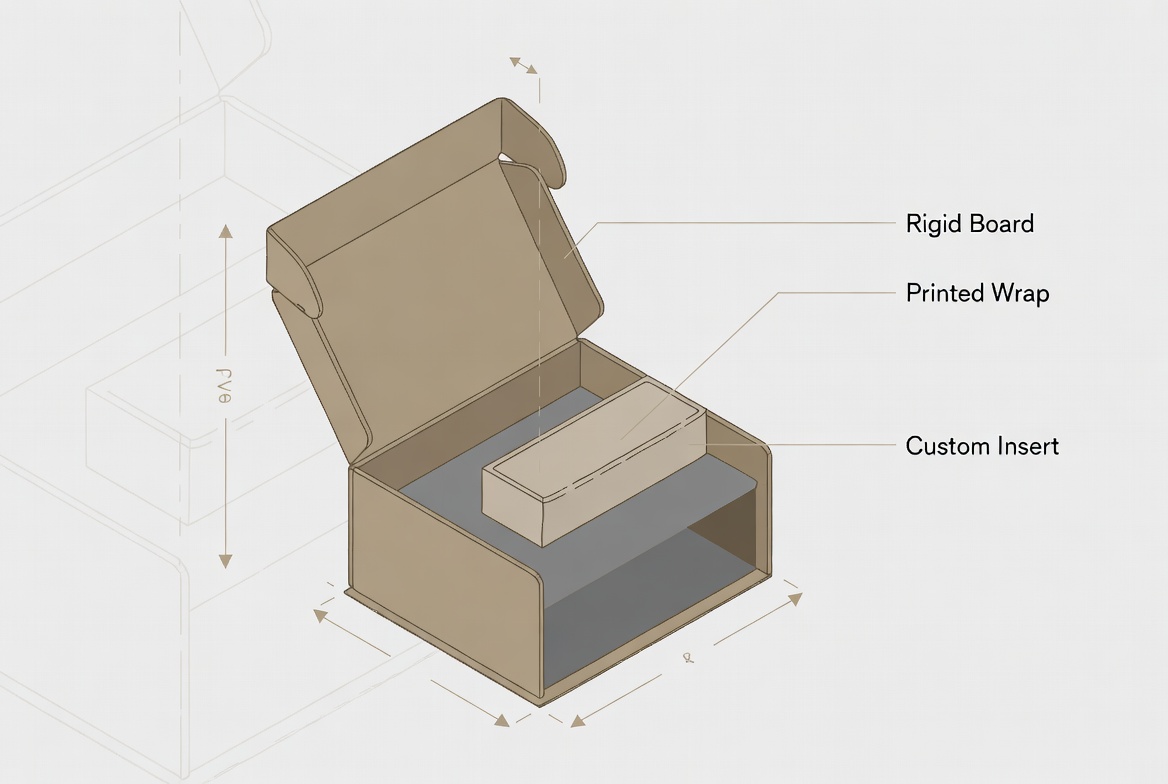
For Maituohong Packaging, our specialization is in rigid cardboard gift boxes and custom paper packaging, where we combine grey-board structures with high-quality printed wraps and tailored inserts to match brand positioning. [magetop]
Sustainability has shifted from "nice to have" to a core requirement in many markets. Buyers, especially in Europe and North America, increasingly expect packaging to reduce waste, use recycled content, and be easy to recycle or reuse. [anthesisgroup]
Practical actions brands can take include:
- Reducing unnecessary layers and over-sized packaging to minimize material use [4-pack]
- Selecting recyclable substrates like FSC-certified paper and cardboard when possible [anthesisgroup]
- Incorporating recycled content into cartons and inserts [4-pack]
- Designing packaging that is easy to disassemble and separate for recycling [4-pack]
From a manufacturer perspective, we also help clients balance sustainability with product protection to avoid damage and returns, which often carry a higher environmental and financial cost than the packaging itself. [anthesisgroup]
Before you redesign anything, align your internal team on what "better packaging" means for your brand:
- Reduce damage in transit
- Increase perceived value and gifting suitability
- Improve sustainability metrics and compliance
- Lower per-unit packaging and shipping cost [specright]
Setting specific, measurable goals (for example, 20% reduction in breakage rate, or 15% increase in repeat purchase rate) helps you judge whether a new packaging design is successful. [specright]
Think through the full customer experience:
- Who opens the packaging (retail customer, gifting recipient, technician)?
- Where is it stored (home, warehouse, shop shelf)?
- How is it disposed of (recycled, reused, thrown away)? [ecwid]
For premium and giftable products, investing in rigid cardboard gift boxes with high-end finishing can significantly improve unboxing satisfaction and brand loyalty. [ecwid]
From an engineering standpoint, structural design is more critical than artwork in determining protection and usability. We typically:
- Adjust dimensions to tightly fit the product and reduce movement
- Add inserts or compartments to separate components
- Choose board thickness based on product weight and transport route [4-pack]
Only after the structure is confirmed do we move to surface design, printing, and finishing to bring your brand to life.
Use your packaging as a compact brand guide:
- Consistent logo placement, colors, and typography across all SKUs [magetop]
- Short, benefit-led messages instead of long, dense paragraphs
- Clear hierarchy for product name, key features, and regulatory information
This not only supports marketing but also helps warehouse teams, distributors, and retailers handle and display your products correctly. [altitudemarketing]
High-performing packaging is rarely perfect in its first iteration. Leading brands and manufacturers:
- Conduct drop, compression, and vibration tests for export shipments [4-pack]
- Gather customer feedback on unboxing, usability, and perceived value
- Track metrics such as damage rates, return reasons, and review scores over time [specright]
As a manufacturing partner, we can adjust board thickness, insert design, and finishing based on performance data, not just aesthetics.
Consider a mid-sized cosmetics brand upgrading from standard folding cartons to custom rigid cardboard gift boxes. After the redesign:
- Retail partners reported fewer damaged units on arrival due to improved structural protection.
- The brand saw a lift in online conversion rates during gifting seasons, driven by more premium perceived value.
- User-generated content and unboxing posts increased, effectively turning packaging into a low-cost media channel. [ecwid]
Cases like this illustrate why strategically designed packaging should be viewed as an investment rather than a fixed cost.
You should consider working with a specialized manufacturer like Maituohong Packaging when:
- You need custom sizes and structures that off-the-shelf boxes cannot provide.
- Your products require premium rigid cardboard gift boxes with precise tolerance and finishing.
- You are scaling internationally and need consistent quality and performance across large volumes.
- You are building a sustainable packaging roadmap and need practical material and process guidance. [anthesisgroup]
A strong manufacturing partner will help you translate brand strategy into industrially feasible designs, optimize costs, and maintain stable quality across multiple production runs.
With more than 18 years of experience in designing and producing high-quality rigid cardboard gift boxes and custom paper packaging, Maituohong Packaging combines structural engineering, material expertise, and precise printing to support global brands. [magetop]
Our core strengths include:
- Custom rigid box development for luxury, cosmetics, electronics, and gifting
- Structural prototypes and sampling to validate fit and performance
- Material consultation, including eco-conscious paper and board options [anthesisgroup]
- Scalable production capacity backed by strict quality control procedures
If you are planning a new product launch, trying to upgrade your packaging for export markets, or exploring sustainable alternatives, our engineering and design team can work with you from concept to mass production.
If you are ready to transform your product presentation and protection with custom paper packaging or rigid cardboard gift boxes, contact Maituohong Packaging to discuss your next project. Share your product dimensions, target markets, and brand goals, and our experts will propose structures, materials, and finishing options tailored to your needs.
1. What is the difference between packaging and industrial packaging?
Packaging mainly focuses on consumer-facing products, combining branding with product protection, while industrial packaging focuses on moving and storing goods in bulk with an emphasis on durability, compliance, and logistics efficiency. [altitudemarketing]
2. How do I choose the right material for my custom box?
You should balance product weight, fragility, transport route, sustainability goals, and budget, then select an appropriate combination of grey-board, paperboard, corrugated board, and inserts that meets these needs. [anthesisgroup]
3. Why are rigid cardboard gift boxes popular for premium products?
Rigid boxes provide a firm, high-end feel, excellent protection, and strong visual impact, which makes them ideal for gifting, luxury goods, and brand positioning where perceived value matters. [ecwid]
4. How can packaging support sustainability goals?
Brands can reduce material use, design for recyclability, incorporate recycled content, and choose certified paper or board while still protecting products to avoid returns and waste. [anthesisgroup]
5. When should I redesign my packaging?
Common triggers include entering new markets, launching premium lines, facing high damage rates, changing sustainability targets, or repositioning your brand; in these cases, a strategic redesign can improve both performance and perception. [altitudemarketing]
1. Ibex Packaging – *What is Packaging & Its Importance in Marketing*
<https://ibexpackaging.com/what-is-packaging/> [magetop]
2. 4Pack – *Achieving Compliance With Sustainable Packaging Requirements*
<https://4-pack.com/knowledge-centre/achieving-compliance-with-sustainable-packaging-requirments/> [4-pack]
3. Anthesis Group – *Best Practices for Eco-Friendly Packaging*
<https://www.anthesisgroup.com/insights/sustainable-packaging-strategy/> [anthesisgroup]
4. Altitude Marketing – *SEO Strategies for Packaging Brands*
<https://altitudemarketing.com/blog/seo-for-packaging-brands/> [altitudemarketing]
5. Ecwid – *Custom Product Packaging: Real Examples to Make Your Store Stand Out*
<https://www.ecwid.com/blog/custom-product-packaging.html> [ecwid]
6. Specright – *The Journey to Sustainable Packaging Compliance*
<https://www.specright.com/blog/sustainable-packaging-compliance/> [specright]
7. Magetop – *How SEO Can Transform the Packaging Industry*
<https://www.magetop.com/blog/how-seo-can-transform-the-packaging-industry-a-guide-for-manufacturers/> [magetop]


