
Views: 222 Author: Maituohong Packaging Publish Time: 2026-06-18 Origin: Site


Content Menu
● Introduction: Why Paper Coating Matters for Modern Packaging
● Core Paper Coating Materials
● Main Types of Paper Coating Used in Packaging
>> 1. Liquid Coatings (On-Press or Post-Press)
>>> 1.3 UV Coating
>>> 2.1 Polypropylene (PP) Lamination
>>> 2.2 Polyester (PET) Lamination
● How Coating Choices Impact Printing, Branding, and Costs
>> Print Quality and Color Reproduction
>> Brand Perception and Tactile Experience
>> Cost and Production Efficiency
● Sustainability and Regulatory Considerations
>> Moving Beyond Plastic-Heavy Coatings
>> Food-Contact Safety and Compliance
● Expert Framework: How to Choose the Right Coating for Your Packaging
>> Step 1: Define Functional Priorities
>> Step 2: Map Priorities to Coating Families
● Case Insight: Coating Choices for Rigid Gift Boxes
● Practical Checklist for Designers and Buyers
● Why Work with an Experienced Coated-Paper Packaging Manufacturer
● Frequently Asked Questions (FAQ)
If you are designing custom paper packaging or rigid gift boxes, the coating you choose will often decide how the box looks, feels, and survives real-world handling. In my experience working with global packaging buyers, paper coating has shifted from a "nice-to-have finish" to a strategic lever for brand perception, sustainability, and cost control. [pulpandpaper-technology]
In this guide, I will unpack what paper coating is, how different coating types work, and how brands can select the right solution for luxury products, e‑commerce shipping, and food-grade packaging. You will also see where high-end manufacturers like Maituohong Packaging fit into this landscape, especially for custom rigid cardboard gift boxes and premium printed packaging.
At its core, paper coating is the process of applying a thin functional layer—often a mixture of minerals, polymers, or water-based resins—onto the surface of paper or paperboard to improve printability, appearance, and performance. This layer can make the sheet smoother, glossier or more matte, more resistant to moisture and scratches, or more opaque for high-impact graphics. [chilliprinting]
For packaging manufacturers, paper coating is not just cosmetic. It directly affects:
- Print quality and color accuracy for branding. [summitprintingpro]
- Protection against scuffs, fingerprints, and humidity during transport and shelf life. [chilliprinting]
- Sustainability claims, especially when moving away from plastic-heavy laminates. [sciencedirect]
A useful way to think about coating is: inks create the design; coatings protect and "sell" the design in real-world conditions.

Many coatings are formulated from mineral fillers and binders that adjust how light reflects from the surface and how the paper behaves under stress. Common materials include:
- Ground calcium carbonate (GCC) – improves brightness, opacity, and smoothness for detailed printing.
- Precipitated calcium carbonate (PCC) – engineered particle size for controlled gloss and bulk.
- Kaolin clay – enhances smoothness and print definition, widely used in coated art papers.
- Talc – improves runnability and reduces dusting in high-speed printing.
- Starch – adds surface strength and acts as a bio-based binder. [sciencedirect]
- Styrene–butadiene (SB) latex – contributes to flexibility, binding, and water resistance.
- Titanium dioxide – used where very high opacity and brightness are needed.
- Wax and other additives – tune slip, rub resistance, and tactile feel.
Varnish is a clear liquid coating applied after printing and then cured, often with heat or UV, to form a protective layer. It is widely used when brands want basic protection with flexible finish options. [summitprintingpro]
- Gloss varnish – maximizes shine and color density for vivid packaging.
- Satin varnish – balances subtle sheen with readability.
- Matte varnish – reduces glare and delivers a more understated, premium look.
Varnish improves scratch resistance and ink protection but typically offers less barrier performance than modern aqueous or film laminates. [summitprintingpro]
Aqueous coating is a clear, water-based overprint that has become a default for many high-end print and packaging projects because it dries quickly and has a lower VOC footprint than traditional solvent-based coatings. It is applied inline on the press and protects against scuffs, fingerprints, and minor moisture. [chilliprinting]
Key advantages:
- Fast drying and efficient for large production runs. [chilliprinting]
- Suitable for many recyclable and biodegradable packaging concepts. [pulpandpaper-technology]
- Available in gloss, satin, and matte variants for different branding needs. [chilliprinting]
For custom rigid boxes and premium folding cartons, AQ is often the first choice when a brand wants a premium yet more sustainable finish compared to full plastic lamination.
UV coating uses a liquid polymer that is cured instantly with ultraviolet light to create an extremely glossy and durable surface. This type of coating is popular for: [summitprintingpro]
- High-impact spot UV on logos or key visuals.
- Cosmetic, electronics, and luxury packaging where shelf appeal is critical. [summitprintingpro]
- Applications needing strong rub and scratch resistance.
However, UV coatings can be less forgiving for folding, creasing, and hot stamping, so experienced packaging engineers carefully balance design, board weight, and coating coverage.
Film laminates bond a thin plastic film to the paper or paperboard surface, dramatically boosting barrier performance and durability. They remain important in specific use cases but face increasing scrutiny in sustainability-driven markets. [sustainablepackaging]
PP lamination is common in food packaging, especially for frozen and chilled products, because it provides strong moisture resistance and good heat-sealing performance. It protects graphics from condensation and freezer abrasion, keeping packs looking fresh on shelf. [colorcopiesusa]
Typical benefits:
- Excellent water resistance and grease resistance. [colorcopiesusa]
- Strong mechanical protection during supply-chain handling.
- Cost-effective for large volumes.
Polyester laminates offer high clarity, stiffness, and resistance to UV light, making them a popular choice for premium rigid boxes and display packaging. They help boxes maintain structure and color integrity even in challenging environments. [colorcopiesusa]
Key characteristics:
- High resistance to moisture, abrasion, and UV. [colorcopiesusa]
- Distinctly crisp, "glass-like" appearance suited to luxury sectors.
- Often chosen when long shelf life and structural stability are top priorities.
For Maituohong Packaging, this is where we typically blend structural paperboard engineering with carefully selected PET films to create rigid gift boxes that feel substantial while still emphasizing paper as the main material.
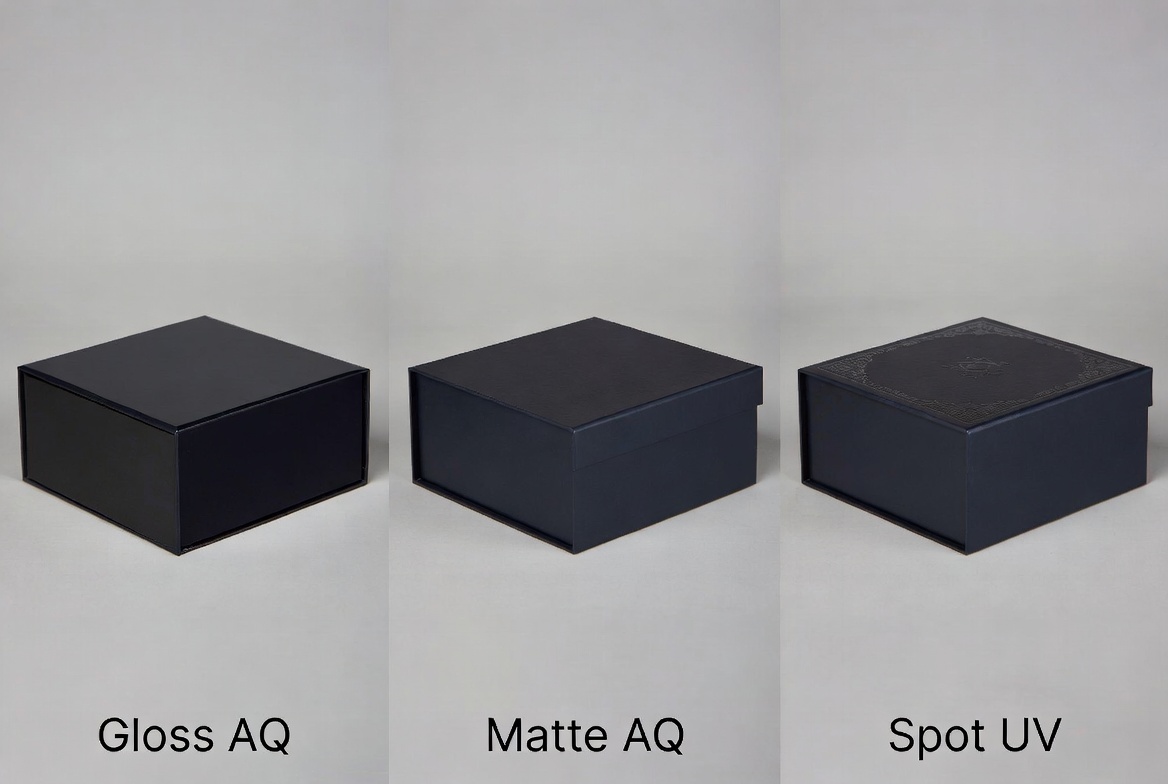
Coated surfaces are smoother and less absorbent, allowing ink to sit closer to the surface, which results in sharper images and richer colors. High-gloss UV or AQ coatings can intensify color saturation, while matte and satin finishes lend a more sophisticated, low-glare look for premium brands. [summitprintingpro]
From a practical standpoint, your design team should test:
- Fine text readability on matte vs gloss.
- Logo legibility under retail lighting.
- Photography quality on different coating bases.
Coating is one of the easiest ways to align packaging with brand positioning. A beauty brand might choose a soft-touch matte overlaminate for a luxurious, velvety feel, while a sports nutrition brand may prefer a high-gloss, high-contrast look with spot UV on metallic inks. [colorcopiesusa]
When we design rigid cardboard gift boxes for export markets, we often prototype several coating combinations so marketing teams can handle and compare them side by side before final specification.
Coatings vary in cost not just by material price but by:
- Machine setup time and curing method.
- Throughput (inline AQ vs offline lamination).
- Waste rates and quality control (e.g., UV coverage consistency). [presortinc]
In many cases, inline AQ offers the best balance between price, protection, and sustainability, while selective use of laminates or spot UV is reserved for hero lines or flagship products.
Global brands are increasingly under pressure to reduce plastic and PFAS-based barrier solutions in paper packaging. Solutions such as water-based dispersions, bio-based waxes, and advanced mineral barrier systems are gaining traction as alternatives to traditional plastic laminates and fluorinated grease-proofing agents. [sustainablepackaging]
For food-contact applications, regulators have tightened restrictions on PFAS use as grease-proof agents on paper and paperboard, with the FDA confirming that PFAS-based grease-proof coatings are being phased out from the U.S. market. This trend is pushing the industry toward safer, more transparent coating chemistries that still meet barrier performance requirements. [fda]
For brands in food, beverage, and confectionery, coatings must comply with relevant FDA (21 CFR) and EU regulations for food-contact materials. This includes ensuring that: [mcpolymers]
- Raw materials are approved in regulations or through food contact notifications. [mcpolymers]
- Migration levels of any residual chemicals stay within safe limits. [compliancegate]
- Suppliers can provide documentation such as declarations of compliance and test reports.
When we work on custom coated paperboard for food-grade boxes, we typically collaborate closely with material suppliers and testing labs to ensure specifications align with both customer and regulatory requirements.
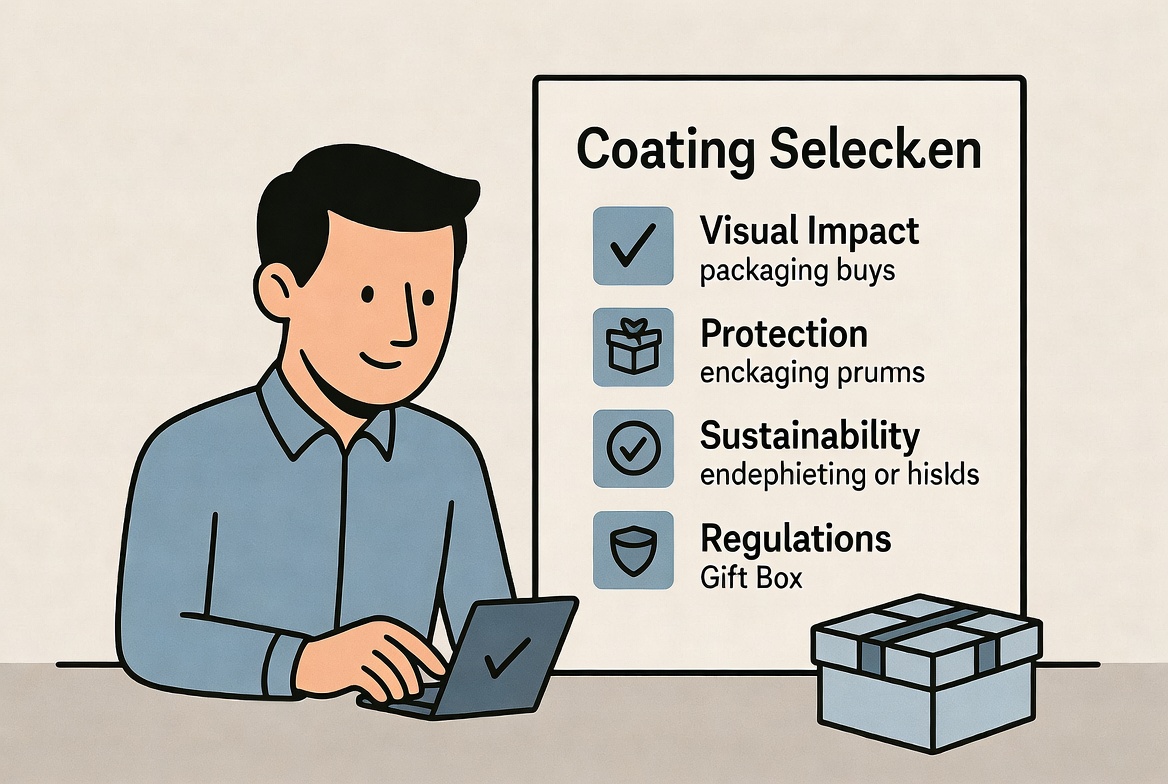
From a practical buyer's perspective, choosing coatings becomes easier if you follow a simple framework.
Decide what matters most for this project:
1. Visual impact – high gloss, deep color, or soft matte.
2. Protection – scratch, scuff, humidity, or freeze–thaw resistance.
3. Sustainability – recyclability, plastic reduction, or specific certifications. [pulpandpaper-technology]
4. Regulatory / food safety – compliance for direct or indirect contact. [compliancegate]
| Main priority | Typical choice | Notes |
|---|---|---|
| Everyday protection | AQ gloss / satin coating (chilliprinting) | Good balance of cost, speed, and recyclability |
| Maximum shelf impact | UV gloss or spot UV (summitprintingpro) | Strong visual pop; check folding and stamping performance |
| Luxury, tactile feel | Matte AQ or soft-touch film (summitprintingpro) | Premium touch; consider fingerprint visibility on very matte jobs |
| Food & frozen products | PP or specialty barrier coatings | Focus on grease/water barrier and legal compliance |
| Sustainability focus | Water-based, bio-based, mineral systems (pulpandpaper-technology) | Reduce plastic content and support recyclability |
Before locking in specifications, we recommend:
- Press proofs with at least two coating variants.
- Simple rub, fold, and tape tests to check cracking and scuffing.
- Transport simulations where feasible (stacking, vibration, condensation).
A small amount of upfront engineering and testing typically saves much larger costs related to returns, reprints, and brand damage.
From our 18+ years manufacturing high-end rigid cardboard gift boxes and custom paper packaging, we see three typical scenarios in export markets:
1. Premium retail gifts (cosmetics, jewelry, tea)
- Outside: matte or satin AQ plus spot UV on logo for subtle contrast.
- Inside: uncoated or lightly coated paper to reduce glare and support tactile unboxing.
2. E‑commerce gift boxes and subscription packaging
- Outside: gloss AQ or light film lamination to handle courier abrasion and humidity.
- Structural: reinforced greyboard or rigid chipboard to prevent crushing in transit.
3. Food and confectionery gift boxes
- Outside: high-quality AQ or lamination for grease resistance.
- Inside: certified food-contact liners and coatings aligned with 21 CFR or EU norms. [mcpolymers]
In each scenario, the coating is deliberately matched to the supply chain, not only to the brand book. This is usually where expert manufacturing partners add the most real-world value.
Use this quick checklist before finalizing your packaging specification:
1. Clarify end use: retail shelf, e‑commerce, cold chain, duty-free, etc.
2. Confirm board type: greyboard, white cardboard, kraft, specialty paper.
3. Choose finish direction: gloss, satin, or matte, aligned with brand.
4. Confirm protection needs: stacking, rubbing, moisture, or freezing.
5. Check regulatory requirements if food or cosmetics are involved. [compliancegate]
6. Align with sustainability goals: recyclability, plastic reduction, region-specific guidelines. [sustainablepackaging]
7. Request coated mockups from the manufacturer for internal sign-off.
Embedding this checklist into your design and procurement workflow reduces risk and improves consistency across markets.
Choosing a manufacturing partner that understands both material science and brand expectations is often more impactful than choosing a slightly cheaper coating chemistry. Experienced producers like Maituohong Packaging can:
- Recommend coating combinations based on product, market, and logistics profile.
- Optimize grammage, board structure, and coating to lower total cost while maintaining perceived value.
- Provide guidance on compliance, eco-claims, and long-term brand consistency based on similar projects.
For brands expanding into new geographies, this kind of experience shortens the learning curve and reduces the risk of expensive trial-and-error runs.
If you are planning a new coated paper packaging project—especially rigid cardboard gift boxes, custom printed sleeves, or specialty paper bags—and want to balance premium appearance with practical performance, consider partnering with a manufacturer that treats coating as a strategic design tool, not just an afterthought.
Contact us to get more information!
1. Is coated paper still recyclable?
Many water-based coatings and light AQ finishes are compatible with standard paper recycling streams, but heavy plastic films or foil laminates can reduce recyclability and may require specialized processing. Always confirm with your supplier and local recyclers. [sciencedirect]
2. Which coating is best for luxury rigid gift boxes?
For most luxury applications, a matte or satin AQ with selective spot UV on the logo or key visuals delivers a premium, low-glare look without excessive plastic use. Soft-touch laminates are also popular but can be more costly and less straightforward to recycle. [colorcopiesusa]
3. What should I use for frozen-food paper packaging?
Frozen and chilled foods typically require PP film lamination or advanced barrier coatings that resist moisture, grease, and low temperatures. Coatings must also meet relevant food-contact regulations, so documentation from suppliers is essential. [mcpolymers]
4. Are UV coatings environmentally friendly?
UV coatings eliminate solvents during curing and are efficient in energy use, but they can be harder to de-ink and may complicate recycling depending on formula and region. Many brands use UV selectively while relying on AQ as their main protective layer. [sciencedirect]
5. How do I brief my packaging supplier about coating?
Provide the product type, distribution method, expected life span, branding goals (gloss vs matte, tactile feel), and any sustainability or compliance targets. Ask your supplier to recommend coating options with pros and cons plus physical samples for internal review. [presortinc]
1. Ibex Packaging. "What is Paper Coating?" (accessed 2026). [https://ibexpackaging.com/what-is-paper-coating/]
2. ChilliPrinting. "Aqueous Coating Explained: Types, Examples & Benefits." 2026. [https://www.chilliprinting.com/online-printing-blog/aqueous-coating/]
3. Summit Printing Pro. "Paper Coatings: UV, Varnish & Aqueous Coatings." [https://www.summitprintingpro.com/resources/paper-coatings.html]
4. ColorCopiesUSA. "What Is Paper Coating? Types, Finishes & Uses Explained." 2024. [https://www.colorcopiesusa.com/what-is-paper-coating.html]
5. Pulp & Paper Technology. "The Future of Packaging: Trends in Paper-Based Solutions." 2025. [https://www.pulpandpaper-technology.com/articles/trends-in-paper-based-solutions]
6. FDA. "Authorized Uses of PFAS in Food Contact Applications." 2025. [https://www.fda.gov/food/process-contaminants-food/authorized-uses-pfas-food-contact-applications]
7. MCP Polymers. "Food Contact Materials Regulations and FDA Compliance." [https://www.mcpolymers.com/library/fda-compliance-food-contact-materials-regulation]
8. ComplianceGate. "Food Contact Materials Regulations in the United States." 2023. [https://www.compliancegate.com/food-contact-materials-regulations-united-states/]
9. ScienceDirect (selected abstract). "Recent progress in sustainable barrier paper coating for packaging." [https://www.sciencedirect.com/science/article/abs/pii/S0300944023001625]
10. Sustainable Packaging Coalition. "2024 Packaging Innovation Trends Report." 2024. [https://www.sustainablepackaging.org]
11. iO Digital. "Google E-E-A-T: Creating Content That Puts People First." 2025. [https://www.iodigital.com/en/insights/blogs/google-e-e-a-t-creating-content-that-puts-people-first]
12. Moz. "What is Google E-E-A-T? Guidelines and SEO Benefits." 2025. [https://moz.com/learn/seo/google-eat]


