
Views: 210 Author: Maituohong Packaging Publish Time: 2026-08-13 Origin: Site


Content Menu
● What Is a Custom Shipping Box?
● Custom Shipping Boxes vs. Mailer Boxes at a Glance
● Structure and Material Differences
● Protection: Which Box Performs Better?
● Branding and Unboxing Experience
● Cost: Look Beyond Unit Price
● A Practical Selection Framework
>> Step 1: Define the product risk
>> Step 2: Map the delivery route
>> Step 3: Determine the packing configuration
>> Step 4: Compare total packaging cost
● Expert Insight: Match the Box to the Shipment, Not the Product Alone
● Sustainability and Material Claims
● When to Choose Custom Shipping Boxes
● FAQ
>> 1. Are mailer boxes strong enough for shipping?
>> 2. Do custom shipping boxes always need tape?
>> 3. Which option is better for e-commerce packaging?
>> 4. Can a mailer box be printed inside and outside?
>> 5. How do I reduce shipping costs with custom boxes?
>> 6. What information should I provide before requesting a quote?
>> 7. Can custom shipping boxes and mailer boxes use recycled paper?
Choosing between custom shipping boxes and mailer boxes affects much more than packaging appearance. It influences product protection, fulfillment speed, freight efficiency, customer perception, and the total cost of delivering an order.
At Maituohong Packaging, we have spent more than 18 years designing and manufacturing custom paper packaging for brands that need both dependable protection and a distinctive presentation. In practical production work, the right choice is rarely "the strongest box" or "the prettiest box." It is the structure that matches the product, delivery channel, handling risks, and brand objective.
This guide explains the real differences between custom shipping boxes and mailer boxes, including materials, structure, printing, cost, sustainability considerations, and selection methods.
A custom shipping box is a corrugated carton engineered primarily to protect products during storage, handling, transport, and delivery. The most familiar version is the Regular Slotted Container (RSC), which has four flaps on the top and bottom and is usually sealed with packing tape.
Custom shipping boxes can be made in many dimensions, board grades, flute combinations, and print options. They are commonly used for:
- Bulk orders
- Heavy products
- Fragile goods
- Industrial components
- Multiple products packed in one carton
- Warehouse and pallet shipments
- Export and long-distance transportation
A shipping carton is usually designed around protection and logistics first. Branding can be added, but the main structural goal is to keep the product stable from dispatch to delivery.
For example, a manufacturer shipping 12 glass candle jars to a distributor may need a double-wall corrugated shipping box, dividers between every jar, and carefully calculated internal clearance. A visually attractive box alone would not be enough.
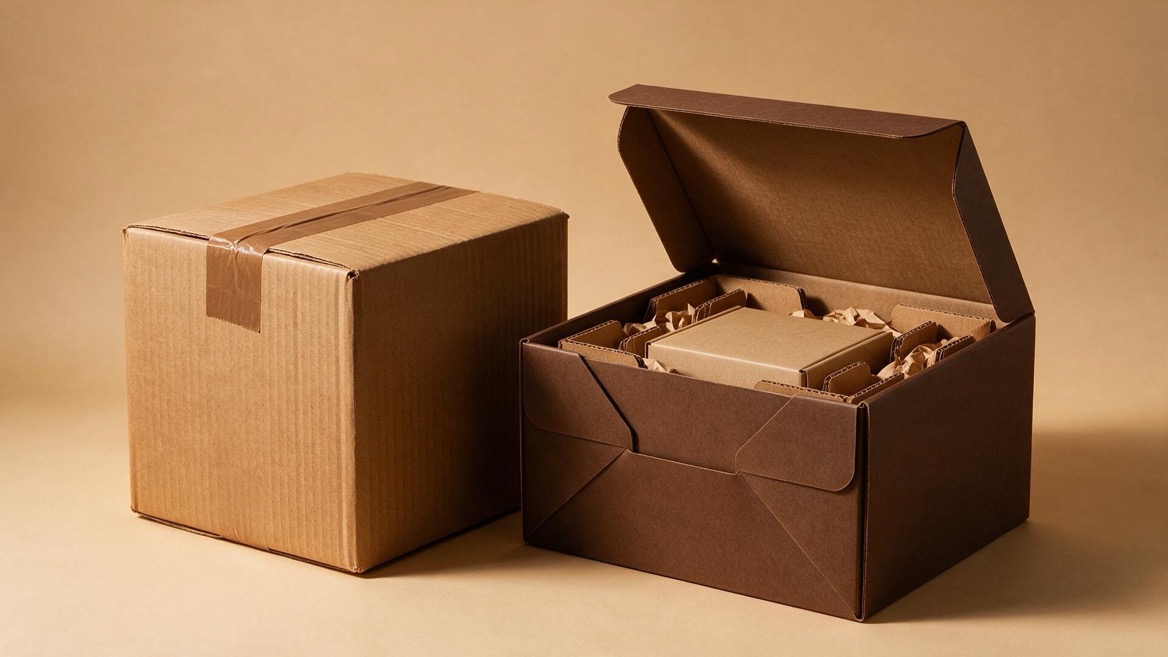
A mailer box is usually a one-piece corrugated box with a self-locking lid and side panels. It folds into shape without glue or tape in most standard designs. The roll-end tuck-front style is especially popular for direct-to-consumer orders, subscription programs, gifts, apparel, cosmetics, accessories, and smaller e-commerce products.
Mailer boxes are made to create a clean and deliberate opening experience. They can be printed on the outside, inside, or both. A brand may use the inside lid for a welcome message, product instructions, a seasonal campaign, or a QR code.
Typical uses for custom mailer boxes include:
- Subscription boxes
- Online retail orders
- Product launch kits
- Influencer mailings
- Gift sets
- Apparel and accessories
- Skincare and cosmetics
- Small electronics
- Branded promotional kits
A mailer box can still provide good protection when it is correctly sized and made with suitable corrugated board. However, it is not automatically the right choice for every product or shipping route.
| Factor | Custom Shipping Boxes | Mailer Boxes |
|---|---|---|
| Main purpose | Transport protection and operational efficiency | Product presentation and direct delivery |
| Typical structure | RSC, die-cut shipper, telescopic carton, multi-depth carton | Roll-end tuck-front, self-locking die-cut format |
| Closure | Usually requires tape | Usually locks without tape |
| Best for | Heavy, fragile, bulky, or multi-item orders | Smaller, lighter, branded single orders |
| Board options | Single-wall, double-wall, heavy-duty grades | Commonly lightweight to medium corrugated board |
| Stacking performance | Usually stronger for warehouse stacking and pallet loads | Suitable for parcel delivery, but less suited to high stacking loads |
| Printing potential | Often simple exterior printing, though full customization is available | Excellent exterior and interior print opportunities |
| Assembly speed | Requires folding and sealing | Fast assembly with integrated locking tabs |
| Unboxing effect | Functional and protective | More polished and brand-focused |
| Void-fill requirement | Often higher for oversized or multi-item packs | Can be lower when the fit is precise |
| Typical customer journey | B2B, wholesale, export, fulfillment | DTC, retail delivery, gifting, subscriptions |
The key distinction is simple: shipping boxes are usually built around transport performance, while mailer boxes are usually built around a balance of protection, convenience, and presentation.
Custom shipping boxes commonly use corrugated board with different flute profiles and paper grades selected according to the product's weight, shape, stacking needs, and route. A larger box does not automatically mean a stronger box. Strength depends on board construction, flute selection, paper quality, box dimensions, and the way the carton is packed.
Common shipping box options include:
- Single-wall corrugated board for standard parcel shipments
- Double-wall corrugated board for heavier or more delicate products
- Reinforced corners for concentrated weight
- Internal partitions for glass, bottles, and electronic components
- Die-cut inserts to prevent movement
- Multi-depth score lines for flexible packing heights
- Water-resistant or protective coatings where appropriate
The RSC format remains widely used because it is practical, material-efficient, and compatible with common packing processes. It can be shipped flat, opened quickly, filled from the top, and sealed securely.
Mailer boxes are commonly die-cut from a single sheet of corrugated board. Their side wings fold inward, while the front tuck and lid create a self-locking closure. This gives the box a neat appearance without requiring a separate tape-sealing process.
For many brands, the structural advantage of a mailer box is its balance between speed and appearance. A fulfillment team can assemble the box, place the product inside, add a small insert if needed, and close it in seconds.
However, the locking tabs must be designed accurately. If the board is too thin, the closure may feel weak. If the tabs are too tight, packing becomes slow and the customer may struggle to open the box. If the internal dimensions are too loose, the product can shift during delivery.
Good mailer-box design is not only about artwork. It is about accurate die-line engineering, proper tolerances, and reliable folding performance.
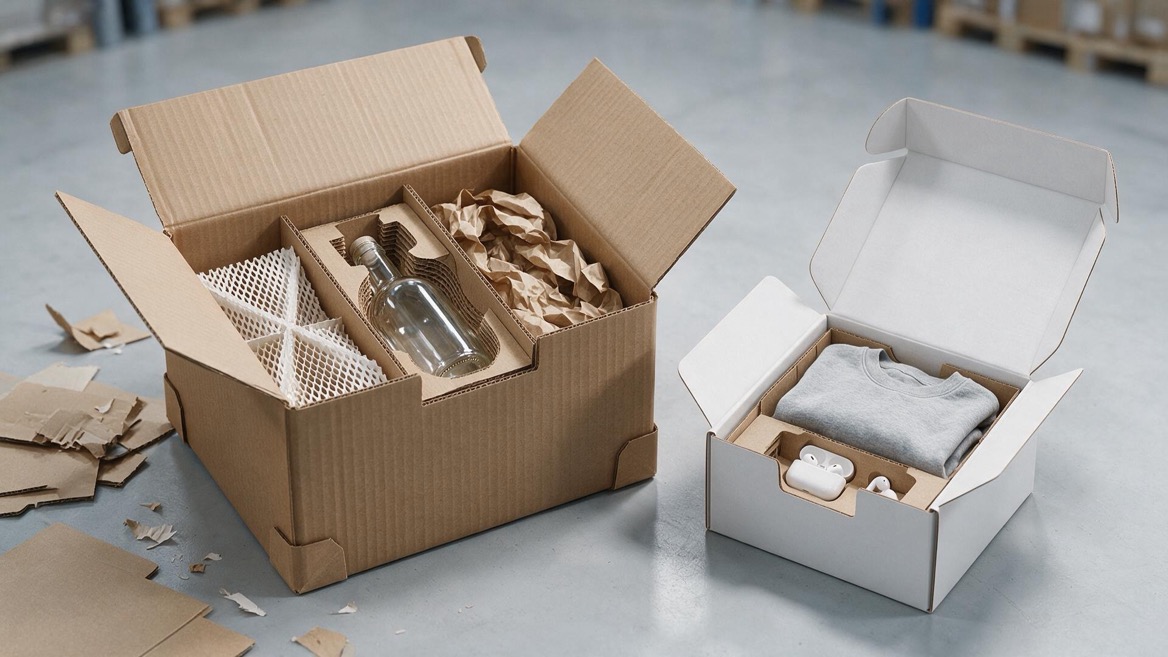
Custom shipping boxes generally provide more flexibility for demanding protection requirements. They can be made with stronger corrugated board, more protective internal components, and larger dimensions for cushioning material.
They are usually the better option when products are:
- Heavy
- Breakable
- Sharp-edged
- Sensitive to compression
- Shipped in multiple units
- Sent through extended export routes
- Stored in warehouses before delivery
- Stacked on pallets
Mailer boxes can protect many products very well, especially lightweight products that fit closely inside the structure. A well-designed mailer box can safely carry clothing, books, cosmetics, small accessories, stationery, soft goods, selected electronics, and subscription items.
The important question is not whether a mailer box is "strong enough" in general. The question is whether it is strong enough for your product and delivery environment.
A ceramic mug may fit neatly in a mailer box, but a snug outer box alone may not protect it from drops or corner impacts. The safer solution could be a mailer box with a molded insert, corrugated divider, or an outer shipping carton. In contrast, a folded T-shirt may need no additional protection beyond a properly sized mailer.
Mailer boxes usually offer a stronger brand-presentation opportunity because the box itself becomes part of the customer experience. The recipient opens the lid like a gift box, sees the inside message, and interacts with the product presentation in a controlled sequence.
This makes custom mailer boxes especially useful when the brand wants to communicate:
- Premium positioning
- A personal welcome message
- Product-care instructions
- A campaign story
- A referral or loyalty offer
- Social-sharing prompts
- Reorder information
- Seasonal graphics
Custom shipping boxes can also be branded effectively. A bold one-color logo, handling instructions, product category label, or warehouse code can create a professional appearance while keeping costs controlled. For high-volume B2B shipments, this approach is often more practical than full-color coverage.
The most effective choice depends on who opens the package. If the recipient is a warehouse worker receiving bulk goods, structural efficiency may be more important than an interior printed message. If the recipient is a first-time online customer, the visual experience may have a much larger commercial impact.

Comparing box prices only by the cost per unit can lead to poor decisions. The better comparison is total delivered packaging cost.
This includes:
1. Box material and printing cost
2. Packaging labor time
3. Tape and sealing materials
4. Inserts, dividers, and void fill
5. Storage space for flat-packed cartons
6. Freight charges
7. Dimensional-weight exposure
8. Damage, replacement, and return costs
Mailer boxes may have a higher unit cost than a basic unprinted shipping carton, especially when they include full-color printing, interior printing, special finishes, or custom inserts. Yet they may reduce labor because they often close without tape and require less packing material when precisely sized.
Shipping boxes can be very economical for high-volume shipments, particularly when using standard structures and limited-color printing. They also offer more flexibility when products require extra cushioning or when one carton must hold several units.
Carriers often calculate charges using either actual weight or dimensional weight, depending on which is higher. That means unused space can become expensive. A box that is only 25 mm taller than necessary may look insignificant, but across thousands of shipments, extra volume can affect freight spending.
Right-sizing is one of the most practical ways to reduce packaging and shipping waste at the same time.
Use the following process before choosing a box style.
Record the product's weight, dimensions, fragile points, surface sensitivity, and value. A lightweight product may still need strong protection if it has a delicate finish or a high replacement cost.
Ask whether the order will travel by local courier, international parcel service, sea freight, air freight, or pallet delivery. The longer and more complex the route, the more important structural protection becomes.
Will the box contain one item, several items, a gift set, or a product plus accessories? The answer affects internal dimensions and whether inserts, dividers, or void fill are required.
Calculate packaging materials, assembly labor, tape, inserts, storage, freight volume, and expected damage risk. Do not select a lower-cost box if it creates frequent returns or product breakage.
Request a physical sample before mass production. Check how the box folds, locks, prints, holds the product, and survives handling. For higher-risk parcel shipments, a structured transit test can help identify weaknesses before a full production run.
A frequent packaging mistake is selecting one box style for every sales channel. The same product can require different packaging depending on where and how it is sold.
For example, a premium skincare brand may use:
- A printed rigid gift box for retail presentation
- A custom mailer box for individual online orders
- A stronger outer shipping carton for wholesale deliveries
- A master carton for export pallet shipments
The product is the same, but the packaging function changes at each stage.
This multi-layer approach can improve efficiency because each box is assigned a specific job. The presentation box makes the product feel valuable. The mailer box creates a branded delivery experience. The shipping carton protects multiple units during logistics.
Paper-based packaging can be a strong choice when it is designed responsibly, right-sized, and supported by suitable recovery systems. Corrugated board is widely collected and reused in many markets, but brands should be careful with broad environmental claims.
Avoid vague statements that cannot be verified. Instead, use precise language such as:
- "Made with X% recycled content"
- "FSC-certified material, where applicable"
- "Designed to reduce unnecessary void space"
- "Recyclable where local facilities accept corrugated paper packaging"
- "Water-based ink option available"
A practical design also matters. A box that uses less material but fails in transit is not automatically the better solution. Product damage can create replacement shipments, additional materials, and customer dissatisfaction.
The most responsible choice is usually the lightest structure that reliably protects the product throughout its real delivery journey.
Choose custom shipping boxes when you need:
- Stronger compression and stacking performance
- Protection for fragile, bulky, or heavier products
- Multi-product packing capability
- Space for protective void fill or partitions
- Cost-efficient bulk shipment packaging
- Warehouse-friendly carton formats
- Reliable solutions for export and freight handling
- Custom dimensions for complex product configurations
They are particularly suitable for industrial parts, ceramics, glassware, home goods, electronics, wholesale orders, and large product bundles.
Choose mailer boxes when you need:
- A memorable direct-to-customer delivery experience
- Fast tape-free assembly
- Custom exterior and interior printing
- A compact box for lightweight to medium-weight products
- A presentation-ready package for gifts or subscriptions
- A tight fit that minimizes internal movement
- Brand storytelling at the moment of opening
They are particularly suitable for apparel, cosmetics, books, accessories, subscription kits, wellness products, samples, and branded promotional packages.
Custom shipping boxes and mailer boxes are not competing solutions in every situation. They solve different packaging problems.
Choose a custom shipping box when protection, stacking strength, bulk packing, and logistics efficiency are the priority. Choose a mailer box when presentation, convenient assembly, and a polished customer-opening experience matter most.
At Maituohong Packaging, we help brands move from concept to production by reviewing product dimensions, shipping conditions, board options, printing requirements, and packing workflow. Send us your product size, estimated order quantity, target market, and shipping method to receive a packaging recommendation tailored to your project.
Yes, mailer boxes can provide dependable parcel protection for many products when the board grade, dimensions, and internal fit are properly designed. Heavy, fragile, or high-value items may need inserts, added cushioning, or an outer shipping carton.
Most standard shipping boxes need tape or another external seal because they use top and bottom flaps. Some die-cut shipping formats can use self-locking structures, but tape remains common for secure transit closure.
Mailer boxes are often better for individual branded orders, subscription programs, and gifts. Custom shipping boxes are often better for heavy products, multi-item orders, and shipments requiring more protective material.
Yes. Mailer boxes can be printed on the exterior, interior, or both sides. Interior printing is useful for welcome messages, instructions, promotional offers, and branded unboxing moments.
Start by right-sizing the box to reduce empty space. Then review board weight, internal packing materials, product arrangement, and carrier dimensional-weight rules. A smaller, well-fitted box can lower freight cost while improving protection.
Provide product dimensions, product weight, quantity per box, desired order quantity, shipping destination, printing requirements, preferred materials, and whether you need inserts or dividers. Product photos and samples can also help confirm the best structure.
Yes, recycled-content paper options may be available depending on the required board strength, print finish, and project specifications. Any recycled-content or recyclability claim should be specific and supportable.
1. [UPS — Package Dimensions, Size Limits and Dimensional Weight Guide] [ups]
2. [International Safe Transit Association — Test Procedures, Including Procedure 3A for Parcel Delivery Shipments] [ista]
3. [FEFCO — The Regular Slotted Case (RSC)] [fefco]
4. [Forest Stewardship Council — Chain of Custody Certification] [fsc]
5. [U.S. Federal Trade Commission — Environmental Claims Summary] [ftc]
6. [Fibre Box Association — Corrugated Is Recyclable] [fibrebox]


