
Views: 233 Author: Maituohong Packaging Publish Time: 2026-08-04 Origin: Site


Content Menu
● Manufacturing and Material Considerations
● Shipping and Cost Implications
● Industry Case Insight: Choosing by Product Category
● Practical Steps for Selecting the Right Box Style
● Sustainability Considerations for Both Styles
Choosing between a drawer box and a flip top box is one of the most consequential decisions a brand makes when designing custom rigid packaging, because the wrong choice can undermine unboxing experience, shipping costs, and even shelf presentation. As a packaging manufacturer with over 18 years of hands-on experience producing custom rigid boxes and folding gift boxes, Maituohong Packaging has seen firsthand how this single structural choice shapes customer perception and product protection.
A drawer box, sometimes called a slide box, consists of two separate components: an outer sleeve and an inner tray that slides in and out like a drawer. This "pull-and-reveal" mechanism creates a deliberate pause in the unboxing sequence, which many premium brands use to build anticipation.
Drawer boxes are widely used for jewelry, watches, cosmetics, and electronics because the sliding motion feels tactile and intentional. The rigidity of the board used in drawer construction also means the box holds its shape under repeated opening and closing, which matters for reusable packaging.

A flip top box (also called a hinged-lid box) has a lid that is permanently attached to the base along one edge, allowing it to open and close like a book or a small cabinet. The hinge can be built into the rigid board itself or reinforced with cloth or paper tape for durability.
Flip top boxes are especially popular for gift sets, food packaging, and subscription boxes because the attached lid prevents loss and speeds up repeated access. This style tends to be faster to open than a drawer box, which matters for products consumers reach for frequently, such as tea, skincare, or stationery sets.

| Feature | Drawer Box | Flip Top Box |
|---|---|---|
| Opening mechanism | Sliding tray inside outer sleeve | Hinged lid attached to base |
| Perceived experience | Slow reveal, luxury feel | Quick, practical access |
| Lid loss risk | Low (tray stays attached to sleeve) | Very low (lid physically hinged) |
| Assembly complexity | Higher (two separate components) | Lower (single hinged structure) |
| Best board thickness | 1.5mm–3mm for sleeve rigidity | 1.2mm–2.5mm depending on product weight |
| Typical use cases | Jewelry, watches, cosmetics, electronics | Gift sets, food, subscription boxes, stationery |
| Cost per unit | Generally higher due to two-piece construction | Generally lower with single-piece build |
| Ideal for repeated use | Moderate (sliding wear over time) | High (hinge designed for frequent opening) |
From a production standpoint, drawer boxes require precise dimensional tolerances between the tray and sleeve; even a 1mm miscalculation can make the drawer too tight or too loose. Flip top boxes, by contrast, depend heavily on hinge reinforcement, since the fold line is the point most prone to wear.
Both box types typically use grey board or chipboard core wrapped in specialty paper, foil, or fabric, but the lamination process differs slightly:
1. Drawer boxes need the sleeve and tray wrapped separately before assembly, adding a production step.
2. Flip top boxes are often wrapped as a single continuous piece, which reduces material waste and labor time.
3. Reinforced hinges on flip top styles frequently use cloth tape or a fabric spine to prevent cracking after repeated use.
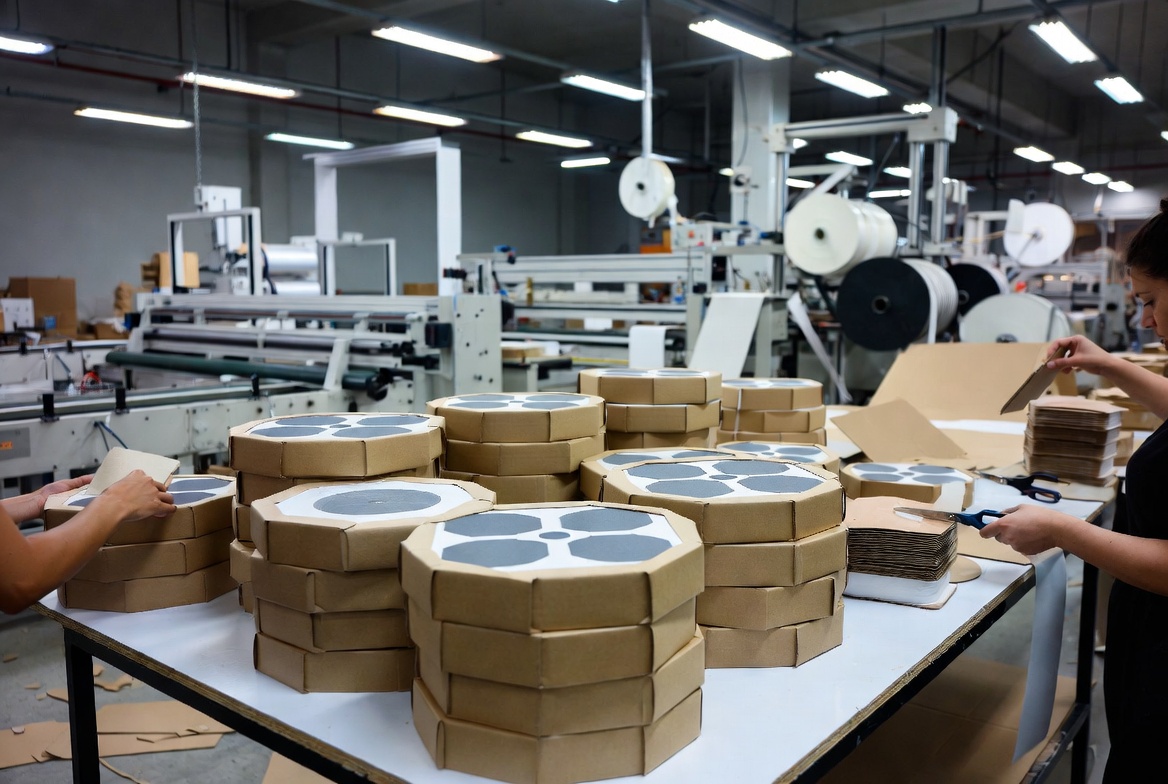
Drawer boxes generally cost more per unit because they require two separately die-cut and wrapped components that must be assembled with tight tolerances. Flip top boxes, being a single connected structure, are typically 8% to 15% less expensive to produce at comparable board thickness and finishing levels, based on typical rigid box production benchmarks in the packaging manufacturing sector.
Shipping costs also differ. Drawer boxes ship less efficiently because the two-piece structure adds bulk and cannot always be nested flat, while flip top boxes can often be shipped flat-packed and assembled at the destination, reducing freight volume for international brands exporting from manufacturing hubs.
Brands in different sectors consistently gravitate toward one style based on how customers interact with the product after purchase.
- Luxury jewelry and watch brands favor drawer boxes because the slow reveal reinforces exclusivity and high price positioning.
- Cosmetics and skincare gift sets often use flip top boxes when the product will be opened daily, prioritizing convenience over ceremony.
- Food and confectionery brands lean toward flip top designs for quick resealing and repeated snacking access.
- Electronics accessories frequently use drawer boxes to showcase the product visually as the tray slides out, similar to a stage reveal.
- Corporate gifting and subscription boxes mix both styles depending on whether the brand wants a premium unboxing moment or fast, functional access.
Choosing between these two structures should follow a clear evaluation process rather than aesthetic preference alone.
1. Define the unboxing goal. Decide whether the priority is a memorable reveal moment or fast, practical access.
2. Assess product fragility and weight. Heavier items benefit from the sleeve support of a drawer box; lighter items work well in either.
3. Calculate shipping volume. Flip top boxes generally flat-pack more efficiently, lowering freight costs for international orders.
4. Estimate reuse frequency. Frequently reopened packaging favors the durability of a reinforced flip top hinge.
5. Review budget per unit. Drawer boxes typically add cost due to two-component assembly, so confirm this fits the overall packaging budget.
6. Request physical samples. Always test both structures with the actual product inside before finalizing a production order.
Sustainable rigid packaging trends in 2026 are pushing manufacturers toward recycled board cores and water-based adhesives for both drawer and flip top constructions. Flip top boxes generally use slightly less material overall since they avoid a separate sleeve component, giving them a marginal edge in material efficiency for brands prioritizing environmental impact. Drawer boxes can still achieve strong sustainability scores when produced with FSC-certified board and minimal plastic lamination.
Based on nearly two decades of producing custom rigid boxes and folding gift boxes for international brands, the most successful packaging decisions start with the customer's actual behavior with the product, not just visual preference. A drawer box elevates perceived value for premium, low-frequency-use items, while a flip top box serves practical, repeated-use products more efficiently and at lower cost.
If your brand is evaluating custom rigid box or folding gift box options for an upcoming product launch, Maituohong Packaging can provide structural samples of both drawer and flip top designs tailored to your product dimensions and budget. Reach out to discuss board specifications, finishing options, and production timelines for your next packaging order.
Q1: Which is more expensive, a drawer box or a flip top box?
Drawer boxes typically cost more per unit because they require two separately constructed components — the sleeve and the tray — compared to the single hinged structure of a flip top box.
Q2: Are drawer boxes more durable than flip top boxes?
Drawer boxes hold their shape well under repeated sliding, but flip top boxes with reinforced hinges are generally more durable for frequent daily opening and closing.
Q3: Which box style is better for shipping internationally?
Flip top boxes usually ship more efficiently because they can often be flat-packed, reducing freight volume compared to the bulkier two-piece drawer box structure.
Q4: Can both box styles be customized with foil stamping or embossing?
Yes, both drawer boxes and flip top boxes can be finished with foil stamping, embossing, spot UV coating, and custom printing, though drawer boxes require finishing on two separate surfaces.
Q5: Which style is best for gift-giving?
Drawer boxes are often preferred for high-end gifting because the slide-out reveal creates a more memorable unboxing moment, while flip top boxes work well for practical or everyday gift sets.
Q6: How do I decide between the two for a new product launch?
Consider how often the customer will reopen the packaging, the fragility and weight of the product, and your budget per unit — drawer boxes suit premium, low-frequency items while flip top boxes suit practical, repeated-use products.
- [Custom Packaging Box Styles: Magnetic vs Mailer vs Drawer]
- [6 Unique Luxury Rigid Box Design Trends in 2026]
- [Choosing Storage Boxes or Storage Drawers – Fellowes Blog]


