
Views: 238 Author: Maituohong Packaging Publish Time: 2026-09-10 Origin: Site


Content Menu
>> Common Characteristics of Brown Kraft Paper Bags
>> Common Characteristics of White Paper Bags
● Kraft Paper Bags vs. White Paper Bags: Quick Comparison
● Material and Strength Differences
>> Why Bag Construction Matters More Than Color
● Appearance and Brand Positioning
>> When Kraft Paper Supports the Brand Story
>> When White Paper Strengthens Premium Presentation
● Printing Quality and Artwork Compatibility
>> Printing on Kraft Paper Bags
>> Printing on White Paper Bags
● Cost Differences: What Drives the Final Price?
>> A Practical Cost-Control Strategy
● Sustainability and End-of-Life Considerations
>> Better Design Choices for Paper Bag Projects
● How to Choose the Right Paper Bag
>> Choose Kraft Paper Bags When You Need
>> Choose White Paper Bags When You Need
>> Use a Hybrid Strategy When Appropriate
● FAQ
>> 1. Are kraft paper bags stronger than white paper bags?
>> 2. Can white paper bags be environmentally responsible?
>> 3. Which bag is better for full-color logo printing?
>> 4. Are brown kraft paper bags cheaper than white paper bags?
>> 5. Can kraft paper bags be customized with luxury finishes?
>> 6. What paper weight should I choose for a custom shopping bag?
>> 7. Should I choose laminated or unlaminated paper bags?
Choosing between kraft paper bags and white paper bags is not simply a color decision. For retailers, food-service brands, luxury stores, event organizers, and product manufacturers, the choice affects perceived product value, print performance, carrying strength, production cost, and end-of-life handling.
At Maituohong Packaging, our team has spent more than 18 years designing and producing custom paper shopping bags, rigid gift boxes, and paper packaging solutions. In practical production work, we see that the "best" paper bag is not always the most expensive or the brightest. It is the one that matches the product weight, brand identity, printing artwork, order quantity, sales channel, and customer expectations.
This guide explains the major differences between kraft paper bags and white paper bags, including materials, appearance, durability, branding, printing, pricing, sustainability considerations, and practical selection methods.
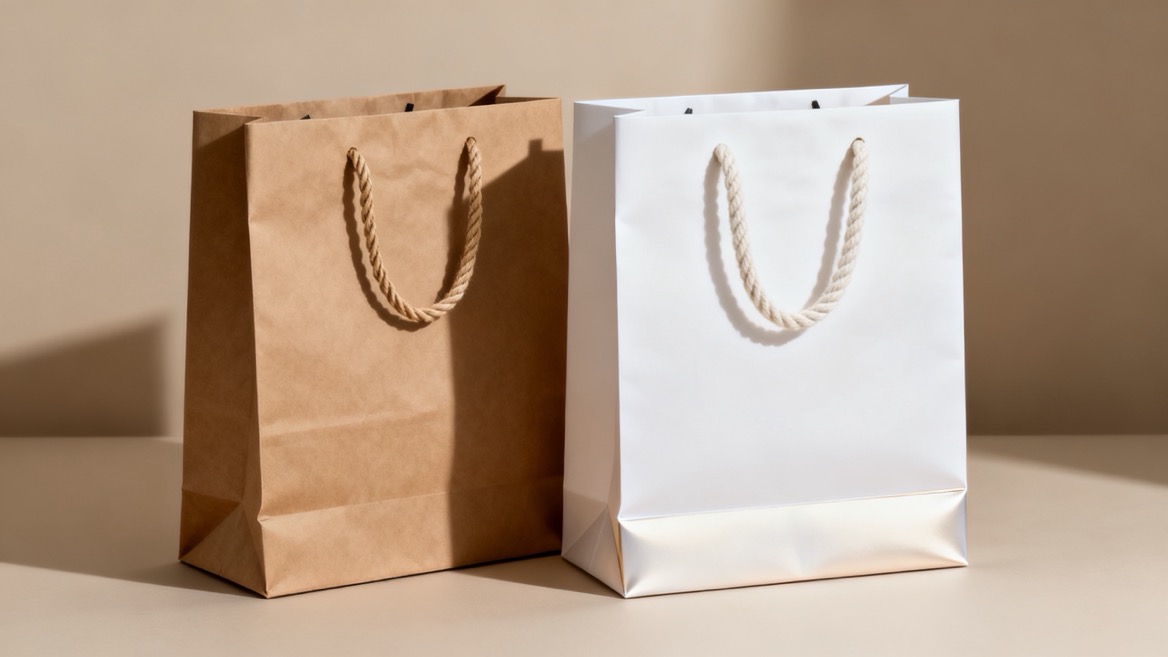
Kraft paper bags are typically made from paper produced through the kraft pulping process. The word "kraft" comes from the German word for "strength," which reflects one of the material's most valued characteristics: its durable fiber structure.
Traditional kraft paper is usually brown because the wood fibers retain more of their natural color during production. This creates the familiar natural, earthy appearance associated with grocery bags, takeaway bags, boutique carrier bags, bakery bags, and eco-oriented retail packaging.
However, kraft paper is not limited to brown. It can also be manufactured in lighter shades or bleached into white kraft paper. Therefore, when buyers compare kraft paper bags and white paper bags, they should clarify whether "white paper" means white kraft paper, white cardboard, coated art paper, or another paper grade.
Brown kraft paper bags are popular because they offer a balance of strength, cost control, and natural visual appeal.
Typical characteristics include:
- Natural brown appearance that communicates simplicity, authenticity, and an organic style
- Strong fiber structure suitable for many retail and takeaway applications
- Good resistance to tearing when the correct paper weight and bag construction are selected
- Excellent suitability for one- or two-color printing
- A generally lower material cost than comparable white or coated paper options
- A practical choice for high-volume packaging programs
Kraft paper bags commonly use twisted paper handles, flat paper handles, cotton ropes, ribbon handles, or die-cut handles. The correct handle depends on the bag's intended load, customer experience, and brand position.
White paper bags are shopping bags made from white paper materials. Depending on the design requirement, the material may be bleached kraft paper, white cardboard, ivory board, coated art paper, or specialty paper.
Their clean background is their biggest visual advantage. A white surface gives printed logos, brand colors, photographs, gradients, and detailed illustrations more contrast and clarity. This makes white paper bags especially suitable for cosmetics, fashion, jewelry, gifts, premium food products, electronics accessories, and promotional packaging.
In custom packaging projects, white paper bags are often selected when a brand wants a more polished, modern, or premium presentation.
White paper bags offer a more controlled and refined visual surface than standard brown kraft bags.
Key characteristics include:
- Bright, clean appearance suitable for premium retail environments
- Better color contrast for logos and full-color artwork
- A smoother print surface on many white paper grades
- Strong compatibility with finishing options, such as lamination, foil stamping, embossing, UV coating, and spot varnish
- Greater flexibility for luxury brand presentation
- Potentially higher production cost, especially when using coated paper, thicker board, or decorative finishes
A white bag can look simple and minimal, but it can also become highly decorative. For example, a white paper shopping bag with a matte laminate finish, gold foil logo, embossed pattern, and cotton rope handle creates a distinctly different customer experience from a plain brown kraft carrier bag.
The table below provides a practical comparison for buyers evaluating custom paper shopping bag options.
| Feature | Kraft Paper Bags | White Paper Bags |
|---|---|---|
| Typical appearance | Natural brown, rustic, warm, organic | Clean, bright, refined, premium |
| Main material options | Brown kraft paper, recycled kraft paper | White kraft, white cardboard, art paper, specialty paper |
| Print performance | Best for bold logos and simple graphics | Best for detailed graphics, vivid colors, and luxury artwork |
| Perceived brand style | Natural, handmade, sustainable, casual | Modern, elegant, premium, polished |
| Cost level | Often more cost-efficient | Can be higher depending on paper grade and finishing |
| Surface texture | Usually more natural and slightly textured | Often smoother and more uniform |
| Color reproduction | Dark inks and simple designs work well | Better for accurate, high-contrast color printing |
| Premium finishing | Possible, but may be visually subtle | Highly suitable for foil, embossing, lamination, and UV effects |
| Typical industries | Food, coffee, bakeries, boutiques, grocery, craft goods | Cosmetics, fashion, gifts, jewelry, beauty, luxury retail |
| Environmental considerations | Can be recycled when designed with compatible components | Can also be recycled, but coatings, films, and mixed materials need review |
A common mistake is to assume that brown kraft paper is always stronger than white paper. In reality, bag strength depends on the full construction, not just color.
The most important variables include:
- Paper basis weight, often measured in grams per square meter
- Fiber composition and paper grade
- Bag size and gusset width
- Bottom construction
- Handle type and handle reinforcement
- Adhesive quality
- Load distribution
- Whether the bag has lamination or additional layers
- The weight and shape of the product being packed
A well-designed white kraft bag can carry substantial weight. Likewise, a brown kraft bag with insufficient paper weight, weak handles, or poor bottom reinforcement may fail under load.
For example, imagine two medium-sized shopping bags:
- Bag A uses 120 gsm brown kraft paper with flat handles and no bottom reinforcement.
- Bag B uses 170 gsm white kraft paper with reinforced folded top, a strengthened bottom board, and cotton rope handles.
Although Bag A uses brown kraft material, Bag B may be the more suitable choice for carrying heavier products because its paper weight, reinforcement, and handle system are designed for a higher load.
Before production, brands should provide their packaging supplier with:
1. Product dimensions.
2. Approximate product weight.
3. Number of items placed in one bag.
4. Whether products have sharp edges or rigid corners.
5. Required handle style.
6. Intended usage scenario, such as takeaway, retail display, gifting, or e-commerce fulfillment.
This information helps the manufacturer recommend an appropriate paper grade and structural design instead of making a decision based only on appearance.
The strongest difference between kraft paper bags and white paper bags is often emotional rather than technical. Each material sends a different visual signal before the customer even touches the product.
Brown kraft paper naturally suits brands that want to emphasize:
- Handmade products
- Organic or natural ingredients
- Farm-to-table food
- Sustainable lifestyle products
- Artisan goods
- Coffee, tea, bakery, and takeaway concepts
- Local retail or craft-market positioning
- Simple, warm, approachable branding
A black one-color logo on brown kraft paper is often enough to create a distinctive package. It can look honest, practical, and intentional without requiring complex surface decoration.
For businesses with a natural brand identity, over-finishing a brown kraft bag can sometimes weaken the message. A heavily laminated bag with metallic printing may look visually impressive, but it can conflict with a brand story built around simplicity and natural materials.
White paper bags are more suitable when the brand wants to emphasize:
- Clean beauty and skincare
- Fashion retail
- High-end gifts
- Jewelry and accessories
- Boutique homeware
- Corporate events
- Premium confectionery
- Cosmetics and fragrance
- Product launches and promotional campaigns
White paper provides a neutral canvas. It allows bright colors to stand out, creates sharper logo contrast, and supports more detailed visual systems.
For instance, a cosmetic brand using pale pink, gold, and soft gray may find that white paper preserves its intended color palette more accurately. The same artwork printed on brown kraft paper may appear darker, warmer, or less consistent because the brown substrate changes the perceived color of the ink.
If branding relies heavily on color accuracy, illustrations, photography, small typography, or fine details, white paper bags usually offer more predictable results.
Printing on brown kraft paper can create beautiful results, but designers should account for the underlying brown tone.
Brown kraft is especially effective for:
- Black logos
- Dark brown, dark green, navy, and deep red inks
- Minimalist graphics
- Large typography
- Stamp-style artwork
- Simple line drawings
- Vintage or handcrafted design language
Light colors may lose brightness when printed directly on brown kraft. White ink can improve contrast, but it may require an additional print layer and should be tested during sampling.
White paper bags are usually more flexible for complex branding because the substrate does not strongly influence ink color.
White paper is especially effective for:
- Multi-color logos
- CMYK artwork
- Illustrations
- Soft pastel palettes
- Product photography
- Fine text
- High-contrast graphic layouts
- Metallic foils and decorative finishes
White paper also works well with matte or glossy lamination. Matte lamination creates a soft, luxury feel, while glossy lamination can make colors appear more vivid. However, brands should consider whether additional coatings align with their packaging recovery goals and local waste-handling systems.
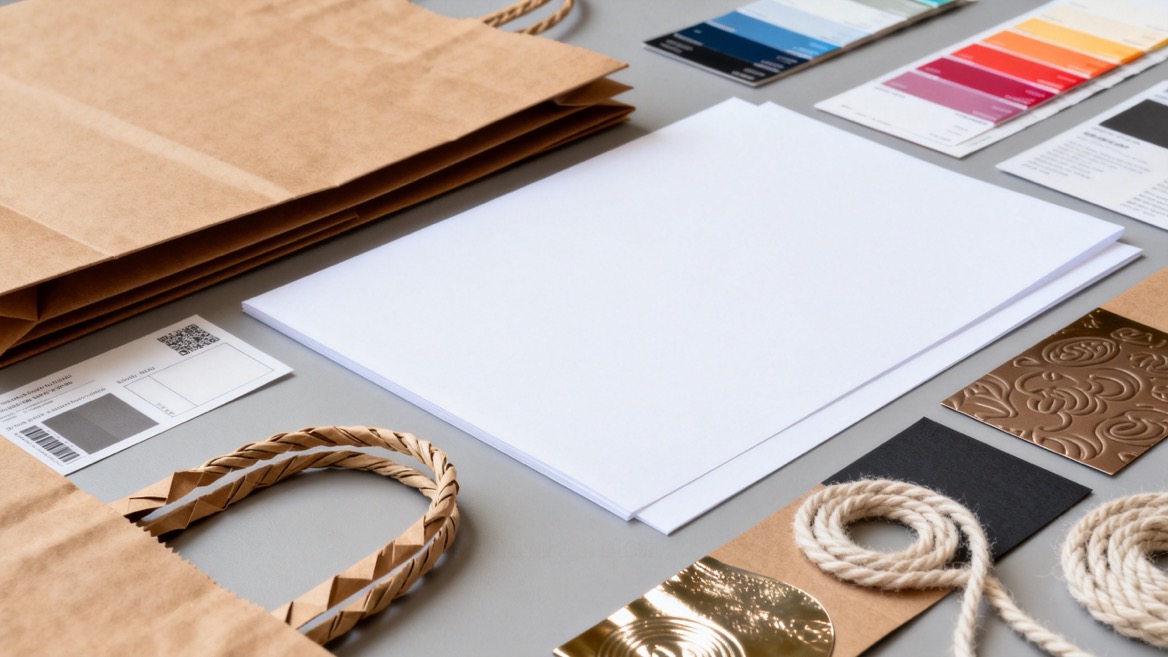
Many buyers expect brown kraft bags to be cheaper than white paper bags, and this is often true. Brown kraft typically involves fewer visual-processing steps than bright white paper. However, the final price depends on much more than paper color.
The cost of custom paper bags is influenced by:
- Paper type and thickness
- Bag dimensions
- Printing colors and coverage
- Offset printing or flexographic printing requirements
- Surface lamination
- Foil stamping, embossing, debossing, or UV treatments
- Handle material
- Bottom board and top reinforcement
- Order volume
- Freight method and destination
- Packaging requirements for shipping
Industry estimates often place basic white kraft bags at a modest premium over comparable brown kraft bags, while coated and heavily finished white bags can cost substantially more. The largest cost increase often comes from premium finishes rather than the change from brown kraft to uncoated white kraft.
Instead of choosing the lowest-cost bag, identify the feature that customers will notice most.
For example:
- A bakery may gain more value from a strong brown kraft bag with a clear one-color logo than from a laminated white bag.
- A skincare brand may benefit more from a white bag with consistent color printing and a premium handle than from a cheaper brown bag that does not reflect the product's price point.
- A gift retailer may choose a white paper bag with subtle embossing rather than full lamination and foil on every design area.
The goal is to spend on the details that support your product's perceived value.
Paper packaging decisions should be based on the complete bag design, not only on whether the paper is brown or white.
Both kraft paper bags and white paper bags can be designed for paper-recycling streams. However, recyclability can be affected by components such as plastic lamination, mixed-material handles, metallic layers, heavy adhesive use, or non-paper decorative elements.
European packaging rules increasingly emphasize recyclable packaging design. The EU's Packaging and Packaging Waste Regulation entered into force in February 2025 and generally applies from August 2026; it sets a direction toward packaging that is recyclable in an economically viable way and requires all packaging to be recyclable by 2030.
For brands seeking a more straightforward material-recovery pathway, consider:
- Choosing uncoated or lightly treated paper where practical
- Using paper handles instead of plastic handles
- Avoiding unnecessary mixed-material decoration
- Selecting paper-based reinforcement components when available
- Printing clear disposal instructions where appropriate
- Confirming local recycling acceptance before making environmental claims
- Requesting accurate documentation for recycled content or certified fiber
Forest certification and recycled content are separate concepts. For example, the FSC Recycled label relates to reclaimed material used in production, while certification claims should be selected and communicated accurately for the specific paper source.
The right choice starts with the customer journey. Ask what the bag needs to do after it leaves the store.
- A natural or organic visual identity
- A cost-conscious solution for large volumes
- Strong everyday carry performance
- Simple logo printing
- A warm, artisanal retail appearance
- Packaging for bakery, café, takeaway, grocery, or craft products
- A bag that complements earthy color palettes
- Strong color reproduction
- A clean and premium retail image
- Detailed or photo-based artwork
- Luxury decorative finishes
- Consistent presentation for fashion, cosmetics, gifts, or jewelry
- High contrast for light-colored logos
- A bag that functions as part of the unboxing or gifting experience
Many established brands use both options rather than choosing only one.
A practical example is a beauty retailer that uses:
- White paper bags with rope handles for full-price products and gift purchases.
- Brown kraft bags for samples, outlet purchases, or lower-value everyday transactions.
- Rigid gift boxes for holiday sets and premium campaigns.
This approach helps control packaging costs while maintaining a premium presentation where it matters most.

Before approving a custom paper shopping bag, review the following points with your packaging manufacturer:
1. Confirm the product weight and expected carrying load.
2. Select the paper material, paper weight, and surface finish.
3. Decide whether the bag should feel natural, premium, minimalist, or decorative.
4. Check logo color requirements and artwork complexity.
5. Choose a handle that matches the bag's load and brand position.
6. Review bottom construction and reinforcement requirements.
7. Request a physical sample before mass production.
8. Test the sample with actual products, not empty bags.
9. Confirm carton packing, shipping volume, and freight implications.
10. Review material claims, certifications, and disposal messaging carefully.
A physical sample is especially important. Digital proofs can show artwork placement, but they cannot fully show texture, handle comfort, bag stiffness, fold quality, ink coverage, or how the bag performs under real weight.
The differences between kraft paper bags and white paper bags go far beyond brown versus white. Kraft paper bags are often ideal for brands seeking a natural, durable, efficient, and approachable packaging solution. White paper bags are usually better for brands that need clean color reproduction, refined presentation, detailed artwork, and a stronger premium impression.
The best result comes from matching the bag to the product, customer, retail environment, and brand message. A well-engineered brown kraft bag can feel premium when its construction and graphics are right. A white paper bag can feel understated and sophisticated when it uses high-quality paper, thoughtful proportions, and restrained finishing.
Maituohong Packaging can help turn your requirements into a custom paper shopping bag solution—from material selection and structural recommendations to printing, handles, reinforcement, and premium finishing. Contact our packaging team to discuss your product size, estimated load, artwork, and target market, and request a tailored sampling recommendation.
Not necessarily. Brown kraft paper is widely valued for its strength, but the final carrying capacity depends on paper weight, bag dimensions, bottom construction, handle type, reinforcement, adhesive quality, and the product load. A properly engineered white kraft bag can be stronger than a thin brown kraft bag.
Yes. White paper bags can be designed with responsibly sourced fiber, recycled content, and paper-compatible components. However, buyers should evaluate the complete construction, including coatings, handles, foils, adhesives, and decorative materials, rather than making a judgment based on color alone.
White paper bags are generally better for full-color printing because their lighter surface provides stronger contrast and more predictable color reproduction. They are particularly suitable for detailed logos, illustrations, photographs, gradients, and pastel colors.
In many projects, standard brown kraft bags are more cost-efficient than comparable white bags. However, the final price depends on material thickness, bag size, printing method, print coverage, handle style, finishing, order quantity, and logistics. Premium finishing often has a greater effect on cost than paper color alone.
Yes. Kraft paper bags can use foil stamping, embossing, debossing, spot effects, colored handles, and custom printing. Still, brands should consider whether decorative finishing supports the intended natural or rustic visual identity of the kraft material.
The suitable paper weight depends on product weight, bag dimensions, handle design, and expected usage. Lightweight takeaway products may need a different specification from glass bottles, cosmetics gift sets, clothing, or heavy retail goods. A packaging supplier should recommend a tested construction after reviewing the actual product.
Laminated bags can improve moisture resistance, color intensity, and premium tactile appeal. Unlaminated bags often retain a more natural paper feel and may have a simpler material structure. The right choice depends on product protection needs, desired appearance, local waste handling, and brand priorities.
1. European Commission. "[Packaging Waste]." Accessed September 2026. [environment.ec.europa]
2. European Commission. "[Packaging and Packaging Waste Regulation]." Accessed September 2026. [environment.ec.europa]
3. Forest Stewardship Council. "[Paper and Packaging]." Accessed September 2026. [fsc]
4. Broadway Industries. "[Paper Bags: Brown or White Kraft Paper?]." January 16, 2024. [broadwayind]
5. CarePac. "[Four Popular Paper Bag Materials & Types]." February 6, 2023. [carepac]
6. Cxgiae. "[Kraft vs. White Paper Bags: Brand & Budget Comparison]." Accessed September 2026. [cxgiae]


