
Views: 220 Author: Maituohong Packaging Publish Time: 2026-08-27 Origin: Site


Content Menu
● What Is a Magnetic Gift Box?
● Magnetic Gift Box vs. Drawer Box at a Glance
● Opening Experience and Brand Perception
>> Magnetic Gift Boxes Deliver an Immediate Premium Moment
>> Drawer Boxes Create Anticipation
● Structure, Protection, and Product Fit
● Cost, Production, and Logistics Considerations
● Choosing the Right Box for Your Product
>> Choose a Magnetic Gift Box If You Need:
>> Choose a Drawer Box If You Need:
>> Ask These Questions Before Finalizing the Design
● Sustainable Material Choices
● A Manufacturer's Sampling Checklist
● FAQ
>> 1. Are magnetic gift boxes more expensive than drawer boxes?
>> 2. Which box is better for jewelry packaging?
>> 3. Can magnetic gift boxes be shipped flat?
>> 4. Are drawer boxes suitable for e-commerce packaging?
>> 5. Can both styles include custom inserts?
>> 6. Which box offers the better unboxing experience?
>> 7. Can these boxes be made with sustainable paper materials?
When choosing premium paper packaging, the decision often comes down to magnetic gift boxes vs. drawer boxes. Both are widely used for luxury retail, corporate gifts, cosmetics, jewelry, apparel, electronics, and subscription kits—but they create very different opening experiences, production requirements, shipping profiles, and brand impressions.
At Maituohong Packaging, we have spent more than 18 years designing and producing custom rigid boxes for global brands. In practice, the "better" choice is not simply the more expensive-looking box. It is the structure that best protects the product, supports the desired customer journey, fits the logistics plan, and makes the brand feel consistent from first touch to repeat use.
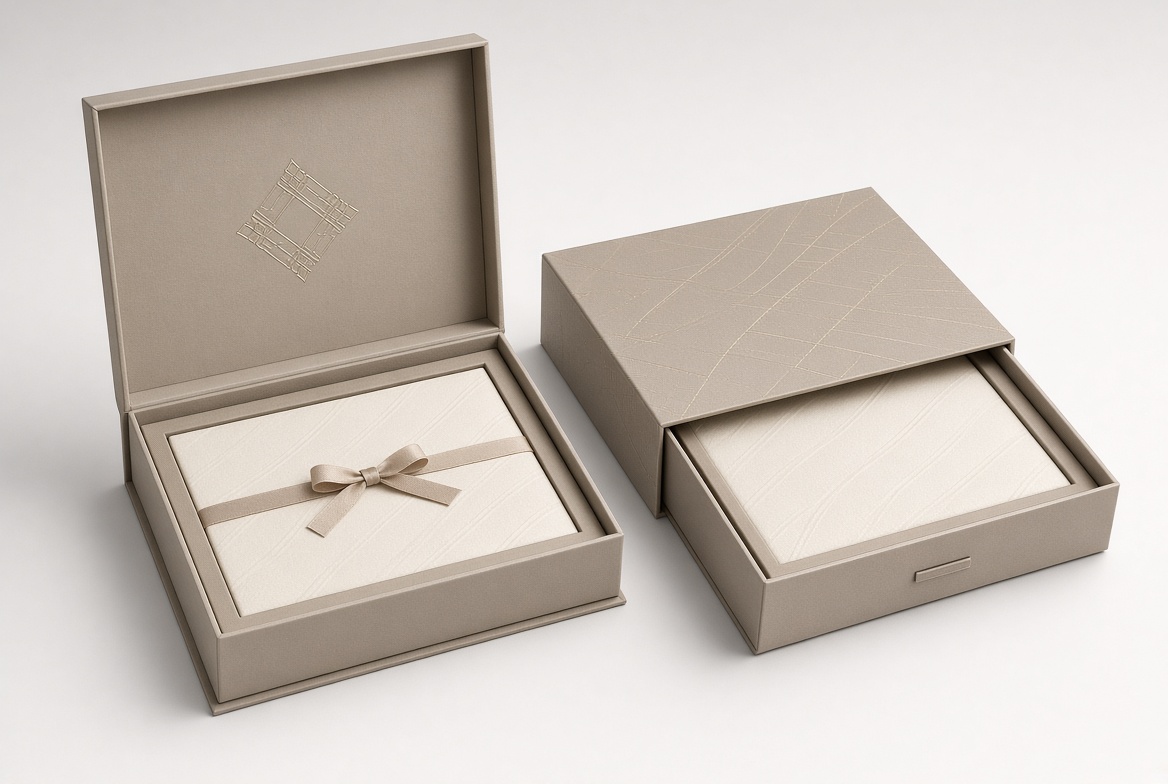
A magnetic gift box is a premium rigid paper box with concealed magnets integrated into the lid and box body. The magnets allow the lid to close with a controlled, secure "snap," creating a polished and high-value presentation.
Most magnetic gift boxes use a hinged flap or book-style lid. The exterior is commonly wrapped in printed art paper, specialty paper, textured paper, or soft-touch laminated paper. Inside, the box can include an EVA foam insert, paperboard insert, velvet tray, silk ribbon, or molded pulp insert.
The key experience is immediate: the customer lifts the lid, hears or feels the magnetic closure release, and sees the product presentation in one opening motion.
Typical uses for magnetic closure boxes include:
- Luxury cosmetics and skincare sets
- Perfume and fragrance packaging
- Premium electronics and accessories
- Corporate gift boxes
- PR kits and influencer mailers
- High-end apparel packaging
- Wine, spirits, and gourmet gift sets
- Jewelry and watch packaging
A well-made magnetic box feels substantial because it normally relies on rigid greyboard or chipboard. Consistent board density, accurate magnet positioning, and clean paper wrapping are essential. If the lid alignment is poor, even expensive finishes will not compensate for a weak closing experience.
A drawer box, also called a sliding box, consists of two primary components: an outer sleeve and an inner tray. The customer pulls the tray outward, often with a ribbon pull, thumb notch, or die-cut finger hole.
Unlike a magnetic box, a drawer box creates a gradual reveal. The product is not immediately visible. Instead, the customer interacts with the packaging before discovering what is inside.
Premium drawer boxes are generally made with rigid board. However, the structure can also be developed with folding carton materials for projects that require a lighter or more cost-conscious option.
Common applications for drawer packaging include:
- Jewelry, watches, and small accessories
- Chocolate and confectionery gift boxes
- Tea, coffee, and gourmet food packaging
- Apparel, socks, and fashion accessories
- Beauty product sets
- Subscription boxes
- Small electronics and accessories
- Stationery, candles, and lifestyle products
The drawer mechanism may look simple, but it requires close attention to tolerances. If the tray is too tight, the customer struggles to open it. If it is too loose, the box can feel cheap and may open unintentionally during transport.
| Feature | Magnetic Gift Box | Drawer Box |
|---|---|---|
| Opening mechanism | Hinged lid with concealed magnets | Inner tray slides out from an outer sleeve |
| First impression | Immediate, polished, dramatic | Slow, tactile, discovery-oriented |
| Closure | Secure magnetic snap | Friction fit, sleeve fit, or optional ribbon/magnet detail |
| Product visibility | Product is revealed at once | Product appears gradually |
| Structure | Usually rigid board with attached lid | Sleeve and separate sliding tray |
| Best for | PR kits, luxury sets, electronics, cosmetics | Jewelry, chocolates, apparel, small gift sets |
| Custom insert options | Extensive | Extensive |
| Reusability | Excellent for storage and gifting | Good, especially for small valuables |
| Shipping efficiency | Lower for fixed assembled boxes | Can be favorable depending on design and nesting |
| Production focus | Magnet placement and hinge alignment | Sliding tolerance and sleeve-tray fit |
Both formats can be fully customized with foil stamping, embossing, debossing, spot UV, textured papers, ribbons, custom inserts, printed interiors, and branded tissue paper. The structural difference—not just the decoration—should drive the final selection.
Packaging is part of the product experience. A luxury box should not simply hold an item; it should guide the customer through a moment that reflects the value of the brand.
A magnetic box is ideal when the product needs to feel important the moment it is opened. The lid opens broadly, allowing the brand to present the complete interior layout at once.
For example, a premium skincare brand may use a matte black magnetic box with a gold foil logo, a printed interior message, and a precision-cut insert holding several products. The box supports a strong first impression before the customer even touches the skincare items.
Magnetic gift boxes are especially effective when:
- The product set needs to be displayed in full immediately
- The brand wants a luxury, polished, and modern identity
- The box will be used for gifting or brand launches
- The customer is likely to keep and reuse the package
- The product needs a secure lid during display or delivery
The audible and tactile magnetic closure can reinforce a feeling of quality. However, magnet strength should be carefully balanced. An overly strong closure can make the box frustrating to open, while a weak closure reduces the premium effect.
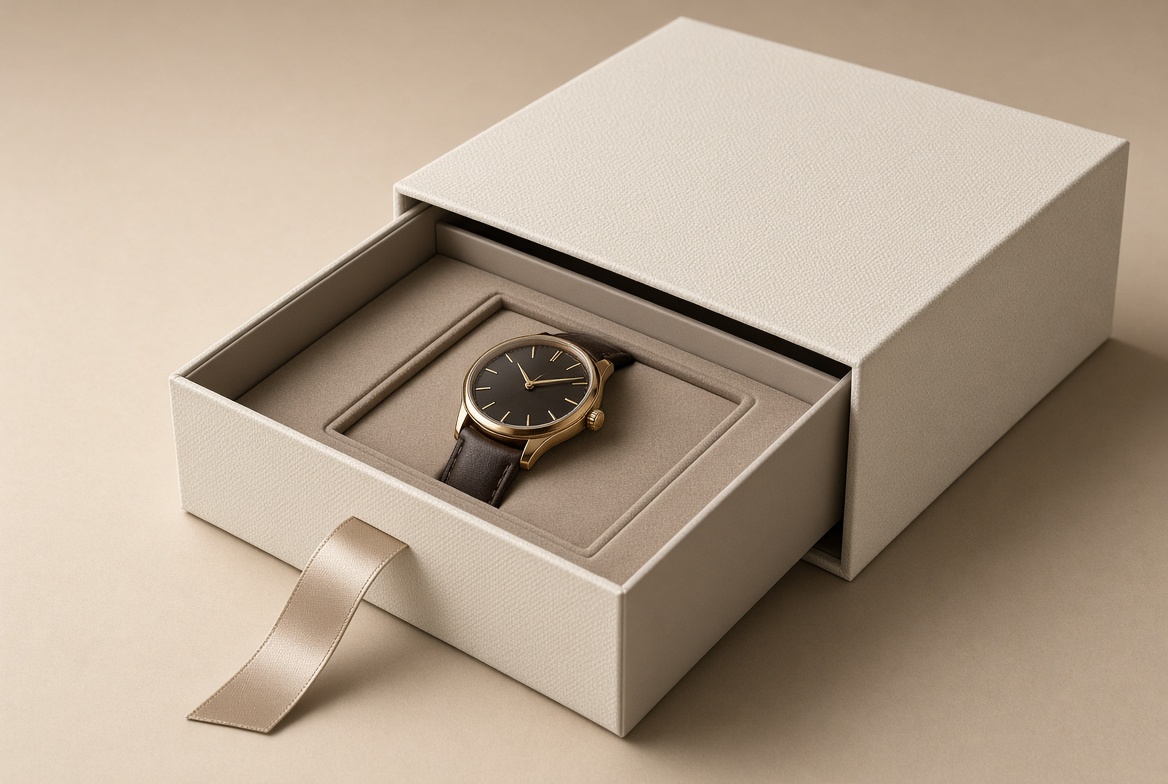
Drawer boxes make the customer participate in the reveal. Pulling a ribbon or sliding a tray adds a small sense of ceremony, which can be particularly effective for jewelry, chocolates, small luxury items, and curated gift sets.
A watch brand, for instance, may use a drawer box with a soft ribbon pull and a velvet-lined insert. The drawer action slows the unboxing process and keeps attention on the product.
Drawer boxes are especially effective when:
- The product benefits from a staged reveal
- The product is compact and needs a close-fitting presentation
- The brand wants a tactile or playful interaction
- Multiple products should be arranged in separate compartments
- The box will be opened repeatedly for storage
A drawer box is not automatically less luxurious than a magnetic box. A well-engineered rigid drawer box with premium wrapping, high-quality ribbon, and an exact-fit insert can feel equally refined—just in a different way.
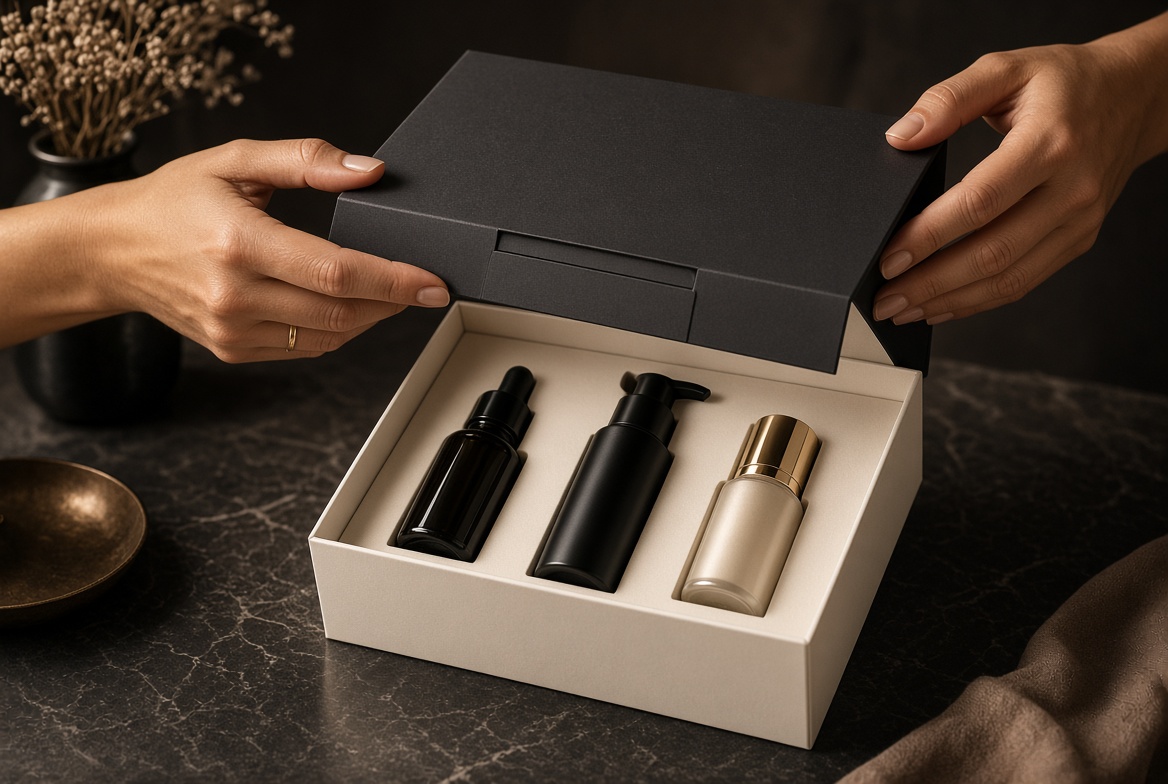
Both box styles can offer excellent protection when made with appropriate board thickness and inserts. The important question is how the product sits inside the package and how the package moves through storage, fulfillment, and transit.
Magnetic boxes are often built with a fixed base and attached lid. This creates a strong, unified format that works well for medium-size and larger product sets.
For fragile products, the internal insert should control movement from every direction. Common options include:
- EVA foam for electronics, glass products, and premium tools
- Paperboard dividers for cosmetics and multi-product sets
- Molded pulp for a paper-based protective solution
- Velvet-covered inserts for jewelry and luxury accessories
- Satin ribbon lifts for bottles, jars, and tightly fitted products
Expert production note: The magnets must be positioned accurately before final paper wrapping. Even a small misalignment can cause the lid to close unevenly, leaving gaps or reducing the closure strength.
Drawer boxes rely on the relationship between the outer sleeve and inner tray. This means dimensions must be engineered carefully around the product, insert, paper thickness, and finishing layers.
For a drawer box, the ideal sliding resistance is controlled. The tray should move smoothly without falling out when the box is held vertically.
Expert production note: Finishing choices affect fit. Thick textured papers, heavy lamination, and multiple wrapped layers can change the clearance between the sleeve and tray. A structural sample should be tested before final mass production.
Drawer boxes can be a strong choice for products that need compartmentalization. For example, a tea brand may use a sliding rigid box with six internal compartments, allowing each tea flavor to remain neatly separated.
A packaging budget should be evaluated as a complete system—not only as a unit price. Material consumption, assembly needs, packing method, transport volume, breakage risk, and customer perception all matter.
| Cost Factor | Magnetic Gift Box | Drawer Box |
|---|---|---|
| Material use | Often higher due to hinged lid and magnets | Depends on sleeve, tray, and insert complexity |
| Additional components | Magnets, glue, optional ribbon | Ribbon pull, optional tray dividers or inserts |
| Production complexity | Requires accurate magnet and lid alignment | Requires tight sleeve-tray tolerances |
| Assembly | Fixed boxes are typically delivered assembled | Usually delivered assembled, but designs vary |
| Shipping volume | Fixed boxes may consume more cubic space | May offer more efficient nesting for some designs |
| Customization potential | Very high | Very high |
| Best budget strategy | Use when the closure experience is central to value | Use when staged unboxing or compartment design adds value |
Fixed rigid magnetic boxes can require more shipping space than compact or collapsible packaging designs. For large orders, this can meaningfully affect warehouse and freight costs. Some brands choose foldable magnetic boxes to reduce storage volume while maintaining a magnetic closure experience.
However, folding structures involve additional considerations. Crease quality, adhesive strength, and assembly workflow must be tested to ensure the box retains a high-end appearance after setup.
Use this practical decision framework before requesting a quotation.
- A strong luxury impression at first opening
- A secure closing mechanism
- A large, fully visible product display
- A premium format for gifting, PR, or retail presentation
- A reusable keepsake box
- A packaging structure for larger product bundles
- A gradual product reveal
- A ribbon-pull or tactile opening experience
- A compact structure for jewelry, accessories, or small sets
- A compartmentalized internal layout
- A distinctive format for chocolates, tea, or subscription products
- A refined box with a slightly more playful or discovery-led interaction
1. What are the exact product dimensions, weight, and fragile areas?
2. Will the product be sold in stores, shipped through e-commerce, or both?
3. Should customers see the full set immediately or uncover it gradually?
4. Does the box need to be reused as a storage case?
5. Which insert material best protects the item while matching the brand's visual direction?
6. What is the target order quantity and freight destination?
7. Does the market require recyclable, FSC-certified, or plastic-reduced material choices?
Paper-based packaging is increasingly important to consumers who consider recyclability and environmental impact during purchases. This makes material selection, clear recycling communication, and reduced unnecessary components practical commercial considerations—not simply design trends.
Premium packaging does not need to mean excessive packaging. The most effective approach is to use the right amount of material, engineer the box for protection, and select components that align with the product's expected life cycle.
For magnetic and drawer boxes, practical material choices include:
- FSC-certified paper and paperboard where suitable
- Recycled-content greyboard
- Paperboard inserts instead of plastic trays
- Molded pulp inserts for protective packaging
- Water-based coatings where compatible with the desired finish
- Soy-based or low-impact inks where available
- Minimal lamination and simplified mixed-material construction
- Reusable rigid structures that customers keep for storage
Magnets and certain decorative components can complicate recycling in some local systems. Brands should avoid making broad environmental claims without reviewing the complete box construction, regional collection systems, and end-of-life instructions.
Before production begins, do not approve a box based only on a digital rendering. A physical pre-production sample is one of the most valuable steps in premium packaging development.
Evaluate the sample using this checklist:
- Check opening and closing: Does the magnetic lid align properly? Does the drawer slide smoothly?
- Inspect corners: Are wrapped edges clean, tight, and free from exposed board?
- Test the insert: Does it hold the product securely without scratching or crushing it?
- Review logo details: Are foil, embossing, printing colors, and placement accurate?
- Assess material feel: Does the paper texture match the intended market position?
- Conduct handling tests: Can customers open the box comfortably without damaging it?
- Check shipping protection: Does the outer carton and internal packing protect the boxes during transit?
- Confirm production tolerances: Do all components remain consistent across multiple samples?
In our experience, brands often focus heavily on exterior decoration during early discussions. Yet the long-term success of a rigid box usually depends on structural precision. A beautiful box that opens poorly, dents easily, or allows the product to move inside will weaken the customer experience.
Magnetic gift boxes and drawer boxes are both excellent choices for premium custom paper packaging. Magnetic gift boxes are best when your brand needs a secure closure, immediate product display, and a bold luxury statement. Drawer boxes are best when you want a slower reveal, tactile interaction, compact storage, or product compartmentalization.
The strongest choice comes from aligning the box structure with the product, buyer expectations, logistics requirements, and brand story. Rather than starting with a finish or color, begin with the customer's opening journey and the product's protection needs.
Ready to develop a custom magnetic box or rigid drawer box? Contact Maituohong Packaging with your product dimensions, target quantity, preferred box style, and destination market. Our team can help you evaluate structures, materials, inserts, finishes, sampling requirements, and production options for a packaging solution that looks premium and performs reliably.
Not always. Magnetic boxes often require magnets, additional assembly work, and a hinged lid structure, which can increase cost. Drawer boxes may cost less for simple designs, but complex trays, multiple compartments, premium ribbons, and detailed inserts can also raise the final price.
Both can work well. A drawer box is often preferred for rings, necklaces, watches, and small accessories because it creates a controlled reveal and can hold a fitted velvet or foam insert. A magnetic box is a strong option for multi-piece jewelry sets or premium gifting collections.
Standard rigid magnetic boxes are normally shipped assembled. However, foldable magnetic box designs can be supplied flat to reduce storage and freight volume. The best option depends on order volume, box size, assembly capacity, and the required luxury appearance.
Yes, but they should be paired with suitable inserts and protective outer shipping cartons. The sleeve and tray must fit correctly, and the product must be secured so it does not move during transit.
Yes. Magnetic and drawer boxes can use EVA foam, paperboard partitions, molded pulp, velvet trays, ribbon lifts, corrugated inserts, and custom die-cut supports. The insert should be selected based on product weight, fragility, presentation, and material preferences.
It depends on the intended emotion. Magnetic boxes create an immediate, impressive reveal and a satisfying closure. Drawer boxes create anticipation through a slower, more interactive opening sequence.
Yes. Options may include FSC-certified paper, recycled-content board, paperboard inserts, molded pulp inserts, and reduced-plastic designs. The final material plan should be reviewed according to your product needs, finish requirements, and destination-market recycling conditions.
1. Smurfit Westrock. [5 Reasons to Choose Paper-Based Packaging to Improve Your Circularity]
2. GWP Group. [Sustainable E-commerce Packaging: What Customers Expect]
3. Packaging Dive. [E-commerce Shoppers Seek Value, Sustainable Packaging]
4. Box Agency. [Rigid Drawer Box vs Magnetic Closure Box]
5. GentleVer. [An Ultimate Guide to Magnetic Closure Boxes]
6. Forest Stewardship Council. [FSC Certification]


