
Views: 231 Author: Maituohong Packaging Publish Time: 2026-07-21 Origin: Site


Content Menu
● Rigid Boxes vs Corrugated Boxes: Main Differences
● Best Applications for Rigid Boxes
● Best Applications for Corrugated Boxes
>> Corrugated boxes are ideal for:
● Sustainability Considerations
● Industry Insight: When Brands Use Both
● FAQ
>> 1. Are rigid boxes stronger than corrugated boxes?
>> 2. Why are rigid boxes more expensive?
>> 3. Which box is better for e-commerce?
>> 4. Can rigid boxes be recycled?
>> 5. Which packaging is better for luxury products?
Rigid boxes and corrugated boxes are both important packaging solutions, but they serve very different purposes. If your product needs a premium unboxing moment, rigid boxes are often the better choice. If your priority is shipping protection, cost control, and warehouse efficiency, corrugated boxes usually perform better.
Rigid boxes are premium paper-based boxes made from thick chipboard wrapped with printed or specialty paper. They do not fold flat, so they feel sturdy and substantial in the hand.
These boxes are widely used for luxury products, gift sets, cosmetics, jewelry, watches, electronics, and high-value branded items. Their main strength is presentation, not shipping efficiency.
Corrugated boxes are made from a fluted inner layer sandwiched between flat liner boards. This structure gives them strong cushioning and stacking performance while keeping the box relatively light.
They are commonly used for shipping, e-commerce, warehousing, and transport because they protect products well and can be stored flat before use.
Rigid boxes and corrugated boxes differ in structure, purpose, handling, and appearance. Understanding these differences helps you choose the right packaging for your product and your supply chain.
| Factor | Rigid Boxes | Corrugated Boxes |
|---|---|---|
| Structure | Thick chipboard wrapped in paper | Fluted board with liner layers |
| Appearance | Premium, elegant, gift-ready | Practical, functional, customizable |
| Strength | Strong in form and presentation | Strong in transport and cushioning |
| Storage | Takes more storage space | Ships flat and saves space |
| Weight | Heavier | Lighter |
| Main use | Luxury packaging, gifting, retail display | Shipping, logistics, e-commerce |

Rigid boxes usually cost more than corrugated boxes because they use more material, require more assembly work, and often include premium finishes such as foil stamping, embossing, magnetic closures, or special inserts.
Corrugated boxes are usually more affordable because they are easier to produce at scale, ship flat, and support highly efficient manufacturing. For brands that need large volumes, corrugated packaging often gives better cost control.
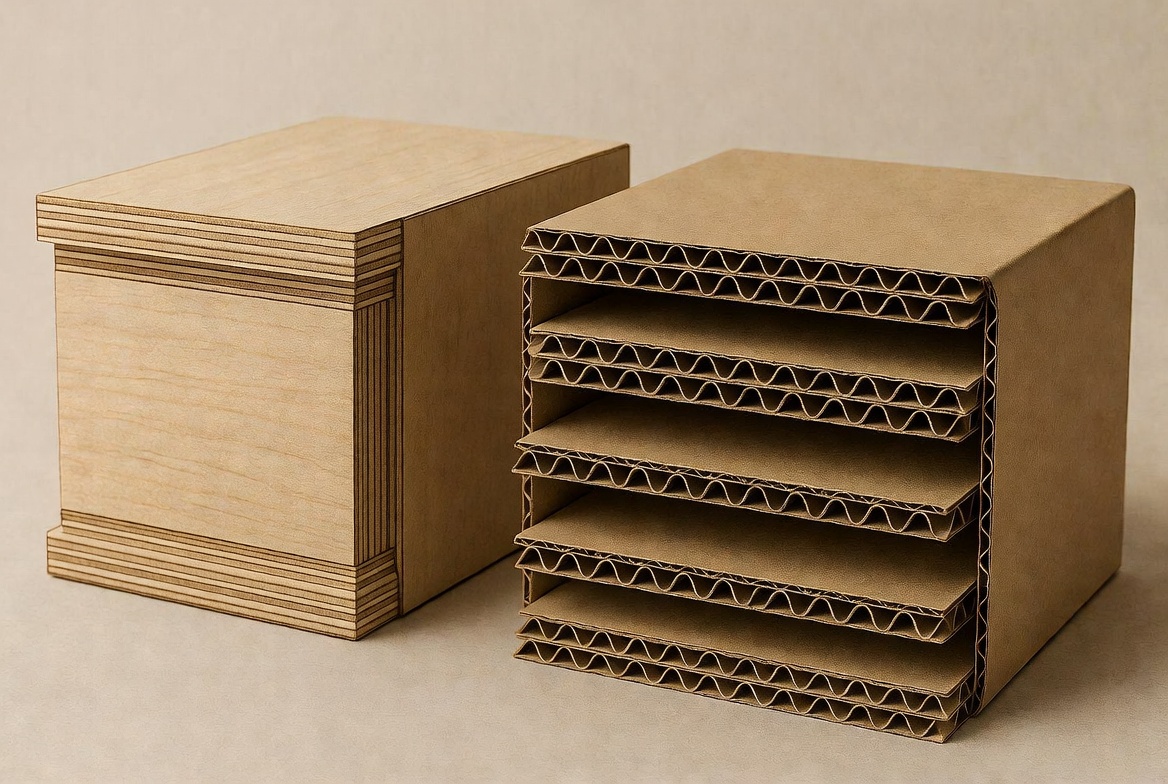
Rigid boxes are the better choice when packaging itself is part of the product experience. They work especially well when visual impact and brand perception matter more than shipping efficiency.
- Luxury gift boxes.
- Jewelry and watches.
- Beauty and skincare sets.
- Premium electronics.
- Corporate gifting.
- Limited-edition product launches.
Corrugated boxes are best when the priority is protection during shipping and cost efficiency across the supply chain. They are especially effective for direct-to-consumer brands and products that travel long distances.
- E-commerce shipping.
- Subscription boxes.
- Industrial products.
- Bulk orders.
- Cross-border logistics.
- Warehousing and distribution.
Corrugated boxes are often easier to recycle in standard waste streams and are widely used in sustainable packaging programs. Their simple structure and flat-pack design also reduce storage and transport waste.
Rigid boxes can also be sustainable when designed carefully, especially when made with recyclable board and paper wrap. However, mixed materials such as magnets, foam inserts, or laminated finishes may make recycling more complicated.

A simple decision process can help you choose the right packaging format.
1. Define the box's main purpose.
2. Decide whether the priority is presentation or protection.
3. Estimate how often the product will ship.
4. Compare storage space and freight impact.
5. Review your brand's premium positioning and budget.
6. Test the packaging with your actual product before mass production.
Many brands do not choose just one format. They use rigid boxes for premium retail or gift presentations and corrugated boxes for shipping and fulfillment.
This mixed packaging strategy helps balance customer experience, logistics efficiency, and overall packaging budget. It is often the most practical solution for brands that sell both online and offline.
Many packaging decisions go wrong because businesses focus only on unit price. A cheaper box can become expensive if it increases damage, returns, or warehouse inefficiency.
Other common mistakes include:
- Using rigid boxes for products that ship frequently.
- Using corrugated boxes when the product needs a luxury presentation.
- Ignoring internal protection and inserts.
- Overlooking storage and freight costs.
- Choosing packaging before testing the product fit.
Choose rigid boxes when your main goal is premium presentation, brand value, and gifting appeal. Choose corrugated boxes when your main goal is protection, shipping efficiency, and cost control.
For many brands, the best answer is a combined system: rigid packaging for special products and corrugated packaging for shipping and distribution.
Rigid boxes feel more solid and premium, but corrugated boxes are usually stronger for shipping and impact resistance.
They use thicker board, more finishing work, and more manual assembly than corrugated boxes.
Corrugated boxes are usually better for e-commerce because they are lighter, more protective in transit, and easier to store.
Yes, many rigid boxes can be recycled if they use simple paper-based materials, but added magnets, foam, or laminations may reduce recyclability.
Rigid boxes are usually better for luxury products because they create a stronger presentation and a more memorable unboxing experience.
1. [MJC Pack — Rigid Boxes vs. Corrugated Boxes: A Cost and Performance Guide]
2. [MJC Pack — Rigid Boxes vs. Corrugated Boxes: Which Packaging Solution is Right for Your Brand?]
3. [OnePlusOne Packaging — How to Choose Between Rigid Box and Corrugated Box for Your Product?]
4. [Meyers — Folding Carton vs. Corrugated Box vs. Rigid Box Comparison]
5. [INSITE Packaging — The Rigid Box vs. Corrugated Shipping Boxes]
6. [EPA — Containers and Packaging: Product-Specific Data]
8. [AF&PA — Design Guidance For Recyclability]
9. [PMC — Sustainable Paper-Based Packaging: A Consumer's Perspective]
10. [Ecopackaging Box — Rigid vs Corrugated Boxes: Complete Comparison Guide 2026]


