
Views: 222 Author: Maituohong Packaging Publish Time: 2026-06-03 Origin: Site


Content Menu
● Understanding Eco-Friendliness in Modern Packaging
● Life Cycle Impact – Paper Bags vs Corrugated Boxes
>> Material and Production Footprint
>> Weight, Transportation, and Damage Rates
● Recyclability and End-of-Life Performance
>> Collection and Recycling Systems
>> Biodegradability and Composting
● Paper Shopping Bags – Eco Pros and Cons
>> Where Paper Shopping Bags Shine
>> Environmental Limitations of Paper Bags
● Corrugated Boxes – Eco Pros and Cons
>> Why Corrugated Boxes Often Win on Sustainability
>> Environmental Challenges of Corrugated Boxes
● 2026 Trends Shaping Eco-Friendly Packaging Decisions
>> Regulatory Pressure and EPR Programs
>> Circular Design and Right-Sizing
● Expert Checklists – When to Choose Paper Bags vs Corrugated Boxes
>> Practical Decision Framework
● Side-by-Side Comparison: Eco Profile of Paper Bags vs Corrugated Boxes
>> Key Sustainability Factors Table
● Industry Case Insights – How Brands Implement Eco-Friendly Paper Packaging
>> Lessons from Sustainable Packaging Case Studies
>> How Maituohong Packaging Applies These Principles
● Practical Steps for Brands to Make the "Greener" Choice
● Conclusion – So, Which Is More Eco-Friendly?
● FAQs: Paper Bags vs Corrugated Boxes
Paper bags and corrugated boxes can both be eco-friendly, but corrugated boxes generally perform better across the full life cycle when they use recycled content and are correctly recycled. For brands like Maituohong Packaging, the most sustainable choice is usually not "paper vs box" in isolation, but how you design, source, and recover each format in a circular system. [ecoenclose]
As a packaging manufacturer that has spent over 18 years helping global brands optimize paper packaging, I've seen the "paper bags vs corrugated boxes" debate from both the factory floor and the boardroom. From an end user's perspective, paper shopping bags feel lighter, more "natural," and highly brandable, while corrugated shipping boxes are the workhorses that protect products through complex logistics. The real sustainability answer depends on life cycle impacts, recyclability, and how well each format fits existing recycling infrastructure. [perfectpackaging]
Before comparing paper bags and corrugated boxes, we need a clear framework for what "eco-friendly" actually means in 2026. Sustainable packaging is now defined less by material buzzwords and more by how well the packaging works within existing recycling and recovery systems, including collection, sorting, and reprocessing. [ecoenclose]
Key dimensions you should evaluate:
- Raw material sourcing and resource intensity
- Energy and water use in production
- Transport efficiency and weight
- Durability and damage-prevention performance
- Recyclability and actual recovery rates
- Compatibility with emerging regulations and EPR schemes [sustainablepackaging]
From an E-E-A-T perspective, brands that publish transparent data about these dimensions are now trusted more than those using vague "green" claims. [sustainablepackaging]

Both paper bags and corrugated boxes are fiber-based, usually derived from wood pulp and increasingly from recycled paper. However, their structure and performance lead to very different life cycle profiles.
- Paper shopping bags typically use higher-quality kraft paper, often bleached for a premium look, which demands more energy and chemicals in production. [news.climate.columbia]
- Corrugated boxes combine linerboard and fluting; they can incorporate high levels of post-consumer recycled (PCW) fiber while still achieving strong stacking strength, which reduces the need for virgin fiber. [gentlever]
Studies comparing paper and other materials have shown that paper products can be among the most energy-intensive packaging categories, with paper and cardboard together representing one of the largest industrial users of energy worldwide. When you concentrate that fiber into single-use paper bags with limited reusability, the per-use impact can actually be worse than many consumers expect. [news.climate.columbia]
A crucial but often overlooked factor is transport efficiency and damage reduction. Corrugated boxes are engineered for shipping and are optimized for palletization, stacking, and protection.
- Corrugated shipping containers are widely preferred in logistics because they provide high strength-to-weight ratios, enabling safe transport with relatively low material usage. [packsize]
- Paper bags are lighter per unit but cannot replace boxes in most shipment scenarios; when they are used beyond reasonable load limits, product damage and returns can increase, leading to additional shipments and wasted inventory. [socialtargeter]
From a climate perspective, preventing damage often outweighs small differences in primary packaging footprint. A slightly heavier corrugated box that prevents a product return can be more eco-friendly overall than a lighter bag that fails in transit. [ecoenclose]
In 2026, recyclability is no longer just a label; it is evaluated by whether packaging is actually collected and reprocessed at scale.
- Corrugated cardboard is one of the most successfully recycled packaging materials worldwide, with well-established collection streams from both B2B and B2C sectors. [gentlever]
- Paper bags are technically recyclable but often become contaminated with food residue, heavy inks, or mixed components (handles, eyelets), which can reduce real recovery rates. [perfectpackaging]
Regulators and EPR schemes increasingly reward fiber formats that demonstrate high real-world recovery rates and recycled content, a category where corrugated boxes typically outperform other paper formats. [sustainablepackaging]
Both paper bags and corrugated boxes are biodegradable in the right conditions, but biodegradability alone is no longer considered a sufficient sustainability argument.
- Composting is now treated as a conditional tool, best reserved for applications where contamination prevents effective recycling. [ecoenclose]
- For clean shipping and retail packaging, recycling is usually the preferred route, because it keeps fiber in circulation and reduces demand for virgin pulp. [sustainablepackaging]
From an expert perspective, your sustainability strategy should prioritize recyclability and circularity for both paper bags and corrugated boxes, and reserve compostability claims only for rigorously tested use cases.
Paper shopping bags can still be a smart eco-choice in the right context, especially for branded retail and light-duty takeaway scenarios.
Key advantages:
- Strong consumer perception as a "natural" and plastic-free option
- Easy to print and customize with water-based inks for branding
- Compatible with existing fiber recycling and, in some regions, composting systems [news.climate.columbia]
- Good fit for in-store reuse (e.g., fashion, gift, and boutique segments)
For brands using Maituohong's custom paper shopping bags, we often recommend unbleached kraft paper, streamlined handles, and minimal coatings to improve recyclability and reduce energy use in production. This shifts the design from "premium but heavy" to "premium and efficient."
However, life cycle studies have repeatedly found that paper bags can have higher energy and water footprints than many shoppers realize. [perfectpackaging]
Typical limitations:
- Higher energy and water consumption per unit compared with some alternative packaging, especially when bleached and heavily printed [news.climate.columbia]
- Lower durability under moisture and heavy loads, leading to limited reuse potential
- Heavier than lightweight alternatives when compared on a per-use basis, which can increase transport emissions [perfectpackaging]
In practice, a paper bag becomes genuinely eco-friendly only when it is produced with high recycled content, minimal additives, and reused multiple times before entering the recycling stream. [news.climate.columbia]
Corrugated shipping boxes are one of the quiet sustainability leaders of modern logistics. Their performance in a circular system is usually stronger than paper bags when you consider total material flow and recovery.
Core advantages:
- High typical recycling rates and well-established recovery infrastructure in both developed and emerging markets [gentlever]
- Strong compatibility with high levels of post-consumer recycled content, reducing pressure on forests and energy usage
- Efficient right-sizing potential, allowing brands to reduce void space and filler materials, lowering overall material and shipping impacts [ecoenclose]
- Robust protection that reduces product damage and returns, a major source of hidden emissions in e‑commerce and export logistics [containerandpackaging]
Industry trend reports for 2026 emphasize "design efficiency" and "circularity" as key levers, and corrugated formats are often highlighted as best-in-class when paired with smart structural design. [sustainablepackaging]
Corrugated is not impact-free. Poorly designed or over-specified boxes can still have a high footprint.
Key challenges:
- Excessive board grades or box sizes increase material use and shipping emissions
- Laminated or plastic-coated surfaces can complicate recycling in some facilities
- Multi-material structures (e.g., heavy foils, magnetic closures) in high-end gift boxes may require specialized recycling or disassembly
As a manufacturer of high-end rigid gift boxes, Maituohong Packaging addresses these issues by optimizing board thickness, using mono-material designs where possible, and specifying recyclable finishes that stay compatible with mainstream paper recycling streams.
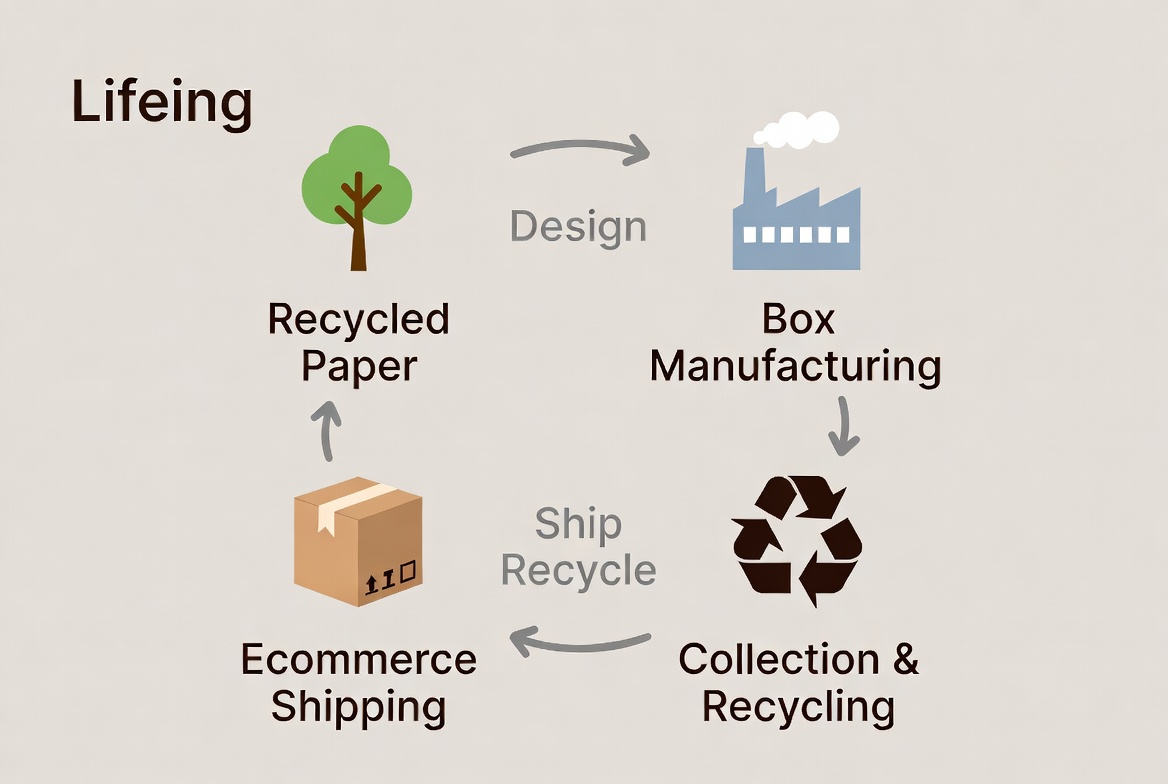
Across major markets, Extended Producer Responsibility (EPR) schemes are expanding, linking packaging fees to recyclability and recycled content.
Trends affecting your choice between paper bags and corrugated boxes:
- Packaging with clear end-of-life pathways (especially highly recyclable paper and board) is increasingly rewarded with lower compliance costs. [ecoenclose]
- Vague "eco" claims are being replaced with data-backed, transparent disclosures about recycled content percentages and recovery performance. [ecoenclose]
For export-focused brands, corrugated boxes with documented recycled content and standard recyclability marks can simplify compliance across multiple markets. Paper bags must be specified just as carefully to avoid hidden penalties for coatings or non-recyclable components.
In 2026, sustainable packaging leaders focus less on switching materials and more on system-aware, circular design. [containerandpackaging]
Best practices include:
1. Right-size corrugated boxes to reduce air shipments and packing fillers.
2. Use standardized paper shopping bag sizes optimized for nesting and palletization.
3. Specify recycled content and verify supplier claims.
4. Design artwork and construction to keep packaging mono-material whenever possible. [containerandpackaging]
Under this lens, corrugated boxes often deliver higher overall eco-performance because they unlock the biggest efficiency gains in the logistics chain.
From both a sustainability and UX standpoint, you can use this simple decision flow as a starting point.
Choose paper shopping bags when:
- You need a branded carry solution for in-store experiences.
- Products are lightweight, non-fragile, and likely to be carried a short distance.
- You can use unbleached or high-recycled-content paper with minimal coatings.
- You encourage customers to reuse the bag multiple times before recycling. [news.climate.columbia]
Choose corrugated boxes when:
- You are shipping products through postal or courier networks where protection is critical.
- You need strong stackability for warehousing and export.
- You can implement efficient right-sizing and standardized dimensions.
- You want to leverage high recycled content and established recycling systems as part of your ESG story. [packsize]
| Factor | Paper Shopping Bags | Corrugated Shipping Boxes |
|---|---|---|
| Typical use case | Retail carry-out, light goods | Shipping, logistics, e‑commerce, export |
| Material | Kraft paper, sometimes bleached | Multi-layer board (liners + fluting) |
| Recycled content potential | Moderate; often mixed or virgin | High; widely available with high PCW content (ecoenclose) |
| Energy and water use per unit | Can be relatively high, especially for bleached bags (news.climate.columbia) | Significant but amortized across high strength and protection |
| Durability and reuse | Limited; sensitive to moisture and heavy loads (news.climate.columbia) | High; can sometimes be reused in B2B loops |
| Recyclability in practice | Recyclable, but contamination and mixed components are issues (news.climate.columbia) | Among the most successfully recycled packaging streams (ecoenclose) |
| Role in damage prevention | Low to moderate | High; reduces returns and product loss (packsize) |
| Fit with 2026 regulatory trends | Positive if mono-material and clean | Very strong, especially with verified recycled content (ecoenclose) |
| Best eco-use case | Short-distance, branded reuse and then recycling | Long-distance shipping with right-sized, recyclable designs |
In most export and e‑commerce contexts, corrugated boxes are the more eco-effective choice, while paper bags add value as a complementary, brand-focused touchpoint.
Case studies of brands adopting eco-friendly packaging show recurring strategies that work, regardless of sector:
- Sourcing sustainable materials such as recycled cardboard and responsibly sourced paper as default options. [socialtargeter]
- Reducing unnecessary packaging and choosing lighter, right-sized formats to cut emissions. [socialtargeter]
- Educating customers with on-pack guidance on how to recycle or reuse packaging.
- Partnering closely with specialized packaging manufacturers to align design, branding, and sustainability goals.
Small and mid-size brands often start by optimizing their corrugated shipping boxes and adding a minimal, recyclable paper shopping bag as a branded value-add rather than a primary transport unit. This combination balances customer experience with measurable environmental performance. [socialtargeter]
From my perspective working with Maituohong Packaging, the most effective programs typically combine:
- Custom corrugated mailer or shipping boxes designed for right-sizing and high recycled content.
- Paper shopping bags optimized for reuse and recyclability, with simplified structures and water-based inks.
- Clear documentation of material specifications and recyclability for client ESG and compliance reporting.
By treating paper bags and corrugated boxes as a coordinated system rather than competitors, brands achieve stronger environmental outcomes and a more coherent customer experience.
If you are deciding between paper bags and corrugated boxes for your next packaging project, use this practical sequence:
1. Map your journey
Identify where packaging is used: in-store, last‑mile shipping, export, returns, and unboxing.
2. Quantify protection needs
Determine how much protection you need to avoid damage and returns; for fragile or long-distance shipments, prioritize corrugated.
3. Specify materials and recycled content
Work with your manufacturer to set minimum recycled content targets for both paper bags and corrugated boxes, and avoid unnecessary laminations.
4. Optimize design for circularity
Use mono-material structures, simple handles, and recyclable coatings; design for easy flattening and separation.
5. Pilot and measure
Track damage rates, customer feedback, and recycling behavior; adjust board grades and bag specs accordingly.
6. Communicate transparently
Share clear, data-backed sustainability information on-pack and online, aligned with current regulations and E-E-A-T expectations. [sustainablepackaging]
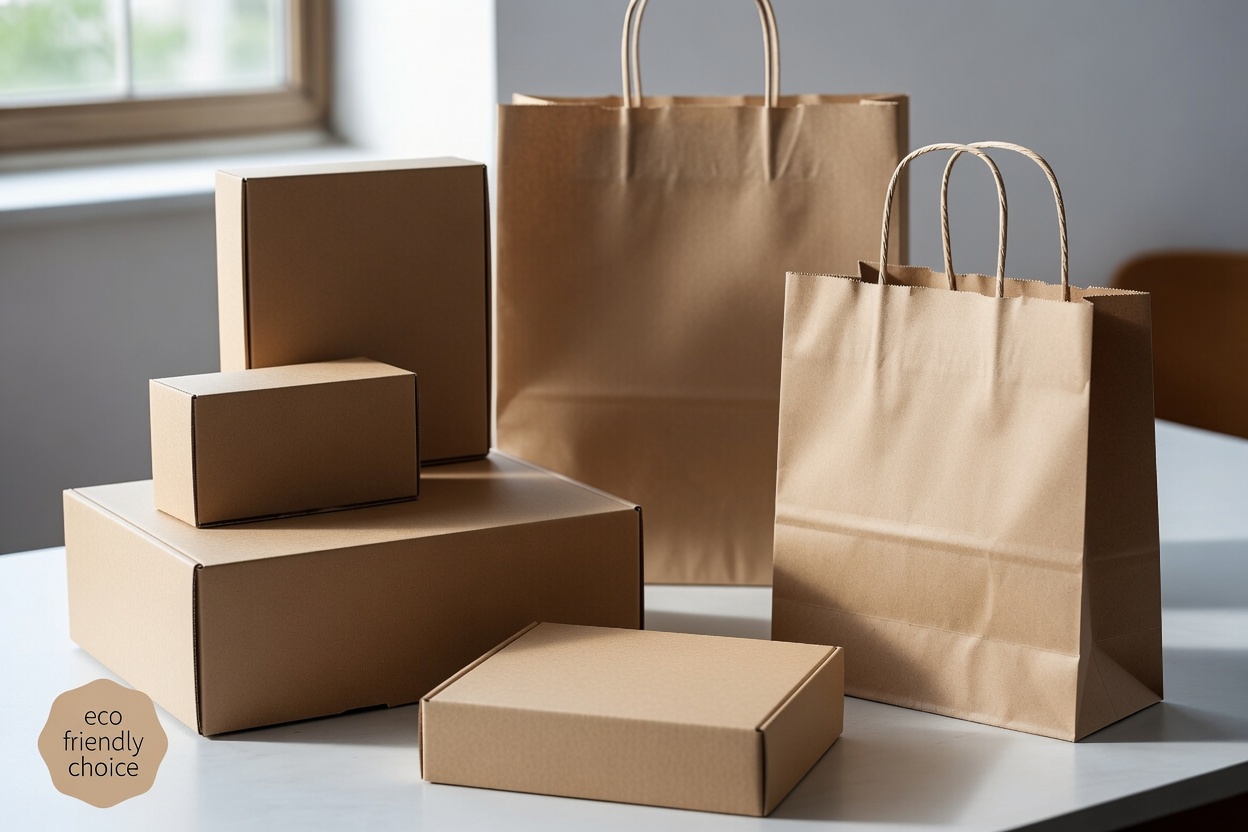
When we look at the full life cycle, corrugated boxes are generally more eco-friendly than paper bags, mainly because they:
- Achieve high real-world recycling rates
- Can incorporate substantial recycled content
- Offer strong protection, reducing product damage and returns
- Align closely with 2026 regulatory trends focused on recyclability and circularity [packsize]
Paper bags still have an important role, especially in branded retail and short-distance scenarios, but they must be designed for reuse and easy recycling to truly deliver on their eco-friendly promise. For most brands, the winning strategy is a hybrid system: right-sized corrugated boxes for shipping, complemented by optimized paper shopping bags for customer experience. [perfectpackaging]
For your next project with Maituohong Packaging, consider starting from the shipping reality (corrugated) and then layering in the retail experience (paper bags) instead of treating them as isolated choices. Would you like a concrete content outline and keyword map tailored to your main export markets (e.g., US, EU, Japan) for this topic?
Q1: Are paper bags always more eco-friendly than corrugated boxes?
No. While paper bags feel "greener," they can have higher energy and water footprints per use and are less durable, which limits reuse. Corrugated boxes often outperform them when designed for recyclability and right-sized shipping. [gentlever]
Q2: How important is recycled content in corrugated boxes?
Recycled content is critical. High post-consumer content reduces pressure on forests and total energy demand and is now a key trust signal in sustainable packaging claims. Many 2026 guidelines explicitly favor packaging with verified recycled content. [sustainablepackaging]
Q3: Can luxury rigid gift boxes be eco-friendly?
Yes, if they use responsibly sourced board, avoid complex laminations, and stay as close to mono-material structures as possible. Optimizing thickness and finishes helps keep them compatible with standard paper recycling streams. [gentlever]
Q4: What is the most eco-friendly choice for e‑commerce brands?
For e‑commerce, right-sized corrugated mailer or shipping boxes with high recycled content usually offer the best balance of protection, recyclability, and regulatory compliance. Paper bags can complement them for lighter local deliveries or in-store pickup. [packsize]
Q5: How can brands communicate packaging sustainability credibly?
Avoid vague language and emphasize specific data: recycled content percentages, recyclability instructions, and relevant certifications or compliance notes. This aligns strongly with Google's E‑E‑A‑T expectations for authoritative, transparent content. [ecoenclose]
1. Packsize – "Paper Vs Plastic: Why Sustainable Packaging Matters" – discussion of corrugated container advantages, sustainability, and logistics performance. [https://www.packsize.com/blog/paper-vs-plastic-why-sustainable-packaging-matters] [packsize]
2. Columbia Climate School – "Plastic, Paper or Cotton: Which Shopping Bag is Best?" – life cycle comparisons of different bag materials, including paper, and discussion of energy, water, and emissions impacts. [https://news.climate.columbia.edu/2020/04/30/plastic-paper-cotton-bags] [news.climate.columbia]
3. Perfect Packaging – "Environmental Impact of Plastic vs. Paper" – analysis of energy, water, and solid waste impacts of paper and cardboard compared to plastics. [https://perfectpackaging.org/environmental-impact-of-plastic-vs-paper/] [perfectpackaging]
4. EcoEnclose – "Sustainable Packaging Trends for 2026: What Eco-Conscious Brands Need to Know" – overview of circularity, recyclability, and regulatory trends shaping sustainable packaging decisions in 2026. [https://www.ecoenclose.com/blog/sustainable-packaging-trends-for-2026] [ecoenclose]
5. Sustainable Packaging Coalition (or similar 2026 trends report) – "2026 Sustainable Packaging Trends Report" – industry-level view on recyclability, EPR, and design efficiency in sustainable packaging. [https://sustainablepackaging.org/2026-sustainable-packaging-trends-report/] [sustainablepackaging]
6. Gentlever – "纸箱包装详解:类型、材料和优势" – explanation of corrugated box types, materials, and advantages relevant to shipping and product protection. [https://gentlever.com/zh-CN/%E7%BA%B8%E7%AE%B1%E5%8C%85%E8%A3%85%E8%AF%A6%E8%A7%A3/] [gentlever]
7. SocialTargeter – "Case Studies in Eco-Friendly Packaging Solutions: Lessons from Small Businesses" – case-based insights into implementing eco-friendly materials and packaging strategies. [https://socialtargeter.com/blogs/case-studies-in-eco-friendly-packaging-solutions-lessons-from-small-businesses] [socialtargeter]
8. Container and Packaging – "Brands Leading the Way in Sustainable Packaging" – examples of brands using recycled materials, minimal designs, and customer education to advance packaging sustainability. [https://www.containerandpackaging.com/resources/brands-leading-the-way-in-sustainable-packaging/] [containerandpackaging]


