
Views: 282 Author: Maituohong Packaging Publish Time: 2026-08-15 Origin: Site


Content Menu
● Corrugated Boxes vs Cardboard Boxes
● The Biggest Structural Difference: Flutes
● Strength and Protection Compared
>> When Corrugated Packaging Is Better
>> When Cardboard Packaging Is Better
● Appearance and Branding Capabilities
● Shipping Costs and Space Efficiency
>> Expert Tip: Start With Product Dimensions
● Which Box Is More Sustainable?
● A Practical Selection Framework
● Common Buying Mistakes to Avoid
>> Choosing by Thickness Alone
>> Using a Retail Carton as a Shipping Carton
>> Treating Packaging as Only a Cost
● Create Packaging That Protects and Performs
>> Is a corrugated box the same as a cardboard box?
>> Are corrugated boxes stronger than cardboard boxes?
>> Can I print high-quality graphics on corrugated boxes?
>> Which is best for e-commerce packaging?
>> Are cardboard boxes suitable for export shipping?
>> Can a premium product use a corrugated box?
>> How do I choose the right corrugated box size?
When buyers compare corrugated boxes vs cardboard boxes, they are often comparing two very different packaging functions: one is primarily engineered for transport protection, while the other is usually designed for presentation, lightweight packing, or retail display. Choosing the wrong material can increase shipping damage, inflate freight costs, or weaken the unboxing experience.
At Maituohong Packaging, our team has spent more than 18 years developing custom paper packaging, from durable mailer boxes and shipping boxes to premium rigid gift boxes. In practical packaging projects, the best option is rarely simply "stronger" or "cheaper." It depends on product weight, shipping route, stacking conditions, branding needs, fulfillment method, and the customer experience you want to create.
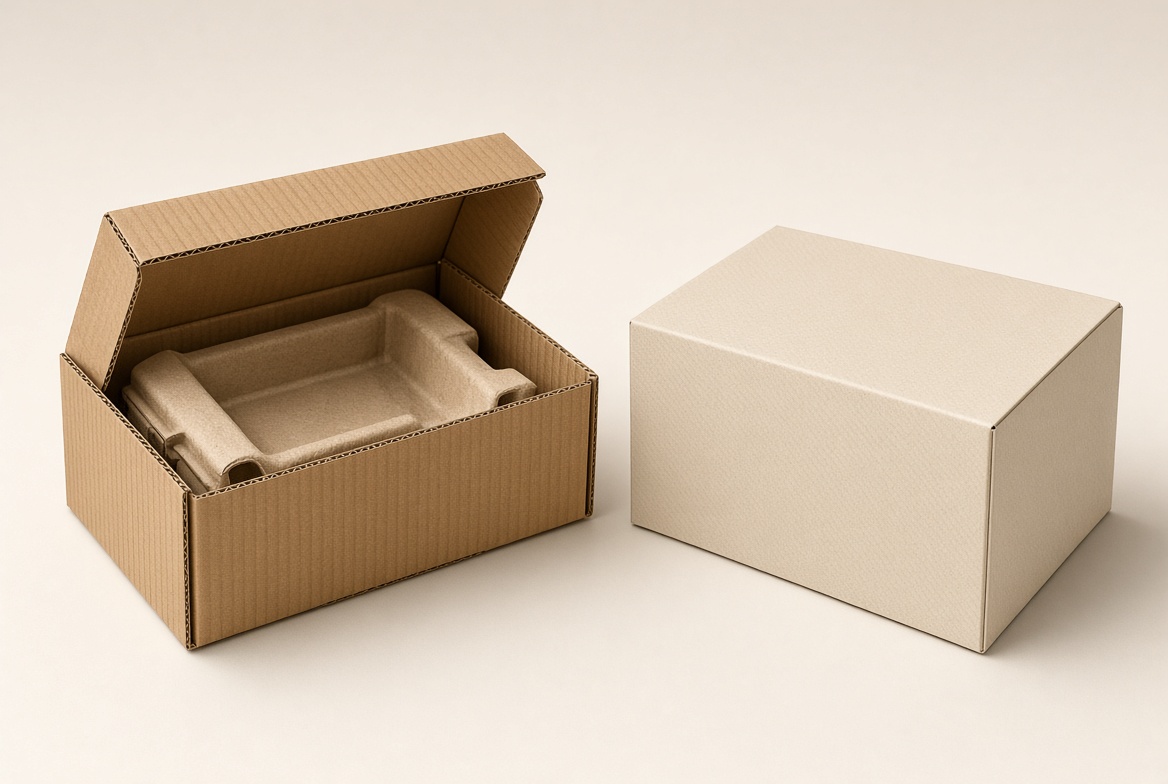
A corrugated box is made from corrugated fiberboard: a layered material that combines flat liner sheets with a fluted, wave-shaped medium in the middle.
This fluted structure creates air columns that help the box resist crushing, absorb impact, and maintain rigidity without adding excessive weight. Most shipping cartons, e-commerce mailer boxes, warehouse cartons, and export cartons use corrugated board for this reason.
A basic corrugated board has three paper layers:
- An outer liner
- A fluted medium
- An inner liner
Stronger grades may use more layers, such as double-wall or triple-wall constructions. The material can range from lightweight single-wall board for cosmetics mailers to heavy-duty multiwall board for machinery parts, glassware, automotive components, or bulk shipments.
Key point: Corrugated boxes are structural packaging. Their core function is to protect products while they move through storage, handling, delivery, and stacking.
The term cardboard box is widely used in everyday language, but it is not always technically precise. It may refer to a box made from paperboard, folding carton board, chipboard, greyboard, or even corrugated material.
In commercial packaging discussions, "cardboard box" often means a box made from solid paperboard rather than fluted corrugated board. Typical examples include:
- Folding cartons for cosmetics, food, medicine, and electronics
- Paperboard gift boxes
- Lightweight product cartons
- Printed retail packaging
- Cereal-style cartons
- Rigid setup boxes made with thick greyboard
Unlike corrugated board, solid paperboard does not contain a fluted middle layer. It is flat, dense, and generally better suited to high-quality printing, precise die-cutting, and compact retail presentation.
Key point: Cardboard boxes are commonly selected for product presentation, branding, and light-to-medium protection rather than demanding distribution conditions.
| Feature | Corrugated Boxes | Cardboard Boxes |
|---|---|---|
| Material structure | Flat liners plus fluted medium | Flat paperboard or thick greyboard |
| Main purpose | Shipping, storage, export, protection | Retail display, product presentation, light packing |
| Cushioning ability | High, due to fluted inner structure | Limited unless combined with inserts or rigid construction |
| Compression strength | Stronger for stacking and warehouse use | Lower for standard folding cartons |
| Printing surface | Good, especially with litho-lamination or coated liners | Excellent for detailed graphics and premium finishes |
| Weight | Lightweight relative to protection level | Often lightweight for folding cartons; heavier for rigid boxes |
| Best for | Mailer boxes, shipping cartons, transit packaging | Cosmetics cartons, retail boxes, gift boxes, food cartons |
| Typical customization | Board grade, flute type, box style, inserts, print | Paper type, thickness, coating, foil, embossing, window cutouts |
| Cost focus | Value through reduced damage and shipping efficiency | Value through shelf appeal and brand presentation |
| Recycling pathway | Widely collected in many commercial recycling streams | Depends on coatings, laminations, inks, and local collection rules |
The most important difference between corrugated boxes and cardboard boxes is the presence of fluting.
Flutes are the arched, wave-like paper layer inside corrugated fiberboard. They create separation between the liners and distribute force across the board. This design gives corrugated packaging a favorable strength-to-weight ratio.
In real shipping conditions, boxes may experience:
- Drops during sorting and delivery
- Compression from stacked cartons
- Vibration in trucks, containers, or aircraft
- Humidity changes during ocean freight
- Repeated handling at warehouses
- Puncture risks from corners and sharp product edges
A flat paperboard carton may look attractive, but it is usually not designed to absorb these pressures independently. A corrugated shipping box is more capable of handling them, especially when paired with the correct board grade, flute profile, dimensions, and internal protection.
For example, a skincare brand may use a printed folding carton around each product, then place multiple units inside a corrugated master carton for export. The folding carton sells the product; the corrugated carton protects the shipment.

Not all corrugated boxes provide the same performance. Strength depends on board construction, paper quality, flute profile, box dimensions, moisture exposure, and the way the carton is packed.
Common corrugated constructions include:
- Single-face: One liner attached to one fluted layer; often used as a protective wrap.
- Single-wall: Two liners with one fluted layer; common for e-commerce mailer boxes and standard shipping cartons.
- Double-wall: Three liners with two fluted layers; suitable for heavier products and longer transport routes.
- Triple-wall: Multiple liners and fluted layers; used for high-load industrial and export applications.
A conventional cardboard folding carton is generally appropriate when the product itself is light, rigid, and already protected. Examples include toothpaste tubes, small cosmetic jars, tea bags, lightweight accessories, and shelf-ready consumer goods.
However, a folding carton is not a substitute for a shipping carton when products will travel through a parcel network. It may crease, crush, tear, or open if used alone.
Choose a corrugated box when you need:
- Reliable shipping protection
- Better resistance to stacking pressure
- A practical solution for e-commerce fulfillment
- Protection for fragile or irregularly shaped products
- A flat-packed box that is easy to assemble
- A lower risk of transit damage
- Custom inserts, partitions, or protective pads
- Export-ready packaging for longer supply chains
Choose a paperboard or rigid cardboard box when you need:
- Premium retail presentation
- Detailed printed artwork
- Foil stamping, embossing, debossing, or spot UV
- Compact and lightweight consumer packaging
- An elegant gift-box experience
- A box that will be displayed on shelves rather than shipped alone
- A high-end unboxing experience for beauty, jewelry, apparel, or electronics
Many buyers assume corrugated packaging is plain and cardboard packaging is premium. That is no longer accurate.
A custom corrugated mailer box can be highly branded through:
- Flexographic printing
- Digital printing for short runs
- Offset-printed paper laminated onto corrugated board
- Inside printing
- Custom die-cut shapes
- Tear strips and self-locking closures
- Branded inserts
- Water-based coatings
- Custom tape or labels
For direct-to-consumer brands, a printed corrugated mailer box can create a strong first impression while protecting products in transit. It is especially useful for subscription boxes, apparel orders, cosmetics sets, small electronics, wellness kits, and promotional mailers.
Paperboard boxes offer more flexibility for ultra-fine graphics and decorative finishing. A rigid cardboard gift box can also communicate luxury through texture, weight, magnetic closures, ribbon pulls, foil details, and wrapped specialty paper.
The choice should reflect the customer journey. If the box is the first branded object customers see at home, a custom mailer box may deserve more visual attention. If the product is purchased from a retail shelf, the folding carton may need to carry the primary branding burden.
Packaging cost should never be evaluated only by unit price.
A low-cost box that causes product damage, requires excessive void fill, occupies too much warehouse space, or increases dimensional-weight charges can become the more expensive option.
Corrugated boxes are usually shipped flat before assembly. This helps importers, e-commerce sellers, and fulfillment operations save warehouse space. Their light weight can also help manage shipping costs, provided the box size is carefully matched to the product.
A well-designed shipping box should minimize unused space. Oversized packaging creates several problems:
- More empty space allows products to move during transit
- More void fill may be required
- Freight charges may increase
- The customer may perceive the packaging as wasteful
- Warehousing and pallet utilization become less efficient
Before selecting a corrugated box or cardboard box, measure:
1. Product length, width, and height.
2. Product weight.
3. Fragile points, edges, or protrusions.
4. Required internal protection.
5. Number of units per shipment.
6. Shipping method and delivery route.
7. Desired opening and closing experience.
Then design the box around the real product, rather than adapting the product to a standard box size.
This approach often reduces material waste and improves transit performance.
Both corrugated and paperboard packaging can support fiber-based packaging strategies, particularly when designed with recyclable materials and simplified construction.
Corrugated boxes are widely recovered from commercial waste streams because they are common in distribution and e-commerce. In the United States, corrugated boxes represented the largest single product category of municipal solid waste in 2018, while the reported recycling rate for corrugated boxes was 96.5 percent.
However, recyclability depends on more than the base material. Packaging can become harder to recover when it includes excessive plastic lamination, mixed materials, foam components, heavy contamination, or difficult-to-separate decorative layers.
For practical packaging development, consider these choices:
- Use responsibly sourced paper where appropriate.
- Select recycled-content board when it meets performance needs.
- Avoid unnecessary material combinations.
- Use paper-based inserts instead of plastic where feasible.
- Print disposal instructions clearly.
- Right-size the box to reduce material use.
- Test performance before reducing board weight.
Sustainability is not only about using less material. It is about using the right amount of material to protect the product and prevent waste from damage, replacements, and returns.
Use this quick decision guide when deciding between corrugated boxes and cardboard boxes.
| Your Packaging Need | Recommended Option |
|---|---|
| Ship individual e-commerce orders | Corrugated mailer box |
| Transport fragile products | Corrugated shipping box with inserts |
| Package premium jewelry or cosmetics | Rigid cardboard gift box |
| Display products in retail stores | Printed folding carton |
| Export products by sea or air | Corrugated master carton |
| Deliver subscription-box products | Printed corrugated mailer box |
| Package lightweight food or personal-care products | Folding cardboard carton |
| Ship a premium gift set | Rigid box inside a corrugated outer shipper |
For many brands, the strongest packaging system uses both materials. A product may sit inside a premium paperboard retail box, then be protected by a corrugated shipping carton during fulfillment.

Thickness does not automatically mean strength. Board performance depends on paper quality, flute construction, liner combination, box design, dimensions, and real shipping conditions.
A beautiful folding carton may protect a product on a shelf but fail in parcel delivery. Add a corrugated outer mailer or shipper when the product will travel independently.
Even a strong corrugated box may not protect a product if the item moves freely inside. Use paper inserts, dividers, molded pulp, corrugated pads, or custom partitions when necessary.
For products with higher value, unusual shapes, fragile components, or long international routes, create samples first. Test assembly, fit, closure performance, print appearance, stacking, and transit protection before mass production.
Packaging affects customer satisfaction, breakage rates, warehouse productivity, return rates, brand perception, and repeat purchase behavior. The most suitable box often creates savings beyond its quoted unit cost.
The difference between corrugated boxes and cardboard boxes is not simply a question of material. It is a decision about protection, presentation, logistics, and customer experience.
Maituohong Packaging can help you develop custom mailer boxes, shipping boxes, rigid gift boxes, folding cartons, and paper-based inserts that match your products and supply-chain requirements. Share your product dimensions, weight, artwork, target quantity, and shipping scenario with our packaging team to receive a tailored packaging recommendation and sampling plan.
Not always. "Cardboard box" is a broad everyday term. A corrugated box is made with fluted layers between liner sheets, while many cardboard boxes are made from flat paperboard or greyboard.
In most shipping and stacking applications, yes. The fluted middle layer gives corrugated boxes better cushioning and compression resistance than standard folding cardboard cartons.
Yes. Custom corrugated boxes can use flexographic, digital, or offset-laminated printing. For luxury-level graphics and decorative finishes, paperboard or rigid boxes may offer more finishing options.
A corrugated mailer box or shipping box is usually the better choice because it provides structural protection during fulfillment and delivery. Add internal inserts if the product needs additional stabilization.
Standard folding cardboard cartons are usually not enough for export transport on their own. For ocean, air, or long-distance distribution, use corrugated shipping cartons designed for the product weight and route.
Absolutely. A custom printed corrugated mailer can create a premium unboxing experience, especially when paired with clean graphics, inside printing, tissue paper, paper inserts, or a rigid gift box inside.
Measure the product and any required protective material first. Then select internal dimensions that keep the item stable without creating excessive empty space. A packaging supplier can help determine the appropriate board grade and box structure after reviewing the product, weight, and shipping method.
1. [United States Environmental Protection Agency — Containers and Packaging: Product-Specific Data]
2. [FEFCO — Standards and Guidelines Relating to the Corrugated Industry]
3. [Boxon — FEFCO and Corrugated Cardboard]
4. [Umbrex — Paperboard, Corrugated and Containerboard Packaging Industry Primer]
5. [THIMM — FEFCO Packaging Standards]
6. [United States Environmental Protection Agency — Commercial Recycling and Corrugated Cardboard]


