Views: 222 Author: Maituohong Packaging Publish Time: 2026-06-09 Origin: Site


Content Menu
● Why Picture Frames Are So Easy To Damage
● Step 1: Gather the Right Packing Materials
● Step 2: Protect the Glass and Artwork
● Step 3: Reinforce Corners and Surfaces
● Step 4: Choose the Right Box (Why Custom Mailer Boxes Win)
● Step 5: Prepare the Box Interior and Load the Frame
● Step 6: Seal, Label, and Prepare for Transit
● Pro‑Level Practices for High‑Value or Fine Art Frames
● How Custom Mailer Boxes Improve Cost, UX, and Brand
● Example Packing Workflow for E‑commerce Frame Sellers
● Mailer Box vs. Regular Shipping Box for Frames
● Sustainability Considerations for Frame Packaging
● When to Partner With a Custom Packaging Manufacturer
● Call to Action: Upgrade Your Picture Frame Shipping
● FAQs: Shipping Picture Frames
Shipping a picture frame is not just about getting it from point A to point B; it is about protecting memories, artwork, and brand reputation in transit. As a custom mailer box and shipping box manufacturer with over 18 years in paper packaging, I'll walk you through a proven, step‑by‑step method to pack and ship frames safely—and show where custom corrugated packaging dramatically improves both protection and unboxing. [ecwid]
- How to pack picture frames for shipping (step‑by‑step). [wikihow]
- Best materials for glass, corners, and impact protection. [modernmemorydesign]
- When to use single boxes vs. double boxing. [theupsstore]
- How custom mailer/shipping boxes reduce damage and cost. [theboxology]
- Practical pro tips and FAQs based on real shipping practice. [artsyshark]
Throughout, I'll highlight how a tailored mailer box solution from a specialist like Maituohong Packaging can make your process safer, faster, and more brand‑consistent. [ecwid]
Shipping frames is deceptively tricky: you are dealing with a combination of glass, rigid corners, and often irreplaceable artwork. [blog.papermart]
- Glass can shatter under point impact or vibration, sending shards into the artwork surface. [wikihow]
- Frame corners take concentrated loads if the box is dropped on an edge. [theupsstore]
- Cheap, oversized boxes allow the frame to move and pick up momentum during transit. [modernmemorydesign]
Carriers assume packages will be stacked, slid, and occasionally dropped from waist height, so your packaging must be engineered for shocks and side pressure—not just gentle handling. [artsyshark]
Before touching the frame, prepare all materials so you can work efficiently and avoid mistakes. [wikihow]
Essential materials for most frames [modernmemorydesign]
- Painter's or artist tape (for glass safety grid).
- Thick packing paper or kraft paper.
- Bubble wrap (at least 2 layers per frame).
- Cardboard sheets or corner protectors.
- A sturdy corrugated shipping box or mailer, slightly larger than the frame.
- Packing tape (high‑quality, at least 2–3 inches wide).
- "Fragile" / "Handle With Care" labels or stickers.
For high‑value or heavy frames, professionals often add foam corners, foam boards, and sometimes a second outer box for extra protection. [figurativeartist]
This is where custom picture‑frame mailer boxes shine: instead of struggling to adapt random stock boxes, you use a box engineered to your frame's exact size and weight. [theboxology]
Glass is the number one failure point when shipping picture frames. If a shock event does occur, you want to control exactly how the glass fails. [blog.papermart]
Create a safety grid on the glass
1. Use painter's or artist tape to create a criss‑cross or grid pattern directly on the glass surface. [wikihow]
2. Extend tape close to the frame edges without sticking onto the frame finish. [blog.papermart]
If the glass breaks, this grid helps hold shards in place and prevents them from cutting into the artwork or photo underneath. [modernmemorydesign]
Wrap the frame in paper, then bubble wrap
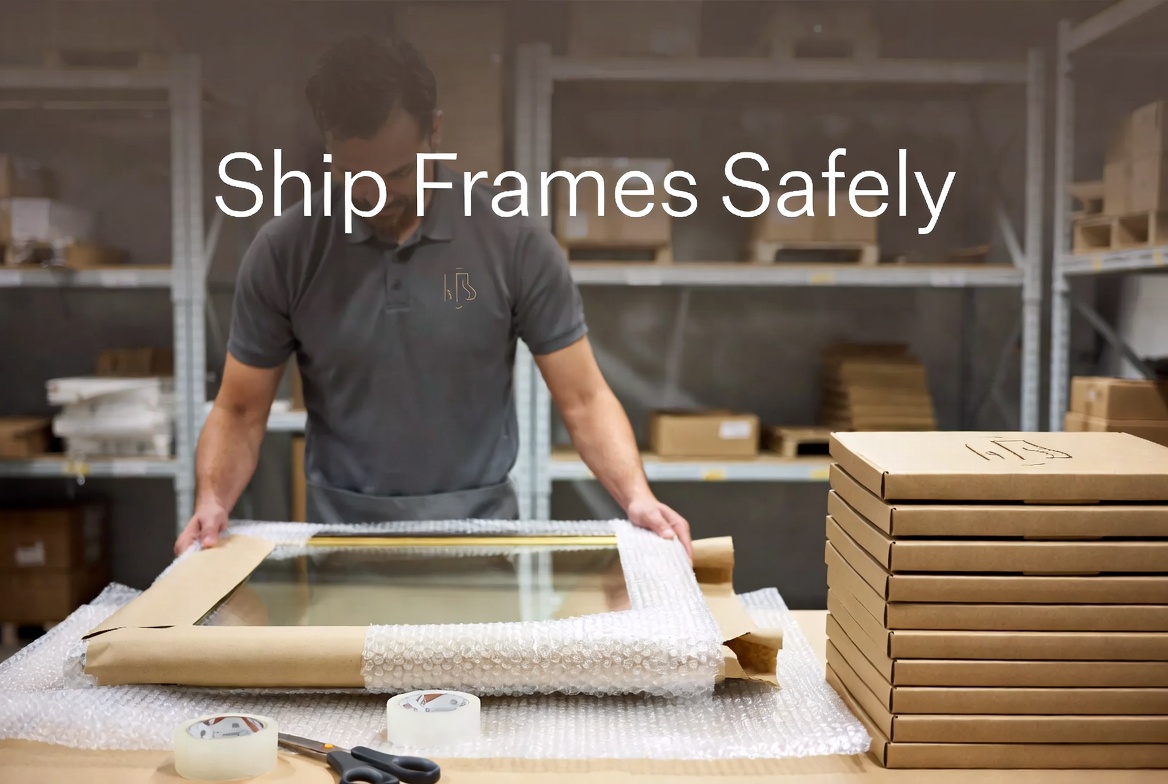
- Wrap the entire frame in thick packing paper and tape it closed. [wikihow]
- Add at least two layers of bubble wrap around the frame, bubbles facing inward, and secure with packing tape. [theupsstore]
Paper adds a scuff barrier and prevents the bubble wrap from sticking to the frame surface, while multiple bubble layers absorb everyday impact. [modernmemorydesign]
Even with bubble wrap, frame corners are vulnerable to crushing if the box takes a hit. [theupsstore]
- Use cardboard corner protectors or foam corner guards on all four corners. [figurativeartist]
- For larger frames, sandwich the wrapped frame between two flat cardboard sheets cut slightly larger than the frame. [figurativeartist]
This "cardboard sandwich" significantly improves rigidity and prevents localized pressure from bending the frame. [figurativeartist]
Custom solutions can integrate pre‑scored corner locking structures or internal buffers into the mailer box design, so you do not need separate corner pieces for every shipment. [theboxology]
A common cause of damage is using a box that is too large or not strong enough. [theupsstore]
General box selection rules
- Choose a corrugated box just slightly larger than the wrapped frame—typically allowing 5–7 cm (2–3 inches) of cushioning on all sides. [blog.papermart]
- For heavy or large frames, use higher strength corrugated (e.g., 44 ECT or better) to resist stacking loads. [theupsstore]
- Avoid reusing heavily worn or previously crushed boxes for fragile shipments. [artsyshark]
Why custom mailer/shipping boxes for frames
From a manufacturer's perspective, a custom mailer box offers several practical advantages: [ecwid]
- Precision sizing reduces void fill needs and movement risk. [theboxology]
- Tailored board grade and flute type match the weight and fragility of your frame. [theboxology]
- Built‑in locking flaps and inserts speed up packing and create repeatable protection. [ecwid]
- Exterior printing supports branding ("Fragile," up arrows, logo, handling instructions). [ecwid]
Across thousands of shipments, these optimizations reduce breakage, returns, and negative reviews while saving time for your packing team. [artsyshark]
Once your frame is fully wrapped and reinforced, you can prepare the box for loading. [modernmemorydesign]
1. Line the bottom of the box with bubble wrap, foam sheets, or packing peanuts to create a cushioning layer (at least 2 inches). [blog.papermart]
2. Place the wrapped frame in the center of the box so it does not directly touch any wall. [modernmemorydesign]
3. Fill all remaining voids with bubble wrap, air cushions, or peanuts until the frame no longer shifts when you gently shake the box. [blog.papermart]
A simple test here is the "shake test"—if you can hear or feel movement, you need more cushioning or a better‑sized box. [theupsstore]
In a custom mailer design, internal buffers and fit‑to‑size dimensions often mean you can achieve a snug, protective fit with much less loose fill material. [theboxology]
Proper closing and labeling is your last line of defense. [blog.papermart]
- Use high‑quality packing tape and seal all seams, ideally with an "H‑tape" pattern across the main flaps and side edges. [theupsstore]
- For heavier frames, add additional tape straps all the way around the box lengthwise and crosswise to reinforce the structure. [figurativeartist]
- Apply clear "Fragile" and "Glass" labels on multiple sides of the box. [blog.papermart]
- Ensure shipping labels are clearly visible and not placed over critical seams. [artsyshark]
Many shippers also select carriers and service levels based on tracking, insurance, and handling quality, especially for high‑value fine art. [artsyshark]
For galleries, artists, and premium frame sellers, the cost of damage is particularly high—financially and reputationally. These are the methods industry professionals rely on: [figurativeartist]
- Double boxing: Place the fully packed inner box into a larger outer box with additional cushioning between them to absorb severe shocks. [theupsstore]
- Foam "sandwich" construction: Surround the frame with rigid insulation foam panels to fully protect the face and edges before boxing. [figurativeartist]
- No direct plastic on artwork: If you worry about condensation, use foam frames deeper than the canvas so nothing touches the painted surface. [figurativeartist]
- Detailed documentation: Include packing lists, condition reports, and clear handling instructions when shipping via specialized art shuttles. [artsyshark]
Custom engineered mailer systems can integrate double‑box logic and foam components into a repeatable workflow, which is especially valuable when you ship multiple framed pieces every week. [ecwid]
From the perspective of a packaging manufacturer, strong EEAT content should go beyond basic "how‑to" and explain why custom packaging often pays for itself. [theboxology]
1. Lower damage and return rates
- Tighter dimensional control reduces internal movement and impact energy. [theboxology]
- Correct board grade and structural design prevent box collapse in stacked pallets. [theboxology]
Even a small drop in damage rate can quickly offset the marginal cost of a custom mailer, especially for framed art and premium home décor. [ecwid]
2. Faster packing and consistent quality
- Pack‑out becomes a repeatable process because every frame fits the same way. [ecwid]
- Internal inserts and scores guide team members, reducing training time and human error. [ecwid]
Over hundreds of shipments, this saves hours of labor and reduces variability in customer experience. [theboxology]
3. Stronger unboxing and branding
- Exterior printing allows you to communicate brand, handling instructions, and sustainability messaging in one place. [ecwid]
- A well‑designed mailer elevates the perceived value of the frame when the customer opens the box. [ecwid]
In B2B and DTC alike, memorable unboxing moments contribute directly to reviews, referrals, and repeat purchases. [ecwid]

If you are shipping picture frames regularly—from an online art shop, print‑on‑demand service, or home décor brand—create a simple Standard Operating Procedure (SOP) like this: [modernmemorydesign]
1. Pre‑check: Verify frame size, glass type, and any special requirements.
2. Glass prep: Apply painter's tape safety grid on glass. [wikihow]
3. Primary wrap: Wrap in kraft paper, then two layers of bubble wrap. [modernmemorydesign]
4. Reinforce: Add corner protectors and, for larger frames, cardboard sheets. [modernmemorydesign]
5. Boxing: Place in custom mailer or right‑sized shipping box with bottom and side cushioning. [blog.papermart]
6. Void fill & test: Fill gaps, perform shake test, adjust as needed. [theupsstore]
7. Seal & label: Use H‑tape pattern and apply fragile/glass labels. [blog.papermart]
8. Ship & track: Choose carrier services with tracking and, where needed, insurance. [artsyshark]
This standardization reduces mistakes and makes it easy to onboard new staff while maintaining a high protection level. [artsyshark]
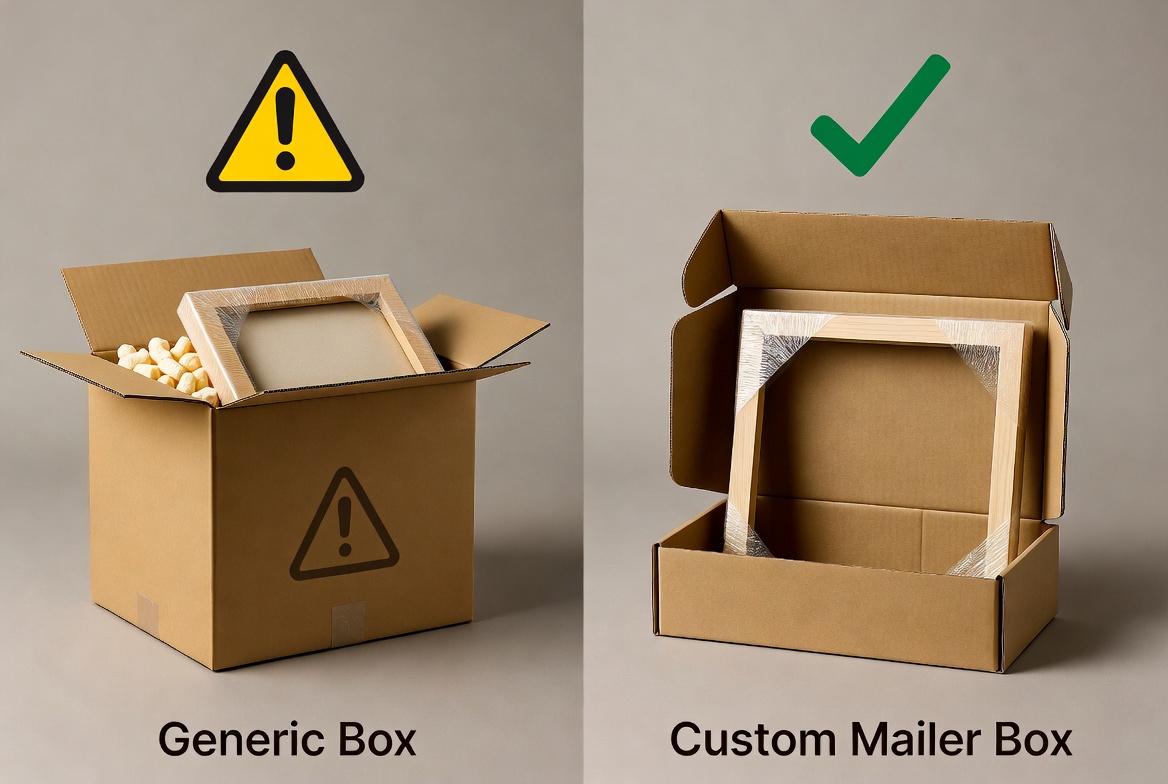
Below is a quick comparison to help you decide when to move from generic boxes to custom frame mailer boxes. [theboxology]
| Aspect | Generic shipping box | Custom frame mailer box |
|---|---|---|
| Fit to frame size | Often loose, needs heavy void fill (modernmemorydesign) | Designed to match frame dimensions closely (theboxology) |
| Protection level | Depends on ad‑hoc packing skill (modernmemorydesign) | Engineered cushioning and structure built in (theboxology) |
| Packing speed | Slower, more improvisation (modernmemorydesign) | Faster, repeatable workflow (theboxology) |
| Branding options | Usually unprinted or generic (ecwid) | Full logo, artwork, and handling graphics possible (ecwid) |
| Material efficiency | May overuse bubble/peanuts (modernmemorydesign) | Optimized to minimize excess materials (theboxology) |
| Long‑term cost | Lower upfront, higher hidden cost from damage and labor (artsyshark) | Higher unit cost but lower damage and labor over time (theboxology) |
For occasional personal shipments, a generic box with good technique is usually enough; for volume shippers and brands, a tailored mailer solution is typically the smarter long‑term choice. [modernmemorydesign]
Many buyers now care about both protection and environmental impact. Fortunately, well‑designed paper‑based solutions can support both. [ecwid]
- Use recyclable corrugated mailer boxes instead of mixed‑material packs. [ecwid]
- Right‑size your box to reduce unnecessary material and shipping weight. [theboxology]
- Replace excessive plastic void fill with paper‑based alternatives where feasible. [ecwid]
Manufacturers with deep paper packaging experience can help you balance protective performance with material reduction and recyclability. [theboxology]
If you are shipping frames regularly, you can treat packaging as a strategic asset rather than a cost center. Consider engaging a specialist when: [theboxology]
- You ship medium to high volume framed prints, photos, or artwork every month. [theboxology]
- You are seeing recurring breakage or corner damage despite careful packing. [artsyshark]
- You want consistent, branded unboxing for DTC or wholesale customers. [ecwid]
A manufacturer focused on mailer boxes and shipping boxes for fragile goods can map your current process, analyze damage modes, and design frame‑specific packaging that aligns with your brand and budget. [theboxology]
If you are currently relying on improvised boxes and inconsistent packing routines, now is the time to upgrade your approach. By combining proven packing techniques with custom‑engineered mailer boxes, you can cut damage, speed up fulfillment, and give customers the confidence that their frames will arrive intact. [modernmemorydesign]
Talk to a specialized paper packaging manufacturer about your frame sizes, shipping volumes, and brand goals, and turn every shipment into a secure, on‑brand unboxing experience. [theboxology]
1. What is the best way to ship picture frames with glass?
Use painter's tape on the glass, wrap with paper and bubble wrap, reinforce corners, then place the frame in a snug, cushioned corrugated box with no internal movement. [wikihow]
2. Do I really need a custom mailer box for frames?
For occasional one‑off shipments, a quality stock box can work; for regular or high‑value shipments, custom mailer boxes reduce damage, labor time, and material waste. [modernmemorydesign]
3. Should I double‑box framed artwork?
Double boxing is recommended for large, heavy, or high‑value frames, especially when shipping long distances or internationally, as it adds a second impact‑absorbing layer. [figurativeartist]
4. What packing materials should I avoid?
Avoid very thin boxes, loose frames in oversized cartons, and unprotected glass; also avoid placing plastic directly on delicate painted surfaces if moisture is a concern. [figurativeartist]
5. How can I reduce shipping damage without spending too much?
Right‑size your boxes, standardize your packing steps, use proper corner protection, and consider a simple custom mailer design that cuts void fill and labor while improving protection. [modernmemorydesign]
1. Paper Mart – "How to Package and Ship Picture Frames." [blog.papermart]
<https://blog.papermart.com/how-to/package-ship-picture-frames/>
2. wikiHow – "How to Pack Picture Frames for Shipping." [wikihow]
<https://www.wikihow.com/Pack-Picture-Frames-for-Shipping>
3. Modern Memory Design – "Cheapest Way to Ship Picture Frames Guide." [modernmemorydesign]
<https://www.modernmemorydesign.com/blogs/news/guide-shipping-and-packing-framed-pictures>
4. The UPS Store – "How to Pack and Ship Framed Art." [theupsstore]
<https://www.theupsstore.ca/how-to-pack-framed-art/>
5. Figurative Artist – "Fool-proof method for shipping artwork." [figurativeartist]
<https://figurativeartist.org/fool-proof-method-for-shipping-artwork/>
6. Artsy Shark – "Insider Tips for Shipping Art." [artsyshark]
<https://www.artsyshark.com/2020/02/19/insider-tips-for-shipping-art/>
7. Ecwid – "Custom Product Packaging: Real Examples of How Your Store Can Stand Out." [ecwid]
<https://www.ecwid.com/zh-CN/blog/custom-product-packaging.html>
8. Picture frame box product listing – The Boxology. [theboxology]
<https://theboxology.us/product/picture-frame-boxes/>