
Views: 222 Author: Maituohong Packaging Publish Time: 2026-06-08 Origin: Site


Content Menu
● What Is A Bubble Mailer And When Should You Use One?
● The Technology Behind Bubble Wrap Protection
● Bubble Mailers vs. Shipping Boxes: How To Decide
>> When Bubble Mailers Make Sense
>> When You Should Use A Box Instead
● Practical Packing Steps: Expert Workflow For Fragile Shipments
>> 1. Evaluate The Product's Fragility And Value
>> 2. Choose The Right Outer Packaging
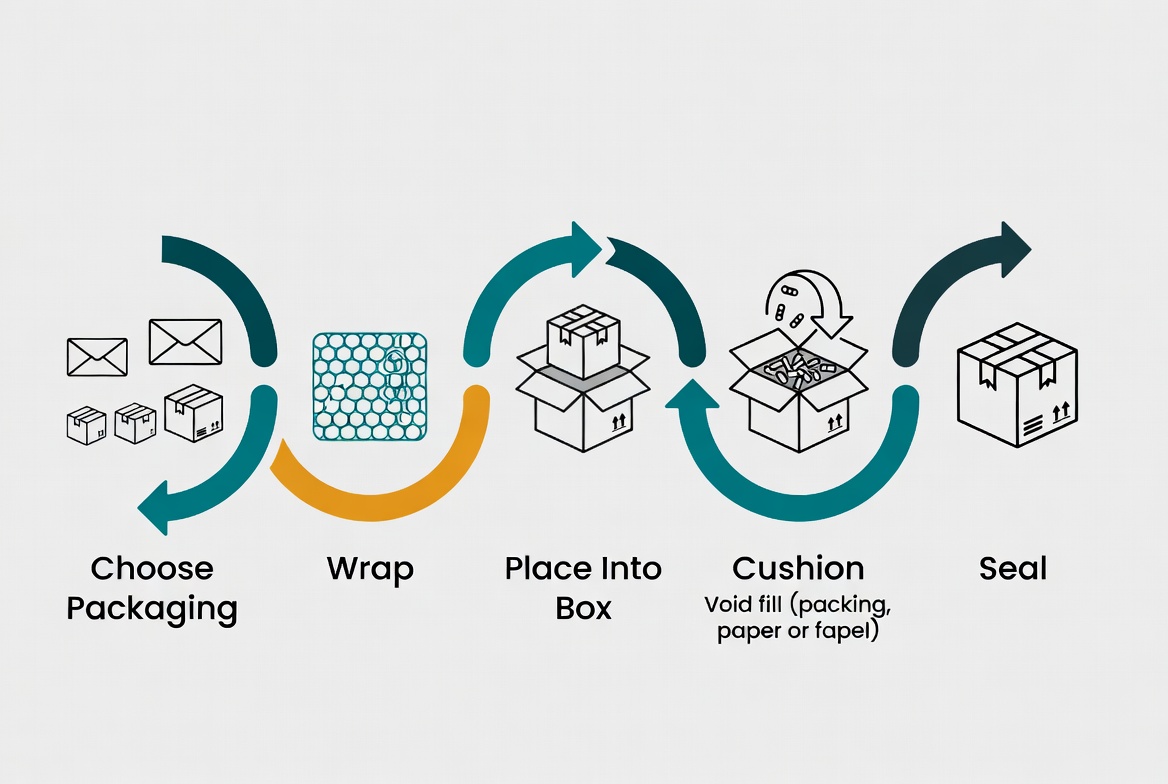
>> 3. Wrap And Cushion The Product Correctly
>> 4. Fill Voids And Prevent Movement
● Real Questions From Shippers (And What They Teach Us)
● How Custom Mailer And Shipping Boxes Improve Protection And Brand Perception
● Best Practices For E‑Commerce Brands Shipping Fragile Items
● Example Packaging Decision Table For Fragile Items
● Call To Action: Design A Safer, Smarter Packaging System
● FAQs About Bubble Mailers And Fragile Shipping
Using bubble mailers to ship fragile items can be both safe and cost-effective—if you understand their limits and package like an industry expert. As a custom mailer box and shipping box manufacturer with over 18 years of packaging experience, Maituohong Packaging has seen how a thoughtful combination of bubble mailers and sturdy corrugated boxes dramatically reduces breakage rates and shipping costs for e‑commerce brands worldwide. [magetop]
A bubble mailer (also called a padded mailer) is a paper or poly envelope lined with bubble wrap to provide lightweight cushioning during transit. The outer layer is usually durable Kraft paper or polyethylene, while the inner layer uses air‑filled bubbles to absorb minor shocks and vibration. [packlane]
Bubble mailers are ideal for:
- Flat, solid items (books, CDs, DVDs, game cartridges) [magetop]
- Jewelry, watches, and accessories that don't have protruding, fragile parts [magetop]
- Small electronics and components (cables, memory cards, circuit boards) with basic impact resistance [packlane]
- Documents or certificates that need light protection but not a full box
From an operational perspective, bubble mailers help shippers reduce dimensional weight, speed up packing workflows, and lower freight costs for small orders—especially in high‑volume e‑commerce or marketplace fulfillment. [gls-group]
Bubble wrap was originally invented in 1957 by engineers experimenting with textured plastic wallpaper; its protective role in packaging was discovered soon after. Modern bubble wrap is typically made from polyethylene, bonded into two layers with air pockets in between that act as micro shock absorbers. [magetop]
Key technical features that matter to shippers:
- Bubble size: Small bubbles (around 3/16 inch) are best for light, compact items, while larger bubbles (up to 1 inch) offer more cushioning for heavier goods. [packlane]
- Material properties: Polyethylene provides flexibility, tear resistance, and good memory, allowing bubbles to rebound from minor compression. [magetop]
- Anti‑static variants: For electronics, anti‑static bubble wrap helps dissipate static charges that can damage sensitive components. [magetop]
From our experience manufacturing custom mailer and shipping boxes, bubble wrap works best as a secondary protection layer: it is excellent inside a rigid outer structure but should not be your only defense for highly fragile, heavy, or irregularly shaped products. [gls-group]
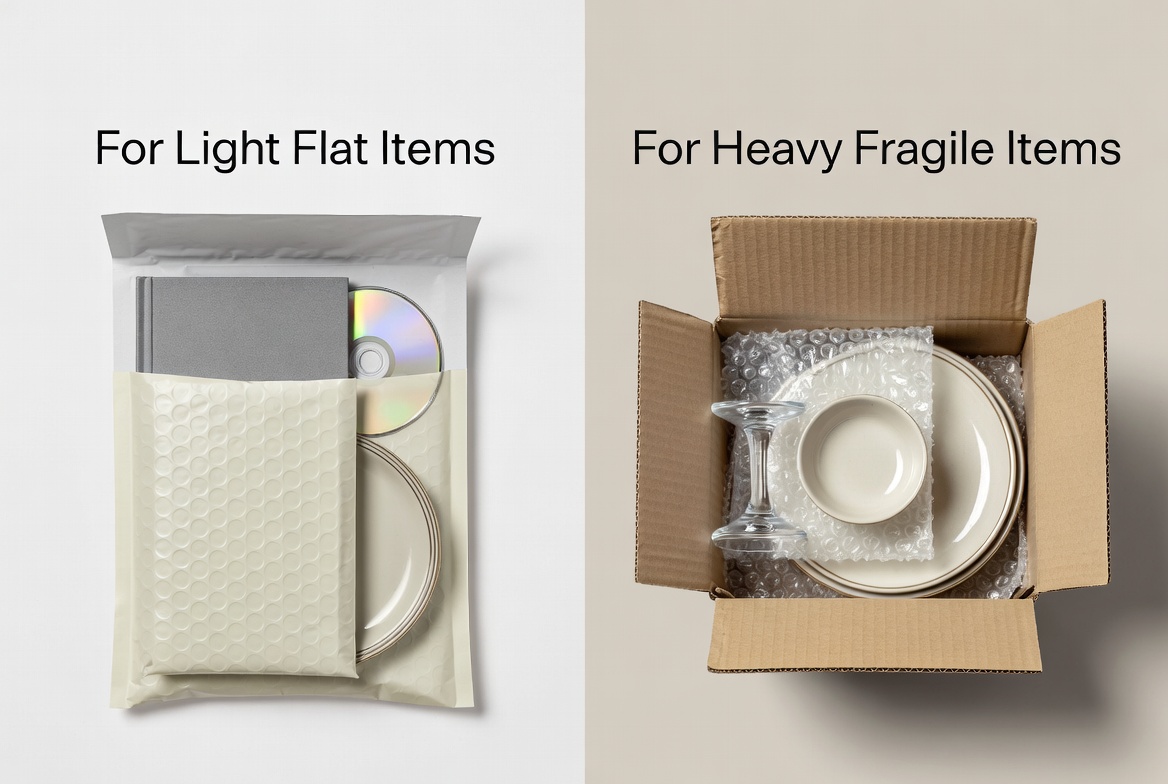
Not all fragile items belong in a bubble mailer. Some need the structural strength of a corrugated shipping box.
Use a bubble mailer when:
- The item is relatively flat and compact (e.g., CDs, books, small devices) [packlane]
- The weight is low enough that a flexible envelope won't sag or tear under stress [gls-group]
- The product already has its own retail packaging providing baseline protection
- You want to minimize postage and packaging costs for lower‑value items
Real user comments on the original article highlight a common concern: are bubble mailers enough for very fragile items like ceramic dishes or glassware? The expert response from Paper Mart and our own factory observations are aligned—these products need sturdy shipping boxes. [magetop]
Choose a corrugated shipping box when:
- The product is extremely fragile (ceramics, glass, delicate decor, handmade crafts) [gls-group]
- The item is heavy relative to its size (dense materials, metal components)
- You ship internationally or through long, multi‑carrier routes with higher impact risk [gls-group]
- You've already experienced breakage with bubble mailers for similar items
In those cases, bubble wrap should go inside the box, not just inside a mailer. Many brands even use a double‑boxing method (inner box + outer cushioned box) for their most breakable SKUs, a practice also recommended by shipping experts responding to user questions in the original article. [packlane]
From 18+ years of working with global brands, we see that damage rates drop significantly when brands standardize a clear packing workflow instead of leaving it to improvisation. Here is an expert‑level sequence you can adapt for your team. [packlane]
Before choosing between a bubble mailer or a box, ask:
1. How easily will this item crack, bend, or shatter?
2. What is the replacement cost (product + shipping + customer support)?
3. How long and complex is the shipping route?
If the damage cost is high or the route is long, step up at least one level in protection—from mailer to box, or from single box to double box. [gls-group]
- For low‑risk items: Bubble mailer in a suitable size—no excessive empty space, but not overly tight. [packlane]
- For medium to high‑risk items: Single‑wall or double‑wall corrugated shipping box with at least 2–5 cm of clearance around the product for cushioning. [gls-group]
- For extremely fragile or premium goods: Inner product box + bubble wrap + outer corrugated box; for some cases, add corner protectors or foam inserts.
As a packaging manufacturer, we often recommend custom‑sized mailer boxes and inserts so you can standardize SKUs and reduce both void fill and breakage. [altitudemarketing]
- Wrap the item fully in bubble wrap, securing it with tape so it doesn't unravel. [packlane]
- Fill any internal cavities (such as hollow dishes or vases) with crumpled paper or bubble wrap to prevent internal shock. [magetop]
- Avoid leaving hard surfaces exposed; double‑wrap especially delicate corners or handles. [packlane]
User feedback on the original article confirms that relying only on labeling "fragile" is not enough—true protection comes from wrapping and cushioning, not stickers. [gls-group]
Whether you are using a bubble mailer or a shipping box, the item must not move freely inside.
- In mailers: Add extra padding (e.g., an additional bubble sleeve or a thin cardboard panel on each side) for items like small electronics or discs. [magetop]
- In boxes: Use tissue paper, paper void fill, air pillows, or foam to fill all sides, top, and bottom around the wrapped product. [gls-group]
A proven technique used by experienced shippers is to place the primary box into a slightly larger outer box with additional cushioning in between, an approach explicitly shared by packaging experts responding to readers who struggled with repeated breakage. [magetop]
The original bubble mailer guide attracted several practical questions from small business owners, which reveal how shippers actually struggle in real life. Incorporating those insights into your packaging SOP can prevent costly trial‑and‑error. [magetop]
- A seller of custom ceramic dishes wondered if bubble mailers would be enough if combined with cardboard panels and bubble wrap. The expert reply recommended sticking with sturdy shipping boxes for such fragile, heavy pieces, confirming that flexibility in mailers can transfer too much stress to brittle materials. [packlane]
- Another user shipping "very fragile items" reported breakage despite using bubble wrap, tissue paper, and large "fragile" labels. The expert suggested double‑boxing with generous cushioning between the inner and outer boxes to absorb impact—a method widely recommended in professional logistics. [gls-group]
- A CD seller asked how best to protect rare discs in transit. Bubble mailers were recommended as a cost‑effective solution, as discs are flat, rigid, and relatively shock‑resistant when properly wrapped. [packlane]
These cases underline a simple rule: match the packaging rigidity and cushioning level to the fragility, mass, and value of the product, not just to shipping cost.
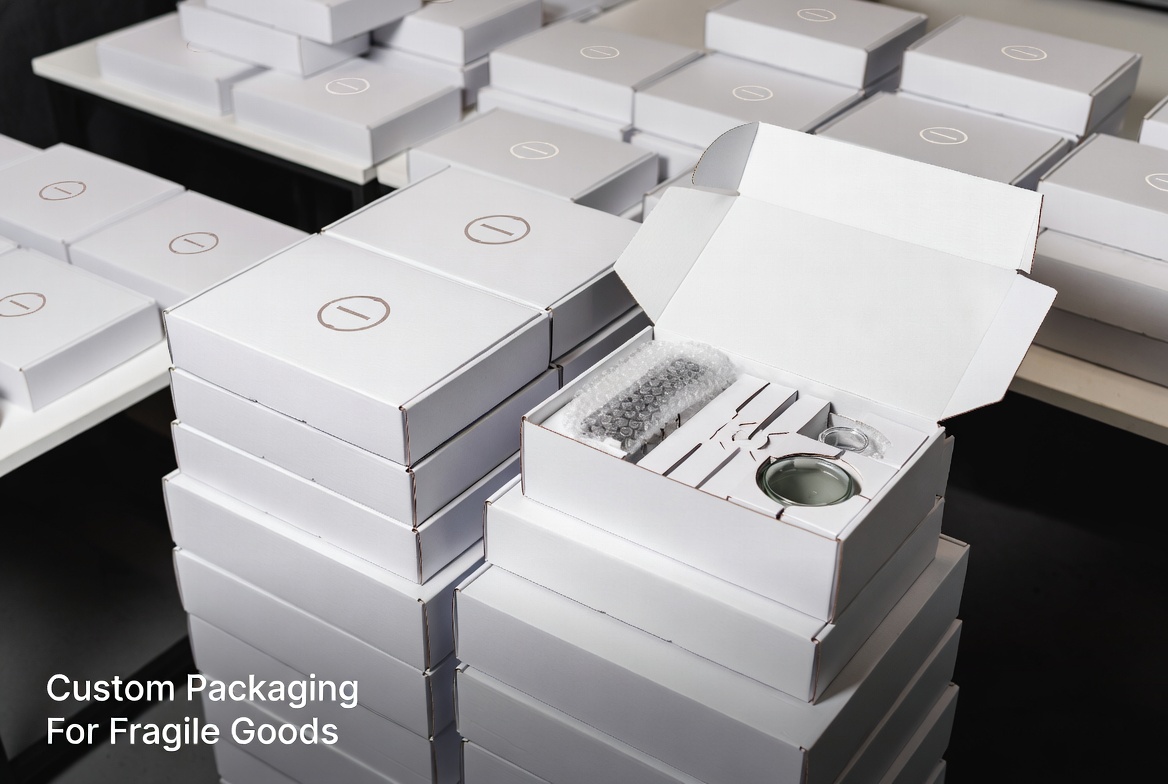
While bubble mailers are useful, many brands eventually upgrade to custom corrugated mailer boxes and shipping cartons to balance protection, branding, and efficiency. [altitudemarketing]
Benefits of custom mailer and shipping boxes for fragile or premium items:
- Better fit: Dimensional optimization reduces internal movement and the need for excessive void fill. [packlane]
- Stronger structure: Multi‑wall corrugated boards offer superior stacking strength and edge crush resistance compared to envelopes. [gls-group]
- Branding opportunity: Printed logos, colors, and messaging turn each shipment into a branded physical touchpoint.
- Sustainability: Custom sizing reduces wasted material and shipping volume, aligning with eco‑conscious customer expectations. [altitudemarketing]
Manufacturers like Maituohong Packaging combine mailer boxes, shipping boxes, and internal paper‑based inserts to create system‑level packaging solutions that protect fragile goods and communicate brand quality at the same time. [altitudemarketing]
To make your packaging truly E‑E‑A‑T‑friendly, you need consistent systems rather than ad‑hoc decisions. [stellarcontent]
Core practices we recommend to our B2B clients:
- Document a packaging matrix mapping each SKU (or SKU group) to a defined packaging recipe (mailer vs. box, layers of wrap, type of filler).
- Train warehouse staff or fulfillment partners on correct wrapping, taping, and labeling standards, using clear visual SOPs. [gls-group]
- Regularly monitor breakage rates and returns, and adjust packaging levels where incidents cluster.
- Highlight your packaging standards on your website and product pages to build customer trust—especially for fragile or higher‑priced items. [momenticmarketing]
Below is a practical decision table you can adapt for your operations or share with your warehouse team.
| Product type | Recommended outer pack | Inner protection details | Notes on use of bubble mailers |
|---|---|---|---|
| Books / CDs / DVDs | Bubble mailer or mailer box | Single bubble wrap layer or protective sleeve | Bubble mailer usually sufficient for standard shipments. (magetop) |
| Small electronics | Bubble mailer or shipping box | Anti‑static bubble wrap + cable management | Use mailer only for low‑risk, light items. (magetop) |
| Jewelry & accessories | Bubble mailer or rigid box | Padded jewelry box + tissue + small bubble sleeve | For premium jewelry, prefer rigid box in outer mailer. (magetop) |
| Ceramic dishes | Corrugated shipping box | Multi‑layer bubble wrap + void fill + optional double box | Bubble mailers not recommended due to high breakage risk. (magetop) |
| Glass decor / vases | Double‑walled box or double box | Bubble wrap, internal fill, corner protection | Treat as high‑risk; label fragile but rely on cushioning. (packlane) |
This type of table helps standardize decisions and reduces inconsistency across different packers and shifts.
If you regularly ship fragile items, the safest and most profitable move is to design a packaging system tailored to your products instead of relying on one‑size‑fits‑all bubble mailers. A packaging partner like Maituohong Packaging can help you develop custom mailer boxes, shipping cartons, and inserts that reduce damage, optimize freight, and elevate your unboxing experience across all your fragile SKUs. [altitudemarketing]
Consider reviewing your top 20 fragile products this quarter and mapping them to specific packaging solutions—starting with whether they truly belong in bubble mailers or deserve upgraded, branded boxes.
1. Are bubble mailers safe for extremely fragile items like ceramics or glass?
Bubble mailers are not recommended for very fragile, heavy items such as ceramic dishes or glass decor, even with extra bubble wrap, because the flexible envelope cannot absorb stronger impacts as well as a rigid box. A sturdy corrugated shipping box—often with double‑boxing for the most delicate pieces—is a better choice. [magetop]
2. How much bubble wrap do I need inside a bubble mailer?
For flat, rigid items such as books or CDs, one snug layer of bubble wrap around the product plus the mailer's internal padding is typically sufficient. For more delicate electronics or accessories, add additional wrapping or a rigid inner sleeve to prevent bending and edge impacts. [magetop]
3. Does labeling a parcel as "fragile" reduce damage?
"Fragile" labels can improve handling awareness, but they cannot compensate for poor packaging. Real protection comes from appropriate outer packaging, correct use of bubble wrap, and sufficient void fill to prevent internal movement. [gls-group]
4. When should I choose a custom mailer box instead of a stock bubble mailer?
Choose a custom mailer box when the product is more fragile, heavier, or higher in value, or when you want to create a branded unboxing experience. Custom sizing also reduces void fill and shipping volume, which can lower total logistics costs over time. [altitudemarketing]
5. How can I reduce shipping damage across my entire catalog?
Create a packaging matrix mapping each product type to standard packaging recipes; train staff on consistent wrapping and filling techniques; monitor breakage rates; and upgrade packaging for SKUs with repeated incidents. Working with an experienced packaging manufacturer helps you refine box strength, insert design, and material choices based on your actual shipping data. [altitudemarketing]


