
Views: 222 Author: Maituohong Packaging Publish Time: 2026-05-12 Origin: Site


A well-optimized cereal box starts with clear dimensions matched to your product weight, shelf strategy, and brand story, not just a "standard" size copied from competitors. In this expert guide, I'll walk you through cereal box dimensions from a packaging manufacturer's perspective, showing exactly how to choose the right size and structure—and where Maituohong Packaging can help you turn those numbers into shelf-ready folding cartons. [citipackaging]
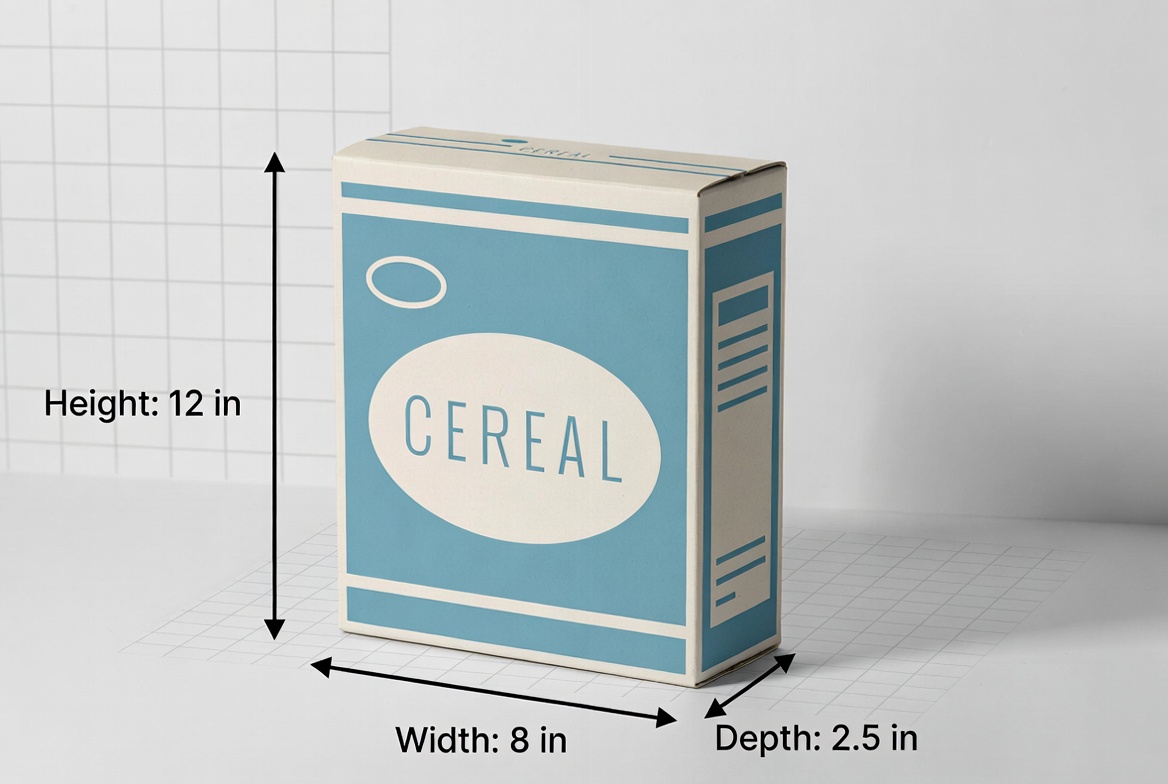
For most dry breakfast cereals, brands still rely on a few proven "anchor" sizes that balance shelf presence, cost, and portion expectations. The commonly referenced standard cereal box for the US market is around: [ibexpackaging]
- Height: 12 in (about 30.5 cm) [packagingbull.co]
- Width: 7.5–8 in (about 19–20.3 cm) [packagingxpert]
- Depth: 2–2.5 in (about 5–6.35 cm) [citipackaging]
- Typical fill: 12–18 oz of cereal (roughly 6–8 cups) [citipackaging]
This footprint is popular because it:
- Fits well on grocery shelves and in kitchen cabinets. [thepackagingworld]
- Leaves enough printable area for branding, nutrition facts, and promotions. [emenacpackaging.com]
- Packs efficiently into shipping cartons and pallets. [thepackagingworld]
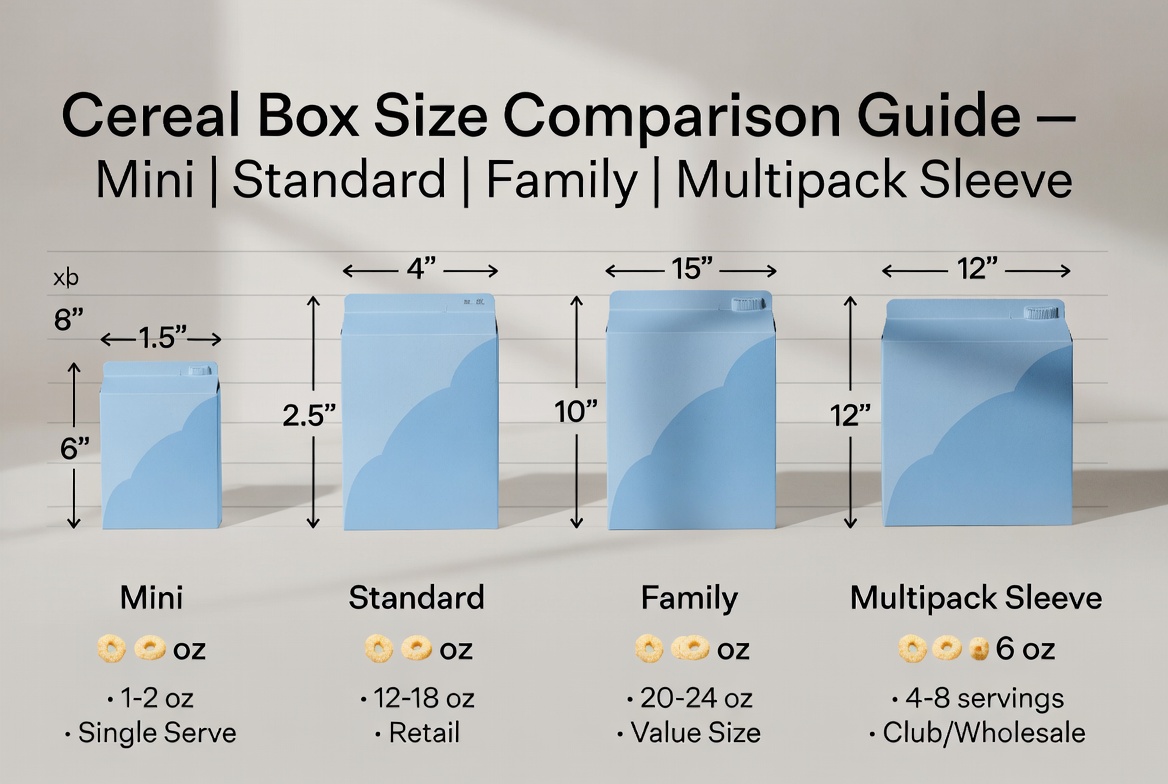
While "standard" boxes dominate, serious cereal brands work with a portfolio of sizes to target different channels and audiences. Below is an updated, user-friendly view of typical size ranges and when to use them. [thecustomizeboxes]
| Box type | Typical dimensions (inches) | Typical fill & usage |
|---|---|---|
| Mini / single-serve | ~5 H × 4 W × 1.5 D | 1–4 cups; hotels, airline snacks, portion-control packs citipackaging |
| Regular / standard | 8–12 H × 6–8 W × 2–3 D | 12–18 oz; most retail cereals, everyday family use citipackaging |
| Family size | ~15 H × 8 L × 3 W | 18+ oz; big families, club stores, bulk buyers citipackaging |
| Multipack sleeves | Varies; often multiple mini or small boxes in 1 outer carton | Variety packs, promotional bundles, e‑commerce kits citipackaging |
When we design folding cartons for cereal at Maituohong Packaging, we usually begin with the net weight and serving strategy, then refine dimensions to hit target shelf heights and pallet patterns. [mthpackagingbox]
Most guides quote 12 inches as the "average" height for a mainstream cereal box, and this remains a useful benchmark. But as manufacturers and designers, we treat that number as a starting point, not a rule. [ibexpackaging]
- It evolved with early American cereal brands like Kellogg's as a tall, narrow format that looked impressive on shelf and allowed strong vertical branding. [thepremierpackaging]
- Retailers optimized shelving around those heights, so brands tended to follow similar vertical footprints. [packagingbull.co]
- Go taller (13–15 in) for family-size SKUs or premium cereals that need extra billboard space and justify a higher price point. [ibexpackaging]
- Go shorter (7–10 in) for kids' cereals, snack cereals, or markets where cabinets and pantries are smaller (for example, some Asian and European kitchens). [cppboxes]
From a manufacturing point of view, even a 1–2 cm height change can impact die-cut layout, board utilization, and shipping efficiency—so it should be a conscious decision tied to volume and logistics, not just design. [mthpackagingbox]
Height determines presence, but width and depth determine how much product you can profitably pack and how stable the box feels in the hand. [packagingxpert]
- Width: often 7.5–8 in for standard boxes; around 5–6 in for small formats. [packagingbull.co]
- Depth: usually 2–2.5 in for everyday cereals; 3–4 in for very large or value packs. [packagingxpert]
You can estimate internal volume (before accounting for inner liners and headspace) using the standard box formula: [citipackaging]
V = length * width * height
In cereal applications this helps you:
- Match net weight (for example, 375 g vs 500 g) to a box that feels "full" but not overpacked. [ibexpackaging]
- Keep enough air space to protect fragile flakes or clusters from crushing. [thepackagingworld]
At Maituohong, our packaging engineers routinely run volume and fill ratio simulations on common cereal sizes for international clients, then fine-tune creasing and inner support options to improve protection during shipping. [mthpackagingbox]
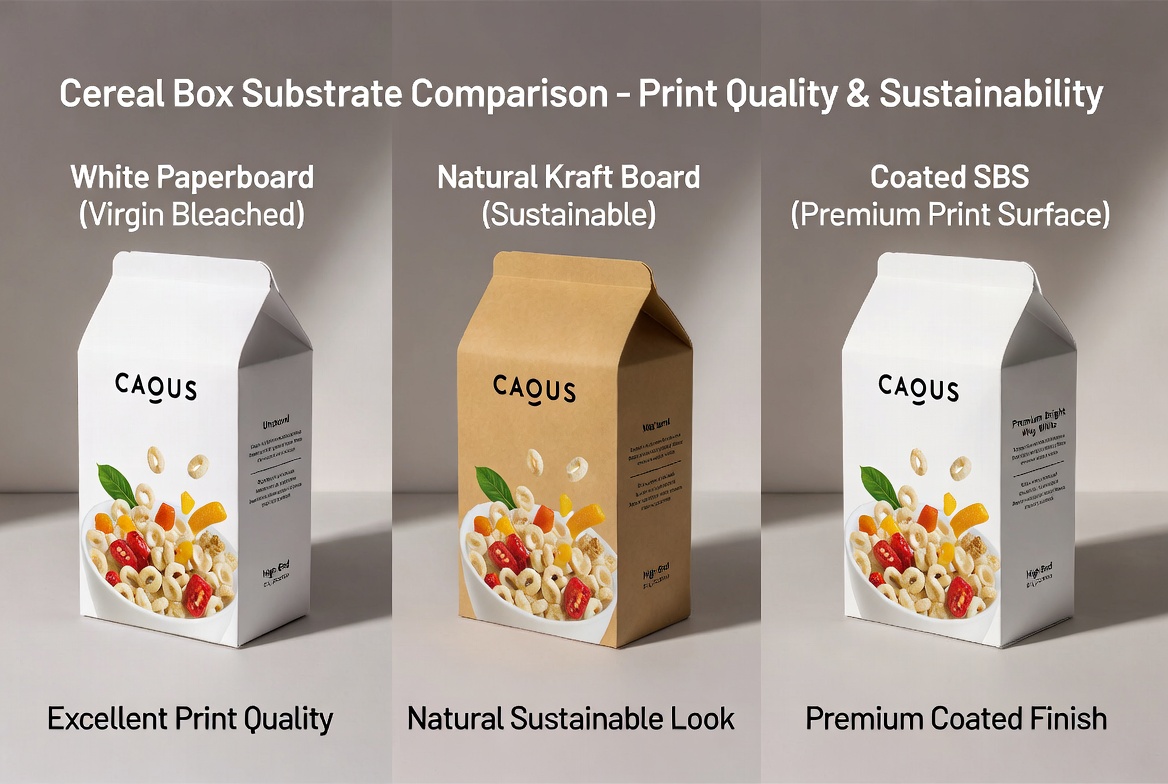
Behind every successful cereal box is a well-chosen paperboard that balances print quality, sustainability, and food safety. [packagingfulfillment]
- Cardboard / paperboard: The go-to for most branded cereal cartons; sturdy, printable, and recyclable. [packagingbull.co]
- Kraft board: Naturally brown, biodegradable, and increasingly used for eco-friendly or "natural" cereals; its porous surface helps manage moisture. [citipackaging]
- Food-grade SBS / coated boards: Smooth white surface ideal for high-resolution graphics, embossing, and specialty finishes. [emenacpackaging.com]
Many mainstream cereal boxes use a board thickness around 0.022 inches, adjusted slightly depending on the product's fragility and shipping conditions. [ibexpackaging]
At Maituohong Packaging, we offer white paperboard, kraft, CCNB, and SBS for folding cartons, all compatible with advanced printing and finishing for cereal brands targeting international markets. [mthpackagingbox]
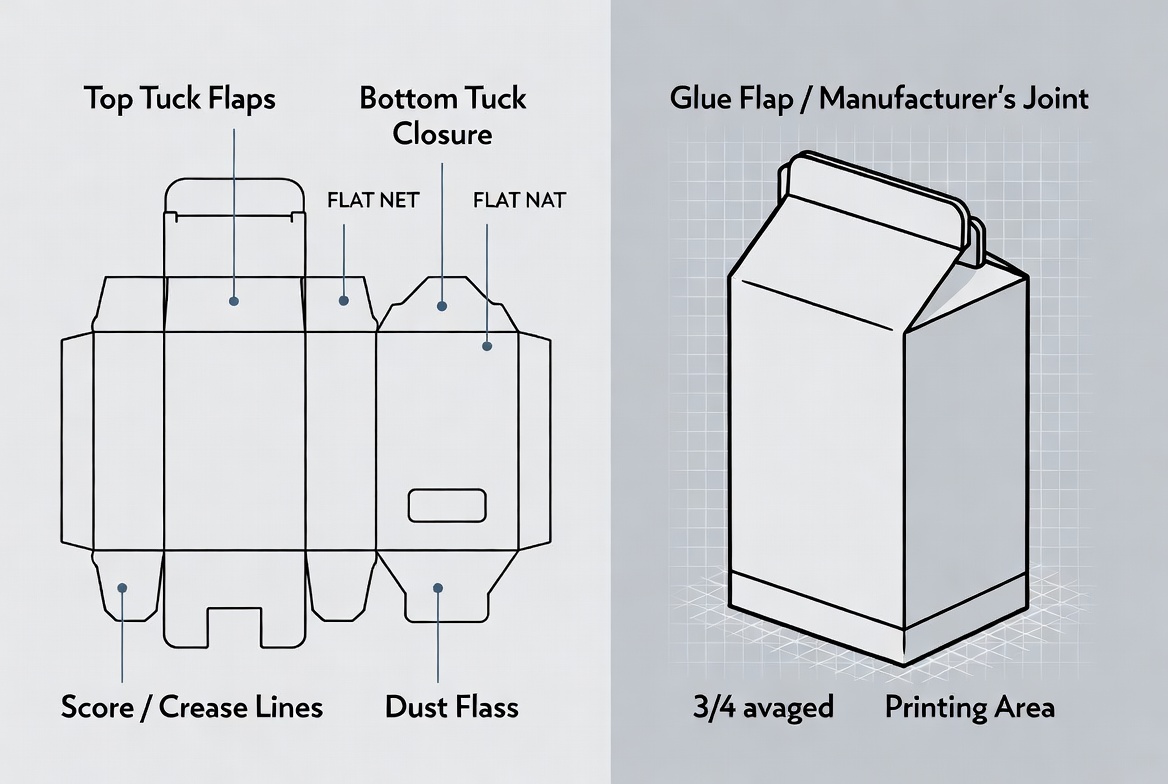
Although the classic cereal carton looks simple, there are several structural options that influence usability and differentiation. [mtpak]
- Standard rectangular folding carton: Top and bottom closure flaps; the familiar "everyday" cereal box. [thepremierpackaging]
- Tall rectangular box: Slimmer but higher profile for premium blends or granola. [emenacpackaging.com]
- Window cereal boxes: Include a die-cut window (with or without clear film) to showcase the product. [thepremierpackaging]
- Square or hexagonal boxes: Used for special editions or gift-style breakfast sets. [emenacpackaging.com]
Because we specialize in custom folding cartons, we can adapt these structures with features like easy-open tabs, tamper-evident locks, or integrated inner partitions when cereal is combined with gifts or mix-ins. [mthpackagingbox]
Dimensions get your cereal onto the shelf; design gets it into the cart. Here are design principles we routinely apply in real projects. [packagingfulfillment]
- High-quality paperboard protects against moisture and physical damage, keeping cereal crisp. [packagingfulfillment]
- Choose a surface that supports rich color and crisp typography so your branding and nutritional information remain legible and appealing. [packagingfulfillment]
- For kids' cereals, bold colors, playful characters, and interactive elements (puzzles, games, QR codes) significantly boost engagement. [emenacpackaging.com]
- For adult or health-focused cereals, cleaner layouts, muted palettes, and strong ingredient imagery support a premium, nutritious positioning. [packagingfulfillment]
To stand out in crowded aisles, many brands now integrate:
- Games and puzzles on side or back panels.
- QR codes linking to digital content, loyalty programs, or AR experiences. [emenacpackaging.com]
- Embossed logos or images to create subtle tactile interest. [emenacpackaging.com]
These upgrades are easy to integrate into custom folding cartons when structural dimensions are carefully planned from the start.
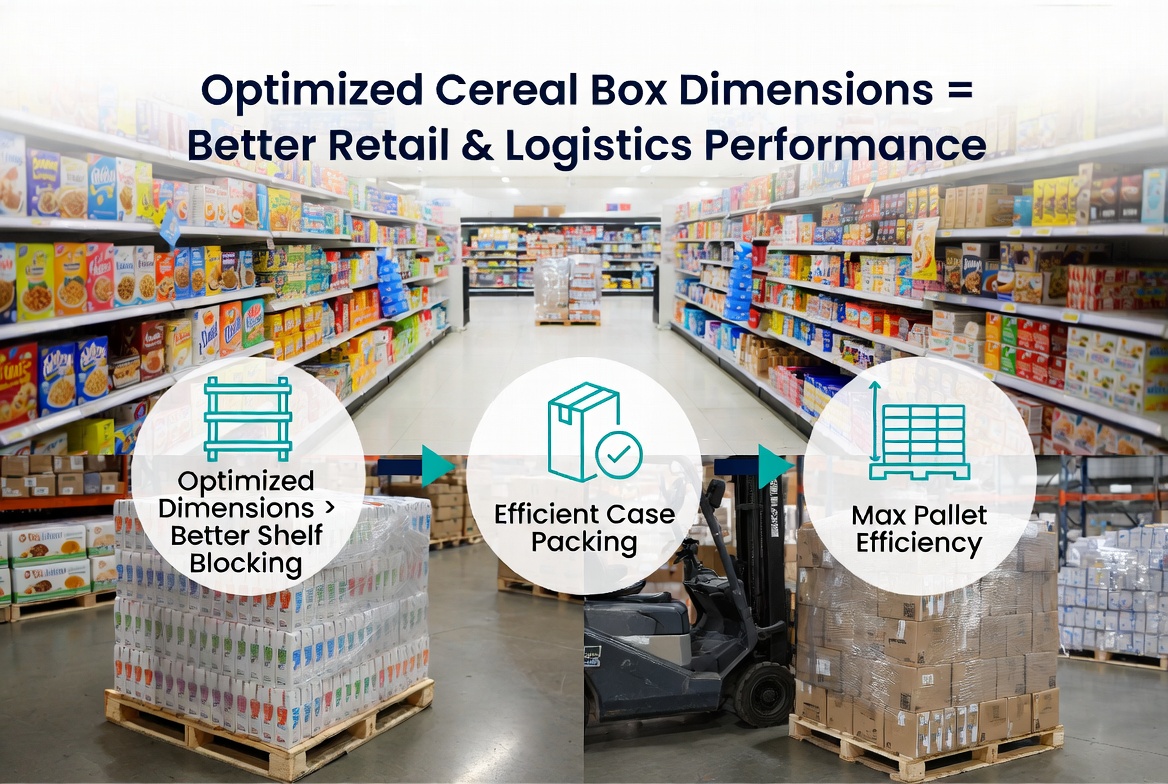
From an operational viewpoint, cereal box dimensions have a direct financial impact on your brand. [thepackagingworld]
- Uniform heights make it easy for retailers to plan attractive, consistent displays. [thepackagingworld]
- Slightly taller or wider boxes can command more visual dominance, but must still fit standard shelf depths and heights. [thepackagingworld]
- Optimized dimensions enable tighter case-packs, reducing void space in master cartons and on pallets. [packagingxpert]
- Better cube utilization lowers per-unit shipping costs and reduces damage risk during transport. [packagingxpert]
- Right-sized cartons minimize wasted board and excess air, reducing overall material use and carbon footprint. [packagingbull.co]
- Using recyclable boards and inks supports eco-conscious positioning and regulatory compliance in key markets. [packagingfulfillment]
With over 18 years in folding carton and rigid box production, Maituohong regularly consults on these trade-offs, helping brands adapt cereal packaging for US, EU, and Asia-Pacific distribution requirements. [instagram]
From a practical manufacturing perspective, here is a simple decision process you can follow before briefing your packaging supplier.
1. Define product weight and density.
Decide your net weight (for example, 250 g, 375 g, 500 g) and consider whether the cereal is light and airy or dense and granola-like. [ibexpackaging]
2. Select a target size category.
Choose mini, standard, or family size based on your channel (retail, HoReCa, e‑commerce) and target consumers. [thecustomizeboxes]
3. Align with shelf and cabinet constraints.
Confirm retailer shelf heights and typical household cabinet dimensions in your key markets; avoid boxes that are too tall or too deep to store comfortably. [packagingbull.co]
4. Calculate volume and fill ratio.
Use V = L * W * H to estimate internal volume, then target a fill level that balances protection with perceived value. [citipackaging]
5. Choose material and board thickness.
Decide between kraft, white paperboard, or coated SBS, and select a thickness that supports your box size and stacking height. [mthpackagingbox]
6. Plan for graphics and regulatory content.
Ensure your chosen dimensions leave enough surface area for branding, nutrition panels, ingredients, and multi-language labeling. [packagingfulfillment]
7. Prototype and test.
Request physical or 3D mockups to validate shelf impact, pouring behaviour, and structural strength before mass production. [mtpak]
At Maituohong Packaging, we typically walk new cereal clients through this process while co‑developing dielines and print-ready files for custom folding cartons. [mthpackagingbox]
Imagine you're launching a high-protein granola aimed at young professionals:
- Target net weight: 400 g (denser than regular corn flakes).
- Channel: modern trade plus online grocery.
A practical approach would be:
- Height around 11–12 in to align with standard retail shelves while signaling a substantial product. [packagingxpert]
- Width about 7 in and depth 2.5–3 in to accommodate heavier granola without making the box feel too slim or unstable. [citipackaging]
- High-quality white SBS or coated paperboard for premium imagery, with optional embossed brand mark and a small window to show real ingredients. [thepremierpackaging]
This kind of weight–dimension–material alignment is exactly the type of optimization our team performs for brands moving from plain bags to branded folding carton cereal packaging.
As a dedicated custom paper packaging manufacturer with over 18 years of experience, Maituohong Packaging combines structural engineering, printing expertise, and export-grade quality control in one place. [mthpackagingbox]
When you develop cereal boxes and other food folding cartons with us, you benefit from:
- End‑to‑end support: From concept, dieline design, and material selection to color management and final production. [mthpackagingbox]
- Flexible structures: Standard cereal cartons, window boxes, hexagonal gift formats, and multipack sleeves. [mthpackagingbox]
- Global market readiness: Packaging solutions aligned with international shelf standards and sustainability expectations. [mthpackagingbox]
If you are planning a new cereal brand or upgrading your existing packaging, our team can help you turn optimized dimensions into high-impact, production-ready folding cartons that stand out on shelf and perform across the supply chain. [mthpackagingbox]
Ready to develop custom cereal folding cartons tailored to your product weight, brand, and markets? Contact Maituohong Packaging to discuss your project, request dielines, and receive a tailored quotation for your next cereal packaging run. [mthpackagingbox]
1. What is the most common cereal box size in the US?
The most common mainstream cereal carton in the US is around 12 in high × 7.5–8 in wide × 2–2.5 in deep, typically holding 12–18 oz of cereal. [ibexpackaging]
2. How do I know which cereal box dimensions are right for my product?
Start from your net weight and product density, then choose a size category (mini, regular, family) and refine dimensions to match shelf requirements and your brand's visual strategy. [thepackagingworld]
3. Can I customize cereal box dimensions for e‑commerce only?
Yes. Many brands now develop slightly shorter or more compact cereal folding cartons optimized for shipping boxes and mailers, even if those dimensions differ from traditional retail sizes. [mtpak]
4. Which material is best for sustainable cereal packaging?
Recyclable paperboard or kraft remains the preferred choice for sustainable cereal cartons, often combined with minimal plastic use or recyclable liners to protect the product. [packagingbull.co]
5. Does changing cereal box dimensions affect my production costs?
It can. Even small changes in height, width, or depth impact board usage, die-cut layout, case-pack counts, and pallet efficiency, which is why brands usually optimize dimensions with their packaging manufacturer before locking designs. [mthpackagingbox]
- WeCustomBoxes – "How Tall is a Box of Cereal About Cereal Box Dimensions" (accessed 2026) [citipackaging]
- PackagingXpert – "Dimensions of a Cereal Box: Complete Guide to Standard Sizes" [packagingxpert]
- PackagingBull – "Cereal Box Dimensions: Understanding Standard and Custom Sizes" [packagingbull.co]
- IBEX Packaging – "Cereal Box Dimensions – How Tall is a Box of Cereal" [ibexpackaging]
- The Packaging World – "Cereal Box Dimensions Used by Top US Cereal Brands" [thepackagingworld]
- Emenac Packaging – "Top 6 Must-Have Elements for Eye-Catching Custom Cereal Box Design" [emenacpackaging.com]
- The Premier Packaging – "How to Create and Design a Cereal Box?" [thepremierpackaging]
- Packaging Fulfillment – "Creative Cereal Box Design: 3 Tips to Maximize Your …" [packagingfulfillment]
- Maituohong Packaging – Folding Carton FAQ and Factory Profile [instagram]


